

P0015 on 2018-2021 Ford EcoSport: Causes and Fixes for Over-Retarded Camshaft Timing
On a 2018-2021 Ford EcoSport, P0015 is most often caused by low or dirty engine oil, or a faulty exhaust VCT solenoid. For 1.0L engines, this code can be a critical early warning for a failing oil pump belt, which is subject to a safety recall (23S64). A VCT solenoid replacement costs roughly $230-$350.
- P0015 on your EcoSport means the exhaust camshaft timing is retarded, most likely due to an oil issue or a bad VCT solenoid.
- Always check your oil level and condition first; a simple oil change can sometimes fix the problem.
- If you have the 1.0L EcoBoost engine, immediately check if your vehicle is part of safety recall 23S64, as this code could signal an impending oil pressure failure and engine seizure.
- Replacing the exhaust VCT solenoid is a common, relatively inexpensive, and DIY-friendly repair that often resolves the code.
- Do not replace the camshaft position sensor first; it is rarely the cause of this specific code.
What's Unique About the 2018-2021 Ford ECOSPORT

For this generation of EcoSport, Ford has issued Technical Service Bulletins (TSBs) acknowledging that P0015 can be caused by small debris making the VCT solenoid stick. More critically, for the 1.0L EcoBoost engine, there is a safety recall (23S64) for an oil pump belt and/or tensioner that can fail. This failure, described as a potential fracture of the tensioner arm or degradation of the belt material, causes a sudden loss of oil pressure. This can trigger VCT codes like P0015 as a direct symptom of impending engine damage and loss of power braking assist.
Diagnostic Flowchart

Tap your situation to follow the diagnostic path that matches what you're seeing on this vehicle.
Symptoms You May Notice

- Check Engine Light is on
- Rough or unstable idle
- Reduced engine power and poor acceleration
- Hesitation during acceleration
- Decreased fuel economy
- Engine may stall, especially at low speeds or idle
- Rattling or knocking noise from the engine
- Replacing the camshaft position sensor. While the sensor reports the timing, it rarely causes an over-retarded condition itself. The problem is usually with the mechanical or hydraulic components that control the timing, such as the VCT solenoid or oil pressure.
Most Likely Causes

- Low or Dirty Engine Oil 🔴 High Probability The Ti-VCT system is hydraulic and extremely sensitive to oil pressure and cleanliness. Sludge or low oil levels are the most common reason for VCT system malfunctions, as they can clog the fine mesh screens on the solenoids.
How to confirm: Check the engine oil dipstick for level and examine the oil's color and consistency. If it is dark, gritty, or below the 'add' line, it needs to be changed. Ensure the correct viscosity oil is being used, as specified by the manufacturer.
Typical fix: Perform an oil and filter change using the correct viscosity oil specified in your owner's manual. Ford recommends Motorcraft brand oil and filters.
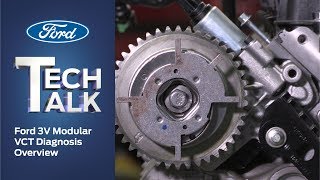
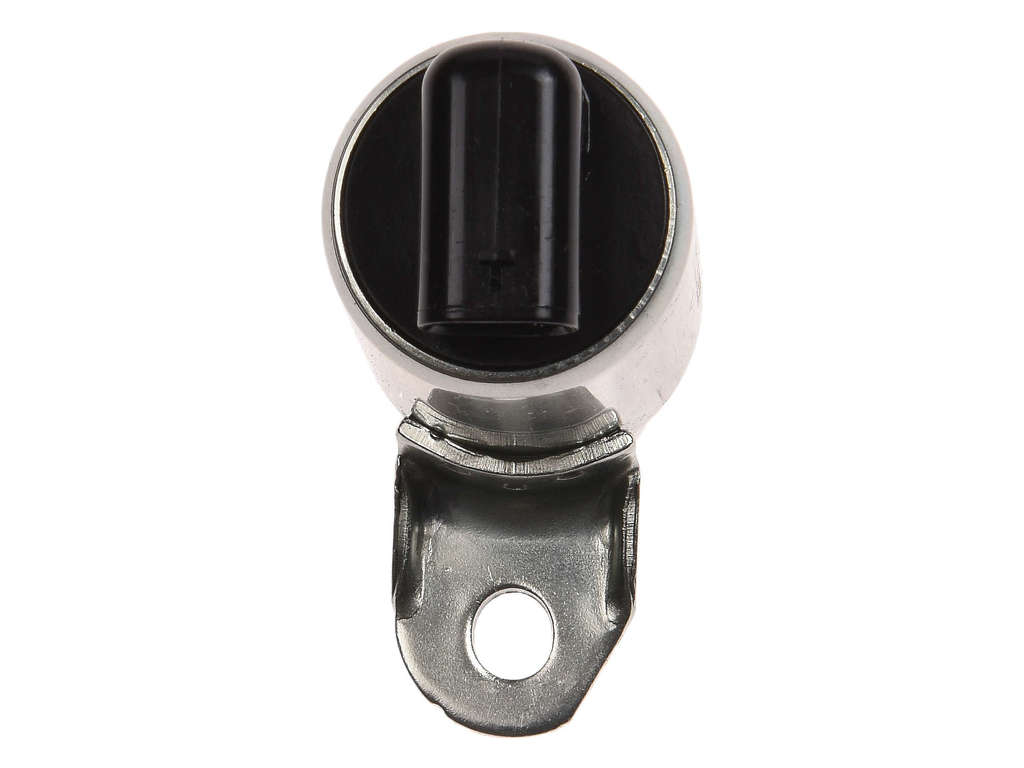
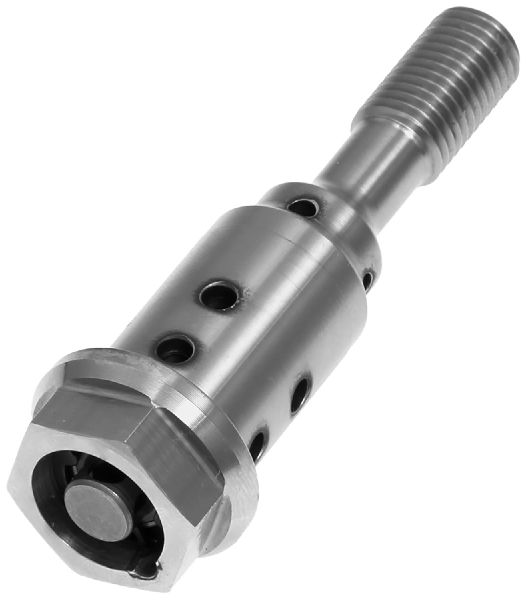
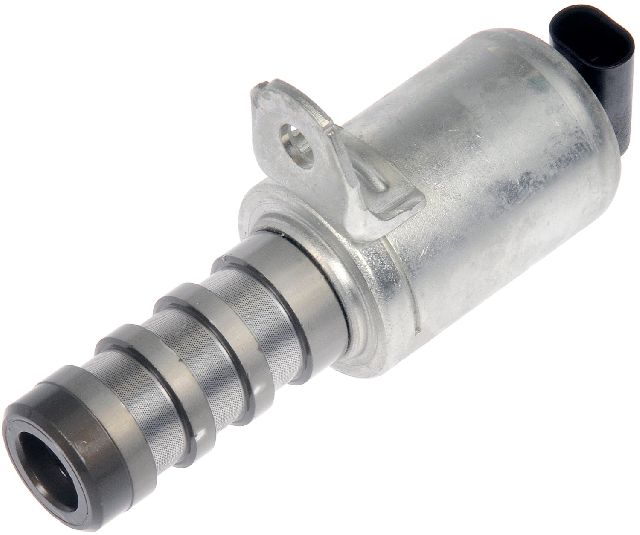
Est. part cost: $40-$80 - Faulty Exhaust VCT Solenoid (Oil Control Valve) 🔴 High Probability → Shop Engine Variable Valve Timing (VVT) Solenoid Ford TSBs #SSM 48423 and #SSM 50067 directly state that debris can cause the VCT solenoid to stick on these vehicles, leading to this code. TSB 50067 even suggests a specific diagnostic procedure to cycle the solenoid 10 times 🎬 Watch: Ford technicians explain the VCT diagnostic process. with a scan tool to try and dislodge debris before replacement.
How to confirm: A mechanic can command the solenoid on and off with a scan tool to check its response. You can also swap the exhaust solenoid with the intake solenoid (if they are identical parts) and see if the code changes to P0014 (over-advanced). Resistance can also be checked with a multimeter; a typical reading is between 6.9 and 7.9 ohms. 🎬 Watch: How to test VCT solenoid resistance and operation.
Typical fix: Replace the exhaust camshaft VCT solenoid. It is often recommended to replace both the intake and exhaust solenoids at the same time.
Est. part cost: $40-$100 - Failing Camshaft Phaser ⚪ Low Probability → Shop Engine Camshaft Ford refers to these actuators as 'phasers'. While durable, they can fail or bind internally, especially if oil maintenance has been neglected.
How to confirm: This is typically diagnosed after ruling out oil issues and a faulty solenoid. It may require more in-depth mechanical inspection of the timing components and is a more complex job.
Typical fix: Replace the camshaft phaser, which is a more labor-intensive job that also requires replacing the timing chain and related components.
Est. part cost: $150-$300
Rare But Worth Checking
- Failing Oil Pump Belt / Tensioner (1.0L EcoBoost Only): → Shop Engine Oil Pump This is the subject of Ford Safety Recall 23S64. A failure here causes a loss of oil pressure, which can trigger VCT codes like P0015. This is a critical failure that can destroy the engine. Owners on forums report their car dying suddenly after the oil pressure light comes on.
- Stretched Timing Chain or Worn Tensioner: → Shop Engine Timing Chain While less common than a solenoid failure, a physically worn timing chain or a failed tensioner can cause the actual cam timing to be retarded, triggering the code. This may be suspected if a rattling noise is present.
- Wiring or ECM Issue: An open or short in the circuit to the VCT solenoid, or in rare cases, a fault within the Engine Control Module (ECM), can cause P0015.
Diagnosis Steps
- Verify the code with an OBD-II scanner.
- Check the engine oil level and condition. If low, dirty, or of the incorrect viscosity, perform an oil and filter change with the manufacturer-specified oil. Clear the code and see if it returns.
- Inspect the electrical connector on the exhaust VCT solenoid for damage or corrosion.
- Using a capable scan tool, monitor the desired vs. actual camshaft position for Bank 1 Exhaust.
- As per TSB 50067, use the scan tool to command the exhaust VCT solenoid on and off (cycle it 10 times) to see if this clears any internal debris.
- If possible, swap the exhaust VCT solenoid with the intake VCT solenoid. Clear the codes and run the engine. If the code changes to P0014, the solenoid is faulty and needs replacement.
- Test the solenoid's resistance with a multimeter. It should typically be between 6.9 and 7.9 ohms. If it reads open or has very high resistance, it has failed.
- If the solenoid tests good, the issue may be a clogged oil passage, a failing camshaft phaser, or a stretched timing chain, which requires more advanced mechanical diagnosis.
Parts You'll Likely Need
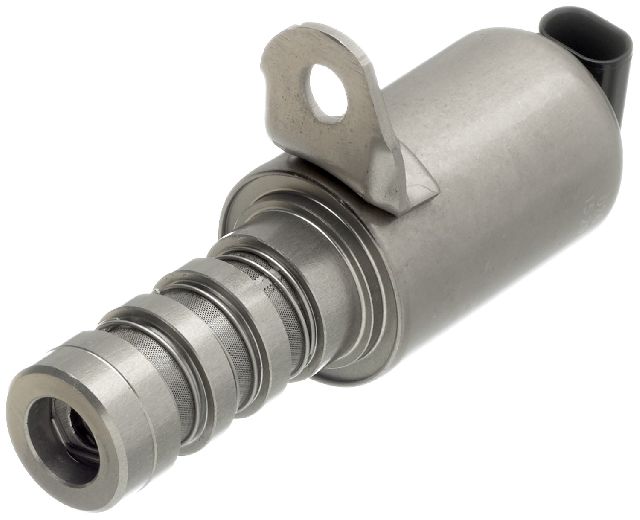
- Engine Variable Valve Timing (VVT) Solenoid
(OEM #CM5Z6M280C (For 2.0L Engine), CM5Z6M280G (For 1.0L Engine))— This part is the most common point of failure for P0015, often due to sticking from oil debris, as noted in Ford's own service bulletins.
Trusted brands: Motorcraft, Dorman, Walker
OEM price range: $70-$100
Aftermarket price range: $40-$70 - Engine Oil and Filter — Incorrect or dirty oil is a primary cause of VCT system faults. An oil change is a crucial first step in diagnosis and repair.
Trusted brands: Motorcraft
OEM price range: $50-$80
Aftermarket price range: $40-$60
Related Codes That Often Appear With This One
- P0014 — If you swap a faulty exhaust solenoid with the intake solenoid for diagnosis, the code may change from P0015 (retarded) to P0014 (advanced), confirming the solenoid is the issue.
- P0011, P0012, P0016, P0017 — These are all VCT-related codes. Seeing them together often points to a widespread oil pressure or oil quality problem affecting the entire VCT system, as noted in TSBs.
Technical Service Bulletins (TSBs) & Recalls
- SSM 48423: Notes that P0015 (and other VCT codes) may be caused by small debris causing the VCT solenoid to stick in some 2015-2020 Ford vehicles.
- SSM 50067: An updated bulletin for 2015-2021 vehicles reiterating that P0015 can be caused by a sticking VCT solenoid due to debris. It advises using a scan tool to cycle the solenoid 10 times to attempt to clear it before replacement.
Platform-Specific Known Issues
- Critical Oil Pump Belt Recall on 1.0L EcoBoost (Recall 23S64): → Shop Engine Oil Pump For 1.0L EcoBoost engines, Ford issued Safety Recall 23S64 because the oil pump drive belt or its tensioner can fail. The failure involves the tensioner arm fracturing or the belt material degrading and losing teeth, leading to a sudden loss of engine oil pressure. This can trigger code P0015 and quickly lead to complete engine failure and loss of power brakes. Owners on Reddit have shared experiences of their cars dying on the road and facing long waits for the interim repair, which is a complete engine replacement. Owners should check their VIN with a Ford dealer or on the NHTSA website to see if their vehicle is affected.
Mechanic-Grade Diagnostic Values
- VCT Solenoid (Oil Control Valve) Internal Resistance — expected: 6.9 - 7.9 Ohms at 68°F (20°C). Some technicians report an acceptable range up to 14 Ohms.. Failure: A reading of 0 Ohms (short circuit) or infinite/OL (open circuit) indicates a failed solenoid.
- VCT Solenoid Power Supply Voltage — expected: Battery voltage (approx. 12.0-12.6V) at Pin 1 with Key On, Engine Off.. Failure: Low or no voltage indicates a wiring issue, blown fuse, or problem with the PCM power relay.
- Engine Oil Pressure (at normal operating temperature) — expected: Minimum of 15 PSI at idle.. Failure: Pressure below 15 PSI at idle suggests a worn oil pump, clogged pickup tube, or (on 1.0L engines) a failing oil pump belt.
Hidden / Shadow Codes Worth Checking
- Mode $06, Test ID (TID) for VCT: Advanced scan tools can access Mode $06 data, which shows results from the PCM's internal, non-continuous monitor tests before a DTC is set. For Ford's VCT system, TIDs such as $81, $82, $C1, or $C2 (depending on the specific ECU protocol) monitor the camshaft timing error in degrees. A failing value here can indicate a developing problem. (see via A professional scan tool or an advanced consumer tool with Mode $06 capability (e.g., FORScan, some BlueDriver/Torque Pro features).)
Scan Tool Commands That Help
- Ford IDS (or equivalent professional scanner like FORScan): VCT Solenoid Duty Cycle (VCT_DC#) PID — Use this to monitor the PCM's commanded duty cycle to the solenoid. A high duty cycle with no change in cam angle can indicate a stuck solenoid or low oil pressure.
- Ford IDS (or equivalent professional scanner like FORScan): VCT Cam Angle Error (VCT_ADV_ERR#) PID — This PID shows the difference between the desired and actual camshaft angle. For P0015, you would expect to see a persistent negative value, indicating the cam is not advancing as much as commanded (is retarded).
- Ford IDS (or equivalent professional scanner like FORScan): Active Command: VCT Solenoid On/Off Test — As mentioned in TSB 50067, this bidirectional command manually cycles the solenoid. It's used to verify electrical function (you should hear a click) and to potentially dislodge small debris causing it to stick.
Wiring & Ground Locations
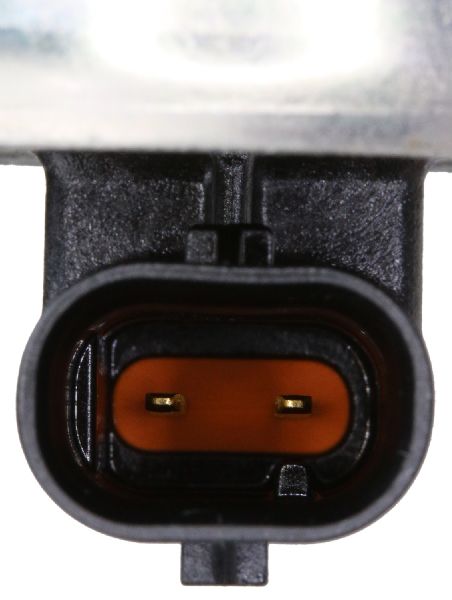
- VCT Solenoid Connector — On the top of the valve cover, one for intake and one for exhaust.. Pin 1 is typically the 12V+ power supply from a PCM-controlled relay, and Pin 2 is the ground-side control wire from the PCM. A damaged connector or wire here will cause the solenoid to fail.
- G202 — Located on the left side of the dashboard, near the A-pillar.. This is a major chassis ground point for various interior and dash-related modules. A poor connection here could potentially affect PCM operation or related sensor inputs.
- G303 — Located under the driver's side front door sill plate.. This is a primary body ground point. Corrosion or a loose connection here can cause unpredictable electrical issues for various systems controlled by the Body Control Module and Powertrain Control Module.
Real Owner Repair Stories
- Ford Owners Club Forum (2015 Ford Focus 1.0L EcoBoost (engine has same wet belt design as EcoSport)) — Loss of power, oil light on, engine light on, brakes seized (due to loss of vacuum assist from stalled engine). Codes P0015, P0017, P0300.
❌ Tried (didn't work) Initial diagnosis pointed to multiple sensor failures.
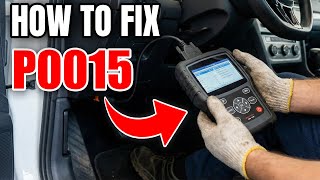
✅ What actually fixed it The owner confirmed with a Ford specialist that the root cause was the oil-immersed 'wetbelt' disintegrating and blocking the oil pump pickup, leading to a catastrophic loss of oil pressure. This is the exact failure mode covered by recall 23S64. - YouTube Repair Channel (Autelet Leader) (Ford New Fiesta 1.6L Sigma engine (similar Ti-VCT technology)) — Code P0015, engine out of sync, loss of power, stalling in the street.
❌ Tried (didn't work) Testing sensors, verifying mechanical timing with tools.
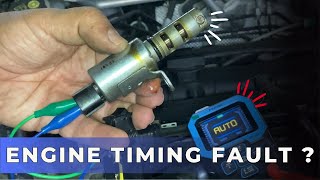
✅ What actually fixed it The mechanic removed the valve cover and found the VCT solenoids were internally clogged with oil sludge, preventing oil passage even though they clicked electrically. The fix was to remove and thoroughly clean both solenoids, perform an engine oil and filter change, and reset the PCM.
OEM Part Supersession History
CM5Z-6M280-A→CM5Z-6M280-C— Part revision/update by the manufacturer.
Heads up: The new part number (CM5Z-6M280-C) is the correct replacement for the 2.0L Ti-VCT engine and is backward compatible.
Model Year Variations Within This Range
- 2018-2021: No significant variations within the 2018-2021 model years for the North American EcoSport are known to affect the causes or diagnosis of code P0015. The primary difference is the installed engine (1.0L vs. 2.0L), which has distinct root causes (e.g., oil pump belt on 1.0L) as noted elsewhere.
Helpful Videos

We Have This Part in Stock


The information in this article is provided for general reference and educational purposes only. Vehicle specifications, procedures, and part compatibility can vary by production date, trim level, and region. Always consult your vehicle's factory service manual and verify part numbers before purchasing or performing repairs. Safety-critical components such as airbags, seat belts, and braking systems should be installed by a qualified professional.
- Ford ECOSPORT:
- 🧭 Diagnostic Flowchart
- 🎬 Helpful Videos
- 🛍️ Shop This Part
- What's Unique About the 2018-2021 Ford ECOSPORT
- Symptoms You May Notice
- Most Likely Causes
- Rare But Worth Checking
- Diagnosis Steps
- Parts You'll Likely Need
- Related Codes That Often Appear With This One
- Technical Service Bulletins (TSBs) & Recalls
- Platform-Specific Known Issues
- Mechanic-Grade Diagnostic Values
- Hidden / Shadow Codes Worth Checking
- Scan Tool Commands That Help
- Wiring & Ground Locations
- Real Owner Repair Stories
- OEM Part Supersession History
- Model Year Variations Within This Range
- 🎟️ Get 5% Off