

P0015 on 2015-2021 Ford Edge: "B" Camshaft Position Timing Over-Retarded (Bank 1) Causes and Fixes
On a 2015-2021 Ford Edge, code P0015 is most often caused by a faulty or dirty Variable Camshaft Timing (VCT) solenoid on the Bank 1 exhaust camshaft. For V6 engines (2.7L, 3.5L), this solenoid is on the firewall side of the engine and requires removing the upper intake manifold to access. The fix is replacing the solenoid and changing the engine oil and filter. The part costs approximately $50-$150.
- The most likely cause of a P0015 code on your Ford Edge is a faulty exhaust VCT solenoid on Bank 1.
- Before replacing any parts, check your engine oil level and condition. Low or dirty oil is a common cause of VCT system problems.
- Replacing the VCT solenoid is a manageable DIY task for many, requiring basic tools and about an hour of time.
- Always use the correct viscosity engine oil and maintain regular oil change intervals to prevent this issue from recurring.
- Do not immediately replace the camshaft position sensor; it is almost always just reporting the timing fault correctly.
What's Unique About the 2015-2021 Ford EDGE
For this generation of Ford Edge and other contemporary Ford vehicles, the VCT system is known to be sensitive to oil quality and debris. Multiple Technical Service Bulletins (TSBs) issued by Ford highlight that small debris in the engine oil can cause the VCT solenoids to stick, directly leading to timing-related codes like P0015. [SSM 47170, SSM 48423] TSB SSM 50067 even provides a specific diagnostic step for technicians to use a scan tool to cycle the solenoid 10 times to try and dislodge debris before replacing the part, confirming this is a well-known, recurring issue. This indicates the solenoids are a primary failure point, often due to oil contamination rather than just electrical failure.
Diagnostic Flowchart
Tap your situation to follow the diagnostic path that matches what you're seeing on this vehicle.
Symptoms You May Notice
- Check Engine Light is on
- Rough or irregular idle
- Poor acceleration and reduced engine power
- Engine stalling or hesitation, especially at low speeds
- Decreased fuel economy
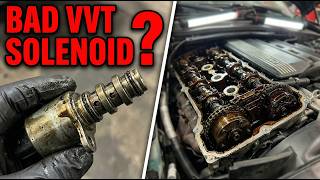
- Rattling, knocking, or tapping noise from the engine 🎬 Watch: 5 symptoms of a bad VVT solenoid you should never ignore.
- Replacing the camshaft position sensor. The sensor is almost always doing its job correctly by reporting the timing deviation. The fault is mechanical (solenoid, phaser, oil) or hydraulic, not the sensor itself.
Most Likely Causes
- Dirty or Failed VCT Solenoid 🔴 High Probability → Shop Engine Variable Valve Timing (VVT) Solenoid Ford has issued multiple TSBs (SSM 47170, SSM 48423, SSM 50067) stating that debris in the oil can cause these solenoids to stick, which directly triggers this code. The solenoids contain fine mesh screens that are easily clogged by oil sludge or contaminants.
How to confirm: Use a scan tool to command the solenoid on and off to check for response (as suggested in TSB SSM 50067). The most common DIY method is to swap the Bank 1 and Bank 2 exhaust VCT solenoids (on V6 models); if the code changes to P0025 (Bank 2), the solenoid is confirmed faulty. On the 2.0L, you can swap the intake and exhaust solenoids; if the code changes to P0012, the solenoid is bad.
Typical fix: Replace the Bank 1 exhaust VCT solenoid. For V6 engines, this is on the rear bank (firewall side) and requires removing the upper intake manifold. It is highly recommended to change the engine oil and filter at the same time to remove the contaminants that likely caused the failure.
Est. part cost: $50-$150 - Low or Dirty Engine Oil 🟡 Medium Probability The VCT system is entirely hydraulic and relies on clean oil at the correct pressure to function. Ford's own TSBs point to oil debris as a primary cause, making regular oil changes with the correct viscosity oil critical.
How to confirm: Check the oil level on the dipstick and inspect its condition. If the oil is low, dark, or gritty, this is a likely contributor. This should be the very first check.
Typical fix: Perform an engine oil and filter change using the manufacturer-recommended oil viscosity (e.g., SAE 5W-30 for many of these engines).
Est. part cost: $40-$80 - Worn Camshaft Phaser ⚪ Low Probability → Shop Engine Camshaft While less common than a solenoid failure, the cam phaser itself (the gear that actually rotates the camshaft) can fail, get clogged with sludge, or its internal locking pin can break, preventing it from moving as commanded.
How to confirm: This is difficult to diagnose and is usually suspected after replacing the VCT solenoid does not solve the issue. Diagnosis often requires an oscilloscope to compare camshaft and crankshaft signals or partial engine disassembly to inspect the phaser for play.
Typical fix: Replace the camshaft phaser for Bank 1 exhaust. This is a much more involved and expensive repair that includes removing the valve cover and often the timing cover.
Est. part cost: $150-$300
Rare But Worth Checking
- Stretched Timing Chain: → Shop Engine Timing Chain On higher mileage engines, the timing chain can stretch, causing a constant timing offset that the VCT system cannot correct. This is usually accompanied by a rattling noise on startup and may set correlation codes like P0016 or P0017 in addition to P0015.
- Wiring or PCM Issue: A damaged wire or corroded connector to the VCT solenoid can prevent it from operating. In very rare cases, the Powertrain Control Module (PCM) driver circuit for the solenoid may be at fault.
Diagnosis Steps
- Check Engine Oil: Before anything else, verify the oil level is correct and the oil is clean and of the proper viscosity. If low or dirty, perform an oil and filter change. This simple step can sometimes resolve the issue.
- Scan for Codes: Use an OBD-II scanner to confirm P0015 is present and note any other codes. Codes like P0017 can point towards a more serious mechanical issue.
- Inspect VCT Solenoid Wiring: Check the electrical connector and wiring going to the Bank 1 exhaust VCT solenoid for visible damage, corrosion, or loose connections. On V6 models, this solenoid is on the rear (firewall side) of the engine.
- Test the Solenoid (Scan Tool): If you have a bidirectional scan tool, use the function described in Ford TSB SSM 50067 (Pinpoint Test HK12) to command the solenoid to cycle 10 times. This may clear debris. Monitor live data to see if the camshaft position changes as commanded.
- Test the Solenoid (Swap Method): A definitive DIY test. On V6 engines, swap the Bank 1 exhaust solenoid with the Bank 2 exhaust solenoid. On the 2.0L I4, swap the exhaust solenoid with the intake solenoid. Clear the codes and drive. If the code 'moves' (e.g., to P0025 on a V6 or P0012 on the I4), you have confirmed the solenoid is the faulty part. 🎬 See this quick video for two DIY methods to fix code P0015.
- Inspect for Sludge: When the solenoid is removed, look into the port in the cylinder head for signs of heavy oil sludge or debris that could be blocking oil passages.
- Check Oil Pressure: If solenoids and oil are good, verify the engine has proper oil pressure using a mechanical gauge. Low pressure will prevent the VCT system from functioning correctly.
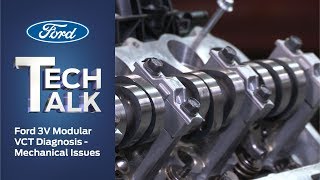
- Mechanical Timing Check: If all else fails, a deeper mechanical inspection is needed to check for a stretched timing chain or a failed cam phaser. 🎬 Watch: Ford Tech Talk explains how to diagnose mechanical VCT failures. This is typically a job for a professional.
Parts You'll Likely Need
- Engine Variable Camshaft Timing (VCT) Solenoid
(OEM #Varies by engine. 3.5L V6 Exhaust RH (Bank 1): AT4Z-6M280-C. 2.0L EcoBoost: HL3Z-6M280-A (check VIN, may vary). 2.7L EcoBoost: Part numbers can vary, consult dealer with VIN.)— This is the most frequent point of failure for code P0015 on this vehicle, as documented by Ford's own service bulletins and extensive owner reports. The original part number from Pass 1 (8L3Z-6M280-B) is incorrect for these engines.
Trusted brands: Motorcraft, Dorman, NTK
OEM price range: $80-$150
Aftermarket price range: $45-$90 - Upper Intake Manifold Gaskets — Required for V6 models (2.7L, 3.5L) because the upper intake manifold must be removed to access the Bank 1 (rear) VCT solenoids. These should always be replaced to prevent vacuum leaks.
Trusted brands: Fel-Pro, Motorcraft
OEM price range: $30-$50
Aftermarket price range: $15-$30
Related Codes That Often Appear With This One
- P0014 — This code is for 'Timing Over-Advanced' on the same camshaft. Seeing both may indicate an erratic VCT solenoid or a severe oil flow problem causing unpredictable movement.
- P0017 — Crankshaft Position - Camshaft Position Correlation (Bank 1, Sensor B). This code often appears with P0015 and indicates a more serious base timing issue, such as a stretched timing chain or a failed phaser, not just a slow-to-respond solenoid.
- P0025 — This is the same 'Over-Retarded' code but for Bank 2. If seen together, it strongly points to a systemic issue like low/dirty oil, low oil pressure, or sludge affecting both banks of the engine.
Technical Service Bulletins (TSBs) & Recalls
- SSM 50067: General diagnostic procedure for multiple VCT codes on 2015-2021 Ford/Lincoln vehicles, advises cycling solenoid to clear debris.
- SSM 47170: Notes that P0015 may be caused by small debris causing the VCT solenoid to stick.
- SSM 48423: Repeats the guidance from SSM 47170 for a wider range of model years, confirming the VCT solenoid's susceptibility to debris.
- TSB-16-0093: Mentions P0015 as a possible code on low-mileage 3.5L engines and provides replacement part numbers.
Platform-Specific Known Issues
- TSB SSM 50067: A newer TSB that supersedes older ones. It instructs technicians dealing with P0015 (and other VCT codes) on 2015-2021 models to first try cycling the solenoid with a scan tool to clear debris before replacing it, confirming the common cause.
- TSB SSM 47170 / SSM 48423: Ford notes that on some vehicles, including the 2015-2020 Edge, DTCs like P0015 may appear due to 'small debris causing the VCT solenoid to stick.' This reinforces the importance of clean engine oil.
Mechanic-Grade Diagnostic Values
- VCT Solenoid Internal Resistance — expected: 5 to 15 Ohms. Failure: A reading of infinite resistance (Open Loop) or near zero ohms (short circuit) indicates a failed solenoid.
- VCT Solenoid Connector Voltage (Key On, Engine Off) — expected: 12V (Battery Voltage). Failure: No voltage indicates a wiring issue, blown fuse, or PCM problem.
- Ford-specific PID: VCT_EXH_ERR(1) — expected: Close to 0 degrees at idle and under steady load.. Failure: A consistent non-zero value, especially a large negative number, indicates the camshaft is lagging (retarded) behind the commanded position.
Hidden / Shadow Codes Worth Checking
- Mode $06, TID $51-$54: Mode $06 is not a shadow code but a diagnostic function that reveals results from non-continuous monitor tests. For Ford, Test IDs (TID) related to VCT (often in the $5x range) show the last measured camshaft angle error. This can reveal if the timing is borderline failing even before a DTC is set. (see via A professional scan tool with Mode $06 capabilities is required.)
Scan Tool Commands That Help
- Ford IDS (Integrated Diagnostic System) or equivalent professional scanner: VCT Solenoid On/Off State or Duty Cycle Command — This is a bidirectional control used to manually command the solenoid to activate. As noted in TSB SSM 54366 and others, it can be used to test the solenoid's mechanical response and potentially dislodge small debris causing it to stick.
Real Owner Repair Stories
- Reddit user in r/E90 (on a BMW, but illustrates a universal VCT issue) (2006 BMW 330i (N52 Engine)) — P0015 code appeared after an oil change using a different brand of oil (Royal Purple) and adding a Lucas stabilizer.
❌ Tried (didn't work) The user was considering changing sensors.
✅ What actually fixed it The problem was resolved by cleaning the VANOS (VCT) solenoids and swapping their positions (intake to exhaust). This confirmed one solenoid was sticking and cleaning it resolved the issue, highlighting the sensitivity to oil type/additives and the effectiveness of cleaning/swapping for diagnosis. - Reddit user in r/E90 (on a BMW, but illustrates a deeper issue) (BMW 328i (N52 Engine)) — P0015 code persisted despite replacing the VANOS (VCT) solenoids.
❌ Tried (didn't work) Replacing VANOS solenoids.
✅ What actually fixed it The user suspected a leaking oil pan gasket was causing a loss of oil pressure, which in turn prevented the VCT system from operating correctly. This points to a crucial edge case: if solenoids are good, the root cause can be a base oil pressure problem, not the VCT components themselves.
OEM Part Supersession History
Unknown/Varies→AT4Z-6M280-C— Standard part evolution for the 3.5L V6 engine.
Heads up: This part is specified for the 3.5L V6, often for the right (Bank 1) exhaust position. Using it on a 2.0L or 2.7L may not work.Unknown/Varies→HL3Z-6M280-A— Standard part evolution for multiple engines, including the 2.0L EcoBoost.
Heads up: This part is listed for a wide range of Ford engines (2.0L, 3.5L, 5.0L) and applications (intake/exhaust). It is critical to verify the correct part for the specific engine and camshaft position using the vehicle's VIN, as its application is broad and can be confusing.
Model Year Variations Within This Range
- 2019-2021: The 2019 model year refresh introduced the Edge ST trim, which uses a high-output 2.7L EcoBoost V6 (335 hp, 380 lb-ft) paired with a new 8-speed automatic transmission. While the base 2.7L engine design is similar to the 2015-2018 models, the ST version is unique. However, forum discussions suggest the Edge's 2.7L is the 'Gen 1' version without the dual port/direct injection system that was added to the F-150's 2.7L in 2018. This means carbon buildup on intake valves remains a long-term concern.
Helpful Videos
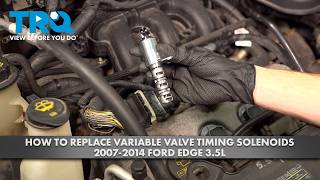
![How to Fix P0015 Engine Code in 4 Minutes [2 DIY Methods / Only $6.62]](https://img.youtube.com/vi/kO0eG5jKmzg/mqdefault.jpg)
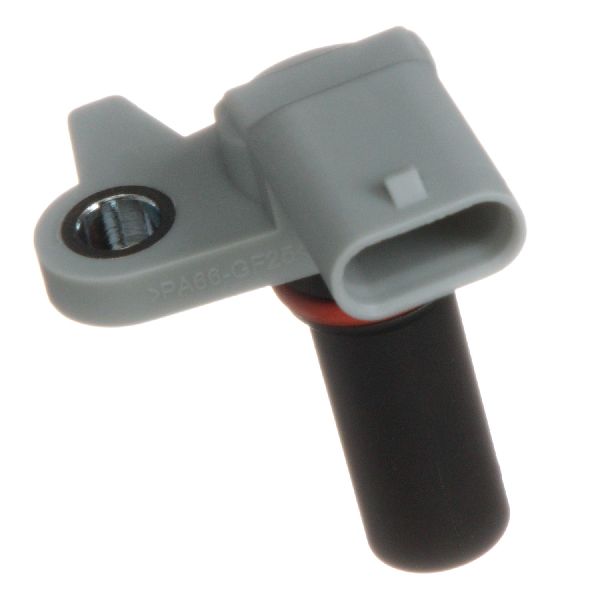
We Have This Part in Stock

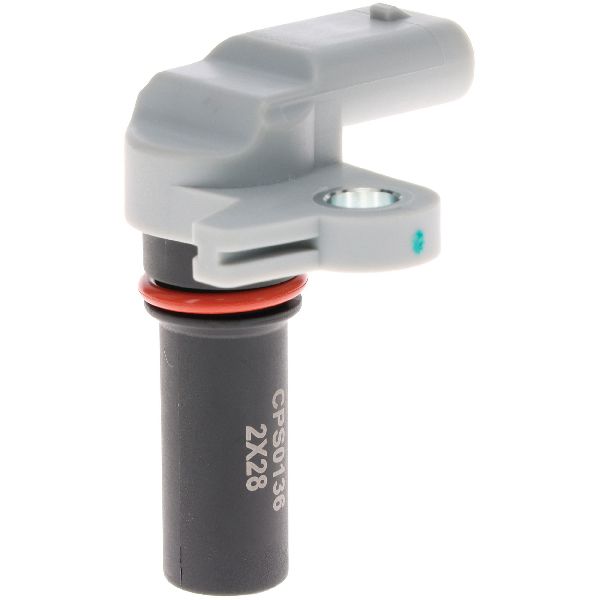
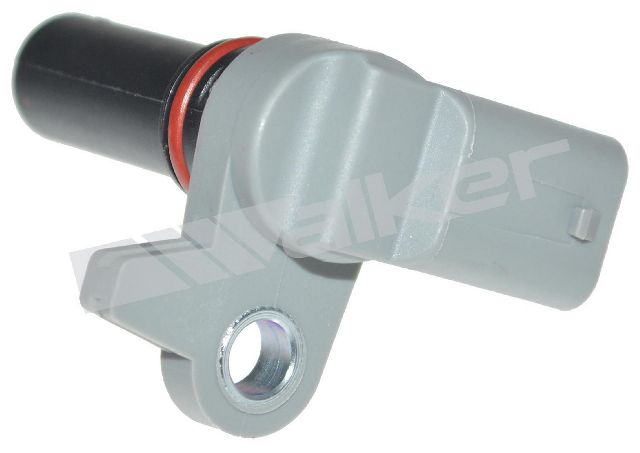
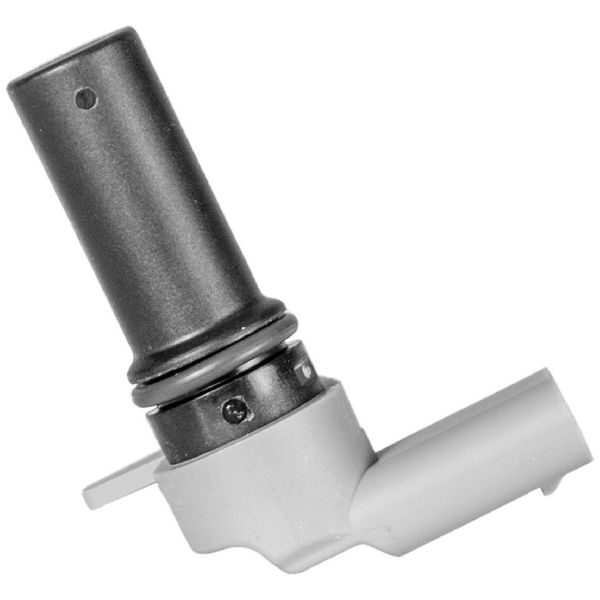

The information in this article is provided for general reference and educational purposes only. Vehicle specifications, procedures, and part compatibility can vary by production date, trim level, and region. Always consult your vehicle's factory service manual and verify part numbers before purchasing or performing repairs. Safety-critical components such as airbags, seat belts, and braking systems should be installed by a qualified professional.
- Ford EDGE:
- 🧭 Diagnostic Flowchart
- 🎬 Helpful Videos
- 🛍️ Shop This Part
- What's Unique About the 2015-2021 Ford EDGE
- Symptoms You May Notice
- Most Likely Causes
- Rare But Worth Checking
- Diagnosis Steps
- Parts You'll Likely Need
- Related Codes That Often Appear With This One
- Technical Service Bulletins (TSBs) & Recalls
- Platform-Specific Known Issues
- Mechanic-Grade Diagnostic Values
- Hidden / Shadow Codes Worth Checking
- Scan Tool Commands That Help
- Real Owner Repair Stories
- OEM Part Supersession History
- Model Year Variations Within This Range
- 🎟️ Get 5% Off