

P0015 on 2015-2021 Ford Escape: Causes and Fixes for Over-Retarded Cam Timing
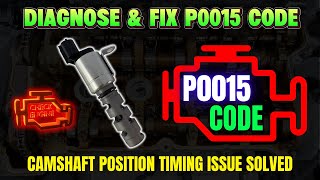
Code P0015 on a 2015-2021 Ford Escape typically indicates a problem with the exhaust camshaft timing on Bank 1. The most common cause is a faulty Variable Camshaft Timing (VCT) solenoid, often due to dirty, low, or incorrect viscosity engine oil. Replacing the VCT solenoid is a frequent fix, with the part costing between $30 and $100. An oil and filter change using the correct OEM-spec oil should be the first step.
- Always check your engine oil first. Low level, poor condition, or incorrect viscosity is a leading cause of P0015.
- The most likely failed part is the exhaust VCT solenoid for Bank 1, which is often a straightforward and affordable DIY replacement.
- Do not immediately replace the camshaft position sensor; it is rarely the cause of this code.
- Using high-quality, manufacturer-specified engine oil and filters can help prevent this issue from recurring.
- This issue is officially recognized by Ford through multiple Technical Service Bulletins, confirming it as a known pattern.
What's Unique About the 2015-2021 Ford ESCAPE
For the 2015-2021 Ford Escape, particularly those with EcoBoost engines, the Variable Camshaft Timing (VCT) system is critical for balancing power and fuel economy. These engines are known to be sensitive to oil quality and maintenance. Ford has issued multiple Technical Service Bulletins (TSBs) for this exact issue across this platform and its relatives. These bulletins state that small debris in the engine oil can cause the VCT solenoid to stick, leading directly to code P0015 and other related timing codes. 🎬 Watch: Understanding the causes and fixes for the P0015 code. This highlights a known sensitivity in the VCT system to oil condition, viscosity, and even the type of oil filter used.
Diagnostic Flowchart
Tap your situation to follow the diagnostic path that matches what you're seeing on this vehicle.
Generation note: This year range covers the third generation (2013-2019) and the fourth generation (2020-2023) of the Ford Escape. While body styles differ, the underlying EcoBoost and i-VCT engines share similar VCT system designs, making the causes and fixes for P0015 largely consistent across these years. The issue is also common on other Ford models using these same engines.
Symptoms You May Notice
- Check Engine Light is on
- Rough or poor idle
- Reduced engine power and acceleration
- Decreased fuel economy
- Engine may hesitate or stall, especially at idle
- Rattling or knocking noise from the engine
- Difficulty starting the engine
- Replacing the camshaft position sensor. The sensor is usually working correctly; it is accurately reporting that the camshaft's timing is incorrect. The problem lies within the mechanical or hydraulic system that controls the timing (solenoid, phaser, oil pressure), not the sensor itself.
Most Likely Causes
- Low, Dirty, or Incorrect Viscosity Engine Oil 🔴 High Probability The VCT system is hydraulic and relies on clean oil at the correct pressure to function. Ford's TSBs (SSM 48423, SSM 47170) explicitly state that debris in the oil is a primary cause of VCT solenoid issues. Using the wrong oil viscosity or a low-quality aftermarket oil filter can also restrict flow and trigger this code.
How to confirm: Check the oil level on the dipstick and examine its condition. If it's low, black, gritty, or past its service interval, it needs to be changed. Ensure the oil viscosity matches the recommendation in your owner's manual (e.g., SAE 5W-30 for many EcoBoost engines).
Typical fix: Perform an oil and filter change using the manufacturer-recommended oil and a high-quality filter (Motorcraft is recommended).
Est. part cost: $40-$80 - Failing Exhaust VCT Solenoid (Oil Control Valve) 🔴 High Probability → Shop Engine Variable Valve Timing (VVT) Solenoid As noted in Ford TSBs SSM 54366, SSM 48423, and SSM 47170, these solenoids can stick due to small debris, preventing proper camshaft adjustment. This is the most common mechanical failure for this code.
How to confirm: Use a scan tool to command the solenoid on and off while monitoring cam angle PID. You can also remove the solenoid to inspect its screens for sludge or debris. A common DIY test is to swap the exhaust and intake solenoids (if they are identical parts) and see if the code changes to P0012 (intake over-retarded). Resistance can be tested with a multimeter and should be between 6.9-7.9 ohms at 68°F (20°C).
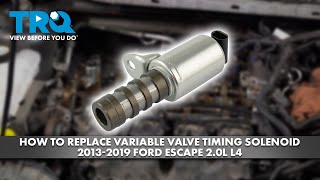
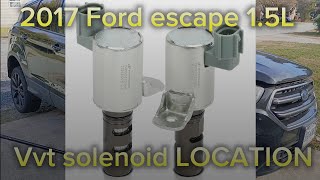
Typical fix: Replace the Bank 1 exhaust VCT solenoid. The solenoid is located on the valve cover. On the 2.0L EcoBoost, for example, it is the front-most solenoid.
Est. part cost: $30-$100 - Worn or Damaged Camshaft Phaser 🟡 Medium Probability → Shop Engine Camshaft The phaser is the mechanical gear that actually adjusts the camshaft. It can become clogged with sludge or fail internally, preventing it from reaching the commanded position, especially on higher mileage vehicles.
How to confirm: This is typically diagnosed after ruling out oil issues and a bad solenoid. It often requires removing the valve cover for inspection and is a more advanced diagnostic step. A mechanic may use a scan tool to monitor CAMERR (cam error) PIDs while running tests.
Typical fix: Replace the camshaft phaser, which often involves replacing timing components as well.
Est. part cost: $150-$400
Rare But Worth Checking
- Stretched Timing Chain or Failed Tensioner: → Shop Engine Timing Chain While less common, a stretched timing chain or a weak tensioner can cause the base timing to be off, which the VCT system cannot overcome, triggering the code. This is more likely on higher-mileage vehicles and may be accompanied by rattling noises on startup.
- Wiring or Connector Issue: Damage to the wiring harness or a corroded/oil-soaked connector for the VCT solenoid can prevent the PCM from controlling it properly. Inspect the harness for chafing or loose pins.
- Faulty Powertrain Control Module (PCM): In very rare cases, the PCM itself may be faulty, but all other possibilities should be exhausted before considering this. This is estimated to be the cause in only about 1% of cases.
Diagnosis Steps
- Verify Oil Level and Condition: Before any other steps, check the engine oil. If it is low, dirty, or the wrong type, perform an oil and filter change with OEM-spec products. This alone resolves the issue in a significant number of cases.
- Scan for Codes: Use an OBD-II scanner to confirm P0015 and check for any other related codes that could point to a broader issue.
- Inspect VCT Solenoid Wiring: Visually inspect the electrical connector and wiring going to the Bank 1 exhaust VCT solenoid for any signs of damage, corrosion, or loose connections.
- Test the VCT Solenoid: Using a capable scan tool, command the solenoid to activate and watch the live data for the camshaft position to see if it responds. Alternatively, you can remove the solenoid, clean it with MAF or brake cleaner, and test its resistance with a multimeter (typically 6.9-7.9 ohms). You can also apply a 12V source to see if it clicks.
- Swap Solenoids (if applicable): If the intake and exhaust VCT solenoids are the same part number, swap them. Clear the codes and drive the vehicle. If the code changes to P0012 (Intake Camshaft Position Timing - Over-Retarded), the solenoid is confirmed to be faulty.
- Check Camshaft Phaser and Timing Components: If the solenoid and oil are good, the issue may be with the camshaft phaser or the timing chain itself. This is a more complex diagnosis that usually requires removing the valve cover for a physical inspection and is best left to a professional.
Parts You'll Likely Need
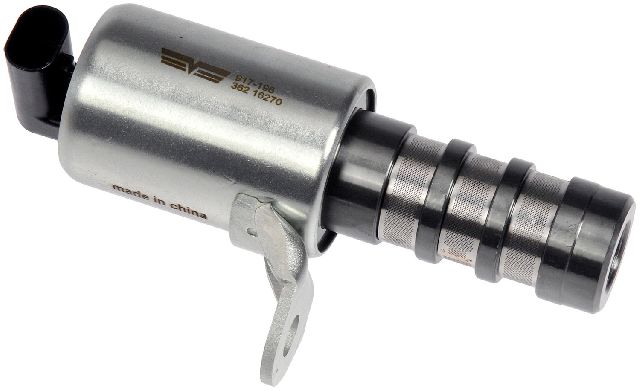
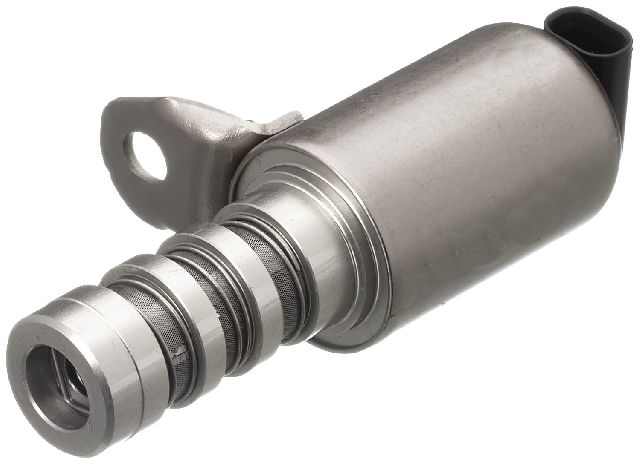
- Engine Variable Valve Timing (VVT) Solenoid
(OEM #CN1Z-6M280-B (For 1.5L/1.6L EcoBoost))— This is the most frequent point of failure according to Ford's own TSBs and general repair data. It gets stuck due to oil debris, preventing it from correctly regulating oil flow to the cam phaser.
Trusted brands: Motorcraft, Dorman, NTK
OEM price range: $60-$110
Aftermarket price range: $28-$70
Related Codes That Often Appear With This One
- P0014 — This code is for 'B' Camshaft Position - Timing Over-Advanced. Seeing both may indicate an erratic VCT solenoid or oil pressure problem causing the timing to swing wildly.
- P0011 / P0012 — These are the corresponding codes for the intake ('A') camshaft on Bank 1. If oil quality or pressure is the root cause, it can affect both intake and exhaust VCT systems simultaneously.
- P0017 — Crankshaft Position - Camshaft Position Correlation (Bank 1, Sensor B). This code specifically indicates a mismatch between the crank and exhaust cam, which is a direct result of the over-retarded condition. Owners often report seeing P0015 and P0017 together.
Technical Service Bulletins (TSBs) & Recalls
- SSM 54366: Notes that various timing DTCs, including P0015, can occur on 2015-2021 models and points towards diagnostic pinpoint test HK.
- SSM 48423: States that for 2015-2020 models, P0015 may be due to small debris causing the VCT solenoid to stick.
- SSM 47170: Also states that P0015 may be due to small debris causing the VCT solenoid to stick for applicable models.
Platform-Specific Known Issues
- TSB SSM 48423 and SSM 47170 specifically mention that for some 2015-2020 Ford vehicles, DTCs including P0015 may be caused by 'small debris causing the VCT solenoid to stick.'
- TSB SSM 54366 extends this guidance to 2021 models, indicating the same potential issue with sticking VCT solenoids across the specified year range. It directs technicians to an updated Pinpoint Test HK in the workshop manual for diagnosis.
- 1.5L EcoBoost Coolant Intrusion: While not a direct cause of P0015, some 1.5L EcoBoost engines are prone to internal coolant leaks which can contaminate the oil, leading to sludge and potential VCT system problems.
Mechanic-Grade Diagnostic Values
- VCT Solenoid Resistance — expected: 6.9 - 7.9 Ohms at 68°F (20°C). Failure: A reading outside this range, or an open/infinite reading, indicates a faulty solenoid coil.
- VCT Solenoid Resistance (General Ford) — expected: 5 - 14 Ohms. Failure: A reading outside this range suggests a faulty solenoid.
- VCT Advance Error (VCT_ADV_ERR) PID — expected: Should hover around 0° with no more than a +/- 5° deviation for an excessive time.. Failure: Excessive variation while a drivability concern is present suggests the VCT system is the cause.
- VCT Solenoid Connector Voltage — expected: Battery voltage (approx. 12V) with key on, engine off.. Failure: No voltage indicates a wiring or fuse issue upstream of the solenoid.
Scan Tool Commands That Help
- Ford IDS (Integrated Diagnostic System): Monitor VCT PIDs (VCT_ADV_ERR, VCT_DUTY#) — To observe the real-time error between commanded and actual cam timing. If the PCM is commanding a high duty cycle to one bank with little response, it points to a mechanical or hydraulic issue (like a sticking solenoid or phaser) on that bank.
- Ford IDS (or equivalent high-level scanner): VCT Solenoid Electrical Disconnect — A diagnostic technique where you electrically disconnect the VCT solenoids and drive the vehicle. If an engine noise or drivability issue disappears, it strongly suggests the problem is within the VCT system, as this locks the phasers in their base position.
Wiring & Ground Locations
- Engine Block Ground — On some Escape models, a key ground contact for the negative battery cable is located on the engine block next to the oil filter.. A poor ground connection at this point can cause a variety of electrical issues and erratic sensor readings. While not a direct cause of P0015, ensuring this ground is clean and tight is a crucial step in resolving any electrical gremlins.
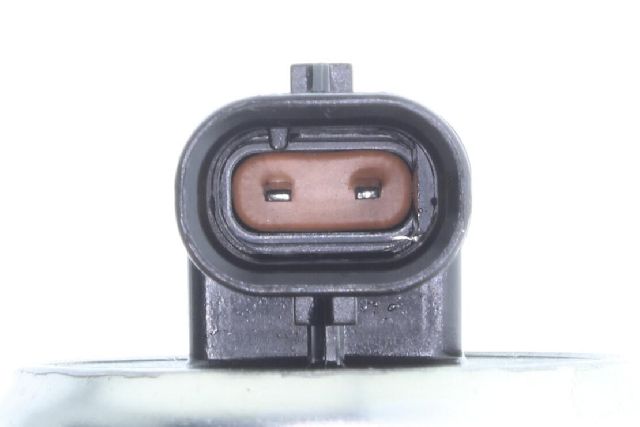
- VCT Solenoid Connector — Directly on the VCT solenoid, typically on the top of the valve cover.. The two pins in this connector supply power and the control signal from the PCM. Pin 1 is typically VPWR (Vehicle Power) and Pin 2 is the control line to the PCM. Testing for voltage and continuity happens at these pins.
Real Owner Repair Stories
- Reddit user on r/Ford (2015 Ford Escape) — Rough running, shaking and rattling on acceleration when cold, engine struggling on inclines.
❌ Tried (didn't work) Mechanic replaced the torque converter., Mechanic replaced a solenoid with a used part, which made it run worse., Mechanic then replaced the solenoid with a new Ford part.
✅ What actually fixed it The user's problem started after a transmission repair (torque converter and solenoid replacement). The symptoms point towards a potential issue with the new parts, incorrect installation, or a new problem induced by the repair, such as a wiring issue or the need for an adaptive learning reset. The final fix was not posted, but the story highlights how other major repairs can sometimes introduce VCT-like symptoms.
OEM Part Supersession History
3L3Z-6M280-EA→8L3Z-6M280-A, then 8L3Z-6M280-B— Part revision and improvement by the manufacturer. This is common for parts that have known failure patterns.
Heads up: While these specific part numbers do not apply to the Escape's EcoBoost engines, they demonstrate a common Ford practice of updating VCT solenoids. Always verify the latest part number for your specific Escape VIN, as a revised part may be more durable than the original.
Model Year Variations Within This Range
- 2015-2019 (Third Generation) vs. 2020-2021 (Fourth Generation): The 2020 model year marked a complete redesign. The base engine changed from a 2.5L four-cylinder (168 hp) in 2019 to a 1.5L three-cylinder EcoBoost (180 hp) in 2020. While the underlying VCT technology is similar, the physical parts (solenoids, phasers) and their locations may differ. The 2020+ models also feature different engine management software.
Helpful Videos

![How to Fix P0015 Engine Code in 4 Minutes [2 DIY Methods / Only $6.62]](https://img.youtube.com/vi/kO0eG5jKmzg/mqdefault.jpg)
We Have This Part in Stock


The information in this article is provided for general reference and educational purposes only. Vehicle specifications, procedures, and part compatibility can vary by production date, trim level, and region. Always consult your vehicle's factory service manual and verify part numbers before purchasing or performing repairs. Safety-critical components such as airbags, seat belts, and braking systems should be installed by a qualified professional.
- Ford ESCAPE:
- 🧭 Diagnostic Flowchart
- 🎬 Helpful Videos
- 🛍️ Shop This Part
- What's Unique About the 2015-2021 Ford ESCAPE
- Symptoms You May Notice
- Most Likely Causes
- Rare But Worth Checking
- Diagnosis Steps
- Parts You'll Likely Need
- Related Codes That Often Appear With This One
- Technical Service Bulletins (TSBs) & Recalls
- Platform-Specific Known Issues
- Mechanic-Grade Diagnostic Values
- Scan Tool Commands That Help
- Wiring & Ground Locations
- Real Owner Repair Stories
- OEM Part Supersession History
- Model Year Variations Within This Range
- 🎟️ Get 5% Off