

P0015 on 2011-2019 Ford Explorer 3.5L: Exhaust Cam Timing Causes and Fixes
On a 2011-2019 Explorer with the 3.5L V6, P0015 is almost always caused by low/dirty engine oil or a faulty exhaust VCT solenoid on Bank 1 (firewall side). An oil change is the first step. Replacing the solenoid is the most common repair, but it is labor-intensive as it's under the valve cover. Ford explicitly recommends cycling the solenoid with a scan tool to clear debris before replacement.
- Always check your engine oil level and condition first. A simple oil change with the correct oil and a quality filter can sometimes fix this code.
- The most likely failed part is the Bank 1 (firewall side) exhaust VCT solenoid, which gets stuck with oil debris.
- This is not an easy DIY fix. Replacing the correct solenoid requires removing the upper intake manifold and the valve cover, which is a 4/5 difficulty job.
- Do not replace the camshaft position sensor; it is almost never the cause of this code.
- If you hear a rattling noise on startup or find milky oil on your dipstick, stop driving and seek professional diagnosis immediately, as this indicates a more severe mechanical failure (timing chain or water pump).
What's Unique About the 2011-2019 Ford Explorer
The 3.5L 'Cyclone' V6 engine's Variable Camshaft Timing (VCT) system is notoriously sensitive to oil quality and cleanliness. Ford has issued multiple Technical Service Bulletins (TSBs), such as SSM 50067, acknowledging that small debris in the oil can cause the VCT solenoids to stick, leading directly to codes like P0015. A more critical issue for this engine is the internal, timing-chain-driven water pump. A failure of this pump can leak coolant directly into the engine oil, leading to widespread VCT system and timing component failure.
Symptoms You May Notice
- Check Engine Light is on
- Rough, unstable, or vibrating idle
- Hesitation or sluggish acceleration
- Reduced engine power
- Decreased fuel economy
- Engine may stall, especially when coming to a stop
- Rattling or ticking noise from the engine on startup (indicates a more serious mechanical timing issue like a stretched chain or bad phaser)
- Replacing the camshaft position sensor. The sensor's job is to report the timing problem, and it is rarely the cause of an over-retarded timing code like P0015. 🎬 Watch: Understanding P0015 causes and fixes
Most Likely Causes
- Low, Old, or Dirty Engine Oil 🔴 High Probability The VCT system uses pressurized engine oil to function. The passages in the VCT solenoids are very small and easily clogged by sludge or debris from degraded oil, a fact acknowledged by Ford in multiple TSBs.
How to confirm: Check the oil level and condition on the dipstick. If the oil is below the 'add' line, dark, or gritty, this is the likely cause. If it appears milky or like 'chocolate milk', suspect an internal water pump failure and stop driving immediately.
Typical fix: Perform an engine oil and filter change using the correct Ford-specified oil (SAE 5W-20 or 5W-30 Synthetic Blend) and a quality filter like the Motorcraft FL-500S.
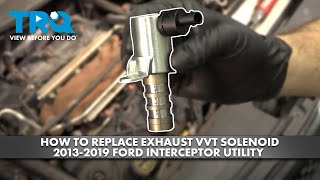
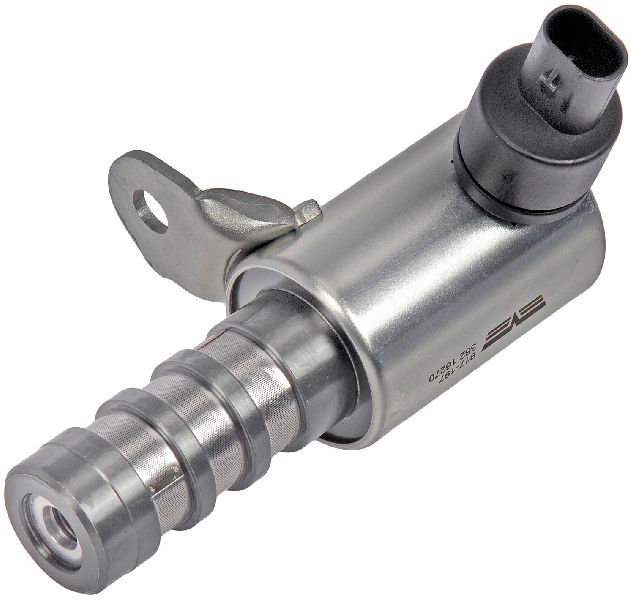
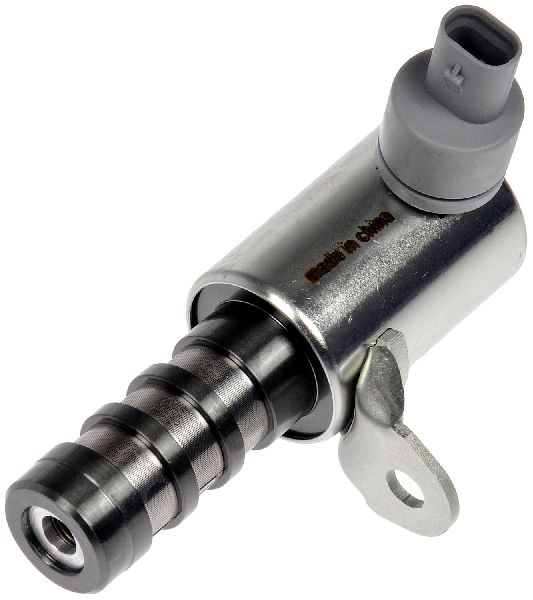
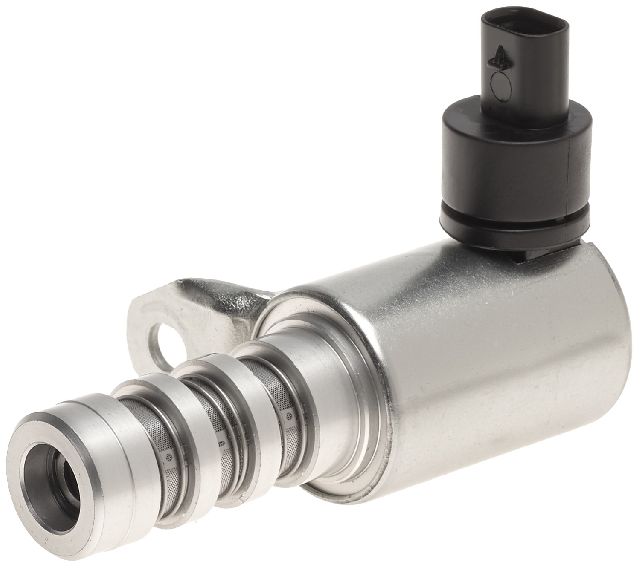
Est. part cost: $40-$80 - Faulty Bank 1 Exhaust VCT Solenoid 🔴 High Probability → Shop Engine Variable Valve Timing (VVT) Solenoid This is a very common failure point acknowledged by Ford in multiple TSBs (e.g., SSM 50067, TSB 16-0093). The solenoid gets stuck from oil debris, preventing it from correctly adjusting cam timing.
How to confirm: Use a scan tool with bidirectional controls to command the solenoid on and off 10 times, as per Ford's Pinpoint Test HK, which can sometimes clear the debris. A lack of response indicates a failed solenoid. You can also test resistance with a multimeter (typically 5-15 ohms is expected). A common DIY method is to swap the suspect solenoid with an identical one from another position (e.g., the intake solenoid on the same bank) and see if the code follows (e.g., changes to P0012).
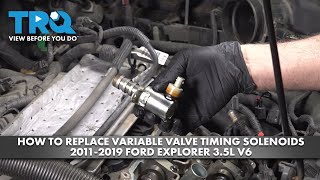
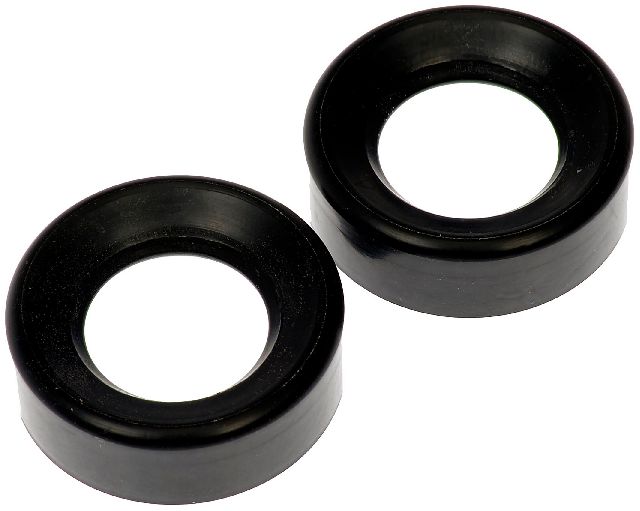
Typical fix: Replace the Bank 1 exhaust VCT solenoid. Since this requires removing the upper intake and valve cover, it is highly recommended to replace the valve cover gasket, spark plug tube seals, and the intake solenoid at the same time. 🎬 Watch: Step-by-step VCT solenoid replacement walkthrough
Est. part cost: $30-$90
Rare But Worth Checking
- Stretched Timing Chain or Worn Timing Components: → Shop Engine Timing Chain This is a major mechanical failure that becomes more likely over 100,000 miles. A key symptom is a distinct rattling or chain-slapping noise on a cold startup. If you hear this, it is much more likely to be a timing component issue than just a solenoid.
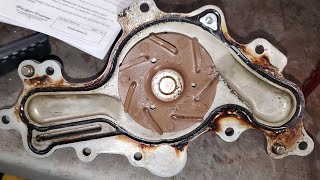
- Internal Water Pump Failure: This is a catastrophic failure specific to the transverse 3.5L/3.7L Cyclone engine family. The pump is driven by the timing chain and can leak coolant into the oil. A key warning sign is a coolant leak from a 'weep hole' located on the passenger side of the engine block, below the alternator. 🎬 Watch: How to diagnose a failing internal water pump If the oil on the dipstick is milky or looks like chocolate milk, stop driving immediately. This requires a full timing chain and water pump replacement, a $2000-$4000+ job.
- Failed Camshaft Phaser (VCT Actuator): → Shop Engine Camshaft The phaser is the mechanical gear that the solenoid controls. While less common than a solenoid failure, a phaser can get stuck or fail internally. This is usually suspected after an oil change and solenoid replacement do not resolve the code, especially if a rattling noise is present.
Diagnosis Steps
- Check engine oil level and condition. If low, dirty, or milky, address this first. An oil and filter change is the cheapest and easiest first step.
- Use an OBD-II scanner to confirm P0015 and check for any other related codes.
- Listen for engine noises. A distinct rattle on cold startup strongly points towards a mechanical timing issue (chain, tensioner, phaser) rather than just a solenoid.
- Using a capable scan tool, monitor the desired vs. actual camshaft position PIDs for Bank 1 Exhaust. A significant lag confirms the issue.
- If your scan tool has bidirectional controls, perform Ford's recommended diagnostic step (Pinpoint Test HK): cycle the Bank 1 exhaust VCT solenoid 10 times to see if it responds or clears debris.
- Inspect the wiring and connector for the Bank 1 VCT solenoid, though access is difficult as it's under the valve cover.
- If an oil change doesn't work, the next logical step is to replace the Bank 1 exhaust VCT solenoid. Due to the difficult access (firewall side, under valve cover), this is a labor-intensive job.
- If a new solenoid does not fix the code, the problem is likely mechanical. This requires professional diagnosis to check for a stretched timing chain, failed tensioner, or bad cam phaser.
Parts You'll Likely Need
- Engine VVT Solenoid (Bank 1 Exhaust)
(OEM #7T4Z-6M280-C or AT4Z-6M280-C)— This is the most common part to fail for P0015, typically by getting stuck with oil debris. Bank 1 is the firewall side. The exhaust solenoid is typically color-coded blue or black.
Trusted brands: Motorcraft, Dorman (including Dorman OE FIX with improved screen design), Delphi, SKP
OEM price range: $50-$90
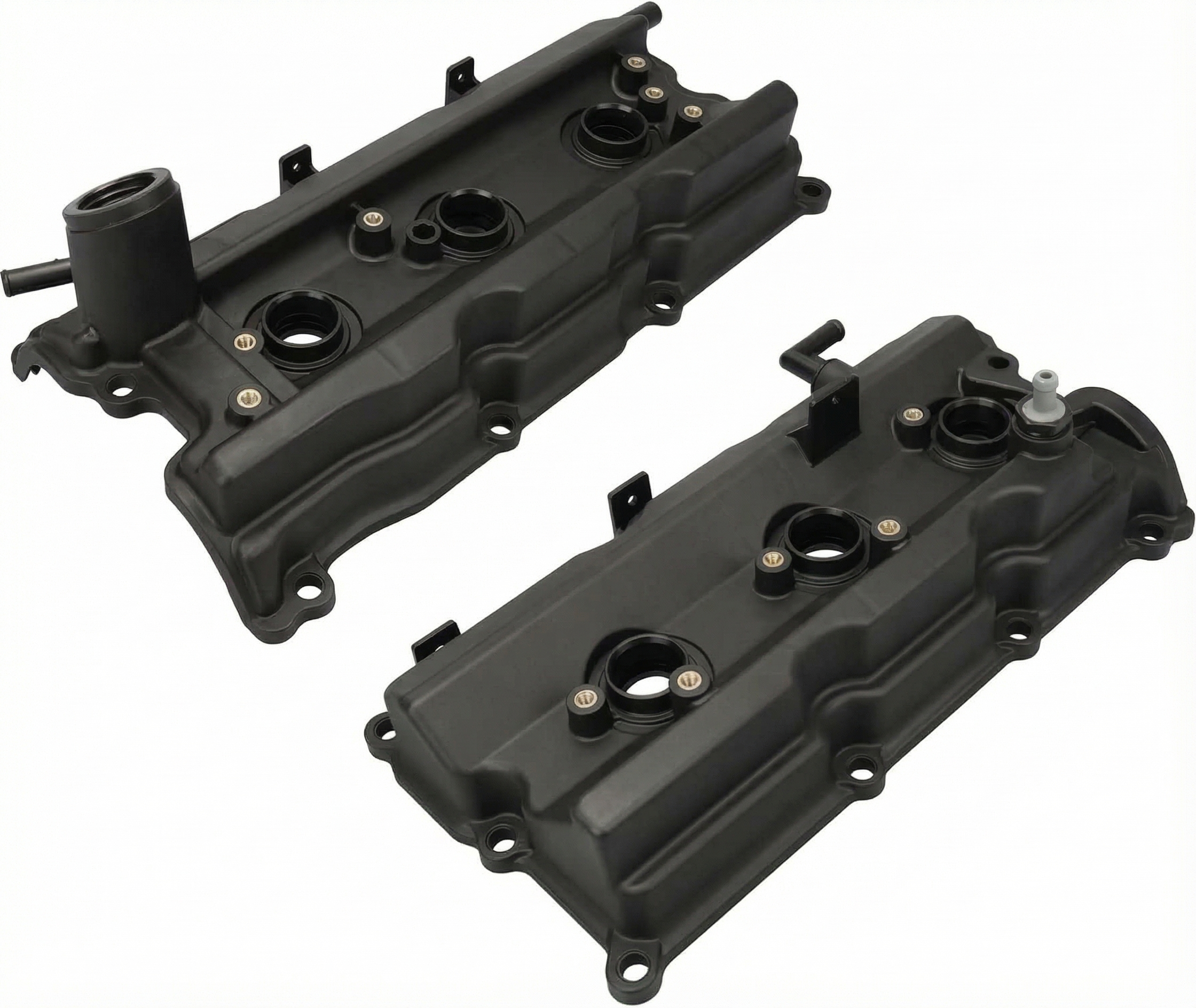
Aftermarket price range: $30-$60 - Valve Cover Gasket (Bank 1 / Right Side)
(OEM #BR3Z-6584-C)— This is a required replacement part because the VCT solenoids on the 3.5L V6 are located under the valve cover. The old gasket should not be reused to prevent oil leaks.
Trusted brands: Motorcraft, Fel-Pro, Mahle
OEM price range: $30-$50
Aftermarket price range: $20-$40 - Upper Intake Manifold Gaskets
(OEM #AT4Z-9H486-A)— The upper intake manifold must be removed to access the Bank 1 (firewall side) valve cover. These gaskets are considered one-time use and must be replaced to prevent vacuum leaks.
Trusted brands: Motorcraft, Fel-Pro
OEM price range: $20-$40
Aftermarket price range: $15-$30
Related Codes That Often Appear With This One
- P0017 — Crankshaft Position - Camshaft Position Correlation (Bank 1, Sensor B). This code often appears with P0015 because an over-retarded cam creates a direct mismatch between the crankshaft and camshaft signals, confirming a timing error. TSB 16-0038 specifically addresses this combination.
- P0025 — The same over-retarded code but for Bank 2 (front bank). If both P0015 and P0025 are present, it strongly suggests a systemic problem like very low/dirty oil or low oil pressure affecting the entire engine.
- P0011, P0012, P0014 — Other timing codes for Bank 1. Seeing multiple codes for the same bank can point to a clogged oil passage in the cylinder head or a failing cam phaser.
Technical Service Bulletins (TSBs) & Recalls
- TSB 16-0093: Notes that VCT codes like P0015 can occur on low-mileage 2016 3.5L engines and recommends direct replacement of the affected solenoid.
- SSM 50067: A Special Service Message from Ford acknowledging that various VCT codes are often caused by small debris in the engine oil causing the solenoids to stick. They advise using a scan tool to cycle the solenoid to attempt to clear it before replacement.
Platform-Specific Known Issues
- Internal Water Pump Failure: The timing chain drives the water pump. A failed seal can leak coolant into the oil, causing rapid wear of all timing and VCT components. This is a known critical failure point for the 3.5L Cyclone engine, often preceded by a coolant drip from a weep hole on the passenger side of the engine block.
- Difficult Access to Bank 1: The Bank 1 VCT solenoids are on the firewall side of the engine, underneath the valve cover, which is itself underneath the upper intake manifold. This makes replacement a significantly more labor-intensive job than for Bank 2.
Mechanic-Grade Diagnostic Values
- VCT Solenoid Internal Resistance — expected: 5 to 15 Ohms. A more precise factory spec is often cited as 6.9 to 7.9 Ohms at 68°F (20°C).. Failure: A reading of 0 Ohms (short circuit) or infinite/OL (open circuit).
- VCT Solenoid Connector Voltage (Key On, Engine Off) — expected: Approximately 12V (Battery Voltage) on the power supply pin (often a WH-BN or similar colored wire).. Failure: Voltage below 10.5V or no voltage suggests a wiring issue, blown fuse, or PCM power relay problem.
- Scan Tool PID: VCT_EXH_ERR1 (Bank 1 Exhaust Camshaft Position Error) — expected: Should be close to 0 degrees at idle. A difference of +/- 5 degrees for a short time is acceptable.. Failure: A consistent, non-zero error value outside the +/- 5 degree range at idle indicates a timing deviation that can set the P0015 code.
- Engine Oil Pressure at Hot Idle — expected: Minimum 15 PSI.. Failure: Pressure below 15 PSI can cause erratic VCT operation and trigger various timing codes as the phasers will not have enough hydraulic pressure to operate correctly.
Scan Tool Commands That Help
- Ford IDS / FORScan / Capable Bidirectional Scanners: VCT Solenoid On/Off Test (or similar naming) — This is part of Ford's official diagnostic procedure (Pinpoint Test HK). The command rapidly cycles the specified VCT solenoid (in this case, Bank 1 Exhaust) 10 times. This is used to dislodge small pieces of debris that may be causing the solenoid to stick, which can sometimes fix the issue without replacing the part. It's also used to confirm if the solenoid is electrically responsive.
Wiring & Ground Locations
- Bank 1 Exhaust VCT Solenoid Connector — On the firewall side (Bank 1) of the engine, under the valve cover. The connector is on the solenoid body itself. Access requires removing the upper intake manifold and the valve cover.. This is the direct electrical connection to the component in question. Damage to the connector or wiring harness during previous repairs (like spark plug changes) can cause an open or short, leading to P0015. The harness has a power wire (approx. 12V) and a control wire that is pulsed to ground by the PCM.
- PCM Connector C175E — This is one of the main connectors at the Powertrain Control Module (PCM), typically located in the engine bay near the firewall or battery.. The control wire for the Bank 1 Exhaust VCT solenoid (VCT21) runs from this connector to the solenoid. A wiring diagram for a similar 3.5L engine shows the control wire may be a Green wire. A continuity or short-to-ground test between the PCM connector pin and the solenoid connector pin can rule out a wiring fault.
Real Owner Repair Stories
- ExplorerForum.com user (2016 Ford Explorer Sport (3.5L EcoBoost, similar VCT system)) — Check engine light with codes P0015 and P0017.
❌ Tried (didn't work) Initial diagnosis suggested a timing chain issue.
✅ What actually fixed it The Ford dealer, following TSB 16-0038, replaced the Bank 1 exhaust VCT solenoid. This resolved both the P0015 and P0017 codes.
OEM Part Supersession History
7T4Z-6M280-C→AT4Z-6M280-C— This appears to be a standard part number update and revision by Ford. The parts are generally interchangeable for this application.
Heads up: The Bank 1 Exhaust solenoid is often described as having a blue or black connector. It's crucial to match the new part to the old part's color and connector style if possible, as intake/exhaust solenoids can differ.
Model Year Variations Within This Range
- 2016-2019: The Explorer received a facelift for the 2016 model year which included revised styling and some powertrain updates. While the base 3.5L V6 remained largely the same, Ford did issue TSB 16-0093 specifically for some 2016 models with the 3.5L engine that could show VCT codes at very low mileage, pointing to a potential batch of faulty solenoids from the factory.
- 2011-2012 vs 2013-2019: For the related 3.5L EcoBoost engine (which uses a similar VCT system), updates were made in 2013 including a switch to a Bosch fuel system and electronic blow-off valves. While not directly affecting the P0015 code on the naturally aspirated engine, it shows that Ford made running changes to the 3.5L engine family during this period.
Diagnostic Flowchart
Other Known Issues on This Vehicle
Issues unrelated to this code that are worth knowing about as an owner of this generation:
- Internal Water Pump Failure 🔴 High — Common after 100,000 miles. Failure can cause catastrophic engine damage by leaking coolant into the engine oil.
- Power Transfer Unit (PTU) Failure 🔴 High — Common on AWD models. Ford's 'lifetime' fluid recommendation leads to overheating and gear oil breakdown, causing failure. Recommended fluid change every 30k miles.
- Exhaust Odor In Cabin 🟠 Medium — Widespread on 2011-2017 models. Exhaust, sometimes containing carbon monoxide, can enter the cabin through unsealed body seams, especially under hard acceleration. (Ref: TSB 17-0044, TSB 17-0029, TSB 16-0166)
- Electronic Throttle Body Malfunction 🟠 Medium — Common on 5th generation models, causing sudden power loss, hesitation, and 'limp mode'. Often throws codes P2111 or P2112.
- Rear Suspension Toe Link Fracture 🔴 High — Primarily affects 2011-2017 models, can cause a sudden loss of steering control. Subject to multiple recalls. (Ref: NHTSA Recall 19V435, 16V245)
- Cracked or Warped Exhaust Manifolds 🟠 Medium — Can occur on naturally aspirated 3.5L engines, leading to ticking noises when cold and potential for exhaust leaks into the cabin.
Used vs. New Parts: Buying Guide for This Vehicle
When a used part is the smart pick: For this specific repair, using used parts is generally not recommended. The primary failure parts (VCT solenoid, gaskets) are inexpensive new, and the failure mechanism (clogging from oil debris) makes a used solenoid a significant gamble.
Donor-vehicle mileage cap: roughly under 80000 miles for the part to have meaningful remaining life.
What to inspect on the donor part:
- If considering a used solenoid, insist on seeing the donor vehicle's maintenance history for regular oil changes.
- Inspect the solenoid's screens for any tears or heavy sludge accumulation before purchase.
- Test the resistance of the used solenoid with a multimeter before installation to ensure it is within the 5-15 Ohm specification.
OEM-only on this vehicle (don't cheap out):
- Cam Phasers: Due to the complexity of the part and the high cost of labor for a timing job, using OEM (Motorcraft) phasers is strongly recommended by mechanics to ensure longevity and prevent repeat failures.
- Timing Chain Kit: Similar to phasers, the timing chain, guides, and tensioners are critical wear items. OEM parts are advised to avoid premature stretching or failure that is sometimes seen with cheaper aftermarket kits.
Aftermarket brands forum-validated for this vehicle:
- Dorman OE FIX (often features an improved screen design to prevent debris issues)
- Standard Motor Products (SMP)
- Delphi
Brands owners have reported issues with on this vehicle:
- No-name, unbranded solenoids from online marketplaces are frequently cited on forums as being dead-on-arrival or failing within a few months.
Real Owner Stories
Aggregated from forums and TSBs cited above. Mileages and costs reflect what owners reported in those sources.
2016 Ford Explorer Sport 3.5L
Symptoms: P0015 and P0017 codes appearing together.
What fixed it: Replacement of the affected VCT solenoid as per TSB 16-0093 recommendations.
Source hint: https://www.explorerforum.com/forums/threads/p0015-and-p0017-on-2016-explorer-sport.496319/
2011-2019 Ford Explorer 3.5L — ~100000 miles
Symptoms: Coolant dripping from a weep hole on the passenger side of the engine block, followed by timing issues.
What fixed it: Internal water pump replacement due to seal failure leaking coolant into the engine oil.
Source hint: vehicle_specific_issues: Internal Water Pump Failure
Related OBD-II Codes
Frequently Asked Questions
Does TSB 16-0093 apply to my 2016 Ford Explorer with the 3.5L engine?
What is Ford's recommended first step for clearing a stuck VCT solenoid according to SSM 50067?
Why is the Bank 1 VCT solenoid more expensive to replace than Bank 2 on my Explorer?
I see 'chocolate milk' looking oil on my dipstick along with the P0015 code; what does this mean?
Which oil filter should I use for my 3.5L Cyclone V6 to prevent VCT issues?
Can I just swap the solenoids to see if the part is bad?
Helpful Videos

Used OEM Parts in Stock
New Aftermarket Parts Available


The information in this article is provided for general reference and educational purposes only. Vehicle specifications, procedures, and part compatibility can vary by production date, trim level, and region. Always consult your vehicle's factory service manual and verify part numbers before purchasing or performing repairs. Safety-critical components such as airbags, seat belts, and braking systems should be installed by a qualified professional.
- Ford Explorer:
- 🧭 Diagnostic Flowchart
- 🎬 Helpful Videos
- 🛍️ Shop This Part
- What's Unique About the 2011-2019 Ford Explorer
- Symptoms You May Notice
- Most Likely Causes
- Rare But Worth Checking
- Diagnosis Steps
- Parts You'll Likely Need
- Related Codes That Often Appear With This One
- Technical Service Bulletins (TSBs) & Recalls
- Platform-Specific Known Issues
- Mechanic-Grade Diagnostic Values
- Scan Tool Commands That Help
- Wiring & Ground Locations
- Real Owner Repair Stories
- OEM Part Supersession History
- Model Year Variations Within This Range
- Other Known Issues on This Vehicle
- Used vs. New Parts: Buying Guide for This Vehicle
- Real Owner Stories
- 2016 Ford Explorer Sport 3.5L
- 2011-2019 Ford Explorer 3.5L — ~100000 miles
- Related OBD-II Codes
- Frequently Asked Questions
- 🎟️ Get 5% Off