

P0015 on 2015-2019 Ford Flex: Exhaust Cam Timing Over-Retarded Causes and Fixes
On a 2015-2019 Ford Flex, code P0015 typically indicates a problem with the exhaust camshaft timing on the rear cylinder bank (Bank 1). The most common fix is replacing the VCT solenoid for that camshaft, but always start with an oil and filter change, as dirty or low oil is a frequent cause. Accessing the Bank 1 solenoids requires removing the upper intake manifold, making the repair more labor-intensive than for the front bank.
- For a P0015 code on a Ford Flex, your first and cheapest step is to check your oil. An oil and filter change with the correct grade of oil can often fix the issue.
- The most likely failed component is the Bank 1 (rear) exhaust VCT solenoid. Due to the labor involved in accessing it, consider replacing both rear solenoids at the same time.
- Do not immediately replace the camshaft position sensor; it is almost always doing its job correctly by reporting the timing fault.
- This issue is well-documented by Ford, with multiple service bulletins pointing to oil debris causing the VCT solenoids to stick.
What's Unique About the 2015-2019 Ford FLEX
The 3.5L V6 engine family in the Ford Flex uses an oil-pressure-driven VCT system that is highly sensitive to oil quality and viscosity. Ford has issued multiple Technical Service Bulletins (TSBs) acknowledging that small debris in the engine oil can cause the VCT solenoids to stick, leading to codes like P0015. This makes regular oil changes with the correct specification oil especially critical for preventing this specific issue on the Flex and other vehicles with this engine. Accessing the Bank 1 (rear) solenoids is a known challenge on this platform, requiring removal of the upper intake manifold, which significantly increases labor time compared to the easily accessible Bank 2 (front) solenoids.
Diagnostic Flowchart
Tap your situation to follow the diagnostic path that matches what you're seeing on this vehicle.
Symptoms You May Notice
- Illuminated Check Engine Light
- Rough or uneven idle
- Hesitation or sluggish acceleration
- Reduced fuel economy
- Engine stalling at low speeds or when stopping
- Rattling or tapping noise from the engine, especially on startup
- Replacing the camshaft position sensor. The sensor is usually accurately reporting the timing problem; it is not the cause of the over-retarded condition. 🎬 Watch: Why you should check the solenoid before the sensor. Technicians confirm the sensor is rarely the root cause for this specific code.
Most Likely Causes
- Low or Dirty Engine Oil 🔴 High Probability The VCT system is hydraulic and highly dependent on clean oil at the correct pressure. Ford TSBs specifically cite debris in oil as a cause for VCT solenoid failure. Long oil change intervals can lead to sludge that clogs the fine mesh screens on the solenoids.
How to confirm: Check the oil level on the dipstick and inspect its condition. If the level is low or the oil appears dark, gritty, or sludgy, it needs to be changed. This should always be the first step.
Typical fix: Perform an engine oil and filter change using the manufacturer-specified oil (typically a Motorcraft 5W-20 or 5W-30 Synthetic Blend, check your owner's manual). Clear the codes and drive to see if the issue is resolved.
Est. part cost: $40-$80 - Failed VCT Solenoid (Bank 1 Exhaust) 🔴 High Probability → Shop Engine Variable Valve Timing (VVT) Solenoid These solenoids control oil flow to the cam phasers and can get clogged with sludge or fail electrically. TSBs SSM 47170 and SSM 48423 directly point to sticking VCT solenoids as a common cause. TSB SSM 48423 even suggests a diagnostic procedure (pinpoint test HK11) to cycle the solenoid 10 times with a scan tool to try and clear debris before replacement.
How to confirm: After an oil change, if the code persists, the solenoid is the next suspect. A diagnostic test involves swapping the Bank 1 exhaust solenoid with the Bank 1 intake solenoid. If the code changes to P0011 or P0012, the solenoid is faulty. The Bank 1 solenoids are on the rear of the engine near the firewall and require removing the upper intake manifold for access.
Typical fix: Replace the Bank 1 exhaust VCT solenoid. Since accessing the rear bank is labor-intensive, it is highly recommended to replace both the intake and exhaust solenoids on that bank at the same time, along with the valve cover and intake manifold gaskets.
Est. part cost: $30-$70 per solenoid - Failing Cam Phaser (Bank 1 Exhaust) 🟡 Medium Probability The cam phaser is the mechanical gear that actually adjusts the camshaft. It can fail internally due to worn locking pins or become clogged with sludge, preventing it from moving to the commanded position. This is a known issue on the 3.5L engine family, often causing a startup rattle.
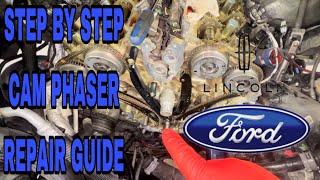
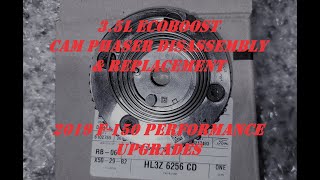
How to confirm: This is typically diagnosed after replacing the VCT solenoid does not resolve the issue. A mechanic may use an advanced scan tool to monitor desired vs. actual cam angle to confirm the phaser is not responding. A persistent startup rattle is also a strong indicator. 🎬 Watch: How to identify and replace faulty cam phasers.
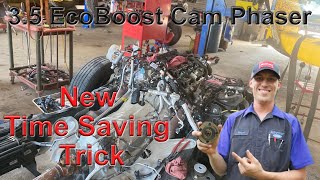
Typical fix: Replace the Bank 1 exhaust cam phaser. This is a complex and labor-intensive job that also requires replacing the timing chain, tensioners, and guides. It's often recommended to replace all four phasers at once.
Est. part cost: $150-$300
Rare But Worth Checking
- Stretched Timing Chain or Damaged Guides: → Shop Engine Timing Chain While less common than a solenoid failure, the 3.5L engine family can experience timing chain issues at higher mileage, especially if oil changes have been neglected. A stretched chain can cause correlation codes and timing position codes like P0015.
- Wiring or Connector Issue: Damage to the wiring harness or corrosion in the connector for the Bank 1 exhaust VCT solenoid can prevent it from receiving the correct signal from the PCM. The connector has a purple locking tab that can be brittle.
Diagnosis Steps
- Check the engine oil level and condition. If low, dirty, or overdue for a change, perform an oil and filter change with the correct Ford-spec oil. Clear the code and test drive.
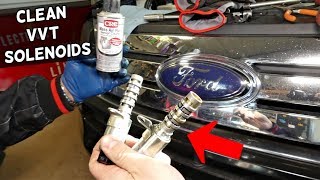
- If the code returns, use a capable scan tool to perform the VCT solenoid cleaning procedure outlined in TSB SSM 48423 (Pinpoint Test HK11), which attempts to dislodge debris by cycling the solenoid. 🎬 See how to clean and test a sticking VVT solenoid.
- If the code still returns, locate the VCT solenoids for Bank 1 (rear bank, near the firewall). This will require removing the upper intake manifold.
- Inspect the wiring and electrical connectors for the intake and exhaust VCT solenoids for any signs of damage, corrosion, or loose connections.
- Swap the exhaust VCT solenoid with the intake VCT solenoid on Bank 1. They are the same part.
- Clear the codes and drive the vehicle. If the trouble code changes to P0011 ('A' Camshaft Position - Timing Over-Advanced) or P0012 ('A' Camshaft Position - Timing Over-Retarded), the VCT solenoid you moved is faulty and needs to be replaced.
- If the P0015 code returns after the swap, the problem is not the solenoid. The issue is likely a faulty cam phaser, a clogged oil passage, or a timing chain problem, which requires more advanced mechanical diagnosis and disassembly.
Parts You'll Likely Need
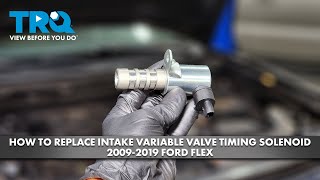
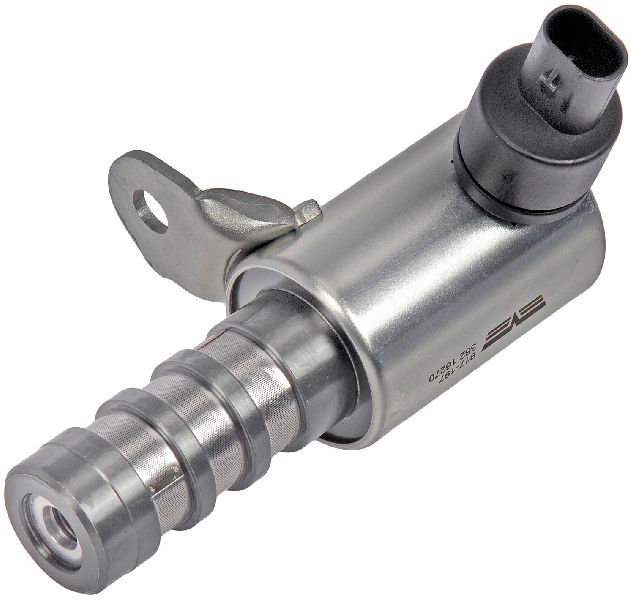
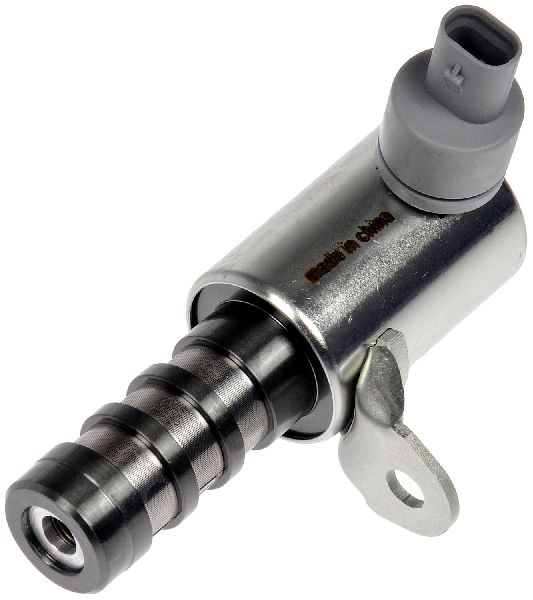
- Engine Variable Valve Timing (VVT) Solenoid
(OEM #HL3Z-6M280-A)— This is the most common point of failure for code P0015, often due to sticking or clogging from oil debris, as noted in Ford TSBs. It is also referred to as an Oil Control Valve (OCV).
Trusted brands: Motorcraft, Standard Motor Products (SMP), Gates, TRQ
OEM price range: $40-$80
Aftermarket price range: $25-$50 - Upper Intake Manifold Gasket Set
(OEM #Fel-Pro MS 97224)— Required for accessing the VCT solenoids on the rear bank (Bank 1). The intake manifold must be removed. Reusing old gaskets is not recommended as it can cause vacuum leaks.
Trusted brands: Motorcraft, Fel-Pro
OEM price range: $30-$50
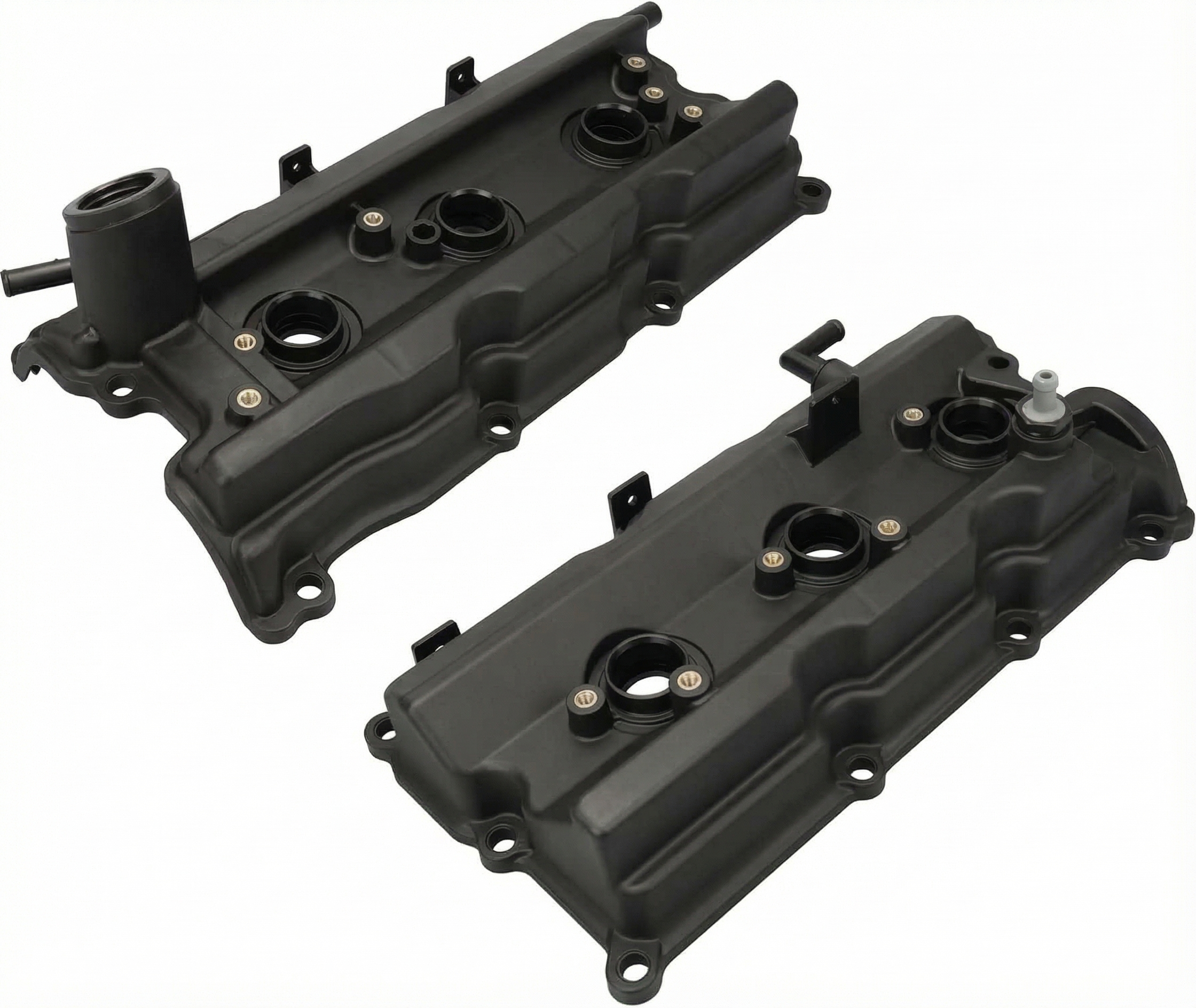
Aftermarket price range: $20-$40 - Valve Cover Gasket Kit — Required to access and replace the VCT solenoids, which are located under the valve covers. A kit usually includes the main gasket, spark plug tube seals, and VCT solenoid seals.
Trusted brands: Motorcraft, Fel-Pro
OEM price range: $50-$90
Aftermarket price range: $30-$60
Related Codes That Often Appear With This One
- P0014 — This code is for 'Timing Over-Advanced' on the same camshaft (Bank 1 Exhaust). It can appear if the VCT solenoid is sticking intermittently, causing both over-retarded and over-advanced conditions at different times.
- P0025 — This is the same 'Over-Retarded' code but for Bank 2 (the front bank). Seeing both codes together could indicate a more widespread oil pressure or sludge issue affecting both banks, or a stretched timing chain.
- P0017 — This code indicates 'Crankshaft Position - Camshaft Position Correlation (Bank 1 Sensor B)'. It often appears alongside P0015, as the retarded cam timing creates a mismatch with the crankshaft's position. TSB 16-0093 notes these codes can appear together.
Technical Service Bulletins (TSBs) & Recalls
- SSM 54366: Notes the existence of specific diagnostic tests for a group of VCT codes including P0015.
- SSM 47170: Cites small debris causing the VCT solenoid to stick as a potential cause.
- TSB-16-0093: Mentions P0015 appearing on low-mileage engines and recommends solenoid replacement.
- SSM 48423: Repeats the warning about debris causing the VCT solenoid to stick and suggests a diagnostic tool procedure to attempt to clear it before replacement.
Platform-Specific Known Issues
- Technical Service Bulletin SSM 48423 and SSM 47170 state that P0015 (and other related VCT codes) may be caused by 'small debris causing the VCT solenoid to stick.' The TSB recommends attempting to clear the debris by cycling the solenoid with a diagnostic tool before replacement.
- TSB-16-0093 notes that this code can appear on very low mileage engines (under 2,000 miles), possibly due to initial manufacturing debris. The prescribed fix is to replace the affected solenoid.
- Accessing the Bank 1 (rear) VCT solenoids is significantly more difficult than accessing the Bank 2 (front) solenoids, as it requires the removal of the upper intake manifold. This turns a simple part swap into a multi-hour job.
- Owner forums frequently advise replacing both VCT solenoids on Bank 1 (intake and exhaust) at the same time due to the high labor cost of accessing them.
Mechanic-Grade Diagnostic Values
- VCT Solenoid Internal Resistance — expected: 8 to 12 Ohms is a generally accepted range for a good solenoid.. Failure: A reading of 0 Ohms indicates a short circuit. An infinite or 'OL' reading indicates an open circuit. A reading far outside the expected range suggests a failing coil.
- Ford VCT System Scan Tool PIDs (at hot idle) — expected: VCT_EXH_DIF_B1 (Exhaust Cam Difference from Desired): Should be near 0 degrees. VCT_EXH_CMD_B1 (Exhaust Cam Commanded Position): Varies by engine load/RPM. VCT_EXH_ACT_B1 (Exhaust Cam Actual Position): Should closely match the commanded position.. Failure: For P0015, you would expect to see the VCT_EXH_ACT_B1 value lagging significantly behind the VCT_EXH_CMD_B1 value, resulting in a large negative number for the VCT error PID (e.g., VCT_EXH_ERR_B1).
Hidden / Shadow Codes Worth Checking
- Mode $06: Mode $06 is not a code, but a diagnostic mode that shows test results for non-continuously monitored systems, including the VCT system. Before a P0015 code is set, a technician can view Mode $06 data to see if the VCT system is marginally failing its self-test. It provides the test value, a minimum limit, and a maximum limit. A value approaching the failure limit can indicate an impending problem. (see via A professional-grade scan tool that supports Global OBD-II functions. The data is often presented with a Test ID (TID) and Component ID (CID).)
Scan Tool Commands That Help
- Ford IDS, FORScan, or equivalent professional scan tool: VCT Solenoid Duty Cycle Command / Output State Control — This bidirectional control allows a technician to command the VCT solenoid to a specific duty cycle (e.g., 0%, 50%, 100%) while monitoring the actual camshaft position PID. This directly tests the solenoid's and phaser's response. A lack of change in cam angle when the solenoid is commanded indicates a failure in the solenoid, oil passage, or phaser.
- Ford IDS or equivalent: Pinpoint Test HK11 (from TSB SSM 48423) — This is a specific diagnostic routine referenced in a Ford TSB. It cycles the solenoid 10 times in an attempt to dislodge small debris that may be causing it to stick. It's used as a last-ditch effort to fix a sticky solenoid before replacing it.
- Professional Scan Tool: Reset All Adaptations / Clear VVT Adaptive Values — After replacing a VCT solenoid or cam phaser, it is recommended to reset the PCM's learned adaptive values. This forces the system to relearn the performance of the new components immediately, rather than slowly adapting over time. While disconnecting the battery may clear some values, a scan tool command is the only guaranteed method.
Wiring & Ground Locations
- VCT Solenoid Connector — On the top of each VCT solenoid, protruding through the valve cover. Bank 1 (rear bank) connectors are under the upper intake manifold.. The two-pin connector provides power and a control signal (ground-side switched by the PCM) to the solenoid. One pin should have battery voltage with the key on, engine off. The other pin is the control wire. Damage to this connector or its wiring will prevent the solenoid from actuating correctly.
- Engine Block Grounds (e.g., G104, G105) — There are multiple ground points on the engine block and chassis. Key grounds for the PCM and engine harness are typically located on the cylinder heads or engine block, secured by bolts.. A poor engine or PCM ground can cause erratic behavior in sensors and actuators, including the VCT solenoids. While not a common cause for a single VCT code, it should be checked if multiple, seemingly unrelated electrical issues are present.
Real Owner Repair Stories
- YouTube Commenter on a related video (2015 Ford F-150 3.5L EcoBoost (engine family shared with Flex)) — Check engine light with codes P0015 and P0016.
❌ Tried (didn't work) Taking it to a Ford dealer, who quoted a $5,900 primary timing chain overhaul.
✅ What actually fixed it The owner independently decided to replace all four VCT solenoids and all four camshaft position sensors. The total cost for parts was $110 from RockAuto, and the repair resolved all codes and symptoms.
When the Usual Fixes Don't Work
- In a notable case involving a similar Ford 3.5L engine, a user reported that after replacing the VCT solenoids did not fix their P0015 and related codes, the ultimate solution was replacing the cam phasers themselves. This highlights that while the solenoids are the most common cause, they are not the only cause. If a solenoid swap or replacement does not resolve the issue, the phaser is the next most likely mechanical component to have failed.
OEM Part Supersession History
AT4Z-6M280-B (and earlier versions)→BL3Z-6M280-B, then HL3Z-6M280-A— Ford often updates parts to improve durability, material composition, or address known failure patterns like sticking or screen issues. The multiple revisions suggest ongoing improvements to the VCT solenoid design.
Heads up: The newer parts (HL3Z-6M280-A) are generally backward-compatible and are the recommended replacement for older versions on the 3.5L engine family. Always use the latest revision available from the dealer or a reputable supplier.
Model Year Variations Within This Range
- 2015-2019: All Ford Flex models in this range use the Twin Independent Variable Camshaft Timing (Ti-VCT) system. This is a key distinction from some older Ford V6 engines that only had VCT on the intake camshafts. The Ti-VCT system has four VCT solenoids and four phasers, allowing the PCM to adjust intake and exhaust cams on both banks independently for greater control over performance and emissions.
Helpful Videos

Used OEM Parts in Stock
New Aftermarket Parts Available


The information in this article is provided for general reference and educational purposes only. Vehicle specifications, procedures, and part compatibility can vary by production date, trim level, and region. Always consult your vehicle's factory service manual and verify part numbers before purchasing or performing repairs. Safety-critical components such as airbags, seat belts, and braking systems should be installed by a qualified professional.
- Ford FLEX:
- 🧭 Diagnostic Flowchart
- 🎬 Helpful Videos
- 🛍️ Shop This Part
- What's Unique About the 2015-2019 Ford FLEX
- Symptoms You May Notice
- Most Likely Causes
- Rare But Worth Checking
- Diagnosis Steps
- Parts You'll Likely Need
- Related Codes That Often Appear With This One
- Technical Service Bulletins (TSBs) & Recalls
- Platform-Specific Known Issues
- Mechanic-Grade Diagnostic Values
- Hidden / Shadow Codes Worth Checking
- Scan Tool Commands That Help
- Wiring & Ground Locations
- Real Owner Repair Stories
- When the Usual Fixes Don't Work
- OEM Part Supersession History
- Model Year Variations Within This Range
- 🎟️ Get 5% Off