

P0015 on 2012-2018 Ford Focus: Causes and Fixes for Over-Retarded Exhaust Cam Timing
On the 2.0L GDI, P0015 is most often caused by low/dirty oil or a faulty exhaust VCT solenoid, a ~$60 part. On the 1.0L EcoBoost (2016-2018), this code can be a critical warning for a recalled oil pump belt failure that can destroy the engine.
- For any engine, your first step should be to check the engine oil level and condition. An oil change is the cheapest and easiest potential fix.
- For the 2.0L GDI, the most likely failed part is the exhaust VCT solenoid (part CM5Z-6M280-B), which is located under the valve cover.
- For the 1.0L EcoBoost (2016-2018), P0015 is a critical warning. Immediately check if your vehicle is part of safety recall 23S64, as this code could signal impending engine failure.
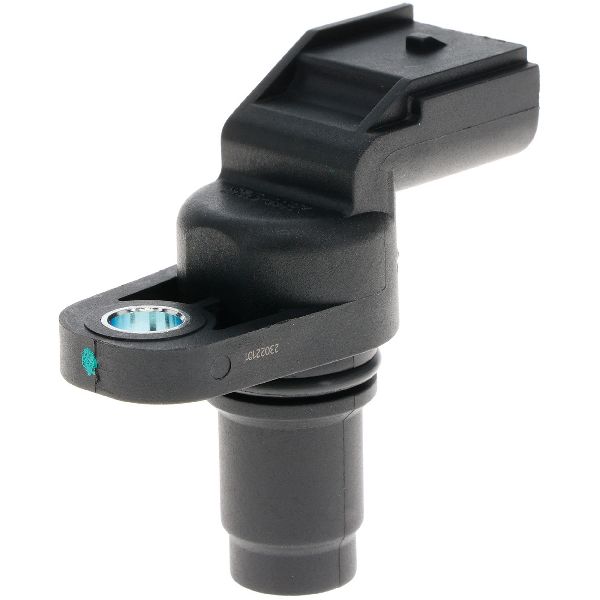
- Do not replace the camshaft position sensor; it is almost never the cause of this code. The sensor is doing its job by reporting the timing error.
What's Unique About the 2012-2018 Ford Focus
The VCT system on both the 2.0L GDI and 1.0L EcoBoost engines is highly sensitive to oil pressure and cleanliness. For the 2.0L GDI, the most common failure point is a sticking VCT solenoid due to oil debris, a fact Ford has acknowledged in service bulletins like SSM 48423. For the 1.0L EcoBoost, this code is far more serious; it is a known early symptom of a failing oil pump drive belt, which is a 'wet belt' design (runs in oil) that can degrade and fail. This failure is the subject of a major safety recall (23S64) that can lead to catastrophic engine failure due to sudden loss of oil pressure.
Symptoms You May Notice
- Check Engine Light illuminated
- Rough or irregular idle
- Poor acceleration and loss of power
- Engine may hesitate or stall, especially at low speeds
- Decreased fuel economy
- Rattling or knocking noise from the engine (if timing chain is involved or oil pressure is low)
- Replacing the camshaft position sensor. The sensor is almost always functioning correctly by reporting the timing deviation. The fault lies with the mechanical or hydraulic components that control the camshaft's position.
Most Likely Causes
- Low, Dirty, or Incorrect Viscosity Engine Oil 🔴 High Probability The Ford Ti-VCT system uses oil pressure to adjust cam timing. Sludge or low levels starve the system, preventing proper operation. Multiple Ford TSBs (SSM 48423, 47170) cite oil debris as a primary cause for VCT-related codes. Using oil that does not meet Ford's specification (e.g., WSS-M2C945-A for 5W-20) can also impede VCT performance.
How to confirm: Check the engine oil dipstick for level and condition. Oil should be at the full mark and not appear dark, sludgy, or gritty. Verify the correct oil type was used in the last service.
Typical fix: Perform an engine oil and filter change using the manufacturer-specified oil (e.g., Motorcraft 5W-20 Synthetic Blend) and a quality filter (e.g., Motorcraft FL-910S).
Est. part cost: $30-$60 - Faulty Exhaust VCT Solenoid 🔴 High Probability → Shop Engine Variable Valve Timing (VVT) Solenoid The solenoid's internal passages are very fine and can become clogged with small amounts of debris or sludge from the oil, causing it to stick. This is the most common component failure for this code on the 2.0L GDI engine.
How to confirm: Swap the exhaust VCT solenoid (rear of the valve cover) with the identical intake solenoid (front). Clear codes and drive. If the code changes to P0012 (Intake Cam Position Timing Over-Retarded), the solenoid is faulty. You can also check resistance; it should be between 5 and 14 ohms.
Typical fix: Replace the exhaust VCT solenoid. On the 2.0L engine, this requires removing the valve cover for access. It's recommended to replace both solenoids at the same time.
Est. part cost: $40-$100 - Failing Oil Pump Belt / Tensioner (1.0L EcoBoost ONLY) 🟡 Medium Probability → Shop Engine Oil Pump Ford issued Safety Recall 23S64 for 2016-2018 Focus models with the 1.0L engine because the oil pump's 'wet belt' (timing belt in oil) or its tensioner can fail, causing a sudden loss of oil pressure. P0015 is a documented symptom of this impending failure.
How to confirm: Check VIN for recall 23S64 status on Ford's official website or the NHTSA website. A mechanic can perform an oil pressure test at idle; low pressure is a key indicator.
Typical fix: The vehicle requires the recall service to be performed by a Ford dealer, which may involve replacing the engine assembly free of charge.
Est. part cost: $0 (if covered by recall) - Worn Timing Chain or Cam Phaser ⚪ Low Probability → Shop Engine Timing Chain While less common than oil or solenoid issues, high mileage (typically over 100,000 miles) can lead to a stretched timing chain or a failing cam phaser (the gear that actually adjusts the cam), causing a mechanical timing error.
How to confirm: This is an advanced diagnosis. It typically involves listening for chain rattle on startup and may require removing the valve cover to inspect for chain slack. Verifying phaser operation requires a scan tool capable of commanding VCT angles.
Typical fix: Replace the timing chain, tensioners, guides, and/or the camshaft phaser. This is a significant, labor-intensive repair.
Est. part cost: $300-$800
Rare But Worth Checking
- Clogged Oil Passages: In cases of severe engine sludge from neglect, the oil passages leading to the VCT solenoid and cam phaser can become blocked. This requires a more intensive engine cleaning or partial disassembly.
- Faulty Powertrain Control Module (PCM): It is extremely rare for the PCM itself to be the cause. This should only be considered after all other mechanical and electrical possibilities have been exhaustively ruled out by a professional.
Diagnosis Steps
- Check Engine Oil: Verify the oil level is full and the oil is clean. If low, top it off. If dirty or past its service interval, perform an oil and filter change with the correct oil meeting Ford specification WSS-M2C945-A (for 5W-20). Clear the code and see if it returns.
- (1.0L EcoBoost Only) Check for Recall: Enter your vehicle's VIN on the Ford recall website to check the status of Safety Recall 23S64. If your vehicle is affected, contact a dealer immediately.
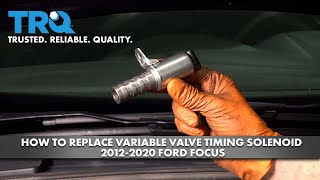
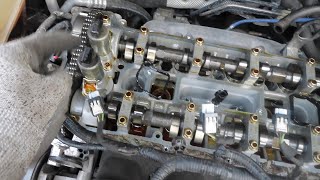
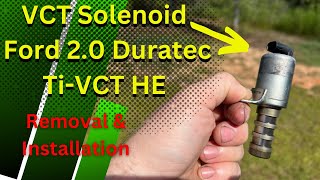
- (2.0L GDI Only) Swap VCT Solenoids: The intake and exhaust VCT solenoids are identical and located under the valve cover. Swap their positions. The exhaust solenoid is toward the rear (firewall side). 🎬 Watch: How to remove and install the VCT solenoid Clear the codes and drive the vehicle. If the code changes to P0012, the solenoid you moved to the intake side is faulty and needs replacement.
- Inspect Solenoid Wiring: Check the connectors and wiring to the VCT solenoids for any signs of damage, corrosion, or looseness.
- Test VCT Solenoid: If not swapping, you can test the solenoid with a multimeter. The resistance should be between 5 and 14 ohms. You can also (carefully) apply 12v to see if it clicks. When removed, inspect the small mesh screens on the solenoid for clogging or damage.
- Advanced Mechanical Checks: If the above steps do not resolve the issue, the problem is likely mechanical. This requires checking engine oil pressure with a mechanical gauge and inspecting the timing chain and phasers for wear, which is best left to a professional.
- NEVER replace the camshaft position sensor first. It is almost never the cause of this code.
Parts You'll Likely Need
- Engine Oil & Filter
(OEM #XO-5W20-QFS / FL-910S)— The VCT system is hydraulic. Clean oil of the correct viscosity (Ford spec WSS-M2C945-A for 5W-20) is the first and most critical requirement for proper operation and can sometimes fix the issue alone.
Trusted brands: Motorcraft, Mobil 1, Castrol
OEM price range: $50-$80
Aftermarket price range: $30-$60 - Variable Camshaft Timing (VCT) Solenoid
(OEM #CM5Z-6M280-C (or -D, supersedes -A and -B for 2.0L) / CM5Z-6M280-G (1.0L))— This is the most common part to fail for P0015 on the 2.0L GDI engine, typically by sticking due to oil debris. Ford has updated this part multiple times.
Trusted brands: Motorcraft, Dorman, Delphi
OEM price range: $60-$100
Aftermarket price range: $40-$80
Related Codes That Often Appear With This One
- P0017 — Crankshaft Position - Camshaft Position Correlation (Bank 1, Sensor B). This code often appears with P0015 because if the exhaust cam timing is incorrect, its correlation to the crankshaft will also be incorrect. TSB 16-0010 notes this specific combination often points to a bad exhaust VCT solenoid.
Technical Service Bulletins (TSBs) & Recalls
- SSM 48423: Advises that VCT codes (including P0015) can be caused by small debris causing the solenoid to stick. Recommends cycling the solenoid with a scan tool to clear debris before replacement.
- SSM 47170: An earlier bulletin that also identifies sticking VCT solenoids from oil debris as a primary cause for VCT-related DTCs.
- TSB 16-0010: Notes that the combination of P0015 and P0017 often points to a faulty exhaust VCT solenoid.
Platform-Specific Known Issues
- Recall 23S64 (1.0L EcoBoost, 2016-2018 models): A failing oil pump belt or tensioner can cause a sudden loss of oil pressure, triggering P0015 as an early warning. This can result in complete engine failure and loss of power braking.
- VCT Solenoid Location (2.0L GDI): Unlike many other engines where VCT solenoids are easily accessible, on the 2.0L GDI they are located under the valve cover, requiring more labor to replace.
Mechanic-Grade Diagnostic Values
- VCT Solenoid Internal Resistance — expected: 6.9 to 12 Ohms. A common range is 7.0-8.0 Ohms.. Failure: A reading of 0 Ohms (short circuit) or infinite/OL (open circuit) indicates a failed solenoid.
- Engine Oil Pressure (Hot Idle) — expected: Minimum of 15 PSI (103 kPa).. Failure: Pressure below the minimum specification indicates a base oiling problem (e.g., worn pump, clogged pickup tube, failing oil pump belt on 1.0L) that must be fixed before diagnosing VCT components.
- VCT Solenoid Connector Voltage (Key On, Engine Off) — expected: Battery voltage (approx. 12V) on the power supply wire.. Failure: No voltage indicates a wiring or fuse issue upstream of the solenoid.
- Mode $06 VCT Advance Error (TID $81, CID $12) — expected: The value should be near 0 degrees. A small variance of +/- 5 degrees is typically allowed.. Failure: A consistently high value that exceeds the PCM's calibrated limit will trigger the P0015 DTC. This shows the measured error between commanded and actual cam position.
Scan Tool Commands That Help
- Ford IDS (Integrated Diagnostic System): Powertrain > Active Commands > Variable Camshaft Timing (VCT) Control — This bidirectional control allows a technician to manually command the VCT solenoid duty cycle (e.g., from 0% to 50%) while monitoring camshaft position PIDs (RCAM, CAMERR). This directly tests if the solenoid and phaser are responding, helping to isolate a sticky solenoid from a mechanical phaser or electrical issue.
- FORScan: Monitor PIDs: VCT_EXH_CMD (Commanded Duty Cycle), VCT_EXH_ACT (Actual Position), VCT_EXH_ERR (Error in degrees) — While driving or at idle, graphing these PIDs can reveal a lazy or non-responsive exhaust camshaft. A large and persistent VCT_EXH_ERR value when the commanded and actual positions diverge confirms the fault condition recorded by the PCM.
Wiring & Ground Locations
- G107 — Right front of the engine compartment.. This is a primary ground point for various engine components. A corroded or loose G107 can cause intermittent electrical issues for sensors and actuators, including the VCT system.
- S114 (Splice) — Located in the engine control sensor & fuel charge wiring harness, near the breakout to the VCT solenoid 11 (intake).. This splice is part of the power distribution for the VCT solenoids. Corrosion or damage at this splice point could interrupt power to one or both solenoids, causing VCT codes.
- VCT Solenoid Connector (C139 for Intake, C140 for Exhaust on some diagrams) — Directly on top of each VCT solenoid, under the valve cover.. The connector pins for power (Pin 1) and PCM control/ground (Pin 2) are where voltage and resistance tests are performed. Oil leaking into the connector can disrupt the signal.
Real Owner Repair Stories
- Reddit r/MechanicAdvice user (Ford Focus 1.0L EcoBoost (year not specified)) — P0015 code present. At idle, exhaust cam shows -45 degrees off desired. At 3,000 RPM, cam timing is correct and it runs fine.
❌ Tried (didn't work) Swapping the cam actuators (solenoids) made no difference.
✅ What actually fixed it The initial cause was a failed oil pump belt tensioner and a damaged oil pump belt (missing teeth). After replacing the belts and re-timing the engine, the P0015 code persisted at idle, indicating a potential secondary issue like a clogged phaser or low oil pressure at idle caused by the initial failure.
OEM Part Supersession History
CM5Z-6M280-A, CM5Z-6M280-B→CM5Z-6M280-C (then to CM5Z-6M280-D)— Internal design improvements to resist sticking from oil debris and improve response time.
Heads up: All revisions (A, B, C, D) are physically and functionally interchangeable for the 2.0L GDI, but it is highly recommended to use the latest revision (-D) for durability.CM5Z-6M280-D, CM5Z-6M280-F→CM5Z-6M280-G— Updated design for the 1.0L EcoBoost engine.
Heads up: These part numbers are specific to the 1.0L EcoBoost and are not interchangeable with the 2.0L GDI solenoids.
Model Year Variations Within This Range
- 2016-2018: The introduction of the 1.0L EcoBoost engine brought a completely different set of critical failure points for P0015, namely the oil pump wet belt and tensioner, which are subject to recall 23S64. The 2.0L GDI does not use this design.
Diagnostic Flowchart
Other Known Issues on This Vehicle
Issues unrelated to this code that are worth knowing about as an owner of this generation:
- DPS6 PowerShift Transmission Failure 🔴 High — Extremely common on 2012-2016 models with automatic transmission. Symptoms include shuddering, hesitation, jerky shifts, and complete failure. (Ref: Multiple warranty extensions (e.g., 14M01) and class-action lawsuits, but no full safety recall for the core issue.)
- Canister Purge Valve Failure 🟠 Medium — Very common across 2.0L models. Causes stalling after refueling, rough idle, and codes like P1450 or P0456. (Ref: Ford Safety Recall 18S32 (NHTSA 18V735) was issued for this problem.)
- Passenger-Side Engine Mount Collapse 🟠 Medium — Common failure item. The hydraulic mount collapses, causing severe vibration at idle and clunking noises.
- Electronic Power Steering Failure 🔴 High — Reported frequently, especially on earlier 2012-2014 models. Can cause sudden loss of power steering assist while driving. (Ref: Multiple recalls (e.g., 14S05, 15S18) for steering gear and software issues.)
Used vs. New Parts: Buying Guide for This Vehicle
When a used part is the smart pick: For this specific repair, buying a used VCT solenoid is NOT recommended. The failure mode is internal sticking/clogging from oil debris, and a used part from a junkyard has an unknown history and high likelihood of being similarly worn or clogged. The cost of a new, quality aftermarket or OEM part is low enough that the labor to potentially replace a faulty used part makes it a poor economic choice.
Donor-vehicle mileage cap: roughly under 30000 miles for the part to have meaningful remaining life.
What to inspect on the donor part:
- If forced to consider a used solenoid, verify the donor vehicle had no VCT-related codes.
- Inspect the mesh screens on the solenoid; they must be perfectly clean, intact, and free of any metallic sheen or debris.
- Check the electrical connector for any signs of corrosion or oil intrusion.
OEM-only on this vehicle (don't cheap out):
- For the 1.0L EcoBoost, any parts related to the oil pump belt system (belt, tensioner) should be sourced directly from Ford to ensure they are the latest, most durable revision, especially in the context of recall 23S64.
Aftermarket brands forum-validated for this vehicle:
- Delphi
- Standard Motor Products (SMP)
- NGK/NTK
Brands owners have reported issues with on this vehicle:
- Dorman: While a major aftermarket supplier, forum and technician feedback for their electronic components like VCT solenoids is mixed, with some reporting premature failures. It is often considered a lower-tier option compared to OEM, Delphi, or SMP for this specific part.
Real Owner Stories
Aggregated from forums and TSBs cited above. Mileages and costs reflect what owners reported in those sources.
2012 Ford Focus 2.0L GDI
Symptoms: Check Engine Light with codes P0015 and P0017.
What fixed it: Replacing both VCT solenoids resolved the issue.
Source hint: FocusFanatics Forum Discussion on P0015
2016-2018 Ford Focus 1.0L EcoBoost
Symptoms: Sudden loss of oil pressure, triggering P0015 as an early warning, potentially leading to engine failure and loss of power braking.
What fixed it: Recall service performed by a Ford dealer, which may involve replacing the engine assembly.
Source hint: Safety Recall 23S64
Related OBD-II Codes
Frequently Asked Questions
My 2017 Focus 1.0L EcoBoost has a P0015 code; is there a recall for this?
I have a 2.0L GDI Focus and the shop wants to replace the camshaft sensor for P0015. Is this right?
Does Ford have any technical bulletins for VCT codes like P0015 on the 2.0L engine?
What specific oil should I use in my Focus to prevent P0015?
Where is the exhaust VCT solenoid located on the 2.0L GDI engine?
Can I test the VCT solenoid myself before buying a new one?
Helpful Videos

We Have This Part in Stock


The information in this article is provided for general reference and educational purposes only. Vehicle specifications, procedures, and part compatibility can vary by production date, trim level, and region. Always consult your vehicle's factory service manual and verify part numbers before purchasing or performing repairs. Safety-critical components such as airbags, seat belts, and braking systems should be installed by a qualified professional.
- Ford Focus:
- 🧭 Diagnostic Flowchart
- 🎬 Helpful Videos
- 🛍️ Shop This Part
- What's Unique About the 2012-2018 Ford Focus
- Symptoms You May Notice
- Most Likely Causes
- Rare But Worth Checking
- Diagnosis Steps
- Parts You'll Likely Need
- Related Codes That Often Appear With This One
- Technical Service Bulletins (TSBs) & Recalls
- Platform-Specific Known Issues
- Mechanic-Grade Diagnostic Values
- Scan Tool Commands That Help
- Wiring & Ground Locations
- Real Owner Repair Stories
- OEM Part Supersession History
- Model Year Variations Within This Range
- Other Known Issues on This Vehicle
- Used vs. New Parts: Buying Guide for This Vehicle
- Real Owner Stories
- 2012 Ford Focus 2.0L GDI
- 2016-2018 Ford Focus 1.0L EcoBoost
- Related OBD-II Codes
- Frequently Asked Questions
- 🎟️ Get 5% Off