

P0015 on 2013-2019 Ford Taurus 3.5L V6: Causes and Fixes for Over-Retarded Exhaust Cam Timing
On a 2013-2019 Ford Taurus with the 3.5L V6, P0015 is almost always caused by a sticking exhaust VCT solenoid on the firewall-side cylinder bank (Bank 1), usually due to dirty engine oil. An oil change is the first step, but expect to replace the solenoid, which is a labor-intensive job costing $400-$700 at a shop. If accompanied by a rattling noise, suspect a larger timing chain issue caused by a failing internal water pump.
- P0015 on this Taurus means the exhaust camshaft on the rear (firewall side) bank is out of time, most likely due to an oiling issue.
- Always check your engine oil level and condition first. A simple oil change with the correct 5W-20 oil can sometimes fix the issue or is a necessary first step.
- The most probable failed part is the Bank 1 exhaust VCT solenoid, which gets stuck from oil debris. However, replacing it is a difficult, labor-intensive job (DIY 4/5).
- Do not mistake this for a bad camshaft position sensor; the sensor is usually working correctly.
- Be aware of the engine's internal water pump design flaw. A milky oil condition indicates a failed water pump, which requires a major, expensive repair of the entire timing system.
What's Unique About the 2013-2019 Ford Taurus
The 3.5L Cyclone V6 in the Taurus is known for two key issues that lead to this code. First, its VCT system is very sensitive to oil quality and condition; Ford has issued multiple service bulletins (SSM 47170, SSM 48423) acknowledging that small debris in the oil can cause the VCT solenoids to stick. Second, because the engine is mounted transversely (sideways), the internal water pump is driven by the timing chain. If the water pump fails, it leaks coolant directly into the engine oil, creating sludge that clogs oil passages and damages VCT components and timing chains, leading to codes like P0015 and P0017.
Symptoms You May Notice
- Check Engine Light is on
- Rough or unstable idle
- Poor acceleration and loss of power
- Decreased fuel economy
- Engine hesitation or stalling, especially at low RPM
- Rattling or knocking noise from the engine, particularly on startup (indicates timing chain issue)
- Replacing the camshaft position sensor. The sensor is accurately reporting that the camshaft is in the wrong position; it is not the cause of the problem. Replacing it will not fix a P0015 code.
Most Likely Causes
- Low or Dirty Engine Oil 🔴 High Probability The VCT system is hydraulically operated by engine oil. The 3.5L V6 is notoriously sensitive to oil viscosity and cleanliness, and small debris can easily clog the narrow passages in the VCT solenoids, as noted by Ford in TSBs.
How to confirm: Check the oil level on the dipstick and inspect its condition. If the oil is below the 'add' line, dark, gritty, or has a milky/frothy appearance (indicating coolant contamination from a failing water pump), this is the likely starting point.
Typical fix: Perform an engine oil and filter change using the correct Ford-specified SAE 5W-20 synthetic blend oil. If the code was caused by minor debris, this might resolve the issue. If sludge is suspected, an engine flush may be considered, but use with caution.
Est. part cost: $40-$80 - Faulty Exhaust VCT Solenoid (Bank 1) 🔴 High Probability → Shop Engine Variable Valve Timing (VVT) Solenoid Ford has issued multiple Technical Service Bulletins (TSBs) like SSM 47170 and SSM 48423 confirming these solenoids are prone to sticking from small debris in the oil. It is the most common mechanical failure for this code when oil level and quality are good.
How to confirm: After confirming oil is clean and full, use a diagnostic scan tool to monitor commanded vs. actual cam angle for Bank 1 Exhaust. A significant lag indicates a problem. The solenoid can also be removed and tested for resistance (typically 5-14 ohms) and function. A clicking sound should be heard when 12V is applied.
Typical fix: Replace the Bank 1 exhaust VCT solenoid. This requires removing the upper intake manifold and the Bank 1 (rear) valve cover. It is highly recommended to replace the upper intake gaskets and valve cover gasket at the same time to prevent future leaks.
Est. part cost: $30-$90
Rare But Worth Checking
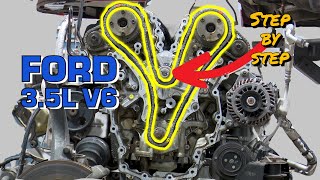
- Stretched Primary Timing Chain or Failed Tensioner: → Shop Engine Timing Chain This is a serious mechanical issue and a known weak point. On this engine, it is often a long-term consequence of a failing internal water pump that has contaminated the oil with coolant, accelerating wear on the chain, guides, and tensioner. A distinct rattling noise on startup that quiets down after a few seconds is a key symptom.
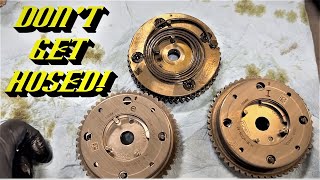
- Failed Camshaft Phaser: → Shop Engine Camshaft The phaser is the gear on the end of the camshaft that actually adjusts the timing. It can become clogged with sludge or fail mechanically, getting stuck in the retarded position. This is usually diagnosed after a new solenoid fails to fix the issue. Replacement is a major job requiring timing component removal.
Diagnosis Steps
- Check Engine Oil: Verify the oil level is correct and the oil is clean. Look for a milky appearance, which indicates coolant contamination from the internal water pump. If low or dirty, perform an oil and filter change with SAE 5W-20 oil, clear the code, and see if it returns.
- Scan Tool Analysis: Connect a scan tool to monitor the VCT system. Compare the desired (commanded) camshaft angle for Bank 1 Exhaust with the actual angle reported by the sensor. A significant and persistent difference confirms the timing is off.
- Cycle the Solenoid: Per Ford TSBs (SSM 47170, SSM 48423), use a scan tool's bidirectional controls to command the Bank 1 exhaust VCT solenoid on and off (cycle it) about 10 times. This can sometimes dislodge small debris and temporarily restore function. If the code clears and stays away, the issue was debris.
- Test the Solenoid Circuit: If the solenoid doesn't respond, unplug it and check for 12V power at the connector with the key on. Check the resistance of the solenoid itself with a multimeter; a reading between 5-14 ohms is typical. An open circuit (infinite resistance) or short (zero resistance) means the solenoid is bad.
- Mechanical Inspection: If the solenoid and wiring are good but the problem persists, the issue is likely mechanical. This requires removing the valve cover to inspect the camshaft phaser and, more likely, removing the timing cover to inspect the timing chain and tensioners for wear, slack, or damage. At this stage, also inspect for evidence of a leaking water pump.
Parts You'll Likely Need
- Engine VVT Solenoid (Bank 1 Exhaust)
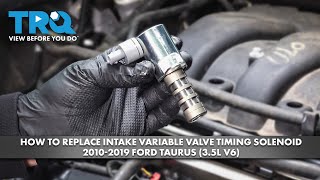
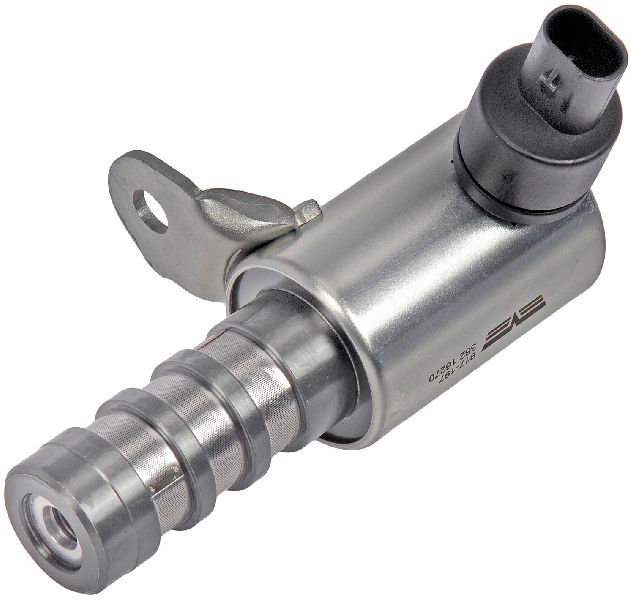
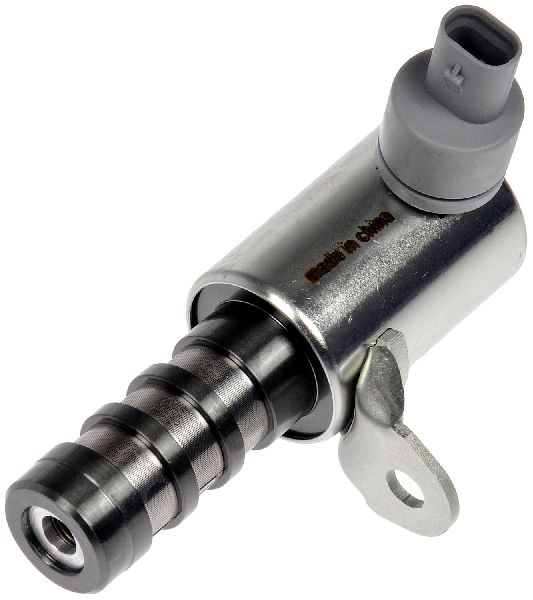
(OEM #AT4Z-6M280-C)— This is the most common part to fail for this code. It gets clogged or stuck due to debris in the engine oil, preventing it from properly controlling oil flow to the cam phaser. The Bank 1 Exhaust solenoid has a blue connector. 🎬 See this step-by-step VVT solenoid replacement walkthrough Note: Part number AT4Z-6M280-A was superseded by AT4Z-6M280-C; always verify with a dealer using your VIN.
Trusted brands: Motorcraft, Dorman, SKP
OEM price range: $45-$70
Aftermarket price range: $25-$50 - Upper Intake Manifold Gasket Set
(OEM #BR3Z-9439-A (or equivalent))— This is a required replacement part. The upper intake manifold must be removed to gain access to the Bank 1 (rear) valve cover and VCT solenoids. These gaskets are single-use and must be replaced to prevent vacuum leaks.
Trusted brands: Motorcraft, Fel-Pro, Mahle
OEM price range: $30-$50
Aftermarket price range: $15-$30 - Valve Cover Gasket (Bank 1)
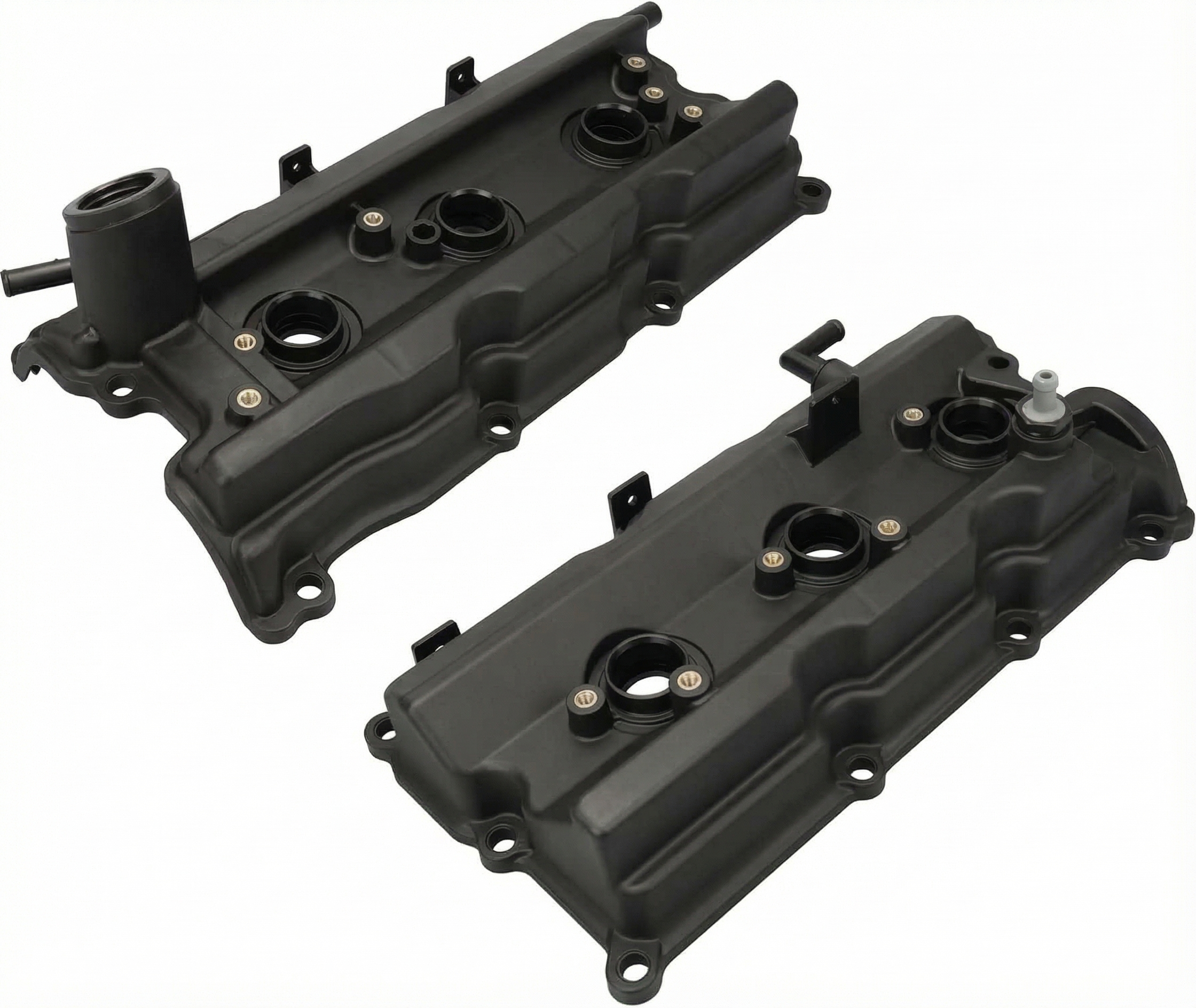
(OEM #BR3Z-6584-C (or equivalent for rear bank))— Required for the repair, as the valve cover must be removed to access the solenoid. Replacing the gasket prevents oil leaks after the service is complete. The kit usually includes spark plug tube seals.
Trusted brands: Motorcraft, Fel-Pro
OEM price range: $40-$60
Aftermarket price range: $20-$40
Related Codes That Often Appear With This One
- P0017 — This code indicates a 'Crankshaft Position - Camshaft Position Correlation' error for Bank 1, Sensor B. It often appears with P0015 because if the exhaust cam is over-retarded, its position will not correlate correctly with the crankshaft's position, pointing towards a definite mechanical timing problem like a stretched chain. Ford TSB 16-0093 specifically calls out this pair, recommending replacement of the Bank 1 exhaust VCT solenoid on low-mileage vehicles.
- P0011, P0012, P0022, P0025 — These are other VCT-related codes for different camshafts and banks. Seeing multiple timing codes together strongly suggests a widespread issue like severe oil contamination, low oil pressure from a failing pump, or a stretched primary timing chain affecting the whole engine.
Technical Service Bulletins (TSBs) & Recalls
- Illuminated MIL With Various VCT DTCs: Ford acknowledges that codes like P0015 can be caused by small debris causing the VCT solenoid to stick. It advises technicians to use a scan tool (Pinpoint Test HK11) to cycle the solenoid 10 times to attempt to clear the debris before replacing the part.
- Various VCT DTCs After Engine Repair: Similar to SSM 47170, this bulletin reminds technicians that debris introduced during other engine repairs can lead to VCT codes. It again recommends using a scan tool's bidirectional control to cycle the solenoids to clear potential blockages before replacement.
- Illuminated MIL With Various VCT DTCs on Low-Mileage Vehicles: For some 2016 models with under 2,000 miles, this TSB directly addresses pairs of codes. If P0015 is present with P0017, it instructs technicians to replace the Bank 1 exhaust VCT solenoid.
Platform-Specific Known Issues
- Internal Water Pump Failure: The 3.5L V6 in transverse applications like the Taurus has a timing-chain-driven water pump located inside the engine. When its seal fails, it leaks coolant directly into the oil pan. This contaminates the oil, creating sludge that destroys VCT solenoids and timing chains, making it a root cause of many timing-related DTCs like P0015 and P0017.
- Difficult Access to Bank 1: The Bank 1 cylinder head is positioned against the firewall. Any service on its camshafts, phasers, or VCT solenoids requires removing the upper intake manifold, adding several hours of labor to the repair compared to the easily accessible Bank 2 components.
Mechanic-Grade Diagnostic Values
- VCT Solenoid Internal Resistance — expected: 5 to 15 Ohms. A more precise target is 6.9-7.9 Ohms at ~68°F (20°C).. Failure: A reading of 0 Ohms (short circuit), infinite/OL (open circuit), or a value significantly outside the specified range indicates a failed solenoid coil.
- VCT Solenoid Connector Voltage (Key On, Engine Off) — expected: Battery voltage (~12.0-12.6V) on the power supply pin (typically a blue/green wire).. Failure: Voltage below 10.5V suggests a problem in the power supply wire (VPWR circuit) or a related fuse.
- Engine Oil Pressure at Hot Idle — expected: Minimum of 15 PSI, with 25 PSI or higher being ideal.. Failure: Pressure below 15 PSI at hot idle can cause the VCT system to malfunction due to insufficient hydraulic pressure, potentially setting timing codes even if components are good.
- Scan Tool PID: VCT_ERR1B (Bank 1 Exhaust VCT Error) — expected: Should be near 0 degrees at idle and during steady-state driving.. Failure: A consistent error value greater than +/- 5 degrees while the system is active indicates a deviation between the PCM's commanded position and the actual position reported by the CMP sensor, confirming a fault.
Hidden / Shadow Codes Worth Checking
- Mode 6, Test ID $53: This test provides cylinder-specific misfire counts. While not a direct VCT test, it can reveal if the P0015 timing issue is causing misfires on cylinders in Bank 1 (1, 2, 3) before a dedicated P030x code is triggered. (see via A scan tool capable of displaying generic OBD-II Mode 6 data.)
Scan Tool Commands That Help
- Ford IDS (or equivalent professional scanner like FORScan): VCT Solenoid On/Off Command (part of Pinpoint Test HK) — This bidirectional control is used to test the VCT solenoid's mechanical and electrical function. As recommended in Ford TSBs SSM 47170 and 48423, cycling the solenoid ~10 times with the engine running can dislodge small debris causing it to stick. A change in idle quality or an audible click should be observed.
Wiring & Ground Locations
- Bank 1 VCT Solenoid Connector — On the top of the rear valve cover (firewall side). The exhaust solenoid has a blue electrical connector. Access requires removal of the upper intake manifold.. This is the primary connector for testing voltage, ground signal, and solenoid resistance for the Bank 1 exhaust VCT circuit.
- G105 — Located on the rear of the engine compartment.. This is a key ground point for various engine components and sensors controlled by the PCM. A corroded or loose G105 ground can cause erratic sensor readings and intermittent electrical faults in the VCT system.
Real Owner Repair Stories
- Reddit user on r/f150 (2019 Ford F-150 3.5L EcoBoost (90k miles) - Note: Same engine family, phaser design is relevant.) — Catastrophic engine failure while driving at 70mph, with violent shaking.
❌ Tried (didn't work) Prior ECU reprogramming under a Customer Satisfaction Program (CSP 21N03) for cam phaser noise did not prevent the failure.
✅ What actually fixed it The root cause was a failed cam phaser where the locking pin sheared off. This caused the engine to jump time, leading to piston-to-valve impact and circulating metal debris throughout the engine. The final resolution was a complete engine replacement costing ~$16,000.
OEM Part Supersession History
AT4Z-6M280-A→AT4Z-6M280-C— Part revision and improvement by Ford. The -C version is the current recommended replacement for the Bank 1 (Right Side) Exhaust VCT solenoid.
Heads up: While older parts may be found, it is critical to use the latest revision (-C for Bank 1 Exhaust) for reliability. The Bank 1 Intake solenoid is a different part number (AT4Z-6M280-B or -A). Always verify the correct part for the specific camshaft position with a VIN.
Model Year Variations Within This Range
- 2013-2019: The base 3.5L Cyclone V6 received an update for the 2013 model year, increasing power from 263 hp to 288 hp. While the core VCT system design remained the same, minor running changes to engine components and PCM software occurred throughout the generation. For example, some forum users note a switch to plastic valve covers around 2015 and crank/head updates in 2017+ on related 3.5L engines, but these do not fundamentally change the P0015 diagnosis for the Taurus.
Diagnostic Flowchart
Other Known Issues on This Vehicle
Issues unrelated to this code that are worth knowing about as an owner of this generation:
- Internal Water Pump Failure 🔴 High — Considered an eventual failure point, typically between 80,000 and 150,000 miles. Failure can be catastrophic to the engine if not caught early.
- AWD Power Transfer Unit (PTU) Failure 🟠 Medium — Common on AWD models, especially those over 80,000 miles. Ford considers the unit 'sealed for life,' but the fluid breaks down from heat.
- Electronic Throttle Body Failure 🟠 Medium — Affects many 2013-2016 models. Can occur intermittently at various mileages. (Ref: Customer Satisfaction Program 16B32)
- Rear Suspension Toe Link Fracture 🔴 High — Affects 2013-2018 models, particularly SHO and Police Interceptor trims, but applicable to all. (Ref: Recall 20V072)
Used vs. New Parts: Buying Guide for This Vehicle
When a used part is the smart pick: For this repair, using used parts is generally not recommended. The primary failure parts (VCT solenoid, gaskets) are inexpensive new and are wear-and-tear items. A used VCT solenoid carries the same risk of being clogged or failing as the one being replaced.
Donor-vehicle mileage cap: roughly under 50000 miles for the part to have meaningful remaining life.
What to inspect on the donor part:
- If sourcing a major component like a cylinder head, look for evidence of regular oil changes (minimal sludge under the oil cap).
- Avoid parts from a donor vehicle that shows signs of a coolant/oil mix (milky residue on dipstick or in coolant reservoir), as this indicates a failed water pump and likely compromised timing components.
OEM-only on this vehicle (don't cheap out):
- VCT Solenoid: While aftermarket is available, Motorcraft (OEM) solenoids are strongly recommended due to the system's sensitivity. The cost difference is minimal compared to the labor required to replace a faulty aftermarket part.
- Timing Chain/Phasers: If a timing job is required, using OEM (Motorcraft) parts is critical for longevity. Aftermarket timing kits for this engine have a poor reputation for premature failure.
Aftermarket brands forum-validated for this vehicle:
- Fel-Pro: Widely trusted for intake manifold and valve cover gaskets.
Brands owners have reported issues with on this vehicle:
- Unbranded/white-box VCT solenoids and timing components from online marketplaces are a significant risk and should be avoided. While Dorman is a common aftermarket brand, for this specific part, owner forums heavily favor Motorcraft.
Real Owner Stories
Aggregated from forums and TSBs cited above. Mileages and costs reflect what owners reported in those sources.
2013 Ford Taurus 3.5L V6 — 130000 miles
Symptoms: Check engine light with codes P0015 and P0017, accompanied by a rattling noise on startup.
What fixed it: A full timing job, including replacement of the timing chains, guides, tensioners, and the internal water pump.
Source hint: TaurusClub.com thread titled 'P0015 and P0017 Error Codes'
2013 Ford Taurus Limited 3.5L
Symptoms: P0015 code present. Owner attempted an oil change and cycling the solenoid with a scan tool per TSBs, but the code remained.
What fixed it: Replacement of the Bank 1 exhaust VCT solenoid, which required accessing the difficult rear bank.
Source hint: FordTaurus.net - P0015 code on my 2013 Taurus Limited 3.5
2013 Ford Taurus 3.5L V6
Symptoms: P0015 and P0017 codes. Discussion noted the commonality of the internal water pump failing and taking out timing components.
What fixed it: Likely a timing component and water pump replacement due to coolant contamination.
Cost: $2,000+
Source hint: Reddit r/MechanicAdvice - 2013 Ford Taurus P0015 and P0017
Related OBD-II Codes
Frequently Asked Questions
My 2013 Taurus 3.5L has P0015 and a rattling noise on startup; is this just a sensor?
Does Ford have a specific procedure to fix P0015 without replacing parts immediately?
Why is the labor for P0015 so much higher on my Taurus than on other cars?
I have a 2016 Taurus with very low mileage and a P0015 code; is there a specific fix?
Can a failing water pump cause the P0015 code on a 3.5L Taurus?
What type of oil should I use to prevent VCT issues in my 2013-2019 Taurus?
Helpful Videos

Used OEM Parts in Stock
New Aftermarket Parts Available


The information in this article is provided for general reference and educational purposes only. Vehicle specifications, procedures, and part compatibility can vary by production date, trim level, and region. Always consult your vehicle's factory service manual and verify part numbers before purchasing or performing repairs. Safety-critical components such as airbags, seat belts, and braking systems should be installed by a qualified professional.
- Ford Taurus:
- 🧭 Diagnostic Flowchart
- 🎬 Helpful Videos
- 🛍️ Shop This Part
- What's Unique About the 2013-2019 Ford Taurus
- Symptoms You May Notice
- Most Likely Causes
- Rare But Worth Checking
- Diagnosis Steps
- Parts You'll Likely Need
- Related Codes That Often Appear With This One
- Technical Service Bulletins (TSBs) & Recalls
- Platform-Specific Known Issues
- Mechanic-Grade Diagnostic Values
- Hidden / Shadow Codes Worth Checking
- Scan Tool Commands That Help
- Wiring & Ground Locations
- Real Owner Repair Stories
- OEM Part Supersession History
- Model Year Variations Within This Range
- Other Known Issues on This Vehicle
- Used vs. New Parts: Buying Guide for This Vehicle
- Real Owner Stories
- 2013 Ford Taurus 3.5L V6 — 130000 miles
- 2013 Ford Taurus Limited 3.5L
- 2013 Ford Taurus 3.5L V6
- Related OBD-II Codes
- Frequently Asked Questions
- 🎟️ Get 5% Off