

P0015 on 2015-2021 Ford Transit Connect: Exhaust Cam Timing Fixes
On a 2015-2021 Ford Transit Connect, code P0015 is most often caused by a sticking exhaust VCT solenoid, frequently due to dirty or low engine oil. Replacing the solenoid is a common fix, costing around $40-$100 for the part. An oil and filter change is critical at the same time.
- P0015 on your Transit Connect means the exhaust camshaft timing is delayed.
- The most likely cause is a sticking VCT solenoid, often due to old or dirty engine oil.
- Start your diagnosis by checking the engine oil level and condition. An oil change is a good first step.
- Replacing the exhaust VCT solenoid is a common and relatively inexpensive DIY repair that often fixes the problem.
- Ignoring this code can lead to poor performance, bad fuel economy, and potential engine damage over time.
What's Unique About the 2015-2021 Ford TRANSIT CONNECT
For this generation of Ford Transit Connect, particularly with the common 2.5L Duratec I4 engine, the issue is well-documented by Ford itself. Multiple Technical Service Bulletins (TSBs) have been issued that cover this exact code and vehicle range. The TSBs consistently point to the Variable Camshaft Timing (VCT) solenoids getting stuck due to small debris in the engine oil, making it a known pattern failure rather than a random occurrence. This strongly suggests that regular, high-quality oil changes are critical for these engines. The 2.5L engine is also shared with many other Ford models, which exhibit the same P0015 failure pattern.
Diagnostic Flowchart
Tap your situation to follow the diagnostic path that matches what you're seeing on this vehicle.
Symptoms You May Notice
- Check Engine Light is on
- Rough or unstable idle, sometimes feeling like a misfire
- Engine hesitation or stalling, especially when coming to a stop
- Reduced engine power and acceleration
- Decreased fuel economy
- Hard starting
- Rattling noise from the engine
- Replacing the camshaft position sensor when the VCT solenoid is the actual problem. The sensor is reporting the timing issue correctly; it is not the cause of it.
- Replacing the cam phaser when only the much cheaper VCT solenoid is stuck. Always diagnose the solenoid first by testing, cleaning, or swapping it with the intake solenoid.
- Assuming a major timing chain issue when the problem is simply low or dirty oil. Always start with an oil and filter change. 🎬 See two simple DIY methods to fix the P0015 code.
Most Likely Causes
- Sticking or Failed VCT Oil Control Solenoid 🔴 High Probability → Shop Engine Camshaft This is the most common cause, as confirmed by multiple Ford TSBs (SSM 47170, SSM 48423, SSM 54366). Small debris or sludge in the oil can cause the solenoid's internal spool valve to stick, preventing it from correctly directing oil pressure to adjust cam timing.
How to confirm: Use a scan tool like FORScan to monitor the VCT PIDs; specifically, VCT_EXH_ACT1 (actual position) and VCT_EXH_DIF1 (error). A large error value confirms a timing deviation. 🎬 Watch this breakdown of P0015 causes and potential fixes. You can also command the solenoid on and off with the scan tool and listen for a click. A common DIY test is to swap the exhaust solenoid with the identical intake solenoid; if the code changes to P0012 or P0011 (intake timing), the solenoid is confirmed bad.
Typical fix: Replace the Bank 1 exhaust VCT solenoid. It is highly recommended to change the engine oil and filter at the same time to remove the debris that caused the failure.
Est. part cost: $40-$100 - Low or Dirty Engine Oil 🔴 High Probability The VCT system is entirely hydraulic and relies on clean oil at the correct pressure and viscosity. Extended oil change intervals lead to sludge and varnish that clog the tiny passages in the VCT solenoids and phasers, causing them to stick.
How to confirm: Check the oil level on the dipstick and inspect its condition. If the oil is dark, gritty, below the minimum level, or the wrong viscosity, this is a likely contributor. An oil change is often the first and cheapest diagnostic step.
Typical fix: Perform an engine oil and filter change using the manufacturer-specified oil (Motorcraft Synthetic Blend 5W-20) and a quality filter (Motorcraft FL-910S).
Est. part cost: $40-$80 - Faulty Camshaft Position Sensor ⚪ Low Probability → Shop Engine Camshaft Position Sensor
How to confirm: Test the sensor's output with a multimeter or oscilloscope. Often, a failing sensor will trigger other codes specific to the sensor circuit itself (e.g., P034x), not just a timing correlation code like P0015. The sensor is usually just accurately reporting the timing problem caused by something else.
Typical fix: Replace the Bank 1 exhaust camshaft position sensor.
Est. part cost: $25-$70
Rare But Worth Checking
- Worn Timing Chain or Cam Phaser: → Shop Engine Timing Chain While less common than a solenoid failure, a stretched timing chain or a failing cam phaser (the gear-like actuator on the camshaft) can cause timing to be physically out of sync. This is a more significant mechanical repair and may be accompanied by rattling noises, especially at startup.
- Clogged Oil Passages: In cases of severe engine sludge from lack of maintenance, the oil passages in the cylinder head leading to the cam phaser can become blocked, starving the system of the oil pressure needed to adjust timing. An engine flush may be attempted, but disassembly and cleaning may be required in extreme cases.
- Faulty PCM (Powertrain Control Module): In very rare instances, the PCM itself can be faulty, either failing to command the VCT solenoid correctly or misinterpreting the data from the cam sensor. This should only be considered after all other possibilities have been exhausted.
Diagnosis Steps
- Check the engine oil level and condition. If it's low, dirty, or overdue for a change, perform an oil and filter change with the correct spec oil (Ford 5W-20) before proceeding. This can sometimes resolve the issue on its own.
- Use an OBD-II scanner to check for any other pending or active trouble codes.
- With a capable scan tool (like FORScan for Fords), monitor the desired vs. actual camshaft position PIDs for Bank 1 Exhaust. Key PIDs are VCT_EXH_ACT1 (Actual) and VCT_EXH_DIF1 (Error/Difference). A significant, lagging difference confirms the problem in real-time.
- Command the Bank 1 exhaust VCT solenoid on and off with the scan tool. Listen for an audible click from the solenoid, located on the top of the valve cover. No click suggests an electrical or mechanical failure of the solenoid.
- If possible, swap the exhaust VCT solenoid with the intake VCT solenoid (on the 2.5L, they are identical and next to each other). Clear the codes and run the engine. If the code returns as P0011 or P0012 (for the intake cam), you have confirmed the solenoid is faulty.
- If the solenoid seems to function, inspect its wiring and connector for damage, corrosion, or oil contamination.
- Check the resistance of the solenoid with a multimeter. It should be between 5 and 14 ohms.
- If all of the above check out, the issue may be more mechanical, such as a failing cam phaser or a stretched timing chain, which requires more in-depth diagnosis, potentially including checking engine oil pressure.
Parts You'll Likely Need
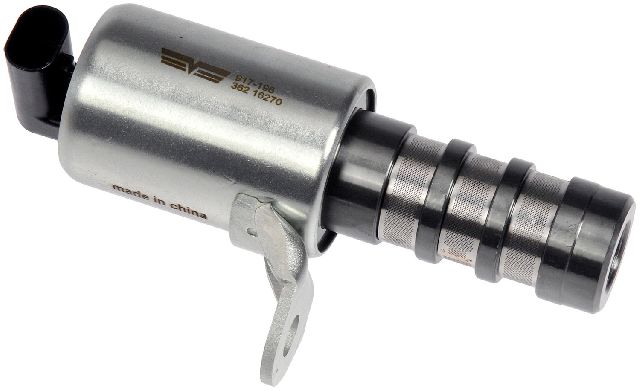
- Engine Variable Valve Timing (VVT) Solenoid
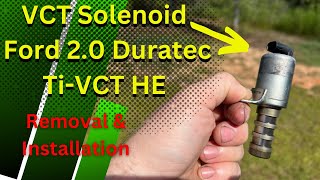
(OEM #CJ5Z-6M280-A (Motorcraft))— This is the most frequent failure point for code P0015 on this vehicle, as documented in Ford's own service bulletins. It is identical for intake and exhaust on the 2.5L engine. 🎬 Watch: Step-by-step VCT solenoid removal and installation guide.
Trusted brands: Motorcraft, Standard Motor Products (SMP), Dorman, NGK
OEM price range: $70-$120
Aftermarket price range: $40-$80 - Engine Oil and Filter
(OEM #Oil: XO-5W20-QSP (Motorcraft), Filter: FL-910S (Motorcraft))— Clean oil is essential for the VCT system to function. An oil change is required to flush out debris that may have caused the solenoid to fail and is the first step in diagnosis.
Trusted brands: Motorcraft, Mobil 1, Castrol
OEM price range: $50-$90
Aftermarket price range: $40-$70 - VCT Solenoid Seal / Gasket
(OEM #CM5Z-6C535-A)— This small seal sits under the VCT solenoid. It is recommended to replace it whenever the solenoid is removed to prevent oil leaks. It is inexpensive.
Trusted brands: Motorcraft
OEM price range: $2-$5
Aftermarket price range: $1-$4
Related Codes That Often Appear With This One
- P0014 — 'B' Camshaft Position - Timing Over-Advanced. This can occur if the VCT solenoid is sticking intermittently or if there are deeper issues with the cam phaser.
- P0011 — 'A' (Intake) Camshaft Position - Timing Over-Advanced. If both P0011 and P0015 are present, it could point to a more systemic issue like low oil pressure or a timing chain problem affecting both camshafts.
- P0012 — 'A' (Intake) Camshaft Position - Timing Over-Retarded. Similar to P0011, having codes for both intake and exhaust cams suggests a broader problem, often pointing back to oil quality/pressure.
Technical Service Bulletins (TSBs) & Recalls
- SSM 54366: Notes that 2015-2021 Ford vehicles may exhibit an illuminated MIL with DTC P0015 among others, and refers technicians to updated diagnostic tests in the workshop manual.
- SSM 47170: States that DTC P0015 may be due to small debris causing the VCT solenoid to stick. [NHTSA]
- SSM 48423: Repeats the information from SSM 47170 for an expanded model year range, confirming the persis
Platform-Specific Known Issues
- Ford has issued multiple Technical Service Bulletins regarding a range of VCT codes, including P0015. The bulletins state that small debris in the oil can cause the VCT solenoid to stick. [SSM 54366, SSM 47170, SSM 48423]
- Owner forums for the Transit Connect frequently report P0015 appearing with symptoms of a very rough idle and stalling when coming to a stop. The most common successful repair reported by owners is replacing both VCT solenoids (intake and exhaust) along with a fresh oil and filter change.
Mechanic-Grade Diagnostic Values
- VCT Oil Control Solenoid Resistance — expected: 6.9 to 7.9 Ohms at 68°F (20°C). Some sources state a wider acceptable range of 7 to 14 Ohms.. Failure: A reading of 0 Ohms (short circuit), infinite resistance (open circuit), or a value significantly outside the expected range indicates a faulty solenoid coil.
- FORScan Live Data PID: VCT_EXH_DIF1 (Exhaust Camshaft Timing Error) — expected: Close to 0 degrees at stable idle and during steady-state driving.. Failure: Large, persistent, or slow-to-correct values indicate the camshaft is not achieving its commanded position. For example, if the PCM commands a change and the error value spikes and remains high, the solenoid or phaser is not responding correctly.
Hidden / Shadow Codes Worth Checking
- Mode 6 Misfire Monitor (TID $53, CID $01-$0A): This is not a specific code but a function within advanced scan tools. It shows raw misfire counts for each cylinder over the last 10 driving cycles, even if the count is not high enough to trigger a P030x misfire code. A timing issue from P0015 can cause intermittent misfires that may be visible here first. (see via Use a scan tool with Mode 6 capability, such as FORScan. Navigate to the 'Tests' or 'Mode 6' section and look for the misfire monitor data.)
Scan Tool Commands That Help
- FORScan / Ford IDS: Output Control Mode (OCM) for VCT Solenoid (e.g., VCTEXHBNK1 or similar PID) — This bidirectional command allows the technician to directly activate and deactivate the exhaust VCT solenoid while the engine is running at idle. A functioning solenoid will produce an audible click and cause a noticeable change in idle quality, potentially making the engine run rough or stall. If the command is sent but there is no click or change in engine operation, it points to a failed solenoid or a wiring/PCM driver issue.
Wiring & Ground Locations
- G101 — Lower left rear of the engine compartment.. This is a primary engine ground point. A poor connection here can cause erratic behavior from sensors and actuators, including the VCT solenoids and camshaft position sensors, leading to incorrect readings and fault codes.
- G102 — Left side of the engine compartment.. Another key engine ground. Ensuring this ground is clean and tight is a crucial step in diagnosing any electronic engine control issue, as multiple components rely on it for a stable reference.
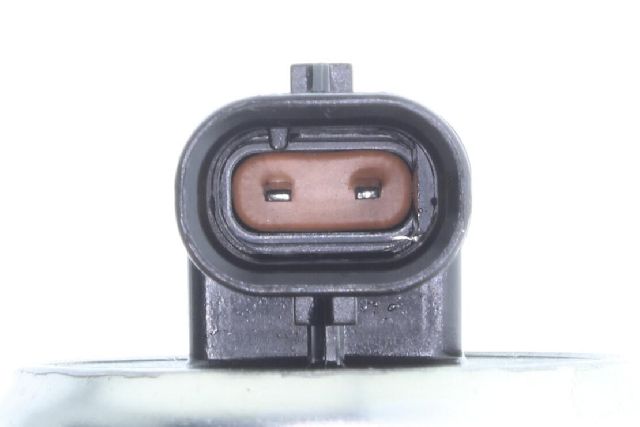
- VCT Solenoid Connector — On top of the valve cover, plugged into the VCT solenoid.. The connector has two pins: one is a 12V power supply (active with key on), and the other is the control wire that the PCM pulses to ground to operate the solenoid. Checking for 12V at the connector is a primary step to rule out a wiring issue before condemning the solenoid.
Real Owner Repair Stories
- Ford F150 Forum (diagnostic process is analogous) (Ford with VCT system (example was 5.0L V8, but PID analysis is identical)) — After 2+ hours of highway driving (hot soak), the engine would shudder, idle roughly, and sometimes stall at stoplights. A P0022 (Bank 2 Intake Over-Retarded) was stored.
❌ Tried (didn't work) Initial diagnosis was uncertain between a bad VCT solenoid and a much more expensive cam phaser failure.
✅ What actually fixed it Diagnosis via FORScan provided the answer. By graphing the VCT error PID (VCT_INT_DIF2 in this case), the user saw large, slow-reacting curves that indicated the solenoid was not responding to commands correctly when hot. This pattern is characteristic of a sticking solenoid, not a completely failed mechanical phaser. The recommended fix was to replace the specific VCT solenoid.
When the Usual Fixes Don't Work
- While P0015 points to an engine timing issue, similar symptoms like stalling when coming to a stop can have non-engine causes. In one documented case for a Transit Connect, these exact symptoms with no engine codes were ultimately traced to a leaking transmission fluid cooler line. The resulting low ATF level caused the torque converter clutch to bind at low speeds, stalling the engine. This is a valuable reminder to not get tunnel vision; if engine diagnostics for P0015 (solenoid, oil, timing) do not resolve the issue, consider that the stalling symptom may have a separate, transmission-related cause.
OEM Part Supersession History
CJ5Z-6M280-A→N/A— This part number appears to be stable and has not been superseded.
Heads up: This solenoid is widely used across many Ford 2.0L, 2.3L, and 2.5L engines in models like the Escape, Fusion, and Focus, making it a very common part.
Model Year Variations Within This Range
- 2019-2021: For the 2019 model year facelift, the standard engine became the 2.0L GDI I4 with an 8-speed automatic. The 2.5L I4 engine, while still available, was primarily offered for fleet customers and CNG/LPG prep packages.
- 2019-2020: A recall (20C26) was issued for some Transit Connects with the 2.5L engine for a PCM software issue. The original software had incorrect fail-safe temperature thresholds, which could delay the cooling strategy during coolant loss. While not directly causing P0015, it represents a model-year-specific electronic difference in engine management that dealers would update.
Helpful Videos

![How to Fix P0015 Engine Code in 4 Minutes [2 DIY Methods / Only $6.62]](https://img.youtube.com/vi/kO0eG5jKmzg/mqdefault.jpg)
We Have This Part in Stock


The information in this article is provided for general reference and educational purposes only. Vehicle specifications, procedures, and part compatibility can vary by production date, trim level, and region. Always consult your vehicle's factory service manual and verify part numbers before purchasing or performing repairs. Safety-critical components such as airbags, seat belts, and braking systems should be installed by a qualified professional.
- Ford TRANSIT CONNECT:
- 🧭 Diagnostic Flowchart
- 🎬 Helpful Videos
- 🛍️ Shop This Part
- What's Unique About the 2015-2021 Ford TRANSIT CONNECT
- Symptoms You May Notice
- Most Likely Causes
- Rare But Worth Checking
- Diagnosis Steps
- Parts You'll Likely Need
- Related Codes That Often Appear With This One
- Technical Service Bulletins (TSBs) & Recalls
- Platform-Specific Known Issues
- Mechanic-Grade Diagnostic Values
- Hidden / Shadow Codes Worth Checking
- Scan Tool Commands That Help
- Wiring & Ground Locations
- Real Owner Repair Stories
- When the Usual Fixes Don't Work
- OEM Part Supersession History
- Model Year Variations Within This Range
- 🎟️ Get 5% Off