

P0015 on 2017-2020 Lincoln Continental: Causes and Fixes for Over-Retarded Exhaust Cam Timing
P0015 indicates the exhaust camshaft on Bank 1 is lagging in its timing. For the transverse-mounted V6 engines in the Continental, Bank 1 is the cylinder bank closer to the firewall. This is most often caused by low/dirty engine oil or a sticking Variable Camshaft Timing (VCT) solenoid. An oil change is the first diagnostic step, but replacing the VCT solenoid is the most common repair, with the OEM part costing between $50 and $150.
- P0015 means the exhaust camshaft on the passenger-side bank is not timed correctly.
- Always check your engine oil level and condition first. A simple oil change with the correct full-synthetic oil can sometimes fix the issue.
- The most likely failed part is the Bank 1 exhaust VCT solenoid, which is a known issue acknowledged by Ford/Lincoln.
- Do not immediately suspect a major timing chain issue unless you also hear significant engine rattling.
- Replacing the VCT solenoid is a manageable DIY task for many home mechanics and is the most common definitive repair for this code.
What's Unique About the 2017-2020 Lincoln CONTINENTAL
For this generation of Lincoln Continental and related Ford vehicles, the manufacturer has issued multiple Technical Service Bulletins (TSBs) that directly address the cause of P0015. The TSBs, such as SSM 48423, state that small debris in the engine oil can cause the VCT solenoids to stick, preventing them from operating correctly. The TSBs even recommend a specific diagnostic procedure (pinpoint test HK11) where a scan tool is used to cycle the solenoid 10 times to attempt to clear the debris before replacement, confirming this is a well-known issue. This makes oil condition and the VCT solenoid itself the primary focus for diagnosis, rather than more complex mechanical issues like timing chains or cam phasers.
Diagnostic Flowchart
Tap your situation to follow the diagnostic path that matches what you're seeing on this vehicle.
Symptoms You May Notice
- Check Engine Light is illuminated
- Rough engine idle, sometimes leading to stalling
- Reduced engine power and sluggish acceleration
- Hesitation or stumbling during acceleration
- Decreased fuel economy
- Rattling or ticking noises from the engine 🎬 Watch: See how a bad VCT solenoid causes these symptoms., particularly on startup
- Replacing the camshaft position sensor when the VCT solenoid is the actual problem. The sensor is reporting the timing issue correctly; it is not the cause of it.
Most Likely Causes
- Low or Dirty Engine Oil 🔴 High Probability The VCT system is hydraulic and extremely sensitive to oil pressure, viscosity, and cleanliness. The manufacturer TSBs (SSM 48423, SSM 47170) directly state that debris in the oil can cause the solenoids to stick. Using oil of the incorrect viscosity can also trigger this code.
How to confirm: Check the engine oil level on the dipstick and examine its condition. If the oil is below the 'MIN' mark, black, gritty, or past its recommended change interval, this is a highly likely cause.
Typical fix: Perform an engine oil and filter change using the full synthetic oil viscosity recommended by Lincoln (e.g., Motorcraft SAE 5W-30) and a quality filter (e.g., Motorcraft FL-500S). Clear the code and drive to see if it returns.
Est. part cost: $40-$80 - Failed Bank 1 Exhaust VCT Solenoid 🔴 High Probability → Shop Engine Variable Valve Timing (VVT) Solenoid This is the most common mechanical failure for this code, as documented in multiple TSBs and extensive owner forums for platform mates like the F-150 and Edge. The solenoid gets clogged with debris or fails electrically, preventing it from properly regulating oil flow to the cam phaser.
How to confirm: After confirming oil is clean and full, use a scan tool to perform the VCT solenoid control test (Pinpoint Test HK11) mentioned in TSB 48423, which attempts to cycle the solenoid. A common DIY method is to swap the exhaust solenoid with the intake solenoid on the same bank (if they are identical parts). If the code changes to P0012 (Intake Over-Retarded), the solenoid is confirmed bad. You can also test resistance with a multimeter; a reading between 6.9-7.9 ohms is typical.
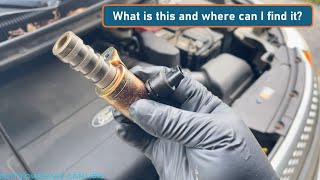
Typical fix: Replace the Bank 1 (firewall side) exhaust VCT solenoid. On the 2.7L and 3.0L engines, this requires removing the upper intake manifold 🎬 See this walkthrough for fixing rough idle on EcoBoost engines. for access, making it more labor-intensive.
Est. part cost: $50-$150 - Damaged VCT Solenoid Wiring or Connector ⚪ Low Probability → Shop Engine Variable Valve Timing (VVT) Solenoid
How to confirm: Visually inspect the electrical connector and wiring harness leading to the Bank 1 exhaust VCT solenoid for any signs of fraying, corrosion, loose pins, or oil contamination from a leaking valve cover.
Typical fix: Repair the damaged wiring or replace the connector pigtail.
Est. part cost: $15-$50
Rare But Worth Checking
- Failing Camshaft Position Sensor: → Shop Engine Camshaft Position Sensor This is an uncommon cause for P0015. The sensor's job is to report the camshaft's position; if it fails, it usually triggers other specific sensor-related codes (like P0345 or P0349). However, it can sometimes send incorrect data, leading to a timing fault code.
- Stretched Timing Chain or Failed Cam Phaser: → Shop Engine Timing Chain This is the most serious and expensive potential cause. If you hear a significant rattling noise from the engine, especially on cold starts, it could indicate a problem with the timing chain, tensioners, or the cam phaser itself. The presence of codes like P0017 alongside P0015 increases the likelihood of a base timing issue. On the 3.7L engine, failure of the internal water pump can contaminate the oil and accelerate timing chain wear.
Diagnosis Steps
- Check Engine Oil: Verify the engine oil is at the correct level and is clean. If low or dirty, perform an oil and filter change with the manufacturer-specified oil and filter, clear the code, and re-test. This simple step resolves the issue in many cases.
- Scan for Codes: Use an OBD-II scanner to confirm P0015 and check for any other related codes (e.g., P0017, P0025) that could point to a more systemic issue.
- Inspect Wiring: Visually inspect the electrical connector and wiring for the Bank 1 (firewall side) exhaust VCT solenoid for damage, oil saturation, or corrosion.
- Test the Solenoid (Scan Tool): Use a scan tool with bidirectional controls to command the solenoid on and off, following the procedure in TSB 48423 (Pinpoint Test HK11). Listen for a click and watch live data for a change in cam position.
- Swap Solenoids (DIY Test): If the intake and exhaust solenoids are the same part number, swap their positions. Clear the codes and drive the vehicle. If the code changes to P0012 (Bank 1 Intake Over-Retarded), the solenoid you moved is faulty and must be replaced.
- Replace Solenoid: If the solenoid is confirmed to be faulty, replace the Bank 1 exhaust VCT solenoid. For the 2.7L/3.0L engines, this will require removing the upper intake manifold.
- Advanced Mechanical Diagnosis: If a new solenoid and clean oil do not resolve the code, the issue may be a faulty cam phaser, a stretched timing chain, or sludged oil passages. This level of diagnosis is best left to a professional.
Parts You'll Likely Need
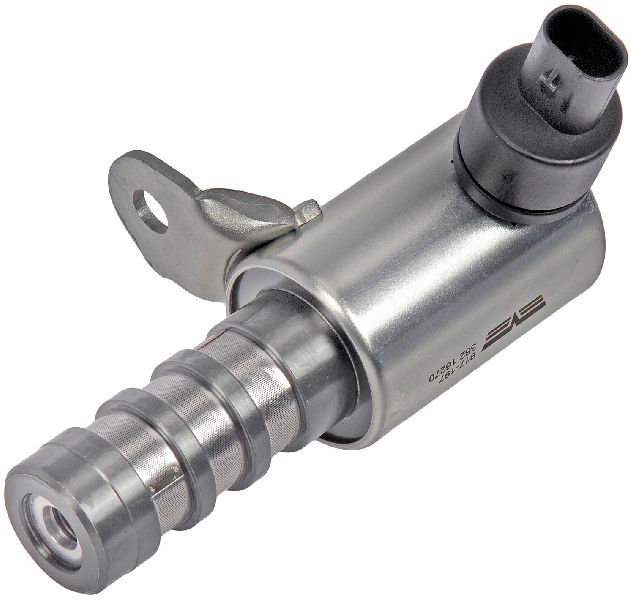
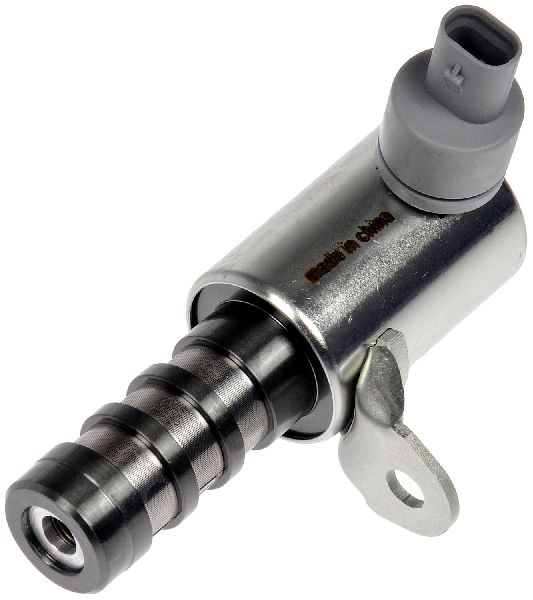
- Engine Variable Valve Timing (VVT) Solenoid
(OEM #FT4Z-6M280-C (For 2.7L/3.0L EcoBoost), BR3Z-6M280-D (For 3.7L V6))— This is the most common point of failure for code P0015 on this platform, as confirmed by multiple manufacturer TSBs. It becomes stuck due to oil contamination or electrical failure.
Trusted brands: Motorcraft (OEM), Dorman, NTK, Standard Motor Products (SMP)
OEM price range: $50-$150
Aftermarket price range: $40-$90 - Upper Intake Manifold Gaskets — For the 2.7L and 3.0L engines, the upper intake manifold must be removed to access the Bank 1 (firewall side) VCT solenoids. The gaskets are single-use and must be replaced to prevent vacuum leaks.
Trusted brands: Fel-Pro, Motorcraft, Mahle
OEM price range: $30-$60
Aftermarket price range: $15-$40
Related Codes That Often Appear With This One
- P0014 — This is for an over-advanced exhaust cam on the same bank. Seeing both P0014 and P0015 can indicate an erratic solenoid or oil pressure issue causing the timing to swing between extremes.
- P0025 — This is the same over-retarded code but for Bank 2 (radiator side). If P0015 and P0025 appear together, it strongly suggests a systemic problem like low/dirty oil or low oil pressure affecting the entire engine.
- P0017 — This code indicates a correlation problem between the crankshaft and the Bank 1 exhaust camshaft. If it appears with P0015, it increases the likelihood of a mechanical timing issue like a stretched timing chain or a failed phaser.
Technical Service Bulletins (TSBs) & Recalls
- SSM 54366: Some 2015-2021 Ford and Lincoln vehicles may exhibit an illuminated MIL with various VCT DTCs including P0015.
- SSM 48423: Some 2015-2020 Ford and Lincoln vehicles may exhibit an illuminated MIL with various VCT DTCs including P0015, possibly due to small debris causing the VCT solenoid to stick. Recommends cycling the solenoid 10 times with a scan tool before replacement.
- SSM 47170: Some vehicles may exhibit an illuminated MIL with various VCT DTCs including P0015, possibly due to small debris causing the VCT solenoid to stick.
- TSB 16-0010: For some low-mileage 2016 models, this TSB noted that P0015 paired with P0017 could indicate a faulty exhaust VCT solenoid.
Platform-Specific Known Issues
- TSB SSM 48423 and SSM 47170: The manufacturer notes that for some 2015-2020 Ford and Lincoln vehicles, DTCs including P0015 may be caused by 'small debris causing the VCT solenoid to stick.' The TSB specifically advises technicians to try cycling the solenoid with a scan tool to clear it before replacement.
- Bank 1 Access Difficulty (2.7L/3.0L): On the EcoBoost V6 engines, the Bank 1 VCT solenoids are on the firewall side of the engine, underneath the upper intake manifold. This makes replacement significantly more labor-intensive than the easily accessible Bank 2 solenoids.
- TSB SSM 54366: This bulletin also covers P0015 and related VCT codes for a wide range of 2015-2021 Ford and Lincoln vehicles, indicating the persistence of this issue across multiple platforms and model years. It directs technicians to the standard pinpoint tests in the PC/ED manual.
Mechanic-Grade Diagnostic Values
- VCT Solenoid Internal Resistance (3.7L Engine) — expected: 6.9 to 7.9 Ohms at 68°F (20°C). Some sources give a broader acceptable range of 5-14 Ohms.. Failure: A reading of 0 Ohms (short circuit) or OL/infinity (open circuit) indicates a failed solenoid.
- VCT Solenoid Internal Resistance (2.7L/3.0L EcoBoost) — expected: 5 to 15 Ohms.. Failure: A reading outside this range, especially 0 or infinity, points to a faulty solenoid.
- VCT Solenoid Connector Voltage (Key On, Engine Off) — expected: One of the two pins should have battery voltage (approx. 12.6V) supplied from the PCM power relay.. Failure: Voltage below 10.5V or no voltage indicates a wiring issue, a bad fuse (e.g., F16 in battery junction box), or a problem with the PCM power relay.
- Engine Oil Pressure at Idle (Warm Engine) — expected: At least 25 PSI.. Failure: Pressure below 25 PSI indicates an oiling system problem that is preventing the VCT system from functioning correctly, which will trigger timing codes.
- Scan Tool Live Data: VCT Advance Error PID (VCTADVERR) — expected: Should be near 0° at idle and under steady-state driving.. Failure: A consistent, significant deviation (e.g., more than +/- 5 degrees) between the commanded and actual cam position indicates the phaser is not reaching its target, which could be due to a sticking solenoid, low oil pressure, or a phaser issue.
Hidden / Shadow Codes Worth Checking
- Mode 6, Test ID $81, Component ID $11-$14: Ford uses Mode 6 data to show the results of non-continuous monitor tests. For the VCT system, specific test IDs (TID) and component IDs (CID) track the average error of the camshaft angle. A high value that is approaching the failure threshold can indicate a developing problem before a DTC like P0015 is set. (see via A professional scan tool capable of displaying Mode 6 data. The specific TIDs and CIDs can vary by year and engine, so a tool with Ford-specific definitions is most helpful.)
Scan Tool Commands That Help
- Ford IDS (Integrated Diagnostic System): VCT Solenoid Duty Cycle PID (VCTDC) — When diagnosing an active fault, a technician can monitor the duty cycle percentage the PCM is commanding to the solenoid. If the PCM is commanding a high duty cycle (e.g., over 75%) to try and move a stuck phaser with no corresponding change in cam angle, it points to a mechanical or hydraulic issue (sticking solenoid, bad phaser) rather than an electrical one.
- Ford IDS (or equivalent bidirectional scan tool): Output State Control for VCT Solenoid — This is the specific function for the 'Pinpoint Test HK' mentioned in TSBs. It allows a technician to manually command the solenoid on and off with the engine running at idle. A functional solenoid will cause a noticeable change in idle quality or may even stall the engine. If there is no change, the solenoid is not actuating.
Wiring & Ground Locations
- VCT Solenoid Connector — On the front of the valve cover for the respective cylinder bank. Bank 1 (firewall side) on the 2.7L/3.0L requires removing the upper intake manifold for access. It is a two-pin connector.. The two pins are for power (from PCM relay) and ground control (from PCM). Checking for ~12V on the power pin and inspecting for corrosion or oil saturation is a key diagnostic step.
- G100 / G101 (example ground points) — Major engine and chassis ground points are typically located on the fender aprons, near the radiator support, or directly on the engine block. For example, G100 is often on the LH side of the engine. A poor engine ground can cause a variety of electrical issues, including erratic sensor readings and incorrect actuator commands from the PCM.. While a direct cause for P0015 is unlikely, a faulty primary engine ground can cause the PCM to operate incorrectly, potentially leading to improper VCT solenoid control. Verifying the main engine-to-chassis ground strap is clean and tight is good practice when diagnosing any electronic DTCs.
Real Owner Repair Stories
- Reddit user, similar VVT system (Jeep 3.6L) (Jeep Wrangler with 3.6L Pentastar V6) — Persistent P0015 code after multiple repairs.
❌ Tried (didn't work) Replacing the VVT solenoid., Performing a complete timing chain service.
✅ What actually fixed it The root cause was found to be the use of the wrong viscosity engine oil. The owner had used a 30-weight oil when the manufacturer specified a 20-weight oil. The thicker oil could not flow correctly through the VVT system's tight passages, causing the timing to be over-retarded. Switching back to the correct oil viscosity resolved the code permanently.
OEM Part Supersession History
7T4Z-6M280-C (and predecessors 7T4Z-6M280-A, -AA, -B)→BR3Z-6M280-D (which is now superseded by BR3Z-6M280-F)— Part revision and improvement by the manufacturer for durability and performance in 3.7L V6 engines.
Heads up: The part number for the 2.7L/3.0L EcoBoost (FT4Z-6M280-C) is different and not interchangeable with the 3.7L parts. Always verify the correct part number by VIN.
Helpful Videos
We Have This Part in Stock


The information in this article is provided for general reference and educational purposes only. Vehicle specifications, procedures, and part compatibility can vary by production date, trim level, and region. Always consult your vehicle's factory service manual and verify part numbers before purchasing or performing repairs. Safety-critical components such as airbags, seat belts, and braking systems should be installed by a qualified professional.
- Lincoln CONTINENTAL:
- 🧭 Diagnostic Flowchart
- 🎬 Helpful Videos
- 🛍️ Shop This Part
- What's Unique About the 2017-2020 Lincoln CONTINENTAL
- Symptoms You May Notice
- Most Likely Causes
- Rare But Worth Checking
- Diagnosis Steps
- Parts You'll Likely Need
- Related Codes That Often Appear With This One
- Technical Service Bulletins (TSBs) & Recalls
- Platform-Specific Known Issues
- Mechanic-Grade Diagnostic Values
- Hidden / Shadow Codes Worth Checking
- Scan Tool Commands That Help
- Wiring & Ground Locations
- Real Owner Repair Stories
- OEM Part Supersession History
- 🎟️ Get 5% Off