

P0015 on 2014-2016 Mazda 6 SKYACTIV: Exhaust Cam Timing Causes and Fixes
On a 2014-2016 Mazda 6 with the SKYACTIV engine, code P0015 is almost always caused by low/dirty engine oil or a faulty exhaust Oil Control Valve (OCV). Start by checking your oil level and condition; an oil change with 0W-20 synthetic oil may fix it. If not, the OCV is the next likely part to replace. This issue is often paired with code P0524 (Low Oil Pressure), confirming an oil system problem as documented in Mazda TSBs.
- Always check your engine oil level and condition first. An oil change with 0W-20 synthetic oil might be the only fix you need.
- This code is very often related to oil pressure. If you also have a P0524 code, the problem is almost certainly oil-related, as confirmed by a Mazda TSB.
- Do not immediately replace the camshaft position sensor; it is rarely the cause.
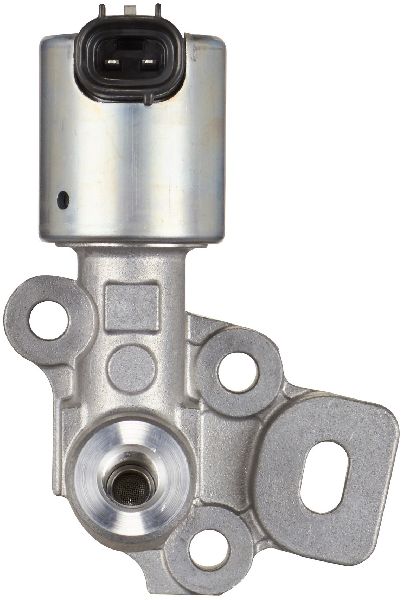
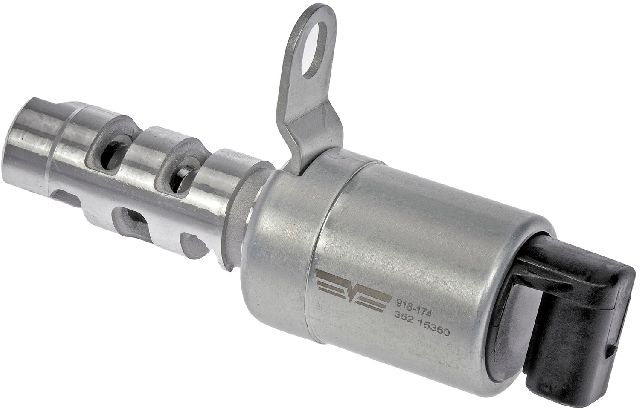
- If an oil change doesn't work, the next most likely fix is replacing the exhaust Oil Control Valve (OCV), part number PE01-14-420A.
What's Unique About the 2014-2016 Mazda 6
Mazda's SKYACTIV engines are known for being highly sensitive to oil quality and pressure. Mazda issued a Technical Service Bulletin (TSB #01-009/16) that directly addresses P0015, often appearing with code P0524 (Engine Oil Pressure Too Low). The bulletin explains that debris in the oil can get stuck in the oil pump's pressure relief valve or the Oil Control Valve (OCV), causing a drop in oil pressure that leads to this specific timing code. The TSBs also detail a repair path that may involve replacing the original oil strainer with a modified part, suggesting an update to the original design. Additionally, TSB Bulletin #01-016-19-3627 notes that some vehicles may experience a rough idle in conjunction with these codes, specifically identifying P0015:00 (Exhaust CMP timing over-retarded) and P0524:00 (Engine oil pressure too low) as being caused by a drop in engine oil pressure.
Symptoms You May Notice
- Check Engine Light is on
- Rough idle
- Poor acceleration or hesitation
- Reduced fuel economy
- Engine stalling, especially at low speeds
- Rattling noise from the engine
- Replacing the Camshaft Position Sensor. The sensor is usually reporting the problem correctly; the issue is typically mechanical or hydraulic (oil pressure), not the sensor itself.
Most Likely Causes
- Low or Dirty Engine Oil 🔴 High Probability The SKYACTIV VVT system is extremely sensitive to oil level, viscosity, and cleanliness. This is the most common cause and the first thing to check, as confirmed by multiple Mazda TSBs.
How to confirm: Check the oil level on the dipstick. Inspect the oil for darkness, thickness (sludge), or a burnt smell. Check the vehicle's service history for the last oil change date.
Typical fix: Perform an engine oil and filter change using a high-quality, full synthetic 0W-20 oil, which is specified for this engine.
Est. part cost: $40-$80 - Faulty Exhaust Oil Control Valve (OCV) / VVT Solenoid 🟡 Medium Probability → Shop Engine Variable Valve Timing (VVT) Solenoid The OCV can become clogged with debris from the oil or fail electrically. Mazda's TSB for this issue acknowledges that debris can get stuck in the OCV, preventing it from operating correctly.
How to confirm: After confirming the oil is clean and full, you can test the OCV. A common method is to swap the exhaust OCV with the intake OCV. If the trouble code changes to P0012 (Intake 'A' Camshaft Position Timing Over-Retarded), the OCV is faulty. You can also test the solenoid's resistance with a multimeter; it should be between 6.9 and 7.9 Ohms.
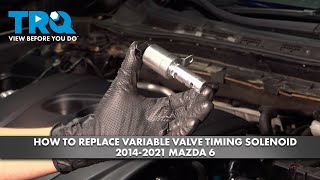
Typical fix: Replace the exhaust Oil Control Valve. 🎬 Watch: Step-by-step guide to replacing the VVT solenoid It is typically located on the top or side of the valve cover.
Est. part cost: $40-$150
Rare But Worth Checking
- Failing Oil Pump / Clogged Oil Passages: → Shop Engine Oil Pump This is a more serious issue, often indicated by the presence of code P0524 along with P0015. The TSB points to debris getting stuck in the oil pump's pressure relief valve, causing a system-wide drop in oil pressure. This requires a mechanical oil pressure test to confirm. The TSB repair path may involve replacing the oil pump and the oil strainer with a modified part.
- Stretched Timing Chain or Failed Tensioner: → Shop Engine Timing Chain While not as common on this platform as oil issues, a significant mechanical timing problem can cause this code, often accompanied by P0017 (Crank/Cam Correlation). This would typically involve a rattling noise on startup and is more likely on higher-mileage vehicles.
- Cracked Internal Oil Passage: In very rare cases where all other fixes fail, the P0015 code has been traced to a hairline crack in an internal engine oil passage, bleeding off pressure to the VVT system. This is nearly impossible to diagnose without a full engine teardown and typically results in engine replacement.
Diagnosis Steps
- Read the trouble codes with an OBD-II scanner. Note if any other codes, especially P0524, are present.
- Inspect Engine Oil. Check the dipstick for the oil level and condition. If low, dirty, or overdue for a change, perform an oil and filter change with full synthetic 0W-20 oil. Clear the code and drive to see if it returns.
- Follow TSB Debris Clearing Procedure. If the code returns, try the manufacturer's suggested method of revving the engine to 4,000 RPM 🎬 See how to potentially clear debris with this DIY method or more for 10 times to potentially dislodge debris from the OCV or oil passages.
- Inspect and Test the Exhaust Oil Control Valve (OCV). Locate the exhaust OCV. Inspect its wiring and connector for damage. You can swap it with the intake OCV 🎬 Watch: How to diagnose and solve the P0015 timing issue to see if the code follows the part (changing to P0012). If it does, the OCV is bad. Alternatively, test its resistance (should be 6.9-7.9 Ohms).
- Test Oil Pressure. If the OCV is not the issue, or if code P0524 was present, perform a mechanical oil pressure test to verify the health of the oil pump and check for internal restrictions, as recommended by Mazda's TSB.
- Inspect Timing Components. If oil pressure is good and the OCV is functional, the final step is to inspect the timing chain, guides, and phaser for wear or damage. This is the least likely cause and most labor-intensive.
Parts You'll Likely Need
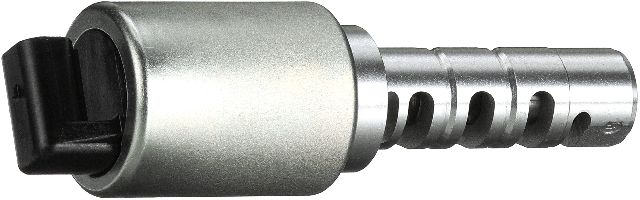
- Exhaust Oil Control Valve (VVT Solenoid)
(OEM #PE01-14-420A)— This valve gets clogged with oil debris or fails electrically, preventing proper control of the exhaust camshaft phaser. It is the most commonly replaced part for this code after an oil change fails to resolve the issue.
Trusted brands: Mazda OE, Denso, Dorman, Standard Motor Products (SMP)
OEM price range: $120-$200
Aftermarket price range: $40-$90 - Engine Oil and Filter — Low, old, or incorrect viscosity oil is the leading cause of P0015 on SKYACTIV engines. An oil change is the first and most critical step.
Trusted brands: Castrol, Mobil 1, Valvoline, Mazda Genuine 0W-20
Aftermarket price range: $40-$80
Related Codes That Often Appear With This One
- P0524 — Stands for 'Engine Oil Pressure Too Low'. Mazda TSB #01-009/16 explicitly states that P0015 and P0524 are often stored together due to a drop in oil pressure caused by debris in the oil system.
- P0017 — Stands for 'Crankshaft Position - Camshaft Position Correlation'. This may appear if the timing has become significantly off, pointing towards a more serious mechanical issue like a stretched timing chain.
Technical Service Bulletins (TSBs) & Recalls
- 01-009/16: Describes a rough idle with check engine light on and DTC P0015 / P0524 stored, caused by a drop in engine oil pressure from foreign objects in the oil system. It covers the Mazda3, Mazda6, and CX-5.
- TSB Bulletin #01-016-19-3627: Confirms that some vehicles may experience a rough idle with the check engine light on and DTC P0015 / P0524 stored in memory, specifically identifying the cause as a drop in engine oil pressure.
Platform-Specific Known Issues
- Mazda TSB #01-009/16 identifies an issue where debris can get stuck in the oil pump pressure relief valve or the OCV, causing a drop in oil pressure that triggers codes P0015 and P0524.
- The TSB diagnostic tree specifies that if a scan tool shows the actual exhaust valve timing is over-retarded by more than 5 degrees from the target, the OCV should be replaced.
Mechanic-Grade Diagnostic Values
- Exhaust OCV Resistance — expected: 6.9 - 7.9 Ohms at 20°C (68°F). Failure: A reading outside this range, or a wildly fluctuating reading, indicates a faulty solenoid coil.
- Exhaust OCV Connector Voltage (KOEO) — expected: Approximately 12V (battery voltage) on one pin, 0V on the other.. Failure: No voltage on either pin suggests a wiring or fuse issue. The 12V supply typically comes from the 'ENG BAR 15A' fuse.
- Scan Tool Live Data: Camshaft Timing Deviation — expected: Actual timing ('VT_EX_ACT') should closely follow desired timing ('VT_EX_DES').. Failure: A deviation of more than 5 degrees between the actual and desired values when the engine is running.
- Mechanical Oil Pressure Test (Engine at 90°C/194°F) — expected: Refer to workshop manual for specific pressures at 650, 1,500, and 4,500 RPM.. Failure: Pressure below the specified range confirms a hydraulic issue as described in TSB 01-009/16.
Hidden / Shadow Codes Worth Checking
- N/A (Stuck Code Behavior): Per TSB 01-012/20, a software issue on some models can cause DTCs (including P0524, which is often paired with P0015) to become 'stuck' and unable to be cleared with a standard scan tool, even after the underlying fault is repaired. (see via This is not a hidden code to find, but a condition observed when a standard 'Clear Codes' command fails repeatedly. The fix requires a PCM software update at a Mazda dealership.)
Scan Tool Commands That Help
- FORScan / Mazda M-MDS: Output Control / Bidirectional Control for Exhaust OCV — This allows a technician to manually command the OCV solenoid on and off while the engine is running to verify its mechanical operation. A change in engine idle or sound should be noticeable if the solenoid is working.
- Mazda IDS: VVT Test — This is a guided diagnostic function within the dealer software to systematically test the variable valve timing system's response.
Wiring & Ground Locations
- Exhaust OCV Connector — On the Oil Control Valve, typically on the top or side of the engine's valve cover.. One pin should receive a constant 12V supply from the 'ENG BAR 15A' fuse with the key on. The other pin is the control wire that the PCM pulses to ground to activate the solenoid. A failure in this wiring can mimic a failed OCV.
- PCM Pin 4S (example) — At the Powertrain Control Module (PCM) connector.. This is the specific pin that sends the ground signal to the OCV on some Mazda models. Verifying continuity from this pin to the OCV connector is a key step in diagnosing a wiring or PCM driver fault.
- G2 Ground Point — Under the lower left side of the dashboard.. While not specific to the OCV circuit, poor engine or chassis grounds can cause a wide range of electrical issues, including erratic sensor and actuator behavior. Verifying main grounds is a good practice if electrical faults are suspected.
Real Owner Repair Stories
- MazdaSpeeds Forum User (2007 Mazdaspeed6 (similar engine control logic)) — P0012 (Intake side, but same diagnostic principle). PCM was not sending the ground signal to the OCV.
❌ Tried (didn't work) Replacing the OCV did not fix the issue.
✅ What actually fixed it Diagnosis revealed a wiring issue. The user found that with the OCV connected, the 12V supply voltage would drop significantly, indicating high resistance in the circuit that prevented the solenoid from actuating properly. The final fix required tracing and repairing the wiring between the fuse box, OCV, and PCM. - Reddit r/AskMechanics User (2005 Mazda 6 3.0L) — Misfire, troubleshooting VVT system.
✅ What actually fixed it This was a diagnostic observation rather than a final fix. The user noted that the resistance of both OCVs would read correctly one day (e.g., 10 ohms) but then read much higher on other days (14 ohms, 20 ohms), far outside the 6.9-7.9 ohm spec. This highlights a failure mode where the OCV coil can become unstable at different temperatures, a fault that a single resistance check might miss.
When the Usual Fixes Don't Work
- While an oil change or OCV replacement fixes P0015 in the vast majority of cases, forum records show instances where the problem was more complex. In one case involving a similar Mazda engine, the OCV tested good and had been replaced, but the code persisted because the PCM was not providing the ground signal due to a high-resistance wiring fault. This required a voltage drop test to diagnose, as a simple continuity test was not sufficient to find the fault.
OEM Part Supersession History
PE0114420→PE01-14-420A— Standard part revision or change in manufacturer. No specific reason documented in public sources.
Model Year Variations Within This Range
- 2014-2016: The 2016 model year received a significant interior refresh (new dashboard, larger infotainment screen, electronic parking brake). However, the 2.5L SKYACTIV-G engine and related VVT components that cause code P0015 remained unchanged. Therefore, the diagnosis and repair for this specific code are identical across this year range.
Diagnostic Flowchart
Other Known Issues on This Vehicle
Issues unrelated to this code that are worth knowing about as an owner of this generation:
- Infotainment System Glitches (Mazda Connect) 🟡 Low — Very common on 2014-2016 models. Issues include screen freezing, slow response, and Bluetooth connectivity problems. (Ref: Firmware updates were released to address some issues. No recall.)
- Carbon Buildup on Intake Valves 🟠 Medium — An inherent issue with all Gasoline Direct Injection (GDI) engines, including SKYACTIV. Can cause rough idle or loss of power over time, typically noticeable after 60,000+ miles. (Ref: Mazda has a TSB describing a chemical cleaning procedure.)
- Automatic Transmission Failure (Early Models) 🔴 High — Less common than other issues, but documented for early 2014 models. Symptoms include whining, rough/delayed shifting, or complete failure. (Ref: A TSB was issued in 2015 for a manufacturing defect in certain transmissions, identified by VIN.)
- Fuel Dilution of Engine Oil 🟠 Medium — More prevalent in vehicles used primarily for short trips. Unburned fuel contaminates the engine oil, reducing its viscosity and lubrication properties, which can accelerate wear.
Used vs. New Parts: Buying Guide for This Vehicle
When a used part is the smart pick: For the Oil Control Valve (OCV), buying used is generally not recommended. The part is relatively inexpensive new, and a primary failure mode is internal clogging from the previous owner's dirty oil. The risk of getting a part that is already clogged or near the end of its electrical life is high.
Donor-vehicle mileage cap: roughly under 50000 miles for the part to have meaningful remaining life.
What to inspect on the donor part:
- Ask for the VIN of the donor car to verify low mileage.
- Inspect the mesh screens on the solenoid. They should be perfectly clean and free of any sludge or metallic debris.
- Test the resistance with a multimeter before purchase; it must be within the 6.9-7.9 Ohm range.
- Avoid parts that show any signs of oil sludge baked onto the exterior.
OEM-only on this vehicle (don't cheap out):
- While not strictly 'OEM-only', using a cheap, unbranded OCV from online marketplaces is a significant gamble. The precision of these valves is critical to engine timing.
Aftermarket brands forum-validated for this vehicle:
- Denso (often the original equipment manufacturer)
- Standard Motor Products (SMP)
- Dorman
Brands owners have reported issues with on this vehicle:
- Generic, no-name brands from marketplaces like Amazon or eBay with no established reputation in the auto parts industry.
Real Owner Stories
Aggregated from forums and TSBs cited above. Mileages and costs reflect what owners reported in those sources.
2014 Mazda 6
Symptoms: Check Engine Light with P-codes, rough idle.
What fixed it: The owner suggested the fix involves renewal of the Oil Pump and/or Oil Control Valve (OCV), which aligns with the official TSB repair path.
Source hint: RX8Club.com
2014 Mazda CX-5 2.5L
Symptoms: Persistent check engine light for P0015.
What fixed it: This was a diagnostic dead end. The owner reported that replacing the oil pump, VVT solenoid (OCV), and timing chain did not resolve the issue.
Source hint: Reddit r/AskMechanics
Related OBD-II Codes
Frequently Asked Questions
What's the very first thing I should check on my 2014-2016 Mazda 6 if I get a P0015 code?
I have both P0015 and P0524 codes. Are they related on this car?
Is there an easy way to test the exhaust VVT solenoid (OCV) at home?
My mechanic mentioned revving the engine to fix the P0015 code. Is that a legitimate procedure?
Does the P0015 issue on the Mazda 6 also affect other Mazda models?
What does Mazda's TSB say is the specific cause of the P0015 and P0524 codes?
Helpful Videos

![How to Fix P0015 Engine Code in 4 Minutes [2 DIY Methods / Only $6.62]](https://img.youtube.com/vi/kO0eG5jKmzg/mqdefault.jpg)
We Have This Part in Stock


The information in this article is provided for general reference and educational purposes only. Vehicle specifications, procedures, and part compatibility can vary by production date, trim level, and region. Always consult your vehicle's factory service manual and verify part numbers before purchasing or performing repairs. Safety-critical components such as airbags, seat belts, and braking systems should be installed by a qualified professional.
- Mazda 6:
- 🧭 Diagnostic Flowchart
- 🎬 Helpful Videos
- 🛍️ Shop This Part
- What's Unique About the 2014-2016 Mazda 6
- Symptoms You May Notice
- Most Likely Causes
- Rare But Worth Checking
- Diagnosis Steps
- Parts You'll Likely Need
- Related Codes That Often Appear With This One
- Technical Service Bulletins (TSBs) & Recalls
- Platform-Specific Known Issues
- Mechanic-Grade Diagnostic Values
- Hidden / Shadow Codes Worth Checking
- Scan Tool Commands That Help
- Wiring & Ground Locations
- Real Owner Repair Stories
- When the Usual Fixes Don't Work
- OEM Part Supersession History
- Model Year Variations Within This Range
- Other Known Issues on This Vehicle
- Used vs. New Parts: Buying Guide for This Vehicle
- Real Owner Stories
- 2014 Mazda 6
- 2014 Mazda CX-5 2.5L
- Related OBD-II Codes
- Frequently Asked Questions
- 🎟️ Get 5% Off