

P0015 on 2016-2018 Mazda CX-3: Causes and Fixes for Exhaust Cam Timing
On a 2016-2018 Mazda CX-3, code P0015 is most often caused by low or dirty engine oil, or a failing exhaust Oil Control Valve (OCV). The first step is always to check your oil. If the oil is fine, replacing the OCV is a common, relatively inexpensive DIY fix. Mazda has issued TSBs indicating this code is often paired with P0524 (low oil pressure) due to debris in the oil system.
- P0015 on your Mazda CX-3 points to an issue with the exhaust camshaft timing, which is almost always oil-related.
- Your first and cheapest step is to check your oil level and condition. An oil and filter change with the correct 0W-20 synthetic oil may solve the problem.
- If an oil change doesn't work, the next most likely culprit is a faulty exhaust Oil Control Valve (OCV), which is a relatively accessible and affordable part to replace.
- This code is often seen with P0524 (Low Oil Pressure). If you see both, it strongly suggests an oil pressure problem that should be diagnosed immediately to prevent engine damage.
What's Unique About the 2016-2018 Mazda CX-3
Mazda's Skyactiv-G engines are high-compression and rely heavily on precise valve timing for their signature efficiency and responsiveness. This makes them particularly sensitive to the quality and pressure of the engine oil that operates the VVT system. A key piece of information for this vehicle is a Technical Service Bulletin (TSB) from Mazda that directly links P0015 with another code, P0524 (Engine oil pressure too low). The TSB explains this is often caused by a temporary piece of debris getting stuck in the oil pump's pressure relief valve or the Oil Control Valve (OCV), causing a momentary drop in oil pressure that throws the cam timing off.
Diagnostic Flowchart
Tap your situation to follow the diagnostic path that matches what you're seeing on this vehicle.
Symptoms You May Notice
- Check Engine Light is on
- Rough idle
- Poor acceleration and loss of power
- Decreased fuel economy
- Engine may hesitate or stall
- Rattling noise from the engine, especially on startup
- Hard starting or struggling to start
- Replacing the camshaft position sensor. The sensor is usually working correctly and accurately reporting that the timing is off; it is the messenger, not the cause 🎬 Watch: Learn the common causes and fixes for P0015. of the problem.
Most Likely Causes
- Low or Dirty Engine Oil 🔴 High Probability The VVT system is hydraulically operated, making it extremely sensitive to oil level, viscosity, and cleanliness. The official Mazda TSB points to oil pressure issues, often caused by small pieces of debris from infrequent oil changes, as a primary cause for P0015, especially when seen with P0524.
How to confirm: Check the engine oil dipstick for level and inspect the oil's color and consistency. If it's low, dark, or sludgy, it needs to be changed.
Typical fix: Perform an oil and filter change using the manufacturer-recommended full synthetic 0W-20 oil.
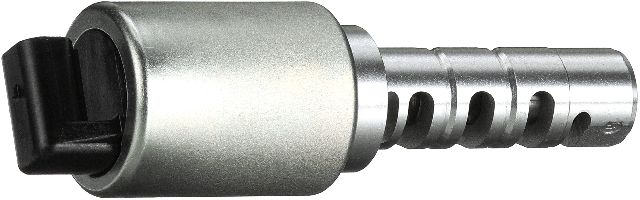
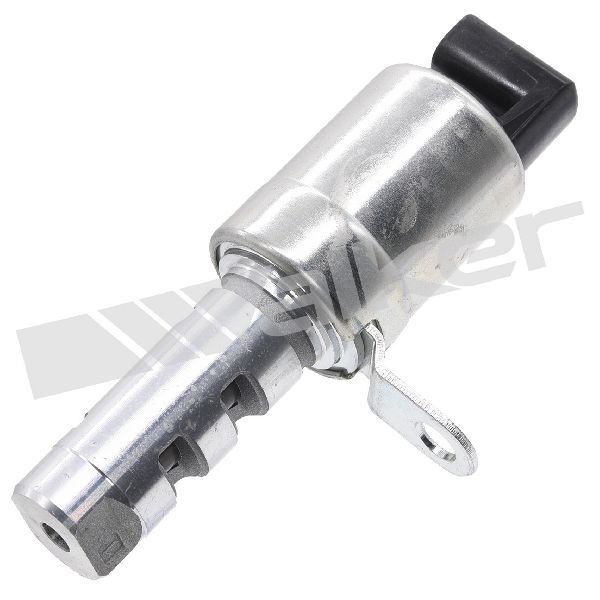
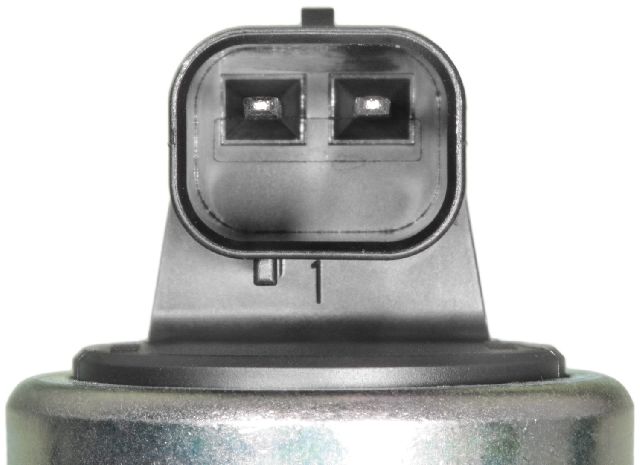
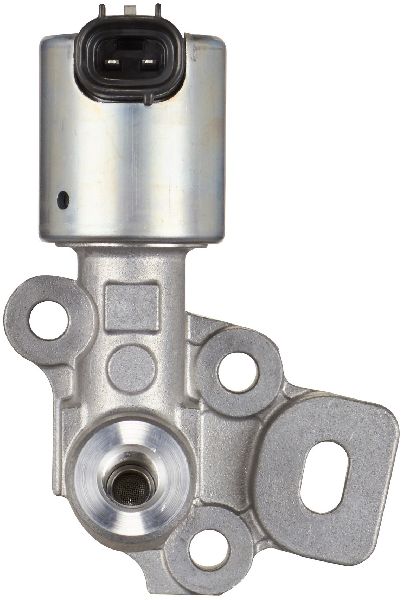
Est. part cost: $40-$80 - Faulty Exhaust Oil Control Valve (OCV) / VVT Solenoid 🔴 High Probability → Shop Engine Variable Valve Timing (VVT) Solenoid This solenoid controls oil flow to the camshaft phaser. It can become clogged with sludge or debris, or fail electrically. It is a common failure point and a specific component mentioned in Mazda's TSB as a potential location for debris to get stuck.
How to confirm: Inspect the OCV's wiring and connector. Test the solenoid with a multimeter; resistance should be around 6.9-7.9 ohms at 68°F (20°C). A common diagnostic trick is to swap the intake and exhaust solenoids (they are identical parts) and see if the trouble code changes to P0012 (intake side).
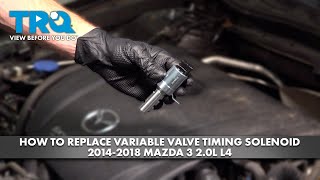
Typical fix: Remove and clean the OCV. If cleaning doesn't work or it fails the electrical test, replace the exhaust camshaft OCV with OEM part PE01-14-420A. 🎬 Watch: How to replace the VVT solenoid on your Mazda.
Est. part cost: $30-$150 - Stretched Timing Chain or Faulty Tensioner ⚪ Low Probability → Shop Engine Timing Chain While the timing chain is designed to last the engine's life, severe oil neglect can accelerate wear on the chain, guides, and tensioner. This causes slack that throws off cam/crank correlation, triggering P0015 and often P0017 as well.
How to confirm: This is a more advanced diagnosis. It often involves listening for a persistent rattling noise from the front of the engine (timing cover area) and may require removing the valve cover to inspect the chain for slack.
Typical fix: Replace the timing chain, guides, and tensioner. This is a labor-intensive job.
Est. part cost: $200-$500
Rare But Worth Checking
- Failed Camshaft Phaser: → Shop Engine Camshaft The phaser is the gear on the end of the camshaft that actually rotates to change the timing. It can get stuck or fail internally, but this is less common than an OCV failure. A user on a Mazda forum with a knocking noise and P0015/P0017 was advised to inspect the phaser.
- Clogged Oil Passages / Internal Oil Pressure Leak: Severe oil sludge can block the small passages that feed oil to the VVT components. In a very rare case for a similar Skyactiv engine, a user reported replacing all common components without success, leading to the suspicion of a cracked internal oil passage requiring an engine replacement.
- Failing Oil Pump: → Shop Engine Oil Pump While the TSB suggests debris in the pump's relief valve is common, the pump itself can fail. A Reddit user with a 2016 Mazda 3 fixed their P0015 and rattling noise by replacing the oil pump after a suspect oil change at a dealership.
Diagnosis Steps
- Check the engine oil level and condition. If it is low, dirty, or the wrong viscosity, perform an oil and filter change with full synthetic 0W-20 oil, clear the code, and drive.
- Scan for other codes. If P0524 is present, the issue is almost certainly oil pressure related, per Mazda TSBs.
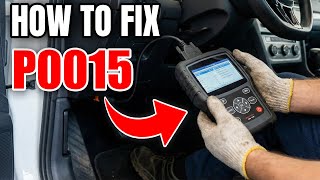
- TSB Debris Clearing Procedure: If only P0015 is stored, clear the DTC. Momentarily rev the engine to 4,000 RPM or more 10 times. This may dislodge debris stuck in the OCV 🎬 See this walkthrough on how to fix a P0015 code. or oil pump relief valve. Drive to see if the code returns.
- Mechanical Oil Pressure Test: If the code returns, perform a mechanical oil pressure test. Warm the engine to 90°C (194°F) and measure pressure at 650, 1,500, and 4,500 RPM. If pressure is below specification, the oil pump may be faulty. A Reddit user's fix for P0015 was a new oil pump.
- Inspect and Test the OCV: Locate the exhaust OCV on the cylinder head. Inspect its wiring. Swap it with the identical intake OCV and see if the code changes to P0012. Test resistance with a multimeter (should be 6.9-7.9 ohms).
- TSB Parts Replacement: If oil pressure tested normal but the code persists, Mazda's TSB recommends replacing the OCV (Part #PE01-14-420A) and the oil strainer (Part #PE7W-14-240) with a modified version, and cleaning the oil pan.
- Advanced Mechanical Check: If all the above steps fail, the issue may be a more serious mechanical problem like a stretched timing chain or a faulty camshaft phaser, which requires more in-depth diagnosis, likely by removing the valve cover.
Parts You'll Likely Need
- Engine Oil Control Valve (VVT Solenoid)
(OEM #PE01-14-420A)— This solenoid is the most common component to fail or get clogged, preventing proper VVT operation. It is a primary suspect in the Mazda TSB. Note: This part number supersedes the older PE0114420.
Trusted brands: Mazda (OEM), Dorman, Standard Motor Products (SMP), Beck Arnley
OEM price range: $120-$150
Aftermarket price range: $30-$80 - Engine Oil and Filter — Because the VVT system is so dependent on oil, starting with a fresh oil and filter change using the correct full synthetic 0W-20 oil is the most critical first step.
Trusted brands: Castrol, Mobil 1, Valvoline, Mazda High Moly (Idemitsu)
OEM price range: $60-$100
Aftermarket price range: $40-$80 - Oil Strainer
(OEM #PE7W-14-240)— The Mazda TSB repair procedure calls for replacing the oil strainer with a modified part if oil pressure tests normal, suggesting the original design may be susceptible to clogging.
Trusted brands: Mazda (OEM)
OEM price range: $40-$60
Aftermarket price range: $20-$40
Related Codes That Often Appear With This One
- P0524 — Stands for 'Engine Oil Pressure Too Low'. Mazda TSBs #01-016-19 and #01-009/16 explicitly state that these two codes often appear together, as low oil pressure directly prevents the VVT system from adjusting cam timing correctly.
- P0017 — Stands for 'Crankshaft Position - Camshaft Position Correlation (Bank 1, Sensor B)'. This code can appear alongside P0015 if the timing is off enough to create a discrepancy between the crank and cam sensors, often pointing towards a mechanical issue like a stretched or jumped timing chain.
Technical Service Bulletins (TSBs) & Recalls
- 01-016-19-3627: Some vehicles may experience a rough idle with the check engine light on and DTC P0015 / P0524 stored in memory. P0015:00 - Exhaust CMP timing over-retarded. P0524:00 - Engine oil pressure too low. This is caused by a drop in engine oil pressure due to a piece of foreign object stuck on the oil pump pressure relief valve or oil control valve (OCV).
- 01-009/16: An earlier, superseded TSB that provides detailed flowcharts for diagnosis. It outlines a procedure to rev the engine to dislodge debris and specifies different repair paths based on whether oil pressure is normal or low.
Platform-Specific Known Issues
- Mazda issued Technical Service Bulletin #01-016-19-3627 (superseding #01-009/16 and others) for Skyactiv engines, noting that P0015 often appears with P0524 due to a drop in oil pressure. The cause is specified as a foreign object (debris) temporarily sticking in the oil pump pressure relief valve or the Oil Control Valve (OCV). The TSB provides a specific diagnostic flow: if oil pressure tests low, replace the oil pump; if oil pressure tests normal, replace the OCV and the oil strainer with an updated part, and clean the oil pan.
Mechanic-Grade Diagnostic Values
- Exhaust Camshaft Angle Deviation — expected: Less than 5 degrees difference between target (VT_EX_DES) and actual (VT_EX_ACT) at idle.. Failure: A difference of over 5 degrees indicates a fault that, per TSB 01-009/16, points to replacing the Oil Control Valve (OCV).
- Oil Control Valve (OCV) Resistance — expected: 6.9 - 7.9 Ohms at 68°F (20°C). Failure: A reading outside this range indicates an electrical failure in the solenoid.
- Mechanical Oil Pressure Test Points — expected: Pressure should be within Mazda's specified range (not publicly listed, but test is pass/fail).. Failure: The TSB procedure requires testing at 650 RPM, 1,500 RPM, and 4,500 RPM after the engine is fully warmed up (90°C / 194°F). Abnormally low pressure points to an oil pump or internal engine issue.
Scan Tool Commands That Help
- Mazda M-MDS or FORScan: Live Data PID Monitoring — Use this to monitor 'VT_EX_DES' (Target Exhaust Valve Timing) and 'VT_EX_ACT' (Actual Exhaust Valve Timing) PIDs. This is a primary diagnostic step in TSB 01-009/16 to determine if the timing deviation exceeds the 5-degree threshold, which helps isolate a faulty OCV.
- FORScan: Bidirectional Control / Output Control — This function allows a technician to directly command the exhaust OCV to activate or deactivate while monitoring the engine's response. This can confirm if the solenoid is physically stuck or responding correctly to electrical commands, helping to differentiate between a bad OCV and a wiring or PCM issue.
Wiring & Ground Locations
- Exhaust Camshaft Position Sensor — Located on the right rear of the cylinder head.. This sensor provides the 'actual' timing data to the PCM. While it's rarely the cause, knowing its location is crucial for inspection. The wiring harness has Green, Pink, and Blue wires.
- G10 — A ground point located on the left rear of the cylinder head.. A poor ground at this location could potentially affect the readings of various engine sensors mounted on the cylinder head, leading to incorrect data being sent to the PCM.
- PCM Pin 1AN — This is the pin on the Powertrain Control Module (PCM) that sends the control signal to the Oil Control Valve (OCV).. In advanced diagnostics, a technician can test for a signal at this pin to verify the PCM is commanding the OCV correctly. This helps rule out a PCM or wiring fault if the OCV is not responding.
Real Owner Repair Stories
- Go-Parts Garage article citing forum/owner experiences (2014 Mazda CX-5 (Same 2.0L/2.5L Skyactiv engine family and TSBs apply)) — Persistent P0015 code
❌ Tried (didn't work) Replaced timing chain, Replaced Oil Control Valve (OCV), Replaced camshaft phaser, Replaced oil pump
✅ What actually fixed it The problem was only resolved by a complete engine replacement. The suspected, but unconfirmed, root cause was a hairline crack in an internal oil passage that was bleeding off oil pressure specifically to the VVT system, a fault impossible to find without a full teardown.
When the Usual Fixes Don't Work
- While the vast majority of P0015 codes on this platform are fixed with an oil change or a new Oil Control Valve (OCV), there are rare but documented cases where the issue is far more severe. In one instance involving a similar Skyactiv engine, a vehicle owner replaced the OCV, oil pump, timing chain, and camshaft phaser, yet the P0015 code persisted. The final resolution was a complete engine replacement, with the likely cause being an undetectable internal crack causing a localized loss of oil pressure to the VVT system.
OEM Part Supersession History
PE01-14-420 / pe0114420→PE01-14-420A— Standard part revision and improvement by the manufacturer.Original Oil Strainer (part number varies)→PE7W-14-240 (or PEDD-14-240)— Mazda TSBs 01-016/19 and 01-009/16 call for replacing the oil strainer with a 'modified one' as part of the repair procedure, even if the oil pump is not replaced. This suggests the original design was more susceptible to clogging from debris.
Model Year Variations Within This Range
- 2016-2018: There are no significant documented variations in the 2.0L Skyactiv-G engine or VVT system within this model year range that would alter the causes or diagnosis of code P0015. A minor facelift occurred for the 2019 model year, which is outside this vehicle's range.
Helpful Videos

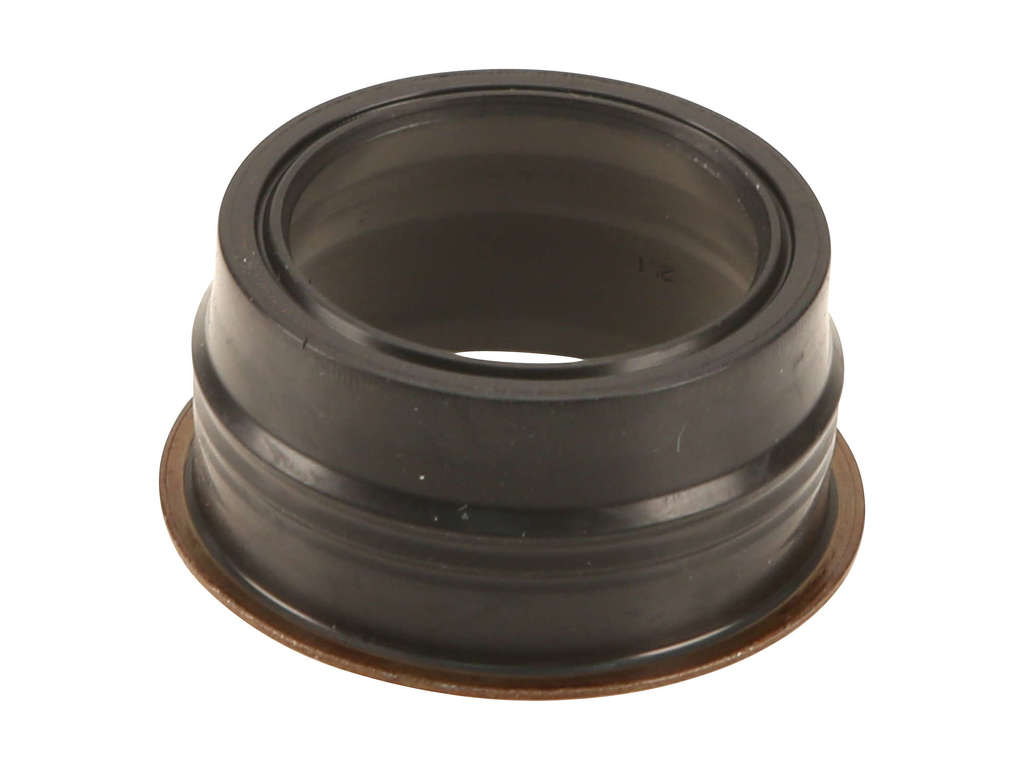
We Have This Part in Stock


The information in this article is provided for general reference and educational purposes only. Vehicle specifications, procedures, and part compatibility can vary by production date, trim level, and region. Always consult your vehicle's factory service manual and verify part numbers before purchasing or performing repairs. Safety-critical components such as airbags, seat belts, and braking systems should be installed by a qualified professional.
- Mazda CX-3:
- 🧭 Diagnostic Flowchart
- 🎬 Helpful Videos
- 🛍️ Shop This Part
- What's Unique About the 2016-2018 Mazda CX-3
- Symptoms You May Notice
- Most Likely Causes
- Rare But Worth Checking
- Diagnosis Steps
- Parts You'll Likely Need
- Related Codes That Often Appear With This One
- Technical Service Bulletins (TSBs) & Recalls
- Platform-Specific Known Issues
- Mechanic-Grade Diagnostic Values
- Scan Tool Commands That Help
- Wiring & Ground Locations
- Real Owner Repair Stories
- When the Usual Fixes Don't Work
- OEM Part Supersession History
- Model Year Variations Within This Range
- 🎟️ Get 5% Off