

P0015 on 2014-2017 Mazda CX-5: Causes for Exhaust Cam Timing Over-Retarded
P0015 on a Mazda CX-5 is most often caused by low or dirty engine oil. Before buying parts, check your oil level and condition, as SkyActiv engines are highly sensitive to oil quality. If the oil is fine, the next most likely cause is a faulty exhaust Oil Control Valve (OCV), also known as a VVT solenoid. An OEM replacement part (PE01-14-420A) costs around $315.
- For a P0015 code on a 2014-2017 CX-5, your first and most important check is the engine oil level and condition.
- This code is frequently accompanied by P0524 (Low Oil Pressure), which strongly points to an oil-related issue rather than a faulty sensor.
- The most common part that needs replacement (if oil is not the issue) is the exhaust Oil Control Valve (OCV), part number PE01-14-420A.
- Always use the correct full-synthetic 0W-20 engine oil, as the SkyActiv VVT system is sensitive to oil viscosity and cleanliness.
What's Unique About the 2014-2017 Mazda CX-5
Mazda's SkyActiv engines are particularly sensitive to oil pressure and quality for the Variable Valve Timing (VVT) system to work correctly. Mazda has issued multiple Technical Service Bulletins (TSBs), including #01-009/16, that directly link P0015 with code P0524 (Engine Oil Pressure Too Low). These TSBs state the cause is often a drop in oil pressure due to foreign objects getting stuck in the oil pump pressure relief valve or the Oil Control Valve (OCV) itself. This makes checking the oil level and condition the most critical first step before any parts are replaced.
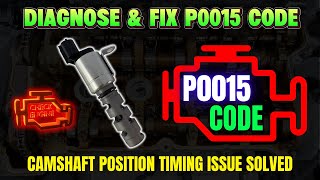
🎬 Watch: Quick DIY methods to fix the P0015 engine code.Diagnostic Flowchart
Tap your situation to follow the diagnostic path that matches what you're seeing on this vehicle.
Symptoms You May Notice
- Check Engine Light is on
- Rough or unstable idle
- Poor engine performance and lack of power
- Hesitation during acceleration
- Decreased fuel economy
- Engine may stall, especially at idle
- Rattling noise from the engine, especially on startup
- Replacing the camshaft position sensor when the actual problem is the Oil Control Valve (OCV) or simply low/dirty engine oil.
- Replacing the VVT actuator (phaser) when the much cheaper OCV is the culprit.
Most Likely Causes
- Low or Dirty Engine Oil 🔴 High Probability The VVT system is hydraulically operated, and Mazda TSBs explicitly state that low oil pressure is a direct cause for this code on SkyActiv engines. Sludge, incorrect oil viscosity (SkyActiv engines require 0W-20), or debris can clog passages and impede the function of the VVT components. Forum users on Reddit have reported the code clearing after a simple oil change.
How to confirm: Check the engine oil dipstick for level and observe the color and consistency of the oil. The oil should be within the 'MIN' and 'MAX' marks and not be black, gritty, or sludgy. Ensure the correct oil viscosity is being used.
Typical fix: Perform an engine oil and filter change using the manufacturer-recommended oil, which is a full-synthetic 0W-20 for SkyActiv engines.
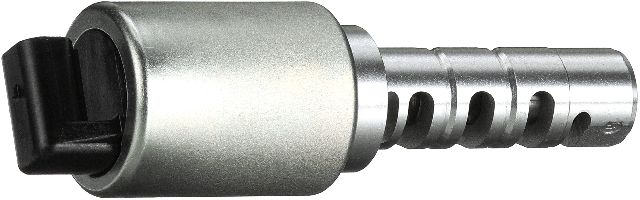
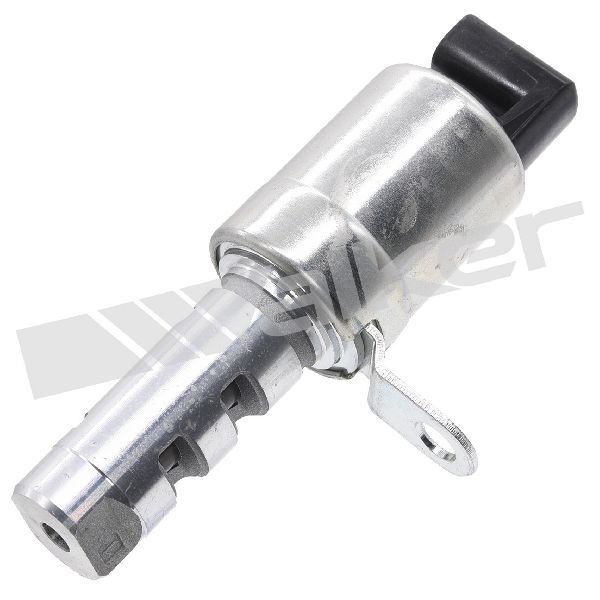
Est. part cost: $40-$80 - Faulty Exhaust Oil Control Valve (OCV) / VVT Solenoid 🔴 High Probability → Shop Engine Variable Valve Timing (VVT) Solenoid The OCV is a common failure point. It can get stuck internally or clogged with debris from the oil, preventing it from properly regulating oil flow to the camshaft phaser. Mazda TSBs acknowledge that debris can get stuck in the OCV, causing the timing issue.
How to confirm: Remove the valve and inspect it for debris or a stuck spool. You can test its resistance with a multimeter (typically 6.9-7.9 ohms at 68°F/20°C). A common diagnostic trick is to swap the exhaust OCV with the intake OCV and see if the code changes to P0012 (Intake 'A' Camshaft Position Timing Over-Retarded). If it does, the OCV is confirmed faulty.
Typical fix: Replace the exhaust Oil Control Valve. It is recommended to also change the engine oil when replacing the valve.
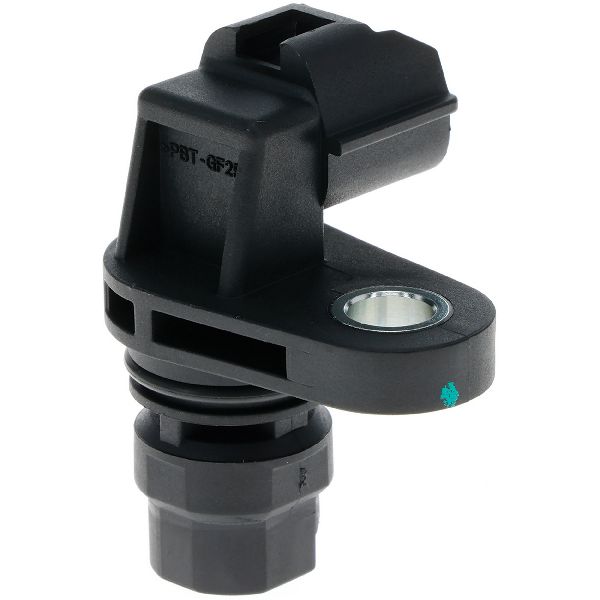
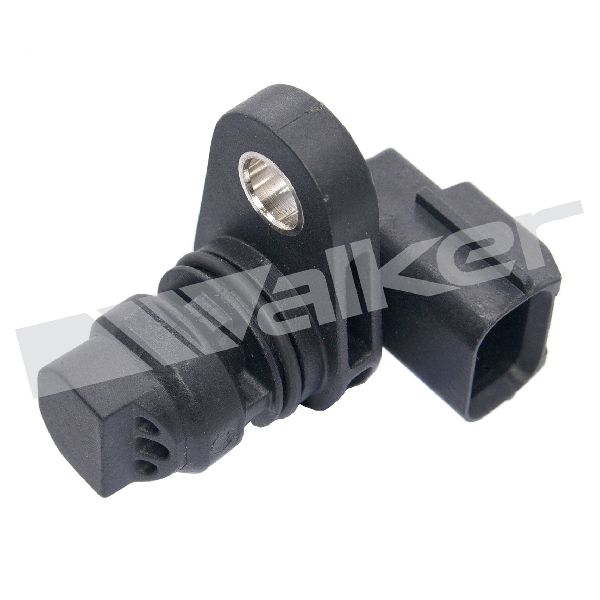
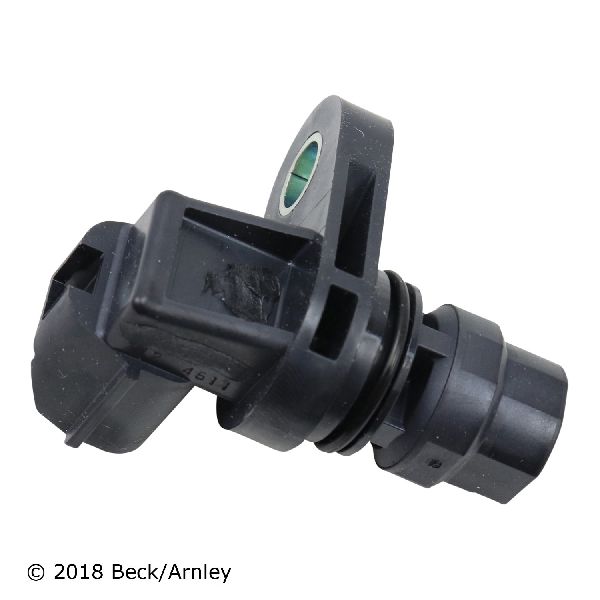
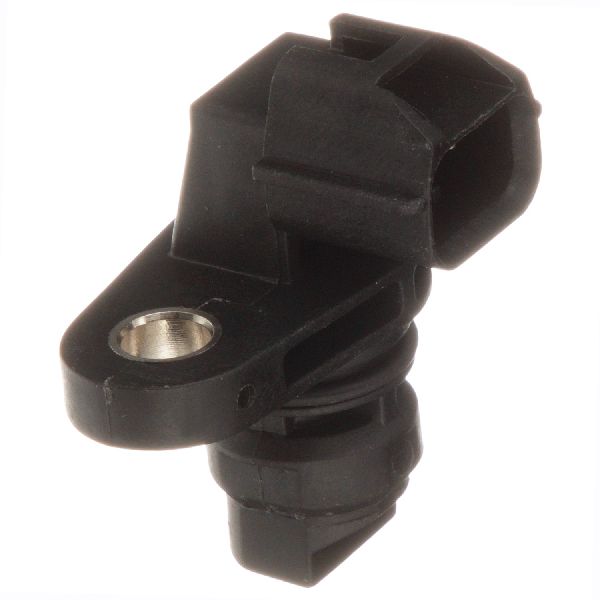
Est. part cost: $100-$400 - Faulty Camshaft Position Sensor (Exhaust) ⚪ Low Probability → Shop Engine Camshaft Position Sensor While less common than an OCV failure for this specific code, the sensor that reads the camshaft's position can fail and send incorrect data to the PCM. It is often incorrectly replaced when the OCV or oil is the real issue.
How to confirm: The best way to confirm is with an oscilloscope. A simpler but less definitive method is to swap the exhaust camshaft position sensor with the intake sensor (if they are identical parts) to see if the code follows the sensor, changing to an intake-related code.
Typical fix: Replace the exhaust camshaft position sensor.
Est. part cost: $50-$150
Rare But Worth Checking
- Stretched Timing Chain or Failed Tensioner: → Shop Engine Timing Chain If the timing chain has stretched or a guide/tensioner has failed, the physical timing between the crankshaft and camshaft will be incorrect, which can trigger this code. This is a more serious mechanical issue that often presents with rattling noises, especially on startup. A user on Mazdas247 reported P0015 and P0017 with a knocking noise, pointing towards this as a possibility.
- Failed VVT Actuator (Cam Phaser): The actuator is the mechanical gear on the end of the camshaft that actually adjusts the timing. It can become stuck or fail internally due to oil contamination or mechanical wear. This is a more involved and expensive repair than the OCV or sensor, often requiring removal of the valve cover and timing components. The OEM part number for the actuator is PE01-12-4X0B, with a list price over $700.
- Clogged Oil Passages or Failing Oil Pump: → Shop Engine Oil Pump In severe cases of oil sludge or if debris is circulating in the engine, the small oil passages leading to the VVT components can become blocked. Mazda TSBs also mention the possibility of a failing oil pump or foreign material stuck in the oil pump's relief valve causing a general drop in oil pressure that triggers P0015 and P0524.
Diagnosis Steps
- Verify the check engine light is on and scan for codes. Confirm P0015 and check for any other codes like P0524 or P0017.
- Check the engine oil level and condition. If low, top it off. If dirty, overdue for a change, or the wrong viscosity, replace the oil and filter with full-synthetic 0W-20 oil. Clear the codes and test drive to see if the code returns.
- If the code returns, locate the exhaust Oil Control Valve (OCV) on the cylinder head. Inspect the wiring and connector for damage or oil contamination.
- Test the OCV. A simple and effective test is to swap it with the intake OCV (they are identical parts). Clear codes and drive. If the code changes to P0012 (Intake side), the OCV is faulty and needs replacement.
- If the OCV swap does not change the code, you can test the valve's resistance with a multimeter (should be 6.9-7.9 ohms). You can also remove it and apply 12V power to check for a clicking sound, indicating the spool valve is moving.
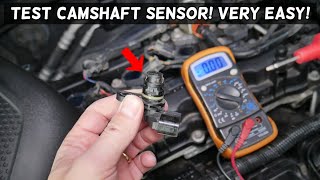
- If the OCV is not the issue, inspect and test the exhaust camshaft position sensor. You can also swap it with the intake sensor to see if the fault moves.
- If sensors and solenoids are good, the problem is likely mechanical. A more advanced diagnosis involves using a scan tool to monitor the target vs. actual exhaust cam angles. Per TSB 01-009/16, if the difference is over 5 degrees, the OCV should be replaced. If the issue persists, inspect the timing chain, tensioners, and the VVT actuator for wear or damage. This may require professional assistance.
Parts You'll Likely Need
- Engine Oil Control Valve (VVT Solenoid)
(OEM #PE01-14-420A)— This is the most common part to fail that causes P0015, either by getting stuck or clogged with debris. It is the same part for both intake and exhaust, and fits both 2.0L and 2.5L SkyActiv engines.
Trusted brands: Mazda (OEM), Dorman, Hitachi
OEM price range: $285-$397
Aftermarket price range: $50-$150 - Engine Oil and Filter — Low, dirty, or incorrect viscosity oil is a primary cause of this code on SkyActiv engines, as confirmed by multiple Mazda TSBs.
Trusted brands: Mobil 1, Castrol, Valvoline
OEM price range: $60-$100
Aftermarket price range: $40-$80 - Camshaft Position Sensor
(OEM #PE01-18-230)— Though less common, a faulty sensor can send incorrect data and trigger the code. It is often misdiagnosed as the primary culprit. The same part is used for intake and exhaust positions.
Trusted brands: Mazda (OEM), Bosch, Denso, NTK
OEM price range: $80-$120
Aftermarket price range: $30-$70
Related Codes That Often Appear With This One
- P0524 — Stands for 'Engine Oil Pressure Too Low'. Mazda TSBs #01-016-19-3627 and #01-009/16 explicitly state that P0015 and P0524 can be stored together due to a drop in engine oil pressure from debris in the oil pump or OCV.
- P0017 — Stands for 'Crankshaft Position - Camshaft Position Correlation (Bank 1, Sensor B)'. This code can appear with P0015 if there is a significant timing discrepancy, often pointing towards a more serious mechanical issue like a slipped or stretched timing chain.
- P0014 — Stands for "'B' Camshaft Position - Timing Over-Advanced". While the opposite of P0015, it can appear alongside it in some cases of erratic VVT system behavior, as seen in some forum discussions.
Technical Service Bulletins (TSBs) & Recalls
- 01-016-19-3627: Rough idle with DTC P0015 / P0524, caused by a drop in engine oil pressure due to a foreign object. Supersedes many previous bulletins.
- 01-023-15-3084B: An earlier version of the bulletin for rough idle with DTC P0015 / P0524.
- 01-009/16: Provides a specific diagnostic and repair procedure for rough idle with P0015 / P0524, including checking cam angle deviation. It applies to 2013-2016 CX-5, as well as Mazda3 and Mazda6 models.
Platform-Specific Known Issues
- Mazda TSB #01-009/16 provides a detailed diagnostic flowchart for vehicles with P0015. It specifies checking oil pressure and then using a scan tool to compare the target exhaust valve angle (VT_EX_DES) with the actual angle (VT_EX_ACT). If the difference is over 5 degrees, the OCV should be replaced.
Mechanic-Grade Diagnostic Values
- Oil Control Valve (OCV) / VVT Solenoid Resistance — expected: 6.9 - 7.9 Ohms at 68°F (20°C). Failure: A reading of 0 ohms (short circuit), infinite/O.L. (open circuit), or a value outside the specified range indicates a faulty solenoid coil.
- Scan Tool Live Data: Target vs. Actual Exhaust Cam Angle — expected: Difference should be less than 5 degrees at various RPMs.. Failure: A difference greater than 5 degrees between the target (VT_EX_DES) and actual (VT_EX_ACT) cam angle suggests a problem with the OCV or VVT system.
- Camshaft Position Sensor (3-wire Hall effect) Signal Voltage — expected: The signal wire should switch between approximately 5V (or 12V) and 0V as the engine is manually rotated.. Failure: A constant voltage or no voltage change indicates a failed sensor.
Scan Tool Commands That Help
- Mazda Modular Diagnostic System (M-MDS) or equivalent (e.g., FORScan): Monitor PIDs: VT_EX_DES (Target Exhaust Valve Timing) and VT_EX_ACT (Actual Exhaust Valve Timing) — This is a critical step per Mazda TSB 01-009/16 to determine if the camshaft is physically failing to reach its commanded position. It helps differentiate between a sensor reporting bad data and a mechanical/hydraulic failure.
- Advanced Scan Tool (e.g., FORScan): OCV Duty Cycle Command / Actuator Test — To actively command the OCV on and off while monitoring the actual cam angle PID. This directly tests the OCV's response to PCM commands and can confirm if the valve is stuck or slow to respond.
Wiring & Ground Locations
- Exhaust Oil Control Valve (OCV) — Installed on the No. 1 exhaust camshaft cap on the cylinder head.. This is the component directly responsible for controlling oil flow to the exhaust cam phaser. Its connector and wiring are a primary point of inspection for damage, corrosion, or oil contamination.
- Main Engine/Transmission Grounds — There are several key ground points: one on a bracket on top of the transmission (from the negative battery terminal), one on the passenger side motor mount, and others bolted directly to the engine block and chassis in the engine compartment.. Poor grounding can cause erratic behavior in sensors and solenoids, leading to incorrect readings or performance. While not a primary cause for P0015 specifically, verifying that main engine grounds are clean and tight is a fundamental step in any electrical diagnosis.
Real Owner Repair Stories
- Reddit user @Eagle2435 (2014 Mazda CX-5 2.5L) — P0015 code that would not clear.
❌ Tried (didn't work) Replaced timing chain and tensioners, Replaced VVT solenoid (OCV), Replaced exhaust camshaft phaser (VVT actuator), Replaced oil pressure control solenoid, Replaced oil pump
✅ What actually fixed it The engine had to be replaced. The owner suspected an internal crack in the motor was causing oil pressure to bleed off, which could not be confirmed without a full teardown, making replacement the more practical solution.
When the Usual Fixes Don't Work
- While most cases of P0015 are resolved with an oil change or a new Oil Control Valve (OCV), there are documented instances where the problem is far more severe. One owner of a 2014 CX-5 went through a comprehensive list of repairs, including replacing the timing chain, OCV, camshaft phaser, and oil pump, but the P0015 code persisted. The final resolution was a complete engine replacement, with the suspected cause being an untraceable internal crack causing a loss of oil pressure specifically to the VVT system. This highlights that if standard fixes fail, the root cause could be a major mechanical engine failure.
OEM Part Supersession History
PE01-14-420→PE01-14-420A— Part revision by the manufacturer, likely for improved durability or performance. The 'A' suffix indicates a newer version.
Helpful Videos
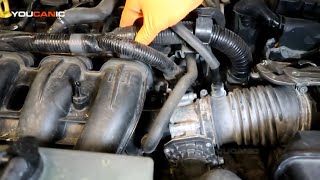
![How to Fix P0015 Engine Code in 4 Minutes [2 DIY Methods / Only $6.62]](https://img.youtube.com/vi/kO0eG5jKmzg/mqdefault.jpg)
We Have This Part in Stock

The information in this article is provided for general reference and educational purposes only. Vehicle specifications, procedures, and part compatibility can vary by production date, trim level, and region. Always consult your vehicle's factory service manual and verify part numbers before purchasing or performing repairs. Safety-critical components such as airbags, seat belts, and braking systems should be installed by a qualified professional.
- Mazda CX-5:
- 🧭 Diagnostic Flowchart
- 🎬 Helpful Videos
- 🛍️ Shop This Part
- What's Unique About the 2014-2017 Mazda CX-5
- Symptoms You May Notice
- Most Likely Causes
- Rare But Worth Checking
- Diagnosis Steps
- Parts You'll Likely Need
- Related Codes That Often Appear With This One
- Technical Service Bulletins (TSBs) & Recalls
- Platform-Specific Known Issues
- Mechanic-Grade Diagnostic Values
- Scan Tool Commands That Help
- Wiring & Ground Locations
- Real Owner Repair Stories
- When the Usual Fixes Don't Work
- OEM Part Supersession History
- 🎟️ Get 5% Off