

P0016 on 2009-2012 Audi A4 3.2L V6: Timing Chain and Sensor Guide
P0016 on the Audi A4 3.2L FSI V6 (engine code CALA) almost always points to a mechanical timing issue, most commonly a stretched timing chain and failing tensioners. While a faulty sensor is possible, it's less likely. This is a critical code that can lead to catastrophic engine failure; a full timing job is an engine-out procedure that can cost between $4,000 and $8,000. Diagnosis is often confirmed by a startup rattle and checking camshaft phase deviation in VCDS Measuring Block 93.
- P0016 on a 2009-2012 Audi A4 3.2L is a critical code that should be addressed immediately.
- Do not drive the vehicle. Ignoring this code can lead to the timing chain jumping or snapping, causing catastrophic engine failure.
- The most likely cause is a stretched timing chain and/or failed tensioners, a known issue with this engine.
- A key symptom is a 1-3 second rattle from the engine on cold starts.
- While it could be a faulty sensor or solenoid, these are much less likely. Expect a costly repair for a full timing chain service, which is an engine-out job.
What's Unique About the 2009-2012 Audi A4
On the 3.2L FSI V6 engine (CALA) used in the B8 platform A4, the P0016 code is an infamous harbinger of timing chain issues. Unlike many vehicles where this code might point to a simple sensor failure, on this specific engine, it is very frequently the first sign of stretched timing chains and failing hydraulic tensioners. This is a well-documented issue, and owners should treat this code with high urgency. The timing components are located at the rear of the engine against the firewall, meaning replacement is an engine-out service, making it exceptionally labor-intensive.
Symptoms You May Notice
- Check Engine Light (MIL) illuminated
- Rattling noise from the engine on cold starts, lasting 1-3 seconds
- Rough, unstable idle, sometimes described as 'jerking' at a stop
- Engine misfires, often triggering codes like P0300, P0301, etc.
- Noticeable loss of engine power and poor acceleration
- Engine is hard to start or cranks for a long time (extended crank)
- Engine may stall, especially at low speeds or when coming to a stop
- EPC (Electronic Power Control) light may flash intermittently
- Replacing only the camshaft or crankshaft position sensor without investigating the mechanical timing. If the P0016 code returns after a sensor replacement, it strongly indicates a deeper mechanical issue like a stretched chain.
- Assuming a timing chain replacement fixed the issue without verifying cam phase values post-repair. There are forum reports of the code returning due to incorrect installation or failure to replace all worn components.
Most Likely Causes
- Stretched Timing Chains and/or Failed Tensioners 🔴 High Probability → Shop Engine Timing Chain The 3.2L FSI V6 CALA engine is known for premature timing chain and tensioner wear. The hydraulic tensioners can bleed down oil pressure when the engine is off, causing chain slack on startup. This slack causes the chain to slap against the plastic guides, breaking them, and accelerates chain stretch.
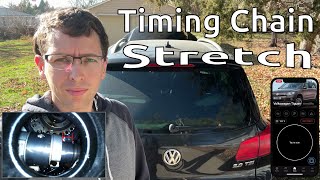
How to confirm: A key symptom is a 1-3 second rattle from the rear of the engine on a cold start. A mechanic can use an Audi-specific scan tool (like VCDS) to check Measuring Block 93 for camshaft adaptation/phase deviation. Values exceeding -4.0 degrees are a strong indicator of a stretched chain. Some forum users report values of -6.5 degrees or more before replacement. Ultimate confirmation is a physical inspection, which is a major undertaking.
Typical fix: This is a major, engine-out repair. It involves replacing all four timing chains, all hydraulic tensioners, and all plastic guides. It is critical to use updated tensioner parts. The job is extremely labor-intensive, often quoted at 25-30 hours.
Est. part cost: $1200-$2500 - Low or Incorrect Engine Oil 🟡 Medium Probability The camshaft adjusters and timing chain tensioners are hydraulically operated by engine oil. Incorrect oil viscosity, low oil level, or oil contaminated with fuel or sludge can prevent them from functioning correctly, leading to timing correlation errors. This engine is also prone to oil consumption, which can lead to low oil levels if not monitored.
How to confirm: Check the oil level and condition. Review service records to ensure the correct specification oil (VW 502.00/504.00) has been used at appropriate intervals. An oil change is the first and cheapest diagnostic step.
Typical fix: Perform an oil and filter change with the manufacturer-specified, high-quality synthetic oil. If the oil is heavily sludged, an engine flush may be considered, but this carries its own risks of dislodging debris and clogging oil passages.
Est. part cost: $80-$150 - Faulty Camshaft Position Sensor (Bank 1, G40) ⚪ Low Probability → Shop Engine Camshaft Position Sensor
How to confirm: Swap the Bank 1 intake camshaft position sensor with the Bank 2 intake sensor. Clear the codes and run the engine. If the code changes to P0018 (Crankshaft Position - Camshaft Position Correlation Bank 2 Sensor 'A'), the sensor is faulty. The sensor can also be tested with a multimeter for resistance, comparing it to the manufacturer's specification.
Typical fix: Replace the faulty sensor. It is located on the top of the cylinder head cover for Bank 1 (passenger side in LHD vehicles).
Est. part cost: $40-$110 - Faulty Camshaft Adjuster Solenoid (N205) ⚪ Low Probability → Shop Engine Camshaft
How to confirm: A TSB suggests swapping the solenoid with one from another bank. If the fault code follows the solenoid, the solenoid is defective. They can also become clogged with debris from poor oil quality. Resistance can be tested with a multimeter; it should be between 6.9 and 7.9 ohms.
Typical fix: Clean or replace the faulty camshaft adjuster solenoid. It is mounted in the camshaft bridge on the cylinder head.
Est. part cost: $50-$150
Rare But Worth Checking
- Faulty Crankshaft Position Sensor (G28): → Shop Engine Crankshaft Position Sensor While less common than the camshaft sensor or timing components for this specific code, a failing crankshaft sensor can send an erratic signal, causing a correlation fault. It is located on the driver's side of the transmission bell housing and can be difficult to access.
- Damaged Tone/Reluctor Ring: The toothed rings that the crank and cam sensors read can be damaged, cracked, or slip out of position, causing incorrect signals. This is rare but possible, especially if other engine work was recently performed.
- Sticking/Jammed Camshaft Adjuster (Phaser): → Shop Engine Camshaft The mechanical VVT phaser on the end of the camshaft can get stuck due to oil sludge or internal failure. This is less common than chain stretch but can cause the same code. In some cases, over-torquing the spool valve on the front of the intake cam during a repair can cause it to bind.
Diagnosis Steps
- Verify Oil Level and Condition: Ensure the engine oil is full, clean, and of the correct VW 502.00/504.00 specification. An immediate oil change is a low-cost first step.
- Scan for All Codes: Use an advanced scan tool (VCDS preferred) to read all stored fault codes. Note if other correlation codes (P0018, P0019) or misfire codes are present.
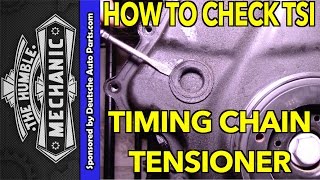
- Listen for Startup Rattle: On a cold engine, listen for a 1-3 second metallic rattle from the back of the engine. This is a classic sign of failing tensioners.
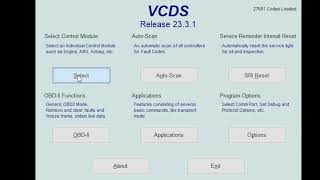
- Check Camshaft Adaptation Values: Using VCDS, access Engine > Adv. Meas. Values and check the value for 'Phase Position' for all camshafts (often found in group/block 93). A value more negative than -4.0 degrees indicates significant chain stretch.
- Test the Sensors: If timing stretch is not confirmed, proceed to test the sensors. Swap the Bank 1 and Bank 2 intake camshaft position sensors and see if the fault code migrates to P0018. If it does, the sensor is bad.
- Inspect Camshaft Adjuster Solenoids (N205): Check for contamination or test by swapping them between banks. Check resistance (should be ~7-8 ohms).
- Mechanical Inspection: If all else fails, a physical inspection of the timing chains, guides, and tensioners is required. This is an invasive, engine-out, labor-intensive process.
Parts You'll Likely Need
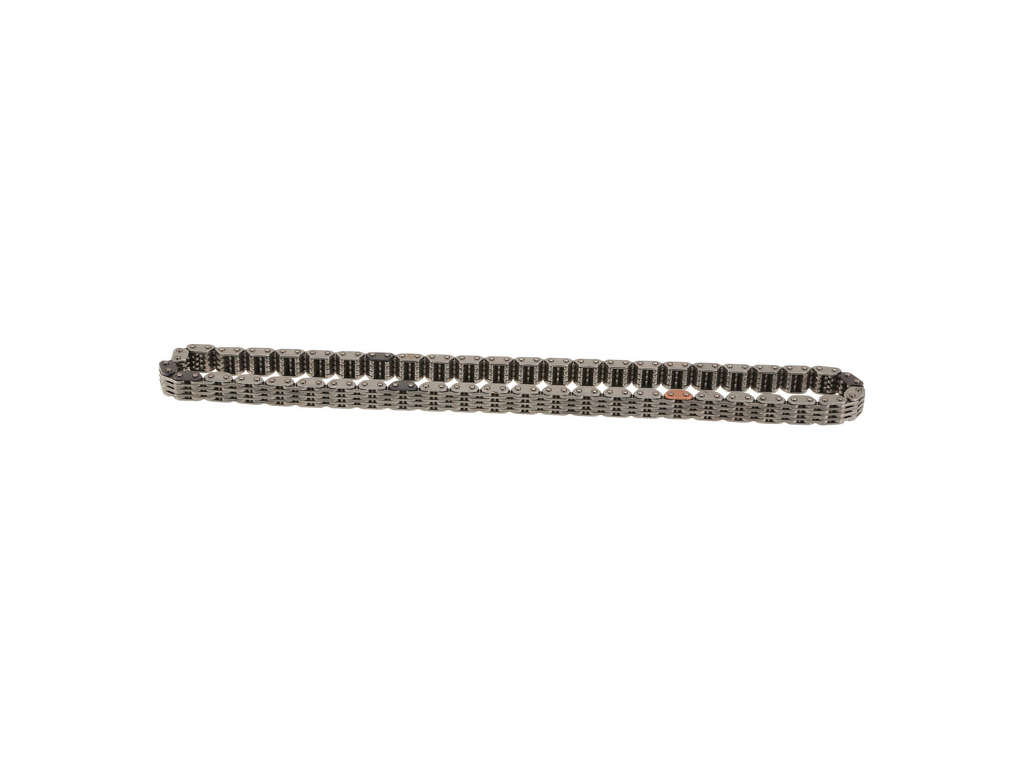
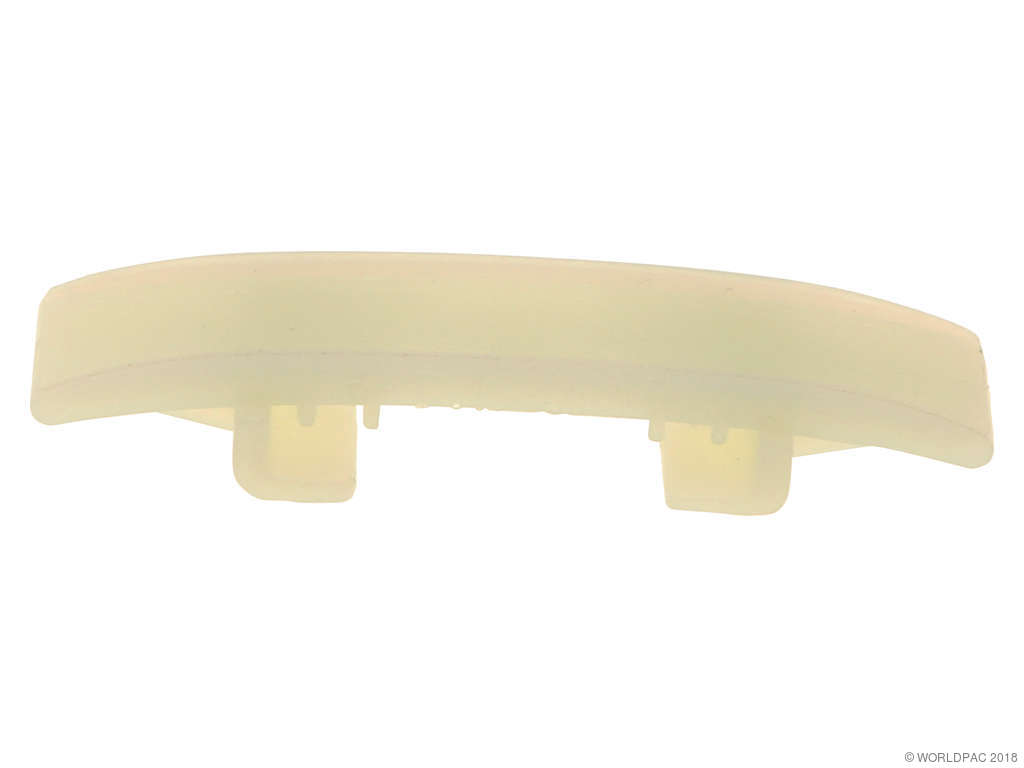
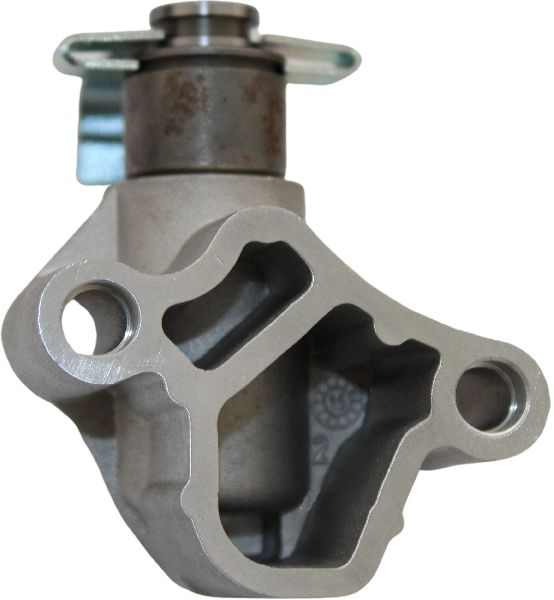
- Timing Chain Kit
(OEM #06E109465BCKT (FCP Euro Kit), 010938 (Europa Parts Kit))— This is the most probable cause of P0016 on the 3.2L FSI. A complete kit includes all chains (4 total), tensioners (4 total), and guides needed for the job.
Trusted brands: Iwis (OEM Chain Manufacturer), Borsehung, Febi Bilstein
OEM price range: $1500-$2500
Aftermarket price range: $800-$1500
Related Codes That Often Appear With This One
- P0018, P0019 — These are correlation codes for the Bank 2 camshafts (driver's side). Seeing P0016 with P0018 and/or P0019 strongly points towards a systemic timing chain issue affecting the entire engine, rather than an isolated sensor failure.
- P0341, P0346 — These are general fault codes for the camshaft position sensor circuit (Bank 1 and Bank 2 respectively). They may appear alongside P0016 if the sensor is failing electrically or if the timing deviation is severe.
- P0087 — An Audi TSB notes that 'Fuel Rail/System Pressure - Too Low' can be stored with P0016. The incorrect cam position can affect the high-pressure fuel pump, which is driven by the camshaft. The TSB advises fixing the P0016 fault first.
- P0300, P0301-P0306 — Random and specific cylinder misfire codes are common companions to P0016. Incorrect valve timing directly disrupts combustion, leading to misfires.
Technical Service Bulletins (TSBs) & Recalls
- TSB 15-09-04 (also referenced as TPI 2027557) - Mentioned by Ross-Tech for the 3.2L FSI engine, this TSB addresses diagnosis for P0016 and related camshaft adjuster faults.
Platform-Specific Known Issues
- The 3.2L FSI V6 is widely known for premature failure of its timing chain system. The primary culprits are often the hydraulic tensioners, which lose pressure and allow chain slack, leading to wear on the plastic guides and stretching of the chains.
- The location of the timing system at the rear of the engine, against the firewall, is a significant design choice that makes this repair exceptionally difficult and expensive, as it requires removing the entire engine and transmission assembly from the vehicle.
Mechanic-Grade Diagnostic Values
- Camshaft Adaptation Phase Position (VCDS Measuring Block 93) — expected: 0 to -4.0 degrees at warm idle.. Failure: A value more negative than -8 degrees indicates significant chain stretch requiring mechanical repair. Some consider any value more negative than -4 or -5 degrees as an early warning.
- Camshaft Adjuster Solenoid (N205) Resistance — expected: 6.9 - 7.9 Ohms at ~68°F (20°C).. Failure: An open circuit (infinite resistance) or a reading significantly outside the specified range indicates a faulty solenoid coil.
- Camshaft Position Sensor (G40) Harness Voltage — expected: Approximately 5.0 Volts between pin 1 (supply) and pin 3 (ground) with the ignition on, engine off.. Failure: No voltage or significantly lower voltage points to a wiring or ECM issue, not necessarily a bad sensor.
Scan Tool Commands That Help
- VCDS (VAG-COM) or ODIS: Engine > Output Tests > Camshaft Adjustment Valve (N205) — To functionally test the N205 solenoid. When activated, a healthy solenoid should produce an audible 'click'. Lack of a click points to a bad solenoid or a wiring issue, which should be investigated before suspecting mechanical timing.
- VCDS (VAG-COM): Engine > Basic Settings > Group 094 (Intake Camshaft Adjustment) — To run a functional test of the entire intake cam phasing system after the engine is warm. The test will command the phaser and report back 'Syst. OK' if it can achieve the specified adjustment and return to its base position correctly. This can help differentiate a stuck phaser from a stretched chain.
Wiring & Ground Locations
- Engine Support Bracket Ground — A ground wire is attached via a nut to the engine support bracket on the 3.2L FSI engine.. A poor engine ground can cause floating or incorrect reference voltages for critical sensors like the crankshaft and camshaft position sensors, potentially leading to erroneous correlation codes.
- Camshaft Position Sensor (G40) Connector — On top of the cylinder head cover for Bank 1 (passenger side in LHD). It is a 3-pin connector.. This is the direct connection for the sensor triggering the P0016 code. Pin 1 is typically 5V supply, Pin 3 is ground. Checking for voltage here is a primary electrical diagnostic step.
- Main Battery Ground Cable — In the rear of the vehicle, connected to the battery negative terminal, often incorporating the Battery Monitoring Module.. While not a direct cause, a faulty main ground or failing battery monitor can cause a host of difficult-to-diagnose electrical issues and codes throughout the vehicle. It should be checked for corrosion and tightness if multiple, seemingly unrelated electrical faults are present.
Real Owner Repair Stories
- AudiWorld Forum user 'jlbell' (2010 Audi A4 Avant (B8)) — Intermittent P0016 code, engine would sometimes run fine and other times would not start. Low power on the low end.
❌ Tried (didn't work) Clearing the code would allow it to start sometimes, but the fault would return.
✅ What actually fixed it The user diagnosed the issue as characteristic of timing chain tensioner failure or chain stretch. He noted that even if service records show a tensioner was replaced, it may not have been the latest updated version or other components (guides, chains) were not replaced at the same time, leading to a repeat failure. - Ross-Tech Forum user 'VCDS User' (2009 Audi A4 2.0T (B8 Platform, similar engine architecture and failure modes)) — Intermittent no-start (5% of the time) that would set code P0016. Car ran fine otherwise.
❌ Tried (didn't work) Replaced timing chains and a new Audi cam-bridge. The problem persisted.
✅ What actually fixed it The final fix was not posted by the original user, but a master tech suggested the likely cause was debris from the *old* cam bridge screen clogging the oil galley in the cylinder head or the spool valve on the intake cam. He also noted that over-torquing the spool valve could cause it to bind. This implies the root cause was not the new parts, but contamination left behind during the repair.
OEM Part Supersession History
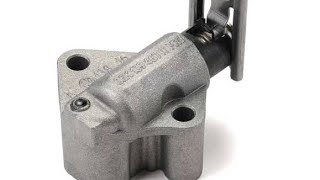
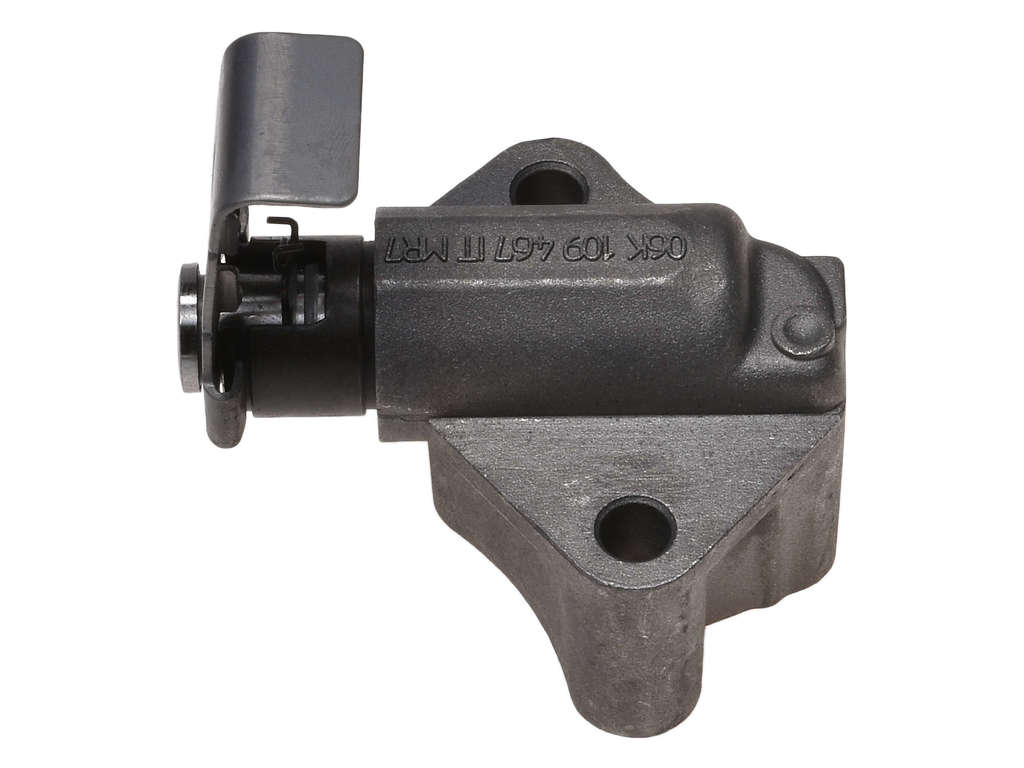
06E109217H (Left Tensioner), 06E109218H (Right Tensioner)→Latest revisions include 06E109217Q/AJ/AM and 06E109218T/AK.— The original tensioner design was prone to losing oil pressure, leading to chain slack on startup and accelerated wear. The updated parts have an improved design to better retain oil pressure and prevent slack.
Heads up: Using old-stock 'H' revision tensioners is a false economy and will likely lead to a repeat failure of the timing system.
Model Year Variations Within This Range
- 2009-2012: No significant variations have been documented for the CALA engine's timing system within this specific vehicle and year range that would alter the diagnosis or primary cause of a P0016 fault. The failure mode is consistent across all years the engine was used in this platform.
Diagnostic Flowchart
Other Known Issues on This Vehicle
Issues unrelated to this code that are worth knowing about as an owner of this generation:
- Intake Valve Carbon Buildup 🔴 High — Considered inevitable on FSI (direct injection) engines. Service often recommended every 40,000-60,000 miles to prevent misfires, rough idle, and power loss.
- Front Control Arm Bushing Failure 🟠 Medium — Bushings in the multi-link front suspension are a common wear item, typically failing around 70,000-100,000 miles. Symptoms include clunking noises over bumps and loose steering feel.
- Water Pump Failure 🟠 Medium → Shop Engine Water Pump — The water pump, often with a plastic housing, is a known failure point that can lead to coolant leaks and overheating. It's not uncommon for it to fail before 100,000 miles.
- Excessive Oil Consumption 🟠 Medium — While more famous on the 2.0T engine, the 3.2L FSI can also consume oil. Owners must monitor oil levels closely to prevent low-oil conditions that can exacerbate timing system wear.
Used vs. New Parts: Buying Guide for This Vehicle
When a used part is the smart pick: For non-wear electronic components like the Camshaft Position Sensor (G40), Crankshaft Position Sensor (G28), or Camshaft Adjuster Solenoid (N205), a used part from a verified running, low-mileage donor vehicle can be a cost-effective option.
Donor-vehicle mileage cap: roughly under 80000 miles for the part to have meaningful remaining life.
What to inspect on the donor part:
- Ask for the VIN of the donor car to check its history for related fault codes.
- Inspect electrical connectors for corrosion, bent pins, or damaged plastic.
- For solenoids, check that the screen is intact and free of metallic debris.
OEM-only on this vehicle (don't cheap out):
- Timing Chains
- Timing Chain Tensioners
- Timing Chain Guides
- Rear Main Seal
- Valve Cover Gaskets
Aftermarket brands forum-validated for this vehicle:
- Iwis (often the original equipment manufacturer for the chains)
- INA (often the OEM for tensioners and guides)
- Borsehung
- Febi Bilstein
Brands owners have reported issues with on this vehicle:
- Unbranded, 'white-box' timing kits from online marketplaces. Given the labor cost of an engine-out service, the risk of using low-quality, unproven timing components is extremely high.
Real Owner Stories
Aggregated from forums and TSBs cited above. Mileages and costs reflect what owners reported in those sources.
2013 Audi A4 3.2L FSI — 92000 miles
Symptoms: Flashing EPC light, rough idle, and multiple misfire codes alongside P0016.
What fixed it: The symptoms were identified as characteristic of timing chain tensioner failure or stretch, requiring replacement of timing components.
Source hint: AudiWorld Forums: 'Dreaded p0016'
2009-2012 Audi A4 3.2L FSI
Symptoms: Extended crank during startup and the return of the P0016 code immediately after a professional timing chain replacement.
What fixed it: The investigation suggested niche installation errors, such as an over-torqued camshaft spool valve.
Source hint: Ross-Tech Forums: 'Audi A4 P0016 Extended Crank Startup After New Timing Chains'
2009-2012 Audi A5 3.2L FSI
Symptoms: P0016 code, long cranking times, and a noticeable loss of engine power following a DIY timing chain replacement.
What fixed it: The failure was attributed to the difficulty of achieving perfect timing without specialized tools and triple-checking the work during the replacement process.
Source hint: AudiWorld Forums: 'Timing Chain Replaced Still Have P0016...'
Related OBD-II Codes
Frequently Asked Questions
Is there a specific TSB for the P0016 code on my 3.2L FSI Audi A4?
How can I tell if my P0016 code is caused by a stretched timing chain without taking the engine apart?
I hear a 2-second rattle when I start my A4 3.2L in the morning. Is this related to P0016?
What specific oil should I be using to prevent timing issues on the CALA V6 engine?
Why is the timing chain repair so expensive on the 2009-2012 A4 3.2L?
Can I just swap sensors to see if the Camshaft Position Sensor (G40) is bad?
Helpful Videos

We Have This Part in Stock


The information in this article is provided for general reference and educational purposes only. Vehicle specifications, procedures, and part compatibility can vary by production date, trim level, and region. Always consult your vehicle's factory service manual and verify part numbers before purchasing or performing repairs. Safety-critical components such as airbags, seat belts, and braking systems should be installed by a qualified professional.
- Audi A4:
- 🧭 Diagnostic Flowchart
- 🎬 Helpful Videos
- 🛍️ Shop This Part
- What's Unique About the 2009-2012 Audi A4
- Symptoms You May Notice
- Most Likely Causes
- Rare But Worth Checking
- Diagnosis Steps
- Parts You'll Likely Need
- Related Codes That Often Appear With This One
- Technical Service Bulletins (TSBs) & Recalls
- Platform-Specific Known Issues
- Mechanic-Grade Diagnostic Values
- Scan Tool Commands That Help
- Wiring & Ground Locations
- Real Owner Repair Stories
- OEM Part Supersession History
- Model Year Variations Within This Range
- Other Known Issues on This Vehicle
- Used vs. New Parts: Buying Guide for This Vehicle
- Real Owner Stories
- 2013 Audi A4 3.2L FSI — 92000 miles
- 2009-2012 Audi A4 3.2L FSI
- 2009-2012 Audi A5 3.2L FSI
- Related OBD-II Codes
- Frequently Asked Questions
- 🎟️ Get 5% Off