

P0016 on 2008-2015 Buick Enclave: Stretched Timing Chain Causes and Fixes
On a 2008-2015 Enclave, P0016 almost always indicates a stretched timing chain, a very common and serious issue with the 3.6L V6 engine. This is a major repair costing $2,800-$5,000+, and simply replacing sensors will not fix the underlying problem. The root cause is often linked to premature chain wear exacerbated by extended oil change intervals.
- P0016 on a 2008-2015 Buick Enclave is a serious code that almost always points to stretched timing chains.
- Do not waste money replacing the camshaft or crankshaft sensors first; this is a very common and costly misdiagnosis.
- The repair is expensive, typically ranging from $2,500 to $5,000, due to the high labor involved.
- Maintaining the correct oil level and using high-quality oil for regular changes is critical for the health of the timing system.
- The issue is most common on 2008-2012 models with the LLT engine, but can still occur on 2013-2015 LFX engines.
What's Unique About the 2008-2015 Buick ENCLAVE
The 3.6L V6 engine (especially the 2008-2012 LLT version) used in this generation of Buick Enclave is notorious for premature timing chain stretching. The primary cause is linked to the original timing chains being susceptible to wear, a problem made worse by GM's original Oil Life Monitoring System (OLMS) calibration, which allowed for excessively long oil change intervals. This led to oil degradation, sludge, and inadequate lubrication for the hydraulic tensioners and chains. The issue was so prevalent that GM issued multiple Technical Service Bulletins (TSBs), created Special Coverage Program #11340C extending the warranty to 10 years/120,000 miles, and eventually updated the chain design and OLMS software. An owner complaint filed with the NHTSA (ODI #10818809) highlights a real-world case where a dealership quoted a $5,000 repair for this exact issue after sensor replacement failed to solve the problem.
Diagnostic Flowchart
Tap your situation to follow the diagnostic path that matches what you're seeing on this vehicle.
Symptoms You May Notice
- Check Engine Light is on with code P0016 and often P0008, P0017, P0018, P0019
- Engine running rough or idling poorly
- A distinct rattling or chain-slap noise from the engine, especially on a cold start
- Reduced engine power and sluggish, hesitant acceleration
- Noticeably decreased fuel economy
- Engine may be hard to start or fail to start at all in severe cases
- Replacing only the Camshaft Position Sensor.
- Replacing only the Crankshaft Position Sensor.
- Replacing the VVT solenoid without checking the mechanical timing first.
- Performing an oil change and assuming it will fix the already-stretched chain.
Most Likely Causes
- Stretched Timing Chains 🔴 High Probability → Shop Engine Timing Chain The original timing chains on the 3.6L LLT V6 were made of a material susceptible to premature wear and stretching. This design flaw was exacerbated by an optimistic Oil Life Monitor calibration that led to oil degradation and poor lubrication.
How to confirm: Confirmed by using a professional scan tool to view camshaft/crankshaft correlation data; 🎬 Watch: How to use a labscope to test for timing chain stretch. a deviation of more than +/- 4-5 degrees usually indicates a problem. Physical inspection for chain slack is the definitive method but requires significant labor.
Typical fix: Complete replacement of all three timing chains, all tensioners, and all guides. This is a major service requiring engine removal or dropping the subframe.
Est. part cost: $400-$800 for a complete, high-quality kit (e.g., ACDelco, Cloyes). - Worn or Failed Timing Chain Tensioners/Guides 🔴 High Probability → Shop Engine Timing Chain The hydraulic tensioners rely on clean oil at the correct pressure. Sludge from infrequent oil changes can clog them, causing them to fail and allow chain slack. The plastic guides can become brittle and break, leading to chain noise and potential jumping.
How to confirm: A distinct rattling noise is a strong indicator. Physical inspection during a timing chain service is the only way to be certain. Broken guide pieces may be found in the oil pan.
Typical fix: Replaced as part of a complete timing chain kit service. It is never recommended to replace just a tensioner or guide without replacing the chains. TSB #PIP3423P specifically calls for inspecting for loose timing chains or tensioners.
Est. part cost: Included in the timing chain kit. - Low Engine Oil Level or Dirty Oil 🟡 Medium Probability The entire variable valve timing (VVT) system, including cam phasers and chain tensioners, is hydraulically operated by engine oil. These engines can consume oil, and the original long oil change intervals recommended by the OLMS often led to low levels and/or degraded, sludgy oil, starving the timing components and accelerating wear.
How to confirm: Check the oil level on the dipstick and inspect its condition. Review vehicle service history for oil change frequency. Many owners recommend 5,000-mile intervals, not the 10,000+ the OLMS might suggest.
Typical fix: Perform an oil and filter change with a full synthetic Dexos-specification 5W-30 oil. If the code returns, the mechanical wear has already occurred and an oil change alone will not fix it.
Est. part cost: $50-$90 for quality full synthetic oil and filter. - Faulty Camshaft Position Actuator Solenoid (VVT Solenoid) ⚪ Low Probability → Shop Engine Camshaft These solenoids control oil flow to the cam phasers. They can become clogged with sludge from dirty oil or fail electrically. While a possible cause, it's far less common than chain stretch on this engine for P0016.
How to confirm: Can be tested with a scan tool's actuator test function. Swapping the Bank 1 intake and exhaust solenoids is a common diagnostic trick; if the code changes to P0017 (exhaust correlation), the solenoid is bad. They can also be removed and tested by applying 12v.
Typical fix: Replacement of the faulty solenoid. This is a simple and inexpensive repair to try 🎬 See this quick guide on replacing the VVT solenoids yourself. before committing to a timing chain job if other symptoms aren't definitive.
Est. part cost: $30-$70
Rare But Worth Checking
- Faulty Camshaft or Crankshaft Position Sensor: → Shop Engine Crankshaft Position Sensor While these sensors can fail, they are often replaced unnecessarily. They are a common misdiagnosis for the P0016 code on this vehicle, as confirmed by owner complaints like NHTSA ODI #10818809 and countless forum posts.
- Damaged or Slipped Crankshaft Reluctor Wheel: → Shop Engine Crankshaft The toothed wheel that the crankshaft sensor reads can physically move on the crankshaft, causing the ECM to receive an incorrect signal for the crank's position. This is rare but is mentioned in GM TSBs as a possibility to check with a borescope through the crank sensor hole before tearing the engine down.
- Failed Camshaft Phaser/Actuator: → Shop Engine Camshaft The mechanical gear on the end of the camshaft that actually adjusts timing can fail or get stuck. This is less common than chain or tensioner issues but is a potential cause, usually replaced during a full timing job.
Diagnosis Steps
- Verify the oil level and condition. If low, dirty, or overdue, perform an oil and filter change with 5W-30 full synthetic oil meeting the GM Dexos spec. Clear codes and re-test.
- Use a professional scan tool to check for other fault codes. Codes for VVT solenoids (e.g., P0010) might point to a simpler electrical issue.
- With a scan tool, monitor live data for Camshaft Angle Deviation for Bank 1 Intake. A value that is consistently off by several degrees at idle is a strong sign of a stretched chain.
- Test the Bank 1 intake VVT solenoid. Use the scan tool's bidirectional control to command it on and off; a change in engine idle should be heard. If no change, suspect the solenoid or a clogged oil passage.
- As a final check before major disassembly, some technicians recommend removing the crankshaft position sensor and using a borescope to inspect the reluctor wheel to ensure it has not shifted on the crankshaft.
- If the above steps do not resolve the issue, a mechanical timing inspection is required. This involves removing the engine front cover to physically check for chain slack and verify the timing marks, which is a very labor-intensive process.
Parts You'll Likely Need
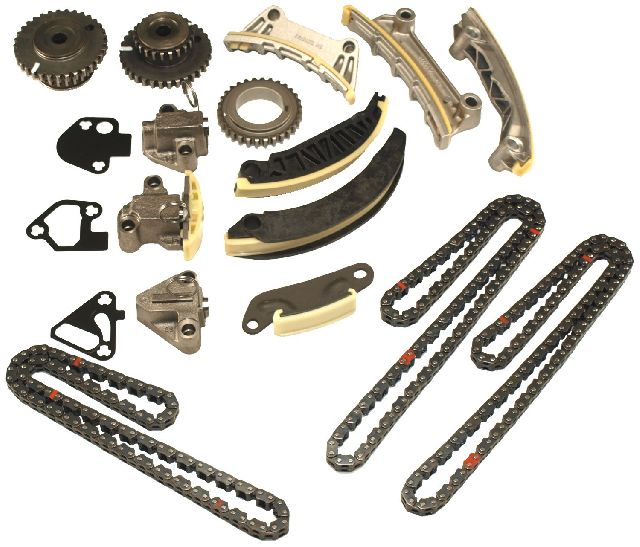
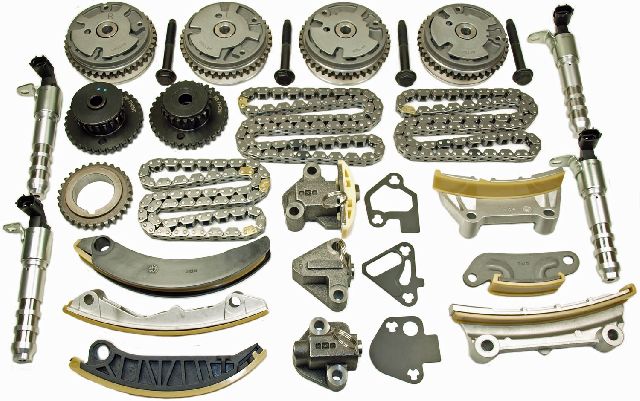
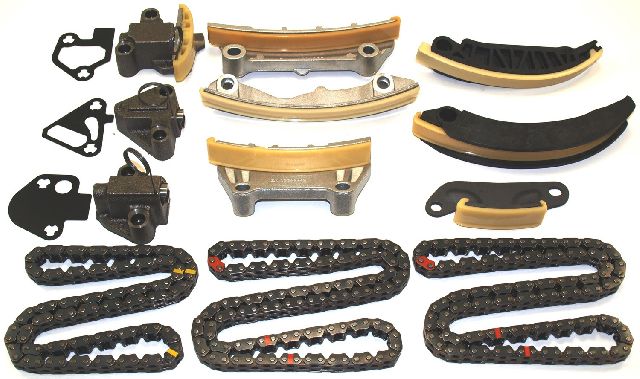
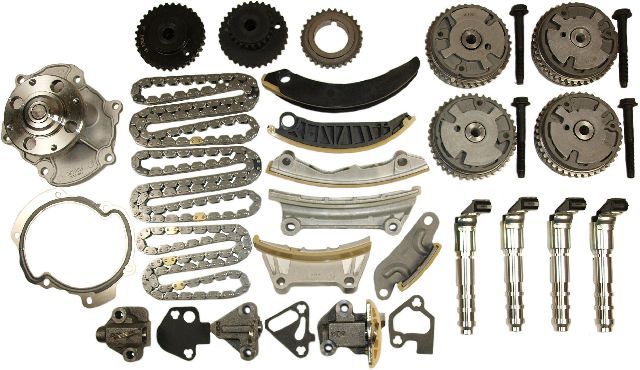
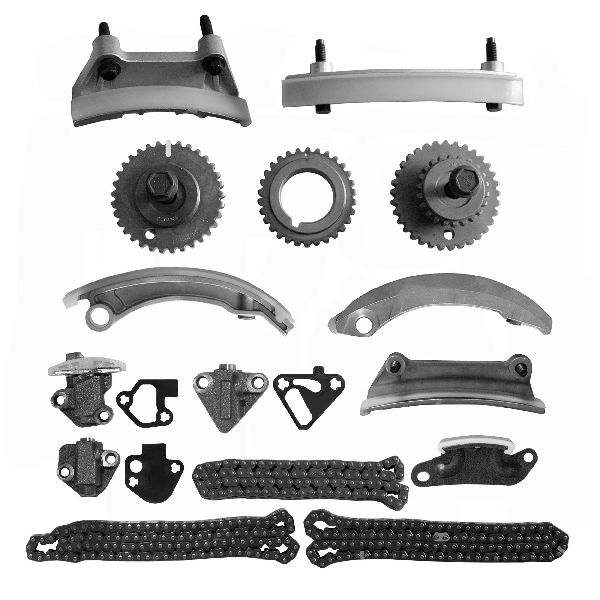
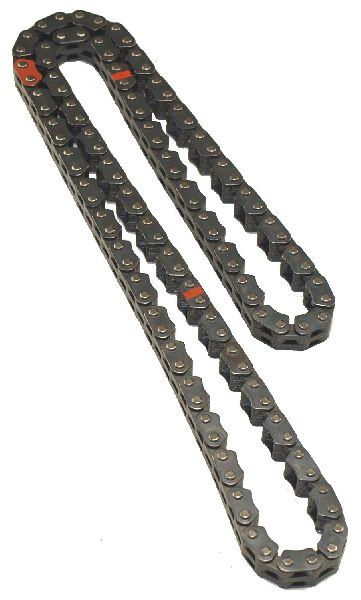
- Engine Timing Chain Kit
(OEM #12651450)— This is the definitive fix for P0016 on this engine. A complete kit ensures all worn components (3 chains, 3 tensioners, guides, gaskets) are replaced with updated parts.
Trusted brands: ACDelco (OEM), Cloyes, Melling
Related Codes That Often Appear With This One
- P0008 — A general engine timing correlation code, often the first to appear when the primary chain begins to stretch.
- P0017 — Indicates a correlation issue on Bank 1's exhaust camshaft. Often set along with P0016 due to the same stretched secondary chain affecting both cams on that bank.
- P0018 — Indicates a correlation issue on Bank 2's (front/radiator side) intake camshaft.
- P0019 — Indicates a correlation issue on Bank 2's exhaust camshaft. TSB #12-06-01-009F and #PIP3423P confirm these codes are all related to the same timing chain issue.
Technical Service Bulletins (TSBs) & Recalls
- Bulletin #PIP3423P: Instructs technicians to inspect for loose timing chains or tensioners for code P0016.
- Bulletin #12-06-01-009F: Discusses the availability of comprehensive timing chain kits for repairing stretched chains that cause P0016 and related codes.
- Special Coverage #11340C: Extended warranty coverage for timing chain wear to 10 years/120,000 miles and mandated an ECM reflash to shorten oil change intervals.
Platform-Specific Known Issues
- Premature timing chain stretching is the single most significant issue related to this code on the 2008-2015 Enclave.
- GM issued Technical Service Bulletin #12-06-01-009F (and its revisions) which provides part numbers for complete timing chain kits to address codes P0016, P0017, P0018, etc.
- GM also issued TSB #PIP3423P instructing technicians to inspect for loose timing chains or tensioners when P0016 is present.
- Due to the prevalence of this issue, GM initiated Special Coverage Program #11340C. This extended the warranty on the timing chains to 10 years or 120,000 miles from the vehicle's in-service date. It covered the full cost of timing chain replacement for eligible vehicles.
- As part of the special coverage, if the chains were not found to be worn, dealers were instructed to reprogram the Engine Control Module (ECM) to shorten the oil change interval calculated by the Oil Life Monitor.
Mechanic-Grade Diagnostic Values
- Camshaft Position (CMP) Actuator Solenoid Resistance — expected: 8-12 Ohms. Failure: A reading below 5.0 Ohms indicates a short or other failure requiring replacement.
- Camshaft Position (CMP) Sensor Circuit Voltage — expected: 5V on power and signal wires (Key On, Engine Off).. Failure: Readings outside the expected 5V range at the sensor connector point to a wiring or ECM issue, not a bad sensor.
- Camshaft Position Variance (Live Data) — expected: 0 degrees, but up to 3-4 degrees is acceptable.. Failure: Consistent variance exceeding 4 degrees at steady speed can indicate a sticking camshaft actuator magnet or a stretched timing chain.
Scan Tool Commands That Help
- GDS2 (GM Global Diagnostic System 2): Camshaft Position Variance — Use this live data parameter while driving at a steady speed to check for excessive deviation between desired and actual cam position, which can indicate a sticking actuator or chain stretch before it becomes a constant hard fault.
- GDS2 / Tech2: Camshaft Position Actuator Solenoid Control — This bidirectional test allows the technician to command the solenoid on and off at idle. A noticeable change in engine sound/RPM confirms the solenoid is mechanically responding to the command, helping to rule it out as the cause.
Wiring & Ground Locations
- G101 — Left side of the engine compartment, on the left frame rail.. This is a primary ground for the Engine Control Module (ECM). A poor connection here can cause erratic behavior and false codes from any sensor the ECM monitors, including the camshaft and crankshaft sensors.
- G113 — Left side of the engine, at the engine-to-transmission stud.. This is another critical engine ground. Corrosion or a loose connection at this point can lead to a variety of phantom engine codes and performance issues.
- Bank 1 Camshaft Position Sensor Connector — Bank 1 (rear, firewall side) has two CMP sensors. For P0016 (Intake), the sensor is located on the cylinder head, often partially obscured by the ECM and its mounting bracket.. GM issued a bulletin (PI0090D) regarding intermittent hesitation or codes due to poor terminal connections at this specific connector. Inspecting for backed-out pins or corrosion is a key diagnostic step before replacing parts.
Real Owner Repair Stories
- enclaveforum.net user (2009 Buick Enclave) — Check Engine Light with codes P0008, P0016, P0017.
❌ Tried (didn't work) Replacing the camshaft position sensors.
✅ What actually fixed it The user reported that despite hoping it was a sensor issue, the final repair was the replacement of the timing chains, which resolved all codes. This aligns with the common understanding that these codes on the 3.6L engine almost always point to a stretched chain.
OEM Part Supersession History
12578517 (Intake), 12578518 (Exhaust)→12655420 (Intake), 12655421 (Exhaust). Further superseded by 12679099 and 12679100 respectively.— Internal design and material updates to improve reliability and resistance to clogging from oil contaminants.
Heads up: While later part numbers are backward compatible, it is critical to use the correct intake vs. exhaust solenoid as they are not interchangeable. They often have different color connectors (e.g., black vs. grey) to prevent mix-ups.
Model Year Variations Within This Range
- 2008-2012 (LLT Engine): Uses an aluminum intake manifold and a Bosch ECM. These earlier engines are significantly more prone to timing chain stretch due to the original chain design and oil life monitor software.
- 2013-2015 (LFX Engine): Features an improved design with a composite intake manifold (resists heat soak), integrated exhaust manifolds in the cylinder heads, and a Delphi ECM. The timing chain components were updated from the factory, making them less prone to the stretching issues that plagued the LLT, though not entirely immune.
Helpful Videos
We Have This Part in Stock

The information in this article is provided for general reference and educational purposes only. Vehicle specifications, procedures, and part compatibility can vary by production date, trim level, and region. Always consult your vehicle's factory service manual and verify part numbers before purchasing or performing repairs. Safety-critical components such as airbags, seat belts, and braking systems should be installed by a qualified professional.
- Buick ENCLAVE:
- 🧭 Diagnostic Flowchart
- 🎬 Helpful Videos
- 🛍️ Shop This Part
- What's Unique About the 2008-2015 Buick ENCLAVE
- Symptoms You May Notice
- Most Likely Causes
- Rare But Worth Checking
- Diagnosis Steps
- Parts You'll Likely Need
- Related Codes That Often Appear With This One
- Technical Service Bulletins (TSBs) & Recalls
- Platform-Specific Known Issues
- Mechanic-Grade Diagnostic Values
- Scan Tool Commands That Help
- Wiring & Ground Locations
- Real Owner Repair Stories
- OEM Part Supersession History
- Model Year Variations Within This Range
- 🎟️ Get 5% Off