

P0016 on 2013-2019 Buick LaCrosse: Crank-Cam Correlation Causes and Fixes
On the 2013-2019 Buick LaCrosse, especially models with the 3.6L V6 engine, code P0016 is most often caused by stretched timing chains and failing tensioners. This is a serious issue requiring a complex repair that can cost between $1,500 and $2,500+. Neglecting regular oil changes is a primary contributor to this failure.
- P0016 on a Buick LaCrosse, especially with the 3.6L V6, is a strong indicator of stretched timing chains, a known and serious issue.
- Always check the engine oil level and condition first, as low or dirty oil can cause or worsen this problem.
- Do not simply replace the camshaft or crankshaft sensors. The problem is most likely mechanical and requires a full timing chain service.
- This is not a DIY-friendly repair. Due to its complexity and the risk of severe engine damage if done incorrectly, professional service is highly recommended.
- Listen for a rattling sound from the engine on startup; it's a key symptom of the underlying timing chain problem.
What's Unique About the 2013-2019 Buick LACROSSE
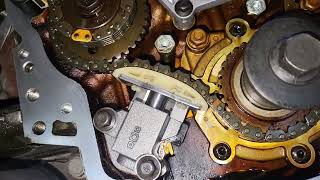
The 2013-2019 LaCrosse, particularly models equipped with the 3.6L V6 engine (LFX), is highly susceptible to premature timing chain stretching. This is a well-documented issue across many GM vehicles using this engine family. A primary contributing factor is believed to be the calibration of the Oil Life Monitor (OLM) system, which can allow for excessively long oil change intervals. Degraded oil loses its ability to properly lubricate the chains and tensioners, accelerating wear. While sensors can fail, the mechanical timing components are the primary weak point, a fact supported by multiple Technical Service Bulletins (TSBs) issued by GM. A rattling noise from the engine, especially on cold starts, is a classic sign 🎬 Watch: Hear the specific clattering noise and learn the fix. of this specific platform's problem.
Diagnostic Flowchart
Tap your situation to follow the diagnostic path that matches what you're seeing on this vehicle.
Generation note: This range covers the end of the second generation (2013-2016) and the entire third generation (2017-2019). The second-gen primarily used the 2.4L I4 and 3.6L LFX V6. The LFX is notorious for timing chain issues. The third-gen (2017+) used a newer, redesigned 3.6L LGX V6 and a 2.5L I4. While the LGX is considered a more robust engine with fewer reported timing chain problems, the issue can still occur, though it is much less common than in the LFX. The provided TSBs cover years from both generations, indicating the issue's relevance across the model range.
Symptoms You May Notice
- Check Engine Light is on
- Engine rattling noise, especially on cold startup
- Reduced engine power and sluggish acceleration
- Rough or unstable idle
- Engine cranks but fails to start
- Poor fuel economy
- Engine surging at idle shortly after startup
- Replacing only the camshaft or crankshaft position sensors without checking the mechanical timing. On this platform, the root cause is very often the timing chains themselves, and replacing sensors will not fix the issue.
- Performing an oil change and assuming it fixed the problem. While fresh oil can temporarily quiet a noisy tensioner, it cannot reverse the mechanical wear and stretch of a timing chain.
Most Likely Causes
- Stretched Timing Chains 🔴 High Probability → Shop Engine Timing Chain The 3.6L V6 engines (LLT/LFX) used in this period have a known history of premature timing chain wear, often linked to extended oil change intervals. This is confirmed by GM TSB #PIP3423P, which directly links P0016 to loose timing chains. The chains don't literally stretch; the pins and rollers wear, causing the chain to lengthen.
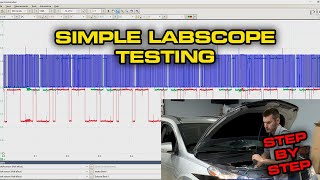
How to confirm: A physical inspection is the only definitive way. This is a labor-intensive process that involves removing the engine's front cover. A distinct rattling noise on startup is a strong indicator. An oscilloscope can also be used to compare cam and crank sensor waveforms against a known-good pattern to confirm a timing deviation without disassembly. 🎬 See how to use a labscope to test for timing issues.
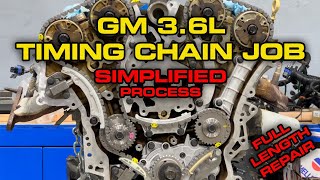
Typical fix: Replace all three timing chains, the tensioners, guides, and sprockets as a complete kit. It is critical to use updated OEM parts (ACDelco is the GM original part) to prevent a repeat failure.
Est. part cost: $250-$500 - Failed Timing Chain Tensioner(s) 🔴 High Probability → Shop Engine Timing Chain The tensioners rely on oil pressure and an internal spring to keep the chains tight. They can fail, lose pressure due to sludge, or the plastic guides can wear down, allowing slack in the chain. They are considered a wear item and are always replaced with the chains.
How to confirm: Diagnosed during a physical inspection for a stretched timing chain. Low oil pressure can also be a contributing factor. Broken pieces of the tensioner guides may be found in the oil pan.
Typical fix: Replace the tensioners as part of a complete timing chain kit service.
Est. part cost: $50-$150 (if bought separately) - Low or Dirty Engine Oil 🟡 Medium Probability The camshaft phasers (VVT system) and timing chain tensioners are hydraulically operated by engine oil. Following the GM Oil Life Monitor (OLM) to its limit can lead to oil breakdown, sludge formation, and loss of lubrication properties, which starves the tensioners and accelerates chain wear.
How to confirm: Check the oil level on the dipstick and inspect its condition. If it's low or very dark/sludgy, this is a major contributing factor. Some owners report the code appearing when an oil change is due.
Typical fix: Perform an oil and filter change using a high-quality full synthetic oil meeting the manufacturer-specified viscosity (e.g., 5W-30 dexos1). Clear codes and see if the problem returns. This is a good first step but will not fix a mechanically stretched chain.
Est. part cost: $40-$80 - Failed Camshaft Position Sensor (Bank 1 Intake) ⚪ Low Probability → Shop Engine Camshaft Position Sensor
How to confirm: Use a scan tool to monitor the sensor's data stream for erratic readings or dropouts. The sensor can also be tested with a multimeter for correct voltage (typically a 5V reference) or swapped with the sensor from the other bank to see if the code follows (e.g., changes to P0018).
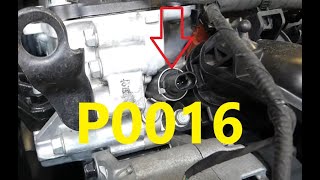
Typical fix: Replace the faulty sensor. It is located on the valve cover for Bank 1. Use of an OEM sensor is highly recommended.
Est. part cost: $25-$70 - Failed Crankshaft Position Sensor ⚪ Low Probability → Shop Engine Crankshaft Position Sensor
How to confirm: A failing crankshaft sensor will often cause stalling or a no-start condition in addition to the code. It can be tested with a multimeter or oscilloscope. An erratic signal on a live data scan tool is also an indicator.
Typical fix: Replace the crankshaft position sensor.
Est. part cost: $30-$80
Rare But Worth Checking
- Damaged or Slipped Crankshaft Reluctor Ring: → Shop Engine Crankshaft TSB #PIP3423P explicitly mentions that the toothed reluctor ring pressed onto the crankshaft can move, causing a timing correlation error even with new chains. This is a major repair requiring crankshaft replacement. It can be visually inspected by removing the oil pan and sometimes with a borescope through the crank sensor hole.
- Damaged or Slipped Camshaft Reluctor Ring: → Shop Engine Camshaft Similarly, TSB #PIP4548F notes that the reluctor ring on the camshaft itself can spin, especially after an engine overheat. This requires camshaft replacement as the ring is not serviced separately.
- Failed VVT Solenoid (Camshaft Actuator): A clogged or failed VVT solenoid can prevent the camshaft from adjusting its timing correctly, which the ECM may interpret as a correlation error. This is mentioned in TSB #PIP4548F as a potential area for inspection. Often, a solenoid failure will also set a solenoid-specific code (like P0010).
- Wiring Harness Damage: Frayed or corroded wiring to either the camshaft or crankshaft sensor can cause a loss of signal, triggering the code. This can be caused by heat, oil contamination, or physical damage.
Diagnosis Steps
- Check engine oil level and condition. If low or dirty, perform an oil change with the correct full synthetic oil, clear the codes, and re-test. This is a low-cost first step.
- Use an OBD-II scanner to check for any other related trouble codes, such as P0008, P0017, P0018, or P0019, as well as any sensor or circuit-specific codes.
- Listen for a rattling or scraping noise from the front of the engine (passenger side) during a cold start. A distinct rattle lasting a few seconds strongly suggests a timing chain/tensioner issue.
- Inspect the wiring and connectors for the crankshaft and Bank 1 camshaft position sensors for any visible damage, corrosion, or oil contamination.
- Using a scan tool with live data, monitor the signals from the cam and crank sensors. For a more advanced diagnosis, use an oscilloscope to capture and compare the cam/crank waveforms to a known-good pattern to definitively identify a timing offset.
- If sensors and oil are good, a mechanical timing issue is highly likely. The next step is a labor-intensive inspection of the timing chains, guides, and tensioners as outlined in TSB #PIP3423P. While the front cover is off, inspect for broken guide pieces. If chains are tight, the crankshaft reluctor wheel position must be verified.
Parts You'll Likely Need
- Engine Timing Chain Kit
(OEM #12700436)— This is the most common cause of P0016 on the 3.6L V6. A complete kit ensures all worn components (chains, tensioners, guides, sprockets) are replaced at once. Using an OEM (ACDelco) or high-quality aftermarket (e.g., Cloyes) kit is crucial.
Trusted brands: ACDelco, Cloyes, Melling
OEM price range: $300-$450
Aftermarket price range: $200-$350 - Camshaft Position Sensor
(OEM #12684186)— If diagnosis points to a sensor failure rather than a mechanical issue, this part is needed. It reads the camshaft's position. It's a low-probability fix but part of the diagnostic process.
Trusted brands: ACDelco, Bosch, Delphi
OEM price range: $40-$70
Aftermarket price range: $25-$50 - Crankshaft Position Sensor
(OEM #12615626)— Replaced if the sensor is tested and found to be faulty, which is a less common cause of this code.
Trusted brands: ACDelco, NTK, Standard Motor Products
OEM price range: $30-$80
Aftermarket price range: $20-$60 - Water Pump
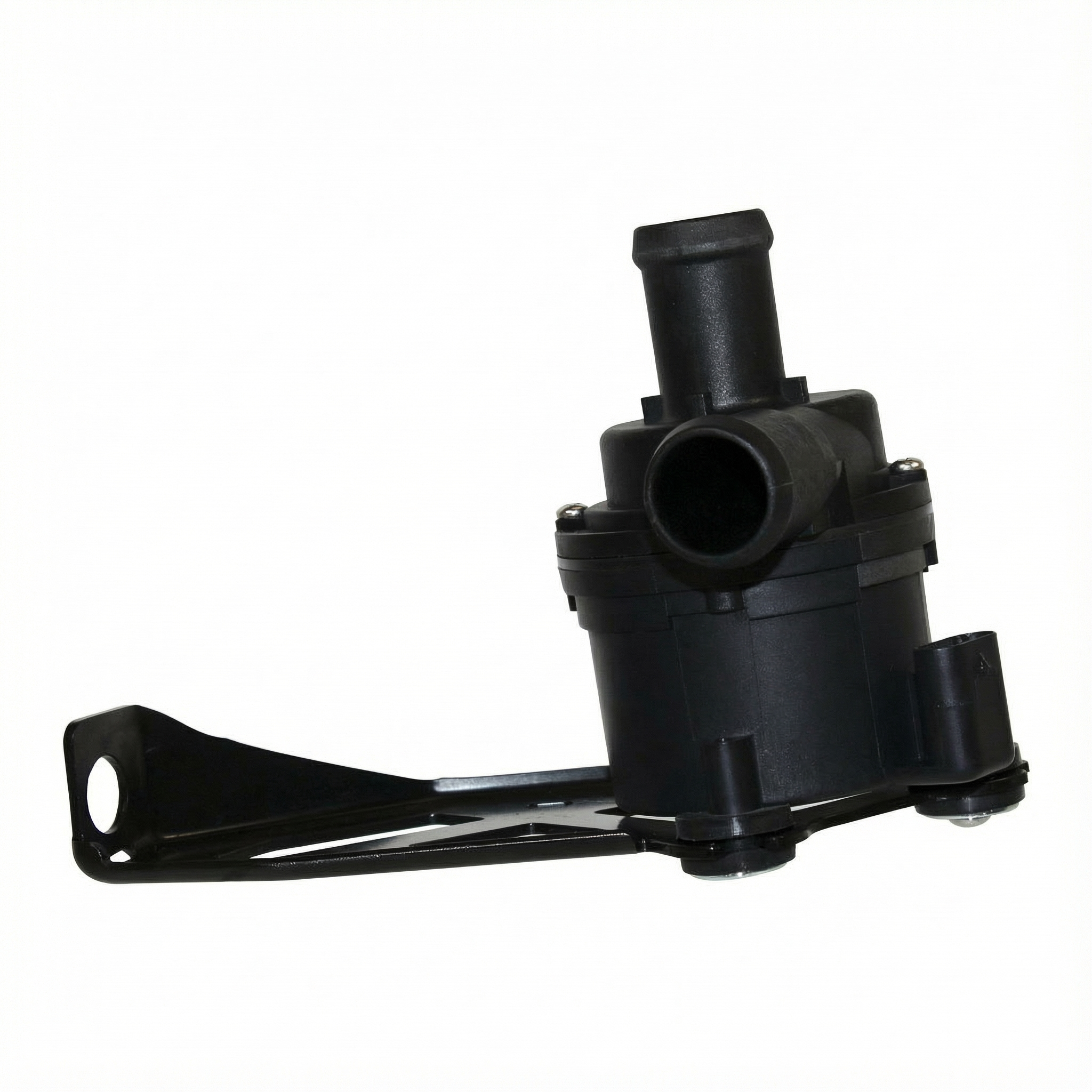
(OEM #12686856)— The water pump is driven by the timing chain system on the 3.6L V6. Since the timing cover must be removed for the chain replacement, it is highly recommended to replace the water pump at the same time to save on future labor costs.
Trusted brands: ACDelco, Gates, Bosch
OEM price range: $100-$200
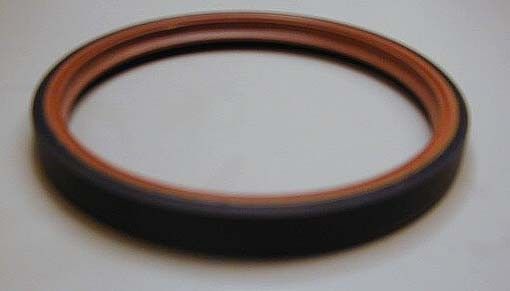
Aftermarket price range: $50-$120 - Gaskets and Seals — A full timing job requires replacing the front timing cover gasket, valve cover gaskets, and the front crankshaft seal to prevent oil leaks after reassembly.
Trusted brands: Fel-Pro, ACDelco, Mahle
OEM price range: $80-$150 (kit)
Aftermarket price range: $50-$100 (kit)
Related Codes That Often Appear With This One
- P0008 — This is a more general GM code for Engine Positions System Performance (Bank 1). It often appears with P0016 and strongly points to a stretched primary timing chain affecting the entire bank.
- P0017 — This code is for the Bank 1 Exhaust camshaft correlation error. If both P0016 and P0017 are present, it further strengthens the diagnosis of a timing chain issue on Bank 1, as both cams are out of sync.
- P0018 / P0019 — These are the equivalent correlation codes for Bank 2 (Intake and Exhaust). Seeing these with P0016 indicates a severe timing issue affecting both banks, almost certainly a stretched primary chain or a slipped crankshaft reluctor wheel.
Technical Service Bulletins (TSBs) & Recalls
- PIP5730B: Communicates additional diagnostic information for DTC's P0016 and P0018.
- PIP4548F: Advises what to inspect if codes P0016 and/or P0017 are setting on a properly timed engine.
- PIP3423P: Provides information that DTCs P0016, P0017, P0008 or P0009 may be set and to inspect for loose timing chains or tensioners.
Platform-Specific Known Issues
- TSB #PIP3423P explicitly states that codes P0016, P0017, P0008, and others may be set due to loose timing chains or tensioners.
- TSB #PIP4548F provides guidance for technicians when P0016/P0017 are set on an engine that is confirmed to be properly timed, suggesting investigation into other components like sensors or reluctor wheels.
- TSB #PIP5730B communicates additional diagnostic procedures for DTCs P0016 and P0018, highlighting that this is a known issue requiring specific diagnostic attention from GM technicians.
Mechanic-Grade Diagnostic Values
- Engine Oil Pressure (3.6L V6) — expected: Minimum 10 psi (69 kPa) at idle; Minimum 20 psi (138 kPa) at 2,000 RPM.. Failure: Pressure below these minimums indicates a lubrication problem that can cause or exacerbate timing component wear.
- VVT Solenoid (Camshaft Actuator) Resistance — expected: 8 to 12 Ohms.. Failure: A reading significantly outside this range, such as 7 Ohms or 15 Ohms, or a reading in the mega-ohm (millions of ohms) range, indicates a failed solenoid coil.
- Camshaft Position Sensor Voltage (3-wire Hall effect type) — expected: One wire should have a 5-volt reference from the ECM, one wire is ground, and the signal wire will also show ~5 volts with the key on, engine off.. Failure: Missing reference voltage or an inability for the signal voltage to drop to zero when the engine is cranked indicates a sensor or wiring fault.
Scan Tool Commands That Help
- GDS2 (GM Dealer Tool): Camshaft Position Counter — When diagnosing a P0016, a technician can use the GDS2 software to monitor the camshaft position counters. If the counters are not incrementing while cranking the engine, it points to a problem with the sensor, its wiring, or the reluctor wheel, rather than a stretched chain.
- GDS2 (GM Dealer Tool): VVT Solenoid Control — This bidirectional command allows a technician to manually command the VVT solenoids on and off to verify their mechanical operation and check for a response in engine timing, helping to isolate a stuck phaser or a faulty solenoid without removal.
Wiring & Ground Locations
- G102 — Located at the left rear of the engine.. This ground point is for the ignition coils. While not directly for the cam/crank sensors, a poor ground here can introduce electrical noise that may affect sensor readings.
- G105 / G106 — Located at the left front of the engine compartment and on the front center of the frame cross rail, under the crank pulley.. These are primary engine and chassis grounds. G101 (jumpered to G106) specifically grounds the Engine Control Module (ECM). A loose or corroded connection at these points can cause erratic behavior from the ECM and its sensors, including the crank and cam sensors, potentially triggering a false P0016.
- Camshaft Position Sensor Connector — On the valve cover, connecting to the sensor.. The 3-pin connector provides power, ground, and signal return for the sensor. Pin 3 is typically the 12-volt power feed with the key on. Damage or corrosion in this connector is a common point of failure leading to sensor codes.
Real Owner Repair Stories
- Reddit user on r/MechanicAdvice (2013 Ford F-150 3.5L EcoBoost (engine with similar VVT and timing chain design principles)) — Code P0016 returned 5-10 minutes after driving, even after a full timing chain and phaser replacement.
❌ Tried (didn't work) Replacing all timing chains, guides, and tensioners with the latest revised Ford parts.
✅ What actually fixed it The user's post was a request for help and did not have a final resolution posted. However, the scenario of the code returning immediately after a timing job is a classic symptom of either a mistake in the timing procedure (one tooth off) or a failure of a new component, like a VVT phaser that was faulty out of the box. This highlights the need for extreme precision during the repair.
OEM Part Supersession History
12651450→12700436 (as a component), or included in kit 12693218— GM periodically updates timing chain kits to improve durability of chains, guides, and tensioners to combat premature wear.
Heads up: When replacing timing components on the 3.6L V6, it is critical to use a complete, updated kit (like ACDelco 12693218) which includes all three chains, tensioners, guides, seals, and gaskets, rather than individual parts which may not be compatible with older revisions.
Model Year Variations Within This Range
- 2013-2016: These years primarily use the 3.6L LFX V6, which is highly prone to timing chain stretch issues that cause P0016. Diagnosis on these models should heavily favor a mechanical timing fault.
- 2017-2019: These years use the updated 3.6L LGX V6. While P0016 can still occur, widespread timing chain issues are much less common. On an LGX engine, other causes like VVT solenoid failure or sensor issues should be given more equal consideration during diagnosis compared to the LFX.
Helpful Videos
Used OEM Parts in Stock
New Aftermarket Parts Available


The information in this article is provided for general reference and educational purposes only. Vehicle specifications, procedures, and part compatibility can vary by production date, trim level, and region. Always consult your vehicle's factory service manual and verify part numbers before purchasing or performing repairs. Safety-critical components such as airbags, seat belts, and braking systems should be installed by a qualified professional.
- Buick LACROSSE:
- 🧭 Diagnostic Flowchart
- 🎬 Helpful Videos
- 🛍️ Shop This Part
- What's Unique About the 2013-2019 Buick LACROSSE
- Symptoms You May Notice
- Most Likely Causes
- Rare But Worth Checking
- Diagnosis Steps
- Parts You'll Likely Need
- Related Codes That Often Appear With This One
- Technical Service Bulletins (TSBs) & Recalls
- Platform-Specific Known Issues
- Mechanic-Grade Diagnostic Values
- Scan Tool Commands That Help
- Wiring & Ground Locations
- Real Owner Repair Stories
- OEM Part Supersession History
- Model Year Variations Within This Range
- 🎟️ Get 5% Off