

P0016 on 2004-2011 Cadillac CTS 3.6L V6: Stretched Timing Chain Causes and Fixes
On a 2004-2011 Cadillac CTS with the 3.6L V6, the P0016 code almost always means the timing chains have stretched. This is a serious mechanical issue, not a simple sensor failure. The problem was so common GM issued a special warranty extension (#11340C). The repair is complex and expensive, typically costing between $2,200 and $3,600 for a full timing chain kit replacement.
- P0016 on a 2004-2011 CTS 3.6L is a serious code that almost certainly indicates stretched timing chains.
- Do not waste money replacing the camshaft or crankshaft sensors; they are very rarely the cause.
- This is not a DIY-friendly repair. It is expensive and labor-intensive, requiring professional service.
- Continued driving is a major risk that can lead to complete engine failure.
- After repair, using high-quality full synthetic oil and changing it every 5,000 miles is the best way to prevent a recurrence.
What's Unique About the 2004-2011 Cadillac CTS
The GM 3.6L V6 engines (LY7 and LLT) from this era are notorious for premature timing chain stretching. The problem was so widespread that GM issued a Special Coverage Adjustment (#11340C) extending the warranty for this specific failure on many vehicles, including the 2007-2009 CTS. The primary causes were an overly optimistic Oil Life Monitor (OLM) system encouraging long oil change intervals (sometimes over 10,000 miles) and original chains with a link design prone to wear. Degraded oil cannot properly supply the hydraulic tensioners, leading to slack and rapid wear. Unlike many other vehicles where P0016 could be a faulty sensor, on this specific Cadillac, it is a very strong indicator of this significant mechanical failure.
Generation note: This range covers the first generation CTS (2004-2007) with the port-injected LY7 engine and the second generation (2008-2011) with both the LY7 and the direct-injected LLT engine. The timing chain stretching issue is prevalent across this entire year span and affects both engine variants, though the LLT also introduces potential issues like high-pressure fuel pump failure and intake valve carbon buildup.
Symptoms You May Notice
- Check Engine Light is on with code P0016, often accompanied by P0008, P0017, P0018, or P0019.
- Engine rattling or buzzing/whirring noise, especially on a cold startup, that may last for a few seconds.
- Rough or unstable idle
- Reduced engine power and poor acceleration
- Difficulty starting the engine, or extended cranking time
- Engine stalling, potentially at low speeds or when coming to a stop
- Replacing the Bank 1 intake camshaft position sensor.
- Replacing the crankshaft position sensor.
- Replacing only the VVT solenoids (camshaft actuators) without addressing the underlying timing chain slack.
Most Likely Causes
- Stretched Timing Chains 🔴 High Probability → Shop Engine Timing Chain This is a widely documented factory issue on the 3.6L V6 engine, acknowledged by GM through TSBs and a special warranty extension (#11340C). The original chains used a design that was susceptible to premature wear, a problem exacerbated by long oil change intervals that degraded oil quality.
How to confirm: A mechanic can use an advanced scan tool to view 'Camshaft Position Variance' data. A consistent deviation of more than 4-5 degrees at idle or 2,000 RPM strongly confirms chain slack. Physical inspection after removing the timing cover provides visual proof of slack and extended tensioners.
Typical fix: Replace all three timing chains, all tensioners, and all guides with an updated OEM kit. It is highly recommended to also replace the water pump, camshaft actuator solenoids (VVT solenoids), and front crankshaft seal at the same time.
Est. part cost: $300-$700 - Failed Timing Chain Tensioners or Guides 🔴 High Probability → Shop Engine Timing Chain The hydraulic tensioners rely on clean oil at the proper pressure. Degraded or low oil compromises their ability to keep the chains taut, leading to chain slack, noise, and accelerated wear. The original plastic guides can also become brittle and break apart over time.
How to confirm: A rattling noise on startup is a key indicator. During a timing chain service, a mechanic will find the tensioners are fully extended (a sign they are compensating for major slack) or that the plastic guide material has broken off and fallen into the oil pan.
Typical fix: These are replaced as part of a complete timing chain kit service. It is not recommended to replace only a single failed tensioner or guide, as the chains themselves are almost certainly worn.
Est. part cost: $0 (Included in timing chain kit) - Low or Dirty Engine Oil 🟡 Medium Probability The original Oil Life Monitor (OLM) calibration allowed for excessively long change intervals (up to 12,000 miles), leading to oil breakdown and sludge. These engines can also consume oil. Low or degraded oil starves the hydraulic tensioners and VVT phasers, directly causing and accelerating timing chain wear.
How to confirm: Check the oil level and condition on the dipstick. If the oil is very low, past the recommended change interval, or appears like dark sludge, this is a primary contributing factor.
Typical fix: Perform an immediate oil and filter change using a high-quality full synthetic oil meeting the GM dexos1 specification. However, if the P0016 code is already present, this is a maintenance step, not a fix. The stretched mechanical components must still be replaced.
Est. part cost: $50-$100
Rare But Worth Checking
- Faulty Camshaft Actuator (Phaser): → Shop Engine Camshaft While less common than chain stretch, a phaser can get stuck in an advanced or retarded position due to sludge or internal failure. However, this will often set other specific codes related to VVT actuator performance (like P0011) in addition to or instead of P0016.
- Slipped Crankshaft Reluctor Wheel: → Shop Engine Crankshaft In very rare cases, the reluctor wheel on the crankshaft that the sensor reads can move slightly, causing a correlation error even if the timing chain is perfectly aligned. This is extremely uncommon compared to chain stretch but is specifically mentioned in GM TSB #PIP3423J as a possible cause if the chains are found to be tight. The TSB provides a measurement of 25-26mm from a specific point on the crank throw to the reluctor to verify its position.
Diagnosis Steps
- Verify Engine Oil Level and Condition: Ensure the oil is full and clean. If not, perform an oil and filter change with full synthetic dexos-spec oil, clear the codes, and see if the code returns. This rarely fixes an active P0016 but is a critical first step and rules out an oil pressure/quality issue with the VVT solenoids.
- Scan for All Codes: Check for other related codes like P0008, P0017, P0018, or P0019. The combination of codes helps determine the scope of the problem (one bank vs. the entire engine).
- Check Camshaft Position Data: Using an advanced scan tool, monitor the 'Camshaft Position Variance' or 'Cam/Crank Correlation' PIDs for Bank 1. A deviation that consistently exceeds +/- 4-5 degrees at idle or while holding RPMs at 2,000 strongly suggests a stretched chain.
- Inspect VVT Solenoids: Remove and inspect the Bank 1 intake and exhaust VVT solenoids for debris on the screens. A stuck solenoid is possible but less likely to be the root cause than chain stretch. A simple test is to swap solenoids between banks to see if the code follows the solenoid.
- Confirm Mechanical Timing: If scan data confirms a timing deviation, the only way to be 100% certain is through physical inspection. This involves removing the valve covers and front timing cover to visually inspect the chain slack, tensioner extension, and timing marks. This is a labor-intensive step and is usually the start of the repair itself.
Parts You'll Likely Need
- Engine Timing Chain Kit
(OEM #12651450 (May be superseded by 12693218 or 12700436))— This is the definitive fix. A complete OEM kit includes all three updated chains, all three tensioners, guides, and necessary gaskets, addressing all wear points at once.
Trusted brands: ACDelco (GM OE), Cloyes, Melling
OEM price range: $450-$700
Aftermarket price range: $250-$450 - Water Pump
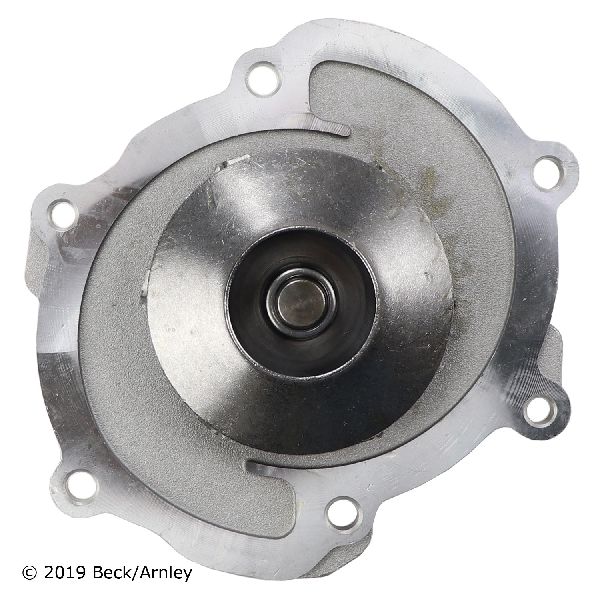
(OEM #12641261)— The water pump is driven by the primary timing chain and is located behind the timing cover. It is replaced preventatively during a timing chain job because the labor to access it later would be immense.
Trusted brands: ACDelco, Gates, GMB
OEM price range: $150-$250
Aftermarket price range: $50-$120 - Timing Cover Gasket and Seal Kit
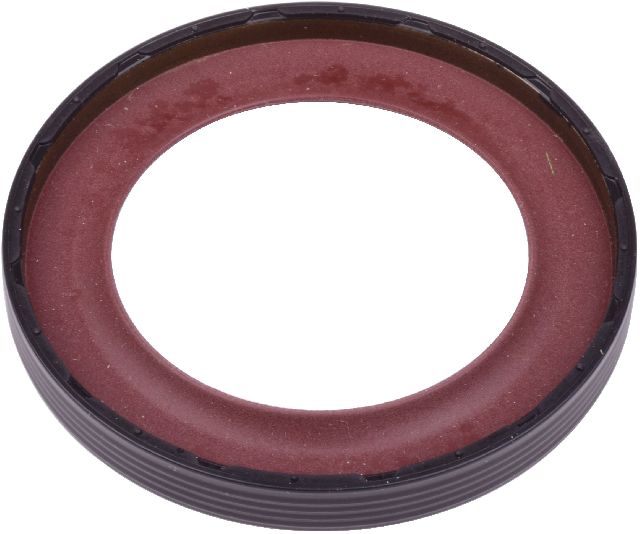
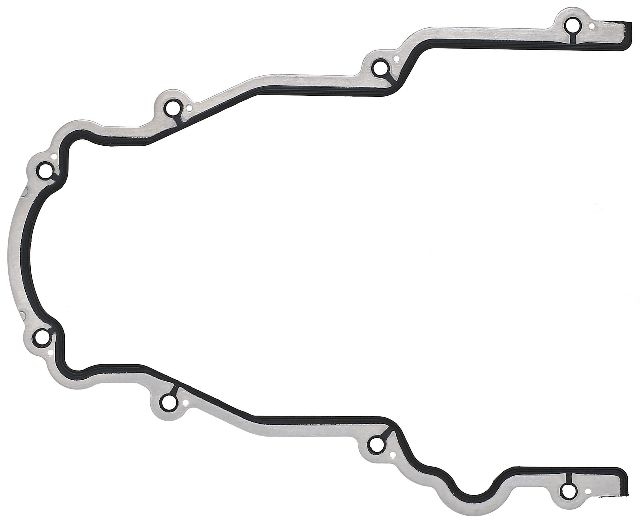
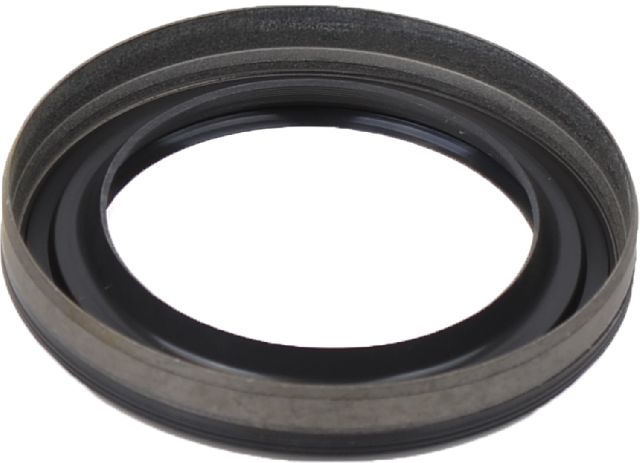
(OEM #Included in most comprehensive kits)— This is required to re-seal the front engine cover after the repair. It includes the main front cover gasket, front crankshaft seal, and other necessary O-rings and seals. A quality kit
Related Codes That Often Appear With This One
- P0008 — This is a more general 'Engine Position System Performance Bank 1' code. It is often the first code to appear as the chains begin to stretch, acting as a precursor to the more specific P0016.
- P0017 — This is the correlation code for the *exhaust* camshaft on Bank 1. Seeing P0016 and P0017 together strongly indicates a stretched secondary timing chain on Bank 1 affecting both cams, or a stretched primary chain.
- P0018 / P0019 — These are the equivalent correlation codes for Bank 2 (driver's side). If codes for both banks appear together (e.g., P0016 and P0018), it points strongly to a stretched primary timing chain affecting the entire engine, or a possible slipped crank reluctor wheel.
Technical Service Bulletins (TSBs) & Recalls
- Special Coverage Adjustment #11340C: Acknowledged premature timing chain wear on 2007-2009 CTS models (among others) and extended the warranty to 10 years or 120,000 miles. It directly linked the wear to the vehicle's original extended oil change intervals. This coverage is now expired for all vehicles due to age.
- TSB #PIP3423P: A crucial diagnostic bulletin for technicians. When P0016, P0008, etc., are present, it instructs them to first inspect for loose timing chains and worn tensioners. If the chains are tight, it directs them to check for a slipped crankshaft reluctor wheel.
- TSB #12-06-01-009F: Announced the availability of updated, more durable timing chain kits to repair vehicles experiencing these specific timing codes, serving as further official acknowledgment of the widespread problem.
- Bulletin #PIP3423P (dated 2018-08-09): This communication provides information to the technician that Diagnostic Trouble Codes P0016, P0017, P0018, P0019, P0008 or P0009 may be set and requires inspection for loose timing chains or tensioners.
- Bulletin #12-06-01-009F (dated 2015-03-03): Confirms the availability of high feature V6 timing chain kits and chain guide replacements for repairing stretched timing chains setting DTCs P0008, P0009, P0016, P0017, P0018 and/or P0019.
Platform-Specific Known Issues
- Expired Special Coverage for Timing Chains: → Shop Engine Timing Chain GM acknowledged the timing chain defect with Special Coverage Adjustment #11340C, which covered repairs for 10 years/120,000 miles on 2007-2009 models. This program is now expired for all vehicles due to age, meaning owners are fully responsible for the costly repair.
- Oil Life Monitor (OLM) Calibration: The original OLM software was calibrated to allow for excessively long oil change intervals. This led to oil degradation, which starved the hydraulic timing components and accelerated chain wear. GM later issued ECM updates to shorten the interval, but the damage was often already done to earlier vehicles. Owners today should change the oil every 5,000 miles with full synthetic oil, regardless of what the OLM indicates.
Mechanic-Grade Diagnostic Values
- Camshaft Position Actuator Solenoid (VVT Solenoid) Resistance — expected: 8 to 13 Ohms. Some sources specify a tighter range of 6.9-7.9 Ohms at 68°F.. Failure: A reading of 0 Ohms (short), infinite/OL (open circuit), or a value significantly outside the expected range indicates a failed solenoid.
- Camshaft/Crankshaft Position Sensor (3-wire Hall Effect) Connector Voltage (Key On, Engine Off) — expected: Pin 1 (Low Reference): ~0V, Pin 2 (Signal): ~5V, Pin 3 (5V Reference): ~5V.. Failure: Absence of 5V reference power or a good ground points to a wiring or ECM issue. Voltage on the signal wire significantly below 5V with the sensor disconnected suggests a short to ground in the harness or ECM.
- Engine Oil Pressure (LLT Engine, Warm Idle) — expected: 20-25 psi. Failure: Persistently low pressure when warm indicates oiling problems that can starve the tensioners and phasers, accelerating wear and causing timing codes.
Scan Tool Commands That Help
- GDS2 / Tech2: Camshaft Position Actuator Control / Solenoid Test — This bidirectional control allows a technician to command a specific VVT solenoid ON or OFF while the engine is running. A change in engine RPM or cam angle data confirms the solenoid is mechanically responding to the command. No change points to a stuck solenoid, clogged oil passage, or wiring issue, helping to differentiate a component failure from a larger mechanical problem.
- GDS2 / Tech2: Crankshaft Position Variation Learn (Crank Relearn) — This procedure is mandatory after replacing the timing chains, crankshaft position sensor, or ECM. It synchronizes the ECM's reference data to the physical tolerances of the new components. Failure to perform this relearn can cause a P0016 or P1336 code to set immediately after the repair is completed, even if the mechanical work is perfect.
Wiring & Ground Locations
- G103 / G104 — Typically located on the rear of the cylinder heads, near the bellhousing area. One on each head.. These are primary grounds for the Engine Control Module (ECM). A loose or corroded connection here can cause unstable voltage and erratic sensor readings for the cam and crank sensors, potentially leading to false correlation codes.
- G108 — A ground strap running from the back of the left (driver's side) cylinder head to the firewall.. Provides the main ground path between the engine block and the vehicle chassis. A poor connection here can create a ground offset, affecting the reference voltage for all engine sensors.
- ECM Connector C1, Pin 4 (2006 CTS) — On the main C1 connector of the Engine Control Module.. This is the specific signal wire for the Bank 1 Intake Camshaft Position Sensor (CMP Sensor Signal - Intake Bank 1). It is an Orange wire. Testing at this pin can verify signal integrity directly at the ECM.
- ECM Connector C1, Pin 10 (2006 CTS) — On the main C1 connector of the Engine Control Module.. This is the high signal wire for the Crankshaft Position Sensor (CKP Sensor High). It is a White/Black wire. Probing here can confirm the crank signal is reaching the ECM.
Real Owner Repair Stories
- Mechanic comment on a diagnostic video (2010 Chevrolet Equinox with 2.4L engine (similar GM VVT architecture)) — Persistent P0016 and P0017 codes immediately on startup.
❌ Tried (didn't work) Installing a complete, known-good used engine., Tearing down the engine multiple times to verify perfect mechanical timing., Replacing timing chain, phasers, and tensioners.
✅ What actually fixed it The reluctor ring on the rear of the intake camshaft had spun, likely from a previous overheat event on the donor engine. The part was a one-year-only design and discontinued, forcing a third engine replacement with a camshaft that had a correctly positioned reluctor ring. - NHTSA ODI #10794483 — An owner reported experiencing error code P0016 related to the engine timing chains on a vehicle with 86,176 miles, noting that the car shared the same engine and problems described in technical bulletin SB-11340.
Model Year Variations Within This Range
- 2004-2009 (LY7) vs 2008-2011 (LLT): The LY7 is a port-injected engine, while the LLT features Spark Ignition Direct Injection (SIDI). The LLT has a higher compression ratio (11.3:1 vs 10.2:1), different piston tops with a depression for the direct injector spray, and under-piston oil squirters for cooling, which the LY7 lacks. While the timing chain issue affects both, the internal engine components like pistons are not interchangeable.
Diagnostic Flowchart
Real Owner Stories
Aggregated from forums and TSBs cited above. Mileages and costs reflect what owners reported in those sources.
2009 Cadillac CTS 3.6L — 80000 miles
Symptoms: Suffered a timing chain failure.
What fixed it: Quoted for a timing chain repair, with a warning from the shop that bent valves could increase the cost significantly.
Cost: $3,600
Source hint: r/AskAMechanic - '2009 Cadillac CTS 3.6L - cost for fix?'
2006 Cadillac STS 3.6L
Symptoms: Encountered codes P0008, P0016, and P0017 immediately after engine reassembly.
What fixed it: User was rebuilding the engine; the codes illustrated how sensitive the timing system is and how easily they trigger if mechanical timing is even slightly off during reassembly.
Source hint: Cadillac Forums - '06 sts cam crank correlation code'
Related OBD-II Codes
Frequently Asked Questions
Is the timing chain repair for P0016 covered under GM's Special Coverage Adjustment #11340C for my CTS?
Why did the timing chains stretch on my 3.6L V6 engine?
How often should I change the oil in my 3.6L CTS to prevent timing chain issues?
What does TSB #PIP3423P say about diagnosing P0016 on this engine?
Can I just replace the failed timing chain tensioner instead of the whole kit?
How can a mechanic confirm my CTS has stretched timing chains without taking the engine apart?
Helpful Videos
Used OEM Parts in Stock
New Aftermarket Parts Available


The information in this article is provided for general reference and educational purposes only. Vehicle specifications, procedures, and part compatibility can vary by production date, trim level, and region. Always consult your vehicle's factory service manual and verify part numbers before purchasing or performing repairs. Safety-critical components such as airbags, seat belts, and braking systems should be installed by a qualified professional.
- Cadillac CTS:
- 🧭 Diagnostic Flowchart
- 🎬 Helpful Videos
- 🛍️ Shop This Part
- What's Unique About the 2004-2011 Cadillac CTS
- Symptoms You May Notice
- Most Likely Causes
- Rare But Worth Checking
- Diagnosis Steps
- Parts You'll Likely Need
- Related Codes That Often Appear With This One
- Technical Service Bulletins (TSBs) & Recalls
- Platform-Specific Known Issues
- Mechanic-Grade Diagnostic Values
- Scan Tool Commands That Help
- Wiring & Ground Locations
- Real Owner Repair Stories
- Model Year Variations Within This Range
- Real Owner Stories
- 2009 Cadillac CTS 3.6L — 80000 miles
- 2006 Cadillac STS 3.6L
- Related OBD-II Codes
- Frequently Asked Questions
- 🎟️ Get 5% Off