

P0016 on 2012-2019 Cadillac Escalade: Crankshaft-Camshaft Correlation Causes and Fixes
P0016 on a 2012-2019 Escalade indicates a serious timing correlation error. The most common cause is a stretched timing chain and worn components, a significant repair often costing over $2,000. Less common causes include a faulty VVT solenoid or low engine oil. Ignoring this code can lead to catastrophic engine failure.
- P0016 is a serious code on the Escalade that requires immediate diagnosis. Do not continue to drive.
- The most likely cause is a stretched timing chain, which is a major and expensive repair.
- Always check the engine oil level and condition first, as low or dirty oil can cause VVT system issues that trigger this code.
- Do not immediately replace the camshaft or crankshaft sensors; they are rarely the root cause and are usually reporting a real mechanical problem.
- Be aware of GM Technical Service Bulletins that point to specific, severe mechanical failures like a shifted crankshaft reluctor wheel.
What's Unique About the 2012-2019 Cadillac ESCALADE
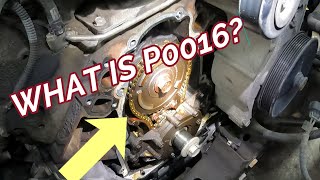
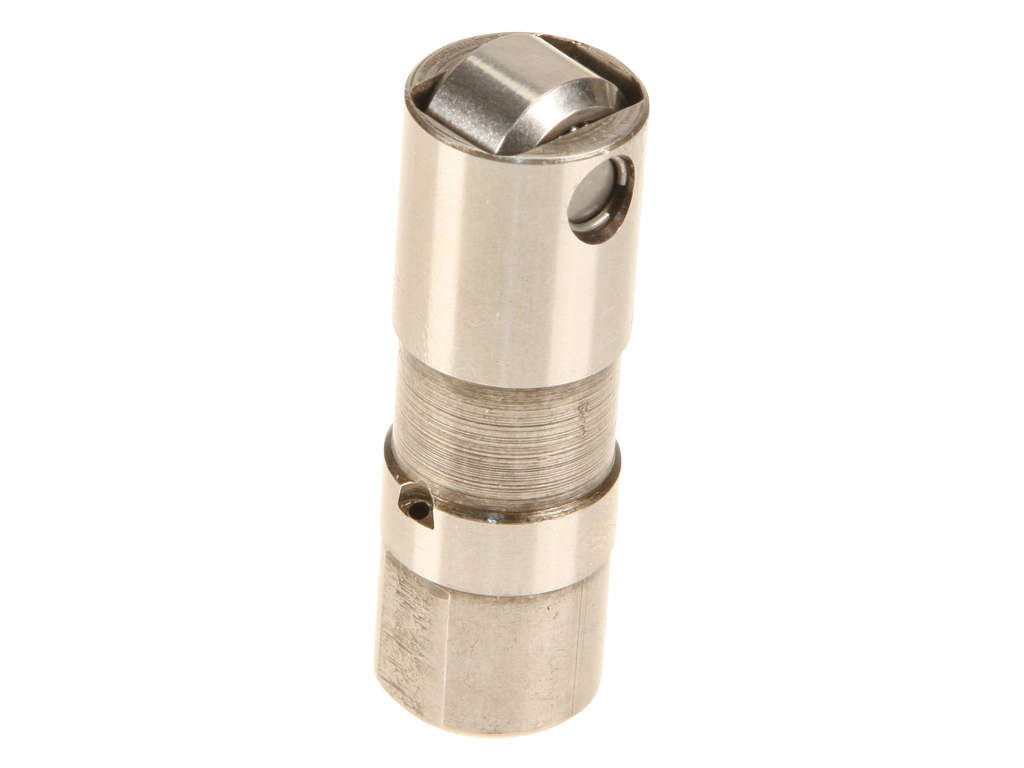
The 2012-2019 Escalade spans two generations with different 6.2L V8 engines (GMT900 with the L94 and K2XX with the L86). While both can suffer from timing chain issues, the problem is a well-documented weak point, often accelerated by oil breakdown. Furthermore, GM has issued specific Technical Service Bulletins (TSBs) for these platforms related to P0016, pointing to severe mechanical faults like a shifted crankshaft reluctor wheel, which is a rare but known issue requiring crankshaft replacement. This makes diagnosis more critical than on other vehicles where a sensor might be the first suspect. 🎬 Watch: A complete guide to fixing P0016 on GM trucks. These engines also suffer from common Active Fuel Management (AFM) lifter failures (per TSB 15-06-01-002H), which can cause ticking noises and misfires that might be confused with timing issues.
Diagnostic Flowchart
Tap your situation to follow the diagnostic path that matches what you're seeing on this vehicle.
Generation note: This range covers the end of the third generation (2012-2014, GMT900 platform) and the majority of the fourth generation (2015-2019, K2XX platform). The third-gen uses the 6.2L L94 V8, while the fourth-gen uses the 6.2L L86 EcoTec3 V8. While the fundamental cause of P0016 is the same, specific parts like timing chain kits and sensors will differ between these engines. The L86 (2015+) is also known for issues with its Active Fuel Management (AFM) system, which can sometimes present with similar symptoms like ticking noises.
Symptoms You May Notice
- Check Engine Light is on
- Rough or unstable idle
- Engine stalling or hesitation
- Reduced engine power and acceleration
- Engine cranks but fails to start
- Rattling noise from the front of the engine on cold starts, near the timing cover
- Metal shavings found in engine oil during an oil change
- Replacing the camshaft position sensor without verifying timing.
- Replacing the crankshaft position sensor without verifying timing.
- Replacing only the VVT solenoid when the timing chain is actually stretched or has jumped a tooth.
Most Likely Causes
- Stretched Timing Chain / Worn Tensioners & Guides 🔴 High Probability → Shop Engine Timing Chain Timing chain stretch is a known issue on many GM V8 engines of this era, often accelerated by long oil change intervals, use of incorrect oil, or simple high mileage. Lack of proper lubrication and worn tensioners are key contributors.
How to confirm: A technician can use a scan tool to view cam/crank correlation data. A definitive diagnosis requires physical inspection of the timing components for slack, which involves removing the timing cover. In some cases, broken teeth on the camshaft gear can be visually confirmed.
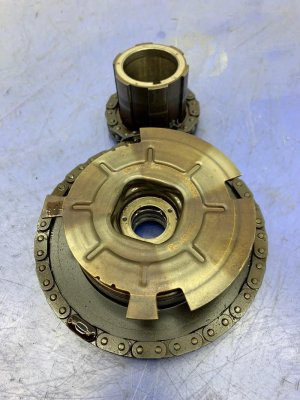
Typical fix: Replace the timing chain, tensioners, and guides as a complete kit. It is often recommended to replace the camshaft phaser (actuator sprocket) and VVT solenoids at the same time.
Est. part cost: $300-$700 - Faulty Camshaft Actuator Solenoid (VVT Solenoid) 🟡 Medium Probability → Shop Engine Camshaft The VVT system relies on clean oil and proper pressure. These solenoids can become clogged with sludge from dirty oil or fail electrically, preventing the cam phaser from adjusting timing correctly.
How to confirm: Use a scan tool's actuator test to command the solenoid on and off while observing engine operation. A change in idle (or stalling) indicates it's working. It can also be removed and inspected for debris and tested for resistance with a multimeter.
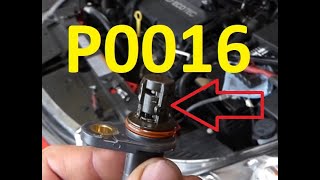
Typical fix: Replace the Bank 1 intake VVT solenoid. It is often wise to replace both intake and exhaust solenoids 🎬 See this walkthrough for replacing the VVT solenoid actuator. on that bank simultaneously.
Est. part cost: $30-$80 - Low or Dirty Engine Oil 🟡 Medium Probability The VVT system is hydraulic and highly sensitive to oil pressure and cleanliness. Incorrect oil viscosity or oil that is broken down or sludgy can impede the function of the cam phasers and solenoids, leading to correlation codes.
How to confirm: Check the oil level on the dipstick and inspect its condition. If it is low, black, or sludgy, this is a likely contributing factor.
Typical fix: Perform an engine oil and filter change using a full synthetic oil that meets the correct GM dexos specification. Clear the codes and see if P0016 returns.
Est. part cost: $50-$100
Rare But Worth Checking
- Shifted Crankshaft Reluctor Wheel: → Shop Engine Crankshaft This is a severe mechanical failure documented in GM TSB #PIP5102C. It specifically affects vehicles built between 02/01/2012 and 02/12/2013. The reluctor wheel, which the crankshaft position sensor reads, can move on the crankshaft, causing a persistent correlation code even with perfect timing. The only fix is to replace the entire crankshaft.
- Faulty Camshaft or Crankshaft Position Sensor: → Shop Engine Crankshaft Position Sensor While possible, sensor failure is a low-probability cause for P0016 on this platform. The code usually indicates the sensors are correctly reporting a real mechanical timing problem. Misdiagnosing this and replacing sensors is a common mistake that wastes time and money.
- Swapped Electrical Connectors: According to GM TSB 19-NA-150, after an engine repair, it is possible to swap the connectors for the Bank 1 intake camshaft actuator solenoid and the intake actuator park lock solenoid. The connectors are identical, and swapping them will cause a P0016 to set immediately. The fix is to verify wire colors and swap the connectors back to their correct locations.
Diagnosis Steps
- Check engine oil level and condition. Correct if low or dirty.
- Use a professional scan tool to read the freeze frame data and see when the code was set.
- Check for other related DTCs (P0017, P0018, P0019, P0011, P0300).
- Use the scan tool to monitor live data for camshaft and crankshaft position, looking for deviations.
- Command the Bank 1 intake VVT solenoid on and off with the scan tool to check for a response in engine idle.
- If the solenoid is suspected, remove and inspect it for sludge or debris. Test its resistance with a multimeter.
- If recent engine work was performed, check for swapped connectors per TSB 19-NA-150.
- If simpler causes are ruled out, perform a physical inspection of the timing chain, guides, and tensioners for wear and slack. This is an advanced step requiring removal of the timing cover.
- As a final, advanced step based on TSB PIP5102C, inspect the crankshaft reluctor wheel for any signs of movement relative to the crankshaft itself, especially on 2012-2013 models.
Parts You'll Likely Need
- Timing Chain Kit
(OEM #L86 (2015-2019): GM 12680750 (replaces 12675579, 12673669, 12635447) | L94 (2012-2014): GM 12630107 (Tensioner Kit))— This is the most probable cause of P0016 on higher-mileage Escalades. A complete kit ensures all worn components (chain, guides, tensioners) are replaced.
Trusted brands: ACDelco, Cloyes, Melling
OEM price range: $400-$600
Aftermarket price range: $250-$450 - Camshaft Position Actuator Solenoid (VVT Solenoid)
(OEM #Intake: ACDelco 12687034 (L86) or ACDelco 12655420 (L94). Exhaust: ACDelco 12687035 (L86) or ACDelco 12655421 (L94).)— A common failure point that is much easier and cheaper to replace than the timing chain. It's often attempted as a first repair after verifying oil level.
Trusted brands: ACDelco, Delphi
OEM price range: $50-$90
Aftermarket price range: $30-$60
Related Codes That Often Appear With This One
- P0017 — This is the same correlation error but for the exhaust camshaft (Sensor 'B') on Bank 1. If the timing chain has stretched, it often affects both intake and exhaust cam timing, triggering both codes.
- P0018 / P0019 — These are the equivalent correlation codes for Bank 2 (driver's side). Seeing them with P0016 strongly suggests a problem common to the entire engine, such as a primary timing chain issue or a shifted crankshaft reluctor wheel.
- P0300 — This is a code for random/multiple cylinder misfires. A timing discrepancy from P0016 can cause poor combustion, leading to misfires across multiple cylinders. TSB 15-06-01-002E also links P0300 to failed AFM lifters, a common issue on these engines.
Technical Service Bulletins (TSBs) & Recalls
- PIP5554A: P0016 setting after internal engine repair due to incorrect base timing.
- PIP5102C: P0016 caused by a moved crankshaft reluctor, requiring crankshaft replacement.
- 19-NA-150: P0016 caused by swapped electrical connectors for VVT components after a repair.
- 15-06-01-002H: Addresses engine misfire (P0300) and ticking noises from faile
Platform-Specific Known Issues
- TSB #PIP5102C notes that the crankshaft reluctor can move on vehicles built between Feb 2012 and Feb 2013, which requires crankshaft replacement to fix the resulting P0016 code.
- TSB #PIP5554A warns that P0016 can be set if engine base timing is not set correctly after an internal engine repair, often due to difficulty in seeing timing marks.
- TSB #19-NA-150 describes how identical electrical connectors for the VVT actuator and park lock solenoid can be swapped during reassembly, causing P0016.
- A rattling noise on cold starts is a very common precursor to P0016, indicating a failing timing chain tensioner or a stretched chain.
Mechanic-Grade Diagnostic Values
- VVT Solenoid (Camshaft Position Actuator) Coil Resistance — expected: 8 to 13 Ohms. Failure: A reading outside this range, or an unstable, bouncing reading on the multimeter, indicates a faulty solenoid. Also, testing from each pin to the solenoid body should show an open circuit (no continuity); a reading indicates the solenoid is shorted to ground.
- Camshaft Position Sensor Signal Voltage (3-wire sensor) — expected: With the key on and engine off, the power supply wire should have ~5V and the signal wire should also have ~4-5V.. Failure: When a metallic object (like a wrench) is passed in front of the sensor tip, the signal voltage should drop to zero momentarily. If the voltage does not change, the sensor is likely bad.
- Scan Tool Cam/Crank Correlation Data (GDS2) — expected: Desired vs. Actual camshaft position should match closely at idle and under load. The specific allowable deviation is not published, but any significant, consistent variance points to a mechanical timing issue.. Failure: Live data showing a persistent deviation between the desired and actual camshaft angle, especially if it exceeds a few degrees after ruling out solenoid issues, strongly suggests a stretched chain or phaser problem.
Scan Tool Commands That Help
- GDS2 / Tech2: Camshaft Position Actuator Control — This bidirectional control allows a technician to command a specific VVT solenoid on and off. It is used to verify if a solenoid is mechanically stuck or electrically unresponsive. The technician can observe live data for a change in camshaft angle and listen for an audible click from the solenoid to confirm it is working. This helps isolate a faulty solenoid from a wiring problem or a mechanical phaser issue.
- GDS2: Cam Timing Correlation Data / Live Data Assessment — Used to monitor the live relationship between the crankshaft and camshafts. A technician will assess the cam timing deviation in real-time. If the deviation is present alongside a cold-start rattle, it confirms the timing chain has stretched beyond the tensioner's ability to compensate, solidifying the diagnosis before engine disassembly.
Wiring & Ground Locations
- Engine Block Ground (Main) — A thick negative battery cable runs to the engine block, typically near the starter on the passenger side.. This is the primary ground for the engine block. A poor connection here can cause erratic behavior from any sensor grounded to the block, including the crankshaft position sensor, potentially creating noise or voltage offsets that could contribute to correlation issues.
- Cylinder Head Grounds — There are typically ground straps or wires bolted to the rear of each cylinder head.. The Camshaft Position Sensor and VVT solenoids are mounted to the cylinder heads. A faulty ground connection at the head can cause incorrect readings or faulty operation of these components, directly leading to timing-related codes.
- X50A Underhood Fuse Block — The main fuse block in the engine bay on the driver's side.. This fuse block supplies power to the Engine Control Module (ECM) and other critical engine components via fuses like F74 (ECM IGN). A poor connection or corrosion within this block can cause low voltage to the ECM, leading to unpredictable codes and misdiagnosis.
Real Owner Repair Stories
- GMTNation Forum user 'FrankV' (GM Atlas Platform (similar VVT system logic)) — P0016 code returns only when the engine is fully warm and coming to a stop. Runs perfectly otherwise.
❌ Tried (didn't work) Replaced timing chain, Replaced timing phaser, Replaced VVT solenoid, Replaced cam sensor, Replaced crank sensor, Replaced PCM
✅ What actually fixed it The user's issue was unresolved in the thread after replacing nearly every related component. Another user suggested a 'CASE relearn' (Crankshaft Position Variation Learn) is mandatory after such extensive work, which had not been mentioned. The story highlights the necessity of software procedures after major hardware replacement, as the lack of a relearn can cause persistent codes even with all new parts. - SHO Forum user 'seasoned_shrimp' (2013 Ford SHO (Illustrates common P0016 diagnostic path)) — P0016 code was present with minimal symptoms ('a slight rumble' at idle). The code would sometimes clear itself and then return.
❌ Tried (didn't work) Replacing the camshaft and crankshaft position sensors.
✅ What actually fixed it The timing chain was stretched. The user replaced the sensors first as a cheaper, easier attempt. When that failed, they proceeded with the timing chain replacement, which resolved the code. The user notes, 'If you get PO016, it's likely the chain.' This story is a classic example of the common misdiagnosis of replacing sensors first when the code is pointing to a mechanical fault.
OEM Part Supersession History
12635447→12675579, then 12680750— These part numbers represent revisions to the timing chain kit for various GM engines, including the L86. Supersessions typically involve improvements to materials or design of the chain, guides, or tensioner to increase durability and reduce stretching.
Heads up: While the latest part number (12680750) is generally the correct one to use for L86 engines, it's critical to verify the exact kit required with the vehicle's VIN. Using a kit for a different RPO code engine (e.g., a V6 kit on a V8) can lead to immediate timing issues.
Model Year Variations Within This Range
- 2012-2014 (L94) vs 2015-2019 (L86): The L94 (Gen IV) and L86 (Gen V) are fundamentally different engine architectures. The L86 introduced direct injection and a more advanced version of Active Fuel Management (AFM). While both have VVT and are prone to timing chain stretch, the sensors, solenoids, phasers, and timing components are not interchangeable. Diagnosis is similar, but parts must be sourced specifically for the correct engine.
- 2019+: Starting in 2019 on some GM trucks with the 6.2L, the L86 was replaced by the L87, which uses Dynamic Fuel Management (DFM) instead of AFM. DFM is a more complex system that can deactivate any combination of cylinders. While the core cause of P0016 (cam/crank sync) remains the same, the DFM system's intricate control over oil pressure for lifter activation could potentially influence the VVT system differently than the older AFM system under certain fault conditions.
Helpful Videos

Used OEM Parts in Stock
New Aftermarket Parts Available



The information in this article is provided for general reference and educational purposes only. Vehicle specifications, procedures, and part compatibility can vary by production date, trim level, and region. Always consult your vehicle's factory service manual and verify part numbers before purchasing or performing repairs. Safety-critical components such as airbags, seat belts, and braking systems should be installed by a qualified professional.
- Cadillac ESCALADE:
- 🧭 Diagnostic Flowchart
- 🎬 Helpful Videos
- 🛍️ Shop This Part
- What's Unique About the 2012-2019 Cadillac ESCALADE
- Symptoms You May Notice
- Most Likely Causes
- Rare But Worth Checking
- Diagnosis Steps
- Parts You'll Likely Need
- Related Codes That Often Appear With This One
- Technical Service Bulletins (TSBs) & Recalls
- Platform-Specific Known Issues
- Mechanic-Grade Diagnostic Values
- Scan Tool Commands That Help
- Wiring & Ground Locations
- Real Owner Repair Stories
- OEM Part Supersession History
- Model Year Variations Within This Range
- 🎟️ Get 5% Off