

P0016 on 2013-2019 Cadillac XTS: Crank/Cam Correlation Causes and Fixes
On a 2013-2019 Cadillac XTS with the 3.6L V6 engine, the P0016 code is a strong indicator of stretched timing chains, a well-documented and serious issue. This is a complex and expensive repair, often costing between $2,000 and $4,000. Do not replace sensors first; the problem is almost certainly mechanical and related to the timing chains or, more rarely, a slipped crankshaft reluctor wheel.
- P0016 on a 2013-2019 Cadillac XTS almost certainly means you have a stretched timing chain.
- This is a serious code. Stop driving the vehicle to avoid catastrophic engine failure.
- Do not waste money replacing camshaft or crankshaft sensors; they are very likely not the problem.
- The repair is complex and expensive, requiring a full timing chain kit replacement by a professional mechanic.
- Using high-quality full synthetic oil and adhering to shorter oil change intervals may help prolong the life of the timing components.
What's Unique About the 2013-2019 Cadillac XTS
The Cadillac XTS uses the GM High Feature V6 (HFV6) engine family, specifically the 3.6L LFX and the twin-turbo LF3 in V-Sport models. This engine family is notorious for premature timing chain stretching. The issue was so prevalent in earlier versions (like the LLT) that GM issued multiple Technical Service Bulletins (TSBs) and released updated, more durable timing chain kits. While models in the 2013-2019 range received these improved parts, they are still highly susceptible, especially if oil change intervals are extended based on the Oil Life Monitor (OLM), which can lead to oil breakdown and accelerated wear. Therefore, unlike on many other vehicles where P0016 might be a simple sensor fault, on the XTS it must be treated as a likely mechanical timing failure until proven otherwise.
Diagnostic Flowchart
Tap your situation to follow the diagnostic path that matches what you're seeing on this vehicle.
Symptoms You May Notice
- Check Engine Light is on
- Engine rattling noise, especially on a cold start, sometimes described as a 'marbles in a can' sound
- Rough or unstable idle
- Reduced engine power and poor acceleration
- Engine stalling, especially at low RPMs
- Decreased fuel economy
- Engine may crank but not start in severe cases
- Replacing the camshaft position sensor without checking mechanical timing.
- Replacing the crankshaft position sensor without checking mechanical timing.
- Replacing only one VVT solenoid when the root cause is a stretched timing chain.
Most Likely Causes
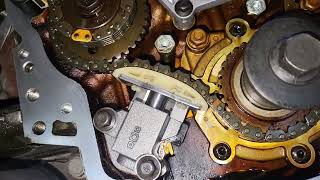
- Stretched Timing Chain(s) 🔴 High Probability → Shop Engine Timing Chain This is a well-documented weakness of the GM 3.6L V6 engine family, acknowledged by GM in TSBs like #12-06-01-009F. The original chain design and extended oil change intervals contribute to premature wear and stretching.
How to confirm: A technician can use a scan tool to observe cam/crank correlation data; a persistent variance points to a mechanical issue. Definitive diagnosis requires physical inspection of the chains for slack, which involves significant labor (removing the engine's front cover). A lab scope can also be used to compare the cam and crank sensor waveforms to a known-good pattern, which is the most efficient non-invasive diagnostic method.
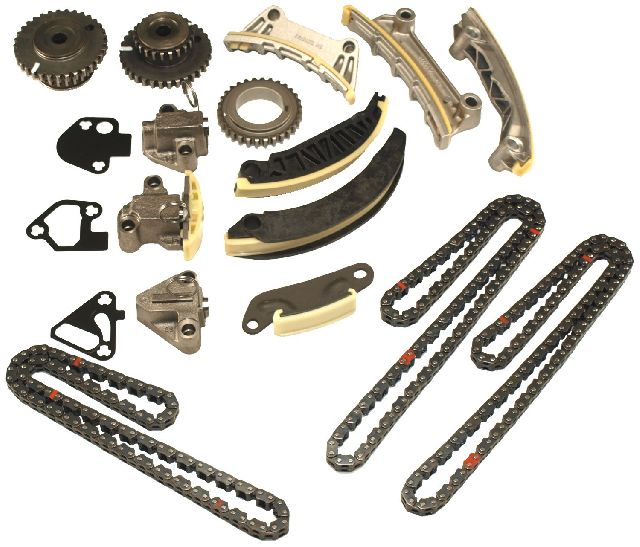
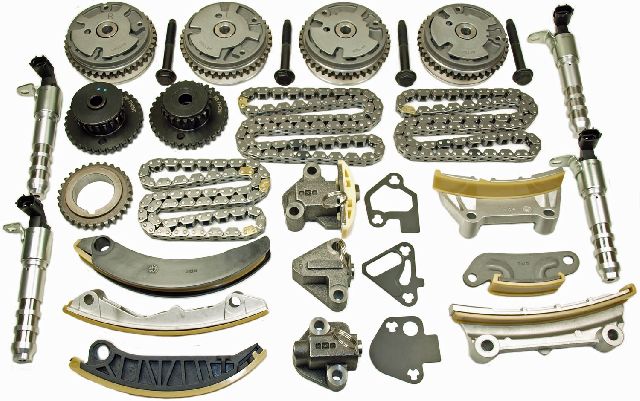
Typical fix: Replace all three timing chains, along with the tensioners, and guides. Sprockets are replaced only if visibly worn, per TSB #12-06-01-009. This is typically done as a complete timing chain kit.
Est. part cost: $400-$900 - Worn Timing Chain Tensioners or Guides 🔴 High Probability → Shop Engine Timing Chain The tensioners are hydraulic and can fail or weaken due to dirty oil or age, losing their ability to keep the chains taut. The plastic guides can become brittle and break, with pieces sometimes falling into the oil pan.
How to confirm: Physical inspection after removing the timing cover is the only way to confirm. The tensioners may be visibly broken or fail to hold pressure, and guides may have chunks missing.
Typical fix: Always replaced as part of a complete timing chain service. Using an updated kit is critical.
Est. part cost: $100-$200 (as part of a kit) - Low or Dirty Engine Oil 🟡 Medium Probability The camshaft phasers (part of the VVT system) and hydraulic tensioners are operated by oil pressure. Low or dirty oil can't properly operate these components, leading to correlation codes. It is also the leading cause of accelerated timing chain wear.
How to confirm: Check the oil level on the dipstick and inspect its condition. If it's low or looks like sludge, this is a likely contributor.
Typical fix: Perform an oil and filter change with high-quality full synthetic oil meeting the GM Dexos specification. If the code returns, the damage to timing components may already be done.
Est. part cost: $50-$120 - Faulty Camshaft Position Actuator Solenoid (VVT Solenoid) ⚪ Low Probability → Shop Engine Camshaft These solenoids control oil flow to the cam phasers. They can get clogged with debris from dirty oil or fail electrically, causing them to stick.
How to confirm: A technician can command the solenoid on and off with a scan tool to check for response. They can also be removed for inspection and cleaning, or swapped with an adjacent solenoid (e.g., intake with exhaust on the same bank) to see if the code follows (e.g., P0016 changes to P0017). Resistance can be checked with a multimeter; a reading outside of the 7-12 Ohm range indicates a fault.
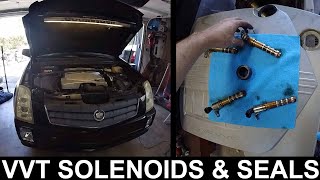
Typical fix: Replace the faulty solenoid. It's often recommended to replace them in pairs (intake/exhaust). 🎬 See this walkthrough on locating and replacing VVT solenoids.
Est. part cost: $30-$80
Rare But Worth Checking
- Slipped Crankshaft Reluctor Wheel: → Shop Engine Crankshaft TSB #PIP3423P explicitly mentions this as a possible cause after timing chains have been ruled out. The reluctor wheel, which the crankshaft sensor reads, is press-fit and can move on the crankshaft, causing a false timing reading even with new chains. Diagnosis requires a borescope or oil pan removal to measure the wheel's position relative to the crankshaft throw. The fix requires complete crankshaft replacement.
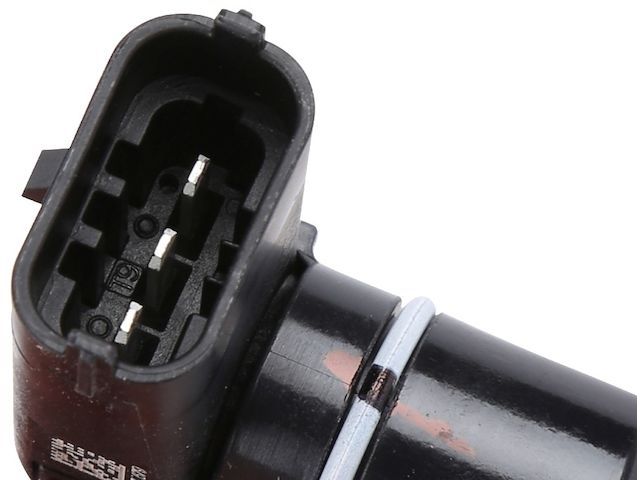
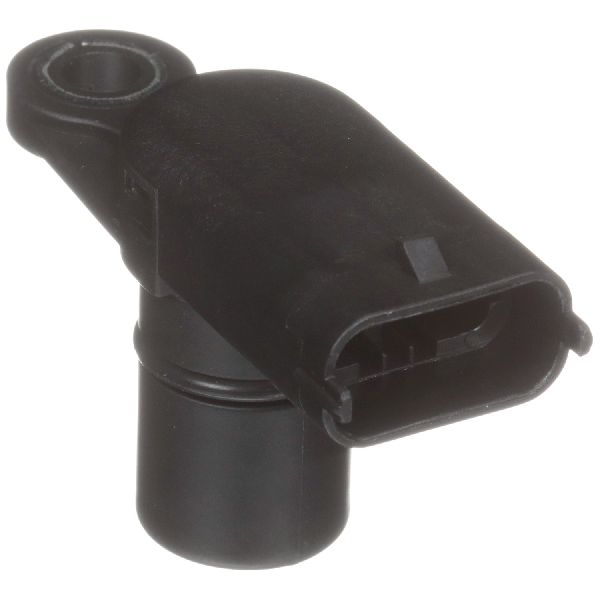
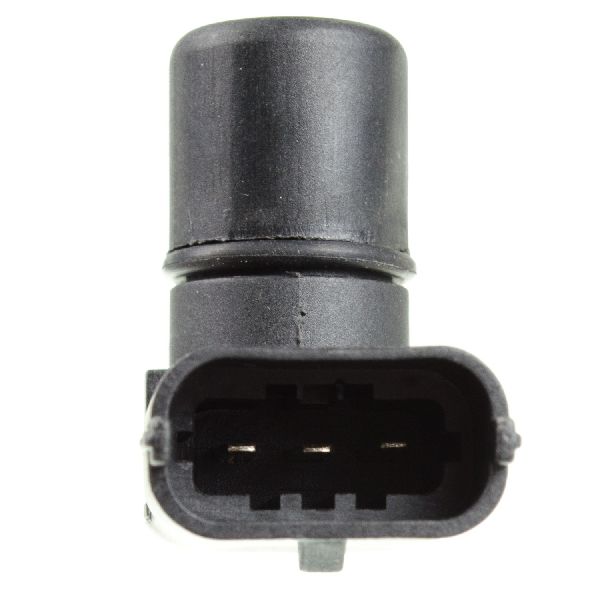
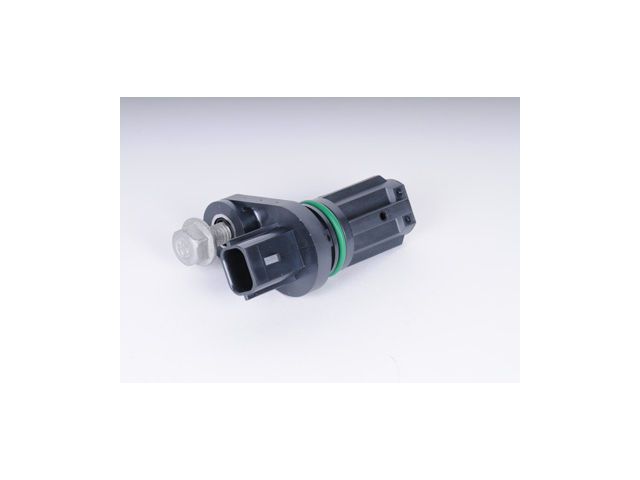
- Faulty Camshaft or Crankshaft Position Sensor: → Shop Engine Crankshaft Position Sensor While possible, this is rarely the cause on this platform. The sensors are usually accurately reporting a real mechanical problem. Replacing them is a common misdiagnosis that almost never fixes the issue.
- Crossed VVT Solenoid Connectors: TSB #19-NA-150 warns that after an engine repair, it's possible to swap the connectors for the Bank 1 intake VVT actuator and the intake park lock solenoid. The connectors are identical and must be identified by wire color. This will set a P0016 code immediately.
Diagnosis Steps
- Verify engine oil level and condition. Ensure it meets GM's Dexos specification. Correct as needed. An oil change is a cheap first step.
- Use a professional scan tool to check for any other DTCs and to view live data for camshaft angle deviation for Bank 1 Intake.
- If cam deviation is high or inconsistent, suspect a mechanical issue. If it's stable and within spec, proceed to test the VVT system.
- Test the Bank 1 intake VVT solenoid. Command it on/off with a scan tool and listen for a click. Swap it with the exhaust solenoid on the same bank; if the code changes to P0017, the solenoid is bad.
- If VVT system tests good, verify mechanical timing. This can be done electronically with a lab scope by comparing cam and crank sensor patterns to a known-good waveform. This is the preferred professional method before disassembly.
- If a lab scope is unavailable or confirms a fault, physical inspection is required. This involves significant disassembly to access the timing chains and inspect for slack, broken guides, or failed tensioners.
- If timing components are replaced and the code persists, investigate the possibility of a slipped crankshaft reluctor wheel as per TSB #PIP3423P.
- If the code appeared immediately after a repair, check for crossed solenoid connectors per TSB #19-NA-150. Also, perform a 'Crankshaft Position Variation Relearn' procedure using a GM-specific scan tool.
Parts You'll Likely Need
- Timing Chain Kit
(OEM #12700436)— This is the most common failure. A complete kit ensures all wear items (chains, guides, tensioners) are replaced at once with updated parts to prevent a repeat failure.
Trusted brands: ACDelco (OEM), Melling, Cloyes
OEM price range: $500-$900
Aftermarket price range: $350-$600 - Camshaft Position Actuator Solenoid
(OEM #12655420 (Intake))— A possible, though less likely, cause. It's a relatively inexpensive part to replace as a diagnostic step before committing to the timing chain job. 🎬 Watch: How to replace VVT solenoids and seals yourself.
Trusted brands: ACDelco, Delphi
OEM price range: $50-$90
Aftermarket price range: $30-$60 - Crankshaft Bolt — The crankshaft harmonic balancer bolt is a torque-to-yield (TTY) bolt and must be replaced anytime it is removed for the timing chain service.
Trusted brands: ACDelco (OEM)
OEM price range: $10-$20
Aftermarket price range: $5-$15
Related Codes That Often Appear With This One
- P0008 — This is a more general Engine Positions System Performance Bank 1 code. It often appears with P0016 as a confirmation of a timing system problem and is a classic indicator of a stretched primary chain on the 3.6L V6.
- P0017 — This code indicates a correlation issue with the Bank 1 *Exhaust* camshaft. If P0016 and P0017 appear together, it strongly points to a base timing issue affecting the entire bank, like a stretched chain.
- P0018 / P0019 — These are the equivalent codes for Bank 2 (the front bank, closer to the radiator). Seeing them with P0016 indicates a severe problem with the primary timing chain or crankshaft reluctor affecting the entire engine.
Technical Service Bulletins (TSBs) & Recalls
- PIP3423P: Addresses DTCs P0016, P0017, P0018, P0019, P0008, or P0009. Instructs technicians to check for loose timing chains/tensioners, and if none are found, to inspect for a slipped crankshaft reluctor wheel.
- 12-06-01-009F: Provides information on updated timing chain kits for High Feature V6 engines to address premature stretching. Notes that guides and sprockets should only be replaced if visibly worn.
- 19-NA-150: Warns that P0016 can be set after a repair if the Bank 1 intake VVT solenoid connector is swapped with the nearby park lock solenoid connector.
Platform-Specific Known Issues
- The GM 3.6L V6 (LFX/LF3) engines are widely known for premature timing chain stretch, which is the primary cause of P0016 on this vehicle.
- Extended oil change intervals, even when following the factory Oil Life Monitor (OLM), can accelerate wear on the timing components. Shorter intervals with Dexos-spec synthetic oil are recommended.
- TSB #PIP3423P points to stretched timing chains or a slipped crankshaft reluctor wheel as the primary causes for a cluster of timing codes including P0016.
- TSB #12-06-01-009F (and its revisions) specifically addresses the timing chain wear issue and the updated parts required for the repair.
Mechanic-Grade Diagnostic Values
- Camshaft Position Actuator (VVT) Solenoid Resistance — expected: 7 to 12 Ohms at 68°F (20°C).. Failure: A reading significantly outside this range, an open circuit (infinite resistance), or a short circuit (near zero ohms) indicates a failed solenoid.
- Crankshaft Reluctor Wheel Position (3.6L LFX) — expected: 25 to 26 mm from the end of the machined surface of the crankshaft throw to the edge of the open space in the reluctor wheel.. Failure: A measurement outside this range indicates the reluctor wheel has slipped on the crankshaft, which requires crankshaft replacement to fix.
- Camshaft Position Sensor (CMP) Low Reference Circuit Resistance — expected: Less than 5.0 ohms between the low reference circuit terminal at the sensor connector and a good ground.. Failure: A reading greater than 5.0 ohms indicates high resistance in the ground circuit, which can cause incorrect sensor readings.
- Engine Oil Pressure (at operating temperature) — expected: Approximately 30 PSI at idle, and 50-55 PSI at 1700-2000 RPM.. Failure: Significantly lower oil pressure can starve the VVT phasers and hydraulic tensioners, leading to correlation codes long before an oil pressure warning light comes on.
Scan Tool Commands That Help
- GDS2 (GM Techline Connect): Camshaft Position Actuator Test — This bidirectional command allows a technician to manually command the VVT solenoids on and off while observing the 'Camshaft Position Variance' PID. If the variance does not change when the solenoid is commanded, it points to a faulty solenoid, clogged oil passage, or a stuck phaser. This is a critical step to isolate a solenoid issue from a more serious mechanical timing problem before disassembly.
- GDS2 / Tech2: Crankshaft Position Variation Relearn — This procedure is mandatory after replacing timing chains, camshafts, crankshafts, or the ECM. It synchronizes the ECM to the new mechanical tolerances of the components. Failure to perform this relearn can cause codes like P0016 to appear immediately after a successful mechanical repair.
Wiring & Ground Locations
- G102 / G103 — Located on the front and rear of the cylinder heads, often as studs where multiple ring terminals from the engine harness are attached.. These are primary engine harness grounds. A loose or corroded connection here can cause incorrect or noisy readings from the camshaft and crankshaft position sensors, potentially triggering a false correlation code. The rear ground (Bank 1) is notoriously difficult to access.
- Engine Wiring Harness Chafe Points — Common chafe points for the 3.6L engine family harness are against the intake plenum, at valve cover bolts, against fuel lines, and on the side of the cylinder head under the plenum.. While more commonly associated with injector codes, damage to the harness in these areas can potentially affect sensor wiring, causing shorts or opens in the cam/crank sensor circuits. This is documented in GM TSBs like #PIP4924D.
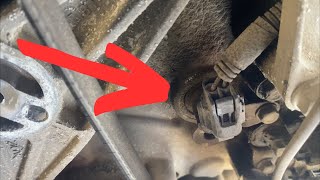
- Camshaft Position Sensor Connectors (Bank 1) — At the rear of the firewall-side cylinder head, often requiring removal of an engine cover or bracket for access.. GM Service Bulletin PI0090D highlights that intermittent codes can be caused by poor terminal connections (fretting corrosion) in these specific connectors. Inspecting for loose or corroded pins is a key diagnostic step before replacing parts.
Real Owner Repair Stories
- YouTube channel 'L1 Automotive Training' (GM vehicle with 3.6L V6 (similar LFX family)) — Check Engine Light with camshaft position sensor performance codes (P0366, P0346).
❌ Tried (didn't work) Replacing the camshaft position sensor with a new ACDelco part from the dealer., Replacing the sensor again with another new ACDelco part., Replacing the sensor with a CarQuest aftermarket part.
✅ What actually fixed it The technician discovered using an oscilloscope that multiple new-in-box sensors, including from the OEM supplier, were producing a faulty waveform. A fourth new ACDelco sensor finally produced the correct signal and fixed the codes, indicating a significant quality control issue with a batch of sensors. - ScannerDanner Forum user 'bizz2222' (2008 Buick Enclave 3.6L (LLT Engine, predecessor to LFX)) — P0011 and C0561 appeared immediately after a timing chain replacement job.
❌ Tried (didn't work) Verifying the new timing chains were installed correctly.
✅ What actually fixed it Performing a 'crank/cam relearn' procedure with a professional scan tool resolved the issue. The ECM needed to be re-synchronized to the new components after the mechanical work was completed.
OEM Part Supersession History
Various older timing chain kits (e.g., 12651450)→12700436 (Verify by VIN)— GM released multiple updated kits over the years with improved chain and tensioner designs to increase durability and combat premature stretching.
Heads up: It is critical to use a complete, updated kit for the specific engine and year. Using an older, superseded kit may lead to a repeat failure.12655420 (VVT Solenoid)→12679099— Part number updated by the manufacturer for inventory or design revisions.
Model Year Variations Within This Range
- 2013-2017 vs 2018-2019: The Cadillac XTS received a significant exterior styling refresh for the 2018 model year to look more like other Cadillac sedans, along with an updated CUE infotainment system. However, the core powertrains, the 3.6L LFX V6 and the twin-turbo LF3 V6, remained the same. Therefore, the causes and fixes for P0016 are identical across the entire 2013-2019 range.
- All (LFX vs LF3 engine): The standard engine is the naturally aspirated 3.6L LFX. The V-Sport models use the twin-turbocharged 3.6L LF3. While the LF3 has many different components due to forced induction, they share the same fundamental block architecture and timing chain system design, making them both susceptible to the same P0016 timing chain failures.
Helpful Videos
We Have This Part in Stock

The information in this article is provided for general reference and educational purposes only. Vehicle specifications, procedures, and part compatibility can vary by production date, trim level, and region. Always consult your vehicle's factory service manual and verify part numbers before purchasing or performing repairs. Safety-critical components such as airbags, seat belts, and braking systems should be installed by a qualified professional.
- Cadillac XTS:
- 🧭 Diagnostic Flowchart
- 🎬 Helpful Videos
- 🛍️ Shop This Part
- What's Unique About the 2013-2019 Cadillac XTS
- Symptoms You May Notice
- Most Likely Causes
- Rare But Worth Checking
- Diagnosis Steps
- Parts You'll Likely Need
- Related Codes That Often Appear With This One
- Technical Service Bulletins (TSBs) & Recalls
- Platform-Specific Known Issues
- Mechanic-Grade Diagnostic Values
- Scan Tool Commands That Help
- Wiring & Ground Locations
- Real Owner Repair Stories
- OEM Part Supersession History
- Model Year Variations Within This Range
- 🎟️ Get 5% Off