

P0016 on 2019-2021 Chevrolet Blazer: Crank-Cam Correlation Causes and Fixes
On the 2019-2021 Chevy Blazer, especially with the 3.6L V6, P0016 usually points to a mechanical timing issue. Before suspecting a costly timing chain replacement (~$2,400), check for a faulty Intake Camshaft Position Actuator Park Lock Solenoid as noted in GM TSB #PIP5730B, which is a much cheaper fix. This code is serious and driving is not recommended to avoid potential catastrophic engine damage.
- P0016 on a 2019-2021 Blazer with the 3.6L V6 is a serious code that should be addressed immediately to prevent potential engine damage.
- Always check the engine oil level and condition first. Low or dirty oil is a primary contributor to this code.
- Before assuming a very expensive timing chain failure, have a mechanic investigate the Intake Camshaft Position Actuator Park Lock Solenoids, as outlined in TSB #PIP5730B.
- Do not simply replace the camshaft or crankshaft sensors as a first step; they are usually reporting a real mechanical issue.
- Repairing a stretched timing chain is a major, expensive job ($1800-$2800+) and should only be performed by a qualified professional.
What's Unique About the 2019-2021 Chevrolet BLAZER
While P0016 is a generic code, it's particularly concerning on the Blazer's optional 3.6L LGX V6 engine. This engine family has a documented history of timing chain issues, often linked to oil maintenance, though the LGX is an improved design over its predecessors (LY7/LLT). GM issued a specific Technical Service Bulletin (PIP5730B) for this vehicle and engine, pointing to a less severe potential cause: a sticking 'Intake Camshaft Position Actuator Park Lock Solenoid Valve'. This provides a critical diagnostic step that can prevent an immediate and expensive jump to a full timing chain replacement. For the 2.0L LSY I4 engine, other GM TSBs (like for the Cadillac XT4) suggest a collapsed timing chain tensioner can also be a cause for this code.
Diagnostic Flowchart
Tap your situation to follow the diagnostic path that matches what you're seeing on this vehicle.
Symptoms You May Notice
- Check Engine Light is on
- Engine runs rough or has a noticeable vibration
- Rattling or ticking noise from the engine, especially on a cold start
- Reduced engine power and sluggish acceleration
- Engine may crank but fail to start
- Stalling at idle, particularly when the engine is warm
- Worse than usual fuel economy
- Vehicle enters 'limp mode' with severely reduced power
- Replacing the camshaft position sensor or crankshaft position sensor without first checking the engine oil and investigating the mechanical timing system. The sensors are often correctly reporting a real mechanical problem.
Most Likely Causes
- Stretched Timing Chain or Worn Timing Components 🔴 High Probability → Shop Engine Timing Chain The GM 3.6L V6 engine family has a known history of premature timing chain wear, often accelerated by extended oil change intervals or running the engine with low oil. Though the LGX engine in the Blazer is an improved design, this remains the most probable cause.
How to confirm: A professional mechanic will need to measure the slack in the timing chains, which involves significant engine disassembly. A rattling noise on startup is a strong indicator. A lab scope can also be used to compare the camshaft and crankshaft sensor waveforms to a known-good pattern to diagnose stretch without major disassembly. 🎬 Watch: How to use a lab scope to diagnose chain stretch.
Typical fix: Replace all three timing chains, the tensioners, and the guides. This is a very labor-intensive job, often quoted at $2,400-$2,800.
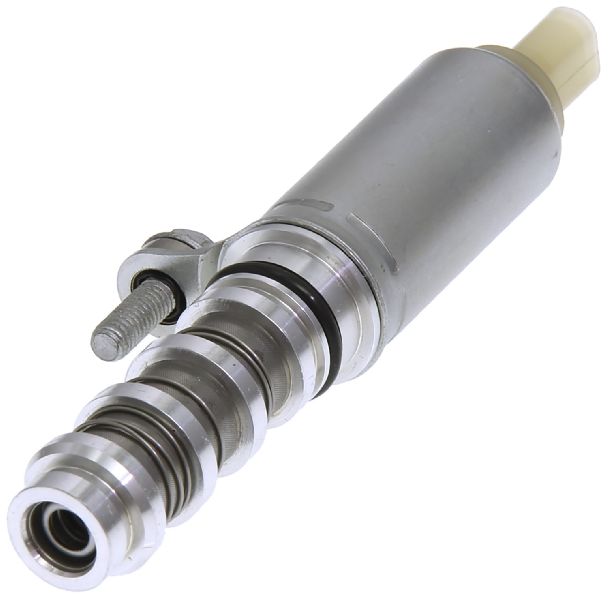
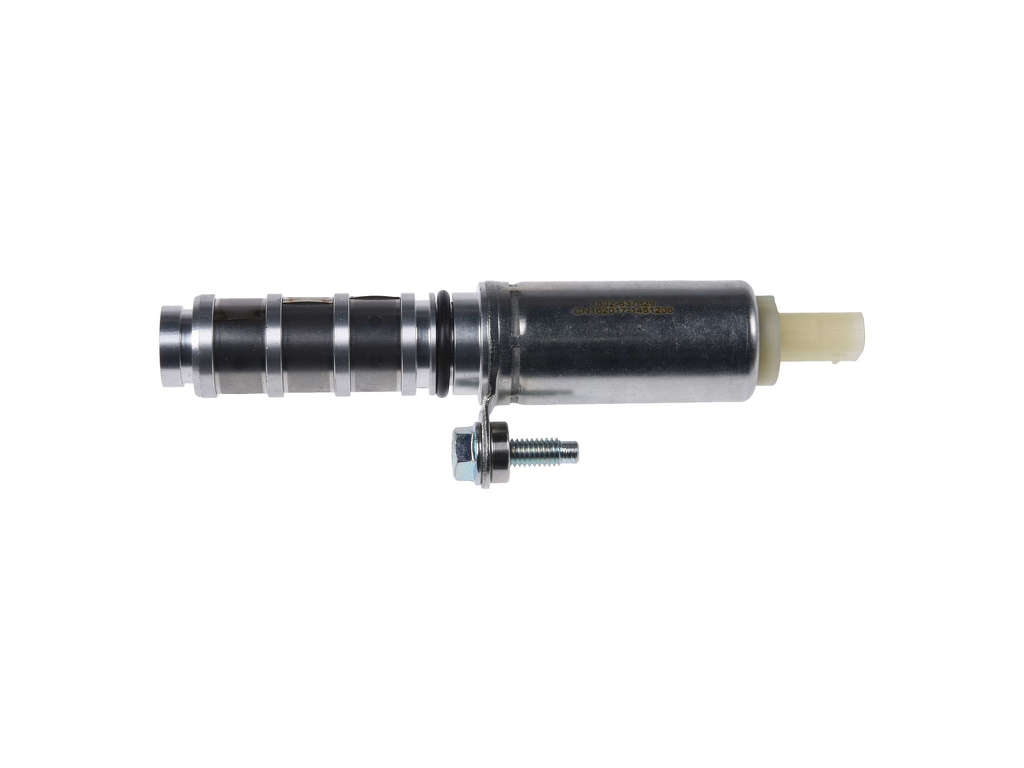
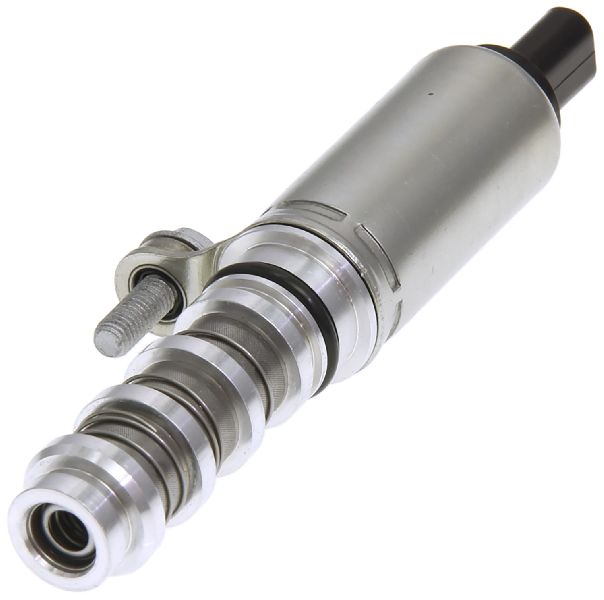
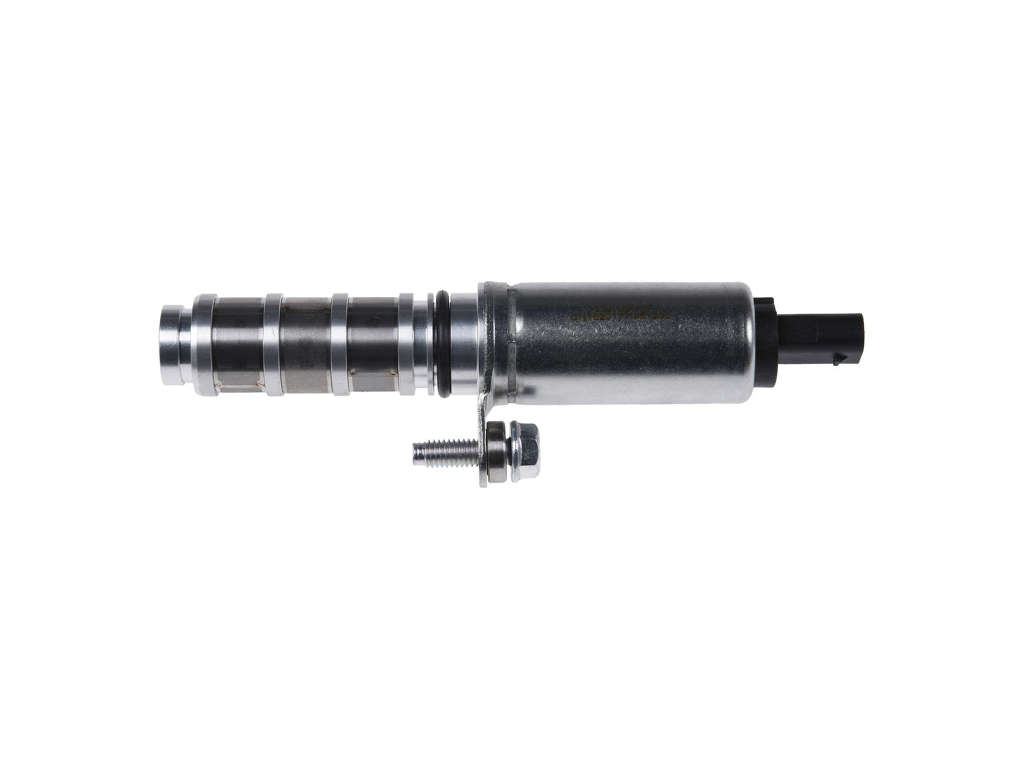
Est. part cost: $500-$700 - Faulty Intake Camshaft Position Actuator Park Lock Solenoid Valve 🟡 Medium Probability → Shop Engine Camshaft GM Technical Service Bulletin PIP5730B specifically identifies this part as a potential cause for P0016 on the 3.6L LGX engine in the Blazer. The valve can stick or come apart, causing a correlation fault without any other drivability issues.
How to confirm: Following the TSB, a technician will remove the solenoids to inspect for damage or sticking. They may swap the solenoids between Bank 1 and Bank 2 to see if the code changes to P0018 (the Bank 2 equivalent).
Typical fix: Replace the faulty solenoid(s).
Est. part cost: $50-$100 - Low or Dirty Engine Oil 🟡 Medium Probability The Variable Valve Timing (VVT) system, including the cam phasers and chain tensioners, relies on clean oil at the correct pressure to function. Dirty oil can clog solenoid screens and passages, and low oil levels accelerate wear on timing chains.
How to confirm: Check the oil level on the dipstick and inspect the oil's condition. If it's very dark, gritty, or below the minimum level, this is a likely contributor.
Typical fix: Perform an oil and filter change using the manufacturer-specified oil (ACDelco dexos-approved). If the code returns, the damage may already be done to other components.
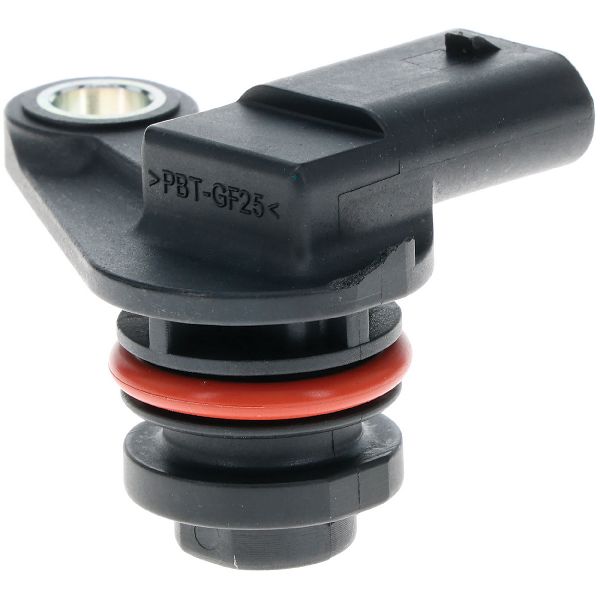
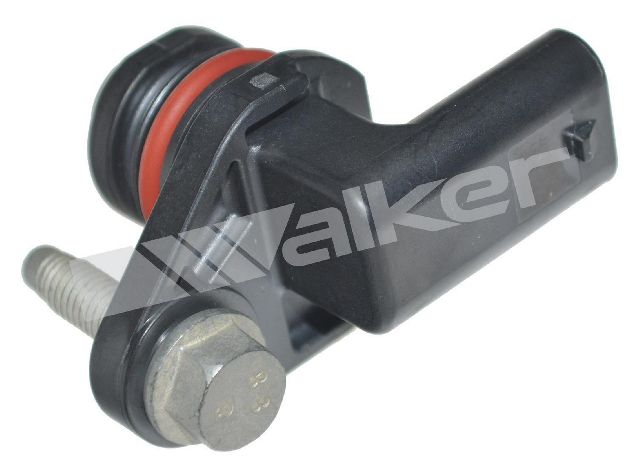
Est. part cost: $50-$90 - Faulty Camshaft Position Sensor ⚪ Low Probability → Shop Engine Camshaft Position Sensor
How to confirm: Test the sensor's output with a multimeter or oscilloscope. A simpler, though less definitive, test is to swap the Bank 1 intake sensor with the Bank 2 intake sensor 🎬 Watch: A guide on testing and fixing the P0016 correlation code. and see if the code changes to P0018. However, this is often a misdiagnosis as the sensor is correctly reporting a mechanical fault.
Typical fix: Replace the Bank 1 intake camshaft position sensor.
Est. part cost: $40-$75
Rare But Worth Checking
- Faulty Crankshaft Position Sensor: → Shop Engine Crankshaft Position Sensor This is a rare cause for this specific code, as the camshaft sensors are more likely to be the point of failure in the electrical system.
- Damaged or Slipped Reluctor Wheel/Tone Ring: The toothed rings on the crankshaft or camshaft that the sensors read can become damaged or slip, causing incorrect readings. This is uncommon but possible, and has been noted in GM TSBs for other engines as a cause for P0016 even when timing chains are correctly installed.
- Wiring Issue: A damaged wire or loose connector for either the camshaft or crankshaft sensor can cause a loss of signal and trigger the code. On the 3.6L LGX, there are two identical electrical connectors for the Bank 1 intake cam actuator and the park lock solenoid that can be swapped during a repair, causing an immediate P0016 code, as noted in TSB 19-NA-150.
- Collapsed Timing Chain Tensioner: → Shop Engine Timing Chain On the 2.0L LSY engine specifically, a GM TechLink article mentions that a stuck or collapsed timing chain tensioner can cause a loose chain and set codes P0016 and P0017.
Diagnosis Steps
- Check Engine Oil: Verify the oil level is correct and the oil is clean. If low or dirty, perform an oil and filter change, clear the code, and see if it returns. This is the simplest and cheapest first step.
- Scan for Other Codes: Use an OBD-II scanner to check for other related codes (like P0017, P0018, P0008) which can help pinpoint the problem's scope.
- Inspect Camshaft Actuator Park Lock Solenoids (3.6L V6): Following TSB #PIP5730B, remove and inspect the intake camshaft actuator park lock solenoid valves for sticking or damage. This is a known issue and a crucial step before assuming a timing chain failure.
- Test Sensors and Wiring: If the solenoids are okay, test the camshaft position sensor (Bank 1 Intake) and the crankshaft position sensor. Check their wiring harnesses for any signs of damage, corrosion, or loose connections. Pay special attention to the possibility of swapped connectors on the 3.6L V6 as per TSB #19-NA-150.
- Professional Mechanical Inspection: If all the above steps do not resolve the issue, the problem is almost certainly with the timing chains, tensioners, or guides. This requires professional disassembly to verify the timing marks and measure chain stretch. A scope analysis of cam/crank signals is a less invasive alternative.
Parts You'll Likely Need
- Timing Chain Kit — This is the most probable root cause on the 3.6L V6. A kit includes the necessary chains, guides, and tensioners for a complete repair.
Trusted brands: ACDelco, Cloyes
OEM price range: $500-$700
Aftermarket price range: $350-$600 - Intake Camshaft Position Actuator Park Lock Solenoid Valve — Identified in TSB #PIP5730B as a specific cause for this code on the 3.6L LGX V6. It can stick or fail, causing a timing correlation error. The part number 12681275 listed in previous versions is incorrect; that is a rocker arm.
Trusted brands: ACDelco
OEM price range: $35-$60
Aftermarket price range: $20-$40 - Camshaft Position Actuator Solenoid (VVT Solenoid)
(OEM #12732244)— This is the standard VVT solenoid that controls oil flow to the phaser. It can become clogged or fail. Part number 12732244 supersedes several previous numbers including 12647900, 12671336, 12687167, 12690515, and 12707054.
Trusted brands: ACDelco
OEM price range: $45-$60
Aftermarket price range: $25-$45
Related Codes That Often Appear With This One
- P0018 — This is the same correlation code but for Bank 2. Seeing P0016 and P0018 together strongly points to a problem with the primary timing chain or another issue affecting the entire engine, as both banks are out of sync.
- P0017 — This is a correlation code for the exhaust camshaft on Bank 1. If seen with P0016, it confirms the timing is off for the entire bank, making a stretched chain the most likely cause.
- P0008 — This is a more general 'Engine Positions System Performance (Bank 1)' code that often appears as an early warning for a developing timing chain problem on GM V6 engines, strongly pointing to a stretched primary timing chain.
Technical Service Bulletins (TSBs) & Recalls
- PIP5730B: 'Diagnostic Assistance For P0011, P0016, P0018, and P0021 On The Gen 2 HFV6 Engine' - Points to faulty Intake Camshaft Position Actuator Park Lock Solenoid Valves as a potential cause.
- 21-NA-278: 'Diagnostic Strategy for Ticking, Tap or Rattle Noise from Engine with Possible Misfire...DTCs P0016-P0019 Set' - Discusses various engine noises and related timing codes on the 3.6L LGX engine.
Platform-Specific Known Issues
- Intake Camshaft Park Lock Solenoid (3.6L V6): → Shop Engine Camshaft Per TSB PIP5730B, a primary suspect for P0016 on the LGX V6 is the intake camshaft position actuator park lock solenoid valve, which can stick or break. This is a much less expensive repair than a timing chain and should be investigated first.
- Swapped Electrical Connectors (3.6L V6): TSB #23-NA-091 warns that after service, two identical electrical connectors for the Bank 1 intake cam actuator and the park lock solenoid can be accidentally swapped. This will cause an immediate P0016 code and rough idle.
- Collapsed Tensioner (2.0L LSY I4): For the 2.0L Turbo engine, a known issue mentioned in GM technical literature is a stuck or collapsed timing chain tensioner, which leads to a loose chain and can trigger P0016.
Mechanic-Grade Diagnostic Values
- VVT Actuator Solenoid Resistance — expected: 8 to 13 Ohms. Failure: A reading outside of this range suggests the solenoid coil is faulty.
- Cam/Crank Waveform Correlation (Bank 1, Lab Scope) — expected: At idle, the rising edge of the intake cam sensor signal should cross within the 'missing tooth' gap of the crankshaft sensor signal. The exhaust cam signal should trigger approximately 3 crank pulses after the gap.. Failure: If the camshaft sensor signals are shifted to the right (retarded) relative to the crankshaft signal, it is a strong indication of a stretched timing chain.
Scan Tool Commands That Help
- GDS2 (GM Dealer Tool): Camshaft Position Actuator Solenoid Control — This bidirectional command allows a technician to manually activate the VVT solenoids and the park lock solenoids to check for a response. A solenoid that doesn't 'click' or respond when commanded is likely stuck or has an electrical fault. This is used to verify solenoid function before condemning mechanical parts.
Wiring & Ground Locations
- Bank 1 Intake Actuator & Park Lock Solenoid Connectors — On the 3.6L LGX V6, the intake camshaft actuator solenoid is on top of the engine, while the intake actuator park lock solenoid is on the front of the engine for Bank 1 (firewall side).. Per GM TSB 19-NA-150, these two connectors are physically identical and can be accidentally swapped during engine service, which will immediately set a P0016 code with no other faults. Verifying the correct wire colors at each connector is a critical diagnostic step.
- K20 Engine Control Module (ECM) Connector X1 — The main engine harness connector at the ECM.. This is the primary connector for all engine sensors. On similar GM engines, X1 is often a black connector with a blue Terminal Position Assurance (TPA) clip. Technicians needing to perform pin-out testing for sensor signals, grounds, or reference voltages would test at this connector.
"I Checked Everything" — The Actual Cause
- In some cases, P0016 can set on a perfectly timed engine with good sensors. GM TSBs #PIP3423L and #PIP4548F describe a condition where the crankshaft reluctor wheel, which is press-fit onto the crank, can slip. This moves the reference point for the crankshaft position sensor, causing a correlation code even though the chains and gears are aligned. This can be diagnosed with a borescope through the crank sensor port or by measuring the reluctor's position relative to the crankshaft throw.
OEM Part Supersession History
12647900, 12671336, 12687167, 12690515, 12707054, and others→12732244— Part consolidation and design updates by GM.
Heads up: This applies to the standard Camshaft Position Actuator Solenoid (VVT Solenoid), not the Park Lock solenoid. Using the most current part number is recommended for reliability.
Model Year Variations Within This Range
- 2020-2021: The 2.0L LSY turbocharged I4 engine was added as an optional engine on 2LT and 3LT trims starting in the 2020 model year. This introduces different potential causes for P0016 on those models compared to the 3.6L V6, such as a collapsed tensioner noted on other LSY applications.
Helpful Videos
We Have This Part in Stock

The information in this article is provided for general reference and educational purposes only. Vehicle specifications, procedures, and part compatibility can vary by production date, trim level, and region. Always consult your vehicle's factory service manual and verify part numbers before purchasing or performing repairs. Safety-critical components such as airbags, seat belts, and braking systems should be installed by a qualified professional.
- Chevrolet BLAZER:
- 🧭 Diagnostic Flowchart
- 🎬 Helpful Videos
- 🛍️ Shop This Part
- What's Unique About the 2019-2021 Chevrolet BLAZER
- Symptoms You May Notice
- Most Likely Causes
- Rare But Worth Checking
- Diagnosis Steps
- Parts You'll Likely Need
- Related Codes That Often Appear With This One
- Technical Service Bulletins (TSBs) & Recalls
- Platform-Specific Known Issues
- Mechanic-Grade Diagnostic Values
- Scan Tool Commands That Help
- Wiring & Ground Locations
- "I Checked Everything" — The Actual Cause
- OEM Part Supersession History
- Model Year Variations Within This Range
- 🎟️ Get 5% Off