

P0016 on 2006-2008 Chevrolet Cobalt 2.4L: Causes and Fixes for Crank-Cam Correlation
P0016 on a 2.4L Cobalt most often means the timing chain has stretched or a camshaft actuator (VVT) solenoid has failed. A rattling noise on startup strongly points to a bad timing chain, a common and serious issue for this engine. Solenoids are a cheaper, easier fix to try first, costing around $40-$80 for the pair. In rarer cases, a press-fit reluctor ring can spin on the camshaft, causing the code even with perfect mechanical timing.
- P0016 on your Cobalt is a serious code that indicates a mechanical timing issue between the crankshaft and intake camshaft.
- A rattling noise from the engine on startup is a very strong indicator that the timing chain system has failed and requires replacement.
- Before suspecting a major repair, always check your engine oil level and consider replacing the inexpensive VVT solenoids, as they are a common and simple fix.
- Do not replace the crank or cam sensors hoping for a fix; this code almost always points to a mechanical issue (timing chain) or a hydraulic control issue (VVT solenoids), not a failed sensor.
- Ignoring this code can lead to the timing chain breaking, which will cause severe and likely irreparable engine damage.
What's Unique About the 2006-2008 Chevrolet Cobalt
The 2.4L LE5 Ecotec engine used in this generation of Cobalt and its platform mates is well-known for premature timing chain system failures. The timing chains can stretch, the plastic guides can become brittle and break, and the hydraulic tensioners can fail, all leading to slack in the chain that causes correlation codes like P0016. This is often exacerbated by oil consumption issues or infrequent oil changes, as the tensioner relies on oil pressure. While faulty VVT solenoids are also a common cause, the high probability of a timing chain issue is a specific and serious concern for this platform, often signaled by a distinct rattling noise on cold starts as noted in TSB #PIP4716F.
Symptoms You May Notice
- Check Engine Light is on
- Engine runs rough or has a fluctuating idle
- Poor acceleration and reduced engine power
- Engine is hard to start or cranks but won't start
- Rattling, scraping, or slapping noise from the passenger side of the engine, especially on cold startup for 2-5 seconds.
- Engine stalling, sometimes after a brief stumble.
- Replacing the camshaft or crankshaft position sensors first. P0016 is a correlation code, not a sensor circuit code, meaning the sensors are likely reading correctly, but the data they are reporting is out of sync mechanically. 🎬 Watch: Understanding P0016 and P0017 correlation codes on your Chevy.
- Replacing only the VVT solenoids when a startup rattle is present. The rattle is a clear auditory sign of a mechanical timing chain issue, which the solenoids cannot fix.
- Assuming the timing is correct after a chain replacement without performing a crank/cam relearn procedure with a capable scan tool.
Most Likely Causes
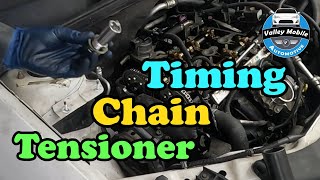
- Stretched Timing Chain or Failed Tensioner/Guides 🔴 High Probability → Shop Engine Timing Chain The Ecotec engines of this era are widely documented to have issues with timing chain stretch and the failure of plastic guides and hydraulic tensioners. Low or poor-quality oil accelerates this wear by starving the hydraulic tensioner of the pressure it needs to keep the chain taut. The original tensioner design has been superseded by an improved part (GM #12608580).
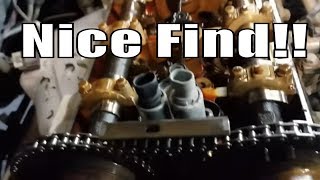
How to confirm: Listen for a distinct rattling or slapping noise from the passenger side of the engine on cold starts. Definitive confirmation requires removing the valve cover and/or timing cover to physically inspect for chain slack and broken guides. A missing top plastic guide is a common visual confirmation.
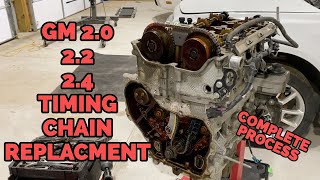
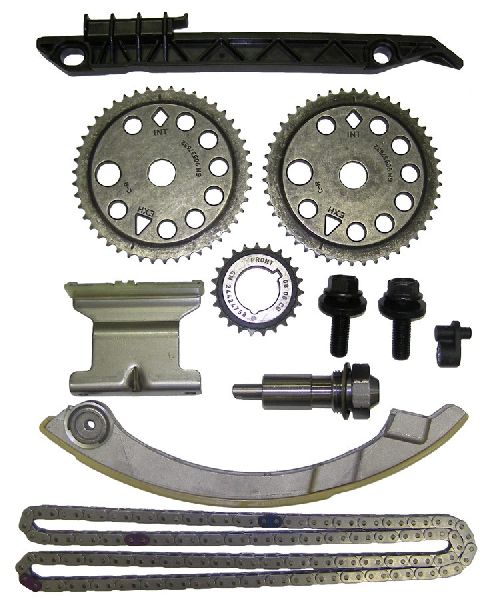
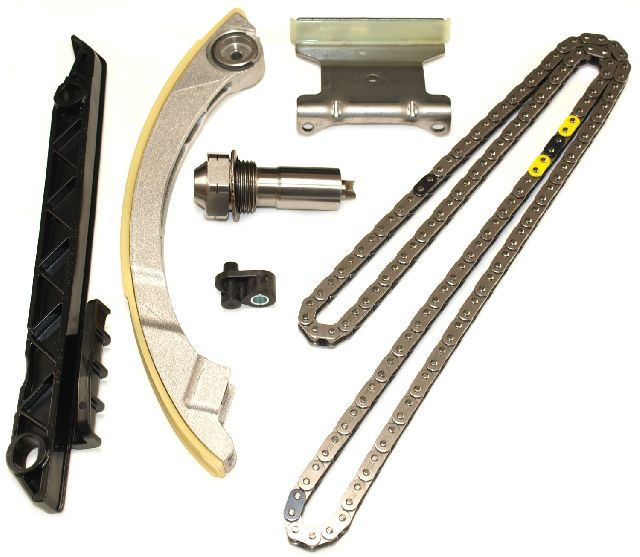
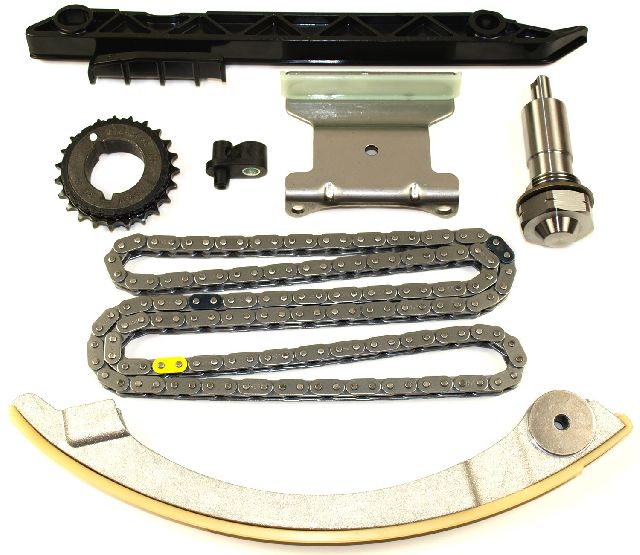
Typical fix: Replace the timing chain, tensioner, and all guides as a complete kit. It is also recommended to replace the balance shaft chain and guides at the same time. 🎬 Watch: Complete step-by-step guide to replacing the Ecotec timing chain. Using an updated OEM tensioner is critical.
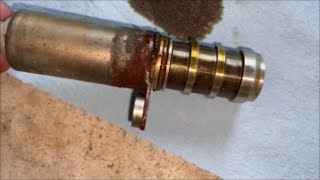
Est. part cost: $150-$300 - Faulty Camshaft Position Actuator Solenoids (VVT Solenoids) 🟡 Medium Probability → Shop Engine Camshaft The small screens on these solenoids can become clogged with oil sludge or metal debris from timing chain wear, impeding their function. This is a very common failure point on all VVT systems and often the first part to check due to its low cost and easy access.
How to confirm: Remove the solenoids from the top of the valve cover (one 10mm bolt each) and inspect their screens for debris. You can test their function by applying 12V to the terminals and listening for a click. A common diagnostic trick is to swap the intake and exhaust solenoids; if the code changes to P0017 (exhaust correlation), the solenoid is bad. Resistance should be between 8 and 13 Ohms.
Typical fix: Replace the faulty solenoid. It is highly recommended to replace both the intake and exhaust solenoids as a pair. Many forum users report that OEM/ACDelco solenoids are more reliable than aftermarket brands. 🎬 See this walkthrough on replacing your camshaft position actuator solenoids.
Est. part cost: $40-$80 for a pair - Low or Dirty Engine Oil ⚪ Low Probability The VVT system and timing chain tensioner are both operated by oil pressure. These engines are known to consume oil. If the oil is low, dirty, or the wrong viscosity, it can't operate these components correctly, leading to timing correlation issues.
How to confirm: Check the oil dipstick for the correct level and inspect the oil's condition. If it is dark, thick, or has been more than 5,000 miles since the last change, it should be replaced.
Typical fix: Perform an oil and filter change with the correct viscosity oil (5W-30) and clear the codes. This is the cheapest and easiest first step.
Est. part cost: $30-$60
Rare But Worth Checking
- Slipped Camshaft Reluctor Ring: → Shop Engine Camshaft TSB #PIP4548F explicitly details that the reluctor ring, which the cam sensor reads, is press-fit and can spin on the camshaft, especially after an engine overheat. This will cause P0016 even if the mechanical timing is perfect. Confirmation requires comparing the reluctor position to a known good engine or camshaft, as the slippage can be very slight. In one documented case on CobaltSS.net, a user chased the code by replacing sensors and solenoids, but the fix was a new camshaft because the ring had rotated 'just a hair'.
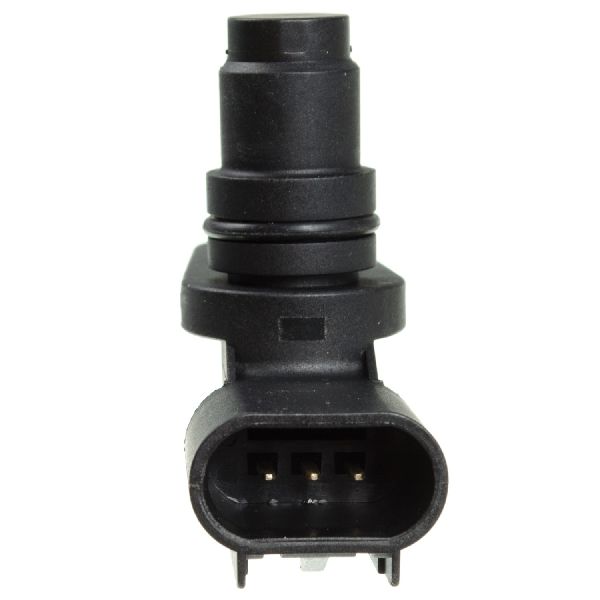
- Faulty Crankshaft or Camshaft Position Sensor: → Shop Engine Camshaft Position Sensor While possible, it's uncommon for a sensor itself to fail in a way that causes a correlation code without setting a specific sensor circuit code (like P0335). This should only be considered after ruling out mechanical timing and VVT solenoid issues. Many owners replace these sensors unnecessarily.
- Failed Engine Control Module (ECM): In very rare cases, a faulty ECM can send a bad signal to the cam actuators, forcing them open and triggering timing codes. This is an unlikely cause and should be the last item to check after all other possibilities are exhausted. One owner on a forum reported this was the ultimate fix after a timing chain replacement did not solve the issue.
Diagnosis Steps
- Check the engine oil level and condition. Top up or change the oil if it is low or dirty. Use full synthetic 5W-30 oil.
- Scan for any other trouble codes. Address any sensor-specific or VVT circuit codes first.
- Listen for a rattling or slapping noise from the passenger side of the engine during a cold start. Any abnormal noise strongly suggests a timing chain issue.
- Remove the intake and exhaust camshaft position actuator (VVT) solenoids. Inspect the screens for metal shavings or sludge. Test their resistance (should be 8-13 ohms) or swap their positions to see if the code changes from P0016 to P0017.
- If solenoids are good and a rattle is present, the next step is to inspect the timing chain system. This requires removing the valve cover to check for visible slack in the chain or broken/missing guides.
- If the timing chain appears tight and guides are intact, investigate the possibility of a slipped camshaft reluctor ring per TSB #PIP4548F. This may require comparing the camshaft to a new part to spot a slight rotation of the ring.
- Only after confirming all mechanical timing and VVT components are working should you consider replacing the crankshaft or camshaft position sensors.
- If all else fails and codes persist after a timing job, investigate the ECM as a final, rare possibility.
Parts You'll Likely Need
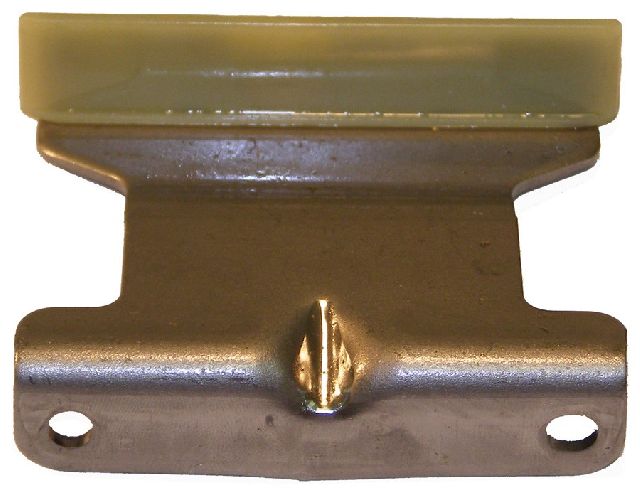
- Timing Chain Kit
(OEM #12680750)— This is the most probable cause of P0016 on these engines, especially with over 100,000 miles or if a startup rattle is present. A kit ensures all worn components (chain, guides, tensioner) are replaced.
Trusted brands: ACDelco, Cloyes
OEM price range: $200-$300
Aftermarket price range: $120-$200 - Intake Camshaft Position Actuator Solenoid
(OEM #12655421)— These solenoids get clogged with debris and are a frequent cause of VVT-related codes. They are relatively inexpensive and easy to replace, making them a good first part to check/replace.
Trusted brands: ACDelco, Dorman
OEM price range: $40-$60
Aftermarket price range: $20-$40 - Exhaust Camshaft Position Actuator Solenoid
(OEM #12655420)— Often replaced as a pair with the intake solenoid, as they are subjected to the same wear and oil conditions. Swapping them is a key diagnostic step.
Trusted brands: ACDelco, Dorman
OEM price range: $40-$60
Aftermarket price range: $20-$40
Related Codes That Often Appear With This One
- P0017 — This code indicates a correlation issue with the exhaust camshaft. Seeing both P0016 and P0017 together strongly suggests a base mechanical timing problem, like a stretched chain or jumped tooth, that is affecting both camshafts.
- P0011 — This code means 'Intake Camshaft Position Timing - Over-Advanced'. It can be caused by a stuck VVT solenoid, an oil flow problem, or a timing chain issue, which are shared root causes with P0016.
- P0014 — This code means 'Exhaust Camshaft Position Timing - Over-Advanced'. It often appears with P0017 and can point to a failing exhaust VVT solenoid or a broader timing system problem.
Technical Service Bulletins (TSBs) & Recalls
- PIP4548F: Details diagnosis for a slipped camshaft reluctor ring causing P0016/P0017 on a properly timed engine.
- PIP4716E: Addresses a short, sharp rattle at startup that may be accompanied by codes P0011, P0014, P0016, or P0017, pointing to cam actuators not parking correctly.
Platform-Specific Known Issues
- Timing Chain Stretch: The Ecotec engines in this Cobalt are notorious for stretched timing chains, broken plastic guides, and failed hydraulic tensioners, often linked to oil pressure/quality issues.
- Slipped Cam Reluctor Ring: As documented in TSB #PIP4548F, the press-fit reluctor ring on the camshaft can spin, causing P0016/P0017 even with a new, perfectly timed chain.
Mechanic-Grade Diagnostic Values
- VVT Solenoid (Camshaft Position Actuator) Resistance — expected: 8 to 13 Ohms at 68°F (20°C). Failure: A reading outside this range, an open circuit (OL), or a reading that fluctuates wildly when wiggling the connector indicates a faulty solenoid.
- Engine Oil Pressure at Hot Idle — expected: At least 18.85 PSI. Failure: Pressure significantly below this value indicates a systemic oil pressure problem (e.g., worn oil pump, clogged pickup tube) that is starving the VVT system and timing chain tensioner.
- Camshaft Position (CMP) Sensor 5V Reference Circuit — expected: 4.8-5.2 Volts between the 5-volt reference wire and ground with Key On, Engine Off.. Failure: Voltage outside this range suggests a wiring issue, a poor ground, or a fault in the Engine Control Module (ECM).
- Crankshaft vs. Camshaft Waveform Alignment (Oscilloscope) — expected: At idle, the 17th pulse of the crankshaft sensor signal after the missing tooth should align with the rising edge of the camshaft sensor's high signal.. Failure: Misalignment of these signals on an oscilloscope confirms a correlation fault, which could be from a stretched chain or slipped reluctor ring, even if timing marks appear correct.
Scan Tool Commands That Help
- GDS2 / Tech2 (or equivalent professional scanner): Camshaft Position Actuator Solenoid Control — This bidirectional control allows a technician to command the intake and exhaust solenoids on and off while the engine is running. By monitoring the camshaft position angles on live data, this directly tests the solenoid's and phaser's mechanical response. It helps isolate a failed solenoid from a wiring or ECM driver issue without removing parts.
- GDS2 / Tech2 (or equivalent professional scanner): Crankshaft Position Variation Learn (Cam/Crank Relearn) — This procedure should be performed after replacing a timing chain, camshaft, crankshaft, or the ECM. It allows the ECM to learn the minor variations in the new component positions to prevent false misfire detection and ensure accurate timing correlation monitoring.
Wiring & Ground Locations
- Intake VVT Solenoid Connector — Top of the valve cover, towards the front of the vehicle (radiator side).. The connector is gray. A poor connection or damaged wiring to this solenoid can cause P0010, P0011, and contribute to P0016.
- Exhaust VVT Solenoid Connector — Top of the valve cover, towards the rear of the vehicle (firewall side).. The connector is black. This is the primary connector to check for P0013, P0014, and P0017, and swapping it with the intake solenoid is a key diagnostic step for P0016.
- Intake Camshaft Position (CMP) Sensor — On the cylinder head, often located underneath the high-pressure fuel pump on the 2.4L LE5 engine.. This sensor provides the camshaft position data to the ECM for the P0016 calculation. Its wiring and connection are critical. Access can be difficult.
- Engine Block Grounds — Multiple points on the engine block and cylinder head, typically secured by bolts to the chassis.. A corroded or loose engine ground can cause erratic voltage and signal issues for all engine sensors, including the cam and crank sensors, potentially leading to false correlation codes.
Real Owner Repair Stories
- CobaltSS.net Forum User (2009 Chevrolet Cobalt SS (LNF Engine, similar VVT system)) — Extremely rough running, stalling, P0016 and P0017 codes present.
❌ Tried (didn't work) Replaced the ECM fuse which had blown., Checked all engine compartment grounds., Tested the crankshaft position sensor., Replaced the entire timing chain and guides.
✅ What actually fixed it A professional shop diagnosed a faulty Engine Control Module (ECM). The ECM was sending a constant 'on' signal to the cam actuators, forcing them fully open. Replacing the ECM and both VVT actuator solenoids resolved the issue. The theory was that a failing actuator shorted and damaged the ECM driver circuit. - 2CarPros Forum User (2008 Chevrolet Cobalt 2.4L) — P0016, hard start, rattling noise on cold start, noise under load.
❌ Tried (didn't work) Replaced camshaft position sensor., Replaced crankshaft position sensor., Changed engine oil.
✅ What actually fixed it The user observed slack in the timing chain upon inspection. The confirmed fix was a complete timing chain replacement. This story highlights the classic symptoms (rattle) and the futility of replacing sensors when the root cause is mechanical.
OEM Part Supersession History
Multiple (e.g., 12578209, 90537802)→12608580— Updated design to improve durability and prevent premature failure of the hydraulic tensioning mechanism.
Heads up: The older part numbers are failure-prone; 12608580 is the correct and necessary replacement for any timing service on this engine.12655421 (Exhaust), 12628348, 12646784→12679100— Design revision for improved reliability and longevity.
Heads up: While older numbers may still be found, 12679100 is the latest OEM revision for the exhaust solenoid.12655420 (Intake), 12628347, 12646783→12679099— Design revision for improved reliability and longevity.
Heads up: 12679099 is the latest OEM revision for the intake solenoid. It is recommended to replace both solenoids with the latest part numbers as a pair.
Model Year Variations Within This Range
- 2007-2008: Starting in the 2007 model year, the Cobalt received a new 32-bit Engine Control Module (ECM), replacing the 16-bit unit from 2006. This can affect diagnostic procedures and software compatibility for tools like the Tech2/GDS2.
- 2008: For the 2008 model year, the naturally-aspirated 2.4L LE5 model was renamed from "Cobalt SS" to "Cobalt Sport". The engine power ratings were slightly adjusted, but the core mechanicals and causes for P0016 remained the same.
Diagnostic Flowchart
Other Known Issues on This Vehicle
Issues unrelated to this code that are worth knowing about as an owner of this generation:
- Electric Power Steering (EPS) Motor Failure 🔴 High — Very common, affects a wide range of model years. (Ref: NHTSA Recalls: 10V073000, 14V153000. Can cause sudden loss of steering assist.)
- Ignition Switch Failure / Key Removable While Not in Park 🔴 High — Extremely common, part of a massive GM recall campaign. (Ref: NHTSA Recalls: 14V047000, 14E021000. Can lead to unintended vehicle movement or engine shutoff while driving.)
- Excessive Oil Consumption 🟠 Medium — Common, particularly on engines over 75,000 miles. Can be 1 quart per 1,000-2,000 miles. (Ref: Multiple TSBs exist regarding oil consumption diagnosis. Often caused by piston ring design.)
- Fuel Pump Module/Line Leaks 🔴 High — Affects a significant number of vehicles, especially in corrosion-prone areas. (Ref: NHTSA Recall: 12V459000. The fuel pump module feed or return port can crack, leading to a fuel leak.)
- Front Control Arm Bushing Failure 🟠 Medium — Common wear item, often fails prematurely leading to clunking noises and poor alignment.
Used vs. New Parts: Buying Guide for This Vehicle
When a used part is the smart pick: For this specific repair, using used parts is strongly discouraged for any of the core components. The only parts where a used component from a junkyard would be acceptable are external, non-wear items like the plastic engine cover or mounting bolts if one were lost.
Donor-vehicle mileage cap: roughly under 50000 miles for the part to have meaningful remaining life.
What to inspect on the donor part:
- For any part on this engine, evidence of regular oil changes (no heavy sludge under oil cap) is a positive sign.
- Avoid engines from vehicles that show signs of a major collision near the front, which could have damaged accessories or the harmonic balancer.
- If considering a complete engine, try to get compression numbers or video of it running before purchase.
OEM-only on this vehicle (don't cheap out):
- Timing Chain Tensioner: The updated ACDelco/GM part (12608580) is critical to a lasting repair.
- Camshaft/Crankshaft Position Sensors: While many aftermarket options exist, forum consensus often points to OEM sensors being the most reliable and least likely to cause repeat issues.
Aftermarket brands forum-validated for this vehicle:
- Cloyes: A highly reputable brand for timing chain kits, considered by some to be an OEM supplier.
- ZZPerformance (ZZP): Offers an upgraded timing chain guide kit that specifically addresses the weak points of the factory plastic guides.
- ACDelco: The OEM supplier for GM, always a safe and reliable choice for any part on this list.
Brands owners have reported issues with on this vehicle:
- Unbranded 'eBay special' kits: While tempting due to low cost, cheap timing kits and VVT solenoids are notorious for premature failure, leading to a repeat of a very labor-intensive job. Quality of materials and tolerances are paramount for these components.
Real Owner Stories
Aggregated from forums and TSBs cited above. Mileages and costs reflect what owners reported in those sources.
2007 Chevrolet Cobalt 2.2L
Symptoms: Owner reported a cam/crank correlation code P0016.
What fixed it: The diagnosis focused on verifying mechanical timing and sensor signals.
Source hint: ScannerDanner.com forum post '2007 Chevy Cobalt 2.2 liter engine code P0016 cam crank correlation'
2009 Chevrolet Cobalt SS
Symptoms: Engine running rough with codes P0016 and P0017.
What fixed it: Investigation of the VVT system and timing components.
Source hint: cobaltss.net forum thread '2009 cobalt ss running rough p0016 p0017'
2006-2008 Chevrolet Cobalt 2.4L LE5 — ~85000 miles
Symptoms: Rattling, scraping, or slapping noise from the passenger side of the engine on cold startup for 2-5 seconds.
What fixed it: Replacement of the timing chain, tensioner, and all guides as a complete kit, including the updated OEM tensioner.
Source hint: vehicle_specific_issues: Timing Chain Stretch
Related OBD-II Codes
Frequently Asked Questions
My 2007 Cobalt has a rattle on cold starts and a P0016 code. Is there an improved part for the tensioner?
I replaced my timing chain but the P0016 code is still there. What does TSB #PIP4548F suggest?
Can I just swap the VVT solenoids to see if one is bad?
What is the recommended oil for the 2.4L Ecotec to prevent timing issues?
Is there a TSB for a sharp rattle at startup on the 2.4L Cobalt?
Are there any major recalls I should know about for my 2006-2008 Cobalt while I'm fixing the engine?
Helpful Videos
We Have This Part in Stock


The information in this article is provided for general reference and educational purposes only. Vehicle specifications, procedures, and part compatibility can vary by production date, trim level, and region. Always consult your vehicle's factory service manual and verify part numbers before purchasing or performing repairs. Safety-critical components such as airbags, seat belts, and braking systems should be installed by a qualified professional.
- Chevrolet Cobalt:
- 🧭 Diagnostic Flowchart
- 🎬 Helpful Videos
- 🛍️ Shop This Part
- What's Unique About the 2006-2008 Chevrolet Cobalt
- Symptoms You May Notice
- Most Likely Causes
- Rare But Worth Checking
- Diagnosis Steps
- Parts You'll Likely Need
- Related Codes That Often Appear With This One
- Technical Service Bulletins (TSBs) & Recalls
- Platform-Specific Known Issues
- Mechanic-Grade Diagnostic Values
- Scan Tool Commands That Help
- Wiring & Ground Locations
- Real Owner Repair Stories
- OEM Part Supersession History
- Model Year Variations Within This Range
- Other Known Issues on This Vehicle
- Used vs. New Parts: Buying Guide for This Vehicle
- Real Owner Stories
- 2007 Chevrolet Cobalt 2.2L
- 2009 Chevrolet Cobalt SS
- 2006-2008 Chevrolet Cobalt 2.4L LE5 — ~85000 miles
- Related OBD-II Codes
- Frequently Asked Questions
- 🎟️ Get 5% Off