

P0016 on 2008-2012 Chevrolet Malibu 3.6L: Stretched Timing Chain Causes and Fixes
On a 2008-2012 Malibu with the 3.6L V6, P0016 almost always means the timing chains have stretched. This is a serious, well-known issue with this engine, primarily caused by premature chain wear and exacerbated by overly long factory oil change intervals. GM acknowledged this with Special Coverage Adjustment #11340C, which extended the warranty (now expired) and mandated an ECM reprogram to shorten oil service intervals. Expect a repair cost of $1,500-$2,800 for a full timing chain kit replaceme
- P0016 on a 2008-2012 Malibu 3.6L is a serious code that almost always points to stretched timing chains.
- Do not continue to drive the vehicle, as you risk catastrophic engine failure.
- The first and easiest check is the engine oil level and condition. An oil change is a cheap first step but is unlikely to be the final fix.
- Do not replace the camshaft or crankshaft sensors as a first step; they are rarely the cause of the problem.
- The correct repair is a full timing chain kit replacement, which is an expensive job best left to a professional mechanic.
What's Unique About the 2008-2012 Chevrolet Malibu
The early GM 3.6L V6 LY7 engine used in this generation of Malibu is widely known for premature timing chain stretching. Unlike many other vehicles where P0016 could have several equally likely causes, on this specific platform, the code is a very strong indicator of this specific mechanical failure. The primary contributing factors were the original timing chain design being prone to wear and an overly optimistic Oil Life Monitor (OLM) calibration from the factory, which led to oil degradation and accelerated chain wear. GM later issued TSBs and a special coverage program (#11340C) to address this, which included an ECM reprogram to shorten oil change intervals. While low oil or a bad sensor are possibilities, they are far less likely to be the root cause than the chains themselves have elongated.
Symptoms You May Notice
- Check Engine Light illuminated
- Engine rattling or chain slap noise, especially on a cold start
- Rough or unstable idle
- Reduced engine power and poor acceleration
- Engine stalling, sometimes during operation
- Difficulty starting the engine, or a crank-no-start condition
- A 'Service ESC' or 'Service Traction' message may appear on the dash along with the Check Engine Light.
- Replacing the camshaft position sensor without checking mechanical timing.
- Replacing the crankshaft position sensor without checking for a slipped reluctor ring or stretched chains.
- Replacing only one VVT solenoid when the root cause is a stretched timing chain.
- Performing a timing chain replacement without checking for a slipped crankshaft reluctor ring, leading to the code returning immediately after the repair.
Most Likely Causes
- Stretched Timing Chains 🔴 High Probability → Shop Engine Timing Chain The original timing chains used on the 3.6L LY7 engine were susceptible to premature wear and stretching. This was exacerbated by the factory's Oil Life Monitor (OLM) allowing for excessively long oil change intervals, leading to oil breakdown and poor lubrication of the hydraulic tensioners. Manufacturer Bulletin #12-06-01-009F notes the availability of specific high feature V6 timing chain kits and guide replacements specifically for repairing stretched chains that set DTC P0016.
How to confirm: A mechanic can use an advanced scan tool to monitor the Camshaft Phase Angle Variance. A deviation of more than +/- 4 degrees at a steady idle confirms excessive chain slack. A physical inspection, which requires significant labor, is the definitive confirmation.
Typical fix: Replacement of all three timing chains, all tensioners, and all guides with an updated parts kit. It is also recommended to perform the ECM reprogram associated with Special Coverage #11340C to shorten the oil life monitor interval if it hasn't been done.
Est. part cost: $250-$500 for a quality aftermarket or OEM kit - Low or Dirty Engine Oil 🟡 Medium Probability The timing chain tensioners and camshaft phasers (VVT system) are hydraulically operated by engine oil pressure. The factory OLM calibration often exceeded 10,000 miles, leading to oil sludging and starvation of these critical components, which directly causes or accelerates chain stretch. GM's own bulletins acknowledge oil consumption of up to 1 quart per 2,000 miles is 'acceptable', making it easy for the level to become critically low between services.
How to confirm: Check the oil level on the dipstick and inspect its condition. If the level is low or the oil is dark, gritty, or sludgy, this is a likely contributing factor. An oil change is a necessary first step, but will not fix chains that are already stretched.
Typical fix: Perform an oil and filter change using the correct specification synthetic oil (5W-30). If the code returns, the low/dirty oil condition has likely already caused permanent damage (stretched chains), and a full timing job is required.
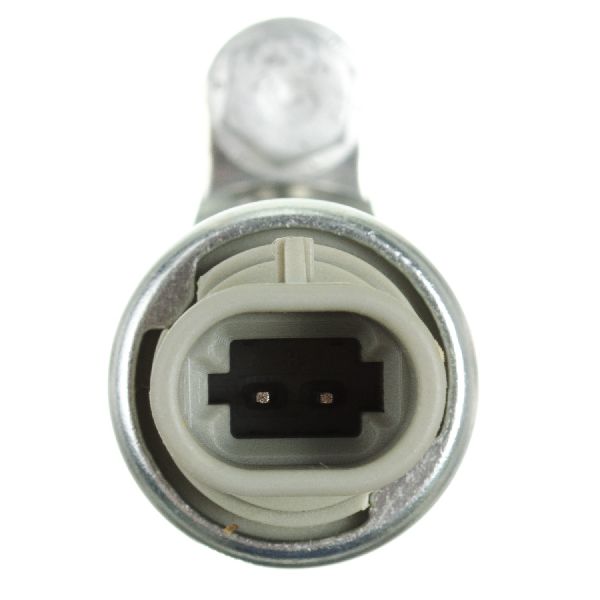
Est. part cost: $40-$80 - Faulty Camshaft Position Actuator Solenoid (VVT Solenoid) ⚪ Low Probability → Shop Engine Camshaft While less common than chain stretch for this code, the solenoids can become clogged with sludge from degraded oil, causing them to stick. This is a direct consequence of the same oil life issues that cause chain failure. Bulletin #PIP3423P notes that technicians should inspect for loose timing chains or tensioners if cam actuator DTCs like P0016 are set.
How to confirm: The solenoids can be tested for resistance with a multimeter (should be 4.6-7.5 Ohms for the LY7 engine). A more effective test is to remove the Bank 1 (rear bank) intake and exhaust solenoids, swap their positions, clear the codes, and see if the code changes to P0017 (for the exhaust cam). If it does, the solenoid is bad.
Typical fix: Replace the faulty solenoid for Bank 1 Intake. It is often recommended to replace both solenoids on the bank at the same time.
Est. part cost: $25-$60
Rare But Worth Checking
- Slipped Crankshaft Reluctor Ring: → Shop Engine Crankshaft The tone ring that the crankshaft position sensor reads can physically move on the crankshaft, causing a correlation error even if the timing chain is perfectly fine. This is a known issue on the 3.6L V6, documented in GM TSB #PIP3423P, and can mimic a stretched chain, leading to a very expensive misdiagnosis. NHTSA ODI #10630584 describes this as the reluctor for the crankshaft sensor being pressed on and potentially shifting. A technician can sometimes inspect for this with a borescope through the crank sensor hole before major disassembly.
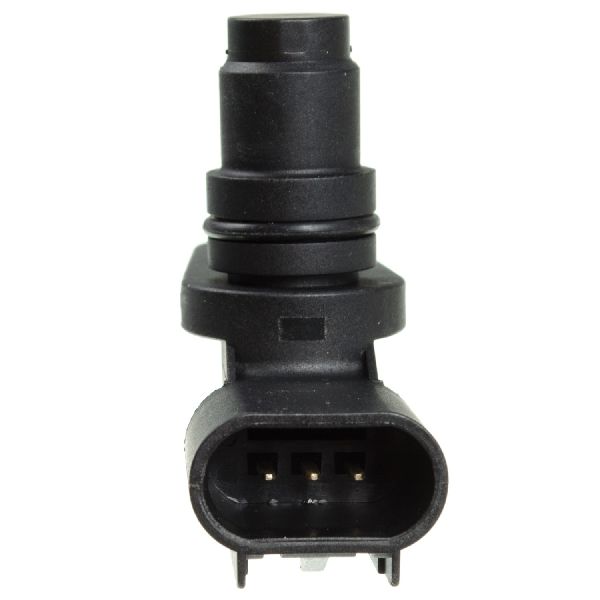
- Faulty Camshaft or Crankshaft Position Sensor: → Shop Engine Crankshaft Position Sensor While possible, it's rare for the sensor itself to fail on this platform. More often, the sensor is accurately reporting a real mechanical problem. Replacing sensors without proper diagnosis (like checking live data and for chain slack) usually does not fix P0016 on this engine. Bulletin #PIP4548F advises technicians what to inspect if P0016 is setting on a properly timed engine or if the vehicle cranks but will not start.
Diagnosis Steps
- Verify the Check Engine Light is on and code P0016 is present using an OBD-II scanner. Check for other timing codes like P0008, P0017, P0018, etc.
- Check the engine oil level and condition. If low, top it off. If dirty or overdue, perform an oil and filter change with 5W-30 synthetic oil, clear the code, and see if it returns. This is a critical first step due to the engine's sensitivity to oil quality.
- Listen for any rattling or scraping noises from the engine, particularly on cold starts. A distinct rattle from the passenger side of the engine is a strong sign of a timing chain issue.
- Using a scan tool with live data, monitor the 'Camshaft Phase Angle Variance' for Bank 1. At a steady idle, if the value consistently exceeds +/- 4 degrees, this confirms excessive timing chain slack and the need for replacement.
- If scan tool data is inconclusive, consider testing the Bank 1 intake VVT solenoid. Swap it with the Bank 1 exhaust solenoid. If the code changes to P0017, the solenoid is the culprit.
- If chains are suspected to be good or have been replaced and the code persists, a crankshaft reluctor ring inspection must be performed per TSB #PIP3423P, possibly with a borescope, before proceeding with further repairs.
Parts You'll Likely Need
- Timing Chain Kit — This is the most common failure. A complete kit includes all chains, tensioners, and guides needed for the repair. Aftermarket kits are popular for this repair.
Trusted brands: ACDelco, Cloyes (Kit #9-0753S is a widely used aftermarket option)
OEM price range: $350-$500
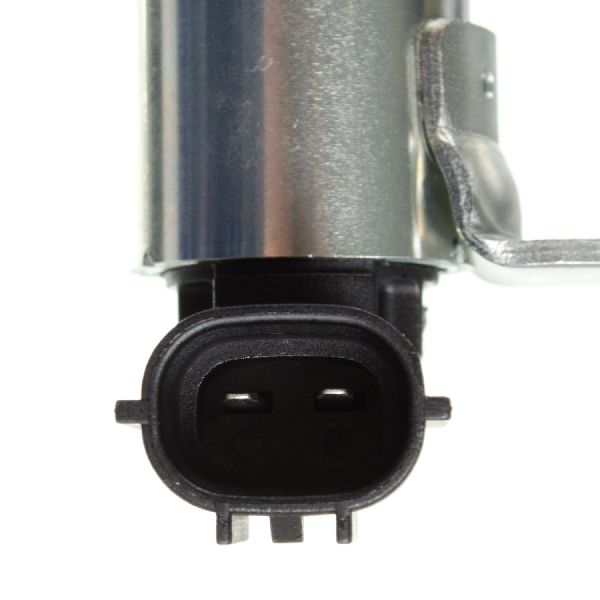
Aftermarket price range: $250-$400 - Camshaft Position Actuator Solenoid (VVT Solenoid)
(OEM #12655420)— Can get clogged with debris or fail electrically, causing timing issues. It's a much cheaper potential fix to investigate before committing to a timing chain job.
Trusted brands: ACDelco, Delphi
OEM price range: $40-$70
Aftermarket price range: $25-$50
Related Codes That Often Appear With This One
- P0017 — This is the correlation code for the exhaust camshaft on Bank 1. A stretched secondary chain on Bank 1 will affect both cams on that bank, so P0016 and P0017 often appear together.
- P0008 — This is a more general engine position system performance code for Bank 1. It often precedes the more specific P0016/P0017 codes as the primary chain begins to stretch, or appears with them, strongly indicating a base timing issue.
- P0018 / P0019 — These are the equivalent correlation codes for Bank 2 (front bank, near the radiator). Seeing codes for both banks (e.g., P0016 and P0018) strongly indicates a problem with the primary timing chain affecting the entire engine, or a slipped crankshaft reluctor ring.
Technical Service Bulletins (TSBs) & Recalls
- 12-06-01-009F: Groups multiple timing correlation codes, including P0016, and points towards stretched timing chains as the cause. Details the official service kits.
- 11340C (Special Coverage): Acknowledged premature timing chain wear, extended the warranty (now expired), and mandated an ECM reprogram to shorten oil change intervals to prevent recurrence.
- PIP3423P: An important diagnostic bulletin for when timing codes are present but chains seem okay. It identifies a possible slipped crankshaft reluctor ring as the culprit.
- PIP4548F: Provides diagnostic guidance for technicians when P0016 and P0017 are set on an engine that is otherwise properly timed or experiencing a no-start condition.
Platform-Specific Known Issues
- A GM Technical Service Bulletin (TSB #12-06-01-009F) addresses codes P0008, P0009, P0016, P0017, P0018, and P0019, indicating the cause is likely stretched timing chains and details the updated service kits.
- GM Special Coverage Adjustment #11340C extended the warranty on the timing chains to 10 years or 120,000 miles. This program also mandated an ECM reprogram to shorten the oil life monitor interval. This program has expired for the 2008-2012 model years.
Mechanic-Grade Diagnostic Values
- Engine Oil Pressure (at normal operating temp) — expected: Minimum of 24 psi at 1,000 RPM, 34 psi at 2,000 RPM, and 38 psi at 4,000 RPM.. Failure: Pressure below these minimums indicates a lubrication problem that will starve the VVT system and can cause timing codes.
- Camshaft Position Actuator Solenoid Resistance (LY7 Engine) — expected: 4.6 to 7.5 Ohms.. Failure: A reading of 0 Ohms (short), infinite/OL (open), or significantly outside the specified range indicates a failed solenoid coil.
- Crankshaft Reluctor Wheel Position (per TSB #PIP3423P) — expected: 25 to 26 mm from the machined surface of the crankshaft throw to the edge of the open space in the reluctor wheel.. Failure: Any measurement outside this range indicates the wheel has slipped on the crankshaft, requiring crankshaft replacement.
- Labscope Cam/Crank Correlation (Bank 1) — expected: On a known-good waveform at idle, the Bank 1 intake cam signal transition should occur in the middle of the wide crank sensor sync gap. The Bank 1 exhaust cam signal should transition high approximately three crank teeth after the sync gap.. Failure: A stretched chain will cause the cam signals to shift to the right (retard) on the scope pattern relative to the crankshaft signal.
Hidden / Shadow Codes Worth Checking
- Mode $06, TID $83 (example): This is not a hidden code but a test monitor result. For cam/crank correlation, it can show the actual measured deviation value in degrees, the pass/fail threshold, and whether the test passed or failed during the last drive cycle. This reveals if the timing is borderline or significantly out of spec. (see via A professional scan tool with Mode $06 capability is required. The specific Test ID (TID) and Component ID (CID) can vary by model year and software calibration.)
Scan Tool Commands That Help
- Tech2/GDS2 (or equivalent): Camshaft Position Actuator Control — This bidirectional control allows a technician to command the VVT solenoid to a specific duty cycle (e.g., 0%, 25%, 50%) while monitoring the 'Actual' vs 'Desired' cam angle PIDs. This is used to test the solenoid's and phaser's range of motion and response, helping to isolate a sticky solenoid or a mechanically failed phaser without disassembly.
Wiring & Ground Locations
- G106 — On the right front of the 3.6L V6 engine block.. This is a primary engine ground. A poor connection here can cause erratic sensor readings from the cam and crank sensors, potentially leading to false correlation codes.
- G107 — At the center rear of the 3.6L V6 engine.. Another critical engine ground point that ensures sensors have a stable reference voltage, preventing signal noise that could be misinterpreted by the ECM.
- ECM (Engine Control Module) — Located in the left front of the engine compartment, under the hood.. The ECM is where all sensor wiring terminates and where the correlation calculation happens. A corroded connector pin or water intrusion at the ECM can cause this code.
Real Owner Repair Stories
- GM Forum user RedCloud657 (2012 Chevrolet Malibu 3.6L V6) — P0016 and P0017 codes returned after a complete engine rebuild which included all new timing components.
❌ Tried (didn't work) Complete engine rebuild with new timing chains, guides, tensioners, and oil pump., Re-checking base timing with cam lock tools., Replacing a faulty Bank 1 intake cam phaser that was discovered during diagnosis.
✅ What actually fixed it The user discovered via borescope that the crankshaft reluctor ring had slipped slightly. The final fix required addressing the slipped reluctor ring, as the new timing components did not resolve the issue. This highlights the importance of checking the reluctor ring even when timing components are being replaced. - Reddit user in r/Justrolledintotheshop (2011 Chevrolet Malibu) — P0016 and P0017 codes, engine kept shutting off.
❌ Tried (didn't work) Initial diagnosis was not detailed, but the car was brought in for an 'engine job'.
✅ What actually fixed it Upon disassembly, the technician found three broken timing chain guides and a frozen (seized) tensioner, likely due to metal flakes from the broken guides circulating in the oil. The root cause was a catastrophic failure of the timing guide and tensioner system. - NHTSA ODI #11190432 — An owner reported receiving P0016 and P0017 codes and discovered a broken timing chain guide at 67,000 miles, despite regular oil changes.
OEM Part Supersession History
12628347, 12646783→12655420, 12681018— Updated design to improve oil flow and resistance to clogging from oil sludge.
Model Year Variations Within This Range
- 2008-2011: These earlier models of the LY7 are most susceptible to the timing chain issues. While the 2012 model still uses the LY7, GM began implementing some material and design improvements around this time, though problems are still common.
Diagnostic Flowchart
Other Known Issues on This Vehicle
Issues unrelated to this code that are worth knowing about as an owner of this generation:
- Power Steering Fluid Leaks / Pump Failure 🟠 Medium — Common issue reported by owners, involves leaks from the rack and pinion assembly or failure of the power steering pump itself.
- Transmission 6T70/6T75 Wave Plate Failure 🔴 High — A well-known issue in the 6-speed automatic transmission where a specific wave plate breaks, causing loss of 3rd, 5th, and Reverse gears. Typically occurs between 60,000 and 100,000 miles. (Ref: Multiple TSBs exist, such as #14-07-30-001.)
- Coolant Leaks 🟠 Medium — Leaks are common from various sources including the water pump, intake manifold gaskets, and radiator/hoses. Overheating due to coolant loss can cause severe engine damage.
- Catalytic Converter Failure 🔴 High — Often a consequential failure resulting from unaddressed issues like leaking fuel injectors or excessive oil consumption fouling the converter. Replacement is expensive.
- Rocker Panel and Fender Rust 🟡 Low — Common in regions that use road salt. Rust typically starts on the lower rocker panels behind the front wheels and can spread to the fenders and door bottoms.
Used vs. New Parts: Buying Guide for This Vehicle
When a used part is the smart pick: For this specific repair, using used parts is strongly discouraged for almost all components. The only exception might be a complete, low-mileage engine assembly from a reputable salvage yard if the original engine has suffered catastrophic failure (e.g., pistons hit valves). Even then, inspecting or replacing the timing chains on the donor engine is a wise precaution.
Donor-vehicle mileage cap: roughly under 60000 miles for the part to have meaningful remaining life.
What to inspect on the donor part:
- For a complete engine: ask for video of it running, check for a clean oil filler cap (no sludge), and get a vehicle history report to verify mileage and check for major accidents.
- Never buy used timing chains, tensioners, or guides. These are wear items and the cause of the P0016 code.
- Used VVT solenoids or cam/crank sensors are a gamble; they are inexpensive enough new that it's not worth the risk of having to do the labor twice.
OEM-only on this vehicle (don't cheap out):
- Crankshaft Position Sensor: While aftermarket sensors exist, the OEM ACDelco sensor is recommended to avoid signal issues that can mimic other problems.
- Camshaft Phasers (VVT Actuators): If phasers need replacement, OEM is the safest bet. Aftermarket phasers have a mixed reputation for longevity and correct operation.
Aftermarket brands forum-validated for this vehicle:
- Cloyes (for Timing Chain Kits, specifically kit #9-0753S)
- ACDelco (OEM supplier, for all components)
- Delphi (for VVT solenoids and sensors)
Brands owners have reported issues with on this vehicle:
- Unnamed, 'white-box' timing chain kits from online marketplaces. These often use inferior materials that can stretch or fail prematurely, leading to a repeat of the original failure.
Real Owner Stories
Aggregated from forums and TSBs cited above. Mileages and costs reflect what owners reported in those sources.
2008-2012 Chevrolet Malibu 3.6L V6
Symptoms: Owners reported the Check Engine Light with P0016 and P0008 codes, often accompanied by repair quotes ranging from $2,000 to over $4,000.
What fixed it: Replacement of the timing chains was confirmed as the ultimate fix.
Cost: $2,000-$4,000
Source hint: chevymalibuforum.com
2008-2012 Chevrolet Malibu 3.6L V6
Symptoms: Owner seeking advice on a P0016 code and timing chain repair costs.
What fixed it: Timing chain job.
Cost: $1,200-$1,500
Source hint: chevroletforum.com
2008-2012 Chevrolet Malibu 3.6L V6
Symptoms: Engine rattling or chain slap noise, especially on a cold start, and a 'Service ESC' or 'Service Traction' message on the dash.
What fixed it: Replacement of all three timing chains, tensioners, and guides with an updated parts kit, plus an ECM reprogram.
Source hint: Article Context Symptoms and Common Causes
Related OBD-II Codes
Frequently Asked Questions
Is my 2008-2012 Chevrolet Malibu 3.6L covered under the timing chain warranty extension?
What does TSB #12-06-01-009F say about my P0016 code?
Can I just change my oil to fix the P0016 code on my Malibu?
How can a mechanic confirm the chains are stretched without taking the engine apart?
What should be checked if my timing chains were just replaced but P0016 persists?
Why does the 3.6L LY7 engine have so many timing chain issues?
Helpful Videos
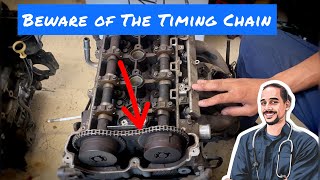
We Have This Part in Stock



The information in this article is provided for general reference and educational purposes only. Vehicle specifications, procedures, and part compatibility can vary by production date, trim level, and region. Always consult your vehicle's factory service manual and verify part numbers before purchasing or performing repairs. Safety-critical components such as airbags, seat belts, and braking systems should be installed by a qualified professional.
- Chevrolet Malibu:
- 🧭 Diagnostic Flowchart
- 🎬 Helpful Videos
- 🛍️ Shop This Part
- What's Unique About the 2008-2012 Chevrolet Malibu
- Symptoms You May Notice
- Most Likely Causes
- Rare But Worth Checking
- Diagnosis Steps
- Parts You'll Likely Need
- Related Codes That Often Appear With This One
- Technical Service Bulletins (TSBs) & Recalls
- Platform-Specific Known Issues
- Mechanic-Grade Diagnostic Values
- Hidden / Shadow Codes Worth Checking
- Scan Tool Commands That Help
- Wiring & Ground Locations
- Real Owner Repair Stories
- OEM Part Supersession History
- Model Year Variations Within This Range
- Other Known Issues on This Vehicle
- Used vs. New Parts: Buying Guide for This Vehicle
- Real Owner Stories
- 2008-2012 Chevrolet Malibu 3.6L V6
- 2008-2012 Chevrolet Malibu 3.6L V6
- 2008-2012 Chevrolet Malibu 3.6L V6
- Related OBD-II Codes
- Frequently Asked Questions
- 🎟️ Get 5% Off