

P0016 on 2012-2016 Chevrolet Sonic: Crank/Cam Correlation Causes and Fixes
P0016 on a Chevy Sonic usually indicates a mechanical timing issue, most often a stretched timing chain on the 1.4L engine (often heralded by a startup rattle) or a jumped timing belt on the 1.8L. This is a serious code that requires immediate attention to prevent engine damage. While VVT solenoids are a possible cause, the root issue is frequently the core timing components. Expect repair costs to range from $800 to over $2,000 for a full timing service.
- P0016 indicates a serious timing misalignment between the crankshaft and intake camshaft.
- The most likely cause is a stretched timing chain on the 1.4L engine or a jumped timing belt on the 1.8L engine.
- Always check engine oil level and condition first, as low or dirty oil can cause VVT system issues that trigger this code.
- Do not drive the vehicle extensively with this code, as it can lead to severe and expensive engine damage.
- This repair is complex and best left to a professional, as errors during a timing job can destroy the engine.
What's Unique About the 2012-2016 Chevrolet SONIC

The Chevrolet Sonic was available with two main engines, a 1.4L turbo (LUV) which uses a timing chain, and a 1.8L naturally aspirated (LUW/LWE) which uses a timing belt. The P0016 code is common on both but for different reasons. The 1.4L Ecotec is known for timing chain stretch and tensioner issues, often causing a distinct rattling sound on startup as the hydraulic tensioner lacks oil pressure. The 1.8L Ecotec can suffer from timing belts jumping a tooth, which has been confirmed by owners on cars with as few as 55,000 miles. A specific issue noted in GM Technical Service Bulletin #PIP4543D is that a small plastic oil sleeve for the camshaft actuator can be lost or damaged during other repairs, leading directly to this code because the ECM can no longer control cam phasing.
Diagnostic Flowchart
Tap your situation to follow the diagnostic path that matches what you're seeing on this vehicle.
Symptoms You May Notice
- Check Engine Light is on
- Rough or shaky idle
- Engine stalls or has trouble starting
- Reduced engine power and sluggish acceleration, sometimes described as 'limp mode'
- Rattling noise from the engine, especially on startup (very common on 1.4L)
- Poor fuel economy
- A deep rumbling or ticking noise from the engine
- Replacing the camshaft and crankshaft position sensors when the root cause is a mechanical timing issue (stretched chain/jumped belt).
- Replacing only the VVT solenoids without checking the base engine timing or oil condition first.
- Replacing multiple components like sensors and even the ECM when the underlying issue is a less obvious wiring harness short.
Most Likely Causes

- Stretched Timing Chain or Jumped Timing Belt 🔴 High Probability → Shop Engine Timing Chain The 1.4L engine's timing chain is a known weak point that can stretch over time, and its plastic guides can become brittle and break. The 1.8L's timing belt can jump a tooth, especially if the belt or tensioner is old or improperly installed.
How to confirm: A physical inspection is required. This involves removing the valve cover and/or timing cover to check the timing marks on the sprockets, chain/belt tension, and guide condition. On the 1.4L, a loud chain-slapping rattle on startup is a strong indicator. On the 1.8L, owners have confirmed being off by a single tooth by aligning the crank to Top Dead Center and checking the cam marks.
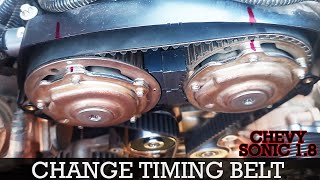
Typical fix: Replacement of the timing chain kit (chain, guides, tensioner) for the 1.4L, 🎬 Watch: Step-by-step 1.4L timing chain replacement walkthrough or the timing belt kit (belt, tensioner, idlers, and often the water pump) for the 1.8L.
Est. part cost: $150-$350 - Low or Dirty Engine Oil 🟡 Medium Probability The camshaft phasing system (Variable Valve Timing or VVT) uses oil pressure to adjust cam timing. Low or sludgy oil can impede the function of the camshaft actuators (phasers) and solenoids, causing a correlation fault.
How to confirm: Check the oil level on the dipstick and inspect its condition. If it's low or appears very dark and thick, it should be changed. While this is a common first step, it often does not resolve a persistent P0016 if mechanical wear has already occurred.
Typical fix: Perform an oil and filter change using the correct viscosity oil specified by GM. Some owners have reported temporary fixes or no change.
Est. part cost: $40-$80 - Faulty Camshaft Actuator Solenoid (VVT Solenoid) 🟡 Medium Probability → Shop Engine Camshaft These solenoids control oil flow to the cam phasers. They can get clogged with debris from dirty oil or fail electrically. This is a very common issue on the 1.8L engine.
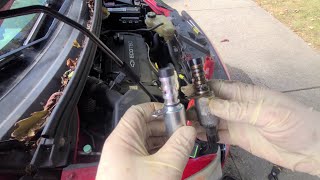
How to confirm: You can test the solenoid's resistance with a multimeter (should be 8-13 ohms for many GM models). A common diagnostic trick, confirmed by owners, is to swap the intake and exhaust solenoids (they are identical) and see if the code changes to P0017 (exhaust cam correlation).
Typical fix: Replace the faulty solenoid. They are easily accessible on top of the engine.
Est. part cost: $30-$70 - Faulty Camshaft or Crankshaft Position Sensor ⚪ Low Probability → Shop Engine Crankshaft Position Sensor
How to confirm: Test the sensor's output using a multimeter or oscilloscope. However, these sensors are more likely to set their own specific circuit codes. Replacing them is a common misdiagnosis when the actual problem is mechanical timing.
Typical fix: Replace the corresponding sensor.
Est. part cost: $25-$60
Rare But Worth Checking
- Missing Camshaft Actuator Oil Sleeve: → Shop Engine Camshaft According to TSB #PIP4543D, this black plastic sleeve sits between the camshaft and the actuator to direct oil. It can be easily lost or damaged during repairs involving the camshaft actuators. Its absence prevents proper oil flow, causing timing control failure and setting codes like P0016. The sleeve is not sold separately and only comes with a new camshaft actuator assembly.
- Wiring Issues: A damaged or corroded wire or connector in the circuit for the cam/crank sensors or VVT solenoids can cause intermittent signal loss and trigger the code. One owner on a forum spent thousands at a dealer before discovering the issue was a short in the engine wiring harness, which cost about $540 to replace and fixed the problem.
- Damaged Reluctor Wheel: The toothed ring on the camshaft or crankshaft that the sensor reads can become damaged, bent, or slip, causing incorrect readings. GM issued a bulletin (PIP4548F) for other Ecotec engines noting the reluctor is a press-fit and can move, especially after an overheat, causing P0016. This is uncommon but possible.
- Failed Camshaft Phaser (Actuator): → Shop Engine Camshaft The actuator gear itself can fail internally. On the 1.8L engine, a failing locking pin inside the phaser can cause a rattle at startup as the camshaft moves before oil pressure builds, eventually leading to correlation codes.
- Swapped VVT Solenoid Connectors: On some GM engines, the intake camshaft actuator solenoid connector and the intake actuator park lock solenoid connector are identical and can be accidentally swapped during reassembly. GM bulletin 19-NA-150 warns that this will cause a P0016 code and a rough idle. The connectors can only be identified by wire color.
Diagnosis Steps
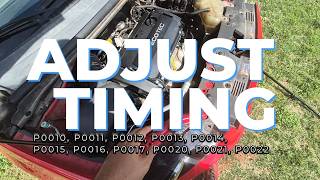
- Verify engine oil level and condition. An oil change is a cheap first step, but may not be the final solution. 🎬 Try this first: Cleaning VVT components without buying parts
- Scan for any other DTCs. Codes like P0011, P0014, or P0017 can provide additional clues and point towards a VVT system or a full timing failure.
- Listen for a startup rattle. A distinct, short-lived rattle on a cold start strongly suggests a loose timing chain on the 1.4L engine.
- Swap the intake and exhaust VVT solenoids (on the 1.8L). They are identical and easily accessible. Clear the codes and drive the vehicle. If the code changes to P0017, the solenoid you moved to the exhaust side is faulty.
- Inspect the wiring and connectors for the camshaft position sensor, crankshaft position sensor, and VVT solenoids for any visible damage or corrosion.
- If any timing work was recently performed, verify the presence of the black plastic oil sleeves behind the camshaft actuators as per TSB #PIP4543D. Their absence will cause this code.
- If the above steps do not resolve the issue, a mechanical inspection is necessary. This requires special tools. Remove the timing cover and verify that the crankshaft and camshaft timing marks are perfectly aligned.
- While the cover is off, inspect the timing chain for slack or the timing belt for wear/damage. Check the tensioner and guides for wear or breakage.
Parts You'll Likely Need
- Timing Chain Kit (for 1.4L Engine)
(OEM #55562234 (chain only))— This is the most common fix for the 1.4L engine, addressing a stretched chain, worn guides, and a weak tensioner. A full kit is recommended.
Trusted brands: ACDelco, Cloyes
OEM price range: $200-$300
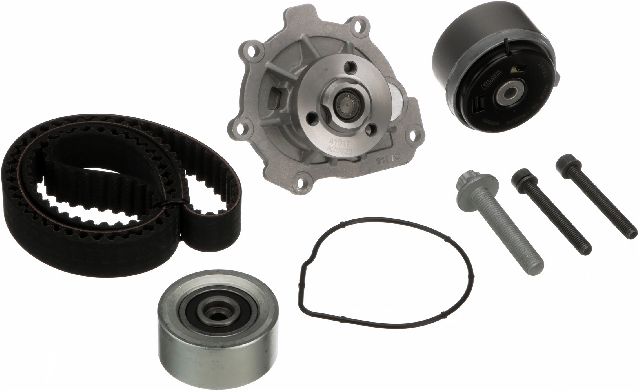
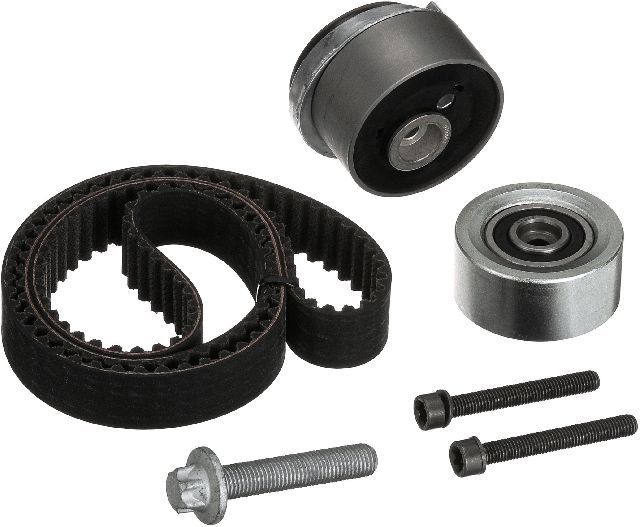
Aftermarket price range: $100-$200 - Timing Belt Kit (for 1.8L Engine) — This is the most common fix for the 1.8L engine. Kits typically include the belt, tensioner, and idler pulleys. It is best practice to replace the water pump at the same time.
Trusted brands: ACDelco, Gates (e.g., TCKWP338 kit with water pump), Continental
OEM price range: $150-$250
Aftermarket price range: $80-$180
Related Codes That Often Appear With This One
- P0017 — Crankshaft Position - Camshaft Position Correlation for the Bank 1 Exhaust Cam. If the timing chain/belt has jumped, it's common for both intake and exhaust cams to be out of sync, setting both codes.
- P0011 — Intake Camshaft Position Timing - Over-Advanced. This code points to a problem with the VVT system's control of the intake cam, often related to the same underlying causes as P0016, such as a faulty solenoid or the missing oil sleeve mentioned in TSB #PIP4543D.
- P0014 — Exhaust Camshaft Position Timing - Over-Advanced. Similar to P0011, but for the exhaust camshaft. Also mentioned in TSB #PIP4543D.
Technical Service Bulletins (TSBs) & Recalls
- PIP4543D
Platform-Specific Known Issues
- On 1.4L Turbo engines, a rattling or slapping noise for a few seconds on startup is a classic sign of a stretched timing chain and failing tensioner, which will lead to P0016.
- On 1.8L engines, the timing belt can jump a tooth, causing an immediate P0016 or P0017 code. An owner on SonicOwnersForum confirmed this happened to their car at only 55,000 miles.
- TSB #PIP4543D is critical for these engines. If any service was performed on the top end of the engine (like replacing a valve cover gasket or actuators), and a P0016 appears afterward, the cause is very likely a missing plastic oil sleeve that is required for the cam phaser to operate.
- Due to the complexity of the system, misdiagnosis is common. One owner reported a dealer replacing sensors and the ECM for a P0016, only for the actual problem to be a short in the engine wiring harness, which is a rare but possible cause.
Mechanic-Grade Diagnostic Values
- VVT (Camshaft Actuator) Solenoid Resistance — expected: 8 to 13 Ohms. Failure: A reading outside this range (e.g., infinite for an open circuit, or near zero for a short) indicates a faulty solenoid.
- Crankshaft Position Sensor (Inductive Type) Resistance — expected: Generally 200 to 1,200 Ohms. Failure: An open circuit (OL) or zero resistance reading suggests the sensor is bad. This value is generic and should be confirmed with a service manual.
- Crankshaft Position Sensor (Hall Effect Type) Signal Voltage — expected: Rapidly switching between 0V and supply voltage (5V or 12V) while cranking.. Failure: A steady voltage or no voltage while cranking indicates a failed sensor.
Scan Tool Commands That Help
- GDS2 (GM Tech Tool): Camshaft Position Actuator Solenoid Test — This bidirectional control allows a technician to command the VVT solenoid on and off to verify its mechanical operation and check for a response in engine timing, helping to isolate a faulty solenoid from a wiring or mechanical issue.
- Professional Scan Tool: Live Data - Engine RPM — While cranking the engine, the scan tool should display an RPM reading between 100 and 500. A reading of zero RPM while the engine is physically turning indicates a complete failure of the crankshaft position sensor or its circuit.
Wiring & Ground Locations
- G105 — Under the battery tray, on the driver's side frame rail.. This is a primary engine and chassis ground. A loose or corroded connection at G105 can cause erratic behavior and communication codes from various modules, including the ECM, potentially leading to incorrect sensor readings. A GM service bulletin (PIC5574A) specifically calls for inspecting this ground for paint or weld slag.
- Engine Block to Chassis Ground — Attaches to the chassis frame rail beneath the battery tray, near the transmission mount.. This is the main ground path for the engine block, where the crankshaft position sensor is mounted. A poor connection here can create a ground offset, affecting the sensor's signal integrity and potentially contributing to correlation codes.
- VVT Solenoid Connectors (Intake vs. Park Lock) — On the 1.4L engine, the intake camshaft actuator solenoid is on top of the engine, while the intake actuator park lock solenoid is on the front.. According to GM Bulletin 19-NA-150, these two connectors are identical and can be swapped. If swapped, the ECM will command the wrong solenoid, immediately setting a P0016 and causing a rough idle. The only way to differentiate them is by checking wire colors against a schematic.
Real Owner Repair Stories
- Sonic Owners Forum (2014 Chevrolet Sonic 1.8L, 55k miles) — Persistent P0016 code that returns after two engine cycles, shaky idle.
❌ Tried (didn't work) Replaced intake camshaft position sensor (ACDelco), Replaced crankshaft position sensor (ACDelco), Inspected intake cam reluctor wheel (looked fine), Checked for 5V and good ground at sensor connectors
✅ What actually fixed it The owner later confirmed the timing belt had jumped one tooth. After realigning the timing marks and reinstalling the belt, the code was resolved.
OEM Part Supersession History
Unknown→55562235— Likely an updated design to improve reliability and prevent premature failure of the hydraulic tensioning mechanism.
Model Year Variations Within This Range
- 2012-2016: The 1.8L engine came in two variants: LUW (VIN H) and LWE (VIN G). The LWE was introduced for stricter emissions (PZEV) and added an air injection smog pump, but the base timing and VVT systems relevant to P0016 are largely the same.
- 2011-2016 (Shared with Cruze): The 1.4L Turbo engine is designated LUJ or LUV. While functionally very similar, there can be minor calibration and component differences. For the purpose of P0016, diagnosis is identical.
Helpful Videos

We Have This Part in Stock


The information in this article is provided for general reference and educational purposes only. Vehicle specifications, procedures, and part compatibility can vary by production date, trim level, and region. Always consult your vehicle's factory service manual and verify part numbers before purchasing or performing repairs. Safety-critical components such as airbags, seat belts, and braking systems should be installed by a qualified professional.
- Chevrolet SONIC:
- 🧭 Diagnostic Flowchart
- 🎬 Helpful Videos
- 🛍️ Shop This Part
- What's Unique About the 2012-2016 Chevrolet SONIC
- Symptoms You May Notice
- Most Likely Causes
- Rare But Worth Checking
- Diagnosis Steps
- Parts You'll Likely Need
- Related Codes That Often Appear With This One
- Technical Service Bulletins (TSBs) & Recalls
- Platform-Specific Known Issues
- Mechanic-Grade Diagnostic Values
- Scan Tool Commands That Help
- Wiring & Ground Locations
- Real Owner Repair Stories
- OEM Part Supersession History
- Model Year Variations Within This Range
- 🎟️ Get 5% Off