

P0016 on 2017-2018 Chevrolet Traverse: Crank/Cam Correlation Causes and Fixes
On the 2017-2018 Traverse, especially the 3.6L V6, P0016 almost always points to a stretched timing chain or related component failure. This is a serious, complex, and expensive repair, often costing between $2,500 and $4,000. Do not replace sensors before verifying the engine's mechanical timing, as this is a common and costly misdiagnosis.
- P0016 on a 2017-2018 Traverse, particularly the 3.6L V6, is a serious code that strongly indicates a mechanical timing issue.
- The most likely cause is a stretched timing chain, a known issue on the first-generation (2017) model.
- Do not replace the cam or crank sensors hoping for a quick fix. Diagnosis should focus on verifying the mechanical timing.
- This is not a DIY-friendly repair. Expect a professional repair to cost between $2,500 and $4,000 due to the high labor involved.
- Ignoring the code can lead to catastrophic engine failure.
What's Unique About the 2017-2018 Chevrolet TRAVERSE
The 2017 Traverse uses a 3.6L V6 engine (LFX) from a family notorious for premature timing chain stretching, an issue GM has acknowledged through various service bulletins like PIP3423P. This problem was often linked to extended oil change intervals allowed by the original Oil Life Monitoring System (OLMS), which led to oil degradation and increased wear. The 2018 model marked a new generation with a redesigned 3.6L V6 (LFY) and a new 2.0L Turbo I4 (LTG). While the LFY engine is an evolution of the LFX, timing chain issues, though less frequent, still occur. A unique issue for some 2019 models with the LFY V6 (which may apply to late 2018 production) involves cylinder head porosity causing coolant to contaminate the oil, leading to timing codes.
Diagnostic Flowchart
Tap your situation to follow the diagnostic path that matches what you're seeing on this vehicle.
Generation note: Yes, this range covers two generations. The 2017 model is the last year of the first generation and is equipped with a 3.6L V6 (LFX) known for timing chain issues. The 2018 model is the first year of the second generation, featuring a redesigned 3.6L V6 (LFY) and a new 2.0L Turbo I4 (LTG). While the timing chain problem is most famous on the first-generation V6, P0016 remains a serious mechanical code on the newer engines as well. TSB PIP3423P, which addresses timing correlation codes, explicitly includes both the LFX and LFY engines.
Symptoms You May Notice
- Check Engine Light is on
- Rough or unstable idle
- Lack of engine power and sluggish acceleration
- Rattling or knocking noise from the engine, especially on startup.
- Engine cranks but may not start
- Reduced fuel economy
- Engine surging or a 'fishbite' feeling under load
- Replacing only the camshaft position sensor or crankshaft position sensor without verifying the engine's mechanical timing. This rarely fixes the issue on this platform and wastes money.
Most Likely Causes
- Stretched Timing Chain(s) 🔴 High Probability → Shop Engine Timing Chain The first-generation 3.6L V6 (in the 2017 model) has a well-documented history of premature timing chain wear and stretching. This is the most common cause, often exacerbated by degraded oil from extended change intervals. The issue is common enough that GM issued multiple TSBs and even a special warranty extension for earlier models.
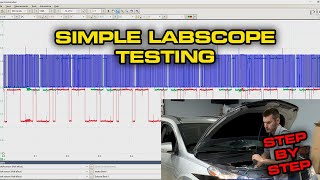
How to confirm: A technician can view cam/crank deviation data with a professional scan tool or use a lab scope to see the retarded signal. 🎬 Watch: How to test timing chain problems with a labscope. Definitive diagnosis requires physical inspection and measurement of chain slack by looking at the tensioner piston extension, which involves removing the timing cover.
Typical fix: Replace all three timing chains, all tensioners, and all guides with an updated kit. This is a labor-intensive job often requiring engine removal. 🎬 Watch: A guide to performing this timing chain fix in-car.
Est. part cost: $300-$800 - Failed Timing Chain Tensioner(s) 🟡 Medium Probability → Shop Engine Timing Chain The hydraulic tensioners rely on clean engine oil at the correct pressure. If they fail or become fully extended due to chain stretch, the chain can become slack, leading to correlation errors.
How to confirm: A rattling noise on startup is a strong indicator. The tensioners are inspected during a timing chain service; a fully extended tensioner piston confirms a stretched chain.
Typical fix: Replace the tensioners. This is always done as part of a complete timing chain job. It is not recommended to replace only the tensioners.
Est. part cost: $50-$150 - Low or Dirty Engine Oil 🟡 Medium Probability The camshaft phasers (VVT system) and chain tensioners are operated by oil pressure. Incorrect oil level or viscosity, or degraded/sludgy oil, can prevent them from working correctly and will accelerate timing chain wear.
How to confirm: Check the oil level on the dipstick and inspect its condition. An oil change is a simple first diagnostic step.
Typical fix: Perform an oil and filter change using the manufacturer-specified grade (e.g., ACDelco dexos-approved 5W-30). Clear codes and see if P0016 returns.
Est. part cost: $50-$100 - Slipped Crankshaft Reluctor Wheel ⚪ Low Probability → Shop Engine Crankshaft A GM Technical Service Bulletin (TSB PIP3423P) notes that the reluctor wheel, which the crankshaft sensor reads, can physically move on the crankshaft, causing a mismatch in sensor readings even with perfect timing chain alignment. This affects a wide range of GM V6 engines, including the LFX and LFY.
How to confirm: This is difficult to diagnose. The TSB suggests it can sometimes be viewed with a borescope through the crankshaft position sensor hole. A measurement from the crankshaft throw to the reluctor is specified in the TSB (25-26mm). Comparing to a known-good crankshaft is the definitive check.
Typical fix: The crankshaft must be replaced. Some aftermarket companies, like Jasper Engines, install a set screw to prevent this slippage on their remanufactured engines.
Est. part cost: $400-$800
Rare But Worth Checking
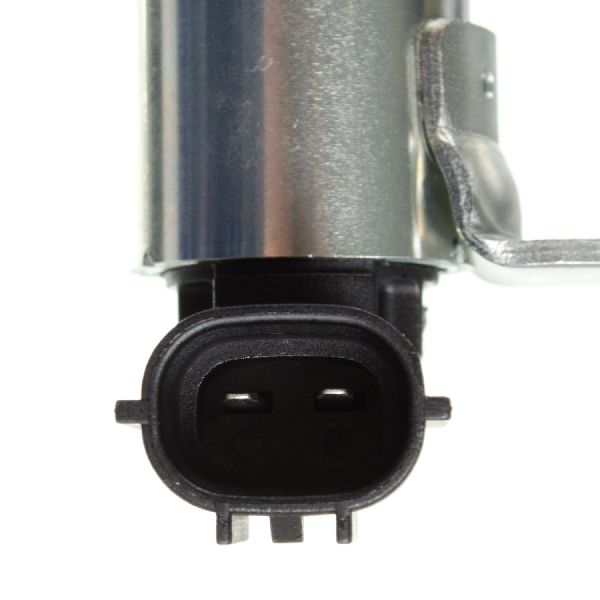
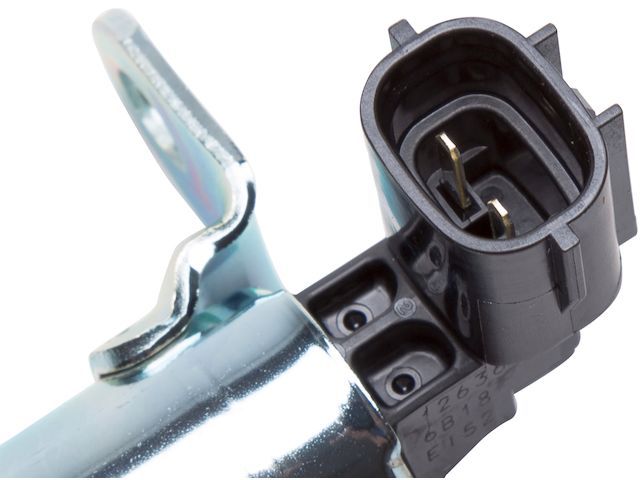
- Faulty Camshaft Position Actuator Solenoid (VVT Solenoid): → Shop Engine Camshaft A solenoid stuck in one position or clogged with debris can cause a timing correlation error. It's a relatively inexpensive part and easy to test by swapping with another solenoid on the engine to see if the code follows.
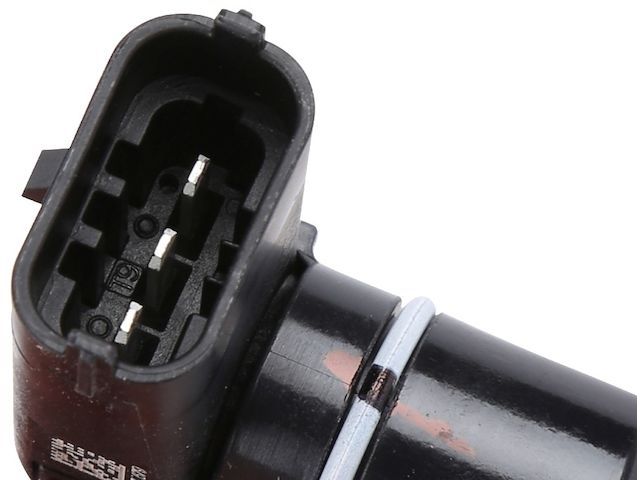
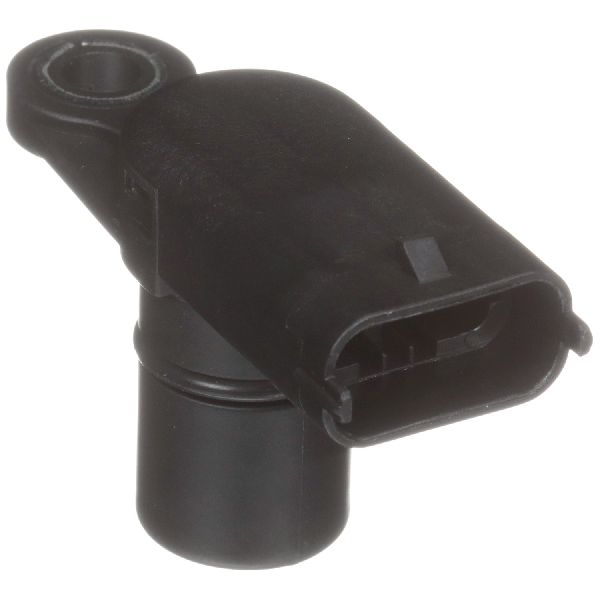
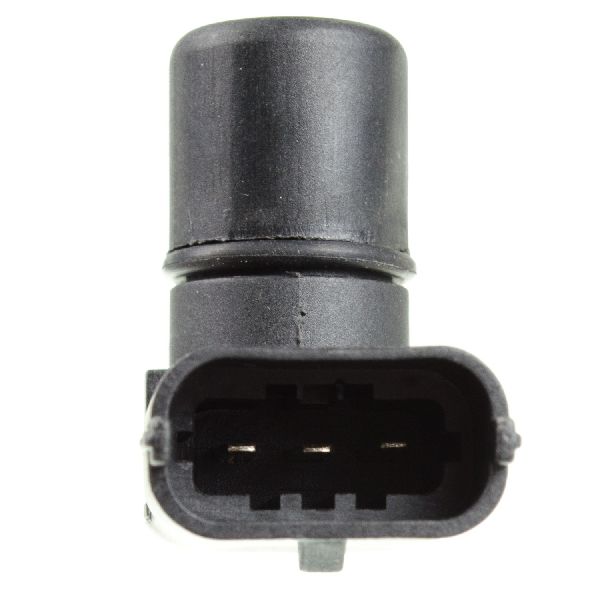
- Faulty Camshaft or Crankshaft Position Sensor: → Shop Engine Crankshaft Position Sensor While possible, it's uncommon for a sensor to fail in a way that sets a correlation code without also setting a sensor-specific circuit code (e.g., P0335, P0340). This is often misdiagnosed as the primary failure.
- Cylinder Head Porosity (2018+ LFY Engine): A known issue on some 2019 models (and potentially late 2018s) with the 3.6L LFY engine involves internal porosity in the cylinder head, which allows coolant to contaminate the engine oil. This degraded oil can cause the camshaft actuators to malfunction and set timing codes like P0016.
Diagnosis Steps
- Verify engine oil level and condition. If low, dirty, or overdue for a change, perform an oil and filter change first, clear the code, and see if it returns.
- Use a high-quality OBD-II scanner to check for any other stored trouble codes, especially sensor-specific codes which would point away from a mechanical issue.
- Observe live data on the scanner, specifically the Camshaft/Crankshaft Correlation parameters or Camshaft Angle Deviation, to see if the timing is showing as retarded.
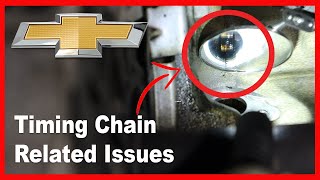
- Test the Bank 1 intake camshaft position actuator solenoid. This can be done by commanding it with a scan tool or by swapping it with the exhaust solenoid 🎬 See this video for a breakdown of timing related codes. (if identical) to see if the code changes to P0017.
- If the above steps do not resolve the issue, a mechanical timing problem is highly likely. The next step is to remove the timing cover for a physical inspection of the chains, guides, and tensioners. Check for excessive slack and how far the tensioner pistons are extended.
- While inspecting, also consider the possibility of a slipped crankshaft reluctor wheel, as noted in TSB PIP3423P. This may be visible with a borescope through the crank sensor hole.
Parts You'll Likely Need
- Engine Timing Chain Kit
(OEM #ACDelco 12690388 (Verify for LFX/LFY))— This is the most common failure. A complete kit ensures all worn components (chains, guides, tensioners, gears) are replaced with updated parts.
Trusted brands: ACDelco, Cloyes (e.g., 9-0753S)
OEM price range: $450-$650
Aftermarket price range: $300-$500 - Camshaft Position Actuator Solenoid (VVT Solenoid)
(OEM #ACDelco 12636175 (Verify application))— A potential, though less common, cause. Often replaced as a preventative measure during a timing chain job.
Related Codes That Often Appear With This One
- P0017 — This code is for the Bank 1 Exhaust camshaft. If the timing chain for Bank 1 is stretched, it often affects both intake and exhaust cam timing on that bank.
- P0008 — This is a more general Engine Position System Performance code for Bank 1. It often appears alongside P0016 as an indicator of a significant timing discrepancy and can be a precursor to P0016 as the chain begins to stretch.
- P0009 — Similar to P0008, but for Bank 2. If the primary (crank-to-idlers) chain is severely stretched, it can affect the timing on both banks, setting multiple codes.
- P0018 / P0019 — These are the correlation codes for Bank 2 (radiator side). Seeing codes for both banks (e.g., P0016 and P0018) strongly points to a problem with the primary timing chain that serves both cylinder heads.
Technical Service Bulletins (TSBs) & Recalls
- PIP3423P
- 12-06-01-009F
- 15-06-01-002F
- 17-NA-272
Platform-Specific Known Issues
- A Technical Service Bulletin for the 2017 and 2018 models, #PIP3423P, directly addresses codes P0016, P0017, P0018, P0019, P0008, or P0009. It advises technicians to first inspect for loose timing chains or tensioners. If the cause is not found, the bulletin points to a slipped crankshaft reluctor wheel, which requires crankshaft replacement.
- Owner complaints on earlier but similar models confirm the timing chain as the culprit for P0016, with one owner of a 2012 Traverse reporting a repair cost of $3200 at 66k miles (NHTSA ODI #11184580).
- A GM TechLink article from September 2019 mentions that for 2019 Traverse models with the 3.6L LFY engine, codes P0016/P0017 could be caused by coolant contaminating the engine oil due to cylinder head porosity, a potential issue for late-production 2018 models as well.
Mechanic-Grade Diagnostic Values
- Camshaft Position Actuator Solenoid (VVT Solenoid) Resistance — expected: 7 to 12 Ohms (some sources state 6.9-7.9 Ohms at 68°F). Failure: A reading outside this range, or an open/short (OL or near zero ohms), indicates a faulty solenoid.
- Scan Tool Live Data: Camshaft Position Variance — expected: Less than +/- 9 degrees from the commanded position at idle and steady RPM.. Failure: A consistent deviation greater than 9-11 degrees indicates the ECM has detected a correlation error sufficient to set the code.
- Crankshaft Reluctor Wheel Position — expected: 25 to 26 mm from the end of the machined surface of the crankshaft throw to the edge of the open space in the reluctor.. Failure: Any measurement outside this range indicates the reluctor wheel has slipped on the crankshaft.
Scan Tool Commands That Help
- GDS2 / Tech2 / High-End Bidirectional Scanner: Camshaft Position Actuator Solenoid Control — This bidirectional command allows a technician to manually command the Bank 1 intake VVT solenoid on and off while the engine is running. If the engine hesitates or stalls, it confirms the solenoid is mechanically responding and oil passages are likely clear. No change in engine operation points to a faulty solenoid, clogged screen, or wiring issue.
Wiring & Ground Locations
- G105 / G106 — Typically located on the front frame cross rail, under the crank pulley area, or on the front left side of the motor near the starter.. These are primary engine block and chassis grounds. A loose or corroded connection here can affect the ground reference for the crankshaft and camshaft position sensors, introducing electrical noise or voltage offsets that could corrupt their signals to the ECM.
- Engine Harness Grounds — Multiple smaller ground wires are typically bolted to the rear and sides of the cylinder heads.. These grounds are critical for the sensors located on the engine itself, including the cam and crank sensors. A forgotten ground strap after previous repairs is a common cause of phantom electrical issues and sensor codes.
Real Owner Repair Stories
- NHTSA ODI Complaint #11184580 (2012 Chevrolet Traverse, 66,409 miles) — Car began running extremely rough with lack of power, Check Engine Light came on.
❌ Tried (didn't work) Not specified in the complaint, but the diagnosis led directly to the timing chain.
✅ What actually fixed it The vehicle had a bad timing chain which was replaced at a cost of $3200. The codes reported were P0016 and P0017.
OEM Part Supersession History
Various older kits (e.g., 12651450)→12700436 (ACDelco)— GM released several revisions of the timing chain kits to improve the durability of the chains and address premature stretching issues found in earlier versions of the 3.6L engine family.
Heads up: It is critical to use the latest available part number for the kit to get the most durable, updated components and prevent a repeat failure. Always verify the correct kit part number using the vehicle's VIN.
Model Year Variations Within This Range
- 2017: The 2017 model is the last year of the first generation, equipped with the 3.6L LFX V6, which is highly prone to the well-documented timing chain stretching issue.
- 2018: The 2018 model is the first year of the second generation, featuring a redesigned 3.6L LFY V6 with auto start/stop and a new 2.0L LTG Turbo I4 option on the RS trim. The LFY is an evolution of the LFX and is still susceptible to timing chain and reluctor wheel issues per TSB PIP3423P. The 2.0L Turbo was discontinued mid-2019 model year.
Helpful Videos

We Have This Part in Stock


The information in this article is provided for general reference and educational purposes only. Vehicle specifications, procedures, and part compatibility can vary by production date, trim level, and region. Always consult your vehicle's factory service manual and verify part numbers before purchasing or performing repairs. Safety-critical components such as airbags, seat belts, and braking systems should be installed by a qualified professional.
- Chevrolet TRAVERSE:
- 🧭 Diagnostic Flowchart
- 🎬 Helpful Videos
- 🛍️ Shop This Part
- What's Unique About the 2017-2018 Chevrolet TRAVERSE
- Symptoms You May Notice
- Most Likely Causes
- Rare But Worth Checking
- Diagnosis Steps
- Parts You'll Likely Need
- Related Codes That Often Appear With This One
- Technical Service Bulletins (TSBs) & Recalls
- Platform-Specific Known Issues
- Mechanic-Grade Diagnostic Values
- Scan Tool Commands That Help
- Wiring & Ground Locations
- Real Owner Repair Stories
- OEM Part Supersession History
- Model Year Variations Within This Range
- 🎟️ Get 5% Off