

P0016 on 2011-2017 Chrysler 200 3.6L: Crank/Cam Timing Causes and Fixes
On the 3.6L Pentastar V6, P0016 most often indicates a stretched timing chain, a significant repair costing $1,500-$2,500. Before assuming the worst, always check the engine oil level and condition first, as low or dirty oil is a common and simple fix. A faulty camshaft position sensor is a less likely but possible cause.
- P0016 on a 2011-2017 Chrysler 200 3.6L is a serious code that should be addressed immediately to prevent potential engine damage.
- Always start your diagnosis by checking the engine oil level and condition; this is the simplest and cheapest potential fix.
- A rattling noise from the engine on a cold start is a very strong indicator of a stretched timing chain, the most common major repair for this code on this engine.
- Do not replace sensors without confirming they are faulty; a sensor swap test is a good diagnostic step to avoid misdiagnosis.
- If the valve covers are removed for any reason, it is critical to inspect the tightness of the oil galley bolts inside the cylinder head.
What's Unique About the 2011-2017 Chrysler 200
The 3.6L Pentastar V6 engine has a well-documented history of timing chain stretch, particularly in vehicles approaching or exceeding 80,000-100,000 miles. While P0016 can be caused by a simple sensor failure on many vehicles, on this specific engine it is very frequently the first warning sign of a worn timing chain that has elongated beyond the tensioner's ability to compensate. A mechanic can confirm this by measuring the tensioner plunger extension; if it exceeds 16mm, the chains are considered stretched and require replacement. Another platform-specific issue is the tendency for oil galley bolts under the valve covers to loosen, causing a localized drop in oil pressure that can also trigger this code.
Generation note: The 2011-2017 year range covers two generations of the Chrysler 200: the first generation (2011-2014) and the second generation (2015-2017). Both generations used the 3.6L Pentastar V6, and the common causes for P0016 are consistent across both. However, the second generation (2015-2017) paired the engine with a ZF 9-speed automatic transmission known for its own set of problems, including harsh shifting and reliability concerns, which are unrelated to the P0016 code but are a notable platform issue. Some VVT components may have different part numbers on engines made in 2016 or later as part of the Pentastar Upgrade (PUG) program, though most changes appeared on other vehicle models first.
Symptoms You May Notice
- Check Engine Light is on
- Rough or unstable idle
- Engine stalling, particularly when coming to a stop
- Reduced engine power and poor acceleration
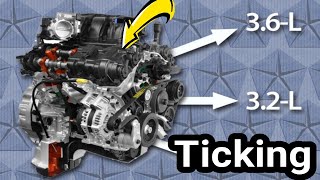
- Rattling or ticking noise from the front of the engine, especially on cold startups
- Engine may crank but fail to start in severe cases
- Vehicle enters 'limp mode' with reduced power
- Replacing the camshaft or crankshaft position sensors without first verifying the engine's mechanical timing and oil condition. A sensor is a much less common cause than a stretched timing chain on this specific engine.
- Immediately replacing the timing chain without checking for simpler causes like low oil pressure from loose oil galley plugs or a faulty VVT solenoid.
Most Likely Causes
- Stretched Timing Chain(s) and/or Failed Tensioners 🔴 High Probability → Shop Engine Timing Chain The 3.6L Pentastar engine is widely known for premature timing chain wear and stretch, often becoming an issue between 80,000 and 120,000 miles. The hydraulic tensioners can no longer compensate for the slack, leading to the correlation fault.
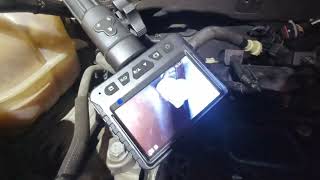
How to confirm: Listen for a distinct rattling noise from the front of the engine during a cold start. A mechanic can remove the valve cover to physically check for slack in the chain or measure the tensioner extension. A lab scope comparing cam and crank sensor waveforms to a known-good pattern is a definitive non-invasive diagnostic method. 🎬 Watch: A deep-dive diagnostic solving a mystery P0016 correlation code.
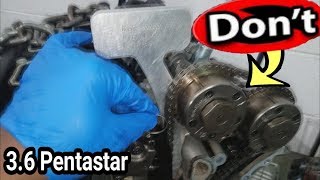
Typical fix: Replace all timing chains (primary and secondaries), tensioners, and guides. This is a major service requiring significant labor. 🎬 Watch: A complete walkthrough of the timing chain and phaser replacement. It is also recommended to replace the water pump at the same time, as it is driven by the timing chain.
Est. part cost: $200-$600 - Low, Dirty, or Incorrect Viscosity Engine Oil 🟡 Medium Probability The Pentastar's Variable Valve Timing (VVT) system is operated by oil pressure and is very sensitive to oil level, cleanliness, and viscosity. Sludge or low pressure can prevent the cam phasers from adjusting correctly, triggering the code.
How to confirm: Check the engine oil dipstick for proper level and inspect the oil's condition. If it is dark, sludgy, or below the 'add' line, this is a likely contributor. Ensure the correct oil viscosity (typically SAE 5W-20 or 5W-30) is being used.
Typical fix: Perform an engine oil and filter change using the manufacturer-specified oil and a quality filter. Clear the codes and re-evaluate.
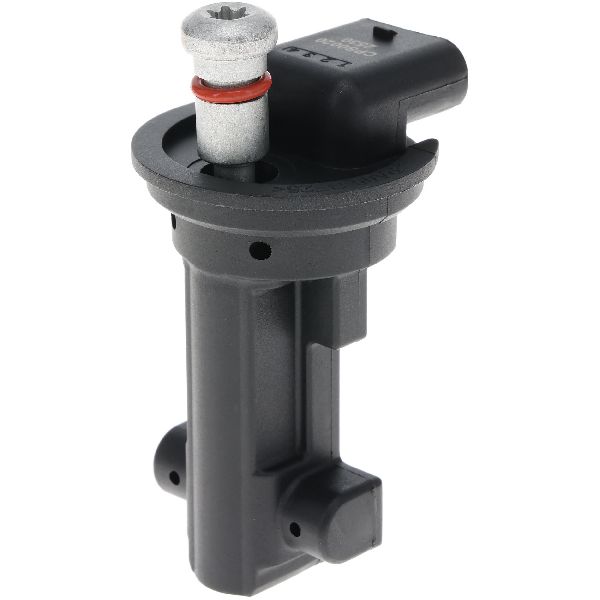
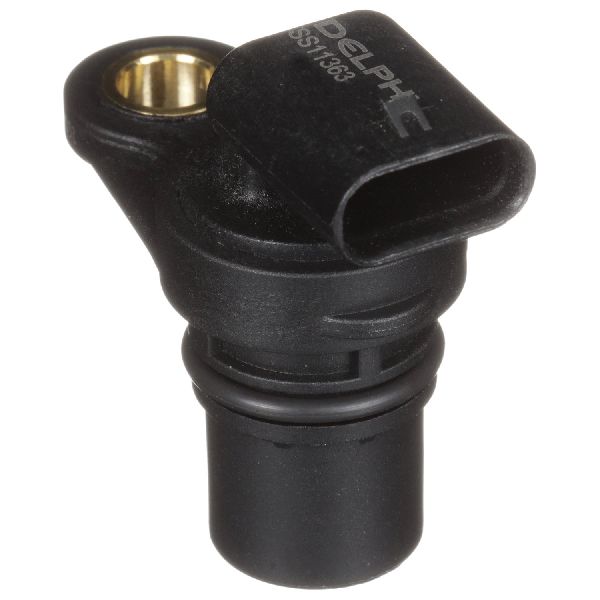
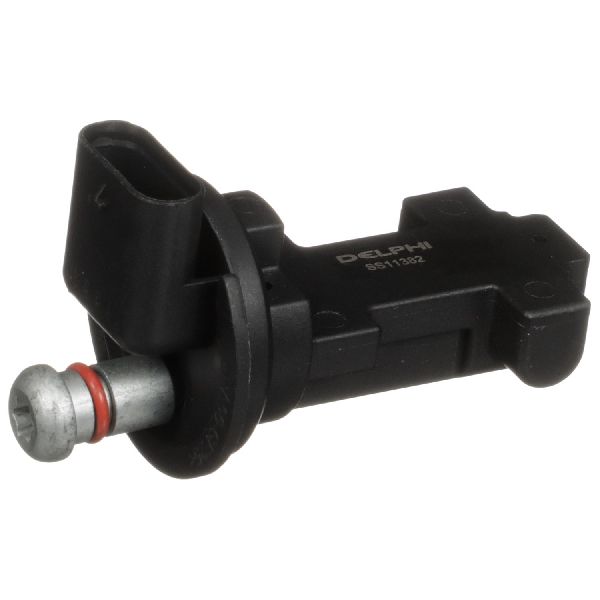
Est. part cost: $40-$80 - Failed Camshaft Position Sensor (Bank 1 Intake) ⚪ Low Probability → Shop Engine Camshaft Position Sensor While less common than timing chain issues on this engine, sensors can fail from heat cycles and age, sending incorrect data to the PCM.
How to confirm: Swap the Bank 1 intake cam sensor with the Bank 2 intake sensor (located on the driver's side). Clear the codes. If the code returns as P0018 (the Bank 2 equivalent), the sensor is faulty. If P0016 returns, the sensor is good.
Typical fix: Replace the Bank 1 intake camshaft position sensor. It is highly recommended to use an OEM Mopar part, as aftermarket sensors are known to cause issues on this engine.
Est. part cost: $30-$70
Rare But Worth Checking
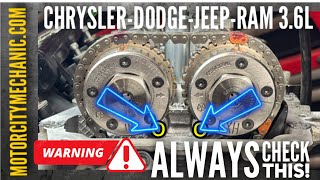
- Loose Oil Galley Bolts: Under each valve cover are two 13mm bolts that plug oil galleys. These are known to work themselves loose over time, causing a loss of oil pressure to the cam phasers on that head. If the valve cover is off for any reason, these should be inspected and torqued to 13 ft-lbs (156 in-lbs). 🎬 See why these loose oil galley bolts are a critical check.
- Failed VVT Solenoid / Oil Control Valve: → Shop Engine Variable Valve Timing (VVT) Solenoid This solenoid controls oil flow to the cam phaser. It can become clogged with sludge or fail electronically, causing timing correlation issues. This is a more common cause on the Hemi engines but can still occur on the Pentastar. Manufacturer Bulletin #9003648 notes that for certain engines with low mileage, a P0016 or P000B code may be active, requiring diagnosis of the VVT Solenoid and VVT Phaser.
- Slipped Crankshaft Tone Ring: → Shop Engine Crankshaft The toothed reluctor ring on the crankshaft that the sensor reads can physically slip out of position. This is a rare mechanical failure that requires crankshaft replacement to fix. This issue has been noted in a GM TSB for similar engine designs.
- Failed Cam Phaser: → Shop Engine Timing Gear The cam phaser itself can fail mechanically or become clogged with debris, preventing it from changing the camshaft's timing as commanded by the PCM. This was seen on a very low-mileage 2020 Jeep Wrangler, where the phasers were replaced under warranty to fix a P0016 code.
Diagnosis Steps
- Check Engine Oil: Verify the oil level is correct and the oil is clean. If low or dirty, perform an oil change with the correct viscosity oil (5W-20 or 5W-30) and filter, clear the codes, and see if the problem returns.
- Scan for Other Codes: Use an OBD-II scanner to check for other related codes (e.g., P06DD, P000B, P03xx) that can help pinpoint the root cause. Manufacturer Bulletin #1807517 indicates that P0016 may appear alongside P000B, P0335, or P0339, which may require further investigation of the crankshaft position sensor circuit.
- Listen for Noises: On a cold start, listen carefully for any rattling or chain-slap noises coming from the front of the engine, which would indicate a timing chain issue.
- Perform Sensor Swap Test: Swap the Bank 1 (passenger side) intake camshaft position sensor with the Bank 2 (driver's side) intake sensor. Clear codes and drive the vehicle. If the code changes to P0018, the sensor is bad. If P0016 returns, the sensor is not the issue.
- Mechanical Inspection: If the above steps do not resolve the issue, a more in-depth mechanical inspection is required. This involves removing the Bank 1 valve cover to visually inspect for timing chain slack and check the tightness of the two oil galley bolts.
- Timing Chain Service: If the timing chain is confirmed to be stretched (e.g., tensioner extended >16mm), it must be replaced along with the guides and tensioners. This is a job best left to a professional.
Parts You'll Likely Need
- Engine Timing Chain Kit
(OEM #5184357AE (Example Mopar Kit))— This is the most common root cause of P0016 on higher-mileage 3.6L Pentastar engines. A complete kit ensures all worn components (chains, guides, tensioners) are replaced at once.
Trusted brands: Mopar, Cloyes (e.g., 9-0511SX), Melling (e.g., 3-1038SX)
OEM price range: $400-$600
Aftermarket price range: $200-$400 - Camshaft Position Sensor
(OEM #5149141AF)— A possible, though less likely, cause of the code. It's an inexpensive part to replace as a diagnostic step, but OEM is strongly recommended.
Trusted brands: Mopar, NTK/NGK, Delphi
OEM price range: $50-$80
Aftermarket price range: $30-$60 - Engine Oil and Filter
(OEM #Mopar 68218840AA (Filter))— The VVT system is sensitive to oil quality and level. An oil change is the first and most crucial diagnostic step.
Related Codes That Often Appear With This One
- P0017, P0018, P0019 — These are the correlation codes for the other three camshafts. Seeing multiple correlation codes at once (e.g., P0016 and P0017) strongly suggests a base timing issue affecting the whole engine, like a stretched primary timing chain.
- P0300, P0301, P0303, P0305 — These are misfire codes for Bank 1. Incorrect cam timing disrupts the combustion process, leading to misfires on the affected cylinders.
- P06DD — This code indicates 'Engine Oil Pressure Control Circuit Stuck Off'. Seeing it with P0016 is a major clue that the root cause is a lack of oil pressure from a failing dual-stage oil pump, not a sensor or timing chain issue alone.
- P000B — This code for 'Exhaust 'B' Camshaft Position Slow Response (Bank 1)' often points to a VVT system problem, like a sludged-up solenoid or phaser, and can appear alongside P0016.
Technical Service Bulletins (TSBs) & Recalls
- TSB 09-002-14 (X56 Warranty Extension) — Addresses a defect with the left cylinder head on 2011-2013 3.6L Pentastar engines, which typically causes misfires on Bank 2 (P0302, P0304, P0306), not P0016. It is a critical piece of context for early models of this engine.
- TSB #18-075-17 — A PCM software update released for some 2016 models to improve diagnostic logic and prevent false P0016 codes. This may be applicable as a first step if the vehicle falls within the TSB's scope.
- Bulletin #1807517 — Notes that technicians may find P0016 alongside P000B, P0335, and P0339, indicating a potential need to investigate the crankshaft position sensor and its circuit.
- Bulletin #9003648 — Highlights that for certain engines with less than 12,000 miles, active P0016 or P000B fault codes may be related to the Variable Valve Timing (VVT) Solenoid or Phaser.
Platform-Specific Known Issues
- The 3.6L Pentastar V6 is widely known for timing chain stretch that commonly manifests after 80,000 miles, making P0016 a frequent indicator of this issue.
- Oil galley bolts located in the cylinder heads (under the valve covers) have a known tendency to loosen, causing a drop in oil pressure to the cam phasers and triggering timing correlation codes.
Mechanic-Grade Diagnostic Values
- Camshaft Position Sensor Supply Voltage — expected: 4.8 - 5.2 Volts DC at the sensor connector (power pin to ground) with key on, engine off.. Failure: Voltage below 4.8V or 0V indicates an open/short in the supply circuit from the PCM or a bad PCM.
- Camshaft Position Sensor Signal Voltage (Bench Test) — expected: Switches between ~5.0V and near 0V when a ferrous metal object or magnet is passed over the sensor tip.. Failure: Voltage does not change, indicating a faulty Hall effect sensor.
- VVT Solenoid (Oil Control Valve) Coil Resistance — expected: 5 - 20 Ohms between the two pins on the solenoid connector. A more specific range of 8-12 Ohms is also cited.. Failure: Infinite resistance (OL) indicates an open coil. Very low resistance (< 2 Ohms) indicates a shorted coil.
- Oil Galley Plug Bolt Torque — expected: 13 ft-lbs (156 in-lbs).. Failure: Bolts are known to loosen over time, causing a loss of oil pressure to the phasers. If loose, they should be removed, cleaned, have red Loctite applied, and be re-torqued.
- Cam Phaser (Oil Control Valve) Bolt Torque — expected: 118 ft-lbs (160 Nm).. Failure: This is a critical torque value when replacing cam phasers during a timing job.
- Camshaft Bearing Cap Torque — expected: 89 in-lbs (10 Nm).. Failure: Incorrect torque or sequence can damage the camshaft or head.
Hidden / Shadow Codes Worth Checking
- Cam/Crank Difference (Live Data PID): While not a hidden code, a critical diagnostic parameter on a professional scan tool (like wiTECH) is the live data PID showing the difference in degrees between the desired and actual camshaft position. The P0016 code is typically set when this value exceeds 10-11 degrees. Monitoring this PID can confirm a real-time timing error. (see via Professional scan tool with Chrysler-specific live data, such as a Snap-on scanner or OEM wiTECH software.)
Scan Tool Commands That Help
- wiTECH (or equivalent professional scanner): VVT System Test — After verifying the sensor and wiring are good, this function actively commands the camshaft phasers to move through their range of motion. This helps determine if the issue is mechanical (stuck phaser, oil pressure problem) rather than electrical.
- wiTECH (or equivalent professional scanner): Cam Phaser Cleaning Procedure — Mentioned as a built-in computer procedure to cycle the phasers through their range to dislodge debris. This can be attempted as a low-cost first step if oil contamination is suspected, before major disassembly.
Wiring & Ground Locations
- G905A — In the engine compartment, below the left (driver's side) headlight assembly.. This is a primary ground point for several engine control components and front-end sensors. A loose or corroded connection here can introduce electrical noise and cause erratic sensor readings, potentially leading to false correlation codes.
- Bank 1 Camshaft Position Sensor Connector — On the Bank 1 (passenger side) valve cover. It is a 3-wire connector for the intake sensor.. This is the primary point for testing the sensor circuit. Pin 1 is typically the 5V power supply, Pin 2 is the signal wire, and Pin 3 is the sensor ground. Verifying power and ground here is the first step in electrical diagnosis.
- PCM Connector C2 — One of the main connectors at the Powertrain Control Module (PCM), located on the right side of the engine bay.. The wires for the camshaft position sensor (and other engine sensors) terminate here. Testing for continuity between this connector and the sensor connector is the final step to rule out a wiring harness break.
Real Owner Repair Stories
- JLwranglerforums.com User Report (2020 Jeep Wrangler Rubicon 3.6L, 2,800 miles) — P0016 code, vehicle went into limp mode.
❌ Tried (didn't work) Not specified; taken directly to dealer.
✅ What actually fixed it The dealer diagnosed the issue and replaced the camshaft phasers under warranty, resolving the code on a very low-mileage engine. - YouTube Mechanic Video (ProMasters Only) (Ram Promaster 3.6L (mileage not specified)) — Persistent P0016 and P0017 codes.
❌ Tried (didn't work) Initial diagnosis considered timing chain stretch or bad phasers.
✅ What actually fixed it The root cause was severe oil sludge and burnt oil residue from failure to use synthetic oil. The contamination clogged the VVT components. An engine cleaning and oil change resolved the codes without major parts replacement. - DIY Forum User (iatn.net) (2014 Chrysler Town and Country 3.6L) — P0016 and P0018 after a timing chain replacement.
❌ Tried (didn't work) First timing chain replacement (resulted in codes)., Second teardown and re-timing confirmed marks were perfect, but a new code (P0019) appeared.
✅ What actually fixed it The initial codes were caused by being off one tooth during the first timing job. After correcting the timing, a new code appeared, indicating the problem was now isolated to a specific component like a VVT solenoid or phaser, which was likely faulty from the start but masked by the incorrect timing. - NHTSA ODI #10822363 — An owner reported a P0016 code that was captured by a dealer snapshot device. The dealer replaced the Bank 1 cam phasers on the rear head, though the owner noted the issue persisted immediately upon pickup.
"I Checked Everything" — The Actual Cause
- This is not an evaporative emissions code, so a smoke test is not a relevant diagnostic. The equivalent scenario is 'Sensors and Wiring Test Good, But Code Persists.' In this situation on the 3.6L Pentastar, the root cause is almost always mechanical. Technicians find that after confirming the cam sensor, crank sensor, and wiring are functioning correctly, the actual cause is a stretched timing chain, a stuck cam phaser locking pin, or a loss of oil pressure to the phasers from loose oil galley bolts.
When the Usual Fixes Don't Work
- While a stretched timing chain is the most common cause on high-mileage engines, a significant number of real-world cases show other causes. One owner of a low-mileage (2,800 miles) Wrangler had P0016 fixed by replacing the cam phasers under warranty, proving it's not always a wear-and-tear issue. Another case on a Ram Promaster was solved simply by addressing severe oil sludge from using the wrong oil, which clogged VVT components and triggered both P0016 and P0017 without any hard parts being replaced. These cases prove that assuming a stretched chain without first investigating oil quality and phaser function can lead to a costly and unnecessary repair.
OEM Part Supersession History
5184296AD, 5184296AE, 5184296AF, 5184296AG→5184296AH— The original rocker arms were prone to premature needle bearing failure, causing the 'Pentastar tick'. The 'AH' revision is the updated, more durable design.5184357AD→5184357AE— Revision update for the intermediate timing gear.
Heads up: Note: This part number is for the intermediate gear only, not a complete timing chain kit.
Model Year Variations Within This Range
- 2011-2015 (Primarily): Earlier models are more susceptible to the rocker arm failure that was addressed by the updated 5184296AH part. While the failure can happen on any year, it was more common on earlier Pentastar engines.
- 2016-2017: Some late-production 3.6L engines may be part of the 'Pentastar Upgrade' (PUG) generation, which featured changes to the VVT system, a two-stage oil pump, and other components. While the Chrysler 200 was less likely to receive the full upgrade before its discontinuation, it's possible for late-model parts to have different numbers than earlier years. Always verify parts with the vehicle's VIN.
Diagnostic Flowchart
Other Known Issues on This Vehicle
Issues unrelated to this code that are worth knowing about as an owner of this generation:
- Cracked Oil Filter Housing / Cooler Assembly 🔴 High — Extremely common across all model years. The plastic housing becomes brittle from heat cycles and can crack, causing significant oil and/or coolant leaks.
- Rocker Arm / Lifter Failure ('Pentastar Tick') 🔴 High — Widespread issue, particularly noted in 2011-2014 models but can occur at any time. Needle bearings in the rocker arms fail, causing a ticking noise that can lead to misfires and camshaft damage if ignored. (Ref: TSB 09-011-25 (mentioned))
- ZF 9-Speed Transmission Problems (2015-2017 models) 🟠 Medium — Very common on second-generation (2015-2017) models. Issues include harsh/erratic shifting, lurching, hesitation, and sudden shifts to neutral. (Ref: ZF Recall (August 2016))
- Left Cylinder Head Defect (2011-2013 models) 🔴 High — Common on early Pentastar engines. Causes premature valve guide wear on Bank 2 (cylinders 2, 4, 6), leading to misfires and requiring cylinder head replacement. (Ref: TSB 09-002-14 / Warranty Extension X56)
- Engine Stalling While Driving 🔴 High — Reported on both generations, but investigated by NHTSA for 2011-2013 models. Caused by a defective Powertrain Control Module (PCM) logic causing the engine to stall at low speeds. (Ref: NHTSA Investigation PE12027)
Used vs. New Parts: Buying Guide for This Vehicle
When a used part is the smart pick: For this specific repair, using used parts is generally not recommended due to the nature of the failures. The only potential exception would be for static, structural components like a valve cover if it were damaged during repair. Electronic sensors could be sourced from a very low-mileage donor in a pinch, but it carries risk.
Donor-vehicle mileage cap: roughly under 50000 miles for the part to have meaningful remaining life.
What to inspect on the donor part:
- For a sensor, ensure the connector is not cracked or full of oil.
- Check the donor vehicle's VIN to ensure it wasn't part of an oil sludge or major engine failure case.
- Avoid parts from vehicles with signs of front-end collision or fire damage.
OEM-only on this vehicle (don't cheap out):
- Timing Chain Kit (Chains, Guides, Tensioners)
- VVT Solenoids (Oil Control Valves)
- Camshaft Position Sensors
- Crankshaft Position Sensor
Aftermarket brands forum-validated for this vehicle:
- Cloyes (for timing components)
- Melling (for timing components and oil pumps)
Brands owners have reported issues with on this vehicle:
- Unbranded 'white-box' sensors from online marketplaces like Amazon or eBay.
- No-name complete timing kits that are significantly cheaper than reputable brands like Cloyes or Melling.
Real Owner Stories
Aggregated from forums and TSBs cited above. Mileages and costs reflect what owners reported in those sources.
2020 Jeep Wrangler 3.6L — 2800 miles
Symptoms: Vehicle experienced P0016 and entered limp mode.
What fixed it: The dealer replaced the cam phasers under warranty.
Source hint: JLwranglerforums.com - P0016 on low-mileage 2020 Wrangler
2016 Ram 1500 3.6L
Symptoms: Persistent P0016 and P0017 codes following a rocker arm failure and major engine work.
What fixed it: The discussion highlights the difficulty of ensuring correct timing and potential for chain stretch or phaser issues.
Source hint: RamForum.com - 2016 Ram 3.6 liter P0016 & P0017 codes - help?
2012 Dodge Grand Caravan 3.6L
Symptoms: Engine stalling and P0016 code.
What fixed it: Identification of a stretched timing chain or failing tensioners as the root cause.
Source hint: Reddit r/autorepair - Multiple CEL Codes 2012 Grand Caravan 3.6
2005 Dodge Caravan
Symptoms: P0016 code for crankshaft and camshaft misalignment.
What fixed it: While sensors were replaced first, the issue was determined to be mechanical (timing chain/belt).
Source hint: DodgeForum.com - P0016 Code crankshaft & camshaft misalignment
NHTSA Reported Incident — ODI #10822363
Symptoms: Vehicle triggered a P0016 code which was verified by a dealer snapshot device.
What fixed it: The dealer replaced the Bank 1 cam phasers on the rear head, though the owner reported the vehicle was still not functioning correctly upon pickup.
Source hint: NHTSA ODI #10822363
Related OBD-II Codes
Frequently Asked Questions
Does TSB 09-002-14 (X56 Warranty Extension) cover my P0016 code on a 2012 Chrysler 200?
Is there a software update for my 2016 Chrysler 200 to fix a false P0016?
I have a P0016 on my 3.6L Pentastar with 100,000 miles; is this common?
Can I just swap the sensors to see if the camshaft position sensor is bad?
Could the oil I use be causing the P0016 code on my Chrysler 200?
What mechanical part under the valve cover besides the chain could cause this?
Helpful Videos


We Have This Part in Stock


The information in this article is provided for general reference and educational purposes only. Vehicle specifications, procedures, and part compatibility can vary by production date, trim level, and region. Always consult your vehicle's factory service manual and verify part numbers before purchasing or performing repairs. Safety-critical components such as airbags, seat belts, and braking systems should be installed by a qualified professional.
- Chrysler 200:
- 🧭 Diagnostic Flowchart
- 🎬 Helpful Videos
- 🛍️ Shop This Part
- What's Unique About the 2011-2017 Chrysler 200
- Symptoms You May Notice
- Most Likely Causes
- Rare But Worth Checking
- Diagnosis Steps
- Parts You'll Likely Need
- Related Codes That Often Appear With This One
- Technical Service Bulletins (TSBs) & Recalls
- Platform-Specific Known Issues
- Mechanic-Grade Diagnostic Values
- Hidden / Shadow Codes Worth Checking
- Scan Tool Commands That Help
- Wiring & Ground Locations
- Real Owner Repair Stories
- "I Checked Everything" — The Actual Cause
- When the Usual Fixes Don't Work
- OEM Part Supersession History
- Model Year Variations Within This Range
- Other Known Issues on This Vehicle
- Used vs. New Parts: Buying Guide for This Vehicle
- Real Owner Stories
- 2020 Jeep Wrangler 3.6L — 2800 miles
- 2016 Ram 1500 3.6L
- 2012 Dodge Grand Caravan 3.6L
- 2005 Dodge Caravan
- NHTSA Reported Incident — ODI #10822363
- Related OBD-II Codes
- Frequently Asked Questions
- 🎟️ Get 5% Off