

P0016 on 2016 Chrysler 300: Crank/Cam Timing Misalignment Causes and Fixes
P0016 on a 2016 Chrysler 300 indicates a timing misalignment between the crankshaft and camshaft. The most common causes are low/dirty oil, a failing VVT solenoid, or a stretched timing chain. An oil change is the first step; more complex repairs like timing chain replacement can cost over $1,500.
- P0016 is a serious code indicating a mechanical timing problem that should be addressed immediately to avoid severe engine damage.
- Always start diagnosis by checking the engine oil level and condition, as low or dirty oil is a frequent cause.
- For the 3.6L V6, a stretched timing chain is a highly probable cause.
- For the 5.7L and 6.4L V8s, suspect issues with the VVT system (solenoids) or physical timing components (guides, tensioners).
- Do not replace sensors without first ruling out mechanical issues and oil-related problems, as this is a common misdiagnosis.
What's Unique About the 2016-2016 Chrysler 300
For the 2016 Chrysler 300, the cause of P0016 is highly engine-specific. On the 3.6L Pentastar V6, this code is notoriously linked to stretched timing chains, even at relatively moderate mileage. Owners report the tensioners maxing out, unable to compensate for the slack. For the high-performance 6.4L SRT V8, a manufacturer Technical Service Bulletin (TSB #9003648) points directly to a faulty Variable Valve Timing (VVT) solenoid or camshaft phaser on low-mileage examples. On the 5.7L Hemi, broken plastic timing chain guides are a known failure point that can cause chain slack and trigger this code, often confirmed by finding plastic pieces in the oil pan.
Diagnostic Flowchart
Tap your situation to follow the diagnostic path that matches what you're seeing on this vehicle.
Symptoms You May Notice
- Check Engine Light is on
- Engine runs rough or has a rough idle
- Poor acceleration and reduced engine power
- Engine stalls, especially when coming to a stop
- Rattling or scraping noise from the front of the engine (timing cover area)
- Increased fuel consumption
- Difficulty starting the engine or a crank-no-start condition
- Traction control light may also illuminate
- Replacing the camshaft or crankshaft sensor when the actual problem is a mechanical timing issue (stretched chain, broken guide, or bad tensioner).
- Replacing the ECM when the issue is with sensors, wiring, or mechanical components.
- Assuming the timing chain is the cause on a 5.7L or 6.4L Hemi before checking the VVT solenoid, which is a more common and easier fix for those engines.
Most Likely Causes
- Low, Dirty, or Incorrect Viscosity Engine Oil 🔴 High Probability The VVT system is entirely dependent on oil pressure to adjust cam timing. Old, dirty, or low oil cannot provide the necessary hydraulic pressure for the cam phasers to operate correctly, leading to a correlation error. This should always be the first check.
How to confirm: Check the engine oil dipstick for low level or a dark, sludgy appearance. Verify the oil viscosity used during the last oil change against the manufacturer's specification (e.g., SAE 5W-20 for the 5.7L Hemi).
Typical fix: Perform an engine oil and filter change using the manufacturer-specified oil weight. Clear the codes and see if P0016 returns.
Est. part cost: $40-$100 - Stretched Timing Chain 🔴 High Probability → Shop Engine Timing Chain The 3.6L Pentastar V6 engine is widely known for premature timing chain stretching. This creates slack that the hydraulic tensioners cannot compensate for, altering the cam/crank correlation and triggering the code. This is a well-documented issue across many Chrysler/Dodge/Jeep platforms with this engine.
How to confirm: This is a difficult diagnosis without disassembly. A mechanic can remove the valve covers and/or timing cover to physically inspect the chain for slack and check if the timing marks align. A key sign is seeing the timing chain tensioner plunger extended to its maximum limit.
Typical fix: Replace the timing chains, tensioners, and guides. This is a labor-intensive job often costing over $2,000. 🎬 See this step-by-step 3.6L timing chain replacement walkthrough
Est. part cost: $250-$600 - Failed VVT Solenoid (Oil Control Valve) 🟡 Medium Probability The solenoid can get clogged with engine sludge or fail electronically, preventing it from properly directing oil to the cam phaser. TSB #9003648 specifically identifies this as a likely cause on low-mileage 6.4L SRT engines. It's also a common failure on the 5.7L Hemi.
How to confirm: A mechanic can use a bidirectional scan tool to command the solenoid to activate while observing engine data for a change in RPMs or timing angle. It can also be removed and inspected for a clogged screen or tested by applying 12V to see if the internal plunger actuates.
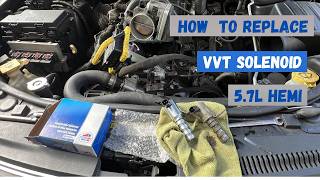
Typical fix: Replace the Bank 1 intake VVT solenoid. On Hemi engines, this is located under the intake manifold. 🎬 Watch: How to remove and replace the Hemi VVT solenoid
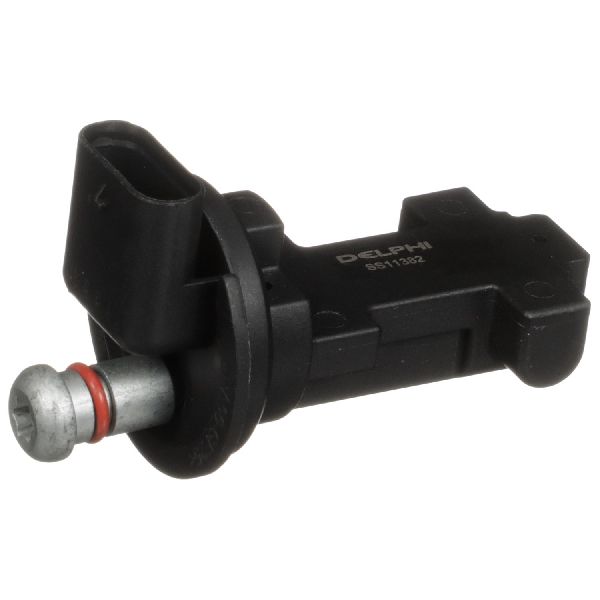
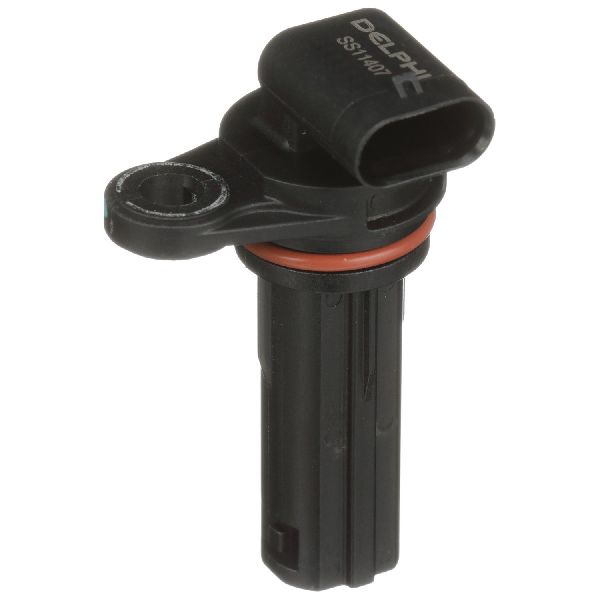
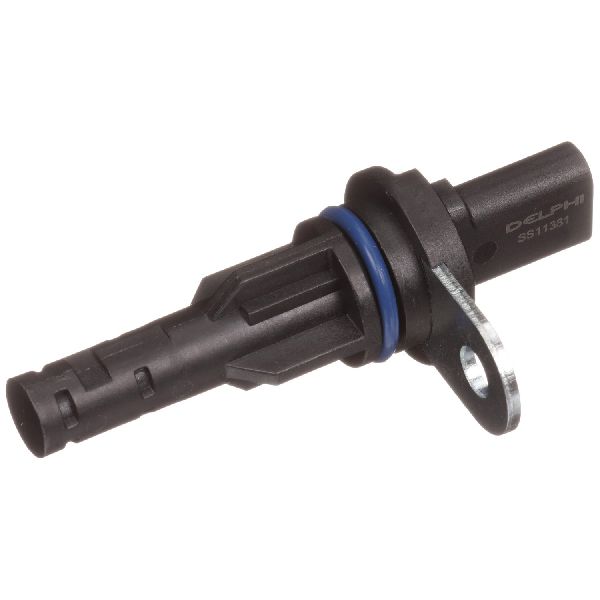
Est. part cost: $30-$80 - Failed Camshaft or Crankshaft Position Sensor 🟡 Medium Probability → Shop Engine Crankshaft Position Sensor These sensors can fail from heat and age, sending incorrect or no data to the ECM. While less common than mechanical timing issues for this code, a sensor failure can perfectly mimic a timing problem and is a common misdiagnosis.
How to confirm: Use a scan tool to monitor the live data from both sensors. An oscilloscope is the best tool to verify a clean, consistent square wave signal pattern. Resistance can also be checked with a multimeter against factory specs.
Typical fix: Replace the faulty sensor (Camshaft Position Sensor for Bank 1, or the Crankshaft Position Sensor).
Est. part cost: $25-$75 - Broken Timing Chain Guide or Failed Tensioner 🟡 Medium Probability → Shop Engine Timing Chain On 5.7L Hemi engines, the plastic timing chain guides can become brittle and break apart. The pieces can fall into the oil pan, and the lack of guidance allows the chain to slap against the timing cover or go slack, causing a P0016 code.
How to confirm: Requires removal of the timing cover for visual inspection. Finding plastic chunks in the oil pan during an oil change is a strong indicator of this failure. A rattling noise from the front of the engine is also a key symptom.
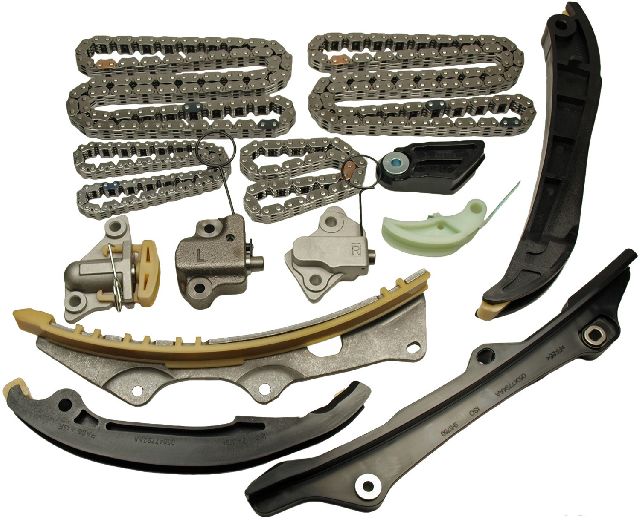
Typical fix: Replace the timing chain, guides, and tensioner. It is recommended to replace all timing components as a kit.
Est. part cost: $250-$600
Rare But Worth Checking
- Failed Camshaft Phaser: → Shop Engine Camshaft The phaser itself can fail mechanically, getting stuck in one position or having internal components wear out. TSB #9003648 mentions this as a possibility on the 6.4L engine. On the 3.6L, a worn internal locking pin can cause a similar issue. This is an expensive repair that often requires special holding tools.
- Damaged Reluctor Wheel: The tone or reluctor ring that the crank or cam sensor reads can be damaged, bent, or have debris on it, causing an incorrect signal. On Pentastar engines, there have been rare cases of the reluctor ring on the camshaft spinning out of position, which requires camshaft replacement.
- Loose Oil Galley Bolts (3.6L V6): A known issue on the 3.6L Pentastar is for oil galley bolts inside the cylinder head (under the valve cover) to come loose. This causes a loss of oil pressure to the phasers and valvetrain on that bank, which can trigger P0016 and other codes. This should be checked any time the valve cover is off.
Diagnosis Steps
- Check the engine oil level and condition. If it is low, dirty, or the wrong viscosity, perform an oil and filter change with the correct OEM-specified oil, clear the code, and re-test. This simple step solves the problem surprisingly often.
- Use a professional scan tool to read freeze frame data and check for any other stored trouble codes. Note the conditions under which the code was set.
- Monitor live data streams for the crankshaft position sensor and the Bank 1 camshaft position sensor. Compare the desired vs. actual camshaft position angles. A large, persistent deviation points to a mechanical issue or VVT system fault.
- Inspect the wiring and connectors for the camshaft sensor, crankshaft sensor, and VVT solenoid for any signs of damage, corrosion, or oil contamination.
- Use the scan tool's actuator tests to command the Bank 1 VVT solenoid on and off. Listen for an audible click and watch for a change in engine RPMs or roughness. If no change occurs, the solenoid or its circuit is faulty.
- If sensors and solenoids test good, a mechanical inspection is necessary. This involves removing the timing cover to check the timing chain for slack, verifying all timing marks align perfectly, and inspecting guides and tensioners for wear or damage. On a 3.6L, check for loose oil galley plugs under the valve cover.
Parts You'll Likely Need
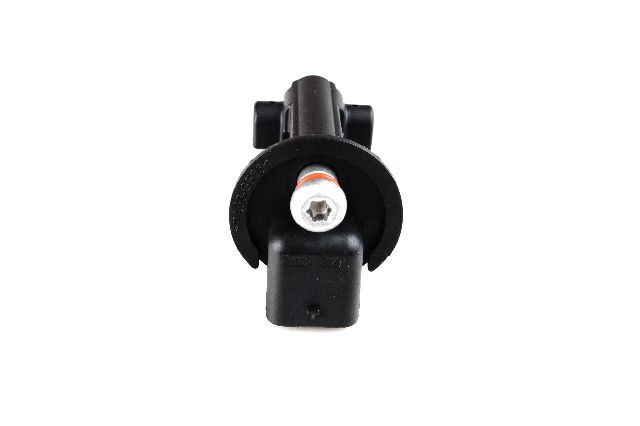
- VVT Solenoid / Oil Control Valve
(OEM #53022338AB)— A common failure point, especially on the 5.7L and 6.4L engines, that gets clogged or fails electronically. It is located under the intake manifold on Hemi engines.
Trusted brands: Mopar, Dorman, Hitachi
OEM price range: $50-$100
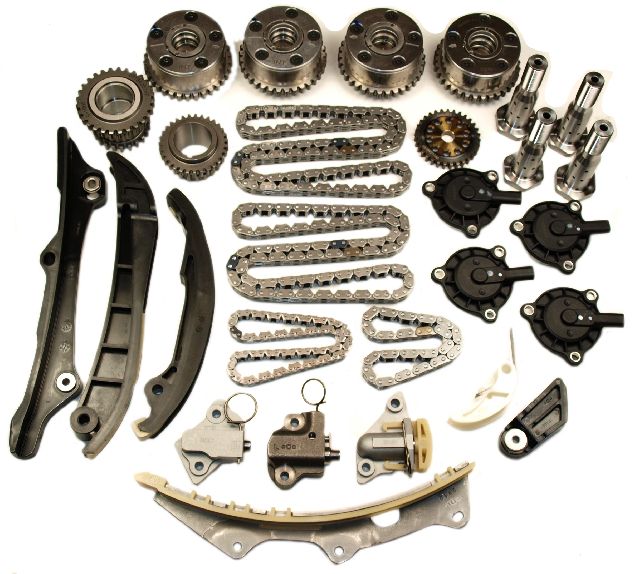
Aftermarket price range: $30-$80 - Timing Chain Kit
(OEM #5184357AE (example for 3.6L))— A stretched chain is the most common cause of P0016 on the 3.6L V6. A kit should always be used, which includes chains, guides, and tensioners.
Trusted brands: Mopar, Cloyes, Melling
OEM price range: $350-$600
Aftermarket price range: $150-$400 - Camshaft Position Sensor — Often replaced during diagnosis, though it's less frequently the root cause than mechanical issues. It's relatively inexpensive and easy to access on the front of the cylinder head.
Trusted brands: Mopar, NTK/NGK, Duralast
OEM price range: $40-$80
Aftermarket price range: $25-$50 - Crankshaft Position Sensor — Replaced if it fails diagnostic tests. A faulty crank sensor will prevent the ECM from knowing the engine's rotational position, making a correlation check impossible.
Trusted brands: Mopar, Bosch, Denso
OEM price range: $45-$90
Aftermarket price range: $30-$60
Related Codes That Often Appear With This One
- P000B — This code indicates a slow camshaft position response, often caused by the same VVT solenoid or oil pressure issues that trigger P0016. TSB #1807517 and #9003648 list them together.
- P0335 — A Crankshaft Position Sensor Circuit Malfunction code can appear if there's an issue with the crank sensor or its wiring, which are core components in the P0016 correlation check. [30, Bulletin #1807517]
- P0339 — This code for an intermittent Crankshaft Position Sensor signal can also accompany P0016, pointing towards a failing sensor or wiring issue. [Bulletin #1807517]
- P0017, P0018, P0019 — These are correlation codes for the other camshafts on the engine (Bank 1 Exhaust, Bank 2 Intake, Bank 2 Exhaust). If a primary timing chain has stretched, it's possible for multiple camshafts to be out of sync with the crankshaft.
Technical Service Bulletins (TSBs) & Recalls
- TSB #9003648: Points to the VVT solenoid or phaser as the likely cause for P0016 on low-mileage 2016-2017 6.4L SRT engines.
- TSB #1807517: Groups P0016 with other related camshaft and crankshaft codes (P000B, P0335, P0339), indicating a related cluster of potential faults.
Platform-Specific Known Issues
- TSB #9003648 notes that for 2016 6.4L SRT models with under 12,000 miles, P0016 is likely caused by a faulty VVT Solenoid or VVT Phaser.
- The 3.6L Pentastar V6 has a well-documented history of timing chain stretching, making it a primary suspect for P0016 on vehicles equipped with this engine.
- On 5.7L Hemi engines, broken plastic timing chain guides are a known failure mode that leads to chain slack and this specific trouble code.
Mechanic-Grade Diagnostic Values
- VVT Solenoid (Oil Control Valve) Internal Resistance — expected: 8 to 12 Ohms. Failure: A reading outside this range, or an open circuit (OL), indicates a failed solenoid coil.
- Cam/Crank Deviation (3.6L Pentastar) — expected: At warm idle, Bank 1 Exhaust cam may normally read 6-8 degrees higher than other cams (which are typically 2-4 degrees).. Failure: A persistent deviation of more than 10-11 degrees on any single camshaft points towards a mechanical timing issue like a stretched chain or spun reluctor ring.
- Engine Oil Pressure at Idle — expected: At least 25 PSI at normal operating temperature.. Failure: Pressure significantly below 25 PSI indicates an oil supply issue that must be fixed before addressing VVT or timing components, as low pressure can cause P0016.
- Crankshaft vs. Camshaft Sensor Waveform Alignment (Oscilloscope) — expected: A known-good pattern shows a specific alignment between the crank sensor's missing tooth signal and the cam sensor's signal pulse.. Failure: If the camshaft sensor's signal has shifted to the right (retarded) relative to the crankshaft signal's reference point, it indicates a stretched timing chain or other mechanical timing error.
Scan Tool Commands That Help
- wiTECH (or equivalent professional scanner): Control the VVT System (Bank 1) - Active Test — This command allows the technician to manually activate the Bank 1 intake VVT solenoid while the engine is running. A change in engine idle (stumble or stall) confirms the solenoid is mechanically responding and oil passages are likely clear. No change points to a bad solenoid, clogged passage, or wiring issue.
Wiring & Ground Locations
- Crankshaft/Camshaft Sensor Connector — Directly on the body of each respective sensor.. These 3-pin connectors are a primary test point. The pins are typically for 5V reference, signal, and ground. Corrosion or loose pins here can cause intermittent or lost signals, directly triggering P0016 or related sensor codes.
- G104 — On the right side (passenger side) of the engine block or on top of the right cylinder head cover.. This is a primary engine ground. A poor connection at G104 can create a floating ground for engine sensors, including the cam and crank sensors, leading to erratic signals and false correlation codes.
- G105 / G106 — Located on the rear of the engine block or cylinder heads.. These are additional engine-to-chassis grounds. Similar to G104, a compromised connection here can cause widespread electrical issues for the engine management system.
Real Owner Repair Stories
- YouTube user 'z p' (Jeep with 3.6L Pentastar V6, 177,000 miles) — P0016 code, check engine light, traction control light, reduced engine power.
❌ Tried (didn't work) The user did not report trying other fixes first, went straight to mechanical inspection.
✅ What actually fixed it The timing chains had stretched so much that the tensioners were maxed out and could no longer keep the engine in time. Replacing the timing chains resolved the P0016 code. - YouTube user 'jason autry' (Jeep Wrangler with 3.6L Pentastar V6) — P0016 code and an idle jump after the engine stalled while fording water.
❌ Tried (didn't work) Not specified; diagnosis pointed towards a mechanical timing issue.
✅ What actually fixed it The timing chains were found to have stretched by 'half a link,' likely due to the stress of the engine stall. Replacing the timing chains fixed the issue.
When the Usual Fixes Don't Work
- While replacing sensors and VVT solenoids is a common first step, these parts are often not the root cause for a persistent P0016. In one documented case on a 2014 3.6L, the owner replaced the camshaft sensors, crankshaft sensor, and all VVT solenoids, yet the code immediately returned. The owner also repaired a faulty battery harness and cleaned the camshaft tone rings with no success. This demonstrates that if the code persists after replacing common components, the problem is almost certainly a deeper mechanical issue (stretched timing chain, failed phaser, spun reluctor ring) or a very elusive wiring fault, requiring advanced diagnostics beyond simple parts replacement.
OEM Part Supersession History
53022298AA→53022298AB— The new part features an improved internal O-ring for easier assembly and reduced insertion force, suggesting an enhancement for better sealing and installation.
Helpful Videos
We Have This Part in Stock

The information in this article is provided for general reference and educational purposes only. Vehicle specifications, procedures, and part compatibility can vary by production date, trim level, and region. Always consult your vehicle's factory service manual and verify part numbers before purchasing or performing repairs. Safety-critical components such as airbags, seat belts, and braking systems should be installed by a qualified professional.
- Chrysler 300:
- 🧭 Diagnostic Flowchart
- 🎬 Helpful Videos
- 🛍️ Shop This Part
- What's Unique About the 2016-2016 Chrysler 300
- Symptoms You May Notice
- Most Likely Causes
- Rare But Worth Checking
- Diagnosis Steps
- Parts You'll Likely Need
- Related Codes That Often Appear With This One
- Technical Service Bulletins (TSBs) & Recalls
- Platform-Specific Known Issues
- Mechanic-Grade Diagnostic Values
- Scan Tool Commands That Help
- Wiring & Ground Locations
- Real Owner Repair Stories
- When the Usual Fixes Don't Work
- OEM Part Supersession History
- 🎟️ Get 5% Off