

P0016 on 2011-2016 Dodge Durango 3.6L: Causes and Fixes for Cam/Crank Misalignment
On the 3.6L Pentastar V6, P0016 almost always points to a stretched timing chain, a very common issue for this engine, especially over 80,000 miles. A rattling noise on startup is the key symptom. Before committing to this expensive repair, check the engine oil level and condition, and rule out a failed camshaft position sensor, which can also be a culprit due to a common oil leak.
- P0016 on a 3.6L Durango is a serious code that points to a high probability of a stretched timing chain.
- A rattling noise from the engine for a few seconds on a cold start is the classic symptom of a worn timing chain.
- Always check the engine oil level and condition first, as low or dirty oil can trigger this code.
- Before assuming a timing chain failure, inspect the Bank 1 camshaft position sensor for oil contamination from the common oil filter housing leak.
- Due to the complexity and high chance of misdiagnosis, professional service is recommended to confirm a mechanical timing issue before beginning repairs.
What's Unique About the 2011-2016 Dodge Durango
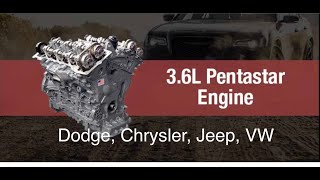
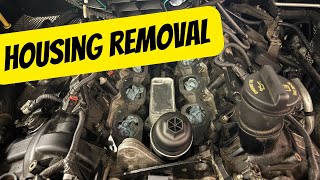
The 3.6L Pentastar V6 engine used in this generation of Durango is well-documented for having issues with premature timing chain stretching, particularly in vehicles approaching or exceeding 80,000-100,000 miles. As a result, P0016 is a very common code that frequently indicates a mechanical timing problem rather than a simple sensor failure. Another widespread issue is a leaking oil filter/cooler housing assembly, which is made of plastic and sits in the hot engine valley. This housing is prone to cracking, causing oil to drip down the back of the engine and onto sensors, including the camshaft position sensors, which can cause them to fail and trigger timing codes. Owners should be aware that a ticking noise can also be caused by failing rocker arms, a separate known issue that can be mistaken for a timing chain problem.
🎬 Watch: How to identify and fix failing rocker arm ticks.Symptoms You May Notice
- Check Engine Light is on
- Rattling or slapping noise from the front of the engine, especially on a cold startup, that may quiet down as the engine warms.
- Rough or unstable idle
- Noticeable loss of engine power and poor acceleration.
- Engine may be hard to start or fail to start.
- Engine may hesitate or stall during operation
- Decreased fuel economy
- Vehicle may enter a reduced power 'limp mode'.
- Replacing only the camshaft and crankshaft sensors without checking for a stretched timing chain. The sensors are often correctly reporting a real mechanical problem.
- Mistaking the ticking sound of a failing rocker arm/lifter for a timing chain rattle. This can lead to an incorrect and very expensive repair. A rocker arm tick is often more constant, while a timing chain rattle is most prominent on a cold start.
Most Likely Causes
- Stretched Timing Chain and/or Worn Timing Components 🔴 High Probability → Shop Engine Timing Chain This is a widely documented, common failure on the 3.6L Pentastar engine family, often occurring after 80,000 miles. The chains, tensioners, and plastic guides can wear prematurely, causing slack that the tensioners cannot compensate for.
How to confirm: Listen for a distinct startup rattle from the front of the engine that lasts a few seconds. A mechanic can use a scan tool to view live cam/crank deviation data; a consistent deviation of more than 8-10 degrees at idle strongly suggests a mechanical timing issue. The definitive test is removing the valve cover to physically inspect for timing chain slack.
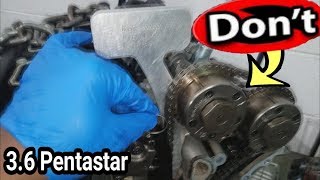
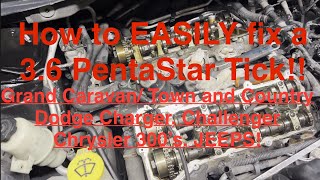
Typical fix: Replace the entire timing set, including all chains (primary and secondary), guides, and tensioners. It is highly recommended to replace the water pump at the same time, as it is driven by the timing chain and the labor overlaps. Using a quality kit from a reputable brand like Mopar or Cloyes is critical. 🎬 Watch: Full walkthrough of the 3.6 Pentastar timing chain replacement.
Est. part cost: $250-$500 for a quality aftermarket kit. - Low or Dirty Engine Oil 🟡 Medium Probability The camshaft phasers, which control the variable valve timing (VVT), are hydraulically operated by engine oil. Incorrect oil viscosity, a low oil level, or oil that is old and sludgy can restrict oil flow, preventing the phasers from adjusting cam timing correctly and potentially leading to oil pressure codes like P06DD.
How to confirm: Check the oil level on the dipstick and inspect the oil's condition and service history. An overfilled oil level from a botched oil change can also cause this code. If the oil is low, dark, or sludgy, this could be the cause.
Typical fix: Perform an engine oil and filter change using the correct OEM-specified viscosity oil (e.g., 5W-20). Clear the codes and see if they return.
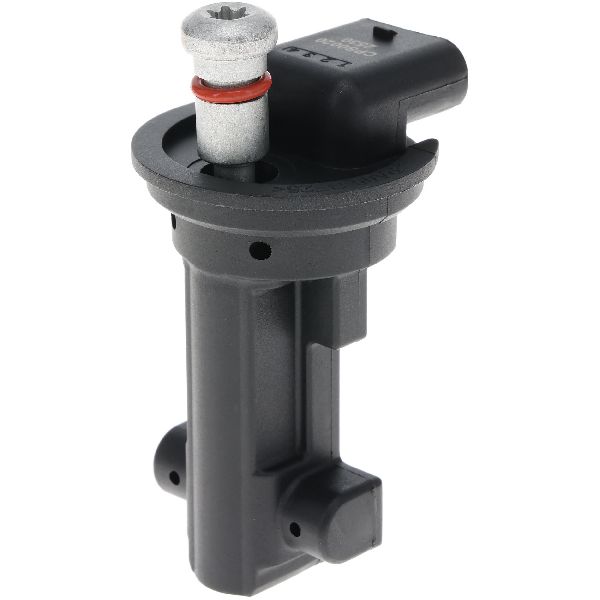
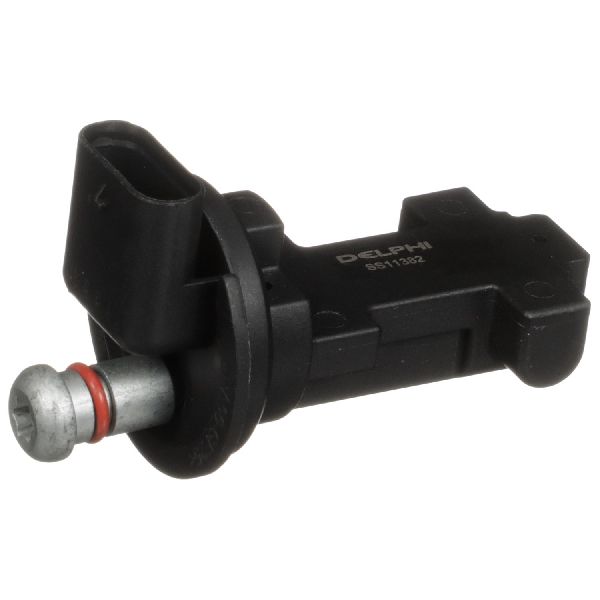
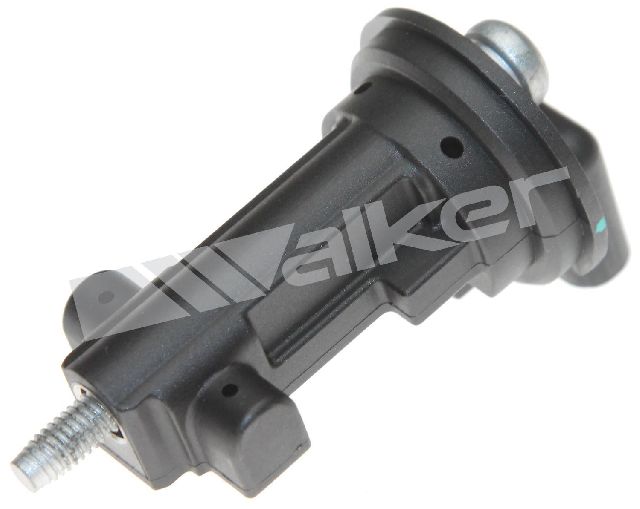
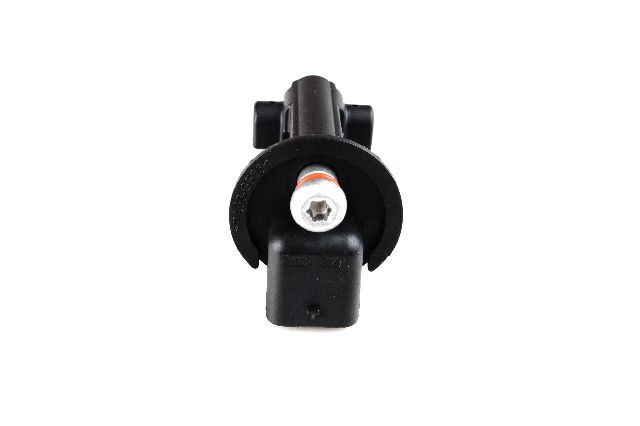
Est. part cost: $50-$100 - Failed Camshaft Position Sensor (Bank 1 Intake) 🟡 Medium Probability → Shop Engine Camshaft Position Sensor A very common oil leak from the plastic oil filter/cooler housing assembly (located in the engine valley) drips down the back of the engine directly onto the Bank 1 sensors and wiring harness, causing them to fail. Standard heat and age can also cause sensor failure.
How to confirm: Visually inspect the sensor and its connector on the passenger-side valve cover for oil saturation. A diagnostic test involves swapping the Bank 1 (passenger side) and Bank 2 (driver side) camshaft sensors. Clear the codes and drive. If the code changes to P0018 (Bank 2), the sensor is faulty.
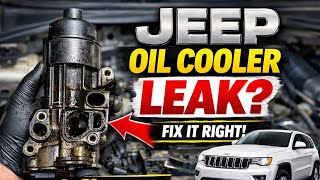
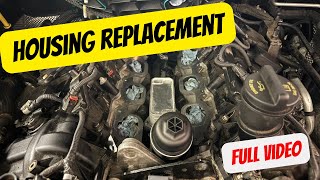
Typical fix: Replace the failed camshaft position sensor. If oil contamination is present, the oil filter/cooler housing assembly must also be replaced to prevent repeat failure. 🎬 See this guide on fixing the common oil cooler leak. Using an OEM Mopar sensor is highly recommended, as aftermarket sensors have a poor reliability record on this engine.
Est. part cost: $40-$120 for an OEM sensor. - Failed VVT Solenoid / Oil Control Valve (OCV) ⚪ Low Probability → Shop Engine Variable Valve Timing (VVT) Solenoid Sludge from infrequent oil changes can clog the small passages and filter screens in the solenoid, causing it to stick. This can prevent proper oil flow to the cam phaser.
How to confirm: A capable scan tool can be used to command the solenoid on and off to see if it operates and if it affects cam/crank correlation. It can also be removed and tested with a 12V power source. Listen for an audible click.
Typical fix: Replace the Bank 1 intake VVT solenoid. The solenoids are located on the front of the valve covers and are relatively accessible.
Est. part cost: $30-$80
Rare But Worth Checking
- Failed Camshaft Phaser: → Shop Engine Camshaft While less common than chain stretch, the phaser itself can fail mechanically or become clogged with debris, preventing it from changing cam timing correctly. This is often replaced during a full timing chain job.
- Loose Oil Galley Plugs: A known issue on the 3.6L Pentastar is that two 13mm oil galley bolts located under the valve covers at the front of the heads can back out. This causes a loss of oil pressure to the phasers, triggering timing codes. They should be inspected for tightness any time the valve covers are removed.
- Wiring or PCM Issue: Damage to the wiring harness between the camshaft sensor and the PCM, or a fault within the PCM itself, can cause this code. This is rare and should only be considered after all other mechanical and sensor-related causes have been ruled out.
Diagnosis Steps
- Check Engine Oil: Verify the oil level is correct and the oil is clean. If low, dirty, or overfilled, perform an oil change with the correct viscosity oil (5W-20), clear the codes, and drive to see if the code returns.
- Listen for Noise: On a cold start, listen carefully for a rattling or chain-slapping sound from the front of the engine that lasts for a few seconds. This is a strong indicator of a timing chain issue.
- Scan Tool Data: Use a scan tool to view live data for cam/crank correlation. A deviation greater than 8-10 degrees at idle points towards a mechanical timing problem.
- Inspect Camshaft Sensor: Visually inspect the Bank 1 (passenger side) intake camshaft position sensor and its connector for any signs of oil saturation. If oil is present, suspect a leak from the oil filter/cooler housing above it.
- Swap Camshaft Sensors: As a diagnostic test, swap the Bank 1 (passenger) and Bank 2 (driver) camshaft sensors. Clear the codes and drive. If the code returns as P0018 (for Bank 2), the sensor you moved is faulty.
- Test VVT Solenoid: Use a scan tool to command the VVT solenoid for Bank 1 Intake. If it doesn't respond or click, it may be faulty.
- Mechanical Timing Inspection: If all other steps fail, a professional mechanical inspection is required. This involves removing the valve covers to physically check for slack in the timing chain and to inspect the oil galley plugs for tightness. This confirms the need for a timing chain replacement.
Parts You'll Likely Need
- Engine Timing Chain Kit — This is the most common high-probability fix for P0016 on a higher mileage 3.6L Pentastar engine.
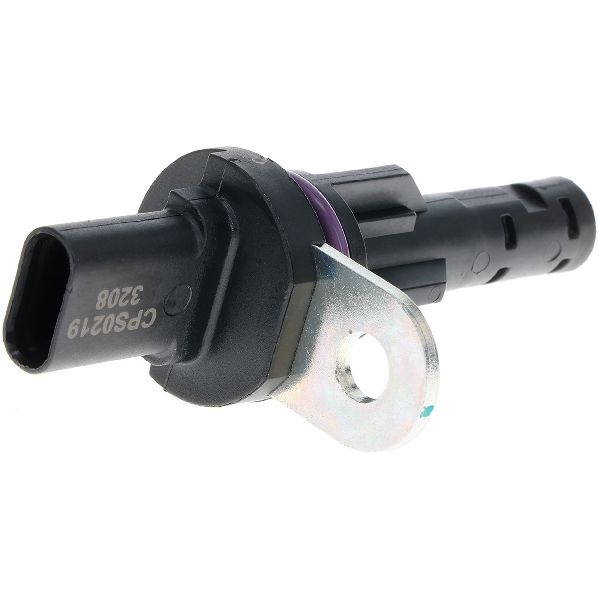
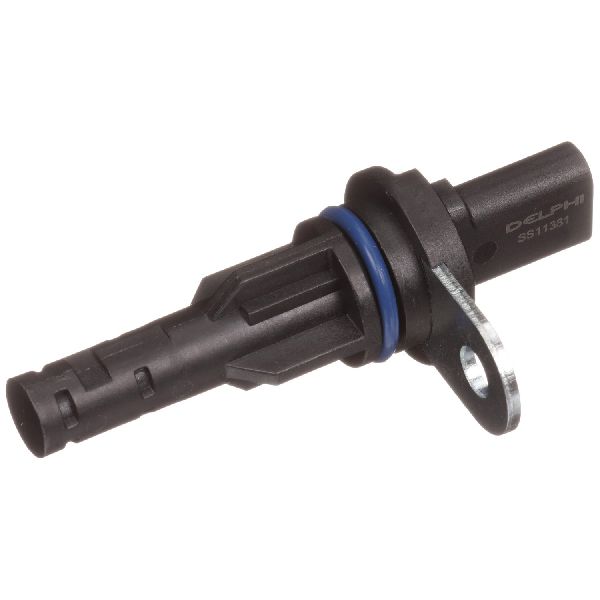
- Camshaft Position Sensor (Bank 1)
(OEM #68080819AD)— A common failure point, especially when contaminated by oil from the cooler housing leak. OEM is strongly recommended. - Engine Oil Filter Housing/Cooler Assembly — Frequently cracks and leaks oil onto the cam sensors, causing them to fail. Must be replaced to prevent repeat sensor failure.
- VVT Solenoid (Bank 1 Intake) — A lower probability cause, but can fail due to oil sludge or internal electrical faults.
Related Codes That Often Appear With This One
- P0017 — This code is for the exhaust camshaft on the same bank (Bank 1). If both P0016 and P0017 appear, it strengthens the diagnosis of a stretched timing chain or base timing issue affecting the entire bank.
- P0018 — This is the equivalent code for Bank 2 (driver's side). If you swap the cam sensors for diagnosis and P0016 is replaced by P0018, it confirms the sensor you moved is faulty.
- P0340 — This is a general fault code for the camshaft position sensor circuit. It can appear alongside P0016 if the sensor is failing or has a wiring issue.
- P06DD — This code indicates the oil pressure control circuit is stuck off. It often points to issues with oil viscosity, a failing oil pump, or internal leaks (like from a loose galley plug) that can also starve the VVT system and trigger P0016.
Technical Service Bulletins (TSBs) & Recalls
- TSB 09-009-16: While not directly for P0016, this TSB addresses faulty VVT solenoids on some 3.6L engines causing other timing codes (P0017, P0019, P000A, P000C), which can be misdiagnosed as a timing chain issue.
- TSB for 2022-2025 models: A recent TSB warns technicians against unnecessarily replacing the entire oil filter assembly for leaks that could be resolved with a new filter cap O-ring or valve cover gasket, highlighting the prevalence of leaks in this area.
- TSB Bulletin #1807517: Notes that P0016 (Crankshaft/Camshaft Timing Misalignment - Bank 1 Sensor 1) may be found alongside P000B and P0335 during diagnostic investigations for MIL illumination.
- TSB Bulletin #9003648: Specifically mentions that for vehicles with less than 12,000 miles, P0016 or P000B fault codes may be active, requiring diagnosis of the Variable Valve Timing (VVT) Solenoid and Variable Valve Timing (VVT) Phaser.
Platform-Specific Known Issues
- Premature timing chain stretch is a well-known issue with the 3.6L Pentastar V6 engine.
- A leaking oil filter adapter housing is extremely common and often leads to the failure of the camshaft position sensors by saturating them with oil.
- Failing rocker arms can produce a ticking noise that is often misdiagnosed as a timing chain issue.
Mechanic-Grade Diagnostic Values
- Camshaft Position Sensor (CMP) Supply Voltage — expected: 4.5 to 5.2 Volts (Key On, Engine Off). Failure: Voltage below 4.5V or above 5.2V indicates a wiring or PCM fault.
- Camshaft Position Sensor (CMP) Signal Circuit Voltage — expected: Toggling square wave between ~0V and 5V on an oscilloscope while engine is running.. Failure: A flat line, or a signal that is stuck high or low, indicates a sensor or wiring fault.
- VVT Solenoid (OCV) Coil Resistance — expected: Generally between 5 and 20 Ohms, with some sources citing 8-12 Ohms as a common range.. Failure: A reading of infinite resistance (Open Loop) or very low resistance (short) indicates a failed solenoid.
- Cylinder Head Oil Galley Plug Torque — expected: 13 ft-lbs (156 in-lbs). Failure: Plugs that are loose or can be tightened further have likely backed out, causing an internal oil pressure leak.
Scan Tool Commands That Help
- wiTECH (Chrysler Dealer Tool) or equivalent: VVT System Test — This bidirectional test commands the VVT solenoid to actuate. It helps a technician determine if a fault is electrical (solenoid doesn't click) or potentially mechanical (solenoid clicks but timing doesn't change), pointing towards a phaser or oil flow issue.
- wiTECH (Chrysler Dealer Tool) or equivalent: Cam/Crank Correlation Live Data — This is the primary data PID to monitor. A consistent deviation of over 8-10 degrees at idle is a strong indicator of a mechanical timing issue like a stretched chain, rather than a sensor glitch.
Wiring & Ground Locations
- Bank 1 Camshaft Position Sensor — On the rear of the passenger side cylinder head. Access is difficult and typically requires removing the upper intake manifold.. This is the sensor ('Sensor A') that the P0016 code specifically references. Its location makes it susceptible to oil contamination from the oil filter housing leak directly above it.
- CMP Sensor Connector Pin 1 — Pin 1 on the Bank 1 CMP sensor harness connector.. This is the 5-volt supply circuit from the PCM. A voltage test here confirms if the sensor is receiving power.
- CMP Sensor Connector Pin 2 — Pin 2 on the Bank 1 CMP sensor harness connector.. This is the signal wire (Circuit K44) that sends the camshaft's position back to the PCM. An oscilloscope reading here can definitively prove if the sensor signal is good, bad, or intermittent.
- CMP Sensor Connector Pin 3 — Pin 3 on the Bank 1 CMP sensor harness connector.. This is the sensor ground circuit provided by the PCM. A fault in this ground can cause incorrect sensor readings.
Real Owner Repair Stories
- Ram Promaster Forum User (Ram Promaster with 3.6L Pentastar (shared engine)) — Persistent P0016 and P0017 codes, low power, rough running. Owner initially thought it was a transmission issue.
❌ Tried (didn't work) Initial diagnosis confirmed the cams were about 10 degrees out of sync.
✅ What actually fixed it The final resolution was a timing chain replacement. The user noted that while VVT solenoids or phasers could be a cause, it's strange for both intake and exhaust on one bank to fail simultaneously, making a stretched chain affecting the whole bank more likely.
Documented NHTSA Reports
- An owner reported in NHTSA ODI #11289495 that their vehicle shut off three times, resulting in a loss of power steering at low speeds, with a scan tool retrieving code P0016.
- NHTSA ODI #11598587 describes a vehicle that failed to accelerate as intended; a diagnostic machine retrieved DTC P0016 (Cam and Crank shafts signals error), leading to the replacement of camshaft and oil sensors.
- In NHTSA ODI #11325729, an owner noted that code P0016 (Crankshaft Position, Camshaft Position Correlation/Bank 1 Sensor A) was becoming more frequent, appearing alongside code P0128.
OEM Part Supersession History
68080819AB, 68080819AC→68080819AD— Standard part revision and improvement by the manufacturer.
Heads up: The newer part number (68080819AD) replaces the previous versions and should be used for repairs.
Model Year Variations Within This Range
- 2016-onward: For the 2016 model year, the 3.6L Pentastar engine received a significant update. Changes included a two-stage variable valve lift (VVL) system, a higher compression ratio (11.3:1 vs 10.2:1), redesigned heads, an improved oil pump, and recalibrated VVT. While the root causes of P0016 are similar, the parts (like timing components and VVT system) may differ from the 2011-2015 version.
- 2011-2013: Early Pentastar engines (2011-2013) were known for a specific left cylinder head issue that caused misfires and ticking, though this is separate from the P0016 timing correlation issue. FCA extended the warranty for the left cylinder head on these early models.
Diagnostic Flowchart
Other Known Issues on This Vehicle
Issues unrelated to this code that are worth knowing about as an owner of this generation:
- Cracked Oil Filter / Cooler Housing 🔴 High — Very common, especially on 2011-2013 models with the original plastic design. Often fails between 60,000 and 120,000 miles. (Ref: No recall, but the issue is widely documented. An updated Mopar part and aluminum aftermarket solutions are available.)
- Rocker Arm / Lifter Failure ('Pentastar Tick') 🔴 High — Common issue causing a distinct ticking noise. If ignored, the failed rocker arm's needle bearings can destroy the camshaft lobe, leading to a much more expensive repair. (Ref: No recall, but it is a well-known pattern failure.)
- Timing Chain Stretch 🔴 High → Shop Engine Timing Chain — Widespread, especially on engines over 80,000 miles. It is the primary cause for code P0016 on this platform.
- Cylinder Head Failure (Early Models) 🔴 High — Primarily affected the left cylinder head on 2011-2013 models due to overheating valve seats, often causing misfires (P0300 series codes). Less common on 2014+ models after a design update. (Ref: Chrysler extended the warranty on the left cylinder head for some vehicles to 10 years/150,000 miles.)
- TIPM (Totally Integrated Power Module) Failure 🟠 Medium — Can cause a wide range of bizarre electrical issues, including no-start conditions, fuel pump problems, or horn/wipers activating randomly. There was a recall for the fuel pump relay within the TIPM. (Ref: Recall for fuel pump relay.)
Used vs. New Parts: Buying Guide for This Vehicle
When a used part is the smart pick: For this specific repair, sourcing used parts is generally not recommended. The key failure items (timing chain, sensors, oil cooler housing) are all high-wear or age/heat-sensitive components. A used part from a donor vehicle would likely have similar wear or be close to failure itself.
Donor-vehicle mileage cap: roughly under 30000 miles for the part to have meaningful remaining life.
What to inspect on the donor part:
- If sourcing a major component like an entire engine, verify the donor vehicle's mileage and history.
- For any electronic sensor, avoid parts that show signs of oil contamination, corrosion, or physical damage to the housing or connector.
OEM-only on this vehicle (don't cheap out):
- Camshaft Position Sensor: Forum users and mechanics strongly advise using only OEM Mopar sensors. Aftermarket sensors are widely reported to have a high failure rate and can cause persistent or new codes on this engine.
- VVT Solenoids: Similar to cam sensors, OEM Mopar solenoids are recommended for reliability and correct electronic response with the PCM.
Aftermarket brands forum-validated for this vehicle:
- Timing Chain Kit: Cloyes is a highly reputable aftermarket brand for timing components and is often recommended as a quality alternative to Mopar. They offer complete kits for this engine.
Brands owners have reported issues with on this vehicle:
- Unbranded/"White Box" Timing Kits: Avoid cheap, unbranded timing chain kits from online marketplaces. These often use inferior materials for chains, guides, and tensioners that can fail prematurely, leading to catastrophic engine damage.
- Dorman (for Oil Filter Housing): While Dorman offers an aluminum replacement for the plastic OEM oil filter/cooler housing, some mechanics report fitment and sealing issues. OEM is the safest bet, though more expensive.
Real Owner Stories
Aggregated from forums and TSBs cited above. Mileages and costs reflect what owners reported in those sources.
2011 Dodge Durango Citadel 5.7L
Symptoms: Owner experienced P0016 and P000B codes, raising concerns about timing chain issues even on this generation of the vehicle.
What fixed it: The source discusses timing chain concerns but does not confirm the final fix for this specific user.
Source hint: DodgeForum.com - '2011 Citadel 5.7 w/ P0016 and P000B codes!'
2011-2016 Dodge Durango 3.6L Pentastar V6 — ~85000 miles
Symptoms: Persistent P0016 code appearing immediately after a timing chain replacement job.
What fixed it: Ensuring the timing is set perfectly during installation, as the engine is sensitive to even slight misalignments.
Source hint: DodgeForum.com - 'Strange P0016 Code'
2011-2016 Dodge Durango 3.6L Pentastar V6
Symptoms: Oil leaks originating from the engine valley, potentially saturating sensors and causing electrical failures.
What fixed it: Replacing the plastic oil filter housing/cooler assembly which fails due to heat cycles and overtightening.
Source hint: BobIsTheOilGuy.com - 'Infamous 3.6 Pentastar oil cooler strikes'
Related OBD-II Codes
Frequently Asked Questions
Is there a TSB for timing issues on the 3.6L Pentastar engine?
Why is my 2011-2016 Durango's oil filter housing leaking onto the sensors?
What brand of timing kit should I use for my 3.6L Pentastar V6?
Can a ticking noise in my Durango engine be related to P0016?
Should I replace the water pump while fixing the timing chain?
How can I tell if my P0016 code is a sensor failure or a mechanical timing issue?
Helpful Videos
We Have This Part in Stock

The information in this article is provided for general reference and educational purposes only. Vehicle specifications, procedures, and part compatibility can vary by production date, trim level, and region. Always consult your vehicle's factory service manual and verify part numbers before purchasing or performing repairs. Safety-critical components such as airbags, seat belts, and braking systems should be installed by a qualified professional.
- Dodge Durango:
- 🧭 Diagnostic Flowchart
- 🎬 Helpful Videos
- 🛍️ Shop This Part
- What's Unique About the 2011-2016 Dodge Durango
- Symptoms You May Notice
- Most Likely Causes
- Rare But Worth Checking
- Diagnosis Steps
- Parts You'll Likely Need
- Related Codes That Often Appear With This One
- Technical Service Bulletins (TSBs) & Recalls
- Platform-Specific Known Issues
- Mechanic-Grade Diagnostic Values
- Scan Tool Commands That Help
- Wiring & Ground Locations
- Real Owner Repair Stories
- Documented NHTSA Reports
- OEM Part Supersession History
- Model Year Variations Within This Range
- Other Known Issues on This Vehicle
- Used vs. New Parts: Buying Guide for This Vehicle
- Real Owner Stories
- 2011 Dodge Durango Citadel 5.7L
- 2011-2016 Dodge Durango 3.6L Pentastar V6 — ~85000 miles
- 2011-2016 Dodge Durango 3.6L Pentastar V6
- Related OBD-II Codes
- Frequently Asked Questions
- 🎟️ Get 5% Off