

P0016 on 2015-2019 Ford Flex: Crank/Cam Correlation Causes and Fixes
On a 2015-2019 Ford Flex, P0016 usually points to a problem with the engine's timing. The most common causes are a faulty Variable Camshaft Timing (VCT) solenoid or a stretched timing chain. A VCT solenoid is relatively inexpensive, but a timing chain replacement, often necessitated by a failing internal water pump, can cost over $2,000 and may exceed $4,000 at a dealership.
- P0016 on a Ford Flex is a serious code that indicates a loss of synchronization between the crankshaft and camshaft.
- Do not ignore this code. First, check your engine oil level and quality immediately.
- The most likely causes are sticking VCT solenoids (due to dirty oil) or a more serious mechanical issue like a stretched timing chain.
- Due to the engine's design, a timing chain job should almost always include replacing the internal water pump to prevent future failure.
- This is not a simple sensor swap. Professional diagnosis is highly recommended to avoid wasting money on unnecessary parts.
What's Unique About the 2015-2019 Ford FLEX

The 3.5L V6 engines (both Duratec and EcoBoost) used in the Ford Flex are known for issues related to the Variable Camshaft Timing (VCT) system and a uniquely problematic internal water pump. Multiple Ford Technical Service Bulletins (TSBs) indicate that debris in the oil can cause the VCT solenoids to stick, leading to correlation codes like P0016. Critically, these engines feature an internal water pump that is driven by the timing chain; a failure of this pump can contaminate the oil with coolant, leading to rapid and catastrophic timing component failure.
Diagnostic Flowchart

Tap your situation to follow the diagnostic path that matches what you're seeing on this vehicle.
Symptoms You May Notice

- Check Engine Light (MIL) illuminated
- Rough idle or engine shudder
- Engine rattling noise, especially a brief 'marbles in a can' sound on cold startup
- Reduced engine power and poor, sluggish acceleration
- Stalling or difficulty starting, engine may crank but not turn over
- Decreased fuel economy
- For water pump failure: Unexplained coolant loss and/or milky, chocolate-milk-like appearance of engine oil on the dipstick
- Replacing the camshaft or crankshaft position sensors without testing them. The code indicates a correlation *problem*, not necessarily a sensor failure. The sensors are often correctly reporting a mechanical issue.
- Replacing only the VCT solenoid when the underlying issue is a stretched timing chain or low oil pressure from a failing water pump.
- Performing an expensive timing chain replacement without also replacing the internal water pump. A failing water pump is often the root cause, and failing to replace it will lead to a repeat failure of the new timing components.
Most Likely Causes

- Dirty or Low Engine Oil 🔴 High Probability The VCT system is hydraulic and highly sensitive to oil pressure and cleanliness. Ford TSBs SSM 47170 and SSM 48423 specifically mention that debris can cause VCT solenoids to stick. An engine flush on a high-mileage engine can sometimes dislodge sludge and trigger this code.
How to confirm: Check the oil level and condition on the dipstick. If the oil is low, black, gritty, or has a milky/frothy appearance, it is a major concern.
Typical fix: Perform an oil and filter change using the manufacturer-specified grade (5W-20 or 5W-30 depending on engine) and a high-quality filter. If oil was contaminated with coolant, the root cause (likely water pump) must be addressed.
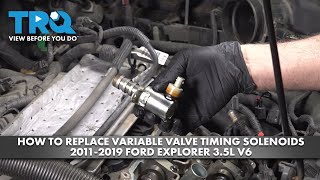
Est. part cost: $40-$80 - Failed Variable Camshaft Timing (VCT) Solenoid 🔴 High Probability → Shop Engine Camshaft As noted in Ford TSBs, these solenoids are prone to sticking due to small debris in the oil. TSB SSM 47170 suggests a diagnostic procedure (pinpoint test HK11) to cycle the solenoid 10 times with a scan tool to try and clear the debris before replacement.
How to confirm: A mechanic can command the solenoid with a scan tool to check for response. It can also be removed and bench-tested. Swapping the Bank 1 intake solenoid with the Bank 1 exhaust solenoid and seeing if the code changes to P0017 is a common DIY diagnostic trick.
Typical fix: Replace the faulty VCT solenoid for Bank 1 Intake. It is often recommended to replace them in pairs (intake and exhaust) or all four.
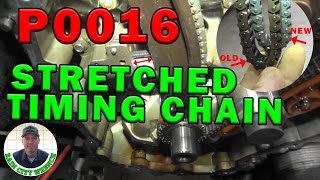
Est. part cost: $30-$70 per solenoid - Stretched Timing Chain 🟡 Medium Probability → Shop Engine Timing Chain Timing chains on these engines are a known wear item and can stretch over 100,000 miles, exacerbated by extended oil change intervals or oil contamination. The tensioner pushing out excessively is a visual confirmation of stretch.
How to confirm: This is a complex diagnosis. A mechanic will use a scan tool to check cam/crank correlation data. Physical inspection requires removing the passenger-side valve cover to view the timing chain tensioner. Full confirmation requires removing the front timing cover.
Typical fix: Replace the primary timing chain, secondary chains, tensioners, guides, and often the cam phasers and water pump at the same time. This is a labor-intensive job, often costing $2,000-$4,000+.
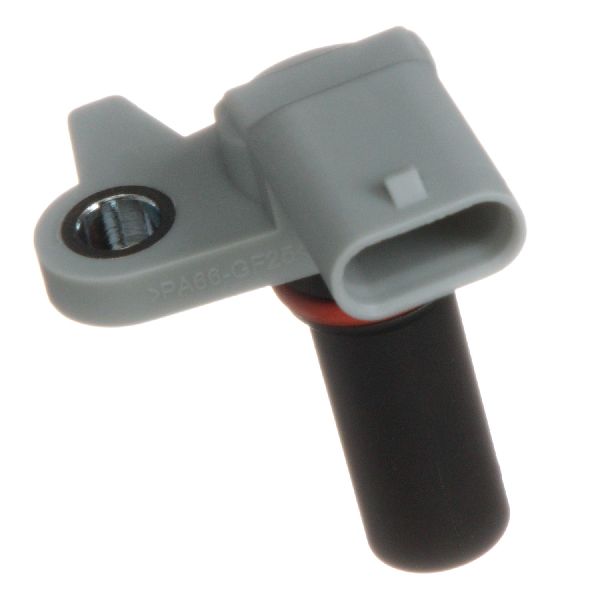
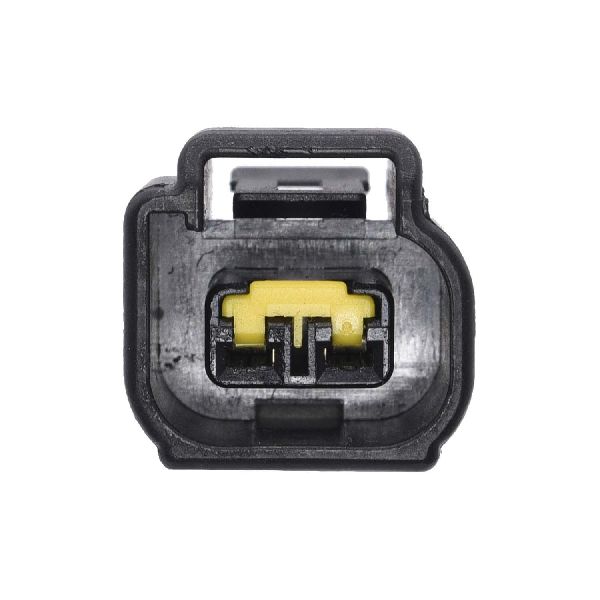
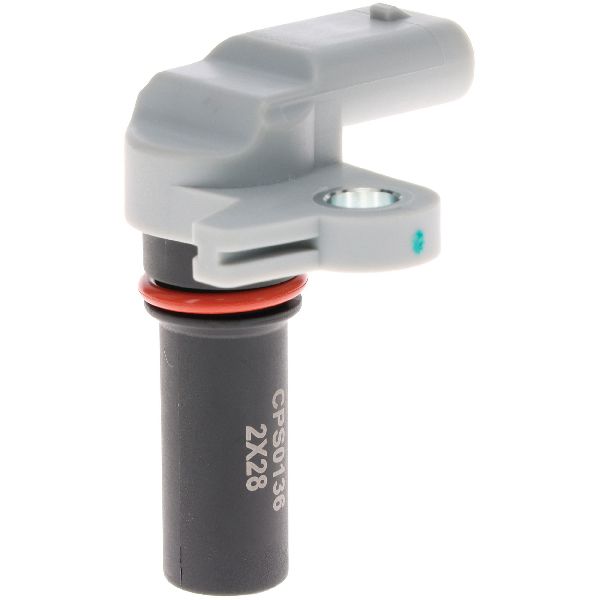
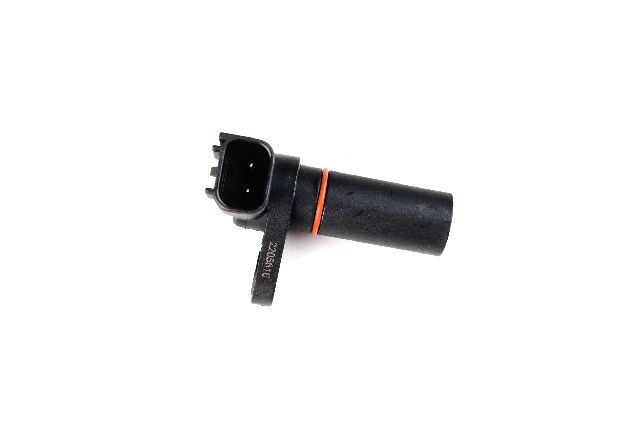
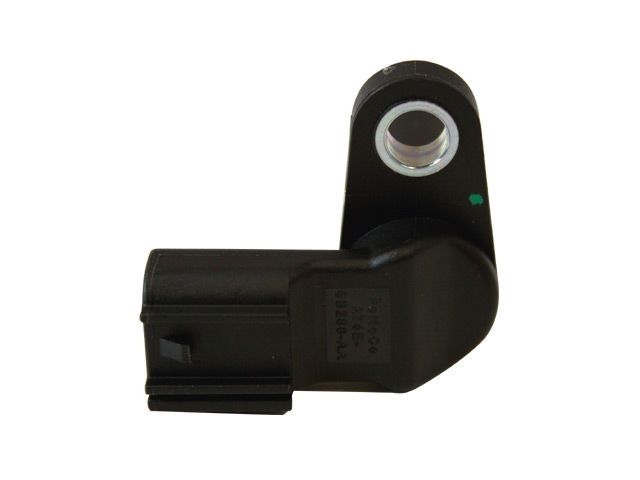
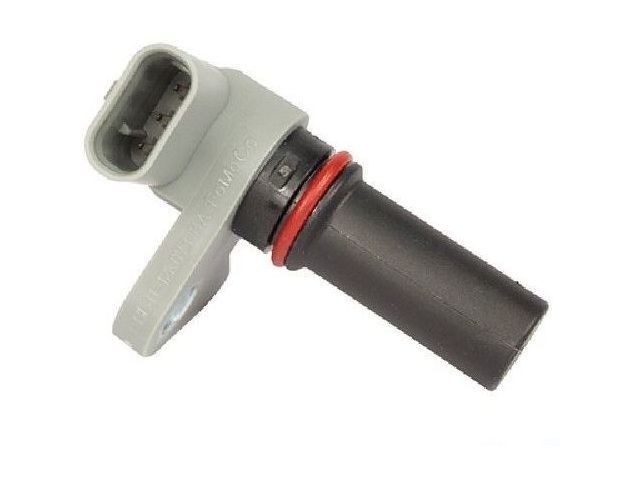
Est. part cost: $400-$800 for a full kit - Faulty Camshaft or Crankshaft Position Sensor ⚪ Low Probability → Shop Engine Crankshaft Position Sensor While sensors can fail on any vehicle, P0016 on this platform is more often caused by mechanical or hydraulic issues than a sensor failure. The sensor is usually accurately reporting a real timing problem.
How to confirm: Check the sensor's signal with an oscilloscope. Inspect wiring for damage. Swapping the sensor with another one (if applicable) can help diagnose.
Typical fix: Replace the specific sensor that has failed (Bank 1 Intake Camshaft Position Sensor or Crankshaft Position Sensor).
Est. part cost: $20-$60
Rare But Worth Checking
- Failed Cam Phaser: → Shop Engine Timing Gear The cam phaser (actuator) can fail mechanically or get clogged with debris, preventing it from adjusting cam timing correctly. This is often replaced during a full timing chain service and can be a source of rattling noises on startup. 🎬 See why updated phasers fix that cold start rattle
- Failing Internal Water Pump: → Shop Engine Water Pump A unique and critical issue for this engine. The water pump is driven by the timing chain. When its bearing seal fails, it can leak coolant externally from a weep hole (best case) or internally directly into the crankcase (worst case). Internal leakage contaminates the oil, destroying its lubricating properties and quickly damaging all timing components, causing chain stretch and setting P0016. If you have coolant loss and a P0016 code, this is a very likely and urgent cause.
Diagnosis Steps
- Verify engine oil level and condition. Look for low level, dark/gritty texture, or a milky/frothy appearance indicating coolant contamination. If oil is suspect, change oil and filter, clear codes, and re-evaluate.
- Use a professional scan tool to check for other DTCs and view live data for camshaft and crankshaft positions, as well as VCT command and actual PIDs.
- Follow TSB SSM 47170: Use the scan tool's active commands to cycle the Bank 1 intake VCT solenoid 10 times to attempt to dislodge debris. Listen for an audible click and watch for changes in engine idle.
- Inspect the wiring and connectors for the Bank 1 intake camshaft position sensor, crankshaft position sensor, and VCT solenoid for any visible damage, oil intrusion, or corrosion.
- If the VCT solenoid is still suspect, swap the Bank 1 intake solenoid with the Bank 1 exhaust solenoid. Clear codes and drive the vehicle. If the code changes to P0017 (Exhaust Camshaft Correlation), the original intake solenoid is confirmed faulty.
- If the above steps do not resolve the issue, check for coolant loss. A pressure test of the cooling system may be necessary. If coolant is disappearing with no external leaks, suspect an internal water pump failure. 🎬 Watch: Diagnosing coolant loss and P0016 from a failed water pump
- The final step is to inspect the base engine timing. This involves removing the passenger-side valve cover to inspect the timing chain tensioner for excessive extension. Full verification requires removing the front timing cover to check all timing marks, guides, and the water pump. This is a professional-level job.
Parts You'll Likely Need
- Variable Camshaft Timing (VCT) Solenoid
(OEM #8A5Z-6M280-B (Intake))— Frequently fails or sticks due to oil debris, as documented in Ford TSBs.
Trusted brands: Motorcraft, Dorman
OEM price range: $40-$60
Aftermarket price range: $25-$50 - Timing Chain Kit
(OEM #AT4Z-6268-C (Primary Chain))— A stretched timing chain is a common mechanical cause for this code. A full kit including primary and secondary chains, guides, and tensioners is needed for the repair.
Trusted brands: Motorcraft, Cloyes
OEM price range: $400-$600
Aftermarket price range: $250-$450
Related Codes That Often Appear With This One
- P0017 — Crankshaft/Camshaft correlation error for the exhaust camshaft on Bank 1. Often appears with P0016 if there is a systemic issue like a stretched chain or oil pressure problem affecting the whole bank.
- P0018 / P0019 — Correlation errors for Bank 2. If codes for both banks are present, it strongly suggests a base timing issue (stretched chain) or a global problem like low oil pressure/coolant contamination affecting the entire engine.
- P0011, P0012, P0014, P0015 — These codes relate to camshaft timing being over-advanced or over-retarded. The provided TSBs show they are commonly associated with the same VCT solenoid issues that cause P0016.
- P0300, P0301-P0306 — Misfire codes. If the cam/crank timing is sufficiently off, it can lead to incomplete combustion and trigger misfire codes for specific cylinders or random misfires (P0300).
Technical Service Bulletins (TSBs) & Recalls
- SSM 47170: Notes that P0016 and other VCT codes can be caused by small debris sticking the VCT solenoid. Recommends using scan tool to cycle the solenoid 10 times to clear it before replacement.
- SSM 48423: Similar to 47170, reiterates that debris in oil is a common cause for VCT-related codes.
- TSB-16-0093: Mentions P0016 on low-mileage 2016 vehicles including the Flex, suggesting potential early life failures or assembly issues.
- SSM 54366: A later TSB that continues to group P0016 with a large family of VCT-related codes across many Ford/Lincoln vehicles.
Platform-Specific Known Issues
- Internal Water Pump Catastrophic Failure: → Shop Engine Water Pump The most significant design quirk of the 3.5L Cyclone engine family is the internal, timing-chain-driven water pump. When it fails and leaks internally, it mixes coolant with engine oil, turning it into a 'chocolate milk' sludge that offers no lubrication. This single failure point is often the root cause for a P0016 code, as the contaminated oil quickly wears out the timing chain, guides, and phasers. Any timing chain job on this engine should include a new water pump as a mandatory replacement.
Mechanic-Grade Diagnostic Values
- VCT Solenoid Resistance — expected: 5 - 14 Ohms. Failure: A reading of infinite resistance (Open Loop) or near zero ohms (short circuit) indicates a failed solenoid coil.
- Camshaft Position (CMP) Sensor Resistance (3.5L) — expected: 586 - 2,033 Ohms. Failure: Readings outside this specific range suggest a faulty sensor.
- Crankshaft Position (CKP) Sensor Resistance — expected: 250 - 1,100 Ohms. Failure: A reading of zero ohms or infinite resistance indicates a failed sensor.
- Scan Tool PID: VCT_INT_ACT1 (Key On, Engine Running) — expected: Less than +6 degrees. Failure: A reading of +6 degrees or greater strongly suggests a stretched primary timing chain.
- 3-Wire Hall Effect Sensor Voltage (CMP/CKP) — expected: One wire with ~5V (reference), one wire with near 0V (ground), and one signal wire that switches between ~5V and 0V as the engine rotates.. Failure: Missing reference voltage, bad ground, or a signal that does not switch indicates a wiring or sensor fault.
Hidden / Shadow Codes Worth Checking
- Mode 6 VVT Monitor: This is not a code, but a function within a generic OBD-II scan tool. It allows a technician to view the raw data and test results from the PCM's non-continuous monitor for the Variable Valve Timing (VVT) system. This can show if the system is marginally failing its self-test, even before a DTC like P0016 is set. (see via Access 'Mode $06' or 'On-Board Monitoring' on a compatible professional scan tool and look for the VVT Monitor ID (OBDMID).)
Scan Tool Commands That Help
- Ford IDS (or equivalent professional scanner): Datalogger: VCT PIDs — Monitor PIDs like VCT_ADV_ERR (VCT Advance Error), VCT_INT_ACT1 (Intake Cam Actual Position Bank 1), and their desired values. Discrepancies point to a problem. Using the Histogram function on VCT Error PIDs can help spot intermittent anomalies during a test drive.
- Ford IDS (or equivalent professional scanner): Active Command: Cycle VCT Solenoid — As per TSB SSM 47170, command the suspect solenoid on and off (typically 10 times) to see if it can dislodge debris. A lack of audible clicking or change in idle quality suggests a stuck or failed solenoid.
- Ford IDS (or equivalent professional scanner): Power Balance Test — While not directly for P0016, if misfires are also present, this test can help identify which cylinder is misfiring, which can be a symptom of a severe timing issue on one bank.
Wiring & Ground Locations
- Engine Harness Grounds — On similar Ford platforms like the Edge, common ground points are located on the chassis frame rails behind the front bumper cover, easily accessible once the cover is removed. One typically serves the main harness/junction box, while the other serves the PCM and engine harness.. A poor ground connection for the PCM or sensor harness can introduce electrical noise or incorrect voltage readings, potentially causing the PCM to misinterpret the cam/crank signals and set a false correlation code.
Real Owner Repair Stories
- Snap-on Diagnostics Product Forums user 'BRIAN617' (2013 Ford F-150 3.5L EcoBoost) — Check engine light with codes P0365 and P0369 (Bank 1 Exhaust Cam Sensor codes, related to P0016/P0017). VVT data was frozen on scan tool.
❌ Tried (didn't work) Swapping intake and exhaust cam sensors (code did not follow the sensor)., Checking wiring from sensor to PCM (all good)., Replacing the entire timing chain set, guides, and tensioners.
✅ What actually fixed it The reluctor wheel (tone ring) on the Bank 1 exhaust camshaft had slipped nearly 90 degrees. This part also serves as the drive coupler for the vacuum pump. The issue was only found by comparing the cam sensor waveforms from Bank 1 and Bank 2 with an oscilloscope. The final fix was replacing the Bank 1 exhaust camshaft and the vacuum pump. - YouTube user comment on a P0016 video (2011 Ford F-150 3.5L EcoBoost) — P0016 code.
❌ Tried (didn't work) Initially thought it was just a bad sensor.
✅ What actually fixed it The root cause was a stretched timing chain. The final repair involved replacing the timing chain, guides, two cam phasers, and the internal water pump as preventative maintenance, costing around $3,500.
"I Checked Everything" — The Actual Cause
- A smoke test is not applicable for P0016. The equivalent scenario is when all electrical tests and even a timing chain replacement do not resolve the code. In one documented case on a 3.5L EcoBoost, the root cause was a slipped reluctor wheel on the rear of the exhaust camshaft. This part provides the signal for the cam sensor but is not part of the main timing assembly and is often overlooked. The timing chain was replaced, but the code returned because the reluctor wheel itself was out of position relative to the camshaft lobes.
OEM Part Supersession History
Pass 2 listed 8A5Z-6M280-B→AT4Z-6M280-A (for this specific code)— Part number correction. P0016 is for Bank 1 Intake. On a transverse 3.5L, Bank 1 is the rear bank (right side of the engine). AT4Z-6M280-A is the VCT solenoid for the Right Side Intake.
Heads up: Using 8A5Z-6M280-B would be incorrect as it is for the Bank 2 (front/left) Intake. The full set of part numbers per TSB 16-0093 is: AT4Z-6M280-A (Right Intake/Left Exhaust), AT4Z-6M280-B (Left Intake), AT4Z-6M280-C (Right Exhaust).
Model Year Variations Within This Range
- 2017-2019: The 3.5L EcoBoost engine was significantly updated starting in the 2017 model year. This second-generation version features a new fuel injection system (both port and direct), redesigned turbochargers, a new timing chain, and different internal components. While the root causes of P0016 are similar, specific parts like cam phasers and the timing chain itself may not be interchangeable with 2015-2016 models.
Helpful Videos
We Have This Part in Stock

The information in this article is provided for general reference and educational purposes only. Vehicle specifications, procedures, and part compatibility can vary by production date, trim level, and region. Always consult your vehicle's factory service manual and verify part numbers before purchasing or performing repairs. Safety-critical components such as airbags, seat belts, and braking systems should be installed by a qualified professional.
- Ford FLEX:
- 🧭 Diagnostic Flowchart
- 🎬 Helpful Videos
- 🛍️ Shop This Part
- What's Unique About the 2015-2019 Ford FLEX
- Symptoms You May Notice
- Most Likely Causes
- Rare But Worth Checking
- Diagnosis Steps
- Parts You'll Likely Need
- Related Codes That Often Appear With This One
- Technical Service Bulletins (TSBs) & Recalls
- Platform-Specific Known Issues
- Mechanic-Grade Diagnostic Values
- Hidden / Shadow Codes Worth Checking
- Scan Tool Commands That Help
- Wiring & Ground Locations
- Real Owner Repair Stories
- "I Checked Everything" — The Actual Cause
- OEM Part Supersession History
- Model Year Variations Within This Range
- 🎟️ Get 5% Off