

P0016 on 2012-2018 Ford Focus 2.0L GDI: Crank/Cam Correlation Causes and Fixes
On a 2012-2018 Focus 2.0L GDI, P0016 is most often caused by low/dirty oil or a faulty intake VCT solenoid. Start by checking your oil. If the oil is good, the intake VCT solenoid is the next likely culprit, costing around $30-$80 for the part. Replacement requires removing the valve cover.
- Always check your engine oil level and condition first. A simple oil change with 5W-20 synthetic oil can sometimes fix this code.
- The most likely failed part is the intake VCT solenoid, which gets stuck from oil debris. Swapping the intake and exhaust solenoids is a great no-cost diagnostic step.
- Do not immediately replace the camshaft or crankshaft sensors; they are rarely the cause of a P0016 correlation code.
- If you hear a rattling noise from the engine on cold starts, suspect a stretched timing chain, which is a more serious and expensive repair.
- Replacing the VCT solenoids requires removing the valve cover, so be prepared for a moderately involved DIY job or a few hours of shop labor.
What's Unique About the 2012-2018 Ford Focus
The 2.0L GDI engine in the third-generation Focus uses a Twin Independent Variable Camshaft Timing (Ti-VCT) system that is highly dependent on clean oil and proper pressure. Ford has issued multiple Technical Service Bulletins (TSBs), such as SSM 48423, acknowledging that small debris in the oil can cause the VCT solenoids to stick, making this the most common point of failure for a P0016 code. Unlike some engines where these solenoids are easily accessible, on the 2.0L GDI they are located under the valve cover, making replacement a more involved job that requires replacing the valve cover gasket as well.
Symptoms You May Notice
- Check Engine Light is on
- Rough or unstable idle
- Engine stalling, especially at low speeds or when stopping
- Reduced engine power and sluggish acceleration
- Hard starting, or cranking but failing to start
- Decreased fuel economy
- Rattling or chattering noise from the engine on startup, especially when cold.
- Replacing the camshaft position sensor or crankshaft position sensor without proper diagnosis. These sensors are usually just reporting the timing problem, not causing it.
Most Likely Causes
- Low, Dirty, or Incorrect Viscosity Engine Oil 🔴 High Probability The Ti-VCT system is hydraulic and extremely sensitive to oil pressure and cleanliness. Debris can clog the fine mesh screens on the VCT solenoids, causing them to stick. Ford TSBs specifically note this as a primary cause.
How to confirm: Check the oil level on the dipstick and examine its condition. If the oil is dark, gritty, or below the 'add' line, it needs to be changed. The recommended oil is 5W-20 Synthetic Blend or Full Synthetic meeting Ford specification WSS-M2C945-A.
Typical fix: Perform an oil and filter change using the manufacturer-recommended 5W-20 synthetic blend or full synthetic oil (e.g., meeting Ford specification WSS-M2C948-B).
Est. part cost: $30-$70 - Failing Intake Variable Camshaft Timing (VCT) Solenoid 🔴 High Probability → Shop Engine Camshaft This is the most common component failure for P0016 on the 2.0L GDI, often due to oil contamination. Ford has acknowledged this in multiple TSBs (e.g., SSM 48423). The solenoids are identical for intake and exhaust, allowing for a diagnostic swap.
How to confirm: A simple diagnostic is to swap the intake and exhaust VCT solenoids, as they are identical parts. Clear the codes and drive the vehicle. If the code changes to P0017 (Exhaust Cam Correlation), the solenoid you moved is faulty. The solenoids are located under the valve cover. A scan tool can also be used to command the VCT solenoids to cycle, which may clear debris as suggested by Ford TSB SSM 48423.
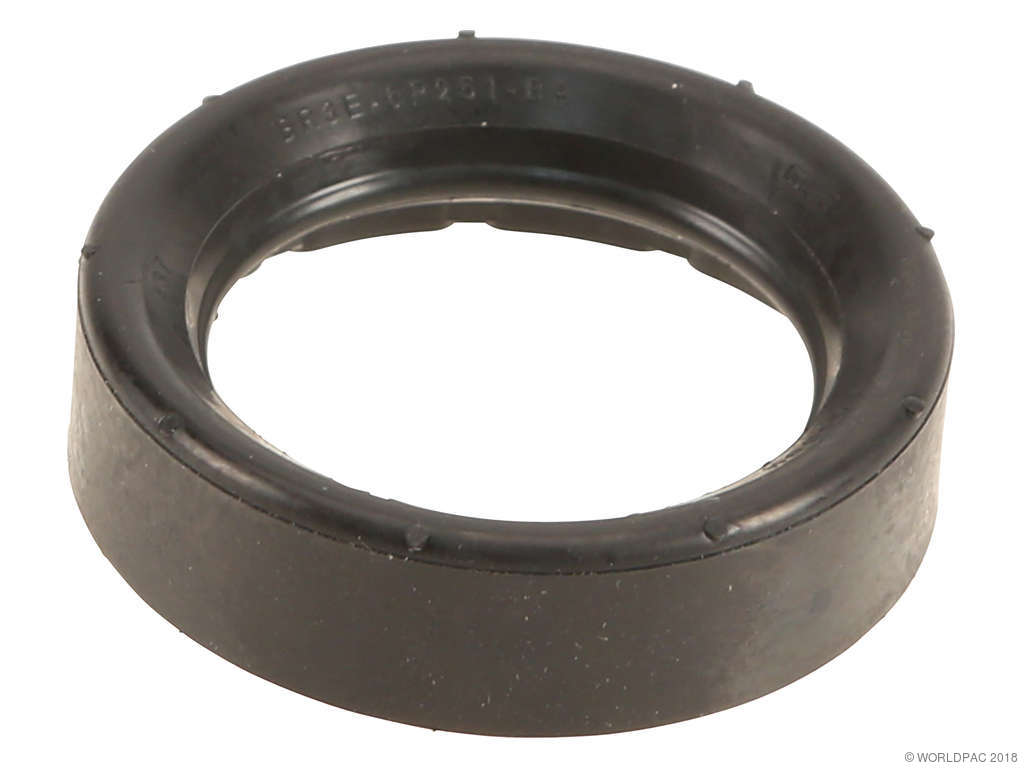
Typical fix: Replace the faulty VCT solenoid. It is highly recommended to replace both solenoids at the same time, along with the valve cover gasket and spark plug tube seals.
Est. part cost: $30-$80 - Stretched Timing Chain or Worn Timing Components 🟡 Medium Probability → Shop Engine Timing Chain Over time, typically over 100,000 miles, the timing chain can stretch, and the plastic guides or hydraulic tensioner can wear out, causing a permanent timing correlation error.
How to confirm: Listen for a distinct rattling or chattering sound from the front (passenger side) of the engine for a few seconds on a cold startup. If both P0016 and P0017 codes are present, a base timing issue is more likely. This is a complex diagnosis best confirmed by a professional who can check physical timing marks.
Typical fix: Replace the timing chain, tensioner, guides, and sprockets. This is a labor-intensive job that requires special timing tools.
Est. part cost: $200-$500
Rare But Worth Checking
- Failing Camshaft Phaser (VCT Actuator): → Shop Engine Camshaft If the oil is clean and a new VCT solenoid doesn't resolve the code, the mechanical phaser gear itself may be stuck, broken, or not returning to its base position. A cold start rattle is also a symptom of a failing phaser.
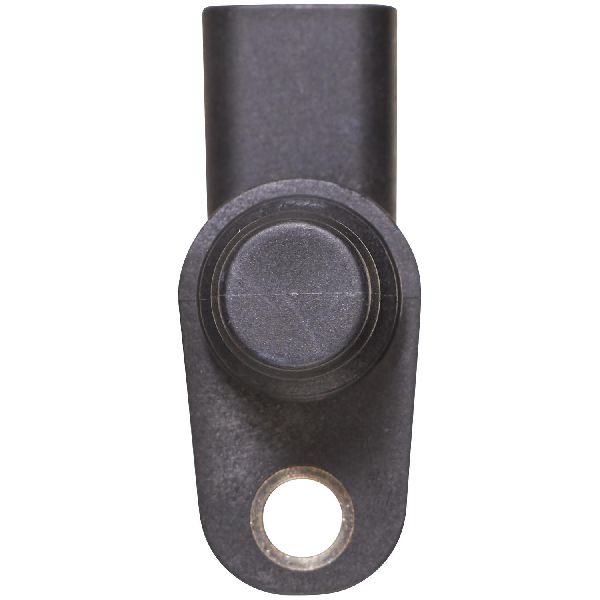
- Faulty Camshaft or Crankshaft Position Sensor: → Shop Engine Crankshaft Position Sensor While these sensors can fail, they are an infrequent cause of a correlation code. They are more likely to cause other codes related to sensor circuit failure (e.g., P0340). Do not replace them unless all other causes have been ruled out.
- Incorrect Timing After a Repair: If the P0016 code appears immediately after a timing chain replacement or other major engine work, it's highly probable that the engine was timed incorrectly. The 2.0L GDI is an interference engine, so incorrect timing can be very dangerous.
Diagnosis Steps
- Check Engine Oil: Verify the oil level is correct and the oil is clean. If low or dirty, perform an oil and filter change with 5W-20 oil and clear the code. This simple step can sometimes resolve the issue.
- Scan for Other Codes: Use an OBD-II scanner to see if other codes, like P0017, are present. Both codes together strongly point towards a timing chain issue.
- Test the VCT Solenoids: The most effective DIY test is to swap the intake and exhaust VCT solenoids. They are located under the valve cover and are identical parts. After swapping them, clear the codes and drive the car. If the trouble code changes to P0017, you have confirmed the solenoid is faulty. A professional scan tool can also be used to perform the VCT solenoid cycling test as described in TSB SSM 48423.
- Listen for Noise: On a cold start, listen for a brief rattling sound from the passenger side of the engine. This is a classic symptom of a stretched timing chain or bad tensioner/phaser.
- Inspect Wiring: Check the wiring and connectors for the VCT solenoids and camshaft sensors for any visible damage or corrosion.
- Professional Diagnosis: If the above steps do not identify the issue, a professional mechanic will be needed to check the physical timing of the engine, test oil pressure, and diagnose a stretched chain or failing phaser. This requires specialized tools.
Parts You'll Likely Need
- Intake/Exhaust Variable Camshaft Timing (VCT) Solenoid
(OEM #CJ5Z-6M280-A)— This is the most common component to fail, typically by sticking due to oil debris, as documented in Ford TSBs. Both intake and exhaust solenoids are the same part.
Trusted brands: Motorcraft, Dorman, Standard Motor Products (SMP)
OEM price range: $50-$80
Aftermarket price range: $30-$60 - Valve Cover Gasket Kit
(OEM #CP9Z-6584-A (example, verify by VIN))— Required when replacing the VCT solenoids, which are located under the valve cover. The kit should include the main gasket and spark plug tube seals.
Trusted brands: Fel-Pro, Mahle, Victor Reinz
OEM price range: $40-$60
Aftermarket price range: $20-$40 - Timing Chain Kit
(OEM #CM5Z-6K255-A (example, verify by VIN))— Needed if diagnosis points to a stretched timing chain or failed tensioner/guides, which is the second most likely mechanical failure.
Trusted brands: Motorcraft, Cloyes
OEM price range: $300-$500
Aftermarket price range: $150-$300
Related Codes That Often Appear With This One
- P0017 — This is the correlation code for the exhaust camshaft. If both P0016 and P0017 appear together, it strongly suggests a base mechanical timing issue (e.g., stretched timing chain) affecting both camshafts.
- P0011 — This code indicates 'Intake Camshaft Position Timing - Over-Advanced'. It is often caused by the same sticking VCT solenoid that triggers P0016, as noted in Ford TSBs like SSM 48423.
- P0014 — This is the 'Exhaust Camshaft Position Timing - Over-Advanced' code. If you swap a bad intake VCT solenoid to the exhaust side for diagnosis, P0016 may be replaced by P0017 and/or P0014.
Technical Service Bulletins (TSBs) & Recalls
- SSM 48423 / SSM 47170 / SSM 54366: Ford acknowledges that various VCT-related DTCs, including P0016, can be caused by small debris causing the VCT solenoid to stick. The TSB advises using a scan tool to cycle the solenoid multiple times to dislodge debris before replacing the part.
Platform-Specific Known Issues
- Owner Experience: P0016 after getting into boost: A Focus ST owner reported getting a recurring P0016 code, along with loud exhaust pops and a feeling of the car falling on its face under boost. This indicates the timing deviation is severe enough to be detected under high engine load.
- Repair Story: P0016 and P0017 after engine swap: An owner who performed an engine swap encountered both P0016 and P0017 codes. The issue was traced back to incorrect installation of the external timing components (crank pulley/trigger wheel) even though the internal chain timing was correct, highlighting the sensitivity of the system.
Mechanic-Grade Diagnostic Values
- VCT Solenoid Internal Resistance — expected: 6.9 - 7.9 Ohms (factory spec), though 7 - 14 Ohms is generally considered acceptable.. Failure: A reading of 0 Ohms (short circuit) or infinite resistance (open circuit) indicates a failed solenoid.
- Engine Oil Pressure (Hot Idle) — expected: Minimum of 15 PSI (103 kPa).. Failure: Pressure below the minimum indicates a base oiling problem (e.g., worn pump, clogged pickup tube) that must be addressed, as it will prevent the VCT system from functioning correctly.
- Scan Tool Live Data: VCT Advance Error (PID: VCTADVERR or VCT_INT_ERR) — expected: Near 0 degrees at idle. A variance of +/- 5 degrees for a short time is acceptable.. Failure: A consistent, non-zero reading at idle (e.g., 7-12 degrees) strongly suggests a base mechanical timing issue like a stretched chain, as the PCM cannot command the phaser back to its target position.
- VCT Solenoid Connector Voltage (Key On, Engine Off) — expected: Pin 1 (Power Supply, often Green/Violet wire) should have 12V (battery voltage). Pin 2 (Control, often Black/Yellow wire) is the ground-side control from the PCM.. Failure: No voltage on Pin 1 indicates a wiring or fuse issue. Inability of the PCM to command ground on Pin 2 during a bidirectional test points to a wiring or PCM fault.
Scan Tool Commands That Help
- Ford IDS / FORScan: VCT Solenoid Pinpoint Test (e.g., HK11, HK12) — As recommended by Ford TSBs (SSM 48423/50067), this command cycles the VCT solenoid 10-15 times with the engine running. This can dislodge small debris, potentially fixing the issue without part replacement and confirming if the solenoid is responsive.
- Ford IDS / FORScan: KAM (Keep Alive Memory) Reset — After replacing a VCT solenoid, timing components, or sensors, a KAM reset should be performed. This clears the PCM's learned adaptive values and forces it to relearn the new component's characteristics, which can be crucial for resolving the code permanently.
Wiring & Ground Locations
- Powertrain Control Module (PCM) — Located in the driver's side front wheel well, behind the fender liner.. The PCM is the source of the control signal for the VCT solenoids. If wiring is suspected, continuity checks must be run from the solenoid connector back to the main PCM connector (e.g., C175B).
- G104 (Ground Point) — On the left front of the motor compartment.. This is a major engine compartment ground. While a failure here would likely cause many other issues, a poor or corroded engine ground can lead to erratic sensor readings and incorrect behavior from PCM-controlled devices like VCT solenoids. Ensuring it is clean and tight is a fundamental step in any electrical diagnosis.
- Main Chassis Ground — On the driver's side strut tower, under the airbox, adjacent to the battery.. This is the primary ground point for the battery negative cable. Corrosion here can cause a host of electrical gremlins, including unstable voltages for sensors and the PCM, which could theoretically contribute to correlation faults.
Real Owner Repair Stories
- YouTube video by 'Alexander Furia' (Ford Focus with 1.6L EcoBoost (demonstrates a common Ford VCT issue)) — Persistent P0016 code even after verifying mechanical timing was correct.
❌ Tried (didn't work) Checking and correcting mechanical timing.
✅ What actually fixed it The camshaft position sensors were found to be leaking oil internally, contaminating the electrical connector and disrupting the signal. Replacing both camshaft position sensors and cleaning the connectors resolved the P0016 code. - Ford Focus Owners Club forum user 'aliislekzade' (2006 Ford Focus 1.6 Ti-VCT) — Recurring P0016 code, especially after driving at higher RPMs.
❌ Tried (didn't work) Clearing the code., Replacing camshaft position sensors (light went off temporarily but returned).
✅ What actually fixed it The issue was ultimately resolved by replacing a worn timing belt. After the timing belt change, the engine noise was gone and the P0016 code did not return.
OEM Part Supersession History
CJ5Z-6M280-A→N/A— This part number appears to be stable and is the current OEM part for the 2012-2018 2.0L GDI Focus.
Heads up: Be aware that similar Ford engines (like the 1.6L EcoBoost) may use a different part number (e.g., CM5Z-6M280-C). Always verify the part number for the 2.0L GDI specifically.
Diagnostic Flowchart
Other Known Issues on This Vehicle
Issues unrelated to this code that are worth knowing about as an owner of this generation:
- PowerShift (DPS6) Automatic Transmission Failure 🔴 High — Extremely common on 2012-2016 models with automatic transmission. Symptoms include shuddering, hesitation, jerking, and complete failure. (Ref: Multiple lawsuits, recalls, and extended warranties (e.g., 14M01, 14M02) were issued. A major class-action settlement was reached.)
- Faulty Canister Purge Valve (CPV) 🟠 Medium — Common across 2012-2018 models with the 2.0L GDI engine. Can cause stalling (especially after refueling), rough idle, hard starting, and an inaccurate fuel gauge. (Ref: Recalls 18V735000 (18S32) and 19V515000 (19S22) were issued to reprogram the PCM and, if necessary, replace the valve and fuel tank.)
- Collapsing/Failed Passenger-Side Engine Mount 🟠 Medium — Common on Mk3 Focus. The hydraulic mount fails, causing excessive engine vibration felt in the cabin and steering wheel, especially at idle.
- Electronic Power Steering Failure 🔴 High — Particularly noted on the 2012 model year, but can affect others. Can result in a sudden loss of power steering assist, making the vehicle difficult to steer. (Ref: NHTSA investigation and various owner complaints, though no single recall covered all instances.)
- Faulty Door Latch 🔴 High — Widespread issue leading to doors not latching correctly or potentially flying open while driving. (Ref: Subject to multiple recalls (e.g., 15S16, 16S30) covering millions of Ford vehicles, including the Focus.)
Used vs. New Parts: Buying Guide for This Vehicle
When a used part is the smart pick: For this specific repair, using used parts is generally not recommended for the key components. The failure items (solenoids, sensors, timing components) are wear-and-tear parts. A used solenoid or sensor carries an unknown history and a high risk of premature failure, offering poor value for the labor involved in replacement.
Donor-vehicle mileage cap: roughly under 80000 miles for the part to have meaningful remaining life.
What to inspect on the donor part:
- For hard parts like a valve cover, check for cracks, warping, or stripped bolt holes.
- Avoid any electronic component (sensor, solenoid) that shows signs of oil contamination, corrosion on the pins, or a brittle connector.
OEM-only on this vehicle (don't cheap out):
- While not strictly 'OEM-only', timing chain kits are a repair where the quality of OEM (Motorcraft) parts is trusted. Given the labor-intensive nature of the job, using a high-quality kit is critical to avoid a repeat failure.
Aftermarket brands forum-validated for this vehicle:
- VCT Solenoids: Dorman, Standard Motor Products (SMP), NGK
- Valve Cover Gaskets: Fel-Pro, Mahle
- Timing Chain Kits: Cloyes
Brands owners have reported issues with on this vehicle:
- Unbranded, no-name electronic sensors and solenoids from online marketplaces are frequently reported to be dead-on-arrival or have incorrect operating parameters, causing the code to persist.
Real Owner Stories
Aggregated from forums and TSBs cited above. Mileages and costs reflect what owners reported in those sources.
2014 Ford Focus ST 2.0L EcoBoost
Symptoms: Recurring P0016 code, loud exhaust pops, and the car 'falling on its face' under boost/high engine load.
What fixed it: The timing deviation was severe enough to be detected under boost, requiring diagnosis of the VCT system/timing components.
Source hint: reddit.com/r/FocusST thread titled 'At a loss here having some issues when i get into boost'
2015 Ford Focus ST 2.0L EcoBoost
Symptoms: Both P0016 and P0017 codes appeared immediately after an engine swap.
What fixed it: Correction of the external timing components (crank pulley/trigger wheel) which were installed incorrectly despite the internal chain timing being correct.
Source hint: reddit.com/r/FocusST thread titled 'P0016 and P0017'
2013 Ford Focus 2.0L GDI — ~115000 miles
Symptoms: Rattling/chattering noise from the passenger side of the engine for a few seconds during cold startups.
What fixed it: Replacement of the timing chain, tensioner, and guides due to component wear over 100,000 miles.
Source hint: Article context regarding 'Stretched Timing Chain or Worn Timing Components' and forum discussions on focusfanatics.com
Related OBD-II Codes
Frequently Asked Questions
My 2012 Focus is throwing P0016; does Ford have a TSB for this?
Can I swap the solenoids on my 2.0L GDI to see if the intake one is bad?
What specific oil should I use in my 2012-2018 Focus to prevent VCT issues?
I have P0016 and a rattling sound on cold starts. Is this just a sensor?
Is the P0016 code related to the PowerShift transmission recalls on my Focus?
Where are the VCT solenoids located on the 2.0L GDI engine?
Helpful Videos
We Have This Part in Stock


The information in this article is provided for general reference and educational purposes only. Vehicle specifications, procedures, and part compatibility can vary by production date, trim level, and region. Always consult your vehicle's factory service manual and verify part numbers before purchasing or performing repairs. Safety-critical components such as airbags, seat belts, and braking systems should be installed by a qualified professional.
- Ford Focus:
- 🧭 Diagnostic Flowchart
- 🎬 Helpful Videos
- 🛍️ Shop This Part
- What's Unique About the 2012-2018 Ford Focus
- Symptoms You May Notice
- Most Likely Causes
- Rare But Worth Checking
- Diagnosis Steps
- Parts You'll Likely Need
- Related Codes That Often Appear With This One
- Technical Service Bulletins (TSBs) & Recalls
- Platform-Specific Known Issues
- Mechanic-Grade Diagnostic Values
- Scan Tool Commands That Help
- Wiring & Ground Locations
- Real Owner Repair Stories
- OEM Part Supersession History
- Other Known Issues on This Vehicle
- Used vs. New Parts: Buying Guide for This Vehicle
- Real Owner Stories
- 2014 Ford Focus ST 2.0L EcoBoost
- 2015 Ford Focus ST 2.0L EcoBoost
- 2013 Ford Focus 2.0L GDI — ~115000 miles
- Related OBD-II Codes
- Frequently Asked Questions
- 🎟️ Get 5% Off