

P0016 on 2019-2021 Ford Ranger 2.3L: Crank/Cam Correlation Causes and Fixes
P0016 on a 2019-2021 Ford Ranger indicates the crankshaft and intake camshaft are out of sync. The most common causes are low/dirty oil, a failing VCT solenoid, or a bad camshaft/crankshaft sensor. In more serious cases, it can be a stretched timing chain, which is a known issue on this engine. Start by checking oil; then suspect the VCT solenoids before assuming a major mechanical failure.
- P0016 means the engine's computer has detected a timing mismatch between the crankshaft and the intake camshaft.
- Always check your engine oil level and condition first; low or dirty oil is a simple but common cause.
- Likely culprits are faulty sensors (cam or crank) or the VCT solenoid, which are relatively inexpensive to replace.
- A rattling noise from the engine could indicate a more serious timing chain problem, which requires immediate professional attention.
- Do not ignore this code, as it can lead to stalling, poor performance, and potentially severe engine damage if left unaddressed.
What's Unique About the 2019-2021 Ford RANGER
The 2.3L EcoBoost engine in the Ranger, also used in the Mustang and Bronco, is a modern, direct-injection turbocharged engine that relies on precise timing for performance and efficiency. While generally reliable, these engines can be sensitive to oil quality and level, which directly impacts the Variable Camshaft Timing (VCT) system. A cold start rattle is a key symptom that often precedes a P0016 code, pointing towards wear in the VCT phasers or timing chain tensioners losing oil pressure. Ford has issued multiple Technical Service Bulletins (like SSM 54366) acknowledging timing correlation codes on these engines, pointing towards a known pattern of failure. The Ranger-specific version of the 2.3L EcoBoost features a forged steel crankshaft and connecting rods to handle truck-duty torque demands.
Diagnostic Flowchart
Tap your situation to follow the diagnostic path that matches what you're seeing on this vehicle.
Symptoms You May Notice
- Check Engine Light is on
- Rough or erratic idle, sometimes hunting for a stable RPM or stalling.
- Engine is hard to start or won't start
- Reduced engine power and poor acceleration, sometimes described as 'limp mode'.
- Stalling, especially at low RPMs
- Decreased fuel economy
- A distinct rattling noise from the front of the engine, especially on a cold startup, that may last for a few seconds. This is a strong indicator of a timing chain tensioner or VCT phaser issue.
- Replacing only one sensor (cam or crank) without testing both, as their signals are interdependent.
- Replacing sensors when the root cause is a mechanical timing issue like a stretched chain or faulty VCT solenoid. The sensor is often doing its job correctly by reporting the timing error.
- Assuming the timing chain is bad before checking simpler causes like oil level/condition or a faulty VCT solenoid, especially if no startup rattle is present.
Most Likely Causes
- Low or Dirty Engine Oil 🔴 High Probability The VCT system uses pressurized engine oil to adjust cam timing. Low, dirty, or incorrect viscosity oil can impede the function of the VCT solenoids and phasers, causing them to stick or respond slowly.
How to confirm: Check the oil level on the dipstick and inspect its condition. If it's low, black, or sludgy, this is a likely contributor. This should always be the first step. 🎬 Watch: Four DIY methods to fix a P0016 engine code.
Typical fix: Perform an oil and filter change using the correct OEM-specified full synthetic oil (Motorcraft) and a quality filter (e.g., Motorcraft FL-910S).
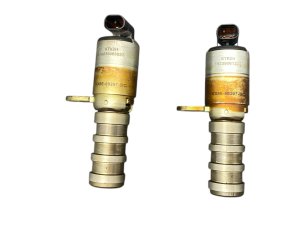
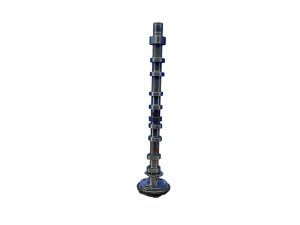
Est. part cost: $50-$90 - Faulty Variable Camshaft Timing (VCT) Solenoid 🟡 Medium Probability → Shop Engine Camshaft The VCT solenoid (also called an oil control valve) can get clogged with sludge or fail electrically, preventing it from properly controlling oil flow to the cam phaser. Forum wisdom suggests replacing both intake and exhaust solenoids for Bank 1 at the same time for preventative maintenance.
How to confirm: A mechanic can command the solenoid on and off with a scan tool to check for a response in cam angle. It can also be removed, inspected for clogged screens, and tested for resistance (typically 7-15 ohms).
Typical fix: Replace the VCT solenoid(s) for Bank 1. Given the labor, replacing both intake and exhaust is recommended. 🎬 See this walkthrough for replacing the 2.3L EcoBoost VVT solenoids.
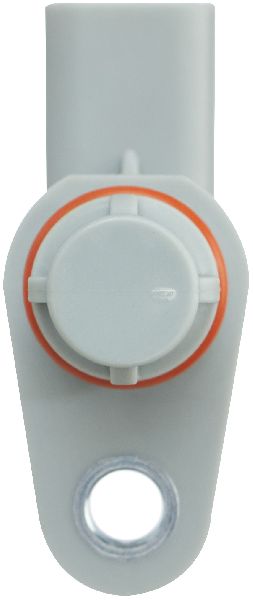
Est. part cost: $40-$80 per solenoid - Faulty Camshaft Position (CMP) Sensor 🟡 Medium Probability → Shop Engine Camshaft Position Sensor
How to confirm: Test the sensor's output with a multimeter or oscilloscope. Check the wiring and connector for damage, corrosion, or oil contamination from a leaking valve cover gasket.
Typical fix: Replace the Bank 1 intake camshaft position sensor.
Est. part cost: $30-$60 - Stretched Timing Chain or Failed Tensioner ⚪ Low Probability → Shop Engine Timing Chain This is a known, albeit less common, failure on the 2.3L EcoBoost. The primary timing chain can stretch over time, or the hydraulic tensioner can fail or bleed down, causing slack in the chain. This is often the root cause if a startup rattle is present.
How to confirm: This is a complex diagnosis. It often starts with hearing a rattling noise on startup. Confirmation requires significant labor to remove the valve cover and/or timing cover to physically inspect the chain, guides, and tensioner for wear, slack, or damage. A mechanic can also use an oscilloscope to compare cam/crank signals against a known-good waveform.
Typical fix: Replace the timing chain, tensioners, guides, and sometimes the VCT phasers as a complete kit. This is a labor-intensive job.
Est. part cost: $200-$500 for a full kit - Faulty Crankshaft Position (CKP) Sensor ⚪ Low Probability → Shop Engine Crankshaft Position Sensor
How to confirm: Test the sensor's signal with an oscilloscope. Check wiring and connector for damage. A failing CKP sensor often causes stalling or no-start conditions and is less likely to fail than the CMP sensor.
Typical fix: Replace the crankshaft position sensor.
Est. part cost: $40-$70
Rare But Worth Checking
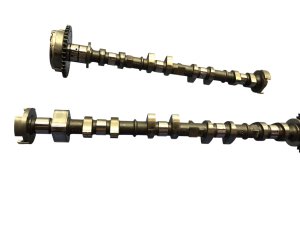
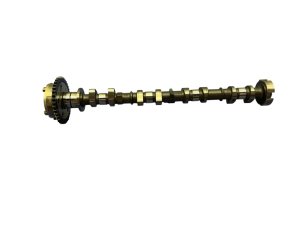
- Damaged Camshaft Phaser/Actuator: → Shop Engine Camshaft The mechanical phaser unit on the end of the camshaft can fail internally, get stuck, or have a broken locking pin. This prevents it from adjusting timing correctly even if the VCT solenoid is working. It often produces a rattling noise and is typically replaced during a full timing chain job.
- Slipped or Damaged Reluctor Ring: The tone rings (reluctor rings) on the crankshaft or camshaft, which the sensors read, can become damaged or slip out of position, causing incorrect sensor readings. This is rare and requires significant disassembly to inspect. On some EcoBoost platforms, an improperly serviced non-keyed crankshaft pulley can also cause this issue.
Diagnosis Steps
- Check engine oil level and condition. An oil and filter change with the correct spec oil is a cheap and easy first step.
- Use an OBD-II scanner to confirm P0016 and check for any other related codes. 🎬 Watch: A deep dive case study on diagnosing P0016 codes. Note if codes for other sensors or the exhaust cam (P0017) are present.
- Listen carefully for a rattling noise from the front of the engine during a cold start. The presence of a rattle strongly suggests a mechanical timing component issue (tensioner, phaser, chain).
- Visually inspect the wiring and connectors for the camshaft position sensor, crankshaft position sensor, and VCT solenoids for any signs of damage, corrosion, or loose connections.
- Using a capable scan tool, monitor live data for Camshaft Timing Advance for Bank 1. Command the VCT solenoid on and off (usually an actuator test function) to see if the camshaft timing angle changes as expected.
- If the VCT system is unresponsive, test the VCT solenoid's resistance with a multimeter (should be around 7-15 ohms) and check for power (battery voltage with key on) and ground at its connector.
- If the solenoids and wiring test good, test the camshaft and crankshaft position sensors individually using an oscilloscope to verify a clean square wave pattern.
- If all sensors and solenoids test good, the cause is almost certainly a mechanical timing issue. This requires professional service for physical inspection of the timing chain, guides, and tensioners.
Parts You'll Likely Need
- Variable Camshaft Timing (VCT) Solenoid
(OEM #HL3Z-6M280-A)— This solenoid controls oil flow to the cam phaser and is a very common failure point, prone to clogging or electrical failure, leading to incorrect cam timing.
Trusted brands: Motorcraft, Dorman
OEM price range: $50-$75
Aftermarket price range: $30-$50 - Camshaft Position Sensor (Bank 1 Intake)
(OEM #DU-102)— A common electrical failure point that directly provides the signal the PCM uses to set this code. Can fail intermittently.
Trusted brands: Motorcraft, Standard Motor Products (SMP), NTK/NGK
OEM price range: $30-$60
Aftermarket price range: $20-$45
Related Codes That Often Appear With This One
- P0011 — Intake Camshaft Position Timing - Over-Advanced (Bank 1). This code is closely related and can be caused by the same VCT system faults, often a stuck VCT solenoid.
- P0340 — Camshaft Position Sensor 'A' Circuit (Bank 1). This points more directly to a fault with the sensor itself or its circuit, which can be a root cause of P0016.
- P0335 — Crankshaft Position Sensor 'A' Circuit. This points to a fault with the crankshaft sensor or its circuit, which would also cause a correlation error with the camshaft.
- P0017 — Crankshaft Position - Camshaft Position Correlation (Bank 1, Sensor B). This is the same error but for the exhaust camshaft. It's common to see both P0016 and P0017 together if the issue is oil-related or a stretched timing chain affecting both cams.
Technical Service Bulletins (TSBs) & Recalls
- While this TSB is often associated with coolant intrusion on 2.0L engines, its mention in the context of rough running and major engine work is relevant. More importantly, it has been cited in forums in discussions that lead to timing chain issues on the 2.3L as well, indicating a pattern of known engine issues from Ford.
- Ford acknowledges that various 2015-2021 vehicles may exhibit an illuminated MIL with a wide range of timing-related DTCs, including P0016. It directs technicians to updated diagnostic procedures in the workshop manual rather than a specific part replacement.
Platform-Specific Known Issues
- Ford has issued Technical Service Bulletin (TSB) SSM 54366 (superseding SSM 49821) which lists P0016 among a group of camshaft-related DTCs affecting various 2015-2021 Ford vehicles, indicating a recognized pattern of faults in the VCT system.
Mechanic-Grade Diagnostic Values
- VCT Solenoid internal resistance — expected: 7.0 - 15.0 Ohms. Failure: A reading of 0 Ohms (short circuit), infinite resistance (open circuit), or outside the specified range.
- CMP Sensor power supply wire voltage (Key On, Engine Off) — expected: Approximately 5.0 Volts DC. Failure: No voltage or significantly lower/higher voltage, indicating a wiring or PCM issue.
- CMP Sensor signal wire voltage (Key On, Engine Off) — expected: Approximately 5.0 Volts DC (or slightly less). Failure: Voltage should drop to near 0V when a metallic object passes the sensor tip; a static or non-responsive voltage indicates a failed sensor.
- Engine Oil Pressure at idle (engine at operating temp) — expected: Minimum 15 PSI. Failure: Pressure below 15 PSI can cause VCT system malfunctions.
Hidden / Shadow Codes Worth Checking
- Mode 6, Test ID $81: Monitors VCT Position Error for Bank 1. A failing value in this onboard test can indicate a developing problem with the VCT system before a full-blown DTC like P0016 is set. (see via An advanced OBD-II scanner or software like FORScan that can display Mode $06 test results.)
Scan Tool Commands That Help
- Ford IDS (Integrated Diagnostic System) or equivalent (FORScan): VCT Solenoid On/Off Actuator Test — Used to manually command the VCT solenoid to activate and deactivate while monitoring engine RPM or cam angle PIDs. A lack of change in engine idle or cam angle indicates a stuck/failed solenoid or an oil flow problem.
- Ford IDS (or equivalent): Monitor VCT_ADV_ERR PID (VCT Advance Error) — This PID shows the difference between the desired and actual camshaft angle in real-time. A consistently high error value confirms the timing discrepancy that triggers P0016 and helps differentiate a mechanical issue from a sensor glitch.
Wiring & Ground Locations
- CMP Sensor Connector — On the top of the valve cover, near the front of the engine for the intake camshaft ('Sensor A').. This is the primary connector to inspect for damage, corrosion, or oil contamination which can disrupt the signal the PCM needs to determine cam position.
- Main Engine Ground — Typically a heavy gauge wire from the engine block to the chassis/frame rail. Specific locations vary but are critical for all engine sensors.. A poor engine ground can introduce electrical noise or incorrect reference voltages for both the camshaft and crankshaft sensors, leading to false correlation codes.
- BCM (Body Control Module) Ground — Inside the cabin, often near the driver or passenger kick panel.. While less direct, the BCM integrates with the PCM. A forum post noted that the BCM can be sensitive to wiring changes, indicating the complexity of the vehicle's electrical system.
Real Owner Repair Stories
- Reddit user post on r/RangerNext (2020 Ford Ranger with 76,000 km) — P0016 code, very rough running, engine would hunt for RPM at idle (revving to 2k then dying down), and eventually would stall or not start.
❌ Tried (didn't work) The user was contemplating replacing the camshaft and crankshaft sensors first to avoid a costly dealer visit.
✅ What actually fixed it The user did not post a final resolution, but the symptoms described (sudden onset, severe rough running, stalling) are highly indicative of a jumped timing tooth or a complete failure of a timing chain tensioner, rather than just a faulty sensor.
OEM Part Supersession History
Unknown→HL3Z-6M280-A— This is the current OEM part number for the VCT solenoid fitting a wide range of Ford engines, including the 2.3L EcoBoost.
Heads up: While this part fits many engines (2.0L, 3.5L, 5.0L), always verify fitment for the specific vehicle, as intake and exhaust solenoids can sometimes differ.Unknown→DU-102— This is the current Motorcraft part number for the camshaft position sensor.
Model Year Variations Within This Range
- 2019-2021: The core 2.3L EcoBoost engine and its timing components remained fundamentally the same during this period. However, Ford did issue TSB 23-2148 for some 2019-2023 Rangers concerning harsh/delayed shifts in the 10R80 transmission, which is unrelated to P0016 but indicates ongoing software updates to the powertrain.
Helpful Videos
![How to Fix P0016 Engine Code in 6 Minutes [4 DIY Methods / Only $6.94]](https://img.youtube.com/vi/extiOvtV8_Y/mqdefault.jpg)
Used OEM Parts in Stock
New Aftermarket Parts Available


The information in this article is provided for general reference and educational purposes only. Vehicle specifications, procedures, and part compatibility can vary by production date, trim level, and region. Always consult your vehicle's factory service manual and verify part numbers before purchasing or performing repairs. Safety-critical components such as airbags, seat belts, and braking systems should be installed by a qualified professional.
- Ford RANGER:
- 🧭 Diagnostic Flowchart
- 🎬 Helpful Videos
- 🛍️ Shop This Part
- What's Unique About the 2019-2021 Ford RANGER
- Symptoms You May Notice
- Most Likely Causes
- Rare But Worth Checking
- Diagnosis Steps
- Parts You'll Likely Need
- Related Codes That Often Appear With This One
- Technical Service Bulletins (TSBs) & Recalls
- Platform-Specific Known Issues
- Mechanic-Grade Diagnostic Values
- Hidden / Shadow Codes Worth Checking
- Scan Tool Commands That Help
- Wiring & Ground Locations
- Real Owner Repair Stories
- OEM Part Supersession History
- Model Year Variations Within This Range
- 🎟️ Get 5% Off