

P0016 on 2015-2019 Ford Taurus: Crank/Cam Correlation Causes and Fixes
On a 2015-2019 Ford Taurus, code P0016 is most often caused by a stretched timing chain, a known issue on the 3.5L engine family. A critical contributing factor is the internally-mounted water pump, which can leak coolant into the oil, accelerating chain wear. Other common causes include low/dirty oil or a faulty Variable Camshaft Timing (VCT) solenoid. A timing chain and water pump replacement can cost over $2,500, while a VCT solenoid is much less.
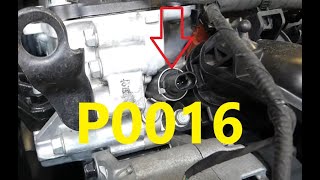
- P0016 on a 2015-2019 Taurus indicates a timing mismatch between the Bank 1 intake cam and the crankshaft.
- Always check your engine oil first. Low or dirty oil is a simple fix that can cause this code.
- The two most likely culprits are a sticking VCT solenoid (a moderate repair) or a stretched timing chain (a major, expensive repair).
- A rattling noise from the engine during a cold start is a strong sign that the timing chain is the problem.
- Due to the high probability of a timing chain issue, professional diagnosis is recommended to avoid wasting money on replacing sensors unnecessarily.
What's Unique About the 2015-2019 Ford TAURUS
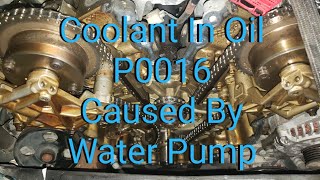
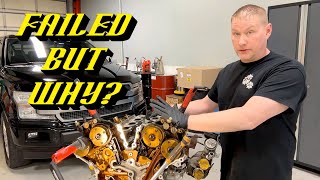
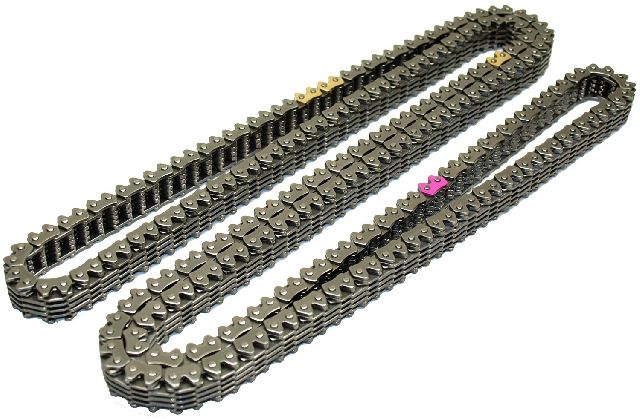
For this generation of Ford Taurus with the 3.5L V6 engine (both naturally aspirated and EcoBoost), the P0016 code is very frequently a sign of a stretched timing chain. The primary chain is very long, and as each link wears, the total elongation becomes significant enough to alter timing. A major design characteristic of this engine family is the internal, timing-chain-driven water pump. When the water pump's seals fail, it leaks coolant directly into the engine oil. This contaminated oil loses its lubricating properties, drastically accelerating the wear of the timing chain, guides, and tensioners, leading directly to the P0016 code. For this reason, any P0016 diagnosis must include checking for coolant in the oil 🎬 Watch: How to diagnose a failing internal water pump., and any timing chain replacement should always include a new water pump. Additionally, Ford has issued Technical Service Bulletins (TSBs) like SSM 47170 and SSM 48423, indicating that debris in the oil can cause the VCT solenoids to stick, which can also trigger this code.
Diagnostic Flowchart
Tap your situation to follow the diagnostic path that matches what you're seeing on this vehicle.
Symptoms You May Notice
- Check Engine Light is on
- Rough or erratic idle
- Engine hesitates or stalls, especially at low speeds
- Reduced engine power and acceleration, sometimes described as 'gutless'.
- Decreased fuel economy
- Engine cranks but may be hard to start
- A distinct rattling or ticking noise from the engine on cold starts that lasts for a second or two, indicating a loose timing chain or failing tensioner.
- Replacing only the camshaft and crankshaft position sensors when the root cause is a mechanical timing issue (stretched chain) or a hydraulic problem (clogged VCT solenoid). Many owners report this does not fix the problem.
Most Likely Causes
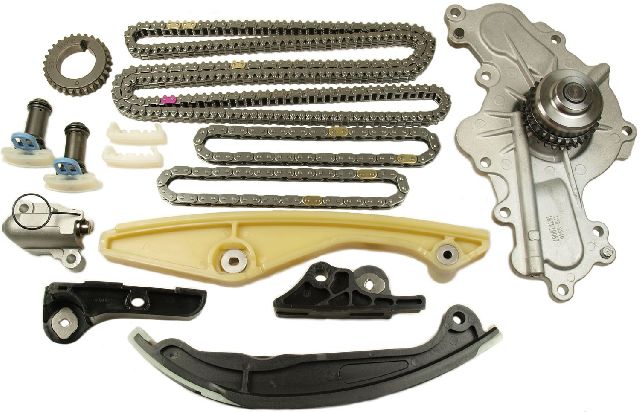
- Stretched Timing Chain (often caused by a failing water pump) 🔴 High Probability → Shop Engine Timing Chain The 3.5L engine's internal water pump is a known failure point. When its seal fails, it leaks coolant into the oil pan, contaminating the oil and destroying its lubricating ability. This leads to rapid wear and stretching of the very long primary timing chain.
How to confirm: Check the engine oil for a milky, 'milkshake' appearance, which indicates coolant contamination. Check for a dropping coolant level with no external leaks. A mechanic can measure chain slack, but this requires engine disassembly. A startup rattle is a strong audible clue.
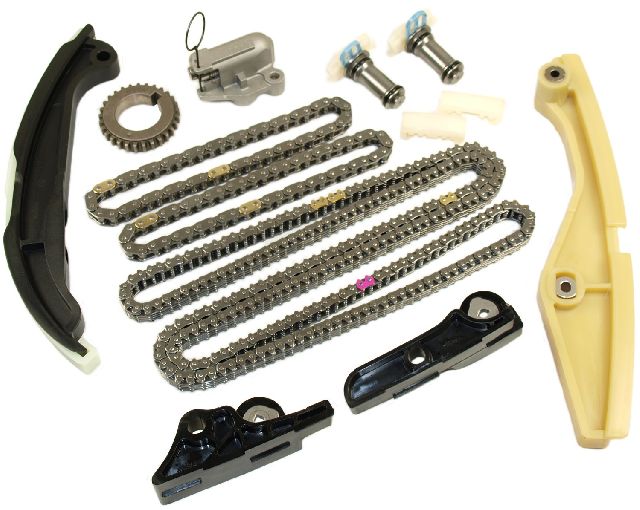
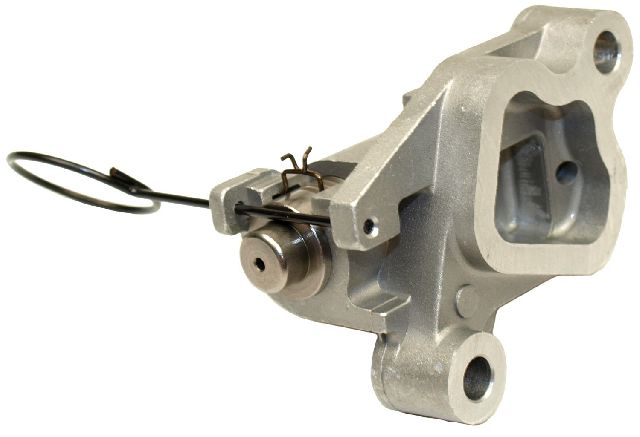
Typical fix: Replace the primary timing chain, all guides, and tensioners. CRITICAL: The water pump must be replaced at the same time to prevent a repeat failure. This is considered a single, comprehensive repair.
Est. part cost: $400-$600 for a complete kit including water pump. - Failed Variable Camshaft Timing (VCT) Solenoid 🟡 Medium Probability → Shop Engine Camshaft Ford TSBs #SSM 47170 and #SSM 48423 specifically mention that small debris in the oil can cause the VCT solenoid to stick, triggering this code. This is often a symptom of poor oil quality or extended oil change intervals.
How to confirm: A diagnostic scan tool can command the solenoid to actuate. A common DIY method is to swap the Bank 1 intake solenoid with the Bank 2 intake solenoid. If the code changes to P0018 (Bank 2 correlation error), the solenoid is confirmed faulty. The solenoids are located under the valve covers.
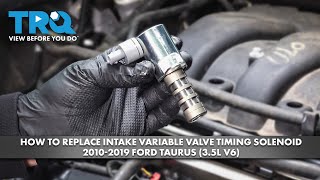
Typical fix: Replace the faulty VCT solenoid. It is recommended to replace all four VCT solenoids (Intake/Exhaust for both banks) while the valve covers are off.
Est. part cost: $30-$90 per solenoid. - Low or Dirty Engine Oil 🟡 Medium Probability The VCT system is entirely dependent on clean oil at the correct pressure. Old, sludgy, or incorrect viscosity oil can clog the small passages in the VCT solenoids and phasers, leading to timing correlation errors.
How to confirm: Check the oil level on the dipstick and inspect its condition. If it's low or appears dark and sludgy, this is a likely contributor.
Typical fix: Perform an engine oil and filter change using the manufacturer-specified grade (typically 5W-20 or 5W-30 for EcoBoost, check owner's manual) and a high-quality filter like Motorcraft.
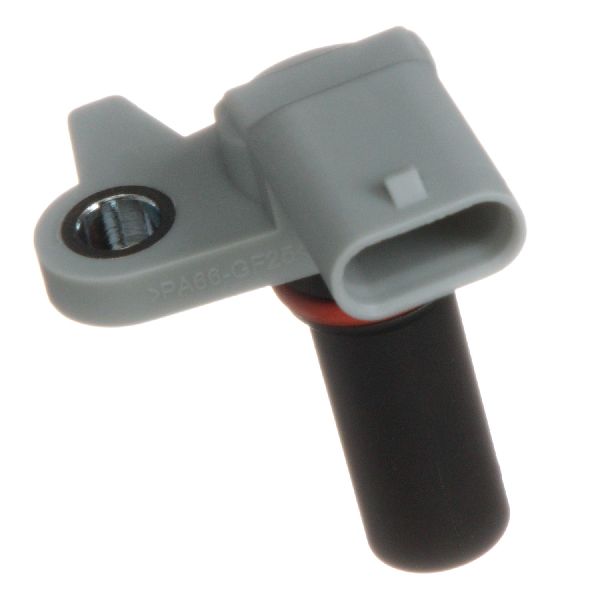
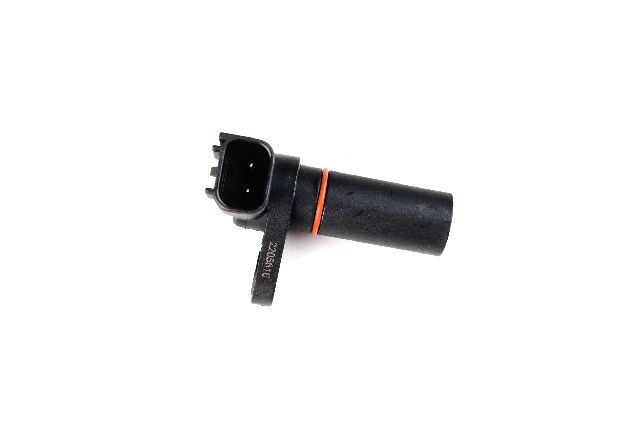
Est. part cost: $40-$80 - Failed Camshaft Position Sensor (Bank 1 Intake) ⚪ Low Probability → Shop Engine Camshaft Position Sensor
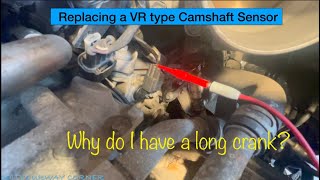
How to confirm: The sensor's output can be tested with a multimeter or oscilloscope. However, owners on forums frequently report that replacing this sensor does not fix the P0016 code, as the root cause is usually mechanical.
Typical fix: Replace the Bank 1 intake camshaft position sensor. This is often done as an inexpensive first step but rarely solves the underlying issue.
Est. part cost: $25-$50
Rare But Worth Checking
- Damaged Camshaft Phaser: → Shop Engine Camshaft The phaser is the gear on the end of the camshaft that actually adjusts the timing. It can fail mechanically or get clogged with debris, but this is less common than a solenoid failure or stretched chain. A dealer quote for a phaser job can be very high.
- Failed Crankshaft Position Sensor: → Shop Engine Crankshaft Position Sensor While possible, it's less likely to fail than the camshaft sensor for this specific code and is often misdiagnosed.
- Wiring or Connector Issue: A damaged wire or loose connection to the camshaft sensor or VCT solenoid can mimic a component failure. This should be checked before major mechanical repairs.
Diagnosis Steps
- Check the engine oil level and condition. Look for a milky appearance indicating coolant contamination from a failed water pump. If oil is low, dirty, or contaminated, perform an oil and filter change and see if the code returns.
- Use an OBD-II scanner to check for any other related trouble codes, such as P0018, P0017, or VCT performance codes.
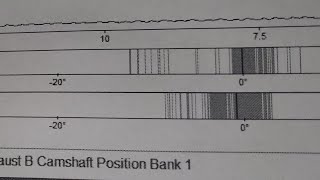
- With a capable scan tool (like FORScan), monitor the VCT_INT_ACT1 PID (may also be labeled VCT_INT_DIF1). A reading of +6 degrees or greater at idle strongly suggests a stretched timing chain, as per Ford's diagnostic procedures in TSB 17-0026.
- Listen for a brief (1-2 second) rattle from the front of the engine on a cold startup. This is a classic sign of a worn timing chain tensioner and guides.
- Perform a VCT solenoid test. Swap the Bank 1 and Bank 2 intake VCT solenoids (requires removing the valve covers). Clear the codes and run the engine. If the code returns as P0018, the solenoid you moved is faulty.
- If sensors, solenoids, and wiring are good, and especially if there is evidence of coolant in the oil or a startup rattle, the root cause is almost certainly a failed water pump and stretched timing chain. This requires professional service.
Parts You'll Likely Need
- Timing Chain and Water Pump Kit
(OEM #BL3Z-6268-A (kit reference))— A stretched timing chain, often caused by a failed internal water pump, is the most probable cause for P0016 on this engine. A complete kit is required.
Trusted brands: Motorcraft, Cloyes
OEM price range: $350-$500
Aftermarket price range: $200-$350 - Variable Camshaft Timing (VCT) Solenoid
(OEM #AT4Z-6M280-B (Bank 1 Intake))— These solenoids can stick due to oil debris, as noted in Ford TSBs, causing timing correlation faults. The -A part number was superseded by -B.
Trusted brands: Motorcraft, Dorman
OEM price range: $50-$80
Aftermarket price range: $30-$60
Related Codes That Often Appear With This One
- P0018 — This is the same correlation error but for Bank 2. Seeing both P0016 and P0018 together strongly points towards a common cause affecting the entire engine, such as a stretched primary timing chain, a failed water pump contaminating the oil, or systemic oil pressure issues.
- P0017 — This is a correlation error for the Bank 1 Exhaust camshaft. If seen with P0016, it points to a more significant timing issue on Bank 1, such as a jumped timing chain or failed phasers on that bank.
- P0011 — This code indicates 'Bank 1 Camshaft Position - Timing Over-Advanced or System Performance'. It is often seen with P0016 as it relates to the same VCT system on the same bank and can be caused by a sticking VCT solenoid or phaser.
Technical Service Bulletins (TSBs) & Recalls
- SSM 54366: Notes that P0016 is one of several VCT-related DTCs and refers technicians to a specific diagnostic test (Pinpoint Test HK).
- SSM 47170: Suggests that small debris causing the VCT solenoid to stick may be the cause for P0016 and other codes. Recommends cycling the solenoid via scan tool before replacement.
- SSM 48423: Similar to SSM 47170, this TSB covers 2015-2020 vehicles and points to sticking VCT solenoids from oil debris as a potential cause for a list of VCT codes including P0016.
- TSB 16-0093: For some 2016 models with low mileage, this TSB directs technicians to replace the specific VCT solenoid related to the code (Bank 1 Intake for P0016) as the primary fix.
Platform-Specific Known Issues
- TSB #SSM 47170 and #SSM 48423 state that P0016 may be caused by small debris causing the VCT solenoid to stick. The recommended procedure is to cycle the solenoid with a scan tool to try and clear it before replacement.
- TSB 17-0026, while for the F-150, provides a key diagnostic data point: if the VCT_INT_ACT1 PID reads +6 degrees or more, it indicates a worn primary timing chain.
- The internal water pump design is a critical point of failure. A post on Reddit highlights a scenario where a dealer replaced a water pump but not the timing chain, leading to a P0016 code shortly after, demonstrating the intertwined nature of the two components.
Mechanic-Grade Diagnostic Values
- VCT Solenoid Resistance — expected: 6.9 - 7.9 Ohms at 68°F (20°C). Some Ford diagnostic procedures allow a wider range of 5 - 14 Ohms.. Failure: A reading of 0 Ohms (short), infinite/OL (open), or significantly outside the specified range indicates a faulty solenoid.
- VCT Solenoid Connector Voltage (Key On, Engine Off) — expected: Greater than 10.5 Volts at the power supply pin.. Failure: Low or no voltage points to a wiring issue, blown fuse, or PCM power relay problem.
- Scan Tool PID: VCT_INT_DIF1 (or VCT_INT_ACT1) — expected: Should be close to 0 degrees at warm idle.. Failure: A reading of +6 degrees or greater at idle strongly suggests a stretched timing chain, per TSB 17-0026.
- Scan Tool PID: VCTADVERR / VCTADVERR2 — expected: Should be minimal at warm idle, around +/- 0.25 degrees.. Failure: Large, persistent deviations between the commanded and actual cam angle, especially on one bank, can indicate a sticking solenoid or phaser.
- Camshaft Position Sensor (3-wire Hall Effect) Signal Test — expected: The signal wire should show voltage (typically 5V) with the key on. When a piece of metal is passed in front of the sensor tip, the voltage should drop to 0V.. Failure: If the voltage does not switch from ~5V to 0V when metal is introduced, the sensor is faulty.
Scan Tool Commands That Help
- FORScan or Ford IDS: VCT Solenoid On/Off Command (Bidirectional Control) — Use this test at idle to verify if a VCT solenoid is mechanically functioning. When the solenoid is commanded on/off, a good solenoid will cause a noticeable change in idle quality (rough running or stall), confirming it can move and affect oil flow. No change in engine operation suggests the solenoid is stuck.
Wiring & Ground Locations
- Main Ground Strap — Located on the transmission case, below the brake booster.. A poor main ground can cause a host of erratic electronic issues, including faulty sensor readings that could potentially trigger correlation codes.
- G105 — A ground point located at the right, center, rear of the engine compartment.. This ground is part of the engine control system's ground distribution. A loose or corroded connection here could affect the PCM or related sensors.
- C175B — This is the identifier for one of the main connectors at the Powertrain Control Module (PCM).. When diagnosing a wiring issue (open or short) for the CMP sensor or VCT solenoid, testing for continuity will eventually lead back to the pins on this connector.
Real Owner Repair Stories
- SHO Forum user 'Ta2dResqr' (2014 Ford Taurus SHO, 66k miles) — P0016 check engine light.
❌ Tried (didn't work) Replaced camshaft position sensor, Performed an oil change, Checked wiring harnesses, Replaced VVT solenoid
✅ What actually fixed it The owner noted slack in the timing chain after removing the valve cover. Another user confirmed their identical P0016 code on a 52k mile vehicle was resolved by replacing the timing chain set and water pump at a dealership for $3,000. - Reddit user on r/Ford (2016 Ford Explorer 3.5L NA, 86k miles) — Sudden loss of power ('gutless'), followed by P0016 code.
❌ Tried (didn't work) Initial external diagnosis by the dealer found nothing.
✅ What actually fixed it This is a cautionary tale. The owner had the water pump replaced 3 months prior. After the P0016 code appeared, the dealer diagnosed a failed woodruff key on the crankshaft and quoted a $12,000 engine replacement. A commenter noted the only likely reason for this failure is that the one-time-use crankshaft pulley bolt was not properly torqued during the preceding water pump job, causing the failure. The root cause was improper workmanship from a prior repair. - Ford Truck Enthusiasts Forum user (2011 Ford F-150 3.5L EcoBoost, 117k miles) — P0016 code, intermittent low power mode, mild turbo screeching. Notably, no cold start rattle was present.
❌ Tried (didn't work) Forum and web searches to find an alternative to timing chain replacement.
✅ What actually fixed it The dealership performed diagnostics and confirmed the timing chain needed to be replaced, even without the classic startup rattle symptom.
OEM Part Supersession History
AT4Z-6M280-A→AT4Z-6M280-B— Part revision and update by the manufacturer.
Heads up: While the -A part may physically fit, it is best practice to always use the latest superseded part number (-B) to ensure you have the most current design and materials.
Model Year Variations Within This Range
- 2015-2019: For the Ford Taurus platform, both the 3.5L naturally aspirated and 3.5L EcoBoost V6 engines were used consistently through the 2019 model year. There were no major engine hardware revisions within this period that would significantly alter the causes or diagnostic procedures for code P0016.
Helpful Videos
We Have This Part in Stock

The information in this article is provided for general reference and educational purposes only. Vehicle specifications, procedures, and part compatibility can vary by production date, trim level, and region. Always consult your vehicle's factory service manual and verify part numbers before purchasing or performing repairs. Safety-critical components such as airbags, seat belts, and braking systems should be installed by a qualified professional.
- Ford TAURUS:
- 🧭 Diagnostic Flowchart
- 🎬 Helpful Videos
- 🛍️ Shop This Part
- What's Unique About the 2015-2019 Ford TAURUS
- Symptoms You May Notice
- Most Likely Causes
- Rare But Worth Checking
- Diagnosis Steps
- Parts You'll Likely Need
- Related Codes That Often Appear With This One
- Technical Service Bulletins (TSBs) & Recalls
- Platform-Specific Known Issues
- Mechanic-Grade Diagnostic Values
- Scan Tool Commands That Help
- Wiring & Ground Locations
- Real Owner Repair Stories
- OEM Part Supersession History
- Model Year Variations Within This Range
- 🎟️ Get 5% Off