

P0016 on 2020-2021 Ford Transit: Timing Chain, VCT Solenoid, and Software Fixes
For a P0016 code on a 2020-2021 Ford Transit, first check if your vehicle is covered by TSB 21-2224, which fixes the issue with a simple PCM software update at the dealer. If not, the most likely causes are low/dirty engine oil, a faulty VCT solenoid (approx. $300-$600 replaced), or a stretched timing chain (approx. $1800-$2800+ replaced). A startup rattle noise strongly points to a timing chain issue.
- For 2020-2021 Transits, your first step should be to contact a Ford dealer to check if your vehicle is covered by TSB 21-2224 for a software update.
- Always check your engine oil level and condition. Low or dirty oil is a simple problem that can cause this complex code.
- Do not replace the camshaft or crankshaft sensors unless they have failed specific diagnostic tests. They are usually not the cause of a P0016 code.
- A rattling noise from the engine on startup is a strong sign of a stretched timing chain, which is a serious and expensive repair.
- If a software update and oil change don't fix the issue, the next most likely culprit is a sticking VCT solenoid on the passenger-side intake camshaft.
What's Unique About the 2020-2021 Ford TRANSIT

For this specific Transit, there are two major stories. First, Ford issued Technical Service Bulletin TSB 21-2224 because a software glitch in the Powertrain Control Module (PCM) can falsely trigger P0016 and other codes on some 2020 and all 2021 models. This makes it critical to check for this simple software fix before pursuing expensive mechanical repairs. Second, the 3.5L engine family, particularly the EcoBoost variant, has a well-documented history of timing chains stretching over time, which is a common and serious mechanical cause for this code. Distinguishing between the software bug and a mechanical failure is the primary diagnostic challenge.
Diagnostic Flowchart

Tap your situation to follow the diagnostic path that matches what you're seeing on this vehicle.
Symptoms You May Notice
- Check Engine Light is on
- Engine runs rough or vibrates, especially at idle
- Reduced engine power and poor acceleration
- Engine may be hard to start or may stall
- Rattling noise from the front of the engine, especially on cold startups (lasting 1-5 seconds).
- Decreased fuel economy
- Engine hesitates or struggles to accelerate, especially around 40 mph.
- Replacing the Camshaft Position Sensor
- Replacing the Crankshaft Position Sensor
Most Likely Causes

- Powertrain Control Module (PCM) Software Error 🔴 High Probability Ford TSB 21-2224 explicitly states this is a known issue for some 2020 (with 3.5L Duratec) and all 2021 models built before July 1, 2021. The PCM's monitoring parameters are too sensitive and can falsely flag a correlation error.
How to confirm: A Ford dealership can check your vehicle's VIN and software version against TSB 21-2224. This should be the very first step in diagnosis for any eligible vehicle.
Typical fix: Reprogramming the PCM with updated Ford-certified software.
Est. part cost: $0 (if covered by warranty/TSB) - Low or Dirty Engine Oil 🔴 High Probability The Variable Camshaft Timing (VCT) system is hydraulic and requires clean oil at the correct pressure to operate. Delays in oil changes can cause sludge and debris to clog the fine passages in VCT solenoids and phasers, leading to timing errors.
How to confirm: Check the oil level on the dipstick and inspect its color and consistency. If it's low, excessively dark, or sludgy, it needs to be changed. This is the easiest and cheapest first step.
Typical fix: Perform an oil and filter change using the correct viscosity oil (e.g., Motorcraft 5W-30 Synthetic Blend) and a quality filter (e.g., Motorcraft FL-500S).
Est. part cost: $50-$100 - Sticking or Failed VCT Solenoid 🟡 Medium Probability → Shop Engine Variable Valve Timing (VVT) Solenoid Oil debris can clog the small passages in the VCT solenoid, causing it to stick. This prevents it from adjusting cam timing correctly, leading to a correlation error. Ford has acknowledged this issue across many models in bulletins like SSM 48423.
How to confirm: A mechanic can command the solenoid with a bidirectional scan tool to check its response. It can also be removed, cleaned, and tested by applying 12V power to see if the internal plunger actuates. The solenoid's resistance can be checked with a multimeter and should typically be between 5 and 14 ohms.
Typical fix: Replace the Bank 1 intake VCT solenoid. This often requires removing the valve cover. It is often recommended to replace all four VCT solenoids at the same time.
Est. part cost: $50-$120 - Stretched Timing Chain 🟡 Medium Probability → Shop Engine Timing Chain The 3.5L EcoBoost engine family is known for timing chain stretch, even at relatively low mileage. As the chain wears and elongates, it creates slack that the hydraulic tensioner cannot compensate for, altering the mechanical timing between the crank and cams and directly causing P0016. 🎬 Watch: How to test and fix P0016 correlation errors
How to confirm: A key symptom is a distinct rattling noise from the front of the engine for 1-5 seconds on a cold start. A mechanic can use a scan tool to monitor the VCT_INT_ACT1 PID; a reading of +6 degrees or more at idle strongly suggests a stretched chain. Visual confirmation requires removing the valve cover to inspect the timing chain tensioner's extension.
Typical fix: Replace the timing chain, tensioners, guides, and often the cam phasers and water pump at the same time. This is a labor-intensive job, typically 9-12 hours. 🎬 Watch: Step-by-step guide to getting inside for timing replacement
Est. part cost: $400-$800
Rare But Worth Checking
- Failed Camshaft Phaser: → Shop Engine Camshaft The phaser is the gear at the end of the camshaft that actually rotates to adjust timing. It can fail mechanically or get clogged with debris. While less common than a solenoid failure, it's often replaced during a timing chain job as a preventative measure.
- Damaged Tone Ring: The reluctor ring (or tone ring) on the crankshaft or camshaft, which the sensors read, can become damaged or slip, causing incorrect signals. This is rare but can happen.
Diagnosis Steps
- Check for TSB 21-2224: Contact a Ford dealer with your VIN to see if your vehicle is eligible for the PCM software update. This is the most important first step for 2020-2021 models.
- Check Engine Oil: Verify the oil level is full and the oil is clean. If in doubt, perform an oil and filter change with the manufacturer-specified oil, clear the code, and drive to see if it returns.
- Scan Tool Analysis: Use a professional scan tool to check for other DTCs. Monitor live data PIDs for Bank 1, specifically VCT_INT_ACT1 (cam angle), VCT_ERR1 (cam error), and VCT_DC1 (solenoid duty cycle). A cam error value that deviates significantly from zero or an angle reading of +6 degrees or more at idle points to a mechanical timing issue.
- Listen for Cold Start Rattle: Let the vehicle sit for several hours. Upon starting, listen carefully for a 1-5 second metallic rattle from the front of the engine. 🎬 See how to diagnose a stretched timing chain This sound is a classic symptom of a stretched timing chain.
- Test VCT Solenoid: Use the scan tool's bidirectional controls to command the Bank 1 intake VCT solenoid on and off. A change in engine idle (stumbling or stalling) indicates the solenoid and phaser are likely working. No change suggests a problem with the solenoid or its circuit.
- Mechanical Inspection: If all other tests are inconclusive, the final step is a physical inspection. This involves removing the Bank 1 valve cover to check the timing chain for slack and to inspect the tensioner's piston extension.
Parts You'll Likely Need
- Engine Variable Valve Timing (VCT) Solenoid
(OEM #HL3Z-6M280-A)— This solenoid controls oil flow to the cam phaser. It's a common failure point due to oil debris, directly causing timing correlation codes. TSBs confirm they can stick, and replacement is a primary diagnostic step after checking oil and software.
Trusted brands: Motorcraft, Dorman, SMP
OEM price range: $70-$110
Aftermarket price range: $30-$80 - Timing Chain Kit
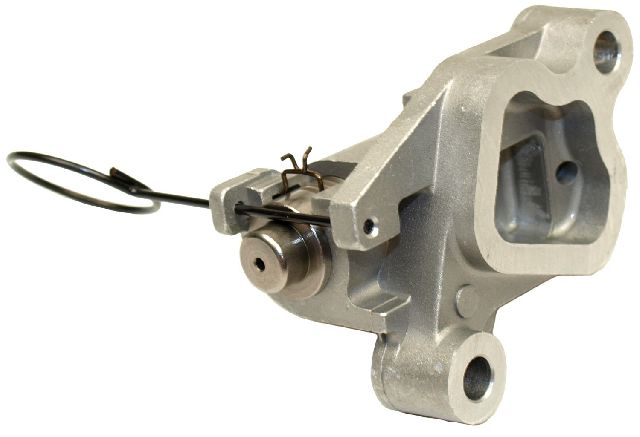
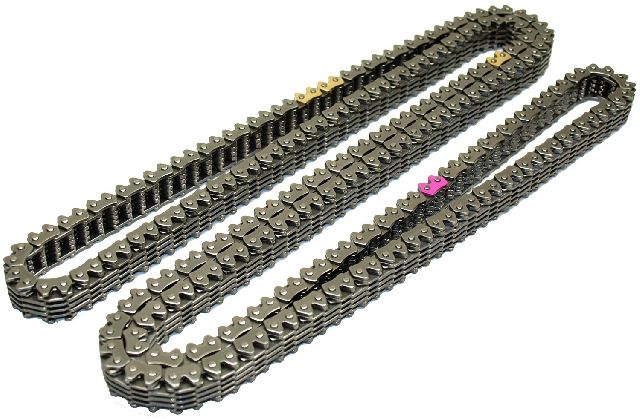
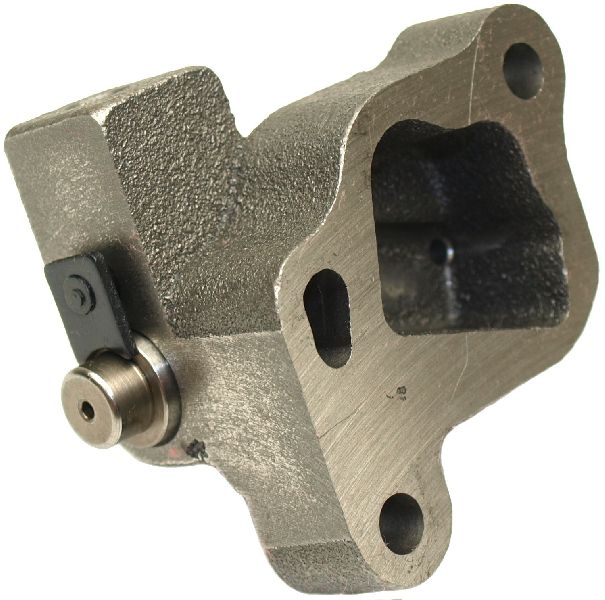
(OEM #HL2Z-6C590-A (This is a larger kit including phasers))— A stretched timing chain is a very common mechanical failure on the 3.5L EcoBoost engine that directly causes P0016. A complete kit should be used, including chains (HL3Z-6268-A), guides (HL3Z-6B274-A/B), tensioners (HL3Z-6L266-A/C), and tensioner arms (HL3Z-6K255-A/B).
Trusted brands: Motorcraft, Cloyes
OEM price range: $400-$700
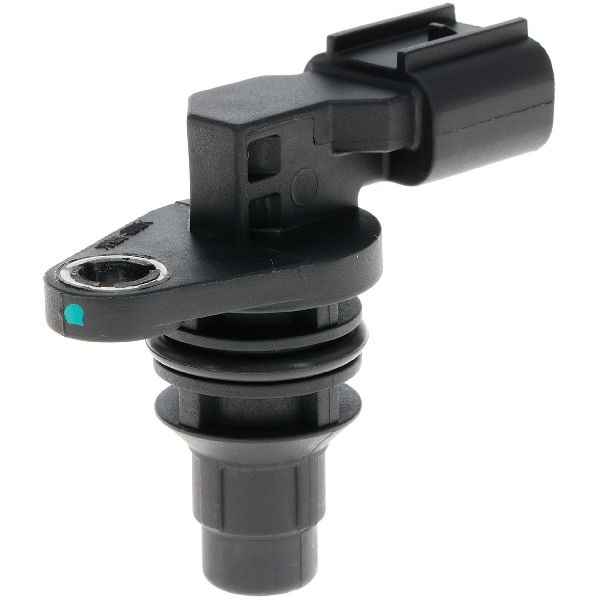
Aftermarket price range: $250-$450 - Camshaft Position Sensor
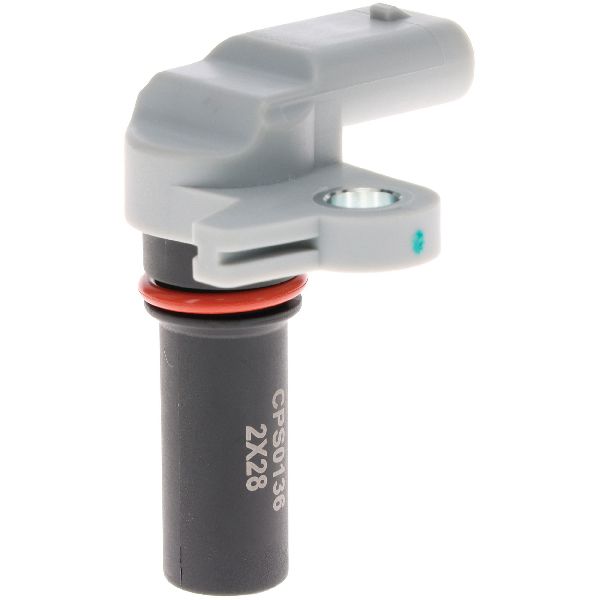
(OEM #DU-102)— This part is commonly misdiagnosed and replaced but is RARELY the actual cause of a P0016 code. The sensor is usually just accurately reporting the timing error caused by a mechanical issue or VCT fault. Only replace it if it has failed a specific electrical test.
Related Codes That Often Appear With This One
- P0017, P0018, P0019 — These are correlation codes for the other camshafts (Bank 1 Exhaust, Bank 2 Intake/Exhaust). If a timing chain is stretched, it can affect all cams, triggering multiple codes. Seeing P0016 and P0018 together is a strong indicator of a base timing issue.
- P0011, P0012, P0014, P0015 — These codes indicate VCT performance issues (over-advanced/retarded). They often point to the same root causes, like a sticking VCT solenoid or oil flow problem, and can appear alongside P0016.
- P0299 — Turbo/Supercharger Underboost. This can sometimes appear if engine performance is significantly impacted by the timing issue, especially on EcoBoost models.
Technical Service Bulletins (TSBs) & Recalls

- TSB 21-2224: Addresses an illuminated MIL with various DTCs, including P0016, due to a PCM software issue on 2020-2021 Transits. The fix is a PCM reprogram.
- SSM 54366: A general bulletin for many 2015-2021 Ford vehicles that lists P0016 and points technicians to standard diagnostic procedures (Pinpoint Test HK) in the service manual, indicating this is a common family of codes for Ford.
- TSB 16-0093: For some 2016 models with low mileage, this TSB directed technicians to replace the specific VCT solenoid related to the code (Bank 1 Intake for P0016), showing a history of solenoid issues.
Platform-Specific Known Issues
- TSB 21-2224: Some 2020 Transit vehicles with the 3.5L Duratec engine and all 2021 models built on or before 01-Jul-2021 may trigger P0016 (and other VCT codes) due to a PCM software error. The official fix is a PCM reprogram by a Ford dealer.
- Cold Start Rattle: The 3.5L EcoBoost engine is widely known for a brief but loud rattle on cold starts, which is a tell-tale sign of a stretched timing chain and/or failing cam phasers. If you hear this noise along with a P0016 code, a timing job is almost certain.
Mechanic-Grade Diagnostic Values
- VCT Solenoid Internal Resistance — expected: 5 - 14 Ohms. Failure: A reading outside this range, or infinite resistance (open circuit), indicates a failed solenoid.
- Camshaft Position Sensor (3-wire Hall-effect) Voltage Check — expected: 5V on reference wire, 5V on signal wire (Key On, Engine Off). Signal wire should switch between ~5V and 0V when the engine is cranked.. Failure: Voltage does not switch, is stuck at 0V, or stuck at 5V, indicating a sensor or wiring issue.
- Scan Tool PID: VCT_INT_ERR1 (Cam Timing Error Bank 1) — expected: Close to 0 degrees at idle when warm.. Failure: A consistent deviation from 0 degrees indicates the cam is not at its commanded position, pointing to a VCT solenoid, phaser, or base timing issue.
- Scan Tool PID: VCT_INT_ACT1 (Actual Cam Angle Bank 1) — expected: Less than +6 degrees at idle.. Failure: A reading of +6 degrees or greater at idle strongly suggests a worn or stretched primary timing chain.
Hidden / Shadow Codes Worth Checking
- Mode 6 Data: Mode 6 provides test results for non-continuous monitors. For VCT systems, it can show statistical data on timing deviations that help confirm a correlation problem before it becomes a constant fault. (see via Requires a professional scan tool like Ford's IDS or an advanced tool like FORScan to access and interpret VCT-related Mode 6 Test IDs (e.g., TID $53).)
Scan Tool Commands That Help
- Ford IDS / FORScan: VCT Solenoid On/Off Command (Bidirectional Control) — Used to test the functionality of the VCT solenoid. When commanding the Bank 1 intake solenoid on at idle, the engine should stumble or run rough. If there is no change in engine operation, it points to a stuck solenoid, clogged oil passage, or a faulty phaser.
- Ford IDS / FORScan: Clear/Reset Keep Alive Memory (KAM) — This should be performed after replacing any timing components or VCT solenoids. The PCM stores learned adaptations for the VCT system; failing to clear the KAM can cause the old, incorrect values to be used with new parts, potentially causing the code to return immediately.
Real Owner Repair Stories
- Ford F150 Forum (2013 Ford F-150 3.5L EcoBoost, 90k miles) — P0016 code returned 5-10 minutes after a full timing chain and phaser replacement.
❌ Tried (didn't work) Complete timing chain and phaser replacement with the latest Ford kit (BL3Z-6D256-C).
✅ What actually fixed it The user was still diagnosing at the end of the thread, but the immediate return of the code after a major mechanical repair strongly suggests an overlooked issue like a faulty 'new' part, a wiring problem, a VCT solenoid that was not replaced, or failure to reset the PCM's Keep Alive Memory (KAM).
OEM Part Supersession History
7T4Z-6M280-A, 7T4Z-6M280-AA, 7T4Z-6M280-B→7T4Z-6M280-C— Part revision and improvement for VCT solenoids used on 3.5L/3.7L engines.
Heads up: The newest part number is generally recommended for durability.AT4Z-6M280-A→AT4Z-6M280-B— Updated VCT solenoid for 3.3L/3.5L/3.7L applications.
Heads up: This solenoid fits specific intake/exhaust positions on different models; VIN verification is critical.
Model Year Variations Within This Range
- 2020 (some) and 2021 (built before 01-Jul-2021): These vehicles may have a PCM software issue that falsely triggers P0016 and other VCT codes. Ford issued TSB 21-2224 to correct this with a PCM reprogram. This should be the first check for any eligible vehicle before attempting mechanical repairs.
- 2020-2021: The standard engine is the 3.5L PFDi (Port Fuel/Direct Injection) V6, while the 3.5L EcoBoost V6 is an option. While both can experience P0016, the EcoBoost variant has a more widely documented history of timing chain stretch issues.
Helpful Videos

We Have This Part in Stock


The information in this article is provided for general reference and educational purposes only. Vehicle specifications, procedures, and part compatibility can vary by production date, trim level, and region. Always consult your vehicle's factory service manual and verify part numbers before purchasing or performing repairs. Safety-critical components such as airbags, seat belts, and braking systems should be installed by a qualified professional.
- Ford TRANSIT:
- 🧭 Diagnostic Flowchart
- 🎬 Helpful Videos
- 🛍️ Shop This Part
- What's Unique About the 2020-2021 Ford TRANSIT
- Symptoms You May Notice
- Most Likely Causes
- Rare But Worth Checking
- Diagnosis Steps
- Parts You'll Likely Need
- Related Codes That Often Appear With This One
- Technical Service Bulletins (TSBs) & Recalls
- Platform-Specific Known Issues
- Mechanic-Grade Diagnostic Values
- Hidden / Shadow Codes Worth Checking
- Scan Tool Commands That Help
- Real Owner Repair Stories
- OEM Part Supersession History
- Model Year Variations Within This Range
- 🎟️ Get 5% Off