

P0016 on 2015-2021 Ford Transit Connect: Cam/Crank Correlation Causes and Fixes
On a 2015-2021 Ford Transit Connect, P0016 is most often caused by a sticking Variable Camshaft Timing (VCT) solenoid due to oil debris, a known issue highlighted in Ford TSBs. The fix usually involves replacing both VCT solenoids, which requires removing the valve cover. If that doesn't work, a stretched timing chain is the next likely culprit.
- P0016 on your Transit Connect is a serious code that points to a mechanical timing issue.
- The most likely cause is NOT a bad sensor, but a sticking VCT solenoid due to dirty oil or debris, an issue acknowledged by Ford in service bulletins.
- Always check your oil level and condition first. A simple oil change can sometimes fix the issue.
- If an oil change doesn't work, the next step is replacing both VCT solenoids, which are located under the valve cover.
- Ignoring this code can lead to stalling, poor performance, and in a worst-case scenario, severe engine damage if the timing chain fails.
What's Unique About the 2015-2021 Ford TRANSIT CONNECT
Ford's VCT systems from this era are known to be sensitive to oil quality and condition. Multiple Technical Service Bulletins (TSBs) from Ford state that small debris in the engine oil can cause the VCT solenoids to stick, triggering this code. Unlike some engines where these solenoids are easily accessible, on the Transit Connect's 2.5L and 2.0L engines, they are located under the valve cover, making replacement a more involved job. Ford's own diagnostic procedure, Pinpoint Test HK11, even suggests using a scan tool to cycle the solenoids 10 times to dislodge debris as a first step before replacement.
Diagnostic Flowchart
Tap your situation to follow the diagnostic path that matches what you're seeing on this vehicle.
Symptoms You May Notice
- Check Engine Light is on
- Rough or unstable idle
- Engine is hard to start or cranks but won't start
- Reduced engine power and poor acceleration, especially struggling to get above 40 mph.
- Stalling, especially at low speeds or when coming to a stop
- Decreased fuel economy
- Rattling noise from the engine, particularly near the timing chain cover on cold starts (if the chain is the issue)
- Replacing only the camshaft position sensor
- Replacing only the crankshaft position sensor
- Assuming the code will clear on its own after an oil change without addressing the underlying component failure.
Most Likely Causes
- Sticking or Failed VCT Solenoid(s) 🔴 High Probability → Shop Engine Variable Valve Timing (VVT) Solenoid Ford TSBs #SSM 47170 and #SSM 48423 specifically state that debris in the oil can cause the VCT solenoids to stick on this family of engines. This is the most widely reported cause in owner forums for the P0016 code. 🎬 Watch: A breakdown of P0016 causes and common fixes.
How to confirm: Use a high-end scan tool to command the VCT solenoids and monitor their response (this is part of Ford's Pinpoint Test HK11). A simpler method is to replace them, as they are a very common failure point. Since they are under the valve cover, it is highly recommended to replace both the intake and exhaust solenoids at the same time to avoid a repeat repair.
Typical fix: Replace both the intake and exhaust VCT solenoids. This requires removing the valve cover, replacing the solenoids, and installing a new valve cover gasket.
Est. part cost: $50-$120 for a pair of solenoids and a gasket set. - Low or Dirty Engine Oil 🔴 High Probability The VCT system is hydraulic and operates on oil pressure. Contaminated oil or a low oil level directly impacts its ability to function, leading to correlation codes. Owners have reported being told by sellers that simply changing the oil will fix the light, which can be a sign of a deeper issue.
How to confirm: Check the oil dipstick for level and inspect the oil's condition. If it is dark, gritty, or below the minimum level, this is a likely contributor. This should always be the first check. 🎬 See how to test and fix cam/crank correlation issues.
Typical fix: Perform an oil and filter change using the correct viscosity oil (Ford-spec 5W-20). Clear the codes and see if the problem returns. Some owners try an engine flush, but if the code returns, the solenoids are likely too clogged to be saved.
Est. part cost: $40-$70 - Stretched Timing Chain 🟡 Medium Probability → Shop Engine Timing Chain Timing chains can stretch over time, typically with mileage over 100,000 miles, which creates slack and directly causes a cam/crank correlation error. In some Ford forums, this is cited as the definitive cause once solenoids and sensors have been ruled out.
How to confirm: This is a complex diagnosis. A key symptom is a rattling noise from the front of the engine on a cold start. A mechanic may remove the valve cover to physically inspect for chain slack. This is typically diagnosed after ruling out oil and VCT solenoid issues.
Typical fix: Replace the timing chain, tensioners, and guides. This is a labor-intensive job.
Est. part cost: $150-$400 for a full kit.
Rare But Worth Checking
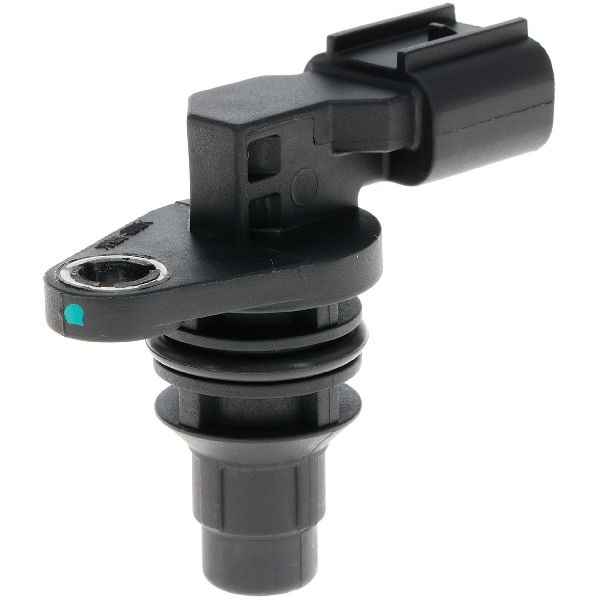
- Failed Camshaft or Crankshaft Position Sensor: → Shop Engine Crankshaft Position Sensor While possible, it's less common for a correlation code to be caused by a bad sensor. Usually, a failed sensor would trigger its own specific circuit code (e.g., P0340). Owners often replace these first as a 'hopeful' fix, but it rarely solves P0016 on this vehicle.
- Failed Camshaft Phaser: → Shop Engine Camshaft The phaser is the gear at the end of the camshaft that is hydraulically adjusted by the VCT solenoid. It can fail mechanically, but this is less common than a solenoid failure. If the timing chain is being replaced, replacing the phasers at the same time is often recommended as a preventative measure.
Diagnosis Steps
- Check Engine Oil: Verify the oil level is correct and the oil is clean. If low or dirty, perform an oil and filter change with the correct Ford-spec 5W-20 oil, clear the code, and test drive. This is the cheapest and easiest first step.
- Scan for Other Codes: Use an OBD-II scanner to check for any other codes that could point to a specific component, like a VCT solenoid circuit code or a sensor-specific code.
- Inspect VCT Solenoid Wiring: Although the solenoids are under the valve cover, their connectors are accessible. Inspect the wiring for any visible damage or loose connections.
- Test VCT Solenoids (Advanced): A professional would use a scan tool to command the solenoids on and off to check for a response, per Ford's TSBs. An audible click should be heard. If there is no response, the solenoid is bad. For a DIY approach without a bidirectional scanner, if the oil is clean and level, the next logical step is replacement.
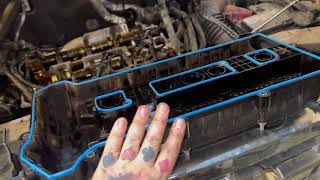
- Replace VCT Solenoids & Gasket: This involves removing the engine cover, air intake components, ignition coils, and wiring harnesses to access and remove the valve cover. Replace both VCT solenoids, install a new valve cover gasket, and apply RTV sealant at the timing cover joints as required. Torque valve cover bolts in a crisscross pattern to 106 in-lbs (approx. 8.8 ft-lbs). 🎬 Watch: Step-by-step guide to replacing the valve cover gasket.
- Inspect Timing Components: If new solenoids and clean oil do not resolve the code, the next step is a mechanical inspection of the timing chain, guides, and tensioners for stretching or damage. This is an advanced repair best left to a professional.
Parts You'll Likely Need
- Variable Camshaft Timing (VCT) Solenoid
(OEM #CJ5Z-6M280-A)— This is the most common cause of P0016 on this vehicle, as documented by Ford TSBs and countless owner forums. They get clogged with debris and stick. Both intake and exhaust solenoids use the same part number.
Trusted brands: Motorcraft, Dorman, NGK, Walker Products
OEM price range: $40-$60 each
Aftermarket price range: $20-$45 each - Valve Cover Gasket Set
(OEM #1S7Z-6584-BA)— Required for replacing the VCT solenoids, which are located under the valve cover. The set should include the main gasket and spark plug tube seals. A popular aftermarket option is Fel-Pro VS50639R-1.
Trusted brands: Motorcraft, Fel-Pro, Mahle
OEM price range: $40-$60
Aftermarket price range: $25-$40 - Timing Chain Kit
(OEM #1L5Z-6268-AA (Chain only))— If the VCT solenoids and oil are good, a stretched timing chain is the next most likely cause, especially on higher mileage vehicles.
Trusted brands: Motorcraft, Cloyes, Melling
OEM price range: $250-$400
Aftermarket price range: $150-$250
Related Codes That Often Appear With This One
- P0017 — This is the correlation code for the exhaust camshaft (Bank 1, Sensor B). If both intake and exhaust solenoids are sticking or the timing chain has stretched, it's common to see both codes together.
- P0011 — This code indicates 'Camshaft Position Timing - Over-Advanced (Bank 1)'. It can appear with P0016 if the VCT solenoid is stuck in an advanced position.
- P0012 — This code indicates 'Camshaft Position Timing - Over-Retarded (Bank 1)'. It can appear with P0016 if the VCT solenoid is stuck in a retarded position or oil flow is restricted.
Technical Service Bulletins (TSBs) & Recalls
- SSM 54366: Points to specific diagnostic procedure (Pinpoint Test HK) for VCT codes.
- SSM 47170: Notes debris can cause VCT solenoids to stick.
- TSB 160038: Mentions P0016 on low-mileage 3.5L GTDI engines.
- SSM 48423: Reiterates that debris can cause VCT solenoids to stick.
Platform-Specific Known Issues
- Ford Technical Service Bulletin SSM 47170 & SSM 48423: Note that DTCs like P0016 may be caused by small debris causing the VCT solenoid to stick. The prescribed diagnostic step is to use Pinpoint Test HK11 to cycle the solenoid 10 times to attempt to clear it before replacement.
- Ford Technical Service Bulletin SSM 54366: Points technicians to a specific diagnostic procedure (Pinpoint Test HK) for a group of VCT-related codes, including P0016, indicating this is a well-documented and frequent issue for Ford service departments.
- Owner Experience: A common repair path seen in forums is: 1. Oil change (code returns). 2. Swap/replace cam/crank sensors (code returns). 3. Replace VCT solenoids (code is fixed). This highlights the prevalence of the VCT solenoid as the primary culprit.
Mechanic-Grade Diagnostic Values
- VCT Solenoid Resistance — expected: 5 - 14 Ω (Ohms). Failure: A resistance reading outside this range, or an open circuit (infinite resistance), indicates a failed solenoid.
- VCT Solenoid Connector Voltage (Key On, Engine Off) — expected: 12V (Battery Voltage). Failure: No voltage suggests a wiring or fuse issue before the solenoid.
- Scan Tool Live Data: VCT_ADV_ERR PID (at idle, closed loop) — expected: Should hover around 0°. Failure: A consistent deviation greater than +/- 5° indicates a correlation error that the PCM cannot correct.
Hidden / Shadow Codes Worth Checking
- Mode 6 Data: This diagnostic mode contains statistical data and test results from onboard monitors that don't necessarily trigger a Check Engine Light. For VCT issues, it can provide data on timing deviations that help confirm a correlation problem. (see via A professional scan tool like the Ford IDS (Integrated Diagnostic System) is needed to access and interpret VCT-related Mode 6 data.)
Scan Tool Commands That Help
- Ford IDS (or equivalent professional scanner): VCT Solenoid Active Command / Bidirectional Control — Used to manually command the VCT solenoid on and off while the engine is idling. A healthy VCT system will cause the engine to run rough or stall when the solenoid is commanded on, confirming the phaser and oil passages are working. No change in engine operation points to a stuck solenoid, clogged passage, or failed phaser.
- Ford IDS: Datalogger with Histogram Mode — This function is used to record the VCT Error PIDs during a test drive, including wide-open throttle events. The histogram helps visualize the frequency and magnitude of timing anomalies that might be intermittent and not obvious at idle.
Wiring & Ground Locations
- Fuse F22 (Engine Compartment Fuse Box) — Located in the power distribution box in the engine compartment.. This 5A fuse provides power supply voltage specifically to the Powertrain Control Module (PCM) for the 2.5L engine. A fault with this fuse could cause erratic PCM behavior and trigger various codes, including correlation faults.
- Engine Ground Strap — Typically a braided cable connecting the engine block to the vehicle's chassis/frame to complete the electrical circuit.. A poor or corroded engine ground can cause erratic signals from the crankshaft and camshaft position sensors, which rely on a stable ground reference. This can lead to false correlation codes even if the sensors and timing components are good.
Real Owner Repair Stories
- Reddit user in r/MechanicAdvice (2012 GMC Terrain 2.4L EcoTech) — Engine shut off while driving, would not restart, P0016 code present.
❌ Tried (didn't work) Refilling engine oil (was found to be completely dry)., Replacing both the camshaft and crankshaft position sensors.
✅ What actually fixed it The root cause was discovered after removing the timing cover: "pieces of the timing guide fell out so i found my issue." The severe lack of oil likely caused the plastic timing chain guides to become brittle and break, leading to the chain jumping time. - Reddit user in r/MechanicAdvice (2009 VW Scirocco 1.4TSI) — Check Engine Light with code P0016. No audible chain noise, no misfires, no erratic running.
❌ Tried (didn't work) Clearing the code (it returned after about 10 minutes of driving).
✅ What actually fixed it The issue was diagnosed as a likely stretched timing chain. The problem started immediately after driving 1000km with the wrong (too thin) viscosity engine oil. Even after changing to the correct oil, the code persisted, indicating the incorrect oil pressure had likely caused permanent wear/stretch on the timing chain.
OEM Part Supersession History
CJ5Z-6M280-A→N/A— This part number appears to be stable and is the standard Motorcraft replacement for the VCT solenoid across a wide range of Ford 2.0L, 2.3L, and 2.5L engines from this era.
Model Year Variations Within This Range
- 2015-2021: No significant variations in the 2.5L Duratec engine's VCT system, sensors, or common causes for P0016 are documented within this model year range. The issue and diagnostic approach are consistent across the generation.
Helpful Videos
![How to Fix P0016 Engine Code in 6 Minutes [4 DIY Methods / Only $6.94]](https://img.youtube.com/vi/extiOvtV8_Y/mqdefault.jpg)
We Have This Part in Stock


The information in this article is provided for general reference and educational purposes only. Vehicle specifications, procedures, and part compatibility can vary by production date, trim level, and region. Always consult your vehicle's factory service manual and verify part numbers before purchasing or performing repairs. Safety-critical components such as airbags, seat belts, and braking systems should be installed by a qualified professional.
- Ford TRANSIT CONNECT:
- 🧭 Diagnostic Flowchart
- 🎬 Helpful Videos
- 🛍️ Shop This Part
- What's Unique About the 2015-2021 Ford TRANSIT CONNECT
- Symptoms You May Notice
- Most Likely Causes
- Rare But Worth Checking
- Diagnosis Steps
- Parts You'll Likely Need
- Related Codes That Often Appear With This One
- Technical Service Bulletins (TSBs) & Recalls
- Platform-Specific Known Issues
- Mechanic-Grade Diagnostic Values
- Hidden / Shadow Codes Worth Checking
- Scan Tool Commands That Help
- Wiring & Ground Locations
- Real Owner Repair Stories
- OEM Part Supersession History
- Model Year Variations Within This Range
- 🎟️ Get 5% Off