

P0016 on 2007-2014 GMC Acadia: Crank/Cam Correlation, Timing Chain Fixes
P0016 on a 2007-2014 Acadia almost always indicates a stretched timing chain. This is a major and expensive repair, often costing between $2,500 and $3,600, that requires significant labor and special tools. The issue is so common that GM issued a special warranty extension for it.
- P0016 on a 2007-2014 GMC Acadia is almost certainly caused by stretched timing chains, a widely known issue with the 3.6L V6 engine.
- This is a serious code that should be addressed immediately to avoid the risk of catastrophic engine failure.
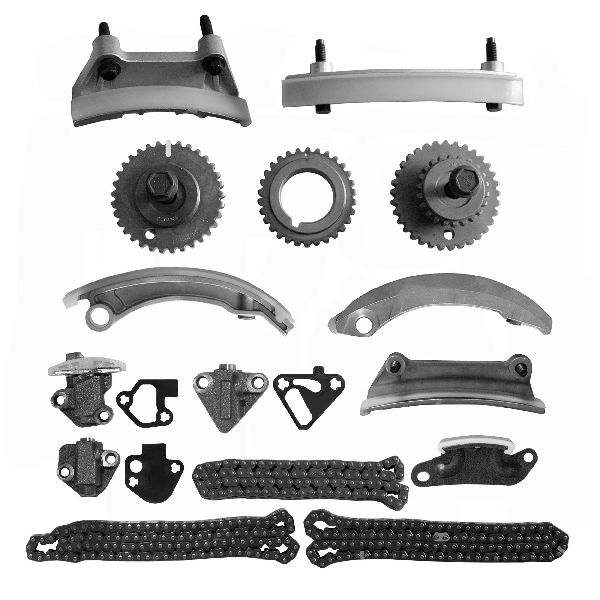
- The repair is expensive and complex, requiring the replacement of the timing chains, guides, and tensioners as a complete kit.
- Before authorizing this costly repair, check your vehicle's VIN to see if it falls under GM's special coverage adjustment (#11340C) for timing chains.
- Replacing sensors or VVT solenoids is unlikely to fix this code and is a common misdiagnosis.
What's Unique About the 2007-2014 Gmc ACADIA
The first-generation GMC Acadia, along with its GM Lambda platform siblings (Buick Enclave, Chevrolet Traverse, Saturn Outlook), uses a 3.6L V6 engine that is widely known for premature timing chain stretching. This issue was so prevalent that GM issued multiple Technical Service Bulletins (TSBs) and a special coverage warranty extension (#11340C) for this specific problem, covering vehicles for 10 years or 120,000 miles. The root causes are often attributed to the original timing chain design and the negative effects of extended oil change intervals recommended by the factory Oil Life Monitor (OLM), which can lead to oil breakdown and sludge, harming the chain tensioners.
Diagnostic Flowchart
Tap your situation to follow the diagnostic path that matches what you're seeing on this vehicle.
Symptoms You May Notice
- Check Engine Light is on
- Reduced engine power or sluggish acceleration
- Rough or unstable idle
- Rattling or scraping noise from the front of the engine (passenger side), especially on a cold start lasting for a few seconds
- Engine may be difficult to start
- A droning or reverberation noise at highway speeds under light load
- Replacing only the camshaft position sensor
- Replacing only the crankshaft position sensor
- Replacing only the VVT solenoids without checking mechanical timing
Most Likely Causes
- Stretched Timing Chains 🔴 High Probability → Shop Engine Timing Chain The 3.6L V6 in this platform has a well-documented history of premature timing chain wear and stretching, as acknowledged in manufacturer TSBs #12-06-01-009F and Special Coverage #11340C. The engine uses a three-chain system, and stretch in any of them can cause timing deviation.
How to confirm: Diagnosis requires significant disassembly to physically inspect the chains for slack. A key indicator is the extension of the timing chain tensioner pistons; if they are extended significantly, the chain is stretched. A mechanic can also use a scan tool to observe cam/crank correlation data, but physical inspection is definitive.
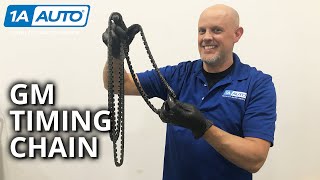
Typical fix: Replace all three timing chains, all tensioners, and all guides as a complete kit. This is a very labor-intensive job. 🎬 See expert tips for replacing timing chains on this motor.
Est. part cost: $300-$600 - Failed Timing Chain Tensioner(s) 🔴 High Probability → Shop Engine Timing Chain The hydraulic tensioners rely on clean engine oil and sufficient oil pressure. Sludge from extended oil change intervals or wear can cause them to fail or stick, allowing the chain to become loose.
How to confirm: Tensioners are inspected for wear, sticking, or full extension during a timing chain inspection. If the piston is pushed far out, it's a sign the chain has stretched.
Typical fix: Tensioners are always replaced as part of a complete timing chain kit replacement.
Est. part cost: $50-$150 (if purchased separately) - Low or Dirty Engine Oil 🟡 Medium Probability The Variable Valve Timing (VVT) system and chain tensioners are hydraulically operated. GM's Oil Life Monitor (OLM) system often allowed for excessively long oil change intervals, leading to oil breakdown and sludge. This degraded oil cannot properly operate the tensioners, accelerating chain wear.
How to confirm: Check the oil level on the dipstick and inspect its condition. If the oil is very low or appears like dark sludge, this is a likely contributor. Many owners recommend ignoring the OLM and changing the oil with full synthetic every 5,000 miles.
Typical fix: Perform an engine oil and filter change with high-quality full synthetic oil. An engine flush may be attempted, but if the chain has already stretched, this will not fix the underlying mechanical problem.
Est. part cost: $40-$80 - Faulty Camshaft Position Actuator Solenoid (VVT Solenoid) ⚪ Low Probability → Shop Engine Camshaft
How to confirm: The solenoids can be removed, inspected for clogged screens, and tested for operation. Swapping the Bank 1 intake solenoid with another one (e.g., the exhaust solenoid) and seeing if the code changes (e.g., to P0017) can help isolate a bad solenoid. This is a common first step but rarely the final solution for this platform.
Typical fix: Replace the faulty solenoid. They are relatively accessible on top of the valve covers.
Est. part cost: $30-$70
Rare But Worth Checking
- Shifted Crankshaft Reluctor Wheel: → Shop Engine Crankshaft A GM TSB (PIP3423 series) mentions that the reluctor wheel, which the crankshaft position sensor reads, can physically move on the crankshaft. This causes a persistent timing code even with new chains. An experienced technician noted he has seen hundreds of timing chain issues but has never personally seen a shifted reluctor wheel be the cause. Confirming this may require a borescope or removing the oil pan. The fix is to replace the entire crankshaft.
- Faulty Crankshaft or Camshaft Position Sensor: → Shop Engine Camshaft Position Sensor While possible, sensor failure is much less common than the mechanical timing chain issues on this engine. People often replace these first, but it rarely solves the P0016 code. 🎬 Watch: How to diagnose P0016 and check for chain stretch. One owner on YouTube documented replacing sensors as a first step, which failed to fix the P0008/P0017 codes, before realizing the timing chain was the issue.
Diagnosis Steps
- Read the codes with an OBD-II scanner to confirm P0016 and any other related codes (P0008, P0017, P0018, P0019).
- Check the engine oil level and condition. If it's low or dirty, perform an oil change with full synthetic oil and a new filter, clear the codes, and see if they return.
- Listen for any rattling or chain slap noises from the engine's front cover (passenger side) during a cold start. The noise may only last for a few seconds.
- As a preliminary step, you can inspect and test the Bank 1 intake VVT solenoid. Check for clogged screens and consider swapping it with the exhaust solenoid to see if the code follows.
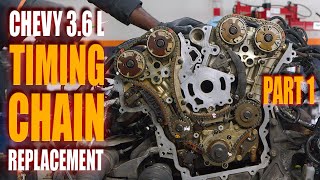
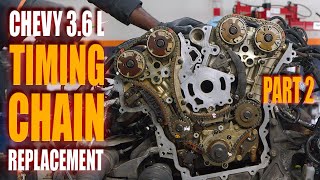
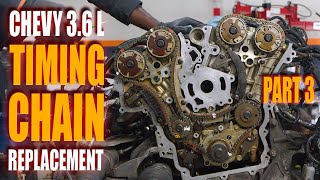
- If the above steps do not resolve the issue, the next step is to prepare for a timing chain inspection. This is a labor-intensive process that involves removing the engine front cover. 🎬 Watch: Step-by-step guide to replacing the timing chain in-car.
- Once the timing cover is removed, inspect the chains for excessive slack and check the tensioners for proper function and how far their pistons are extended.
- If the chains are tight and tensioners appear normal, consider the rare possibility of a shifted crankshaft reluctor wheel, as described in TSB PIP3423P. This can sometimes be inspected with a borescope through the crankshaft position sensor hole.
Parts You'll Likely Need
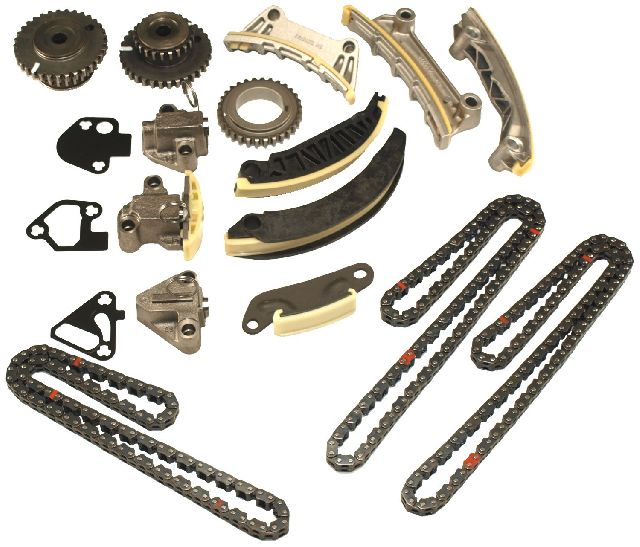
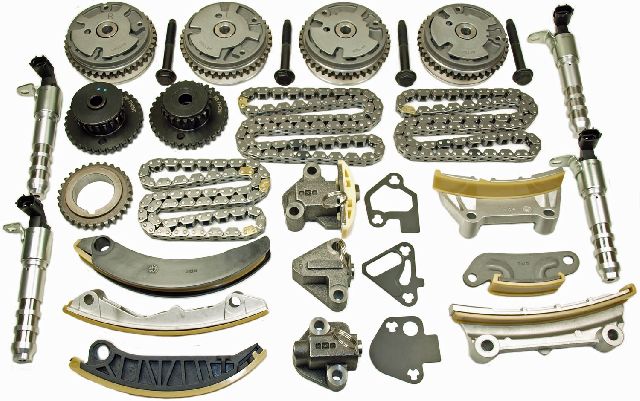
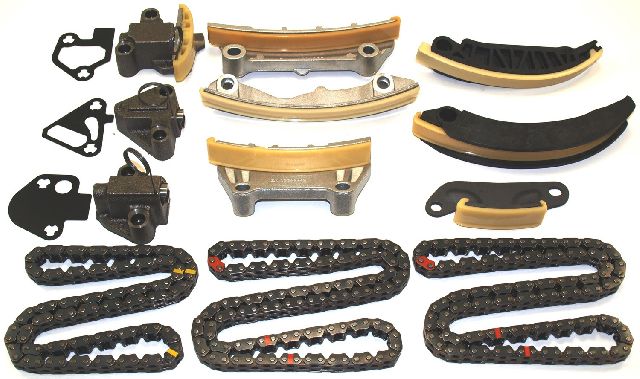
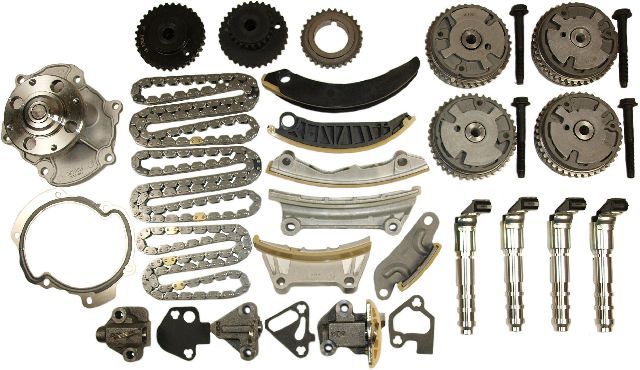
- Engine Timing Chain Kit
(OEM #12651450 (superseded by 12700436))— This is the primary failure point for code P0016 on this engine. A complete kit ensures all worn components (chains, guides, tensioners) are replaced. The original part number 12651450 has been replaced by updated kits.
Trusted brands: ACDelco (Genuine GM), Cloyes, Melling
OEM price range: $400-$550
Aftermarket price range: $250-$400 - Camshaft Position Actuator Solenoid
(OEM #12655420)— Can become clogged with sludge from infrequent oil changes, causing timing issues. It's a relatively inexpensive part to replace as a diagnostic step, though it's unlikely to be the root cause if the chain is stretched.
Trusted brands: ACDelco, Delphi, Dorman
OEM price range: $45-$70
Aftermarket price range: $25-$50
Related Codes That Often Appear With This One
- P0008 — A general engine position system performance code, often the first to appear when timing chains begin to stretch. It's a precursor to more specific codes like P0016.
- P0017 — Indicates a correlation issue on the Bank 1 exhaust camshaft. It's common to see both P0016 and P0017 together when the Bank 1 chain has stretched.
- P0018 — Indicates a correlation issue on the Bank 2 intake camshaft. Seeing multiple codes across both banks (e.g., P0016 & P0018) points strongly to the primary timing chain being the issue.
- P0019 — Indicates a correlation issue on the Bank 2 exhaust camshaft.
Technical Service Bulletins (TSBs) & Recalls
- PIP3423P: Instructs technicians to inspect for loose timing chains or tensioners for P0016 and related codes, and also mentions the rare possibility of a shifted crankshaft reluctor wheel.
- 12-06-01-009F: Notes the availability of timing chain kits specifically for repairing stretched chains causing codes like P0016.
- 11340C: This is a Special Coverage Adjustment, not a standard TSB. It extended the warranty to 10 years/120,000 miles for timing chain wear on affected models, acknowledging the high failure rate.
Platform-Specific Known Issues
- A known issue of stretched timing chains is documented in GM TSB #12-06-01-009F, which discusses the availability of replacement timing chain kits for this exact problem.
- GM also issued a special coverage adjustment (#11340C) extending the warranty on timing chains for many of these vehicles to 10 years or 120,000 miles due to the high failure rate. This explicitly acknowledged that original oil change intervals could contribute to premature wear. Owners should check if their vehicle is still covered, although most are now past the time limit.
- TSB #PIP3423P instructs technicians to inspect for loose timing chains or tensioners when P0016 is present, and if that is not the cause, to check for a shifted crankshaft reluctor wheel.
Mechanic-Grade Diagnostic Values
- Camshaft Position Actuator Solenoid (VVT Solenoid) resistance — expected: 7-12 Ω. Failure: A reading outside this range indicates a faulty solenoid.
- Camshaft Position Sensor resistance — expected: Approximately 1.2 kΩ. Failure: A significant deviation from this value suggests a bad sensor.
- Engine Oil Pressure at idle — expected: At least 25 PSI. Failure: Pressure below this level indicates lubrication starvation, which is a primary cause of timing chain wear.
- Camshaft Correlation DTC Trigger (Bank 1 Intake) — expected: Within 9° retarded or 12° advanced. Failure: Exceeding these angles relative to the crankshaft will set a P0016 code.
Scan Tool Commands That Help
- GDS2 / Tech2 (or equivalent professional scanner): Cam/Crank Relearn (also called Crankshaft Position Variation Learn) — This procedure is required after replacing the timing chains, camshafts, crankshaft, sensors, or the ECM. It synchronizes the new components' positions with the ECM to prevent rough running or persistent codes after the repair.
- GDS2 / Tech2: Command Camshaft Position Actuator — This bidirectional control allows a technician to command the VVT solenoids ON and OFF to test their mechanical function and the response of the phasers, helping to isolate a stuck solenoid or phaser from a wiring issue.
Wiring & Ground Locations
- ECM Grounds (G105/G106) — On the engine block, typically on the left (front) side. The ECM relies on these grounds for accurate sensor readings.. A poor ground connection at these points can introduce electrical noise or voltage offsets, potentially causing the ECM to misinterpret the signals from the camshaft and crankshaft position sensors, leading to a false P0016 code.
- Camshaft Position Sensor Connector — On the front of each cylinder head, connecting to the four camshaft position sensors.. GM issued a service bulletin (PI0090D / SB-10038345-1648) regarding intermittent hesitation caused by backed-out terminals in these connectors. A poor connection here directly interrupts the signal that the ECM uses to determine cam timing.
- Crankshaft Position (CKP) Sensor — On the right side of the engine block, reading the reluctor wheel on the crankshaft.. This is the primary reference sensor for ignition timing and for correlation with the camshafts. Its signal integrity is paramount.
OEM Part Supersession History
Various older timing chain kits prior to ~2012→ACDelco 12651450, then 12700436— The original timing chains were prone to premature stretching. Later designs incorporated improved materials and construction to increase longevity.
Heads up: While older kits may physically fit, using the latest superseded part number is critical to get the updated, more durable chain design. Using old stock or an incorrect kit will likely lead to a repeat failure.
Model Year Variations Within This Range
- 2007-2008: These models use the LY7 engine with port fuel injection. The timing chain issues are well-documented for this engine.
- 2009-2014: These models use the LLT engine with direct injection. While still prone to timing chain issues, especially in early years (2009-2011), GM made revisions to the timing chain components around the 2012 model year to improve durability. The LLT also has a higher compression ratio (11.3:1 vs 10.2:1 for the LY7) and different pistons.
Helpful Videos



We Have This Part in Stock

The information in this article is provided for general reference and educational purposes only. Vehicle specifications, procedures, and part compatibility can vary by production date, trim level, and region. Always consult your vehicle's factory service manual and verify part numbers before purchasing or performing repairs. Safety-critical components such as airbags, seat belts, and braking systems should be installed by a qualified professional.
- Gmc ACADIA:
- 🧭 Diagnostic Flowchart
- 🎬 Helpful Videos
- 🛍️ Shop This Part
- What's Unique About the 2007-2014 Gmc ACADIA
- Symptoms You May Notice
- Most Likely Causes
- Rare But Worth Checking
- Diagnosis Steps
- Parts You'll Likely Need
- Related Codes That Often Appear With This One
- Technical Service Bulletins (TSBs) & Recalls
- Platform-Specific Known Issues
- Mechanic-Grade Diagnostic Values
- Scan Tool Commands That Help
- Wiring & Ground Locations
- OEM Part Supersession History
- Model Year Variations Within This Range
- 🎟️ Get 5% Off