

P0016 on 2007-2016 GMC Acadia 3.6L: Stretched Timing Chain Causes and Fixes
On a first-generation GMC Acadia with the 3.6L V6, code P0016 almost always means the timing chains have stretched. This is a serious, complex, and expensive repair costing between $2,500 and $4,000. Do not ignore this code, as a chain failure can lead to catastrophic engine damage. The root cause is a combination of the original chain design and long oil change intervals.
- P0016 on a 2007-2016 Acadia is a critical code that almost always means the timing chains have stretched.
- This is not a simple sensor issue. Do not waste money on new camshaft or crankshaft sensors unless they have failed specific diagnostic tests.
- Continued driving is not recommended as a chain failure can destroy the engine.
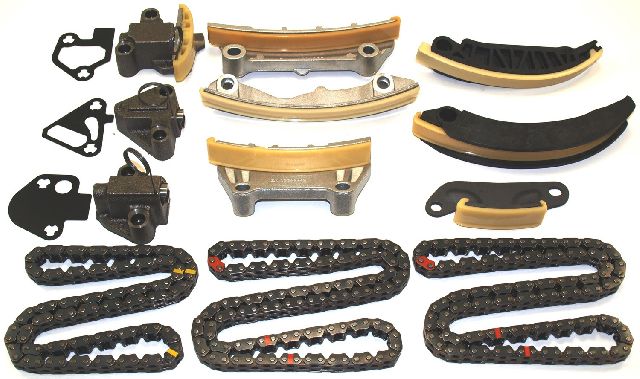
- The correct repair is a full replacement of all timing chains, tensioners, and guides, which is a very expensive and labor-intensive job.
- Check your oil level immediately. Frequent oil changes (every 3,000-5,000 miles) with high-quality synthetic oil are the best preventative measure against this issue.
What's Unique About the 2007-2016 GMC Acadia
The first-generation GMC Acadia and its Lambda platform siblings (Buick Enclave, Chevy Traverse, Saturn Outlook) are notorious for premature timing chain failure in their 3.6L V6 engines. The original timing chains used a design that was prone to wear in the pins and rollers, causing the chain to effectively lengthen or "stretch". The problem was often exacerbated by the factory's long recommended oil change intervals (often over 10,000 miles), which could lead to oil breakdown and sludge, starving the hydraulic tensioners of proper pressure. The issue was so widespread that General Motors issued Special Coverage Adjustment #11340C, which extended the warranty for this specific repair to 10 years or 120,000 miles for many 2007-2009 models, though most of these vehicles are now too old to qualify.
Symptoms You May Notice
- Check Engine Light illuminated
- Rattling or scraping noise from the engine (passenger side), especially on cold starts for a few seconds
- Reduced engine power and sluggish acceleration
- Rough or unstable idle
- Noticeably worse fuel economy
- In severe cases, the engine may crank but fail to start
- Stalling
- Replacing the camshaft position sensor.
- Replacing the crankshaft position sensor.
- Replacing only the VVT solenoids without addressing the underlying chain wear.
Most Likely Causes
- Stretched Timing Chains 🔴 High Probability → Shop Engine Timing Chain The original equipment timing chains on the LY7, LLT, and LFX engines were susceptible to premature wear in the chain's pins and rollers, causing it to lengthen. This was exacerbated by long oil change intervals promoted by the factory Oil Life Monitor, leading to oil degradation and loss of tensioner pressure. Many owners now recommend ignoring the OLM and changing full synthetic oil every 5,000 miles.
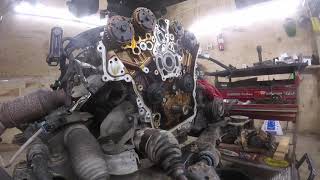
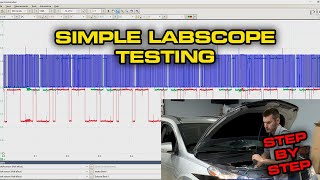
How to confirm: A mechanic can use a scan tool to read camshaft position deviation data; a consistent deviation beyond 4-5 degrees at idle indicates a stretched chain. A lab scope can also be used to compare the crank and cam sensor waveforms to a known-good pattern to confirm stretch without major disassembly. 🎬 Watch: How to use a lab scope to confirm chain stretch. Definitive confirmation involves physically inspecting the chains for slack and checking the extension of the tensioner pistons, which is a labor-intensive process.
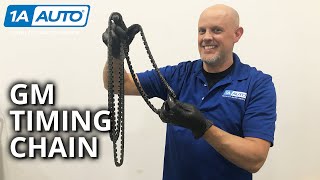
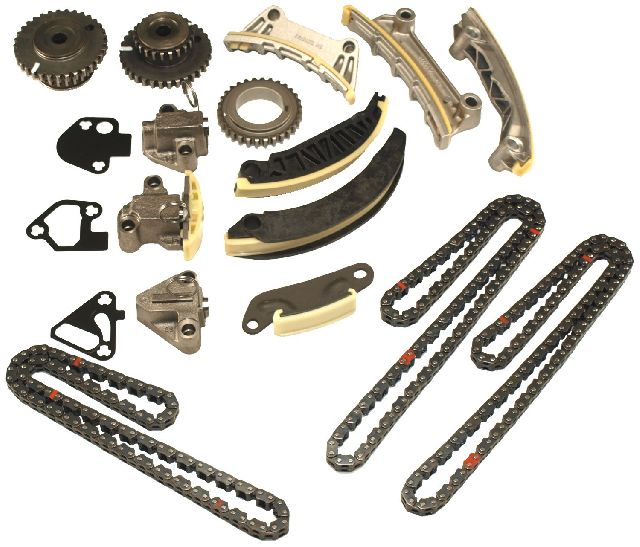
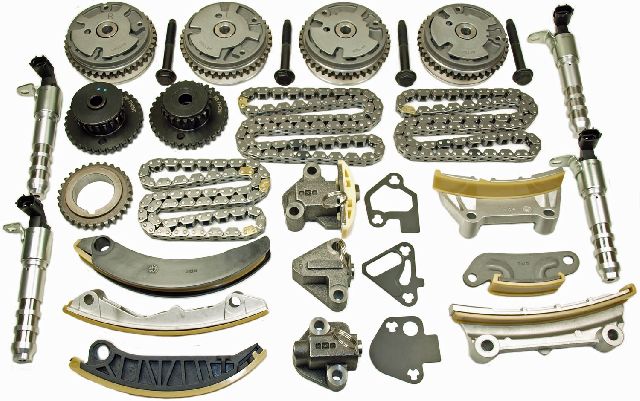
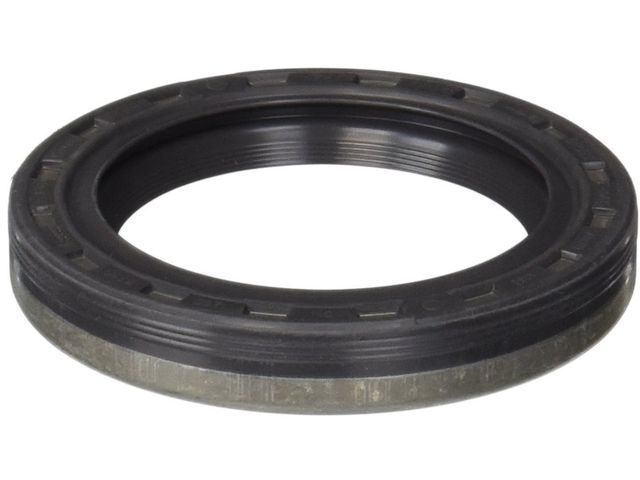
Typical fix: Replace all three timing chains, all tensioners, and all plastic guides as a complete kit. It is also highly recommended to replace the water pump, front crank seal, and valve cover gaskets at the same time. Some also replace the camshaft actuator phasers as a preventative measure.
Est. part cost: $300-$900 - Low or Dirty Engine Oil 🟡 Medium Probability The timing chain tensioners and camshaft phasers are hydraulic and rely on clean oil at the proper pressure to function. The original Oil Life Monitor (OLM) calibration encouraged long intervals, leading to sludged or low oil that could cause the tensioners to fail or the phasers to respond slowly, triggering a correlation code.
How to confirm: Check the oil level on the dipstick and inspect the oil's condition on the dipstick and through the oil filler cap. If the oil is very low or appears thick, black, and sludgy, this is a likely contributor.
Typical fix: Perform an engine oil and filter change with a high-quality full synthetic oil meeting the correct specification (e.g., ACDelco dexos-approved 5W-30). If the code returns, the low/dirty oil has likely caused permanent mechanical wear. An engine flush may be attempted but will not fix an already stretched chain.
Est. part cost: $50-$100 - Failed Timing Chain Tensioner(s) 🟡 Medium Probability → Shop Engine Timing Chain The tensioners keep the chains tight. They can fail due to wear or get stuck due to oil sludge, leading to chain slack that causes the P0016 code. A manufacturer service bulletin, TSB Bulletin #PIP3423P, notes that technicians should specifically inspect for loose timing chains or tensioners when this code is present.
How to confirm: A rattling noise on startup is a strong indicator of a failing tensioner. Final confirmation requires visual inspection during engine disassembly. A fully extended tensioner piston is a clear sign that the chain has stretched significantly.
Typical fix: Tensioners are always replaced as part of a complete timing chain job. It is not recommended to replace only the tensioners without also replacing the chains and guides.
Est. part cost: $50-$150
Rare But Worth Checking
- Shifted Crankshaft Reluctor Wheel: → Shop Engine Crankshaft GM issued a Technical Service Bulletin (PIP3423 series) about this. The toothed wheel that the crankshaft sensor reads can physically move on the crankshaft, causing persistent timing codes even with new chains. Diagnosis can sometimes be done with a borescope through the crank sensor hole. The fix requires crankshaft replacement. While this is a known issue, some experienced GM technicians report having seen hundreds of timing chain jobs but never a shifted reluctor wheel.
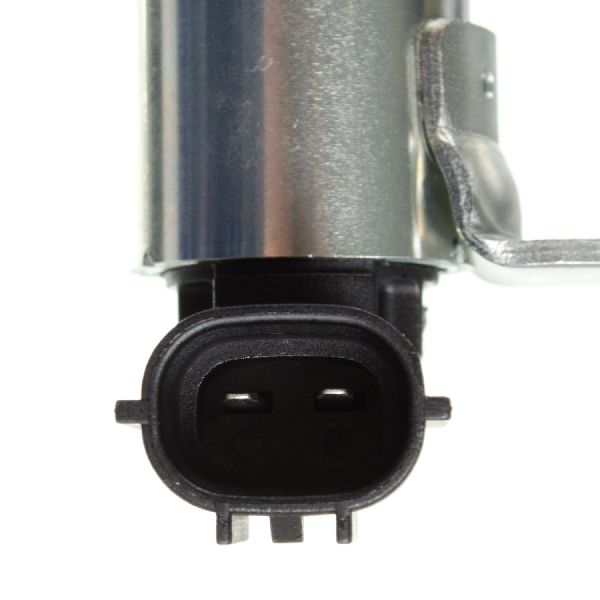
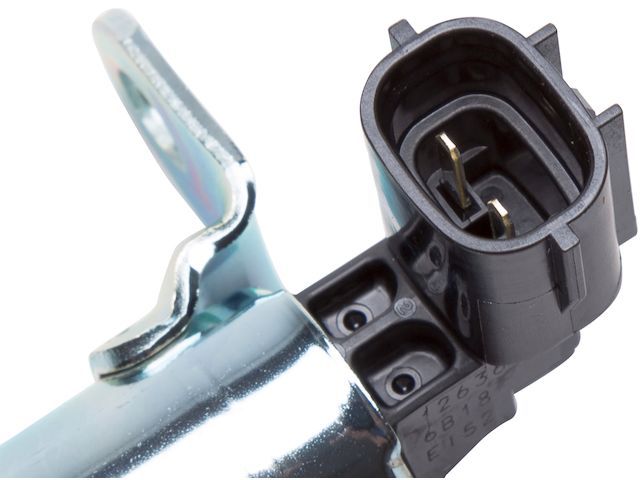
- Faulty Camshaft Actuator Solenoid (VVT Solenoid): → Shop Engine Camshaft These solenoids control oil flow to the cam phasers. They can become clogged with sludge or fail electrically. While they are a possible cause, they are far less common than chain failure. A good diagnostic step is to swap the intake and exhaust solenoids on Bank 1 to see if the code changes from P0016 to P0017.
Diagnosis Steps
- Check engine oil level and condition. Top off or change if necessary with high-quality full synthetic oil.
- Scan the vehicle for any other stored trouble codes. The presence of codes like P0008, P0017, P0018, or P0019 is highly significant.
- Listen for a rattling noise from the passenger side of the engine on a cold start. 🎬 Listen to what a failing timing chain rattle sounds like here.
- As a low-cost diagnostic step, consider swapping the Bank 1 intake and exhaust VVT solenoids to see if the code changes to P0017.
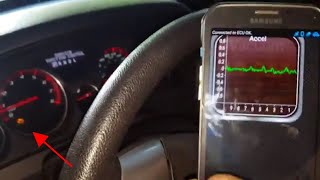
- Using a professional scan tool, monitor the camshaft deviation PIDs. A deviation of more than 4-5 degrees at idle strongly suggests a stretched chain.
- If scan tool data is inconclusive, use a lab scope to compare the crankshaft sensor signal with the Bank 1 intake camshaft sensor signal. A stretched chain will show the cam signal retarded (shifted to the right) relative to a known-good pattern.
- If a stretched chain is confirmed, proceed with timing chain replacement.
- If timing chains are replaced and the code returns, investigate the rare possibility of a shifted crankshaft reluctor wheel as per TSB PIP3423.
Parts You'll Likely Need
- Engine Timing Chain Kit
(OEM #12651450 (often superseded))— This is the primary failure point. A complete kit should include all three chains, all tensioners, and all guides to do the job correctly. The original part number has been superseded by updated versions.
Trusted brands: ACDelco, Cloyes (e.g., 9-0753S)
OEM price range: $400-$600
Aftermarket price range: $250-$450 - Camshaft Position Actuator Solenoid (VVT Solenoid)
(OEM #12655420)— These can get clogged with sludge and are often replaced as a preventative measure or as a diagnostic step, though they are rarely the sole cause of the code.
Trusted brands: ACDelco, Delphi, Dorman
OEM price range: $40-$60
Aftermarket price range: $25-$50 - Engine Front Cover Gasket and Crankshaft
Related Codes That Often Appear With This One
- P0008 — A general engine timing correlation code that often appears as a precursor to more specific codes like P0016, strongly indicating a base timing issue like a stretched chain.
- P0017 — Indicates a correlation fault on the Bank 1 exhaust camshaft. Seeing P0016 (intake) and P0017 (exhaust) together on the same bank is a very strong sign of a stretched timing chain affecting the entire bank.
- P0018 — Indicates a correlation fault on the Bank 2 intake camshaft. If seen with P0016, it suggests the timing issue is severe enough to affect both banks, pointing to the primary chain or a slipped reluctor wheel.
- P0019 — Indicates a correlation fault on the Bank 2 exhaust camshaft. The presence of P0016, P0017, P0018, and P0019 together almost guarantees a major timing chain system failure affecting the entire engine.
Technical Service Bulletins (TSBs) & Recalls
- GM Special Coverage Adjustment #11340C: Extended warranty coverage for timing chain wear on certain 2007-2009 models to 10 years/120,000 miles.
- GM TSB #PIP3423 (multiple revisions, e.g., K, L, P): A key diagnostic document for P0016/P0017/P0018/P0019/P0008/P0009 codes, pointing to either stretched timing chains or a rare but possible shifted crankshaft reluctor wheel. TSB Bulletin #PIP3423P specifically advises technicians to inspect for loose timing chains or tensioners.
- GM TSB #23-NA-091: Notes that on some GM V6 engines, the connectors for the cam actuator and park lock solenoid are identical and can be swapped during reassembly, causing an immediate P0016 code.
Platform-Specific Known Issues
- Premature timing chain stretching is a widely documented problem on the 3.6L V6 engine family (LY7, LLT, LFX) used in these vehicles.
- GM issued Special Coverage Adjustment #11340C which extended the warranty on timing chains to 10 years/120,000 miles for many affected vehicles, including 2007 and 2009 Acadias.
- The original Oil Life Monitor (OLM) programming was criticized for allowing excessively long oil change intervals, contributing to oil sludge and accelerated chain wear. Many owners now proactively change oil every 5,000 miles.
Mechanic-Grade Diagnostic Values
- Camshaft Position Actuator Solenoid (VVT Solenoid) Resistance — expected: 7-12 Ohms. Failure: A reading outside this range, or an open/short circuit, indicates a faulty solenoid.
- Camshaft Position Sensor Resistance — expected: Approximately 1.2 kΩ. Failure: A significant deviation from this value suggests a bad sensor.
- Engine Oil Pressure at Idle (Hot) — expected: At least 25 PSI. Failure: Pressure below this level indicates lubrication starvation, which is a primary cause of timing chain and tensioner wear.
- Camshaft Correlation DTC Trigger Threshold (Bank 1 Intake) — expected: Within 9° retarded or 12° advanced. Failure: The ECM will set P0016 if the camshaft position is outside this range relative to the crankshaft.
- Camshaft Position Variance (Scan Tool PID) — expected: Near 0 degrees at idle. Failure: A consistent deviation of more than +/- 5 degrees at idle points to a mechanical timing issue like a stretched chain.
Scan Tool Commands That Help
- GDS2 / Tech2: Command Camshaft Position Actuator — This bidirectional control allows a technician to command the VVT solenoids ON and OFF to test their mechanical function and the response of the phasers. It helps isolate a stuck solenoid or phaser from a base timing or wiring issue.
- GDS2 / Tech2: Crankshaft Position Variation Learn (Cam/Crank Relearn) — This procedure is required after replacing the timing chains, camshafts, crankshaft, sensors, or the ECM. It synchronizes the ECM with the physical positions of the new components to prevent rough running or persistent codes after the repair.
Wiring & Ground Locations
- G105 / G106 — On the engine block, typically on the left (front) side. G105 is often at the left rear of the engine, while G106 is at the top left front.. The ECM relies on these primary engine grounds for accurate sensor readings. A poor ground connection can introduce electrical noise or voltage offsets, potentially causing the ECM to misinterpret signals from the camshaft and crankshaft position sensors, leading to false timing correlation codes.
- Camshaft Position Sensor Connector — On the front of each cylinder head, connecting to the four camshaft position sensors (Bank 1 Intake/Exhaust, Bank 2 Intake/Exhaust).. The 3-wire connector provides the sensor with a 5V reference, a low reference (ground), and a signal return to the ECM. Damage, corrosion, or oil contamination at the Bank 1 Intake sensor connector can directly cause a P0016 code.
- ECM Connector X1 / X2 — The main connectors at the Engine Control Module (ECM), located in the left front of the engine compartment.. The signal wires from the crankshaft and all four camshaft position sensors terminate at these connectors. A poor pin connection or harness damage near the ECM is a possible, though less common, cause for signal integrity issues that could trigger a P0016.
Real Owner Repair Stories
- YouTube video on a similar VVT engine (Vehicle make/model not specified, but relevant to VVT systems.) — P0016 code and blinking Overdrive light persisted after a timing chain replacement.
❌ Tried (didn't work) Replacing the timing chain and gears., Checking the wiring harness and ECU., Verifying the VVT solenoid sensor was good.
NHTSA ODI #10876640 describes an owner who experienced a returning check engine light with codes P0008, P0016, and P0017, which the owner believed signified a timing chain stretch issue.
✅ What actually fixed it The technician discovered that the oil pressure holes in the intake cam phaser (actuator) were blocked with sludge. This prevented oil from reaching the VVT solenoid, which monitors oil pressure as part of its function. The lack of oil pressure at the solenoid caused the ECU to re-trigger the P0016 code, even with a new chain. The fix was to clear the blockage in the cam phaser's oil passages.
OEM Part Supersession History
12651450→12679117, 12693218, and finally 12700436— GM has updated the timing chain kits for the 3.6L V6 multiple times to improve durability and address the premature stretching issue. The latest part number represents the most current design.
Heads up: While older kits may physically fit, only the latest available part number should be used to ensure the most updated and durable components are installed. Always verify fitment with the vehicle's VIN.
Model Year Variations Within This Range
- 2007-2008 (LY7) vs. 2009-2016 (LLT/LFX): The primary difference is the fuel system. The LY7 uses port fuel injection, while the LLT and LFX use direct injection. This results in different piston designs; the LLT/LFX pistons have a specific shape on top to facilitate direct injection, and the engines have a higher compression ratio (11.3:1 vs 10.2:1 for the LY7). While the timing chain issue is common to all, the engines are not identical.
- Post-2012 (LFX): GM made several changes to the 3.6L engine around the 2012 model year to address the timing chain issues, including improved chain designs. The LFX engine also featured redesigned cylinder heads with integrated exhaust manifolds to save weight. While timing chain problems are less common on post-2012 models, they are not eliminated and remain a primary suspect for P0016.
Diagnostic Flowchart
Real Owner Stories
Aggregated from forums and TSBs cited above. Mileages and costs reflect what owners reported in those sources.
2010 GMC Acadia 3.6L
Symptoms: Check engine light illuminated with codes P0016, P0017, and P0008. The vehicle ran and drove smoothly without misfires, but the RPM fluctuated.
What fixed it: Diagnosed as a timing chain issue requiring replacement.
Source hint: youtube_comment by Antonio Aguirre
GMC Acadia 3.6L
Symptoms: Check engine light with P0016 code, accompanied by DIY diagnostic struggles.
What fixed it: Replaced the timing chains.
Cost: $2500-$4000
Source hint: AcadiaForum.net - Numerous discussions on P0016
2012 GMC Acadia 3.6L
Symptoms: P0016 code triggered by stretched timing chains.
What fixed it: Complete replacement of the timing chains, requiring a complex engine removal and reinstallation process.
Source hint: GMTNation.com - 2012 GMC Acadia Stretched Timing Chains & Engine R&R
GM 3.6L V6
Symptoms: P0016 and P0017 codes that persisted even after the timing chains were replaced.
What fixed it: Replaced the crankshaft because the crankshaft reluctor wheel had slipped, confirming TSB PIP3423P.
Source hint: Camaro5 Forum - User with Slipped Reluctor Wheel
Documented NHTSA Reports
NHTSA ODI #10876640
Symptoms: An owner reported that after initial service, the check engine light returned with codes P0008, P0016, and P0017. The owner noted these codes signified timing issues, specifically timing chain stretch.
What fixed it: The report indicates the owner anticipated an expensive repair for the timing chain system.
Related OBD-II Codes
Frequently Asked Questions
Does GM have a warranty extension for the timing chain issue on my Acadia?
I just replaced my timing chains but the P0016 code immediately came back. What did I do wrong?
How often should I change the oil in my 3.6L V6 to prevent P0016?
Can I just replace the timing chain tensioners to fix the cold start rattle and P0016?
How can a mechanic confirm my Acadia's timing chain is stretched without tearing down the engine?
Helpful Videos


We Have This Part in Stock

The information in this article is provided for general reference and educational purposes only. Vehicle specifications, procedures, and part compatibility can vary by production date, trim level, and region. Always consult your vehicle's factory service manual and verify part numbers before purchasing or performing repairs. Safety-critical components such as airbags, seat belts, and braking systems should be installed by a qualified professional.
- GMC Acadia:
- 🧭 Diagnostic Flowchart
- 🎬 Helpful Videos
- 🛍️ Shop This Part
- What's Unique About the 2007-2016 GMC Acadia
- Symptoms You May Notice
- Most Likely Causes
- Rare But Worth Checking
- Diagnosis Steps
- Parts You'll Likely Need
- Related Codes That Often Appear With This One
- Technical Service Bulletins (TSBs) & Recalls
- Platform-Specific Known Issues
- Mechanic-Grade Diagnostic Values
- Scan Tool Commands That Help
- Wiring & Ground Locations
- Real Owner Repair Stories
- OEM Part Supersession History
- Model Year Variations Within This Range
- Real Owner Stories
- 2010 GMC Acadia 3.6L
- GMC Acadia 3.6L
- 2012 GMC Acadia 3.6L
- GM 3.6L V6
- Documented NHTSA Reports
- NHTSA ODI #10876640
- Related OBD-II Codes
- Frequently Asked Questions
- 🎟️ Get 5% Off