

P0016 on 2023 GMC Acadia: Crankshaft-Camshaft Correlation Causes and Fixes
On a 2023 GMC Acadia with the 3.6L V6, code P0016 almost always points to a mechanical timing issue, most commonly a stretched timing chain. This is a critical issue requiring immediate attention to prevent catastrophic engine failure. Professional repair, involving replacement of the complete timing chain kit, is highly recommended, with costs potentially ranging from $1,500 to over $3,500.
- P0016 on a 2023 GMC Acadia is a critical code that should be addressed immediately to prevent catastrophic engine failure.
- The most likely cause is a stretched timing chain or failed tensioner, a known issue with this engine family.
- Do not drive the vehicle. A stretched chain can break or jump, leading to pistons hitting valves.
- Simple fixes like replacing the camshaft sensor are very unlikely to solve the problem and are a common misdiagnosis.
- If the code appeared right after an engine repair, check for swapped connectors as described in TSB #23-NA-091 before assuming a major mechanical failure.
What's Unique About the 2023-2023 Gmc ACADIA
While the 3.6L V6 engine in the 2023 Acadia is an updated design (LFY), the GM 3.6L 'High Feature' engine family has a long, well-documented history of premature timing chain wear and stretching. This issue was particularly prevalent in earlier Acadia models (2007-2014), leading to special warranty coverage from GM (#11340C). 🎬 Learn more about GM's extended warranty for these timing codes. Though designs have improved, the timing chain system remains the primary suspect for a P0016 code, often more so than simple sensor failures. The problem is so common that multiple Technical Service Bulletins (like #PIP3423P) have been issued, directing technicians to inspect for loose timing chains when P0016 and related codes appear.
Diagnostic Flowchart
Tap your situation to follow the diagnostic path that matches what you're seeing on this vehicle.
Symptoms You May Notice
- Check Engine Light illuminated
- Rough or unstable idle
- Engine rattling noise, especially on a cold start, that may indicate a failing tensioner
- Reduced engine performance and poor acceleration
- Engine cranks but fails to start (in severe cases)
- Engine may stall unexpectedly
- Fluctuating idle RPM
- Replacing the camshaft or crankshaft position sensors. On this platform, a P0016 code is far more likely to be a mechanical timing issue rather than a sensor failure. Technicians and owner forums frequently note that replacing sensors alone rarely fixes the problem and is a waste of money.
Most Likely Causes
- Stretched Timing Chain(s) 🔴 High Probability → Shop Engine Timing Chain The GM 3.6L engine family has a historical weakness with timing chains, which can stretch prematurely. While designs have improved from early versions, and proper oil maintenance is key, the chains remain the most probable cause for P0016.
How to confirm: Diagnosis requires an advanced scan tool to read camshaft deviation data; a sustained deviation of more than +/- 5 degrees at idle points to a mechanical issue. A definitive diagnosis can be made electronically with a lab scope comparing cam and crank signals, or physically by inspecting the chains for slack after removing the engine's front timing cover.
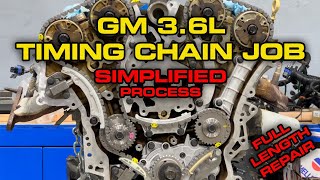
Typical fix: Replace all three timing chains, all tensioners, and all guides as a complete kit. It is not recommended to replace only the faulty components. Using the latest revised OEM parts is critical.
Est. part cost: $300-$900 - Failed Timing Chain Tensioner 🔴 High Probability → Shop Engine Timing Chain The hydraulic tensioners rely on clean oil and proper pressure to keep the chains tight. Sludge from infrequent oil changes can cause them to fail, get stuck, or leak, leading to chain slack. A broken tensioner has been documented as a specific cause for P0016.
How to confirm: A rattling noise on startup that quickly disappears is a classic sign of a failing tensioner bleeding down oil pressure. Confirmation requires visual inspection during a timing chain service.
Typical fix: Replace the tensioners. However, because reaching the tensioners requires the same labor as a full chain replacement, it is strongly recommended to replace them as part of a complete timing chain kit.
Est. part cost: $50-$150 - Low or Dirty Engine Oil 🟡 Medium Probability The entire Variable Valve Timing (VVT) system, including the cam phasers and hydraulic tensioners, is operated by oil pressure. Low or contaminated oil can impede their function, leading to slow phaser response or tensioner failure, which can trigger correlation faults. Some blame GM's historically long Oil Life Monitor (OLM) intervals for accelerating wear.
How to confirm: Check the oil level on the dipstick and inspect its condition. If it is low, dark, or sludgy, this is a likely contributing factor. An owner on a forum attempted an engine flush to fix P0016/P0017 codes, but the codes remained, suggesting the damage was already done.
Typical fix: Perform an oil and filter change using the manufacturer-specified oil (full synthetic ACDelco dexos-approved 5W-30). If the code returns, the low/dirty oil has likely caused or revealed permanent mechanical wear to the timing components.
Est. part cost: $50-$100 - Faulty Camshaft Actuator Solenoid (VVT Solenoid) ⚪ Low Probability → Shop Engine Camshaft These solenoids control oil flow to the cam phasers and can get clogged with debris from dirty oil or fail electronically. While a possible cause, it's far less common than mechanical chain issues for this specific code on this engine.
How to confirm: An advanced scan tool can command the solenoid to check for response. They can also be removed and inspected for clogged screens or tested for resistance (expected range is typically 8-13 Ohms). A common diagnostic trick is to swap the Bank 1 intake and exhaust solenoids; if the code changes from P0016 to P0017, the solenoid is faulty.
Typical fix: Replace the Bank 1 intake VVT solenoid. It is often recommended to replace them in pairs or all four at once if oil contamination is suspected.
Est. part cost: $30-$80
Rare But Worth Checking
- Swapped Electrical Connectors After Service: According to TSB #23-NA-091, if the code appears immediately after engine repair, it's possible that two identical-looking connectors (the Bank 1 intake camshaft actuator solenoid and the intake actuator park lock solenoid) were swapped. They can only be identified by wire color.
- Slipped Crankshaft Reluctor Wheel: → Shop Engine Crankshaft This is a very rare failure where the toothed wheel on the crankshaft that the position sensor reads moves slightly, throwing off all timing readings. TSBs like PIP3423P mention this as a possibility to check before major engine disassembly. It can sometimes be inspected with a borescope through the crank sensor hole. This typically requires crankshaft replacement to fix.
- Sticking Intake Camshaft Park Lock Solenoid: → Shop Engine Camshaft Distinct from the VVT solenoids, TSB #PIP5730B notes that for 2017+ engines like the LFY, the 'Park Lock' solenoid can stick or break apart. This can cause P0016 even if the main timing components are in good condition. Diagnosis requires removing and inspecting this specific solenoid, which is located on the front of the timing cover.
Diagnosis Steps
- Confirm P0016 is present and check for any other codes (like P0008, P0017, P0018) using an OBD-II scanner.
- Check the engine oil level and condition. If low or dirty, perform an oil and filter change with GM dexos-approved full synthetic oil, clear the code, and see if it returns. This is a cheap first step but rarely a final fix.
- Listen for a rattling noise from the passenger side of the engine during a cold start, which could indicate a bad tensioner or chain slack.
- If the code appeared immediately after an engine repair, check the wiring connectors for the Bank 1 intake cam actuator and park lock solenoid to ensure they are not swapped, per TSB #23-NA-091.
- Using an advanced scan tool, monitor the cam/crank correlation data (Camshaft Position Variance) to see the degree of deviation. At idle, it should be near 0 degrees. A consistent deviation of more than +/- 5 degrees indicates a mechanical timing problem.
- Test the Bank 1 intake VVT solenoid. Command it with a scan tool or swap it with the exhaust solenoid to see if the code follows (changes to P0017).
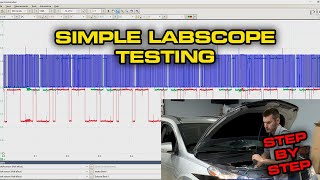
- If a mechanical fault is suspected, use a lab scope to compare the crankshaft and camshaft sensor waveforms against a known-good pattern. This can confirm chain stretch without engine disassembly.
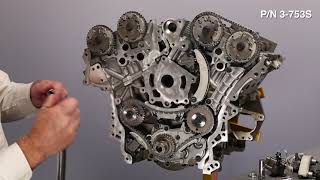
- If all signs point to a mechanical fault, the final step is to remove the timing cover for a physical inspection of the chains, guides, and tensioners. This is a significant undertaking and is best left to a professional.
Parts You'll Likely Need
- Engine Timing Chain Kit
(OEM #12690388)— This is the most common cause of P0016
Related Codes That Often Appear With This One
- P0008 — This is a more general Engine Position System Performance code for Bank 1. It is often the first code to appear as timing chains begin to stretch and serves as a precursor to more specific codes like P0016.
- P0018 — This is the correlation code for the Bank 2 intake camshaft. Seeing P0016 and P0018 together strongly suggests an issue with the primary timing chain affecting both banks, or a slipped crank reluctor wheel.
- P0017 — This is the correlation code for the Bank 1 exhaust camshaft. If P0016 and P0017 appear together, it points to a timing issue affecting the entire Bank 1 chain, making a stretched chain highly probable.
- P0019 — This is the correlation code for the Bank 2 exhaust camshaft. Seeing all four codes (P0016, P0017, P0018, P0019) almost certainly confirms a major timing system failure affecting the entire engine.
Technical Service Bulletins (TSBs) & Recalls
- TSB #23-NA-091: Warns of swapped electrical connectors for the Bank 1 intake camshaft actuator solenoid and the intake actuator park lock solenoid causing P0016/P0018 after engine repairs.
- TSB #PIP3423P: Directly links codes P0016, P0017, P0018, P0019, P0008, or P0009 to loose timing chains or a slipped crankshaft reluctor wheel.
- TSB #12-06-01-009F: Provides information on updated timing chain service kits released by GM to address premature wear issues.
- TSB #PIP5730B: Communicates additional diagnostic information for DTCs P0016 and P0018.
Platform-Specific Known Issues
- The GM 3.6L V6 engine family has a well-documented history of timing chain issues, acknowledged by the manufacturer through multiple Technical Service Bulletins (e.g., PIP3423P, 12-06-01-009F) and a special coverage warranty extension (#11340C) on previous generations.
- TSB #23-NA-091 specifically calls out the possibility of swapped electrical connectors on the Bank 1 intake side after a repair, which can set a P0016 code.
- Forum discussions on sites like acadiaforum.net and traverseforum.com are filled with owner experiences detailing P0016 leading to timing chain replacement, with repair quotes often exceeding $2,500-$3,500.
Mechanic-Grade Diagnostic Values
- VVT Actuator Solenoid Resistance — expected: 8 to 13 Ohms. Failure: A reading that is bouncing around, open circuit (OL), or shorted (near 0 Ohms) indicates a failed solenoid.
- Camshaft Position Variance (Scan Tool PID) — expected: Near 0 degrees at idle. Failure: A consistent deviation of more than +/- 5 degrees indicates a mechanical timing issue, such as a stretched chain.
- Camshaft Position Sensor Signal Circuit Voltage (Key On, Engine Off) — expected: 4.8 to 5.2 Volts (Reference Voltage). Failure: Voltage outside this range points to a wiring or ECM issue, not necessarily a failed sensor.
Scan Tool Commands That Help
- GDS2 / Tech2: Camshaft Position Actuator Solenoid Control — To bidirectionally command the VVT solenoid on and off while monitoring live data for a change in camshaft angle. This isolates a faulty solenoid from a mechanical phaser or chain issue.
- GDS2 / Tech2: Crankshaft Position Variation Learn — This procedure MUST be performed after replacing the crankshaft position sensor or the ECM. It synchronizes the ECM to the physical crankshaft reluctor wheel. Failure to perform this can cause other running issues.
Wiring & Ground Locations
- G103 / G106 — Typically located on the cowl in the rear of the engine compartment, often near the brake booster or a hood hinge.. This is a major ground point for the Engine Control Module (ECM). A loose or corroded connection here can cause erratic ECM behavior and introduce electrical noise into sensor signals, potentially leading to false correlation codes.
- Engine Harness Grounds to Cylinder Head/Block — The 3.6L engine has several smaller ground wires from the main harness that bolt directly to the rear of the cylinder heads or engine block.. These grounds are essential for the proper operation of the camshaft position sensors and VVT solenoids. A poor connection can cause incorrect readings or intermittent function.
- Intake Camshaft Actuator & Park Lock Solenoid Connectors — Bank 1 (firewall side). The VVT actuator solenoid is on top of the engine/valve cover, while the park lock solenoid is on the front of the engine timing cover.. Per TSB #23-NA-091, these two connectors are identical and can be swapped during reassembly after a repair. This will immediately set code P0016. They can only be identified by wire color.
Real Owner Repair Stories
- YouTube user 'zmotorsports' (2007 GMC Sierra 5.3L (different engine, but same code principle)) — Constant Check Engine Light with code P0016. The truck still ran, but the light was always on.
❌ Tried (didn't work) Replacing the camshaft position sensor, Replacing the crankshaft position sensor
✅ What actually fixed it The timing chain tensioner had broken, causing the timing to jump by one tooth. The final fix was a full timing chain service to re-time the engine and replace the broken tensioner. - Diagnostic Forum User (2016 Chevy Camaro 3.6L (LGX engine) with 132k miles) — P0016 and P0018 codes set simultaneously with no audible noise or other driveability issues.
❌ Tried (didn't work) Visually inspected the Intake Cam Park Lock solenoids (per a TSB), which appeared fine.
✅ What actually fixed it The user captured cam/crank waveforms with an oscilloscope and compared them to known-good patterns. The analysis showed the Bank 1 intake cam was retarded by 8-9 degrees and the Bank 2 intake cam was retarded by about 6 degrees, confirming stretched timing chains were the root cause, requiring a full timing chain replacement.
OEM Part Supersession History
12680750→12690388, then 12709595— GM frequently updates timing chain kit components, including chain, guide, and tensioner designs, to improve durability and combat premature wear.
Heads up: It is critical to use the latest available OEM part number when performing a timing chain replacement to benefit from the most recent design improvements. Using old stock may lead to a repeat failure.12588943, 12615613, 12626012→12636175— Revisions to the VVT Solenoid (Camshaft Position Actuator) to improve reliability and resistance to oil contamination.
Helpful Videos

The information in this article is provided for general reference and educational purposes only. Vehicle specifications, procedures, and part compatibility can vary by production date, trim level, and region. Always consult your vehicle's factory service manual and verify part numbers before purchasing or performing repairs. Safety-critical components such as airbags, seat belts, and braking systems should be installed by a qualified professional.
- Gmc ACADIA:
- 🧭 Diagnostic Flowchart
- 🎬 Helpful Videos
- What's Unique About the 2023-2023 Gmc ACADIA
- Symptoms You May Notice
- Most Likely Causes
- Rare But Worth Checking
- Diagnosis Steps
- Parts You'll Likely Need
- Related Codes That Often Appear With This One
- Technical Service Bulletins (TSBs) & Recalls
- Platform-Specific Known Issues
- Mechanic-Grade Diagnostic Values
- Scan Tool Commands That Help
- Wiring & Ground Locations
- Real Owner Repair Stories
- OEM Part Supersession History
- 🎟️ Get 5% Off