

P0016 on 2004-2011 GMC Canyon: Crank/Cam Correlation Causes and Fixes
P0016 on a first-generation GMC Canyon most often points to a stretched timing chain, a faulty camshaft actuator (VVT) solenoid, or a loose crankshaft balancer bolt. Changing the VVT solenoid is an easy DIY fix for under $50, but a timing chain replacement is a major repair costing over $1,500.
- P0016 on a 2004-2011 Canyon is a serious code indicating a mechanical timing problem.
- Before suspecting a major repair, check the engine oil and consider replacing the Camshaft Actuator (VVT) Solenoid, as it's a common, cheap, and easy fix.
- Listen for a rattling noise from the front of the engine; this could point to either a loose crankshaft balancer bolt (an easy fix) or a stretched timing chain (an expensive fix).
- Do not ignore this code. Driving with a severe timing issue can lead to catastrophic engine failure.
What's Unique About the 2004-2011 Gmc CANYON
The first-generation GMC Canyon, with its Atlas family of inline-four and inline-five engines, has specific vulnerabilities that lead to code P0016. A notable issue, identified in GM Technical Service Bulletin #PIP4581B, is the potential for the crankshaft balancer bolt to loosen, causing the harmonic balancer to wobble and disrupt the crankshaft position sensor's reading. Additionally, the original camshaft actuator solenoids (VVT solenoids) were known to have fine mesh screens that could tear or break off, sending debris into the engine's oil passages and causing timing issues. This is a widely documented failure point on owner forums. These platform-specific problems are common culprits for P0016, alongside the more universal issue of timing chain stretch, which is also prevalent in higher-mileage Atlas engines. A more hidden issue on these engines is the potential for the crankshaft reluctor wheel to spin on the crankshaft, which will set correlation codes even if the timing chain is perfect.
Diagnostic Flowchart
Tap your situation to follow the diagnostic path that matches what you're seeing on this vehicle.
Symptoms You May Notice
- Check Engine Light is on
- Engine runs rough or has a rough, shaky idle
- Reduced engine power and sluggish acceleration
- Engine cranks but may not start
- Rattling or ticking noise from the front of the engine, especially on a cold start
- Worse than usual fuel economy
- Engine stalling, especially when coming to a stop
- Replacing the camshaft and crankshaft position sensors immediately. While they can fail, the root cause for P0016 on this truck is more often mechanical (timing chain, VVT solenoid) or oil-related. It's a common mistake to 'throw parts' at the problem without proper diagnosis.
- Assuming any engine rattle is a death sentence. While a timing chain rattle is serious, a rattle could also be from a loose harmonic balancer, which is a much simpler fix as described in TSB #PIP4581B.
Most Likely Causes
- Stretched Timing Chain or Worn Timing Components 🔴 High Probability → Shop Engine Timing Chain The Atlas engines are known to experience timing chain stretch and guide wear, particularly over 100,000 miles. Lack of regular oil changes accelerates this wear, causing slack in the system and incorrect timing correlation.
How to confirm: A mechanic can use a scan tool to view live data and see the cam/crank correlation deviation. A physical inspection is more definitive; this requires removing the valve cover to visually inspect the timing chain tensioner. If the tensioner piston is extended significantly (e.g., more than half an inch), it confirms the chain has stretched.
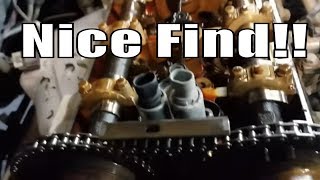
Typical fix: Replace the timing chain, tensioner, and all guides. 🎬 See this step-by-step timing chain replacement walkthrough This is a labor-intensive job often costing over $1,500.
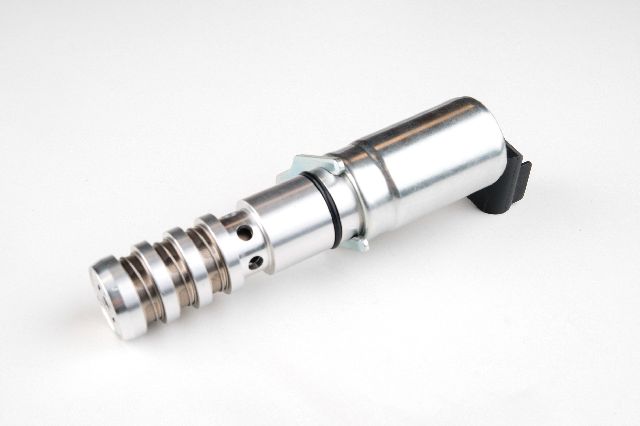
Est. part cost: $200-$400 - Faulty Camshaft Actuator Solenoid (VVT Solenoid) 🟡 Medium Probability → Shop Engine Camshaft The original solenoids used fine mesh screens that can tear, get clogged with oil sludge, or fail electronically. This prevents the VVT system from adjusting cam timing correctly. This is a very common failure and a frequent topic in owner forums.
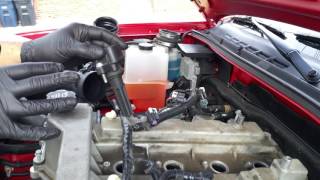
How to confirm: Unplug the solenoid and check its resistance with a multimeter; a reading between 6.9 and 7.9 ohms is expected. A more practical test is to remove it (held by one bolt) and inspect for clogged or torn screens. Applying 12V to the terminals should make the internal plunger move, causing an audible click. 🎬 Watch: How to test and clean your VVT solenoid
Typical fix: Replace the camshaft actuator solenoid. It's located on the top-front of the engine and is easily accessible.
Est. part cost: $25-$75 - Low or Dirty Engine Oil 🟡 Medium Probability The VVT system is entirely dependent on clean oil at the correct pressure to function. The Atlas engines are sensitive to oil level and condition; sludgy or low oil can't operate the camshaft phasers properly, leading to a correlation error.
How to confirm: Check the oil level and condition on the dipstick. If it's low, black, or sludgy, this is a likely contributor. Some owners report the code appearing only when oil is low.
Typical fix: Perform an oil and filter change using the manufacturer-specified grade of oil (e.g., 5W-30). Clear the code and drive to see if it returns.
Est. part cost: $40-$80 - Loose Crankshaft Balancer Bolt ⚪ Low Probability → Shop Engine Crankshaft As noted in TSB #PIP4581B, the crankshaft balancer bolt can loosen. This causes the harmonic balancer, which has the reluctor wheel for the crank sensor, to wobble. This wobble creates an erratic signal from the crankshaft position sensor, leading to a false correlation error with the camshaft.
How to confirm: With the engine running, carefully observe the crankshaft pulley/balancer at the front of the engine for any wobble. A mechanic must check the torque on the bolt, which requires special tools to hold the crankshaft from turning.
Typical fix: Re-torque the crankshaft balancer bolt to the manufacturer's specification (55 lb-ft + 120 degrees), as stated in the TSB. If the threads in the crankshaft are damaged, a thread repair kit (Heli-Coil) may be necessary.
Est. part cost: $0-$20 (if a new bolt or thread repair kit is needed)
Rare But Worth Checking
- Faulty Crankshaft or Camshaft Position Sensor: → Shop Engine Camshaft Position Sensor While sensors can fail, it's less common for them to cause a P0016 code than a mechanical timing issue or VVT solenoid failure. Usually, a bad sensor will trigger its own specific performance code (e.g., P0335, P0340) in addition to P0016. Many owners replace these sensors first, only to have the code return.
- Damaged or Spun Crankshaft Reluctor Wheel: → Shop Engine Crankshaft The reluctor wheel (tone ring) that the crankshaft sensor reads is press-fit onto the crankshaft and not keyed. GM issued a TSB (PIP3423L) indicating this wheel can move or spin on the crank, causing a persistent timing correlation error even with a new timing chain. This requires removing the oil pan or using a borescope through the crank sensor hole to inspect its position relative to the crankshaft throw.
- Failed Camshaft Phaser: → Shop Engine Camshaft The actuator on the end of the camshaft itself, known as a phaser, can get stuck or fail internally. This is a more involved repair than the VVT solenoid and requires removing the valve cover and timing components.
Diagnosis Steps
- Check engine oil level and condition. If low or dirty, perform an oil change with the correct grade oil and a new filter. Clear the code and re-test. This simple step solves the issue surprisingly often.
- Scan for other codes. Codes like P0017, P0014, or sensor-specific codes (P0335, P0340) can help narrow down the diagnosis.
- Inspect and test the Camshaft Actuator (VVT) Solenoid. It's easy to access (one 10mm bolt). Remove it, inspect the screens for tears or debris, and test its resistance with a multimeter (should be 6.9-7.9 ohms).
- With the engine running, carefully observe the crankshaft pulley/harmonic balancer for any wobble. If wobble is present, investigate the crankshaft balancer bolt torque per TSB #PIP4581B. This is a known issue.
- If the above steps don't resolve the issue, the next step is to investigate a potential slipped crankshaft reluctor wheel as per TSB PIP3423L. This can sometimes be viewed with a borescope through the crankshaft position sensor hole.
- If the reluctor is confirmed to be in the correct position, inspect the timing system. This involves removing the valve cover to check the timing chain tensioner for over-extension, which indicates a stretched chain.
- If significant chain stretch is confirmed, a full timing chain service is required.
- After major repairs like timing chain or crankshaft sensor replacement, a 'Crankshaft Position Variation Learn' procedure using a GM Tech2 or equivalent high-level scan tool is often required to clear a resulting P0315 code and ensure proper timing calibration.
Parts You'll Likely Need
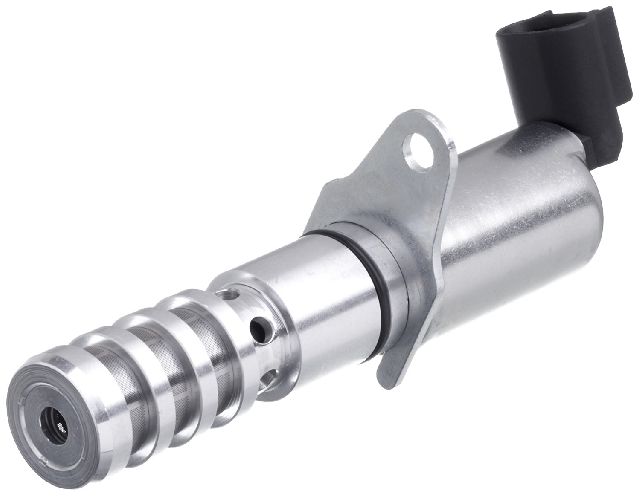
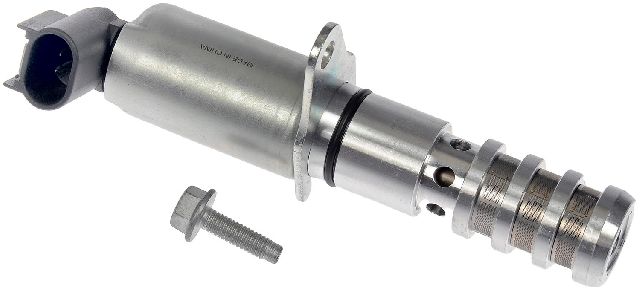
- Camshaft Position Actuator Solenoid (VVT Solenoid)
(OEM #12615873)— A very common failure point due to clogging or screen failure. It's an easy and affordable part to replace as a first step. The original design is known to be failure-prone.
Trusted brands: ACDelco (GM Genuine), Dorman (917-010)
OEM price range: $40-$60
Aftermarket price range: $25-$45 - Timing Chain Kit — Timing chain stretch is the most common major mechanical cause of P0016 on higher-mileage Atlas engines. A full kit includes the chain, guides, and tensioner.
Trusted brands: Cloyes, ACDelco
OEM price range: $300-$500
Aftermarket price range: $200-$400
Related Codes That Often Appear With This One
- P0017 — This code indicates a correlation issue with the exhaust camshaft. Seeing P0016 and P0017 together strongly points towards a base timing problem, like a stretched chain or a loose crankshaft balancer, that affects the timing reference for both camshafts.
- P0014 — This code is for 'Camshaft Position B - Timing Over-Advanced'. It often relates to a stuck or faulty VVT solenoid, which is also a primary cause of P0016.
- P0300 — A general/random misfire code. Incorrect cam/crank timing can easily lead to misfires as the valve events and spark delivery are not happening at the optimal moment.
- P0315 — This code for 'Crankshaft Position System Variation Not Learned' can appear after replacing a crankshaft sensor or performing major engine work. It indicates a specific scan tool relearn procedure is required to calibrate the new sensor's signal to the ECM.
Technical Service Bulletins (TSBs) & Recalls
- PIP4581B: Notes that if a rattle noise is present with code P0016 or P0017 and standard diagnostics don't find a cause, the crankshaft balancer bolt should be inspected for looseness and re-torqued to specification (55 lb-ft + 120 degrees).
Platform-Specific Known Issues
- A known issue documented in TSB #PIP4581B involves the crankshaft balancer bolt loosening, which can cause a P0016 code accompanied by a rattle noise. The fix is to re-torque the bolt to specification.
- The original design of the VVT solenoid included screens that were prone to tearing and failing. The updated ACDelco part 12615873 is considered the reliable replacement.
- On the 355nation.net forums, a common repair thread for P0016 involves owners first replacing the VVT solenoid. If the code returns, they proceed to check the timing chain, with many confirming a stretched chain was the ultimate culprit, especially on trucks with over 100k-130k miles.
Mechanic-Grade Diagnostic Values
- Camshaft Actuator (VVT) Solenoid Resistance — expected: 6.9 to 7.9 Ohms at 68°F (20°C). A general acceptable range is often cited as 7 to 14 Ohms.. Failure: A reading of 0 Ohms (short circuit) or infinite/OL (open circuit).
- Crankshaft Reluctor Wheel Position — expected: 25mm to 26mm from the machined surface of the crankshaft throw to the edge of the open space in the reluctor wheel.. Failure: Any measurement outside this range indicates the reluctor has spun on the crankshaft, requiring crankshaft replacement.
Hidden / Shadow Codes Worth Checking
- P0315: Crankshaft Position System Variation Not Learned. This is not a fault code in the traditional sense, but an informational code indicating the ECM has not learned the specific signature of the crankshaft position sensor's reluctor wheel. It requires a specific procedure to resolve. (see via Standard OBD-II scanner. It often appears after replacing the crankshaft, crankshaft sensor, or ECM, or after performing major timing work.)
Scan Tool Commands That Help
- GM Tech2 or equivalent professional scan tool: Crankshaft Position Variation Learn — This procedure is required to resolve a P0315 code. It must be performed after replacing the crankshaft position sensor, crankshaft, or ECM to calibrate the precise position of the new components for the ECM. The procedure involves warming the engine, applying the brake, and accelerating to wide-open throttle until fuel cut-off occurs, allowing the ECM to learn the new values.
- Professional scan tool with bidirectional controls: VVT Solenoid Control — To test the functionality of the VVT solenoid and phaser. A technician can command the solenoid to advance or retard timing while monitoring live data for the camshaft angle. A change in engine idle and reported cam angle confirms the system is mechanically responding.
Wiring & Ground Locations
- G101 — Lower left side of the engine block.. This is a primary ground for the Engine Control Module (ECM). A poor connection here can cause erratic ECM behavior and false sensor readings, potentially leading to a P0016 code.
- G103 — On the cowl in the left rear of the engine compartment, above the brake booster.. Grounds numerous components including the Data Link Connector (DLC). A poor ground here could interfere with scan tool communication during diagnosis.
- SP105 / SP106 (Splice Packs) — SP-105 is on the driver's side near the battery; SP-106 is on the passenger side behind the engine airbox.. These factory ground splice packs are known weak points that corrode and cause widespread, intermittent electrical issues. Problems with the EBCM, fuel pump, and other modules grounded here can sometimes create confusing electrical noise that may impact sensor readings.
"I Checked Everything" — The Actual Cause
- A common scenario for a persistent P0016 on this engine is when a technician replaces the timing chain, guides, and tensioner, clears the code, but it returns. The standard mechanical fix did not work. The actual cause, as documented in GM TSB PIP3423L, is often a spun crankshaft reluctor wheel. Because the wheel is press-fit and not keyed, it can move slightly, creating a permanent offset between the true crank position and what the sensor reports. This is missed because it's an internal crankshaft issue, not a problem with the more commonly replaced timing components.
OEM Part Supersession History
12568078, 12576768, 12597025, 12602516→12615873— Likely design improvements to the screen and internal valve to prevent clogging and failure, which were common issues with the original parts.
Model Year Variations Within This Range
- 2004-2006: These years used the 2.8L I4 (LK5) and 3.5L I5 (L52) engines. These early Atlas engines featured a fully counterweighted (12 counterweight) crankshaft.
- 2007-2011: Engines were updated to the 2.9L I4 (LLV) and 3.7L I5 (LLR) with a larger bore. These 'Gen 2' Atlas engines also received larger valves and cams but moved to a lighter 8-counterweight crankshaft. The VVT system on the exhaust cam was carried over from the earlier engines.
Helpful Videos
We Have This Part in Stock


The information in this article is provided for general reference and educational purposes only. Vehicle specifications, procedures, and part compatibility can vary by production date, trim level, and region. Always consult your vehicle's factory service manual and verify part numbers before purchasing or performing repairs. Safety-critical components such as airbags, seat belts, and braking systems should be installed by a qualified professional.
- Gmc CANYON:
- 🧭 Diagnostic Flowchart
- 🎬 Helpful Videos
- 🛍️ Shop This Part
- What's Unique About the 2004-2011 Gmc CANYON
- Symptoms You May Notice
- Most Likely Causes
- Rare But Worth Checking
- Diagnosis Steps
- Parts You'll Likely Need
- Related Codes That Often Appear With This One
- Technical Service Bulletins (TSBs) & Recalls
- Platform-Specific Known Issues
- Mechanic-Grade Diagnostic Values
- Hidden / Shadow Codes Worth Checking
- Scan Tool Commands That Help
- Wiring & Ground Locations
- "I Checked Everything" — The Actual Cause
- OEM Part Supersession History
- Model Year Variations Within This Range
- 🎟️ Get 5% Off