

P0016 on 2015-2021 GMC Canyon 3.6L: Timing Chain and Sensor Guide
On the 2015-2021 GMC Canyon with the 3.6L V6 engine, code P0016 almost always points to a stretched timing chain and worn tensioners. This is a serious mechanical failure requiring a complex repair; expect a shop cost of over $1,500. Before assuming a chain failure, check for low/dirty oil and investigate less common causes like faulty camshaft solenoids as outlined in GM TSBs.
- P0016 on a 2015-2021 GMC Canyon 3.6L strongly indicates a mechanical problem with the timing chains.
- Do not simply replace the camshaft or crankshaft sensors; they are likely working correctly and reporting a real timing misalignment.
- The first and easiest check is the engine oil level and condition. Low or dirty oil can cause issues with the timing system.
- This is a serious code. Driving with it risks the timing chain skipping or breaking, which can destroy the engine.
- Repair is expensive and complex, requiring a full timing chain service by a professional familiar with GM V6 engines.
What's Unique About the 2015-2021 Gmc CANYON
The High Feature (HFV6) 3.6L engine family has a well-documented history of premature timing chain wear. The 'stretch' is actually accumulated wear in the chain's pins and links, often accelerated by extended oil change intervals. While the 2015-2016 LFX engine is a continuation of the earlier design known for this issue, the updated LGZ engine (2017+) features a simplified, quieter timing drive system intended to improve service life. Despite the improvements, the LGZ is not immune to timing chain problems, and this mechanical fault remains the primary suspect for P0016 over sensor or electrical failures.
Diagnostic Flowchart
Tap your situation to follow the diagnostic path that matches what you're seeing on this vehicle.
Symptoms You May Notice
- Check Engine Light illuminated
- Engine rattling or scraping noise, especially on cold startup, coming from the front of the engine 🎬 Listen: What a failing 3.6L LFX engine rattle sounds like.
- Rough or unstable idle
- Reduced engine power and sluggish acceleration
- Engine misfires, which may trigger other codes
- In severe cases, the engine may crank but not start
- No noticeable symptoms other than the Check Engine Light, as noted in TSB PIP5730B
- Replacing only the camshaft or crankshaft position sensor. These sensors are robust and rarely fail; they are almost always accurately reporting a real mechanical timing issue. Replacing them is a waste of money if the timing system is not diagnosed first.
Most Likely Causes
- Stretched Timing Chains 🔴 High Probability → Shop Engine Timing Chain The GM 3.6L V6 has a known design weakness with premature timing chain stretching, caused by wear on the chain's internal pins. Long oil change intervals or low oil levels exacerbate this wear.
How to confirm: A technician can use a scan tool to view camshaft deviation data; 🎬 Watch: How to determine if you need a new timing chain. significant variance points to a timing issue. A definitive diagnosis requires physically inspecting the chains for slack by looking at the tensioner piston extension after removing the front timing cover.
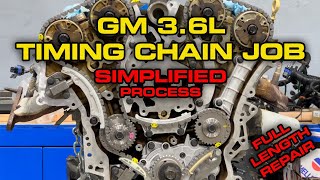
Typical fix: Replace all three timing chains, all guides (especially the plastic/nylon ones which become brittle), and all three tensioners. It is highly recommended to also replace the water pump, camshaft sprockets (phasers), and VVT solenoids at the same time.
Est. part cost: $300-$700 for a complete, high-quality timing chain kit. - Failed Timing Chain Tensioner(s) 🔴 High Probability → Shop Engine Timing Chain The tensioners are operated by oil pressure and have seals that can fail or weaken, causing them to lose their ability to keep the chain taut. A stuck or failed tensioner is a common point of failure.
How to confirm: Diagnosed during a physical inspection. A fully extended tensioner piston is a clear sign that the chain has stretched beyond its service limit.
Typical fix: Always replaced as part of a complete timing chain service. Never replace just a tensioner without replacing the chains.
Est. part cost: $50-$150 (typically included in a full kit). - Low or Dirty Engine Oil 🟡 Medium Probability The entire variable valve timing system, including the cam phasers and chain tensioners, is dependent on clean oil at the correct pressure. Sludge from infrequent oil changes can clog passages in the VVT solenoids and phasers, and low oil levels can cause tensioner failure, leading to chain slack and jumping time.
How to confirm: Check the oil level and condition. If the oil is significantly low, black, or sludgy, it is a major contributing factor. An oil change may be a temporary fix if no hard part has failed yet.
Typical fix: Perform an oil and filter change using a full synthetic oil that meets the GM dexos specification. If the code returns, mechanical wear has already occurred and parts replacement is necessary.
Est. part cost: $50-$100 - Faulty Camshaft Position Actuator Solenoid (VVT Solenoid) ⚪ Low Probability → Shop Engine Camshaft These solenoids control oil flow to the cam phasers. They can get clogged with debris from dirty oil or fail electrically. While a possible cause, they are often replaced unnecessarily when the true fault is mechanical (the chain).
How to confirm: Can be tested for resistance (typically 8-13 ohms). A more effective test is to swap the intake and exhaust solenoids on Bank 1 to see if the code changes to P0017 (exhaust correlation). A scan tool can also command them to check for response.
Typical fix: Replace the faulty solenoid. They are accessible after removing the engine cover and sometimes the throttle body.
Est. part cost: $30-$80
Rare But Worth Checking
- Sticking Intake Camshaft Park Lock Solenoid: → Shop Engine Camshaft TSB #PIP5730B points to a unique issue on the LGZ/LGX engines where the 'Park Lock' solenoid (a separate part from the VVT solenoid) can stick or come apart. This can set P0016, often with no other symptoms. Diagnosis involves removing and inspecting these specific solenoids.
- Swapped Electrical Connectors: According to TSB #23-NA-091, it's possible for the Bank 1 intake VVT solenoid connector and the intake actuator park lock solenoid connector to be swapped during a repair, as they are identical. This will immediately set a P0016 code.
- Slipped Camshaft Reluctor Wheel: → Shop Engine Camshaft A GM TSB (#PIP4548C) notes that the reluctor wheel, which the camshaft sensor reads, can spin on the camshaft itself, causing a timing correlation code even with a perfectly good chain. This requires camshaft replacement.
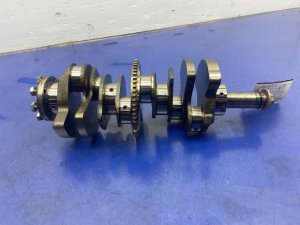
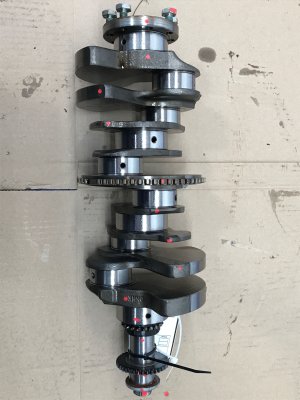
- Slipped Crankshaft Reluctor Wheel: → Shop Engine Crankshaft TSB #PIP3423P mentions a rare condition where the crankshaft reluctor wheel can move on the crankshaft, leading to P0016 and other timing codes. This requires crankshaft replacement.
Diagnosis Steps
- Verify engine oil level and condition. An engine that was run low on oil is a prime candidate for timing chain failure. Correct if low or dirty and clear codes to see if they return.
- Use a professional scan tool to check for all DTCs. Note if codes for other cams (P0017, P0018, P0019) or general timing (P0008) are present.
- Monitor live data for Camshaft Position Variance. At a steady idle, this value should be close to 0 degrees. Consistent deviation or erratic jumping indicates a mechanical timing problem.
- Inspect wiring and connectors per TSB #23-NA-091 to ensure the VVT solenoid and park lock solenoid connectors are not swapped.
- Test the Bank 1 VVT and Park Lock solenoids. Per TSB #PIP5730B, remove and inspect the park lock solenoid for damage. Consider swapping the VVT solenoid with the exhaust solenoid to see if the fault follows.
- If all preliminary checks pass, a mechanical inspection is required. This is an invasive process that involves removing the engine's front timing cover to physically check chain slack, guide condition, and tensioner extension.
Parts You'll Likely Need
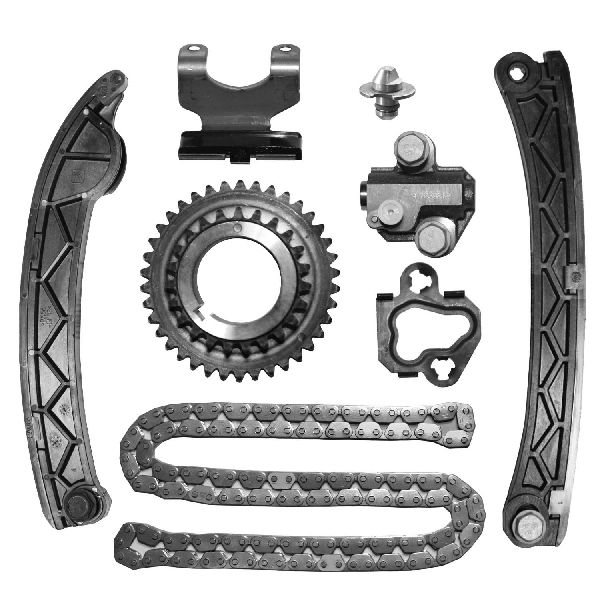
- Timing Chain Kit
(OEM #ACDelco 12713649 (for LGZ, 2017+), ACDelco 12651450 (for LFX, 2015-2016))— This is the most common cause of P0016. A complete kit ensures all worn components (chains, guides, tensioners, gaskets) are replaced at once.
Trusted brands: ACDelco (GM OE), Cloyes
OEM price range: $400-$600
Aftermarket price range: $250-$450 - Camshaft Position Actuator Solenoid
(OEM #12655420 (Intake))— A possible but less common cause. Often replaced during a timing job as a preventative measure.
Trusted brands: ACDelco, Delphi
OEM price range: $40-$70
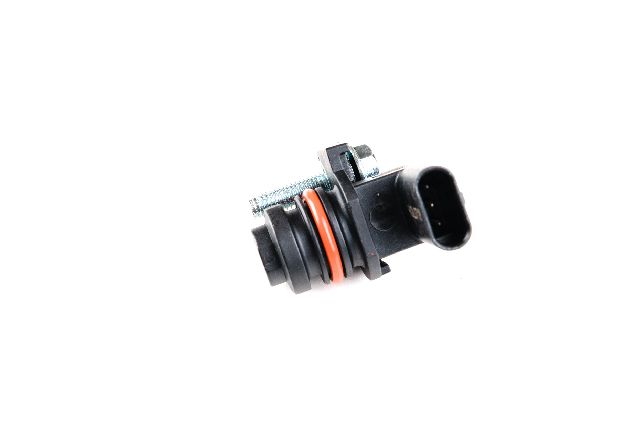
Aftermarket price range: $25-$50 - Intake Camshaft Position Actuator Park Lock Solenoid
(OEM #12681275)— A specific failure point on LGZ/LGX engines noted in TSB PIP5730B that can cause P0016 without chain stretch.
Trusted brands: ACDelco
OEM price range: $35-$60
Aftermarket price range: $20-$40 - Crankshaft Position Sensor
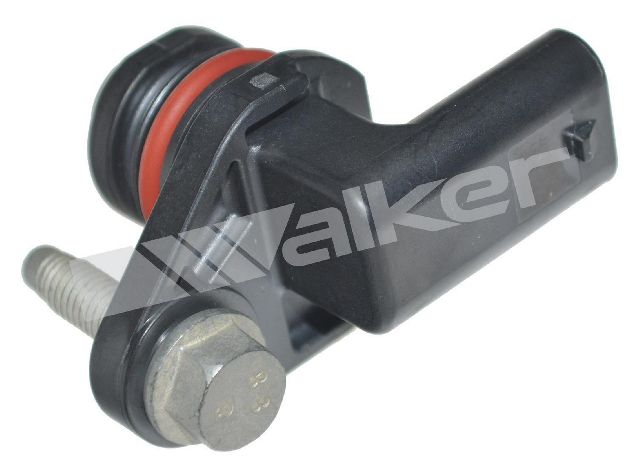
(OEM #12615626)— Rarely the cause, but can be replaced if it fails diagnostic tests. It's often misdiagnosed as the culprit.
Trusted brands: ACDelco, NTK
OEM price range: $30-$50
Aftermarket price range: $20-$40
Related Codes That Often Appear With This One
- P0008 — This code indicates a general engine position system performance error for Bank 1. It is a very common companion code to P0016 on GM V6 engines and strongly points to a stretched primary timing chain.
- P0017 — This is the same correlation error but for the exhaust camshaft on Bank 1. If both P0016 and P0017 are present, it confirms the timing is off for the entire bank, making a stretched chain the most likely cause.
- P0018 / P0019 — These are the equivalent correlation codes for Bank 2 (driver's side). Seeing codes for both banks (e.g., P0016 and P0018) is a very strong indicator of a major timing system failure, usually involving the primary chain from the crankshaft that serves both banks.
Technical Service Bulletins (TSBs) & Recalls
- Advises that for P0016/P0018 on Gen 2 HFV6 engines (LGX/LGZ), the cause can be sticking or damaged Intake Camshaft Position Actuator Park Lock Solenoid Valves, which are distinct from the more commonly replaced VVT solenoids.
- Warns that P0016/P0018 can set after engine repairs if the electrical connectors for the Bank 1 intake VVT solenoid and the intake actuator park lock solenoid are swapped, as they are identical. It provides images for correct identification.
- Directly links codes like P0016 to loose timing chains or tensioners. It also mentions the possibility of a moved crankshaft reluctor wheel as a root cause if timing chain inspection reveals no issues.
- Specifically addresses the scenario where a camshaft reluctor wheel spins on the camshaft, often after an engine overheat, causing correlation codes like P0016 even when the chains are properly timed.
- Notes that swapping two specific electrical connectors during a repair can inadvertently trigger a P0016 code. This TSB is superseded by 23-NA-091, which provides more detail.
Platform-Specific Known Issues
- The 3.6L V6 engines (both LFX and the updated LGZ) are known for timing chain issues. TSB #PIP3423P directly links P0016 to loose timing chains or tensioners.
- TSB #23-NA-091 highlights that P0016 can appear after engine repairs if two specific connectors are swapped, emphasizing the need for careful reassembly.
- TSB #PIP5730B identifies a unique failure mode for 2017+ LGZ engines where a sticking Intake Camshaft Position Actuator Park Lock Solenoid can cause P0016 even if the timing chains are in good condition.
Mechanic-Grade Diagnostic Values
- VVT Solenoid (Camshaft Position Actuator Solenoid) Resistance — expected: 6-10 Ohms. Failure: A reading of 0 Ohms (short) or infinite/OL (open circuit). A reading outside the expected range, such as 15 Ohms, also indicates a failure.
- Engine Oil Pressure at Idle — expected: At least 25 PSI on most engines. Failure: Pressure significantly below 25 PSI indicates oil starvation, which can cause VVT and timing chain tensioner malfunction, leading to P0016.
- Crankshaft Reluctor Wheel Position (LFX/LLT engines) — expected: 25 to 26 mm from the end of the machined surface of the crankshaft throw to the edge of the open space in the reluctor.. Failure: Any measurement different from the expected 25-26mm indicates the reluctor wheel has slipped on the crankshaft, requiring crankshaft replacement.
Hidden / Shadow Codes Worth Checking
- P1336: Indicates that the Crankshaft Position Variation Relearn procedure has not been learned or was unsuccessful. This code can be stored if the relearn procedure is not performed after replacing the ECM, crankshaft position sensor, or reprogramming the ECM. (see via Standard OBD-II scan tool.)
Scan Tool Commands That Help
- GDS2 / Professional Scan Tool: Crankshaft Variation Relearn (also called Cam/Crank Relearn) — This procedure must be performed after replacing the crankshaft position sensor, the ECM, or after the ECM has been reprogrammed. Failure to perform the relearn can cause misfire detection issues and may set code P1336. The procedure typically involves warming the engine, applying the brakes, and accelerating the engine to a specific RPM (e.g., 4000 RPM) until the tool indicates the process is complete.
- GDS2 / Professional Scan Tool: VVT Solenoid Activation Test — This bidirectional control allows a technician to command a specific VVT solenoid to activate. It is used to verify if the solenoid is mechanically functioning and if the oil passages are clear, helping to distinguish between an electrical failure, a stuck solenoid, or a blockage.
Wiring & Ground Locations
- Engine Harness Chafe Point 1 — Where the engine harness crosses over the top of the Camshaft Carrier Cover.. GM Service Bulletin #21-NA-149 identifies a potential for the engine harness to chafe against the camshaft carrier cover. While this bulletin covers multiple DTCs, damage to the wiring for the camshaft position sensor or VVT solenoid in this area could cause erratic signals or failures leading to a P0016 code.
- Engine Harness Chafe Point 2 — At the generator (alternator) bracket and the left front coil spring stud.. Engine movement during driving can cause the harness to rub against the generator bracket. Damage to critical sensor or actuator circuits routed in this part of the harness could potentially trigger timing correlation codes.
Real Owner Repair Stories
- SHO Forum User (Ford Taurus SHO (different vehicle, but same 3.5L/3.6L V6 engine family architecture and P0016 cause)) — Check Engine Light with P0016, slight rumble at idle, but no major performance issues. Remote start was disabled by the code.
❌ Tried (didn't work) Replacing both the camshaft and crankshaft position sensors.
✅ What actually fixed it A full timing chain replacement service. The user noted the old chain was visibly stretched. The final repair cost around $2,000 at a local independent shop.
OEM Part Supersession History
ACDelco / GM 12651450→12693218, then 12700436— Standard part evolution and design updates for the LFX engine timing chain kit.
Heads up: According to a parts supplier, the newer part number 12693218 for the LFX kit includes all three chains, tensioners, gaskets, seals, and cam cover gaskets. Buyers should verify the latest part number when ordering.
Model Year Variations Within This Range
- 2015-2016 (LFX) vs. 2017-2021 (LGZ): The LGZ engine is a significant redesign, not just a refresh. Key differences affecting this code include a simplified and reportedly more durable timing chain system, an all-new cylinder head design, and the addition of an 'intermediate park' feature for the Variable Valve Timing (VVT). The LGZ also introduced the separate 'Park Lock Solenoid' mentioned in TSBs, which is a failure point not present on the LFX.
Helpful Videos
Used OEM Parts in Stock
New Aftermarket Parts Available


The information in this article is provided for general reference and educational purposes only. Vehicle specifications, procedures, and part compatibility can vary by production date, trim level, and region. Always consult your vehicle's factory service manual and verify part numbers before purchasing or performing repairs. Safety-critical components such as airbags, seat belts, and braking systems should be installed by a qualified professional.
- Gmc CANYON:
- 🧭 Diagnostic Flowchart
- 🎬 Helpful Videos
- 🛍️ Shop This Part
- What's Unique About the 2015-2021 Gmc CANYON
- Symptoms You May Notice
- Most Likely Causes
- Rare But Worth Checking
- Diagnosis Steps
- Parts You'll Likely Need
- Related Codes That Often Appear With This One
- Technical Service Bulletins (TSBs) & Recalls
- Platform-Specific Known Issues
- Mechanic-Grade Diagnostic Values
- Hidden / Shadow Codes Worth Checking
- Scan Tool Commands That Help
- Wiring & Ground Locations
- Real Owner Repair Stories
- OEM Part Supersession History
- Model Year Variations Within This Range
- 🎟️ Get 5% Off