

P0016 on 2012-2019 GMC Yukon: Crank/Cam Correlation Causes and Fixes
P0016 on a GMC Yukon indicates a serious timing misalignment between the crankshaft and camshaft. The most common cause is a stretched timing chain and worn tensioners, a known issue. Other platform-specific causes include a physically shifted crankshaft reluctor wheel. This is a critical repair that should not be ignored, as it can lead to severe engine damage.
- P0016 is a critical code on a GMC Yukon that indicates a mechanical timing problem.
- Do not continue to drive the vehicle, as you risk catastrophic engine failure.
- The most likely cause is a stretched timing chain, a common issue on these V8 engines.
- Do not waste money replacing the camshaft or crankshaft sensors unless they have failed specific diagnostic tests.
- Due to the complexity and risk, this repair is best left to a professional technician.
What's Unique About the 2012-2019 Gmc YUKON
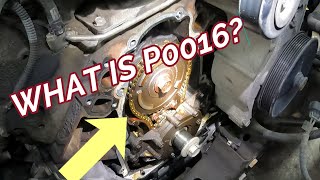
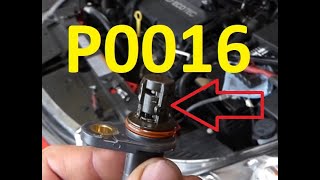
On the V8 engines in this generation of GMC Yukon, code P0016 is frequently a sign of a stretched timing chain, a known issue for these powerplants. 🎬 Watch: A breakdown of common P0016 causes on GM trucks. Beyond the common chain issue, GM has also issued Technical Service Bulletins (TSBs) for more severe mechanical problems, such as a crankshaft reluctor wheel that has physically moved on the crankshaft, which requires a major engine repair to correct. For the newer Gen V EcoTec3 engines (2015+), TSBs also note that setting base timing during a repair is difficult due to the lack of keyways and poor visibility of timing marks, which can cause the code to appear immediately after a cam or chain replacement.
Diagnostic Flowchart
Tap your situation to follow the diagnostic path that matches what you're seeing on this vehicle.
Generation note: This range covers the end of the third generation (2012-2014, GMT900 platform) and the entire fourth generation (2015-2019, K2UG platform). While the fundamental cause (timing correlation) is the same, the engines differ (Gen IV Vortec vs. Gen V EcoTec3). The EcoTec3 engines (2015+) have different timing components, direct injection, and VVT systems. However, both generations are known to suffer from timing chain stretch and are covered by the TSBs regarding reluctor wheel and timing setting issues.
Symptoms You May Notice
- Check Engine Light is on
- Engine is hard to start or will not start
- Rough or unstable idle
- Rattling noise from the front of the engine, especially on cold starts, that may last a few seconds
- Reduced engine power and sluggish acceleration.
- Engine stalling
- Noticeably worse fuel economy.
- Service StabiliTrak message may appear on the dash, as the ECU often disables this system during a critical engine fault.
- Replacing the camshaft or crankshaft position sensors. While these sensors can fail, it is far more common for P0016 to be caused by a mechanical timing issue. If the sensors were the problem, you would likely see other codes specific to sensor circuit faults (e.g., P0340, P0335). Many owners report replacing sensors with no success.
Most Likely Causes
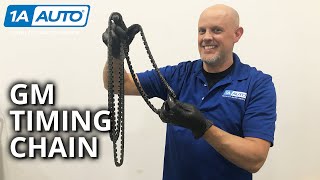
- Stretched Timing Chain and/or Worn Tensioner 🔴 High Probability → Shop Engine Timing Chain The V8 engines in these trucks are known to cause timing chain stretch over time, often accelerated by extended oil change intervals which can lead to premature wear of the chain, guides, and tensioner.
How to confirm: A technician can use a scan tool to observe 'Camshaft Position Variance' or compare desired vs. actual cam angle; a steady variance over 2-3 degrees 🎬 See how to diagnose a stretched timing chain using scan data. at idle points to a mechanical timing issue. Physical inspection requires removing the timing cover to check for chain slack, broken guides, or misaligned timing marks.
Typical fix: Replace the timing chain, sprockets, guides, and tensioner as a complete kit. It is also highly recommended to replace the oil pump at the same time since it must be removed for the job.
Est. part cost: $150-$400 - Low or Dirty Engine Oil 🟡 Medium Probability The camshaft phasing system (VVT) relies on clean oil at the correct pressure to function. Sludgy or low oil can impede the movement of the phasers or clog the screens on the actuator solenoids, causing a correlation error.
How to confirm: Check the engine oil level and condition on the dipstick. If it's low or very dirty, this is a likely contributing factor. An oil change is a cheap first step before more expensive diagnostics.
Typical fix: Perform an oil and filter change using the manufacturer-specified oil viscosity (e.g., ACDelco dexos-approved).
Est. part cost: $50-$100 - Faulty Camshaft Actuator Solenoid (VVT Solenoid) ⚪ Low Probability → Shop Engine Camshaft
How to confirm: The solenoid can be commanded on and off with a scan tool to check for response. It can also be removed and inspected for clogged screens or tested for resistance with a multimeter (typically 7-14 ohms). The Pass 2 value of 6.9-7.9 ohms is also a valid range for many solenoids.
Typical fix: Replace the Bank 1 intake camshaft actuator solenoid. It's recommended to use an OEM ACDelco part, as some aftermarket solenoids have been reported to not resolve the issue.
Est. part cost: $40-$100
Rare But Worth Checking
- Crankshaft Reluctor Wheel Has Moved: → Shop Engine Crankshaft A known issue documented in GM TSB #PIP5102 and PIP3423P. The reluctor wheel, which the crankshaft sensor reads, is press-fit and can physically shift its position on the crankshaft. This causes a timing correlation error even if the chain is perfectly timed. Diagnosis can sometimes be done by inserting a borescope through the crankshaft position sensor hole to visually inspect the wheel's position relative to a crankshaft throw. The only official fix is to replace the entire crankshaft.
- Incorrect Base Timing After a Repair: As noted in TSB #PIP5554A, if the code appears immediately after an internal engine repair (like a camshaft or timing chain replacement), the base mechanical timing may have been set incorrectly. This is especially common on Gen V engines where timing marks are hard to see. 🎬 Watch: Fixing P0016 after a recent cam or lifter replacement. The TSB suggests marking the chain and the opposite side of the gears to aid alignment.
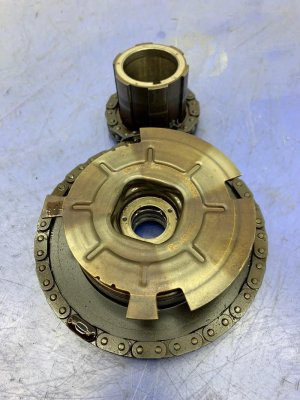
- Failing Camshaft Phaser / Actuator: → Shop Engine Camshaft Separate from the solenoid, the mechanical phaser itself can fail. It can get stuck in an advanced or retarded position due to internal debris, a weak return spring, or wear. A scan tool may show the desired cam angle and actual cam angle not matching when the solenoid is commanded. Replacement requires removing the timing chain.
Diagnosis Steps
- Verify engine oil level and condition. An oil and filter change is an inexpensive first step if the oil is old or low.
- Use a professional scan tool to check for other DTCs. Monitor live data, specifically 'Desired Camshaft Position', 'Actual Camshaft Position', and 'Camshaft Position Variance'. A variance of more than 2-3 degrees at idle strongly suggests a mechanical timing problem.
- Command the Bank 1 intake camshaft actuator solenoid with the scan tool to verify its operation. If it doesn't respond or the cam angle doesn't change, test the solenoid's resistance and inspect its screens for debris.
- If the solenoid and oil are good, the next step is to inspect the mechanical timing. This involves removing the timing cover.
- Visually inspect the timing chain for excessive slack (a worn tensioner will be extended significantly) and check that the timing marks on the cam and crank sprockets align correctly (cam dot at 6 o'clock, crank dot at 12 o'clock).
- If timing marks are aligned and the chain is tight, investigate the possibility of a shifted crankshaft reluctor wheel per TSB PIP5102. This may be visible by removing the crank sensor and using a borescope to inspect the reluctor's position relative to the crankshaft throw.
Parts You'll Likely Need
- Engine Timing Chain Kit
(OEM #ACDelco 12694291 (Gen V, 2015+), Cloyes 9-4205S (Gen IV))— This is the most frequent cause of P0016 on these engines due to chain stretch. A complete kit ensures all wear items (chain, guides, tensioner, sprockets) are replaced.
Trusted brands: ACDelco, Melling, Cloyes
OEM price range: $250-$400
Aftermarket price range: $150-$250 - Camshaft Position Actuator Solenoid
(OEM #12679099 (Verify by VIN))— This solenoid controls oil flow to the cam phaser. If it gets clogged or fails, it can cause timing correlation issues. It's a common point of failure and relatively easy to replace.
Trusted brands: ACDelco, Delphi
OEM price range: $60-$100
Aftermarket price range: $40-$70 - Crankshaft — In the rare but documented case of a shifted reluctor wheel (per TSB PIP5102), the entire crankshaft must be replaced as the wheel is press-fit and not serviced separately.
Trusted brands: ACDelco
OEM price range: $500-$900
Aftermarket price range: $300-$600
Related Codes That Often Appear With This One
- P0017 — This code indicates a correlation issue with the Bank 1 exhaust camshaft. If the timing chain has stretched or jumped, it's common for both intake (P0016) and exhaust (P0017) cam codes to appear together as they are both affected.
- P0008 / P0009 — These are more general engine position performance codes for Bank 1 and Bank 2 respectively. They often point to a significant timing chain issue affecting both banks of the engine, indicating a more advanced state of wear.
Technical Service Bulletins (TSBs) & Recalls
- PIP5554A: P0016 setting after internal engine repair due to incorrect base timing.
- PIP5102: P0016 caused by a moved crankshaft reluctor, requiring crankshaft replacement.
Platform-Specific Known Issues
- TSB #PIP5102 / PIP3423P: Warns technicians that code P0016 may be caused by a crankshaft reluctor wheel that has moved on the crankshaft. The bulletin provides images of a correct vs. moved reluctor and states the official fix is to replace the entire crankshaft.
- TSB #PIP5554A: Highlights that P0016 can be set after an engine repair on Gen V V8 engines if the base timing was not set correctly. This is because it is difficult to get a straight-on visual of the timing marks during installation.
Mechanic-Grade Diagnostic Values
- Camshaft Position (CMP) Actuator Solenoid Resistance — expected: 7 to 14 Ohms. Failure: A very low reading indicates a short, while a very high or infinite reading indicates an open circuit.
- Scan Tool CMP Variance at Idle — expected: Less than 1 degree. Failure: A steady variance of more than 2-3 degrees at idle (with the VVT system commanded to 0) points to a mechanical timing misalignment (e.g., stretched chain).
- Scan Tool Code Set Threshold — expected: Deviation less than +/- 11 degrees. Failure: The ECM will set code P0016 when the measured deviation between the cam and crank is greater than 11 degrees advanced or 14 degrees retarded.
Scan Tool Commands That Help
- GDS2 (GM Tech Tool): CMP Actuator Control — This bidirectional command allows a technician to manually command the VVT solenoid to a specific degree (e.g., 25 degrees) while the engine is idling. The technician can then monitor the 'Desired CMP Angle' and 'Actual CMP Angle' PIDs. If the actual angle does not match the desired command, it indicates a problem with the solenoid, oil pressure to the phaser, or the phaser itself.
- GDS2 (GM Tech Tool): Engine Data Display / Camshaft Position Variance — This data PID is the primary tool for diagnosing mechanical timing stretch. With the engine at a steady idle, this value should be close to zero. A consistent, non-zero value that does not change with RPM indicates the base timing is off.
Wiring & Ground Locations
- G102 — Located at the left rear of the engine; grounds the 8 ignition coils.. While not a direct cause, a poor ground here can create electrical noise and interfere with various engine sensor readings, potentially complicating diagnosis.
- G103 — Located on the cowl, above the brake booster on the driver's side of the engine compartment.. This is a critical ground point that serves the Body Control Module (BCM), Instrument Panel Cluster (IPC), and the Data Link Connector (DLC). A fault here can cause bizarre communication issues and prevent proper scanning.
- G104 — Located on the rear of the passenger-side cylinder head.. This ground is crucial for the Vehicle Control Module (VCM/ECM) and other engine management components like the fuel pump relay trigger. A poor connection at G104 can directly impact ECM function and sensor readings.
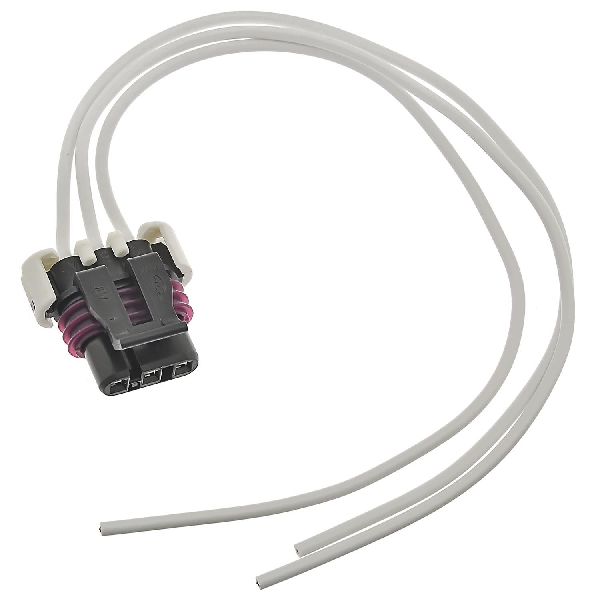
- Crankshaft Position Sensor Connector — On the lower right side of the engine block, near the starter.. The three wires are typically a signal wire (White w/ Black stripe on some models), a low reference, and a 5V reference. Verifying signal and voltage at this connector is a key diagnostic step.
Real Owner Repair Stories
- YouTube Channel 'BL Automotive' (2015 GMC Yukon XL 6.2L (L86 Engine)) — P0016 code set immediately after an internal engine repair.
❌ Tried (didn't work) The vehicle had already received a new camshaft and lifters from another mechanic before arriving for diagnosis.
✅ What actually fixed it The root cause was incorrect base timing set during the previous camshaft replacement. The technician referenced GM TSB #PIP5554A, which specifically addresses this issue on Gen V engines due to poor visibility of timing marks. The fix required re-opening the front of the engine and correctly aligning the timing chain and gears. - iATN (International Automotive Technicians Network) post (2007 Chevrolet HHR 2.2L (Similar GM VVT system logic)) — P0016 sets immediately or shortly after startup.
❌ Tried (didn't work) Physically verified that the timing chain alignment was correct., Confirmed sensor patterns on a scan tool looked good.
✅ What actually fixed it The post highlights a scenario where the obvious checks (timing marks, sensor signals) are all good, yet the code persists. This points towards more subtle issues like a faulty VVT actuator (phaser) that is mechanically stuck, a shifted reluctor wheel, or an internal ECM fault, which are common misdiagnoses for this code.
OEM Part Supersession History
12633123→12681018, 12734067— Standard part evolution and design updates by the manufacturer.
Heads up: The part number for the VVT solenoid can be confusing. Part number 12679099 is often listed for 2.4L 4-cylinder engines, while 12681018 is listed for the V8s (4.3L, 5.3L, 6.2L). It is critical to verify the correct part number by VIN, as using the wrong solenoid can cause fitment or operational issues.
Model Year Variations Within This Range
- 2012-2014 (Gen IV Vortec Engines): These engines (LY5, LMG, LC9) use a more traditional timing set and VVT system. While prone to chain stretch, they do not have the direct injection system of the later models. The camshaft position sensor is typically located in the front timing cover.
- 2015-2019 (Gen V EcoTec3 Engines): These engines (L83, L86) feature direct injection, a different VVT phaser design, and a high-pressure fuel pump driven by the camshaft. TSB #PIP5554A, regarding incorrect base timing after a repair, is particularly relevant to these engines due to the timing mark visibility issues.
Helpful Videos

Used OEM Parts in Stock
New Aftermarket Parts Available


The information in this article is provided for general reference and educational purposes only. Vehicle specifications, procedures, and part compatibility can vary by production date, trim level, and region. Always consult your vehicle's factory service manual and verify part numbers before purchasing or performing repairs. Safety-critical components such as airbags, seat belts, and braking systems should be installed by a qualified professional.
- Gmc YUKON:
- 🧭 Diagnostic Flowchart
- 🎬 Helpful Videos
- 🛍️ Shop This Part
- What's Unique About the 2012-2019 Gmc YUKON
- Symptoms You May Notice
- Most Likely Causes
- Rare But Worth Checking
- Diagnosis Steps
- Parts You'll Likely Need
- Related Codes That Often Appear With This One
- Technical Service Bulletins (TSBs) & Recalls
- Platform-Specific Known Issues
- Mechanic-Grade Diagnostic Values
- Scan Tool Commands That Help
- Wiring & Ground Locations
- Real Owner Repair Stories
- OEM Part Supersession History
- Model Year Variations Within This Range
- 🎟️ Get 5% Off