

P0016 on 2013-2016 Hyundai Genesis Coupe 3.8L: Crank-Cam Timing Causes and Fixes
P0016 on a 3.8L Genesis Coupe most often points to low/dirty engine oil or a failing Bank 1 (passenger side) intake Oil Control Valve (OCV). Always check your oil first and use an OEM filter. If the oil is fine, swapping the passenger and driver side intake OCVs is a key diagnostic step before suspecting a more serious timing chain issue, which is often signaled by a cold-start rattle.
- P0016 is a serious code on the 3.8L Genesis Coupe that requires prompt attention.
- Your first step should always be to check the engine oil level and condition. An oil change may fix the problem.
- A rattling noise on a cold start is a strong sign of a failing timing chain tensioner, a known issue that can lead to this code.
- Before assuming a costly timing chain failure, diagnose the Oil Control Valve (OCV) by swapping it with the one from the other bank. If the code moves (to P0018), you've found the problem.
- Do not continue to drive the vehicle extensively with this code, as you risk severe and expensive engine damage.
What's Unique About the 2013-2016 Hyundai Genesis Coupe
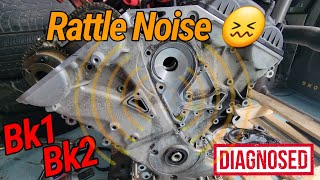
On the Lambda II 3.8L GDI V6 engine, the Dual CVVT system is highly dependent on oil pressure and cleanliness to actuate the cam phasers. While many vehicles can trigger P0016, owner experiences with the Genesis Coupe suggest that this code, especially when accompanied by a cold start rattle, should be taken very seriously. It can be an early warning of a failing timing chain tensioner or a stretched chain, which can lead to catastrophic engine failure if ignored. A distinct 1-3 second rattling noise during a cold startup that fades as oil pressure builds 🎬 Watch: Hear what a failing timing chain tensioner sounds like. is a classic symptom of a faulty hydraulic tensioner bleeding down.
Symptoms You May Notice
- Check Engine Light is on
- Rough or unstable idle
- Engine stalling, especially at low RPM
- Reduced engine power and poor acceleration
- Increased fuel consumption
- Rattling or tapping noise from the engine, especially on cold starts
- Engine misfires on one bank (e.g., cylinders 1, 3, 5)
- Replacing the camshaft and crankshaft position sensors immediately. These sensors are often not the root cause; they are simply reporting the timing misalignment.
- Replacing only the timing chain tensioner after the P0016 code has appeared. If the chain has already stretched or jumped a tooth, a new tensioner might quiet a startup rattle but will not fix the incorrect timing correlation, and the code will return.
- Ignoring the importance of the OEM oil filter. Using an aftermarket filter can cause oil pressure deviations that directly impact the CVVT system's function.
Most Likely Causes
- Low or Dirty Engine Oil / Incorrect Oil Filter 🔴 High Probability The CVVT system uses hydraulic pressure to adjust timing. Low oil levels or old, sludgy oil can clog the small passages in the Oil Control Valves (OCVs) and cam phasers. Furthermore, Hyundai has issued TSB 12-EM-006 regarding aftermarket oil filters, which may have incorrect specifications and cause oil pressure variations, leading to engine noise and potentially contributing to CVVT-related codes.
How to confirm: Check the engine oil dipstick. The level should be full, and the oil should be a clean amber color. Check service records to ensure the correct oil viscosity (5W-30) and an OEM Hyundai oil filter were used.
Typical fix: Perform an engine oil and filter change using a high-quality full synthetic oil that meets Hyundai specifications and a genuine OEM Hyundai oil filter (Part No. 26300-35503 or similar) to ensure proper flow and pressure.
Est. part cost: $40-$80 - Faulty Bank 1 Intake Oil Control Valve (OCV) 🟡 Medium Probability → Shop Engine Variable Valve Timing (VVT) Solenoid The OCV is a solenoid that actuates frequently and can fail electrically or become clogged with debris from engine oil over time. On the 3.8L GDI, the intake OCVs are located under the lower intake manifold, making them more labor-intensive to access than the exhaust OCVs.
How to confirm: Swap the Bank 1 (passenger side) intake OCV with the Bank 2 (driver's side) intake OCV. They are interchangeable. Clear the codes and drive the vehicle. If the code changes to P0018 (Bank 2 correlation error), the OCV you moved is confirmed to be faulty. You can also test the OCV's resistance with a multimeter; it should be within 6.7-7.9 ohms per Hyundai TSB 09-EM-002.
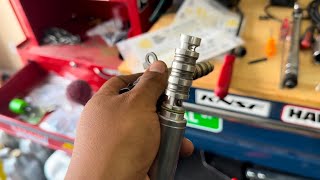
Typical fix: Replace the faulty Oil Control Valve for Bank 1 (passenger side). This requires removing the upper and lower intake manifolds. 🎬 See this walkthrough on replacing the intake oil control valves.
Est. part cost: $50-$100 - Stretched Timing Chain or Failed Timing Chain Tensioner 🟡 Medium Probability → Shop Engine Timing Chain The hydraulic tensioners can weaken or fail, allowing slack in the timing chain. This slack can cause the chain to stretch or even jump a tooth, leading to a correlation error. A cold start rattle is a classic symptom of a bad tensioner bleeding down oil pressure. Hyundai issued TSB 19-EM-001H noting a change in timing chain and sprocket parts, indicating revisions have been made to the system.
How to confirm: This requires a physical inspection by removing the timing cover, which is a labor-intensive job. An advanced scan tool may show a significant deviation between desired and actual camshaft timing angles. A persistent rattle from the front of the engine on cold starts is a strong indicator.
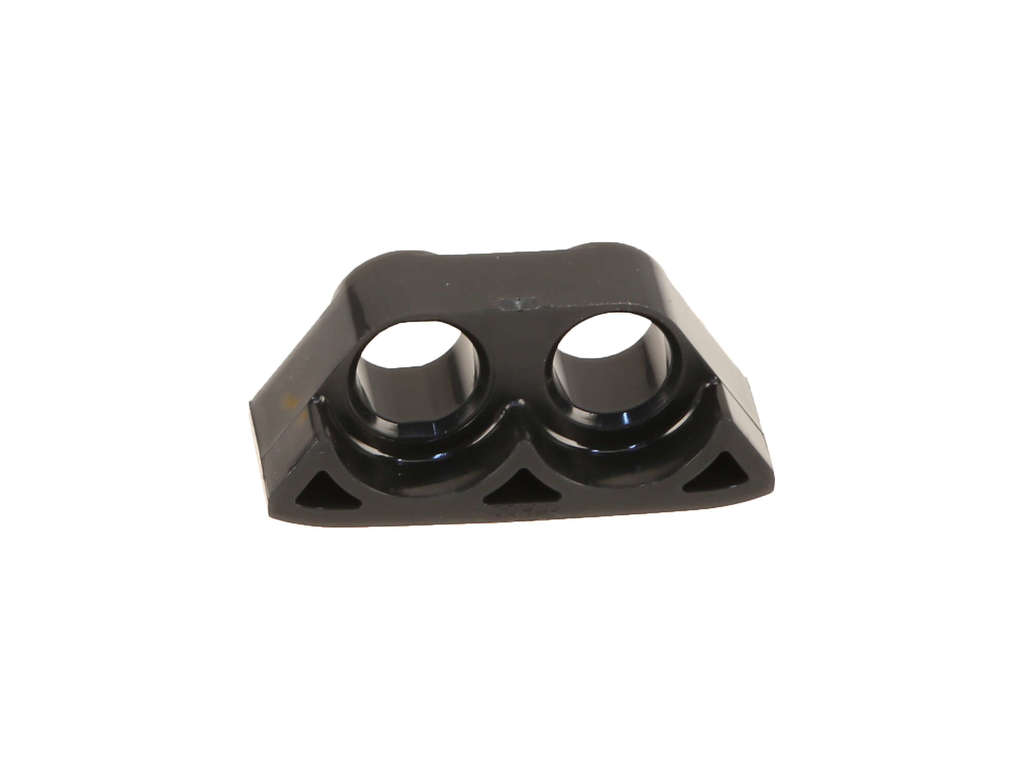
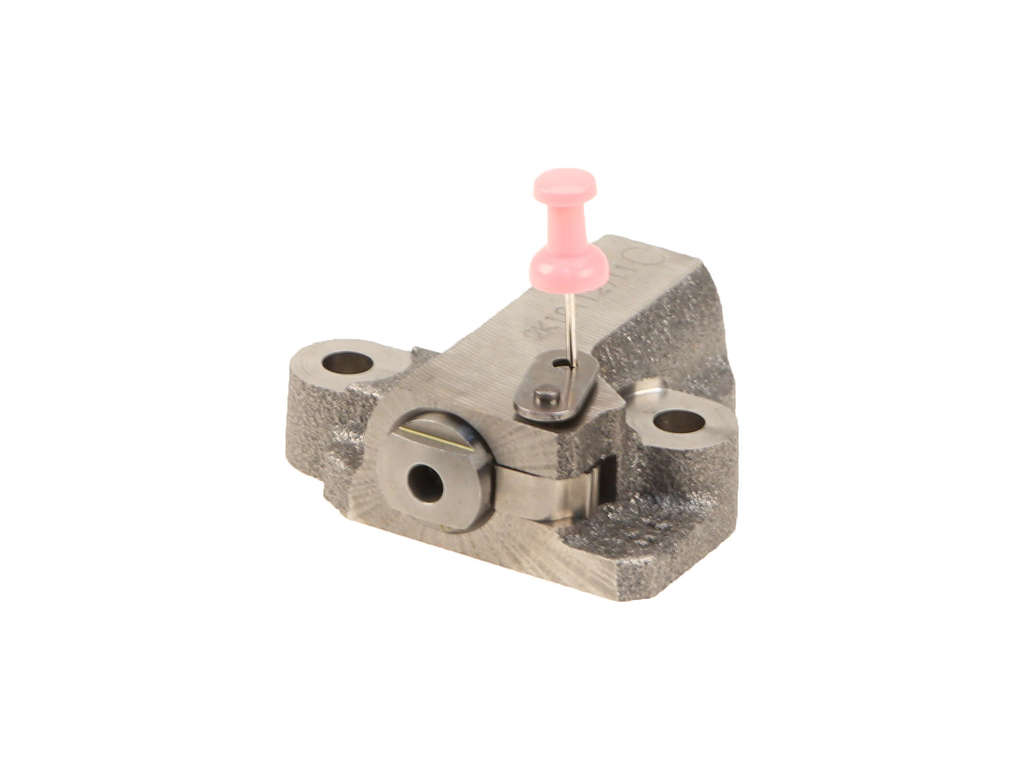
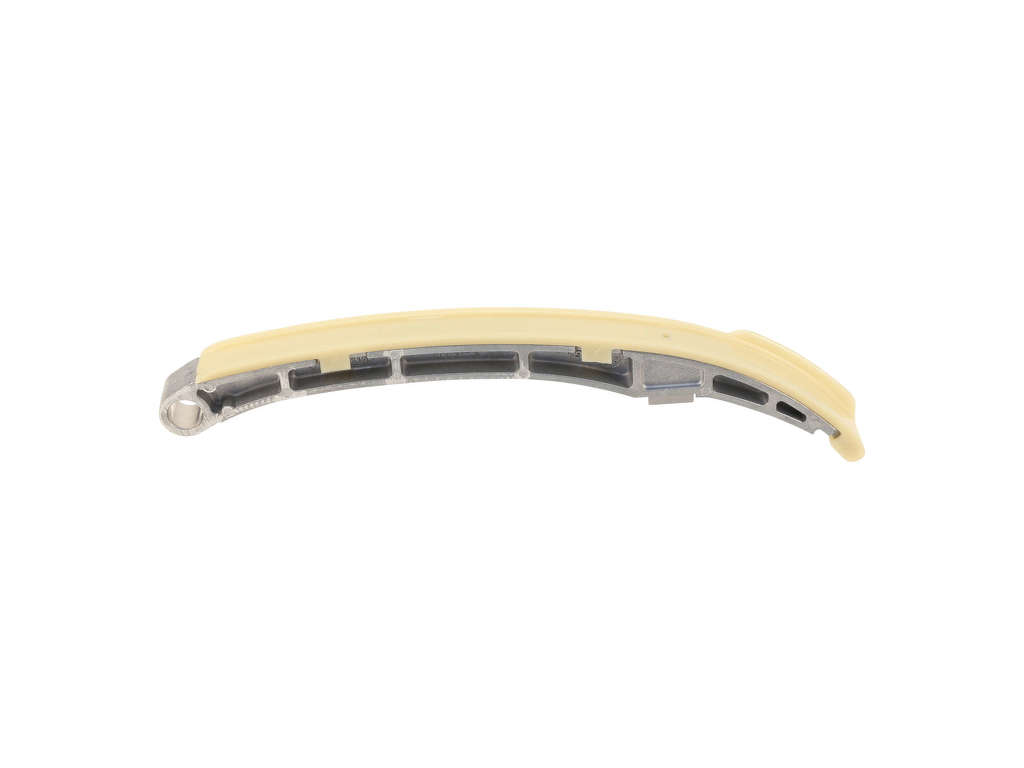
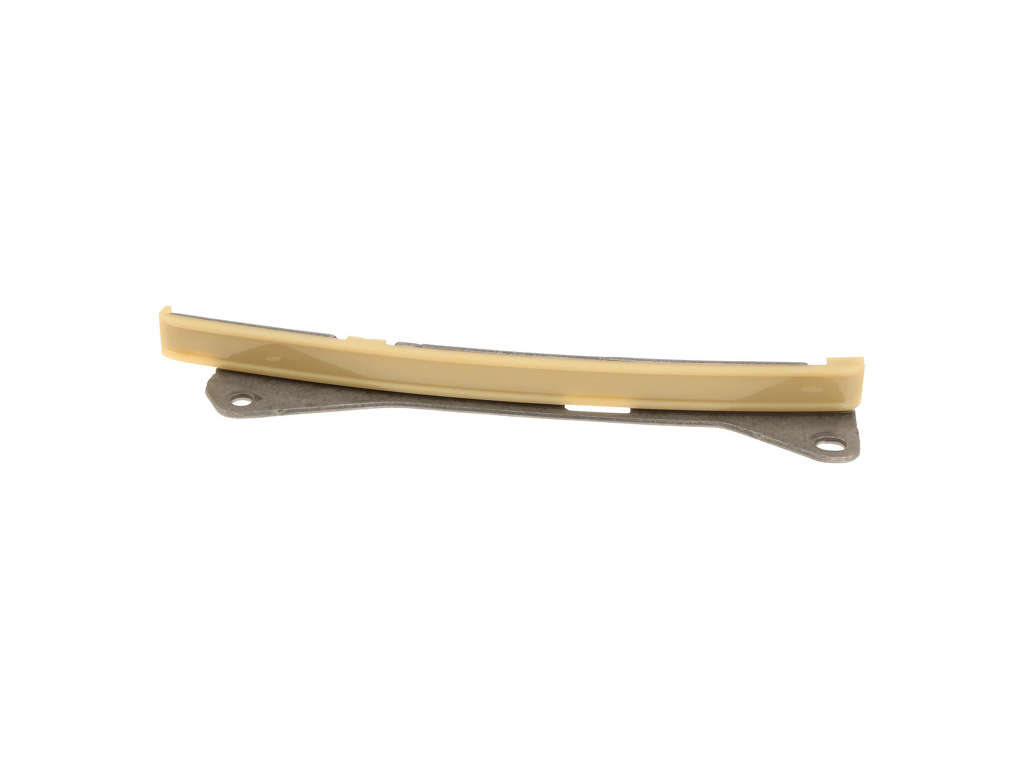
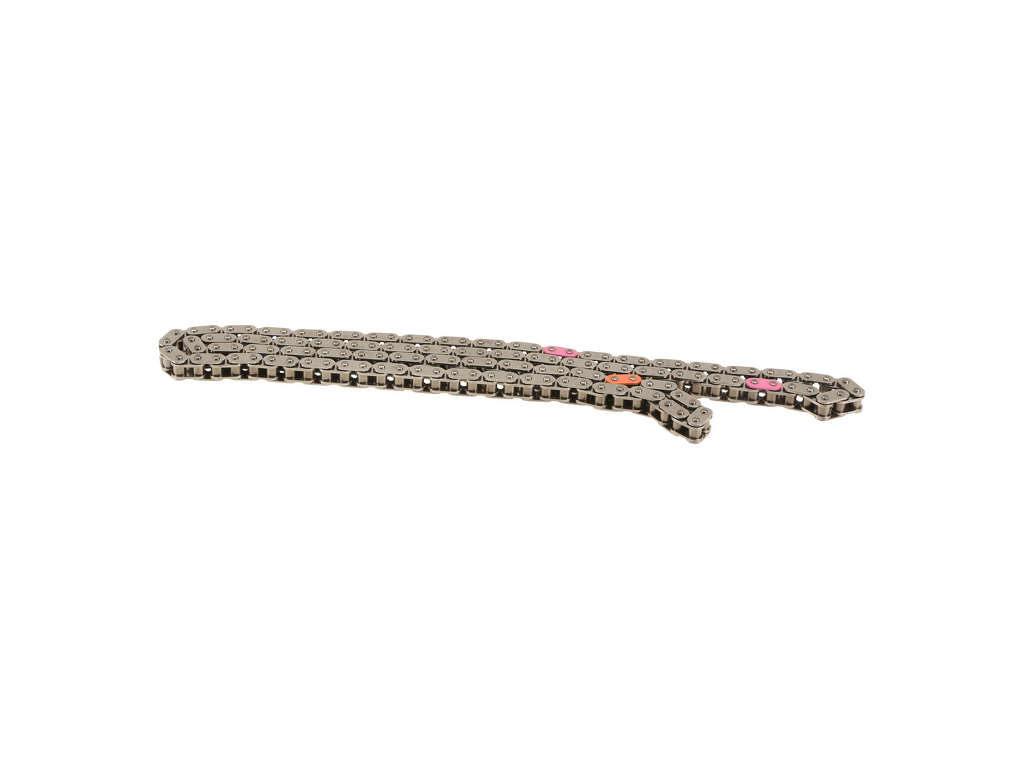
Typical fix: Replace the primary timing chains, all hydraulic tensioners, and the plastic chain guides. It is critical to use the updated parts as a set per TSB 19-EM-001H. This is a major repair, often costing over $1,500.
Est. part cost: $400-$800
Rare But Worth Checking
- Faulty Camshaft or Crankshaft Position Sensor: → Shop Engine Crankshaft Position Sensor While possible, sensor failure is less common than mechanical or oil-related issues for a correlation code. The ECM is receiving signals from both sensors, but they don't line up. This usually means one of the rotating components is physically in the wrong place, not that a sensor has failed completely.
- Damaged Camshaft Phaser (CVVT Actuator): → Shop Engine Camshaft The gear on the end of the camshaft that actually adjusts the timing can fail internally or get stuck due to debris, but this is less common than an OCV failure or timing chain issue.
- Clogged OCV Filter: There are small filter screens in the cylinder head oil passages leading to the OCVs. These can become clogged with sludge, starving the OCV and phaser of oil pressure. Cleaning or replacing these requires significant disassembly.
Diagnosis Steps
- Check Engine Oil: Verify the oil level is full and the oil is clean. If low, dirty, or the wrong viscosity, perform an oil and filter change with OEM parts (Hyundai filter 26300-35503 or equivalent), 🎬 Watch: Step-by-step guide for a proper Genesis Coupe oil change. clear the code, and see if it returns.
- Listen for Noises: On a cold start (after the car has sat for several hours), listen for a brief 1-3 second rattle or grinding noise. This strongly indicates a failing timing chain tensioner.
- Inspect Sensor Wiring: Visually inspect the wiring and connectors for the crankshaft position sensor (near the crank pulley) and the Bank 1 camshaft position sensor (on the passenger side valve cover) for any damage or loose connections.
- Diagnose the Oil Control Valve (OCV): The intake OCVs are under the intake manifold. The most effective step is to swap the Bank 1 (passenger side) and Bank 2 (driver's side) intake OCVs. Clear the codes and drive. If P0016 returns, the OCV is likely not the issue. If the code changes to P0018, the OCV you moved is faulty and must be replaced.
- Scan Tool Data Analysis: Use an advanced scan tool to monitor the desired vs. actual camshaft position angles for Bank 1 Intake. A significant, lagging deviation greater than 15-20 degrees indicates a mechanical timing or hydraulic issue.
- Professional Inspection: If the above steps do not resolve the issue, the problem is likely mechanical (timing chain system). The vehicle should be taken to a qualified technician to inspect the timing chains, guides, and tensioners. This involves significant engine disassembly.
Parts You'll Likely Need
- Engine Oil Control Valve (OCV), Intake
(OEM #24356-3C100)— This solenoid controls oil flow to the cam phaser and is a common failure point. Both intake OCVs (Bank 1 and 2) use the same part number. Access requires intake manifold removal.
Trusted brands: Hyundai (OEM)
OEM price range: $70-$120
Aftermarket price range: $40-$80 - Engine Timing Chain Kit (Updated)
(OEM #24312-3L100 (Chain), 24410-3CGA3 (Tensioner))— If a tensioner has failed, a complete kit including chains, guides, and tensioners is required. Per TSB 19-EM-001H, updated chain and sprocket parts must be installed as a set. A full kit may include multiple part numbers.
Related Codes That Often Appear With This One
- P0018 — This is the equivalent code for Bank 2 (driver's side). Seeing P0016 and P0018 together strongly suggests a problem affecting the entire engine's timing, such as a stretched primary timing chain or severe oil pressure/starvation issues.
- P0017 — This code is for the exhaust camshaft on Bank 1. If seen with P0016, it points more strongly to a base timing issue on Bank 1, like a jumped chain on that bank's secondary timing chain, or a problem with the primary chain.
- P0011 — This code indicates the Bank 1 intake camshaft is over-advanced. It can be caused by a stuck OCV and may appear with P0016 as the system struggles to maintain correct timing.
Technical Service Bulletins (TSBs) & Recalls
- TSB 19-EM-001H: Documents updated part numbers for timing chains and crankshaft sprockets that are not interchangeable with old parts.
- TSB 12-EM-006: Warns that aftermarket oil filters may cause engine knock/noise due to incorrect pressure specifications, impacting CVVT function.
- TSB 09-EM-002: Provides official test procedure and resistance specifications (6.7-7.9 ohms) for Oil Control Valves (OCVs).
Mechanic-Grade Diagnostic Values
- Low-Side Fuel Pressure at Idle — expected: 480 - 519 kPa (69.6 - 75.3 psi). Failure: Pressure outside this range indicates a fuel delivery issue, though not a primary cause for P0016, it can affect overall engine performance.
- Oil Control Valve (OCV) Coil Resistance — expected: 6.7 - 7.9 ohms at 68°F (20°C). Failure: A reading outside this range, or infinite resistance (open circuit), indicates a failed solenoid coil.
- Scan Tool Cam/Crank Correlation Deviation — expected: Less than 15 degrees of crankshaft angle (|Difference between adapted Reference position and design specification| < 15°CA). Failure: A deviation greater than this threshold will trigger DTC P0016.
- Crankshaft (CKP) and Camshaft (CMP) Sensor Waveform Alignment (Oscilloscope) — expected: At idle, the 17th tooth signal of the crankshaft sensor after the missing tooth gap should align with the rising edge (high signal) of the camshaft sensor waveform.. Failure: If these points do not align as specified, it confirms a physical timing misalignment between the crank and cam.
Scan Tool Commands That Help
- Hyundai GDS (or equivalent bidirectional scanner): Actuator Test for Bank 1 Intake OCV — This command forces the OCV solenoid to activate while the engine is idling. A healthy OCV and cam phaser will cause a noticeable change in engine idle (stumble, hesitation, or stall), confirming the hydraulic circuit is responding to commands. If there is no change, it points to a stuck OCV, clogged passage, or faulty phaser.
Wiring & Ground Locations
- Glg01 — Left rear of the engine compartment, near the ECM.. This is a primary ground point for the Engine Control Module (ECM). A poor connection here can cause erratic behavior from multiple sensors, including the cam and crank sensors.
- Glg02 — Top front of the engine.. Provides a ground path for various components on the front of the engine. Ensuring it's clean and tight is good practice when diagnosing sensor signal issues.
- Starter Motor Ground — A 14mm bolt on the bottom of the starter motor where it mounts to the transmission bell housing.. This serves as a major engine-to-chassis ground. While not directly for the sensors, a poor connection here can create electrical noise and grounding issues throughout the engine management system.
OEM Part Supersession History
24312-3CGA2 (Timing Chain), 23121-3CGA3 (Crank Sprocket LH), 23122-3CGA1 (Crank Sprocket RH)→24312-3L100 (Timing Chain), 23121-3L100 (Crank Sprocket LH), 23122-3L100 (Crank Sprocket RH)— Part design change to improve durability of the timing system. The tooth root diameter of the sprockets and the corresponding chain were changed.
Heads up: CRITICAL: The old and new parts cannot be interchanged individually. If replacing any of these components, the timing chains (qty 2) and both crankshaft sprockets (LH and RH) must be replaced as a complete set with the new part numbers.
Diagnostic Flowchart
Other Known Issues on This Vehicle
Issues unrelated to this code that are worth knowing about as an owner of this generation:
- Manual Transmission Second Gear Lockout/Grind 🟠 Medium — Common complaint, especially on earlier BK2 models. Often addressed with upgraded transmission mounts and shifter bushings.
- Peeling Interior Chrome Trim 🟡 Low — Very common cosmetic issue where the chrome-like finish on door handles, steering wheel, and center console bubbles and peels.
- Taillight Gasket Leak 🟠 Medium — A well-documented issue where failed taillight gaskets allow water to leak into the trunk, potentially damaging electronics or causing mold.
- Carbon Buildup on Intake Valves 🟠 Medium — Inherent to all Gasoline Direct Injection (GDI) engines, including the Lambda II. Over time (50k-100k miles), carbon deposits can build up, causing misfires and reduced performance. Requires periodic walnut blasting or chemical cleaning.
- Oil Consumption 🟠 Medium — Some owners report higher-than-average oil consumption, which can exacerbate issues with the CVVT system if the level is not checked regularly. Hyundai has a general TSB for oil consumption inspection (23-EM-008H). (Ref: TSB 23-EM-008H)
Used vs. New Parts: Buying Guide for This Vehicle
When a used part is the smart pick: Non-wear items like the Camshaft Position Sensor or Crankshaft Position Sensor can be a viable option from a low-mileage donor vehicle. An Oil Control Valve (OCV) is a possibility but carries more risk due to the potential for internal clogging or electrical failure.
Donor-vehicle mileage cap: roughly under 60000 miles for the part to have meaningful remaining life.
What to inspect on the donor part:
- Inspect the donor vehicle for signs of engine sludge in the oil fill cap, which would indicate poor maintenance.
- Ensure sensor connectors are free of corrosion, oil contamination, and are not brittle.
- If possible, test the resistance of a used OCV before purchase to ensure it is within the 6.7-7.9 ohm specification.
OEM-only on this vehicle (don't cheap out):
- Engine Oil Filter: Aftermarket filters are a known cause of oil pressure issues on this engine, which directly leads to CVVT system faults like P0016.
- Timing Chain, Tensioners, and Guides: These are critical wear items. Given the known issues and part supersessions, only a new OEM kit with the updated part numbers should be used for this repair.
Brands owners have reported issues with on this vehicle:
- Non-OEM oil filters of any brand.
Real Owner Stories
Aggregated from forums and TSBs cited above. Mileages and costs reflect what owners reported in those sources.
2010 Hyundai Genesis Coupe 3.8L V6
Symptoms: Rattle only on cold start.
What fixed it: The issue is identified as a timing chain tensioner failing to maintain oil pressure, often requiring replacement of the timing chain components.
Source hint: Reddit r/genesiscoupe thread titled '2010 genesis coupe 3.8 rattle only on cold start'
Hyundai Genesis Coupe 3.8L V6
Symptoms: P0016 and P0018 error codes appearing together.
What fixed it: Diagnosing the Oil Control Valve (OCV) location and function; swapping valves between banks to see if the code follows the part.
Source hint: Gencoupe.com thread titled 'p0016 and p0018 3.8 error code help wheres is the ovc on a v6'
Documented NHTSA Reports
Hyundai 2.0L Engine (Cross-Model Reference)
Symptoms: P0016 code and severe oil sludge at 73,000 miles.
What fixed it: NHTSA ODI #11690688 describes a vehicle with symptoms identical to those found in Recall 21V301, involving timing correlation issues and significant sludge buildup within the engine.
Source hint: NHTSA ODI #11690688
Related OBD-II Codes
Frequently Asked Questions
Can using an aftermarket oil filter cause the P0016 code on my 3.8L Genesis Coupe?
I hear a rattle for a few seconds when I start my car in the morning. Is this related to P0016?
How can I test if my Bank 1 Intake Oil Control Valve is actually bad without buying a new one?
Are there updated parts I should use if I need to replace my timing chain?
Why is the intake OCV more expensive to fix than the exhaust OCV on the 3.8L V6?
What oil viscosity should I be using to prevent CVVT issues on my 2013-2016 Genesis Coupe?
Helpful Videos

We Have This Part in Stock

The information in this article is provided for general reference and educational purposes only. Vehicle specifications, procedures, and part compatibility can vary by production date, trim level, and region. Always consult your vehicle's factory service manual and verify part numbers before purchasing or performing repairs. Safety-critical components such as airbags, seat belts, and braking systems should be installed by a qualified professional.
- Hyundai Genesis Coupe:
- 🧭 Diagnostic Flowchart
- 🎬 Helpful Videos
- 🛍️ Shop This Part
- What's Unique About the 2013-2016 Hyundai Genesis Coupe
- Symptoms You May Notice
- Most Likely Causes
- Rare But Worth Checking
- Diagnosis Steps
- Parts You'll Likely Need
- Related Codes That Often Appear With This One
- Technical Service Bulletins (TSBs) & Recalls
- Mechanic-Grade Diagnostic Values
- Scan Tool Commands That Help
- Wiring & Ground Locations
- OEM Part Supersession History
- Other Known Issues on This Vehicle
- Used vs. New Parts: Buying Guide for This Vehicle
- Real Owner Stories
- 2010 Hyundai Genesis Coupe 3.8L V6
- Hyundai Genesis Coupe 3.8L V6
- Documented NHTSA Reports
- Hyundai 2.0L Engine (Cross-Model Reference)
- Related OBD-II Codes
- Frequently Asked Questions
- 🎟️ Get 5% Off