

P0016 on 2006-2010 Hyundai Sonata 3.3L V6: Crank-Cam Correlation Causes and Fixes
On the 2006-2010 Sonata 3.3L, code P0016 is most often caused by a stretched timing chain or a faulty Bank 1 (rear) intake Oil Control Valve (OCV). Listen for a 2-5 second rattle on cold startup, which strongly points to a timing chain issue. An OCV is a cheaper first fix, costing around $70-$120 for the part and is a common point of failure.
- P0016 on this engine is a serious code that points to a mechanical or hydraulic issue, not just a bad sensor.
- Listen for a 2-5 second rattle when starting the engine cold. If you hear it, the timing chain and/or tensioner is the most likely culprit.
- If there is no rattle, the next most likely cause is a faulty Bank 1 (rear) intake Oil Control Valve (OCV).
- Always check your oil level and condition first. Use only high-quality oil and an OEM filter.
- Do not replace the cam or crank sensors unless you have specifically tested them and confirmed they are faulty.
What's Unique About the 2006-2010 Hyundai Sonata
The 3.3L Lambda V6 engine in this generation of Sonata is known for timing chain tensioner issues. The original tensioners are hydraulic and can fail to hold oil pressure when the engine is off, allowing slack in the chain. On startup, before oil pressure builds, the loose chain rattles against the guides for 2-5 seconds. This repeated slack and impact causes the timing chain to stretch prematurely, making it a primary cause for P0016. Unlike sensor-related codes on other vehicles, P0016 on this platform is very frequently a sign of a deeper mechanical problem within the timing system or the oil-dependent CVVT (Continuously Variable Valve Timing) system.
Symptoms You May Notice
- Check Engine Light is on
- Engine rattling noise on cold startup, lasting 2-5 seconds
- Rough idle or stalling
- Reduced engine power and acceleration
- Hesitation during acceleration
- Engine cranks but fails to start (in severe cases)
- Poor fuel economy
- Replacing the camshaft and crankshaft position sensors without testing them. This is the most common mistake, as the issue is usually mechanical (timing chain) or hydraulic (OCV/oil).
Most Likely Causes
- Stretched Timing Chain or Failed Tensioner 🔴 High Probability → Shop Engine Timing Chain The original timing chain tensioners on the 3.3L Lambda engine are a known weak point. They are hydraulic and contain a mechanical ratchet to prevent slack when oil pressure is zero. This ratchet mechanism can fail, allowing the chain to be loose on every startup, which causes a distinct rattle and rapidly accelerates chain stretch.
How to confirm: A persistent rattling noise from the engine for 2-5 seconds on a cold start is a very strong indicator. Definitive diagnosis requires removing the timing cover to inspect the chain for slack and verify the alignment of timing marks. An oil pressure test can also be indicative; low pressure can exacerbate tensioner problems.
Typical fix: Replace the timing chains (there are multiple), all tensioners, guides, and sprockets. This is a labor-intensive job, often quoted at 8-10 hours.
Est. part cost: $400-$750 for a complete OEM kit. - Faulty Bank 1 Intake Oil Control Valve (OCV) 🟡 Medium Probability → Shop Engine Variable Valve Timing (VVT) Solenoid The OCV (also called a VVT solenoid) controls oil flow to the cam phaser. It can become clogged with sludge from infrequent oil changes or fail electrically, causing it to stick. Given its location, it is susceptible to heat and vibration.
How to confirm: Check the resistance of the OCV; it should be between 6.7-7.9 ohms. You can also apply 12V power to see if the internal plunger moves. The best and most common DIY test is to swap the Bank 1 (rear, harder to access) OCV with the Bank 2 (front, easier) OCV. Clear the codes. If the fault returns as P0018 (Bank 2 correlation error), the OCV you moved is confirmed faulty.
Typical fix: Replace the Bank 1 intake Oil Control Valve. The Bank 1 (rear) and Bank 2 (front) OCVs often have different part numbers.
Est. part cost: $70-$120 - Low or Dirty Engine Oil 🟡 Medium Probability The CVVT system is entirely hydraulic and highly sensitive to oil pressure and cleanliness. Low oil levels or old, sludgy oil can clog the tiny passages in the OCVs and cam phasers, preventing correct timing adjustments. Many owners in forums report that using non-OEM oil filters can cause issues with the anti-drainback valve, leading to delayed oil pressure on startup and exacerbating timing chain rattle.
How to confirm: Check the oil level on the dipstick and inspect its condition. If the oil is low, excessively dark, or sludgy, this is a likely contributor. Check service records for oil change frequency.
Typical fix: Perform an oil and filter change using a high-quality 5W-20 or 5W-30 synthetic oil and an OEM Hyundai oil filter. Clear codes and monitor.
Est. part cost: $40-$80
Rare But Worth Checking
- Faulty Camshaft or Crankshaft Position Sensor: → Shop Engine Crankshaft Position Sensor While these sensors can fail, it's uncommon for them to cause a P0016 code without other sensor-specific codes (e.g., P0340). The P0016 code points to a correlation failure, which is usually mechanical, not a failed sensor. A forum user on Hyundai-Forums.com reported replacing all sensors only to have the light return, with the dealer then pointing to the 'oil drive actuator' (OCV). Only replace a sensor if it fails a specific electrical test.
- Damaged Camshaft Phaser (CVVT Gear): → Shop Engine Camshaft The CVVT gear itself can fail internally, getting stuck in one position or having a damaged locking pin. This is less common than an OCV failure but can happen, especially if the engine has been run with low or dirty oil, or has experienced severe timing chain slack.
- Damaged Reluctor Ring: The tone ring on the camshaft or crankshaft that the sensor reads can become damaged, loose, or broken. This is very rare but will cause a persistent correlation code that cannot be fixed by replacing sensors or timing components.
Diagnosis Steps
- Check Engine Oil: Verify the oil level is full and the oil is clean. If it's low, dirty, or the wrong viscosity, perform an oil change with a quality 5W-20/5W-30 oil and an OEM Hyundai filter. Clear the code and see if it returns.
- Listen for Startup Rattle: On a cold engine (sitting for 6+ hours), listen for a distinct rattling or grinding sound from the front of the engine for the first 2-5 seconds after starting. This is a classic sign of a bad timing chain tensioner and chain slack.
- Inspect/Test the Oil Control Valve (OCV): Locate the Bank 1 (rear bank) intake OCV. Check for oil sludge in the valve cover area. Test its resistance with a multimeter (should be 6.7-7.9 ohms). For a definitive test, swap it with the more accessible Bank 2 (front bank) OCV. Clear the codes and drive the vehicle. If the code returns as P0018, the OCV you moved is bad and needs to be replaced.
- Test Sensors: If the above steps don't identify the issue, test the camshaft and crankshaft position sensors according to the factory service manual. An oscilloscope is the best tool for this to verify a clean, consistent signal.
- Inspect Timing System: If all other steps fail, the final step is to remove the valve covers and timing chain cover to physically inspect the timing components. Check for a stretched chain (excessive slack between cams), broken plastic guides, or a fully extended/failed tensioner. Verify that all timing marks on the chains and sprockets align perfectly. This is a labor-intensive step.
Parts You'll Likely Need
- Timing Chain Kit
(OEM #24312-3C100)— This is the most probable cause of P0016 on the 3.3L engine, especially if accompanied by a startup rattle. A full kit including all chains, tensioners, and guides should be used.
Trusted brands: Hyundai Genuine, Cloyes, INA
OEM price range: $500-$750
Aftermarket price range: $250-$450 - Intake Oil Control Valve (Bank 1 / Rear)
(OEM #24355-3C200)— A common failure point that is much easier and cheaper to replace than the timing chain. It's a logical part to replace first if no startup rattle is present. Note: Bank 2 (Front) is often 24355-3C100. Verify by VIN.
Trusted brands: Hyundai Genuine (Delphi), Standard Motor Products (SMP), Dorman
OEM price range: $100-$150
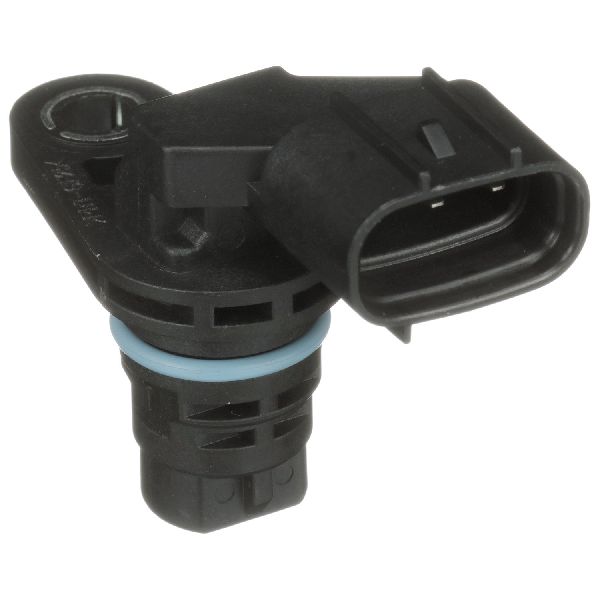
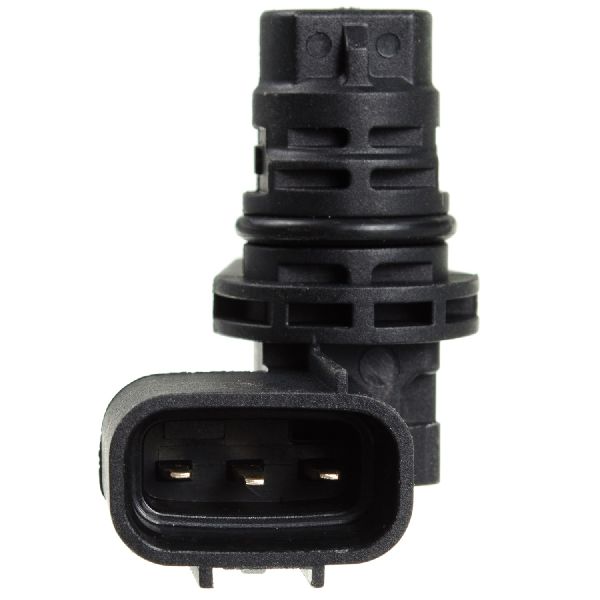
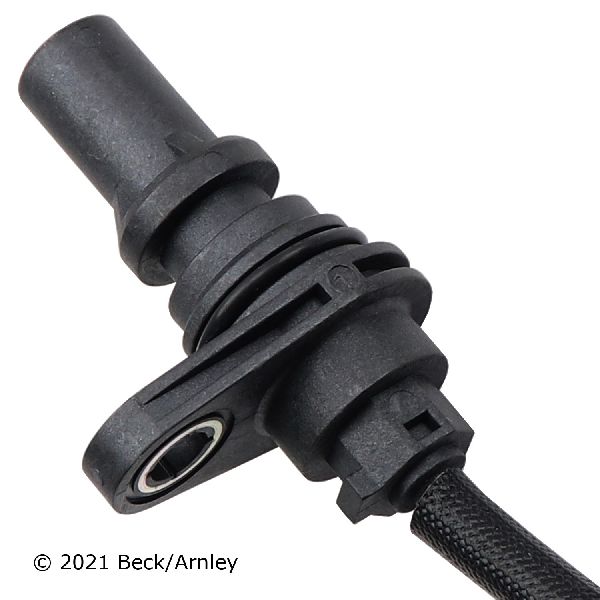
Aftermarket price range: $50-$90 - Camshaft Position Sensor
(OEM #39318-3C100)— Replaced if it fails a specific electrical test. It is often misdiagnosed as the cause.
Trusted brands: Hyundai Genuine, Beck/Arnley, NGK/NTK
OEM price range: $60-$90
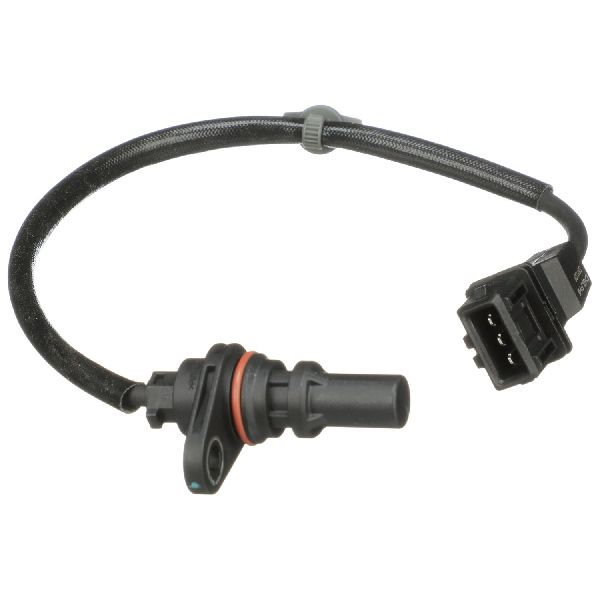
Aftermarket price range: $30-$50 - Crankshaft Position Sensor
(OEM #39310-3C100)— Replaced only if it fails a specific electrical test. A failure is rare compared to timing chain or OCV issues.
Trusted brands: Hyundai Genuine, Bosch, Delphi
OEM price range: $80-$120
Aftermarket price range: $40-$70
Related Codes That Often Appear With This One
- P0017 — This is the same correlation error but for the exhaust camshaft on Bank 1. If P0016 and P0017 appear together, it very strongly suggests a base timing issue affecting both cams on that bank, such as a stretched or jumped timing chain.
- P0018 — This is the Bank 2 (front bank) equivalent of P0016. It would not normally appear with P0016 unless there is a widespread oil sludge issue or if an OCV was swapped for diagnosis.
- P0011 — This code indicates the intake camshaft timing is over-advanced. It often points to a problem with the CVVT system, such as a stuck Oil Control Valve (OCV), and can appear alongside P0016.
Technical Service Bulletins (TSBs) & Recalls
- TSB 12-EM-005: While for a different model, this TSB addresses CVVT and OCV inspection, cleaning, and replacement procedures that are highly relevant to diagnosing P0016 on the Lambda engine family.
- NHTSA Recall 13V113000 (Hyundai Campaign 113): Not directly related to P0016, but a critical recall for this vehicle concerning rear subframe corrosion in salt-belt states, which owners should be aware of.
Platform-Specific Known Issues
- The 3.3L Lambda V6 engine family had known issues with the original timing chain tensioners, which would allow slack in the chain upon startup before oil pressure built up, causing a rattling noise and leading to premature chain stretch.
- Consistent with broader manufacturer trends, an owner report for a related Hyundai model (NHTSA ODI #11690688) noted a P0016 code accompanied by severe oil sludge, highlighting the critical nature of oil maintenance for this code.
Mechanic-Grade Diagnostic Values
- Intake Oil Control Valve (OCV) Resistance — expected: 6.7 - 7.9 Ohms at 68°F (20°C). Failure: A reading of 0 Ω (short), infinite resistance (open), or a value significantly outside the expected range.
- OCV Power Supply Voltage (at connector) — expected: Approximately 12V (Battery Voltage) with Key On, Engine Off.. Failure: No voltage suggests a wiring, fuse, or relay issue.
- Camshaft vs. Crankshaft Signal Alignment (Oscilloscope) — expected: At idle, the PCM expects to see the high signal of the Bank 1 intake camshaft position sensor align with the 17th tooth of the crankshaft position sensor's signal after the missing tooth.. Failure: Misalignment of these two signals on an oscilloscope confirms a correlation error and points to a mechanical timing issue (stretched chain, jumped tooth, or failed phaser).
Scan Tool Commands That Help
- Hyundai GDS (or equivalent professional scan tool): Actuation Test for OCV — This command allows a technician to manually activate the OCV solenoid while the engine is running. If the solenoid is working, activating it should cause the engine to hesitate or stall. If there is no change in engine operation, it points to a faulty OCV or a clogged oil passage.
Real Owner Repair Stories
- Hyundai-Forums.com user (2006 Hyundai Sonata 3.3L) — Check Engine Light with code P0016.
❌ Tried (didn't work) Replacing all camshaft and crankshaft position sensors.
✅ What actually fixed it The dealer diagnosed the issue as a faulty 'oil drive actuator', which is the Oil Control Valve (OCV). The user declined the expensive dealer repair but the diagnosis points to the OCV as the root cause after sensors were eliminated.
OEM Part Supersession History
24355-3C100→24355-3C200— Updated design for the Oil Control Valve (OCV) to improve reliability and performance.
Heads up: The new part (24355-3C200) is a direct, backward-compatible replacement for the original.N/A→24410-3C300— An updated timing chain tensioner was released to fix the common startup rattle caused by the original tensioner bleeding down oil pressure.
Heads up: This is the required replacement part to permanently fix the startup rattle issue per Hyundai TSBs.
Model Year Variations Within This Range
- 2009-2010: For the 2009 model year refresh, the 3.3L V6 engine's power was increased from 234 hp to 249 hp, and it gained a variable intake system. While this doesn't fundamentally change the P0016 diagnosis, it's a notable mid-cycle update.
Diagnostic Flowchart
Other Known Issues on This Vehicle
Issues unrelated to this code that are worth knowing about as an owner of this generation:
- Rear Subframe Corrosion 🔴 High — Very common in 'Salt Belt' states, but can occur anywhere. Affects 2006-2010 models. (Ref: NHTSA Recall 13V113000 (Campaign 113).)
- Occupant Classification System (OCS) Fault 🟠 Medium — Commonly reported issue where the passenger airbag light illuminates incorrectly. (Ref: NHTSA Recall 08V161000.)
- Leaking Valve Cover Gasket onto Alternator 🟠 Medium → Shop Engine Valve Cover — A design flaw on the 3.3L V6 where the front valve cover gasket leaks oil directly onto the alternator, causing premature alternator failure.
- Malfunctioning Stop Lamp Switch 🟡 Low — Widespread issue causing brake lights to fail or stay on, and can prevent shifting out of Park. (Ref: NHTSA Recall 09V122000.)
- Harmonic Balancer / Damper Pulley Failure 🔴 High → Shop Engine Harmonic Balancer — Less common but reported; the pulley can separate, causing a sudden loss of power steering and other belt-driven accessories.
Used vs. New Parts: Buying Guide for This Vehicle
When a used part is the smart pick: For this specific P0016 repair, sourcing used parts is generally not recommended for the primary failure components (timing system, OCVs). The only exception might be for sensors (Cam/Crank) if they can be tested before purchase, or for major hard parts like a valve cover if damaged during the repair.
Donor-vehicle mileage cap: roughly under 60000 miles for the part to have meaningful remaining life.
What to inspect on the donor part:
- For sensors, ensure the connector is not cracked or corroded.
- Check for evidence of heavy oil sludge on any engine component, which would indicate poor maintenance of the donor vehicle.
- Ask for the donor vehicle's VIN to check its service history if possible.
OEM-only on this vehicle (don't cheap out):
- Timing Chain Kit: Given the high labor cost, using aftermarket timing components is a significant risk. The OEM tensioner (part #24410-3C300) is a known good, updated part.
- Oil Filter: It is highly recommended to use a genuine Hyundai oil filter. Many owners report that aftermarket filters can cause oil pressure issues that trigger timing-related codes.
Aftermarket brands forum-validated for this vehicle:
- Cloyes (Timing Chain Kits)
- Melling (Timing Chain Kits)
- Standard Motor Products (SMP) (OCVs)
- Dorman (OCVs)
Brands owners have reported issues with on this vehicle:
- No-name, unbranded timing kits or OCVs from online marketplaces are a significant risk and should be avoided due to the critical nature of the timing system.
Real Owner Stories
Aggregated from forums and TSBs cited above. Mileages and costs reflect what owners reported in those sources.
2006 Hyundai Sonata 3.3L V6
Symptoms: Check Engine Light (P0016) appeared. The owner replaced all camshaft and crankshaft sensors, but the light remained on.
What fixed it: The dealer identified the 'oil drive actuator' (Oil Control Valve/OCV) as the actual failure point.
Source hint: Hyundai-Forums.com - Thread: 'POO16 Check Engine Light Problem'
Hyundai 3.3L V6 (Lambda)
Symptoms: Distinct startup rattle when the engine is first turned on.
What fixed it: A dealer technician confirmed that Hyundai updated the entire timing chain and tensioner system to resolve these issues. In one specific case, a bad oil pump was taking too long to build pressure, causing the rattle.
Source hint: BobIsTheOilGuy.com - Thread: 'Start up rattle'
Related OBD-II Codes
Frequently Asked Questions
I hear a rattling noise for about 3 seconds when I start my 3.3L Sonata in the morning. Is this related to P0016?
Can using a non-Hyundai oil filter cause a P0016 code on my 3.3L V6?
Is there a TSB for cleaning the Oil Control Valves (OCV) on the Lambda engine?
How can I tell if my P0016 code is a bad sensor or a mechanical timing issue without opening the engine?
What is the resistance specification for the Oil Control Valve on the 2006-2010 Sonata 3.3L?
Is there a recall for the timing chain issues on the 2006 Sonata?
Helpful Videos

We Have This Part in Stock

The information in this article is provided for general reference and educational purposes only. Vehicle specifications, procedures, and part compatibility can vary by production date, trim level, and region. Always consult your vehicle's factory service manual and verify part numbers before purchasing or performing repairs. Safety-critical components such as airbags, seat belts, and braking systems should be installed by a qualified professional.
- Hyundai Sonata:
- 🧭 Diagnostic Flowchart
- 🎬 Helpful Videos
- 🛍️ Shop This Part
- What's Unique About the 2006-2010 Hyundai Sonata
- Symptoms You May Notice
- Most Likely Causes
- Rare But Worth Checking
- Diagnosis Steps
- Parts You'll Likely Need
- Related Codes That Often Appear With This One
- Technical Service Bulletins (TSBs) & Recalls
- Platform-Specific Known Issues
- Mechanic-Grade Diagnostic Values
- Scan Tool Commands That Help
- Real Owner Repair Stories
- OEM Part Supersession History
- Model Year Variations Within This Range
- Other Known Issues on This Vehicle
- Used vs. New Parts: Buying Guide for This Vehicle
- Real Owner Stories
- 2006 Hyundai Sonata 3.3L V6
- Hyundai 3.3L V6 (Lambda)
- Related OBD-II Codes
- Frequently Asked Questions
- 🎟️ Get 5% Off