

P0016 on 2013-2015 Jaguar XF: Crank/Cam Correlation Causes and Fixes
On 3.0L V6 (AJ126) and 5.0L V8 (AJ133) engines, P0016 almost always indicates a serious mechanical timing issue, such as stretched timing chains or failed guides, often accompanied by a startup rattle. This is a major, expensive repair; expect shop costs to be in the $2,500-$5,000+ range. Do not continue to drive the vehicle as it can lead to catastrophic engine failure.
- P0016 on a 2013-2015 Jaguar XF with a V6 or V8 engine is a serious code that points to a likely failure of the timing chain system.
- A rattling noise from the engine on startup is a key symptom confirming a mechanical timing problem.
- Do not drive the vehicle. A jumped or broken timing chain can destroy the engine.
- The fix is a complex and expensive replacement of the timing chains, guides, and tensioners, and should be performed by a qualified professional.
- Always use the correct specification engine oil and maintain proper service intervals to prolong the life of timing components.
What's Unique About the 2013-2015 Jaguar XF
The AJ126 (V6) and AJ133 (V8) engines used in this generation of Jaguar XF are known for a specific design flaw leading to premature wear of their timing chain components. Early versions of the timing chain guides were made of aluminum, which would be worn down by the harder steel piston of the hydraulic tensioner. This wear creates slack in the chain. Additionally, the plastic guide surfaces can become brittle and break. This slack allows the camshaft and crankshaft timing to drift apart, triggering the P0016 code. While sensor or solenoid issues can cause this code on other cars, on this platform, it is very frequently a symptom of this underlying mechanical failure. Jaguar Land Rover later released updated guides with steel inserts to mitigate this issue.
Diagnostic Flowchart
Tap your situation to follow the diagnostic path that matches what you're seeing on this vehicle.
Symptoms You May Notice
- Check Engine Light is on, often with 'Restricted Performance' message.
- Rattling, clattering, or diesel-like noise from the front of the engine, especially on cold startup, that may last for 2-5 seconds.
- Rough or unstable idle.
- Reduced engine power and hesitation during acceleration.
- Engine may crank but fail to start in severe cases.
- Poor fuel economy.
- Misfires logged on one entire bank of cylinders.
- Replacing the camshaft and crankshaft position sensors without first verifying the engine's mechanical timing. The sensors are often correctly reporting a real mechanical problem.
- Replacing only the VVT solenoid when a startup rattle is present. The rattle is a clear sign of a mechanical issue with the chains, guides, or tensioners.
Most Likely Causes
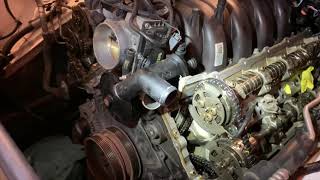
- Stretched Timing Chains and/or Failed Tensioners/Guides 🔴 High Probability → Shop Engine Timing Chain The original timing chain guides on the AJ126/AJ133 engines have a fundamental design flaw where the steel tensioner piston wears away 🎬 Watch: See how the tensioner piston damages the aluminum guide. the softer aluminum guide rail, leading to slack. The plastic surfaces also become brittle from heat and oil exposure, crack, and fail. This is a widely documented issue across the JLR platform.
How to confirm: A distinct startup rattle is a strong audible clue. A physical inspection is the definitive confirmation, which involves removing the valve covers and front engine cover to check for chain slack and broken guide pieces in the oil pan. A technician can also use a scan tool to observe the live data for camshaft/crankshaft deviation.
Typical fix: Complete replacement of all timing chains, tensioners, and guides with the updated parts. This is a labor-intensive job often quoted at over $5,000 at a dealership. 🎬 See this complete walkthrough of the timing chain and guide replacement.
Est. part cost: $400-$900 - Low or Dirty Engine Oil 🟡 Medium Probability The hydraulic timing chain tensioners and VVT phasers rely on clean oil at the correct pressure to function. Extended oil change intervals or using the wrong oil specification (JLR specifies Castrol Edge Professional 5W-20 for many of these engines) can lead to sludge buildup, clogging the small passages in the tensioners and VVT solenoids, accelerating wear.
How to confirm: Check the engine oil level and condition. If the oil is very low, overdue for a change, or appears sludgy, it is a likely contributor.
Typical fix: Perform an oil and filter change with the correct specification oil. If this resolves the code, it was the likely cause. However, running the engine with low or dirty oil may have already caused irreversible wear on the timing components, making this a temporary fix at best.
Est. part cost: $80-$150 - Faulty Variable Valve Timing (VVT) Solenoid ⚪ Low Probability
How to confirm: Swap the Bank 1 intake and exhaust VVT solenoids (or swap them with Bank 2). Clear the codes and see if the fault code changes to P0017 (exhaust) or moves to Bank 2 (P0018/P0019). If the code follows the solenoid, the solenoid is bad. A faulty solenoid may also show an incorrect resistance reading.
Typical fix: Replace the faulty VVT solenoid. This is often done as a 'while you're in there' preventative measure during a full timing chain job.
Est. part cost: $70-$150
Rare But Worth Checking
- Failed VCT Actuator (Cam Phaser): A Jaguar TSB (JTB00480NAS2) specifically mentions the intake VCT actuator failing on the 2.0L GTDi engine, causing P0016. While less common on the V6/V8, a phaser can get stuck due to oil sludge or internal failure, which would also cause this code.
- Faulty Camshaft or Crankshaft Position Sensor: → Shop Engine Crankshaft Position Sensor While possible, it's far more likely for the mechanical components to fail than the sensors themselves. The sensors are usually correctly reporting a real mechanical problem. The code may appear instantly on cranking, before the engine even starts, which can sometimes point towards a sensor or wiring issue, but a jumped chain is still more probable.
Diagnosis Steps
- Check engine oil level and condition. Ensure it is full and clean. If in doubt, change the oil and filter with the manufacturer-specified grade (e.g., Castrol 5W-20).
- Listen for a distinct rattling noise from the front of the engine during a cold start. If present, a timing chain issue is highly likely.
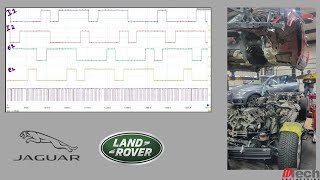
- Using an advanced OBD-II scanner, check for other related codes and view live data. Monitor the 🎬 Watch: How to diagnose correlation codes using a scan tool. camshaft position desired vs. actual angles for Bank 1 and compare them to Bank 2. A significant deviation on Bank 1 points to a problem.
- As a diagnostic test, swap the VVT solenoids on Bank 1 (intake with exhaust). Clear codes and see if the fault changes from P0016 to P0017. If it does, the solenoid is faulty.
- If the code persists and a rattle is present, a mechanical inspection is required. This is a professional-level job involving removal of the valve cover(s) and front engine cover to physically inspect the timing chain for slack and check the integrity of the guides.
- If timing components are confirmed to be intact and tight, test the camshaft and crankshaft position sensor circuits and signals with a multimeter or oscilloscope.
Parts You'll Likely Need
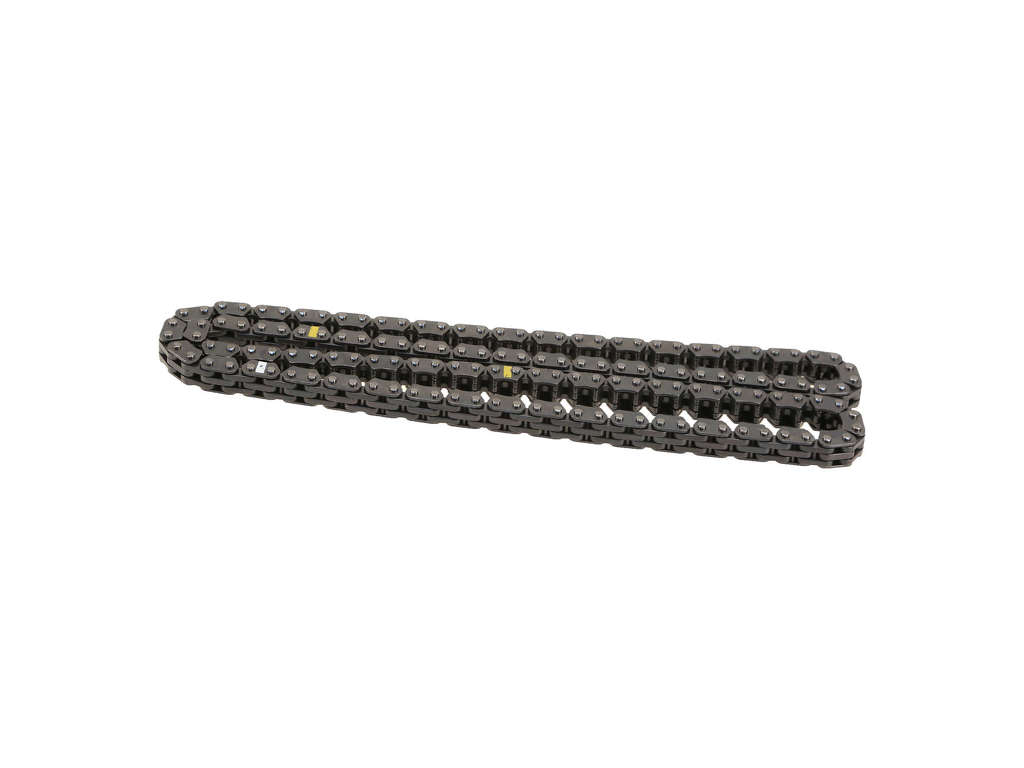
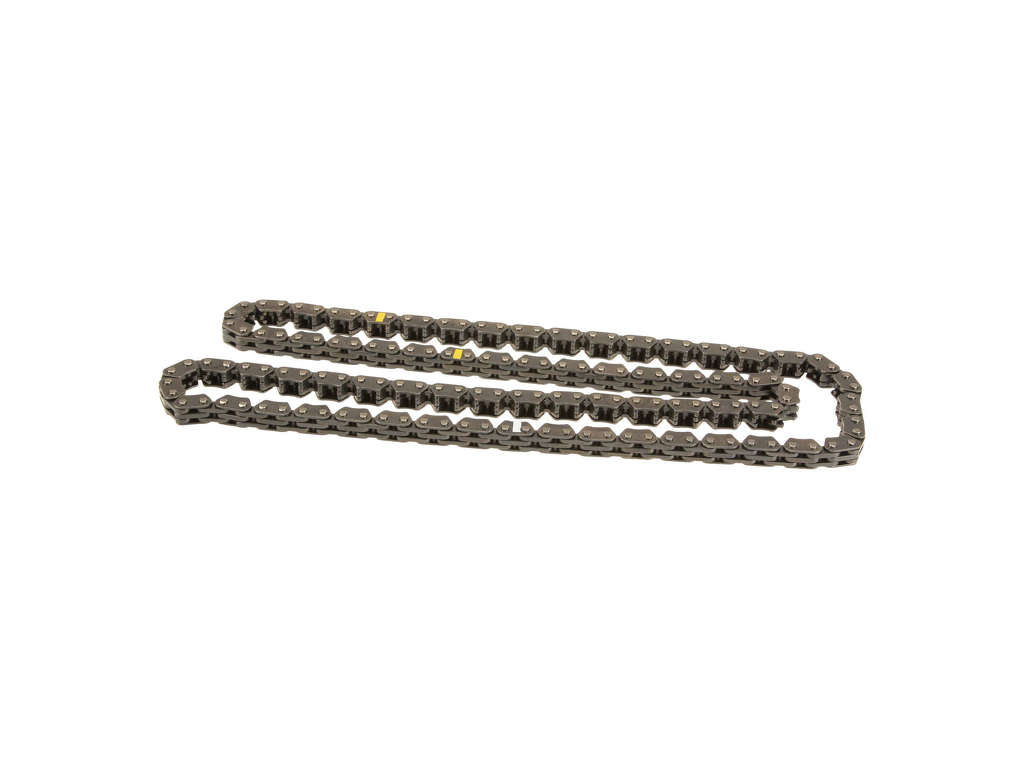
- Timing Chain Kit
(OEM #AJ811966 (V6 Kit Example), Multiple numbers for V8 kits like LR032048)— This is the most common failure. A complete kit with the *updated* guide rail design should be used. Kits typically include all chains, guides, tensioners, and necessary gaskets.
Trusted brands: Jaguar (OEM), FAI Automotive, Britpart (DA3416)
OEM price range: $600-$900
Aftermarket price range: $350-$600 - Timing Chain Tensioner
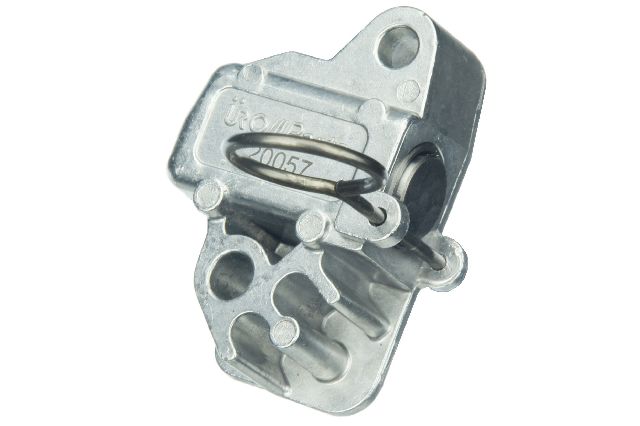
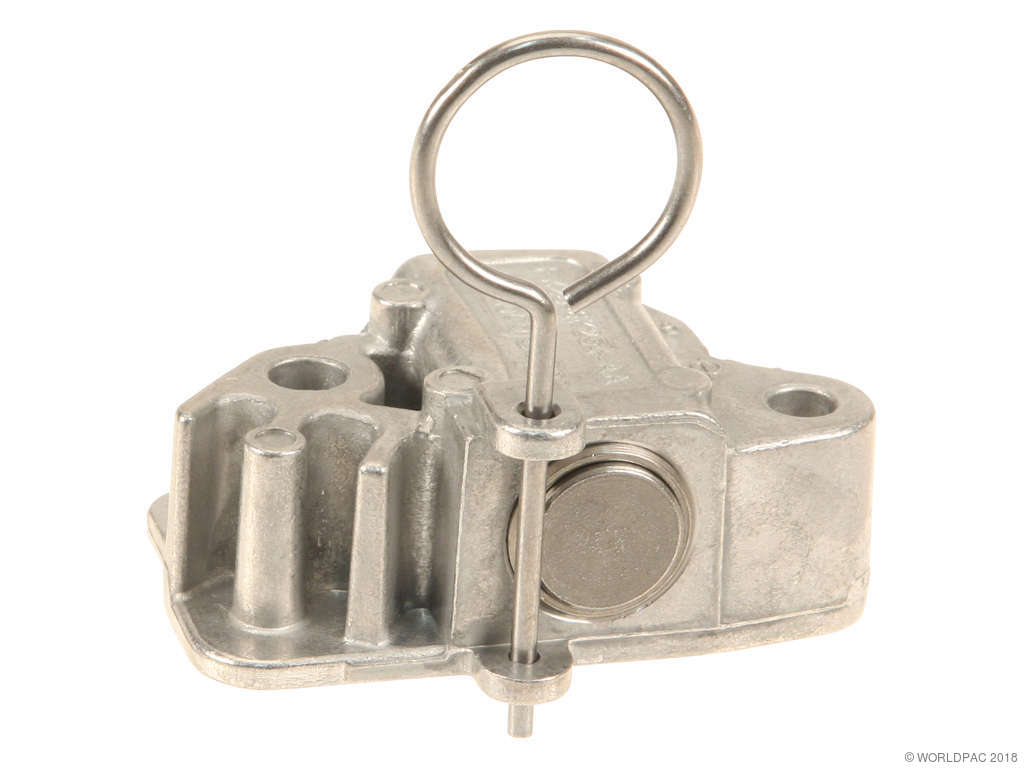
(OEM #AJ813898 (supersedes C2Z28428))— The hydraulic tensioners can fail or weaken, allowing the chain to go slack. They are always replaced as part of a full timing job. The part number AJ813898 is an updated design.
Trusted brands: Jaguar (OEM)
OEM price range: $50-$80
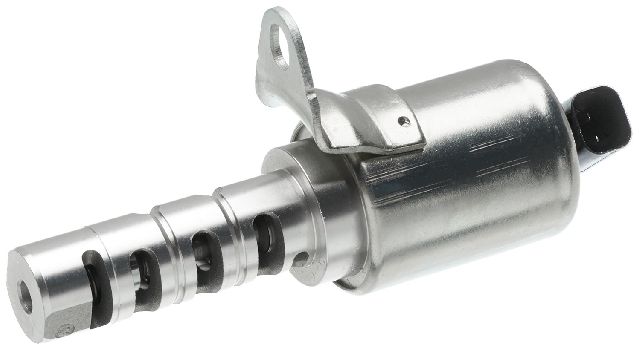
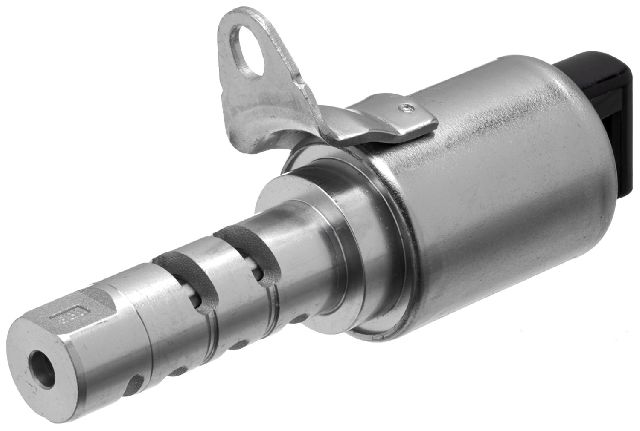
Aftermarket price range: $30-$60 - Variable Valve Timing (VVT) Solenoid
(OEM #LR025652 (Example for 5.0L))— A less common cause, but a potential fix if the timing components are confirmed to be in good condition. It's often replaced as a preventative measure during a timing job as sludge can affect its operation.
Trusted brands: Bosch, Dorman
OEM price range: $120-$200
Aftermarket price range: $60-$120
Related Codes That Often Appear With This One
- P0017 — Crankshaft/Camshaft Correlation for Bank 1 Exhaust. Often appears with P0016 when timing has jumped, affecting both cams on the bank. It is also cited in TSB JTB00480NAS2.
- P0341 — Camshaft Position Sensor 'A' Circuit Range/Performance (Bank 1). This indicates a problem with the sensor's signal, which can be caused by the erratic movement of a loose timing chain. It is also cited in TSB JTB00480NAS2.
- P0018 / P0019 — Correlation codes for Bank 2. If the timing issue is severe or chains have stretched significantly, it's possible for both banks to be out of specification.
- P052A — Cold Start Camshaft Timing Control Performance Bank 1. This code is highly specific to a timing issue during startup and is often seen with P0016/P0017 on these engines.
Technical Service Bulletins (TSBs) & Recalls
- JTB00480NAS2: Mentions a rattle noise and DTCs including P0016, P0017, P0026, or P0341, caused by a failure in the intake camshaft VCT actuator on 2.0L GTDi engines.
- SSM71893 / LTB00474v2: Addresses repeat repairs for timing chain noise on the AJ133 5.0L V8, instructing technicians to replace all guides and tensioners with the updated design featuring a steel insert to prevent wear.
Platform-Specific Known Issues
- The 3.0L V6 (AJ126) and 5.0L V8 (AJ133) engines are widely known for issues with their timing chain guides. The original guides were made of a plastic material on an aluminum rail, which was susceptible to being worn down by the steel tensioner piston. The updated design incorporates a steel insert on the guide to prevent this wear.
- TSB JTB00480NAS2 notes that on the 2.0L GTDi engine, P0016 can be caused by a detached 'stopper' inside the intake camshaft VCT actuator, which is a specific component failure rather than chain stretch.
- TSB SSM71893 / LTB00474v2 was issued for the AJ133 engine to address repeat repairs for timing chain noise, emphasizing the need to replace all tensioners and guides with the latest versions.
Mechanic-Grade Diagnostic Values
- VVT Solenoid Coil Resistance — expected: Approximately 7-12 Ohms. Failure: A significantly higher reading (e.g., 26 Ohms) or an open circuit indicates a faulty solenoid.
- VVT Solenoid Actuation Test — expected: An audible 'clack' or 'click' when 9V or 12V is applied directly to the solenoid's terminals.. Failure: No sound when voltage is applied indicates the internal spool valve is stuck.
- Camshaft Position Sensor Supply Voltage — expected: Approximately 12V with Key On, Engine Off (KOEO).. Failure: No voltage suggests a wiring or power supply issue from the ECM.
Hidden / Shadow Codes Worth Checking
- P0016-76: The '-76' suffix is used by JLR's diagnostic system to point specifically to an incorrect alignment or mounting of a component. For P0016, this strongly supports the diagnosis of a jumped timing chain or a failed VVT phaser that is not locking in its base position. (see via Typically only visible on dealer-level diagnostic tools like Jaguar's SDD (Symptom Driven Diagnostics) or Pathfinder.)
Scan Tool Commands That Help
- Jaguar SDD (Symptom Driven Diagnostics): Vehicle Identification and DTC Read — To read the full Jaguar-specific fault code, including any suffixes like '-76' that provide more detailed diagnostic information than a standard OBD-II reader.
- Jaguar SDD (Symptom Driven Diagnostics): Service Functions / Reset Adaptations — After replacing timing components or VVT solenoids, the engine's learned adaptations for timing may need to be reset to ensure the ECM recognizes the new components and correct timing.
Wiring & Ground Locations
- Crankshaft Position (CKP) Sensor — Located on the rear lower left side of the engine block.. This sensor provides the primary timing reference for the engine. A poor connection or damaged wiring at this location will directly cause correlation codes like P0016.
- G1D120 — Ground point located at the right rear of the engine compartment.. This is a major ground point for various engine components and sensors. A loose or corroded connection here can introduce electrical noise or incorrect readings for the cam and crank sensors.
- G1D123 — Ground point located at the right rear of the engine compartment, near G1D120.. Similar to G1D120, this ground serves the engine control system. Verifying its integrity is a crucial step in diagnosing any electrical fault, including sensor correlation issues.
- Engine Control Module (ECM) — Located in the left rear of the engine compartment.. All sensor signals are processed here. Checking for corrosion or damage at the ECM connectors is a necessary step if wiring issues are suspected.
Real Owner Repair Stories
- Jaguar Forums - Jaguar Enthusiasts Forum (2013 Jaguar XJ 3.0SC (Supercharged) with 158k miles) — Check Engine Light with code P0016. No reported startup rattle initially, but car was high mileage.
❌ Tried (didn't work) Clearing the code (it returned on the next drive)., Considering replacing sensors first as a cheaper option.
✅ What actually fixed it The consensus from experienced forum members was that at 158k miles, it was almost certainly the timing chain tensioners and guides, the 'dreaded timing chain' issue. The user was advised to take it to a specialist for a full timing job rather than attempting sensor replacement.
OEM Part Supersession History
C2Z28428→AJ813898, LR051008, LR095472— The original tensioner design was updated to improve reliability and prevent premature failure.
Heads up: While the new parts supersede the old, there have been multiple tensioner designs from different suppliers (e.g., INA) with subtle differences in plunger angle. It is critical to use a full, matched kit with the latest guide and tensioner design to ensure proper geometry.Aluminum-backed timing guide rails (various PNs prior to ~2013)→Guide rails with steel inserts (various PNs, often included in kits like DA3416).— The original aluminum guide rail was susceptible to being worn through by the steel tensioner plunger. The updated design adds a steel contact point to prevent this wear-through, which was a primary cause of timing chain slack.
Model Year Variations Within This Range
- 2013: The 2013 model year was the first to introduce the 3.0L supercharged V6 (AJ126) to the XF, replacing the naturally aspirated 5.0L V8. Early production 2013 models are more likely to have the original, flawed timing guide and tensioner design before mid-cycle updates were implemented.
Helpful Videos
We Have This Part in Stock

The information in this article is provided for general reference and educational purposes only. Vehicle specifications, procedures, and part compatibility can vary by production date, trim level, and region. Always consult your vehicle's factory service manual and verify part numbers before purchasing or performing repairs. Safety-critical components such as airbags, seat belts, and braking systems should be installed by a qualified professional.
- Jaguar XF:
- 🧭 Diagnostic Flowchart
- 🎬 Helpful Videos
- 🛍️ Shop This Part
- What's Unique About the 2013-2015 Jaguar XF
- Symptoms You May Notice
- Most Likely Causes
- Rare But Worth Checking
- Diagnosis Steps
- Parts You'll Likely Need
- Related Codes That Often Appear With This One
- Technical Service Bulletins (TSBs) & Recalls
- Platform-Specific Known Issues
- Mechanic-Grade Diagnostic Values
- Hidden / Shadow Codes Worth Checking
- Scan Tool Commands That Help
- Wiring & Ground Locations
- Real Owner Repair Stories
- OEM Part Supersession History
- Model Year Variations Within This Range
- 🎟️ Get 5% Off