

P0016 on 2011-2016 Kia Optima 2.4L: Causes, Fixes, and Theta II Engine Issues
On the 2011-2016 Kia Optima with the 2.4L Theta II engine, code P0016 is most often caused by a failing oil control valve (OCV) or a stretched timing chain. An OCV is a relatively inexpensive fix (~$50-$120), but a timing chain replacement is a major repair costing over $1,000. Due to this engine's known history of oil-related failures and timing problems, immediate and accurate diagnosis is critical to prevent catastrophic engine damage.
- First, immediately check your oil level and condition. Low or dirty oil is a simple fix that can cause this code.
- The most likely parts to fail are the Oil Control Valve (OCV) or the timing chain itself. An OCV is a manageable DIY replacement; the timing chain is not.
- Due to the severe known issues with the 2.4L Theta II engine, a P0016 code should be diagnosed immediately to prevent potential catastrophic engine failure.
- A rattling noise from the engine is a critical symptom that points strongly towards a stretched timing chain, requiring professional repair.
- Be aware of the history of recalls and warranty extensions for this engine; check with a Kia dealer to see if your vehicle's VIN has any outstanding campaigns.
What's Unique About the 2011-2016 Kia Optima
The 2.4L GDI Theta II engine (engine code G4KJ) in this generation of Kia Optima has a well-documented history of significant mechanical issues. While P0016 can be a simple sensor or solenoid issue on many vehicles, on the Theta II it is frequently a precursor to serious timing system problems like a stretched chain or failing tensioner. These engines were subject to class-action lawsuits and recalls (like SC147) related to premature bearing wear and engine seizure, often stemming from manufacturing debris blocking oil passages and causing oil starvation. These same oil flow and sludge issues are root causes of timing component failure, which directly trigger P0016.
Symptoms You May Notice
- Check Engine Light is on
- Rough idle or stalling, especially at stops
- Poor acceleration and loss of power
- Engine rattling noise, especially on startup or at low RPMs
- Increased fuel consumption
- Difficulty starting the engine or crank-no-start condition
- Engine knocking sounds
- Replacing the camshaft or crankshaft position sensors without proper diagnosis. Often, these sensors are correctly reporting a mechanical timing problem, and replacing them will not fix the issue.
- Replacing only one component of the timing system. If the chain is stretched, it is critical to replace the tensioner and guides as well. If the tensioner has failed, the chain has likely been stressed and should also be replaced.
Most Likely Causes
- Low or Dirty Engine Oil 🔴 High Probability The Theta II GDI engine's continuous variable valve timing (CVVT) system is highly sensitive to oil pressure and cleanliness. Sludge buildup from extended oil change intervals or oil consumption can clog the tiny passages in the OCVs and cam phasers, causing timing correlation issues.
How to confirm: Check the oil level on the dipstick and inspect its condition. If the oil is low, black, or appears sludgy, this is a likely contributor. This should always be the first step.
Typical fix: Perform an oil and filter change using a high-quality, OEM-spec synthetic oil and filter. If the problem was minor, this may resolve the code, but often the damage (clogged components) is already done.
Est. part cost: $30-$70 - Failing Oil Control Valve (OCV) 🔴 High Probability → Shop Engine Variable Valve Timing (VVT) Solenoid The OCV (also called a VVT solenoid) controls oil flow to the camshaft phaser. It can become clogged with sludge or metal debris from the known engine manufacturing issues, or fail electronically, causing it to respond slowly or not at all.
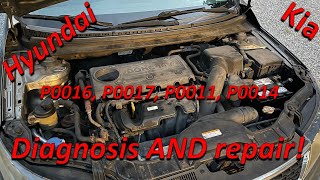
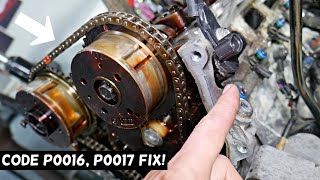
How to confirm: Inspect the OCV for sludge on its screens after removal. You can test it by applying 12V to see if the solenoid actuates. A common diagnostic trick is to swap the intake and exhaust OCVs (if they are identical) and see if the code changes to P0017 (exhaust correlation), which would confirm a bad OCV. 🎬 Watch: Diagnostic steps for P0016 and VVT system issues.
Typical fix: Replace the Bank 1 (intake) Oil Control Valve. It is often recommended to replace both intake and exhaust OCVs at the same time.
Est. part cost: $50-$120 - Stretched Timing Chain 🟡 Medium Probability → Shop Engine Timing Chain The timing chains on these engines are known to stretch over time, especially with higher mileage or a history of poor oil maintenance. This creates slack, altering the cam/crank timing beyond the ECM's acceptable window and can lead to the chain jumping a tooth.
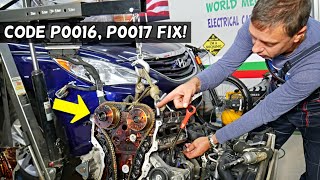
How to confirm: Listen for a rattling or ticking noise from the front of the engine, particularly between 1500-2000 RPM under light load. The definitive check requires removing the valve cover and timing cover to physically inspect the chain for slack and verify the timing marks on the sprockets and crankshaft.
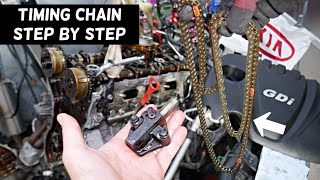
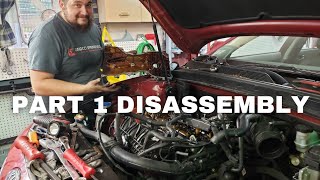
Typical fix: Replace the timing chain, tensioner, and all guides as a complete kit. This is a labor-intensive job. 🎬 See this walkthrough of the timing chain disassembly process.
Est. part cost: $200-$500 (for a kit) - Failed Timing Chain Tensioner 🟡 Medium Probability → Shop Engine Timing Chain The hydraulic tensioner can fail, losing its ability to keep the chain tight. This can be due to wear, oil pressure issues, or a failure of its internal ratchet mechanism. A failed tensioner allows the chain to slap and can lead to it jumping a tooth, causing catastrophic damage.
How to confirm: A rattling noise is a strong indicator. Visual inspection for a fully extended or collapsed tensioner plunger is required after removing the timing cover.
Typical fix: Replace the timing chain tensioner, and typically the chain and guides at the same time as a full kit.
Est. part cost: $60-$120 (for tensioner only)
Rare But Worth Checking
- Failing Camshaft or Crankshaft Position Sensor: → Shop Engine Crankshaft Position Sensor While these sensors are often blamed, they are less likely to be the root cause than mechanical timing components or oil-related issues. The sensors are often correctly reporting a mechanical problem. A sensor failure would typically set a specific sensor circuit code, but it can occasionally contribute to a correlation code.
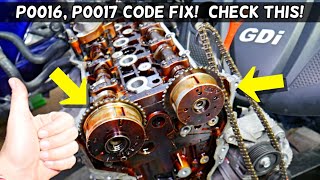
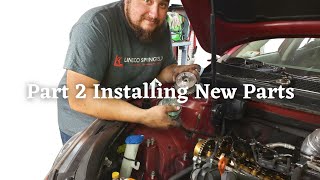
- Damaged or Failing CVVT Cam Phaser/Sprocket: → Shop Engine Timing Gear The sprocket assembly on the end of the camshaft can fail internally, getting stuck in one position or having a delayed response due to clogged oil passages or mechanical failure. This is a more complex and expensive repair than an OCV and often requires timing chain removal to replace. 🎬 Watch: How to install a new timing chain and phaser.
- Damaged Tone Ring / Reluctor Wheel: The tone ring, which the crankshaft or camshaft sensor reads, can become damaged or slip, causing incorrect readings. A manufacturer service bulletin, Bulletin #PS731, notes that an incorrect camshaft reluctor wheel configuration can trigger codes P0011, P0014, P0016, and P0017 on related Kia models.
Diagnosis Steps
- Verify the code with a reliable OBD-II scanner.
- CRITICAL FIRST STEP: Check the engine oil level and condition. If low or dirty, perform an oil and filter change with OEM-spec oil and clear the code to see if it returns.
- Listen for any rattling or unusual noises from the engine, particularly the front (timing cover area), especially during a cold start and around 1500-2000 RPM.
- Inspect the wiring and connectors for the intake camshaft OCV and the camshaft position sensor for any damage, corrosion, or oil contamination.
- Remove and inspect the intake OCV for sludge or debris on its filter screens. Test the solenoid by applying 12V to check for actuation.
- If the intake and exhaust OCVs are interchangeable on your specific model, swap them. Clear the codes and run the engine. If the code changes to P0017, the OCV you moved to the exhaust side is faulty.
- If the above steps do not resolve the issue, a mechanical inspection is necessary. This involves removing the valve cover to inspect the timing chain for excessive slack and to check the alignment of the timing marks on the cam sprockets against the crankshaft.
- If timing marks are misaligned or the chain is loose, a full timing chain service (chain, guides, tensioner) is required.
Parts You'll Likely Need
- Oil Control Valve (VVT Solenoid), Intake
(OEM #24375-2G610) - Oil Control Valve (VVT Solenoid), Exhaust
(OEM #24375-2G500) - Timing Chain Kit (Chain, Tensioner, Guides)
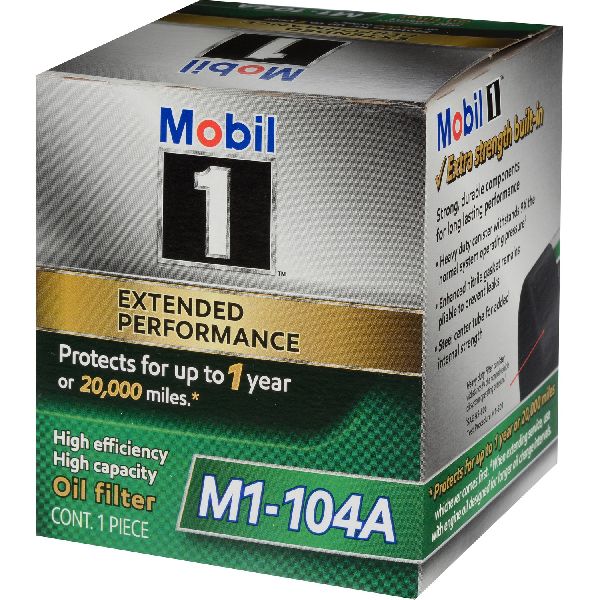
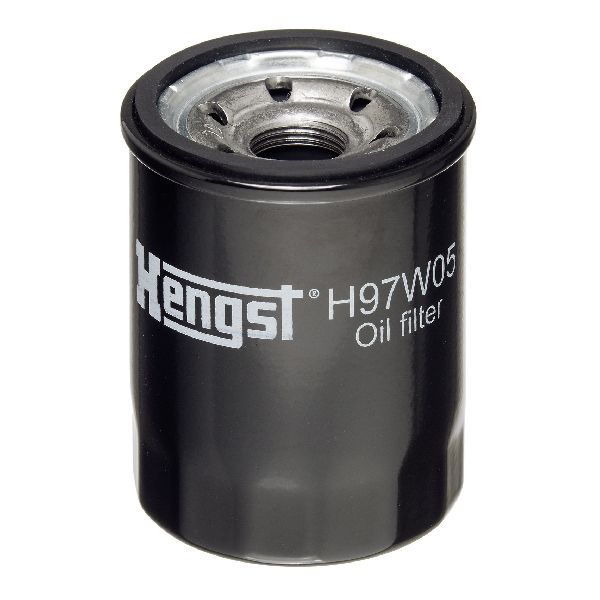
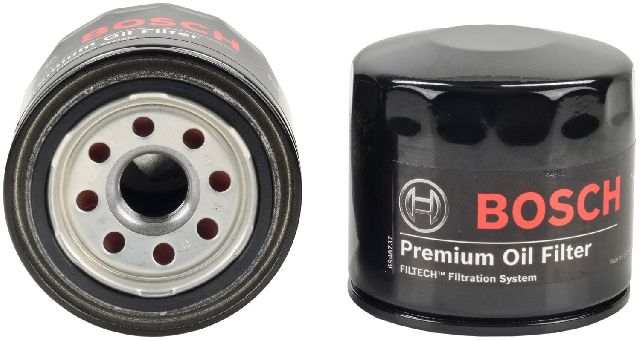
(OEM #24321-2G111) - Engine Oil Filter
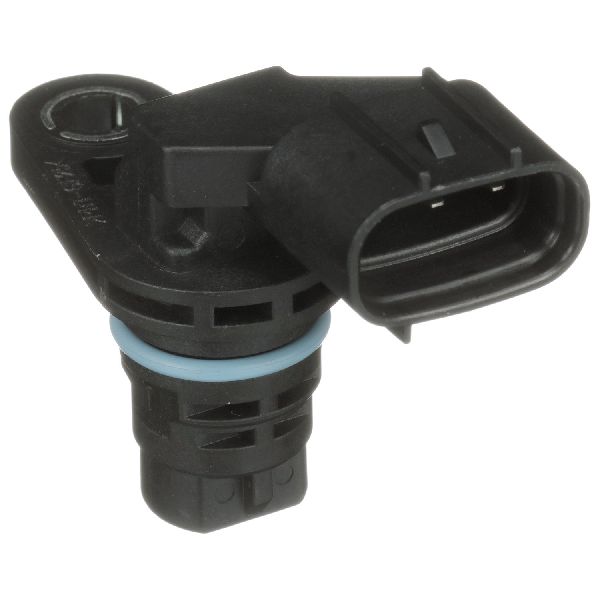
(OEM #26300-35505) - Camshaft Position Sensor
(OEM #39350-2G000)
Related Codes That Often Appear With This One
- P0017 — Crankshaft Position - Camshaft Position Correlation (Bank 1, Sensor B - Exhaust). Seeing P0016 and P0017 together strongly suggests a base timing issue, like a stretched chain or jumped tooth, that is affecting both camshafts.
- P0011 — Intake Camshaft Position Timing - Over-Advanced (Bank 1). This code points to the cam timing being stuck in an advanced position, often caused by the same faulty OCV or CVVT phaser that triggers P0016.
- P0014 — Exhaust Camshaft Position Timing - Over-Advanced (Bank 1). Similar to P0011, this points to a problem with the exhaust side of the CVVT system, which shares common failure points like oil sludge and failing OCVs.
Technical Service Bulletins (TSBs) & Recalls
- SC147 - Safety Recall for Theta II engine inspection and replacement. While not directly for P0016, it addresses the root cause of many engine failures on this platform.
- Bulletin #TSBENG170 - This manufacturer bulletin provides a specific procedure to reset adaptive values for DTC P0016 on certain Kia vehicles.
- Bulletin #TSBENG170_R1 - An updated manufacturer service bulletin that provides revised information regarding the adaptive values reset procedure for P0016.
- Bulletin #PS731 - This Pitstop bulletin provides information regarding P0011, P0014, P0016, and P0017 codes resulting from incorrect camshaft reluctor wheel configuration.
Platform-Specific Known Issues
- Engine Failure Recall (SC147): Many 2011-2014 Optimas with the 2.4L GDI engine were part of a recall and warranty extension for engine replacement due to premature connecting rod bearing failure. The manufacturing debris and oil flow issues that caused this are also linked to timing component failures.
- Oil Consumption: These GDI engines can be prone to high oil consumption, which can lead to low oil levels that trigger P0016 if not monitored closely.
- Sludge Buildup: The engine design, combined with long oil change intervals, can lead to significant oil sludge that clogs the OCVs and oil passages for the timing system.
Mechanic-Grade Diagnostic Values
- Oil Control Valve (OCV) Coil Resistance — expected: 6.8 - 8.0 Ω (for Siemens manufactured OCV). Failure: Resistance is infinite (open circuit) or zero (short circuit). Any reading outside the specified range indicates a faulty coil.
- Camshaft Position Sensor (CMP) - Power Pin Voltage — expected: Battery Voltage (approx. 12V) with ignition on.. Failure: No voltage or low voltage indicates a wiring or ECU power supply issue.
- Camshaft Position Sensor (CMP) - Signal Pin Voltage — expected: Switches between approx. 5V and 0V when a metal object is passed in front of the sensor tip.. Failure: Voltage does not change or is stuck high/low, indicating a faulty sensor.
- Camshaft Position Sensor (CMP) - Ground Pin Voltage — expected: 0V. Failure: Any voltage reading indicates a bad ground connection.
Scan Tool Commands That Help
- Kia GDS (Global Diagnostic System): Resetting Adaptive Values — After replacing major components like the throttle body or after certain software updates, this function in the 'Vehicle S/W Management' or 'Special Function' menu resets the ECU's learned values. It can be useful to perform this after a repair to ensure the ECU relearns correctly, though it's not always required for a P0016 fix unless other systems were disturbed.
- Kia GDS (Global Diagnostic System): Actuation Test (for OCV) — To command the OCV solenoid to activate while the engine is running. A successful test will cause the engine to hesitate or stall, confirming the solenoid is mechanically capable of actuating and that oil passages are likely clear. If the engine does not react, it points to a clogged OCV, failed OCV, or blocked oil passage.
- Kia GDS (Global Diagnostic System): Flight Record / Trigger Module — For intermittent faults. This function allows for recording sensor data (like Cam/Crank signals) over a period of driving to capture data at the exact moment the fault occurs. This is highly valuable for diagnosing issues that don't happen consistently.
Wiring & Ground Locations
- 91860-2T011 — This is the part number for the main engine ground wiring assembly for 2011-2013 Optimas. It includes the primary ground cable from the battery and connection points on the engine block and chassis.. A poor engine ground can cause erratic voltage signals from critical sensors like the crankshaft and camshaft position sensors, potentially leading to false correlation codes. Ensuring these ground points are clean and tight is a crucial, though often overlooked, diagnostic step.
- Fuse Panel Ground Bolt — There is a primary grounding bolt located to the right of the interior fuse panel (driver's side kick panel area) where multiple ground wires connect.. This is a central ground point for many interior electronics and potentially circuits related to the ECU. While less likely to be the direct cause than the main engine ground, a loose connection here can cause a variety of difficult-to-diagnose electronic issues.
Real Owner Repair Stories
- Forum user on kia-forums.com (2012 Kia Optima EX 2.4L, approx. 100k miles) — P0016 code, rough idle, engine rattle.
❌ Tried (didn't work) Replaced both intake and exhaust camshaft position sensors., Replaced both intake and exhaust Oil Control Valves (OCVs)., Performed multiple oil changes with engine flush.
✅ What actually fixed it The timing chain had stretched significantly. The user reported that after replacing the sensors and solenoids did not work, they took it to a mechanic who confirmed the timing chain was loose. A full timing chain, guide, and tensioner replacement finally resolved the P0016 code and associated symptoms. - NHTSA ODI #11712704 — An owner reported that the Check Engine Light would come on and off randomly, with codes P0017 and P0016 appearing as pending when the light was illuminated.
OEM Part Supersession History
24375-2G100, 24375-2G200, 24375-2G600→24375-2G610— Improved design to better resist clogging and electronic failure.Not specified, but multiple revisions exist.→24410-2E000 (and later revisions)— The timing chain tensioner design was updated to improve reliability and prevent loss of hydraulic pressure or mechanical ratchet failure, which could lead to chain slack.
Heads up: Always use the latest available OEM tensioner when performing a timing chain service.22100-2G520, 416Z4-2GH00→24375-2G500— Part number consolidation and potential design improvements for the exhaust OCV.
Model Year Variations Within This Range
- 2014-2015: The third-generation Optima received a facelift for the 2014 model year, which included revised front and rear fascias and some interior updates. However, the core 2.4L GDI Theta II engine (G4KJ) and its CVVT system remained fundamentally the same, meaning the causes and fixes for P0016 are consistent across the 2011-2015 range.
Diagnostic Flowchart
Real Owner Stories
Aggregated from forums and TSBs cited above. Mileages and costs reflect what owners reported in those sources.
Kia 2.4L MPI
Symptoms: Noticed a characteristic 'tick' coming from the timing chain around 1950 RPMs.
What fixed it: Performed a preventative timing chain replacement using OEM parts.
Cost: $200-$200
Source hint: BobIsTheOilGuy - Timing chain change interval on Kia 2.4L MPI
2011 Hyundai Sonata 2.4L
Symptoms: Experienced engine stalling and the check engine light came on with codes P0011 and P0016.
What fixed it: Replaced the cam sensor first, and then the VVT solenoid (OCV), which ultimately resolved the stalling and cleared the codes.
Source hint: YouTube - 2010-2014 Hyundai Sonata P0011 P0016 Sensor In Depth Repair
Hyundai/Kia 2.4L
Symptoms: Check Engine Light illuminated due to a failing OCV, but there were no obvious drivability symptoms or poor running conditions.
What fixed it: Replaced the failing Oil Control Valve (OCV).
Source hint: BobIsTheOilGuy - Kia oil control valve
Related OBD-II Codes
Frequently Asked Questions
Is the P0016 code related to the engine failure recall on my 2011-2014 Kia Optima?
Why is the 2.4L GDI Theta II engine so prone to P0016?
I have a P0016 code and hear a rattling noise from the front of my engine. What does this mean?
Can I test the Oil Control Valve (OCV) on my Optima before replacing it?
How much does it cost to fix a P0016 on a 2.4L Theta II engine?
Does the P0016 code affect other Kia and Hyundai models?
Helpful Videos
We Have This Part in Stock


The information in this article is provided for general reference and educational purposes only. Vehicle specifications, procedures, and part compatibility can vary by production date, trim level, and region. Always consult your vehicle's factory service manual and verify part numbers before purchasing or performing repairs. Safety-critical components such as airbags, seat belts, and braking systems should be installed by a qualified professional.
- Kia Optima:
- 🧭 Diagnostic Flowchart
- 🎬 Helpful Videos
- 🛍️ Shop This Part
- What's Unique About the 2011-2016 Kia Optima
- Symptoms You May Notice
- Most Likely Causes
- Rare But Worth Checking
- Diagnosis Steps
- Parts You'll Likely Need
- Related Codes That Often Appear With This One
- Technical Service Bulletins (TSBs) & Recalls
- Platform-Specific Known Issues
- Mechanic-Grade Diagnostic Values
- Scan Tool Commands That Help
- Wiring & Ground Locations
- Real Owner Repair Stories
- OEM Part Supersession History
- Model Year Variations Within This Range
- Real Owner Stories
- Kia 2.4L MPI
- 2011 Hyundai Sonata 2.4L
- Hyundai/Kia 2.4L
- Related OBD-II Codes
- Frequently Asked Questions
- 🎟️ Get 5% Off