

P0016 on 2010-2017 Kia Soul: Crank/Cam Correlation Causes and Fixes
P0016 on a Kia Soul indicates a timing mismatch between the crankshaft and intake camshaft. The most common causes are low/dirty oil, a failing oil control valve (OCV), or a stretched timing chain. An OCV is about $40-$80 to replace, while a timing chain job can cost over $1000. Start by checking your oil level and condition.
- Always check your engine oil level and condition first; it's the simplest and a very common cause for P0016.
- The Oil Control Valve (OCV) is a likely culprit and is relatively inexpensive and easy to replace as a next step.
- A rattling noise from the engine is a strong sign of a stretched timing chain, which is a serious repair that should not be ignored.
- Due to the complexity of timing systems, professional diagnosis is recommended if an oil change or OCV replacement doesn't solve the problem.
- Be aware of the specific TSB #PS731, which points to a potential manufacturing defect with the camshaft reluctor wheel.
What's Unique About the 2010-2017 Kia SOUL

While P0016 is a generic code, Kia Souls in this year range, particularly those with GDI (Gasoline Direct Injection) engines, can be prone to timing chain stretch over time due to factors like extended oil change intervals. Furthermore, Kia issued a Technical Service Bulletin (TSB #PS731) for 2010-2019 Souls regarding this code, pointing to a very specific and unusual cause: an incorrect camshaft reluctor wheel configuration. This is often a defect from a previous engine replacement or repair, where the tone ring that the sensor reads is not correctly aligned, causing an erroneous signal even if the mechanical timing is perfect.
Diagnostic Flowchart

Tap your situation to follow the diagnostic path that matches what you're seeing on this vehicle.
Generation note: This range covers the first generation (AM, 2010-2013) and the second generation (PS, 2014-2017) of the Kia Soul. Both generations used versions of the 1.6L Gamma and 2.0L Nu engines and can experience this code. The provided TSB #PS731 specifically covers both generations, indicating shared potential issues with the camshaft reluctor wheel.
Symptoms You May Notice

- Check Engine Light is on
- Rough or unstable idle
- Engine misfires
- Reduced engine power and sluggish acceleration
- Engine cranks but fails to start, or has a long crank time
- Rattling noise from the engine, especially a brief rattle lasting 2-3 seconds on a cold startup, indicating a failing timing chain tensioner.
- Worse fuel economy
- Engine stalling, especially when coming to a stop.
- Replacing the camshaft or crankshaft sensors when the actual problem is mechanical (stretched chain or bad OCV). Sensors report the problem; they are not always the cause.
- A mechanic quoting a full timing job without first testing the much cheaper and more common OCV failure.
Most Likely Causes

- Low or Dirty Engine Oil 🔴 High Probability The CVVT (Continuously Variable Valve Timing) system uses oil pressure to adjust cam timing. Low or sludgy oil starves the system, preventing the camshafts from adjusting correctly. GDI engines can be harder on oil, making timely oil changes with OEM-spec filters critical.
How to confirm: Check the oil level on the dipstick and inspect its condition. If it's low or very dark and thick, this is the first and most important step.
Typical fix: Top off or change the engine oil and filter. Use the manufacturer-recommended oil viscosity and an OEM filter to ensure correct oil pressure.
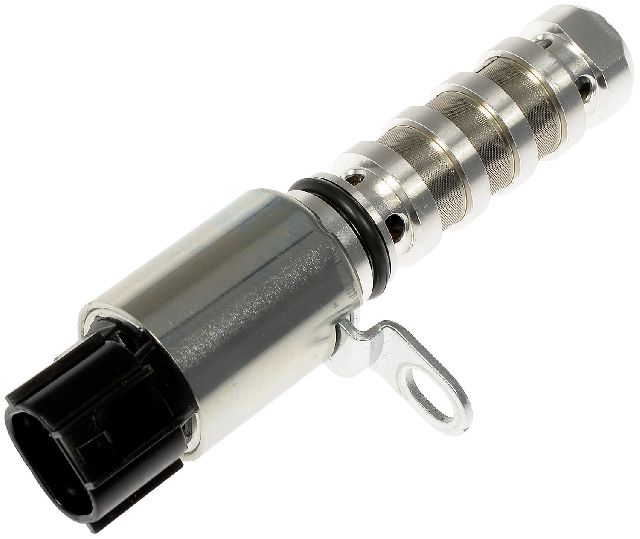
Est. part cost: $30-$70 - Failing Oil Control Valve (OCV / VVT Solenoid) 🔴 High Probability → Shop Engine Variable Valve Timing (VVT) Solenoid The OCV is an electronic solenoid that directs oil flow to the cam phasers. It can get clogged with sludge or fail electrically, causing it to stick. The small mesh screens on the OCV can also break down, sending debris into oil passages.
How to confirm: You can test the solenoid's resistance with a multimeter (a good one should read around 8 ohms). You can also apply 12V to see if it actuates with an audible click. Visually inspect for a broken or clogged screen upon removal.
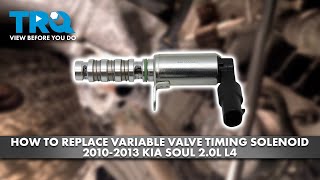
Typical fix: Replace the intake OCV for Bank 1. It is typically held in by a single 10mm bolt and is accessible on the top of the engine. 🎬 Watch: Step-by-step guide to replacing the VVT solenoid.
Est. part cost: $40-$120 - Stretched Timing Chain or Failed Tensioner 🟡 Medium Probability → Shop Engine Timing Chain Over time, especially with extended oil change intervals, the timing chain can stretch or the hydraulic tensioner can weaken. This creates slack, alters the mechanical timing between the crank and cams, and is often preceded by a startup rattle.
How to confirm: This is a complex diagnosis. A key symptom is a rattling noise on startup that goes away after a few seconds. Confirmation involves removing the valve cover to inspect for chain slack or using an oscilloscope to analyze cam and crank sensor patterns. 🎬 See how to diagnose P0016 timing faults on Kia engines. If the chain has jumped a tooth, retiming is required.
Typical fix: Replace the timing chain, guides, and tensioner. This is a labor-intensive job. 🎬 Watch: Full timing chain replacement walkthrough for the 2.0L engine.
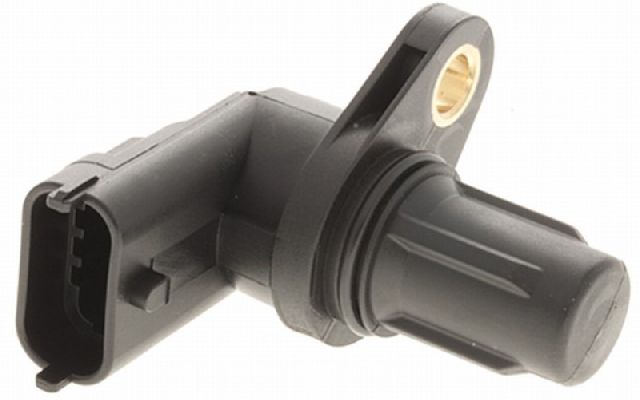
Est. part cost: $150-$400 for a kit - Faulty Camshaft or Crankshaft Position Sensor ⚪ Low Probability → Shop Engine Crankshaft Position Sensor
How to confirm: A scan tool can view live data from the sensors. Swapping the intake and exhaust cam sensors (if they are identical) to see if the code changes to P0017 is a common diagnostic step, though some Soul models have different OCVs for intake/exhaust, preventing a swap. Testing with a multimeter can also confirm failure.
Typical fix: Replace the faulty sensor. The camshaft sensor is usually on top of the valve cover, while the crankshaft sensor is on the lower part of the engine block.
Est. part cost: $30-$90 per sensor
Rare But Worth Checking
- Incorrect Camshaft Reluctor Wheel Configuration: → Shop Engine Camshaft As cited in Kia TSB #PS731, the reluctor wheel (tone ring) on the camshaft itself may have an incorrect configuration from the factory or a previous repair. With the engine at Top Dead Center, the edge of the reluctor wheel should align with a specific mark, such as an indentation on the camshaft cap. If misaligned, it sends incorrect signals, and the camshaft must be repositioned or replaced.
- Failing Camshaft Phaser (CVVT Gear): → Shop Engine Camshaft The gear at the end of the camshaft that actually adjusts the timing can fail internally, getting stuck in one position or having a sheared dowel pin. This is less common than an OCV failure but can cause the same code and often requires timing chain removal to replace.
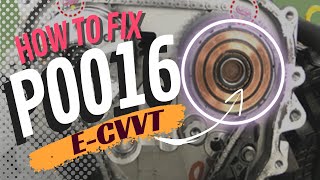
- ECU Needing a Reset After Component Replacement: In some cases, particularly after an engine replacement or major timing work, the ECU's learned adaptive values must be reset using a dealer-level scan tool for the code to clear. TSB ENG170 for the related Kia Forte notes this procedure for a stuck CVVT assembly. Some newer systems also have an 'E-CVVT' that requires a scan tool reset.
Diagnosis Steps
- Check Engine Oil: Verify the oil level is correct and the oil is clean. If low or dirty, perform an oil change with an OEM filter and the correct oil weight. This is the most critical first step.
- Scan for Other Codes: Check for any other codes that could point to a specific component (like a sensor circuit fault or an OCV-specific code like P0011).
- Inspect Wiring: Visually inspect the wiring and connectors for the camshaft position sensor, crankshaft position sensor, and oil control valve for any damage, corrosion, or looseness.
- Test the Oil Control Valve (OCV): Remove the intake OCV (Bank 1). Check its screen for debris or damage. Test for resistance across the two pins with a multimeter (spec is often 6.9-7.9 ohms). Apply 12V power to confirm the internal plunger moves with an audible click.
- Test Sensors: Use a multimeter or oscilloscope to verify the output signals from the camshaft and crankshaft position sensors are within spec. An oscilloscope is the most definitive way to compare the crank and cam signals to see the timing deviation.
- Inspect Mechanical Timing: If the above steps don't reveal the issue, the next step is to inspect the physical timing components. This involves removing the valve cover to check for timing chain slack and verifying the timing marks on the sprockets and chain. This step is best left to a professional.
- Check Reluctor Wheels: Per TSB #PS731, if the engine has been recently replaced or repaired, a visual inspection of the camshaft reluctor wheels may be necessary to ensure they are not damaged or incorrectly clocked.
Parts You'll Likely Need
- Intake Camshaft Oil Control Valve (VVT Solenoid)
(OEM #24355-2E100 (For 2.0L Nu, check VIN), 24355-2E000 (For 1.8L Nu, check VIN), 24355-2B700 (For 1.6L Gamma, check VIN))— This solenoid is a frequent failure point, getting clogged or failing electrically, directly causing timing correlation issues.
Trusted brands: Kia/Hyundai (OEM), Denso, Dorman
OEM price range: $80-$140
Aftermarket price range: $40-$80 - Timing Chain Kit — If the chain has stretched or the tensioner has failed, it will cause a persistent P0016 code that cannot be fixed by replacing sensors or solenoids.
Related Codes That Often Appear With This One
- P0017 — Crankshaft Position - Camshaft Position Correlation (Bank 1, Sensor B). This is the same error but for the exhaust camshaft. Seeing both P0016 and P0017 strongly points to a base timing issue like a stretched chain or jumped tooth affecting both cams.
- P0011 — Intake Camshaft Position Timing - Over-Advanced (Bank 1). This code indicates the cam timing is stuck in an advanced position, often caused by the same faulty OCV or cam phaser that triggers P0016.
- P0300 — Random/Multiple Cylinder Misfire Detected. Incorrect cam timing disrupts the combustion process, leading to misfires across multiple cylinders.
Technical Service Bulletins (TSBs) & Recalls
- PS731: Provides information regarding DTCs P0011, P0014, P0016, or P0017 that may be caused by an incorrect camshaft reluctor wheel configuration on 2010-2019 Soul models.
Platform-Specific Known Issues
- A known issue documented in TSB #PS731 involves an incorrect camshaft reluctor wheel configuration on 2010-2019 Soul models, which can cause P0016 without any actual timing chain or sensor fault.
Mechanic-Grade Diagnostic Values
- Oil Control Valve (VVT Solenoid) Resistance — expected: 6.9 to 7.9 Ohms at 68°F (20°C). Failure: A reading outside this range, or an open circuit (infinite resistance), indicates a failed solenoid coil.
- Camshaft Position Sensor Signal Voltage (Key On, Engine Off) — expected: Approximately 4.8-5.0 Volts on the signal wire, relative to ground.. Failure: No voltage or significantly lower voltage suggests a sensor or wiring issue. The voltage should drop to zero when a metal object is placed near the sensor tip.
- Camshaft Position Sensor Power Supply Voltage (Key On, Engine Off) — expected: Battery voltage (approx. 12V) on the power supply wire relative to ground.. Failure: Low or no voltage indicates a problem with the wiring or the power source from the ECU.
Scan Tool Commands That Help
- Kia GDS or compatible professional scanner: Reset E-CVVT Learned Values — After replacing timing components or the CVVT assembly on newer models with electronic CVVT, the ECU's adaptive values may need to be cleared for the code to resolve and the system to operate correctly.
Wiring & Ground Locations
- Camshaft Position Sensor Connector — On top of the valve cover, plugged into the camshaft position sensor.. This 3-terminal connector provides power, ground, and signal return for the sensor. A loose connection, corrosion, or damaged wire here will directly cause sensor-related codes, including P0016. The three wires are typically power (12V), ground, and signal (approx. 5V).
- Main Engine Ground Strap — Typically connects the engine block or transmission case to the vehicle's chassis/frame.. A poor engine ground can cause a variety of electrical issues and floating voltages for sensors. While not a direct cause, verifying the main ground is clean and tight is a fundamental step in diagnosing any electrical fault.
Real Owner Repair Stories
- S&E's Garage YouTube Channel (2012 Kia Forte (with similar Nu engine)) — P0016 code, startup issues.
❌ Tried (didn't work) Initial diagnosis pointed towards timing components.
✅ What actually fixed it The Oil Control Valve (OCV) was found to have a disintegrated filter screen. Although its electrical resistance tested within spec (8 ohms), the mechanical part of the valve was suspect. Replacing the OCV resolved the P0016 code and the startup issue. - Reddit user in r/AskMechanics (2019 Kia Soul 2.0L with 120,000 miles) — P0016 code that could not be cleared, along with misfires.
❌ Tried (didn't work) Cleaned and replaced the VVT solenoid., Swapped the intake and exhaust camshaft position sensors to see if the code would change to P0017; it did not.
✅ What actually fixed it The user was advised by other mechanics in the thread that after ruling out the OCV and sensors, the next logical step is a mechanical timing issue, such as a stretched timing chain or failed tensioner, which requires a more in-depth, professional repair. The final fix was not posted by the original user, but the diagnostic path points strongly to a base timing problem.
OEM Part Supersession History
22100-2E000, 22110-2E000, 5D015-2EU00→24355-2E100— Part number consolidation and potential design updates for the Oil Control Valve (VVT Solenoid) for the 2.0L Nu engine.
Heads up: The part 24355-2E100 is listed for many 2.0L Nu engines from 2012 onwards. Always verify fitment with a VIN, as there can be variations.
Model Year Variations Within This Range
- 2012-2013 vs 2014-2017 (2.0L Engine): The 2.0L engine in early first-generation Souls (2010-2011) was a Beta II engine. Starting in 2012, Kia introduced the 'Nu' engine. Within the 2012-2017 range, the 2.0L Nu engine was available in both Multi-Port Injection (MPI) and Gasoline Direct Injection (GDI) versions. While the P0016 diagnosis is similar, GDI engines are generally considered more susceptible to carbon buildup and issues related to oil quality, which can impact the CVVT system.
Helpful Videos
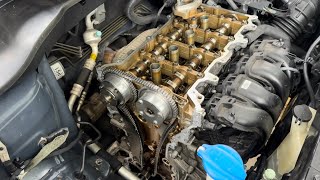
We Have This Part in Stock

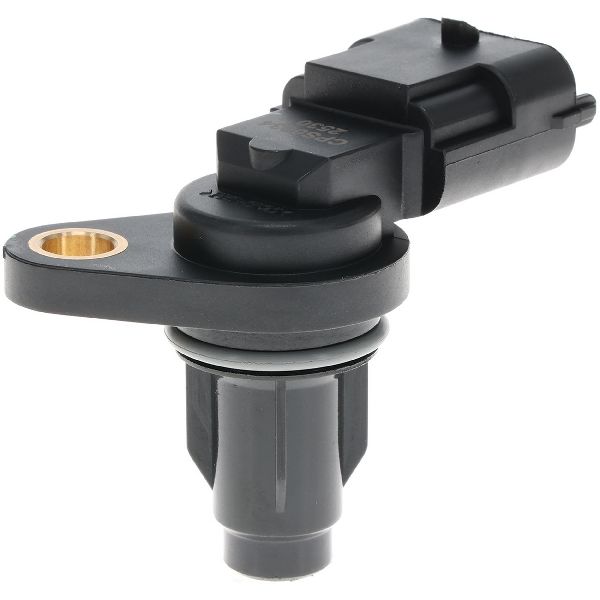
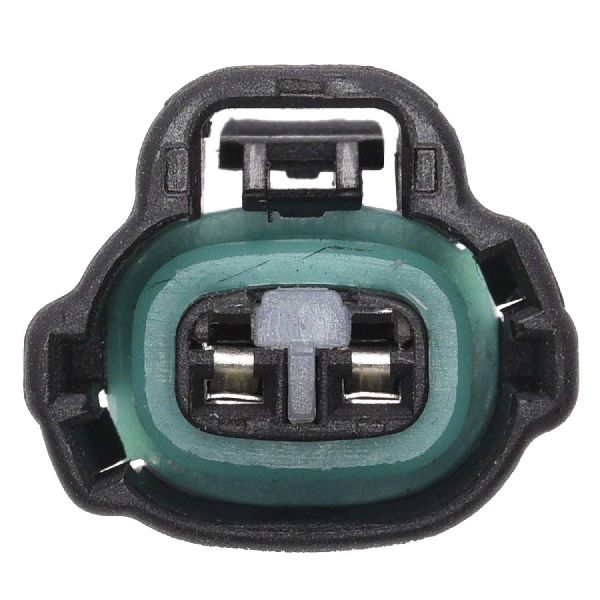
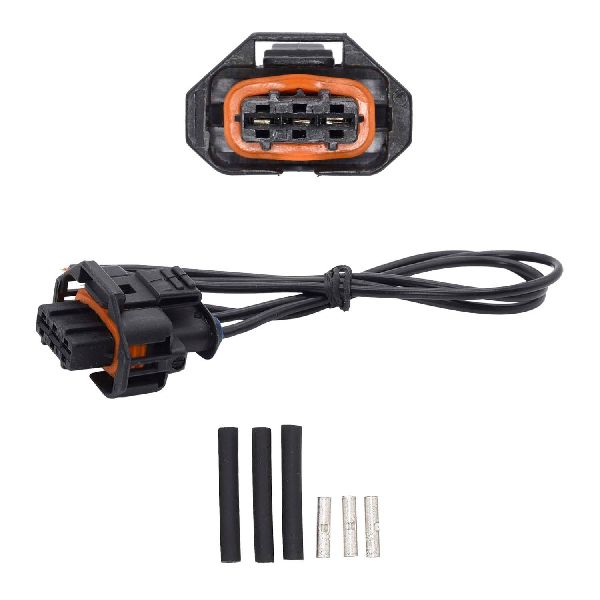

The information in this article is provided for general reference and educational purposes only. Vehicle specifications, procedures, and part compatibility can vary by production date, trim level, and region. Always consult your vehicle's factory service manual and verify part numbers before purchasing or performing repairs. Safety-critical components such as airbags, seat belts, and braking systems should be installed by a qualified professional.
- Kia SOUL:
- 🧭 Diagnostic Flowchart
- 🎬 Helpful Videos
- 🛍️ Shop This Part
- What's Unique About the 2010-2017 Kia SOUL
- Symptoms You May Notice
- Most Likely Causes
- Rare But Worth Checking
- Diagnosis Steps
- Parts You'll Likely Need
- Related Codes That Often Appear With This One
- Technical Service Bulletins (TSBs) & Recalls
- Platform-Specific Known Issues
- Mechanic-Grade Diagnostic Values
- Scan Tool Commands That Help
- Wiring & Ground Locations
- Real Owner Repair Stories
- OEM Part Supersession History
- Model Year Variations Within This Range
- 🎟️ Get 5% Off