

P0016 on 2018-2023 Kia Stinger 3.3T: Crank/Cam Correlation Causes and Fixes
P0016 on a Kia Stinger 3.3T most often points to low or dirty engine oil, or a faulty Oil Control Valve (OCV). Start by checking your oil level and condition. An OCV is about $50-$70, while a more serious timing chain issue can exceed $2,000.
- P0016 is a serious code for your Stinger; address it immediately to prevent potential engine damage.
- Before buying any parts, check your engine oil level and condition. Also, inspect for oil leaks near the driver's side turbocharger, as this is a known recall issue (SC300).
- The most likely part to have failed is the Bank 1 (passenger side) intake Oil Control Valve (OCV), which is a relatively inexpensive fix.
- Do not assume the camshaft or crankshaft sensors are bad. They are less likely to be the cause than oil-related or mechanical timing problems.
- A rattling noise from the engine on startup is a strong sign of a more serious timing chain problem, which requires professional repair.
What's Unique About the 2018-2023 Kia Stinger
The Lambda II 3.3L T-GDI is a high-performance, direct-injection, twin-turbo engine that is very sensitive to oil level and quality. A critical issue for this specific platform is safety recall SC300, which addresses a deteriorating left-hand (driver's side) turbocharger oil feed pipe that can leak oil onto hot exhaust components, creating a fire risk. This oil leak can directly lead to low oil pressure, starving the CVVT system and triggering a P0016 code before any mechanical failure occurs. Therefore, checking for oil leaks around the turbocharger area is a unique and vital first step for this vehicle.
Symptoms You May Notice
- Check Engine Light is on
- Rough or unstable idle
- Reduced engine power and acceleration
- Engine rattling noise, especially on cold startup
- Engine may crank but fail to start
- Poor fuel economy
- Engine stalling
- Replacing the camshaft and crankshaft position sensors immediately. These sensors are often not the root cause; the issue is typically the mechanical relationship they are monitoring, which is affected by oil pressure or timing chain slack.
- Replacing only the timing chain tensioner. If the chain has already stretched or jumped a tooth, a new tensioner might quiet a startup rattle but will not fix the correlation error, and the P0016 code will persist.
Most Likely Causes
- Low or Dirty Engine Oil 🔴 High Probability The CVVT system is hydraulic and highly dependent on oil pressure and cleanliness. The 3.3T engine has a known safety recall (SC300) for an oil feed pipe that can leak, leading to low oil levels and pressure. Dirty or incorrect viscosity oil can clog the small passages in the Oil Control Valves.
How to confirm: Check the oil level on the dipstick and inspect its condition. Check for oil leaks, particularly around the left (driver's side) turbocharger, per recall SC300.
Typical fix: Perform an oil and filter change using a high-quality full synthetic oil meeting Kia's specifications (typically 5W-30) and a genuine OEM oil filter. If a leak is found from the turbo oil feed line, it must be replaced per recall SC300.
Est. part cost: $60-$100 for oil and filter - Faulty Bank 1 Intake Oil Control Valve (OCV) 🟡 Medium Probability → Shop Engine Variable Valve Timing (VVT) Solenoid These solenoids can become clogged with oil sludge or fail electrically, getting stuck in one position. This is a very common failure point in CVVT systems across the Hyundai/Kia platform.
How to confirm: Swap the Bank 1 (passenger side) intake OCV with the Bank 2 (driver's side) intake OCV. Clear codes and drive. If the code changes to P0018 (Bank 2 Intake), the OCV is faulty. A multimeter can also be used to test resistance, which should be between 6.9 and 7.9 ohms.
Typical fix: Replace the Bank 1 intake Oil Control Valve. It is located on the valve cover for the passenger-side cylinder bank and held by a single 10mm bolt.
Est. part cost: $50-$120 - Stretched Timing Chain or Failed Tensioner ⚪ Low Probability → Shop Engine Timing Chain Over time, especially with poor oil maintenance, the timing chain can stretch, or the hydraulic tensioners can weaken, causing slack in the system and altering the mechanical timing. While not as common as on four-cylinder Theta engines, the Lambda II can still experience this.
How to confirm: A distinct rattling noise on a cold start that goes away after a few seconds is a strong indicator. A mechanic can use a scan tool to view desired vs. actual camshaft angle data; a significant deviation (e.g., 5 degrees or more) points to a mechanical timing issue. Physical inspection is the ultimate confirmation but is very labor-intensive.
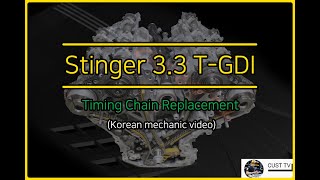
Typical fix: Replace the timing chain, tensioners, and guides. This is a major repair requiring significant engine disassembly and can cost over $2,000. 🎬 Watch: A professional walkthrough of the 3.3L timing chain installation.
Est. part cost: $400-$900 for a full kit - Failed Camshaft or Crankshaft Position Sensor ⚪ Low Probability → Shop Engine Crankshaft Position Sensor Sensors can fail due to heat and age, but they are less likely to be the root cause of a correlation code than oil or mechanical issues. The code implies the sensors are working but their signals don't align.
How to confirm: Swap the suspect Bank 1 intake camshaft sensor with the Bank 2 intake sensor. If the code changes to P0018, the sensor is bad. An oscilloscope can also be used to verify the sensor's signal pattern.
Typical fix: Replace the faulty sensor.
Est. part cost: $40-$80
Rare But Worth Checking
- Damaged Camshaft Phaser (CVVT Actuator): → Shop Engine Camshaft The gear on the end of the camshaft that actually adjusts the timing can fail internally, getting stuck or not responding to oil pressure changes from the OCV. This is usually diagnosed after an OCV has been replaced with no change.
- Wiring Harness or Connector Issue: An open or short in the wiring to the OCV or camshaft position sensor can mimic a component failure. This should be suspected if new parts do not resolve the code. A wiring harness recall for 2018 models existed for potential damage from a body panel burr.
- Incorrect Camshaft Reluctor Wheel Configuration: → Shop Engine Camshaft Manufacturer Bulletin #PS731 notes that on some Kia models, correlation codes like P0016 can be caused by issues with the camshaft reluctor wheel configuration.
Diagnosis Steps
- Verify the engine oil level and condition. If low, dirty, or overdue for a change, perform an oil and filter change with the correct viscosity oil and an OEM filter. Clear codes and re-test.
- Inspect for oil leaks, paying close attention to the left-side turbocharger oil feed line, which is subject to recall SC300.
- Scan for any other DTCs that may be present to get more context. An owner reported in NHTSA ODI #11712704 that the Check Engine Light would come on and off randomly with P0016 and P0017 appearing as pending codes.
- Listen for any rattling noises from the engine during a cold start, which would indicate timing chain issues.
- Inspect the wiring and connectors for the Bank 1 intake camshaft position sensor and the Oil Control Valve (OCV) for any damage or corrosion.
- If oil and wiring are good, swap the Bank 1 (passenger side) intake OCV with the Bank 2 (driver's side) intake OCV. Clear codes and see if the fault moves to Bank 2 (P0018). If it does, the OCV is bad.
- If the OCV is not the issue, consider swapping the Bank 1 and Bank 2 intake camshaft position sensors to see if the fault follows the sensor.
- If all of the above steps fail to identify the issue, the problem is likely mechanical (stretched timing chain, failed tensioner, or faulty CVVT phaser) and requires professional diagnosis with advanced tools to check live cam/crank deviation.
Parts You'll Likely Need
- Bank 1 Intake Oil Control Valve (OCV)
(OEM #24355-3L100)— This solenoid is a very common failure point, getting clogged or failing electrically, which directly causes timing correlation faults.
Trusted brands: Hyundai/Kia Genuine
OEM price range: $50-$70
Aftermarket price range: $30-$60 - Timing Chain Kit (Chain, Tensioners, Guides)
(OEM #24321-3L100)— If the code is caused by a mechanical timing issue, a complete kit is needed to restore proper synchronization and prevent catastrophic failure.
Trusted brands: Hyundai/Kia Genuine
OEM price range: $400-$900
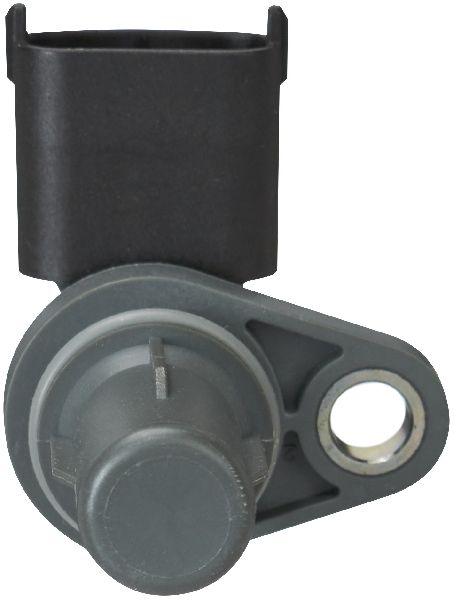
Aftermarket price range: $250-$500 - Intake Camshaft Position Sensor (Bank 1)
(OEM #39350-3L100)— Though less common, a faulty sensor can send incorrect data, triggering the code. It's a potential fix if oil and OCV issues are ruled out.
Trusted brands: Bosch, NGK/NTK, Hyundai/Kia Genuine
OEM price range: $60-$90
Aftermarket price range: $40-$70
Related Codes That Often Appear With This One
- P0017 — Crankshaft/Camshaft correlation error for the Bank 1 *exhaust* cam. If seen with P0016, it strongly suggests a base timing issue on Bank 1, like a jumped or stretched chain.
- P0018 / P0019 — These are the equivalent correlation codes for Bank 2. Seeing them along with P0016 would indicate a major timing problem affecting the entire engine, possibly a primary timing chain issue or a problem with the crankshaft position sensor.
- P0011 — Intake Camshaft Position Timing - Over-Advanced (Bank 1). This code points specifically to a problem with the CVVT system's ability to control the intake cam, often caused by the same faulty OCV or oil issues.
Technical Service Bulletins (TSBs) & Recalls
- Safety Recall Campaign to replace the left-hand (LH) turbocharger oil feed pipe and hose assembly, which can deteriorate from heat, leak oil, and cause a fire risk. (Recall SC300).
- Bulletin #TSBENG170_R1: This manufacturer bulletin provides a specific procedure to reset adaptive values for DTC P0016 on certain Kia vehicles.
- Bulletin #TSBENG170: An earlier version of the adaptive value reset procedure specifically for 2.0L MPI engines, highlighting the importance of ECU learning in correlation diagnostics.
- Bulletin #PS731: Provides information regarding DTC P0016 and P0017 due to incorrect camshaft reluctor wheel configuration.
Platform-Specific Known Issues
- Recall SC300 (NHTSA ID: 24V-191): The left turbocharger oil feed pipe and hose assembly may deteriorate from heat, leading to an oil leak. This leak can cause low oil levels, which is a primary trigger for P0016 and other timing-related codes.
Mechanic-Grade Diagnostic Values
- Oil Control Valve (OCV) Coil Resistance — expected: 6.9–7.9 Ohms at 68°F (20°C).. Failure: A reading of infinity (open circuit) or near zero (short circuit) indicates a failed OCV that requires replacement.
- Scan Tool Live Data: Desired vs. Actual Camshaft Angle (Bank 1 Intake) — expected: The actual angle should closely track the desired angle commanded by the PCM, with a difference near 0 degrees at idle.. Failure: A consistent deviation of more than a few degrees, or a value that is stuck, points towards a mechanical timing issue (stretched chain) or a faulty CVVT phaser.
Scan Tool Commands That Help
- Kia GDS/KDS or compatible advanced scan tool: Actuator Test - Bank 1 Intake OCV — With the engine idling, this command forces the OCV solenoid to activate. A healthy system (solenoid, oil passages, phaser) will cause the engine to stumble or stall, confirming the hydraulic circuit is working. If nothing happens, it points to a bad OCV, clogged passage, or failed phaser.
- Kia GDS/KDS: S/W Management -> Reset adaptive values — This is used after certain component replacements to force the ECU to relearn cam position values. While a TSB for P0016 on a Forte mentions this, it can be a useful step after a major timing repair on the Stinger to clear old learned values.
Wiring & Ground Locations
- Engine Ground Point — In the engine bay, on the passenger side fender, there is a small bolt that serves as the negative jump-start terminal. This is a primary and easily accessible ground point for the engine chassis.. A poor engine ground can cause floating voltage references for sensors like the camshaft and crankshaft position sensors, leading to erratic signals and potential correlation codes. Verifying this ground is clean and tight is a quick and essential electrical check.
Real Owner Repair Stories
- stingerforum.org / kiastinger.org (referenced in related articles) (Kia Stinger GT 3.3L T-GDi V6) — Check engine light with timing codes (P0016, P0019, etc.).
❌ Tried (didn't work) Replacing sensors without diagnosis.
✅ What actually fixed it In many documented cases, the issue was resolved by either correcting the engine oil level and condition or by replacing a faulty Oil Control Valve (OCV). - NHTSA ODI #11712704: An owner reported that their Check Engine Light would come on and off randomly, with codes P0016 and P0017 appearing as pending when the light was active.
OEM Part Supersession History
24355-3C100→24355-3L100— Part has been updated by the manufacturer. 24355-3L100 is the current recommended replacement for many Lambda V6 applications.
Heads up: While 24355-3C100 may still be found, using the latest 24355-3L100 is recommended for any repair to ensure the latest design is used.
Model Year Variations Within This Range
- 2022-2023: For the 2022 model year facelift, the 3.3L T-GDI V6 received a new variable exhaust system which slightly increased horsepower to 368 hp from the previous 365 hp. This change does not fundamentally alter the CVVT system or the causes of P0016, but it's a known difference in the later models.
Diagnostic Flowchart
Other Known Issues on This Vehicle
Issues unrelated to this code that are worth knowing about as an owner of this generation:
- Warped Brake Rotors / Vibration 🟠 Medium — Very common, often appearing before 25,000 miles. Owners report steering wheel vibration under braking.
- Tailgate and Headliner Rattles 🟡 Low — Common fit-and-finish issue, especially on earlier models. TSBs exist for some of these rattles. (Ref: TSB-BOD178, TSB-BOD317)
- LH Turbo Oil Feed Pipe Leak 🔴 High — Common enough to trigger a safety recall. The pipe deteriorates from heat, leaks oil, and poses a fire risk. (Ref: Recall SC300)
- Paint Chipping 🟡 Low — Owners frequently complain about the paint being thin and easily chipped, particularly on the front bumper and hood. A specific issue with Sunset Yellow paint flaking was noted on early models.
- Excessive Oil Consumption 🟠 Medium — While the Lambda II is generally more reliable than the 4-cylinder Theta II, some owners of the 3.3L GDI in various Kia/Hyundai models have reported significant oil consumption between changes, which can lead to low oil levels and engine damage if not monitored. (Ref: TSB_ENG222_R5 (Covers multiple engines))
Used vs. New Parts: Buying Guide for This Vehicle
When a used part is the smart pick: Used parts can be a cost-effective option for sensors (Camshaft/Crankshaft Position Sensors) and possibly Oil Control Valves (OCVs), provided they can be tested or come from a low-mileage, reputable donor vehicle.
Donor-vehicle mileage cap: roughly under 60000 miles for the part to have meaningful remaining life.
What to inspect on the donor part:
- For sensors and OCVs, check for clean connectors with no corrosion or frayed wiring.
- Inspect the OCV's mesh screens for any metallic debris or sludge, which indicates poor health of the donor engine.
- Ask for the VIN of the donor car to verify its mileage and check for any reported accidents near the engine.
- Avoid parts from engines that show signs of heavy oil leaks or sludge buildup under the oil cap.
OEM-only on this vehicle (don't cheap out):
- Timing Chain Kit (Chain, Guides, Tensioners): The risk of catastrophic engine failure from a low-quality timing component is too high. Always use genuine OEM parts for this critical job.
- Oil Filter: The 3.3T is sensitive to oil pressure. An OEM filter ensures correct flow rates and bypass valve operation. Aftermarket filters are a known risk for causing oil pressure issues.
Aftermarket brands forum-validated for this vehicle:
- Bosch (for sensors)
- NGK/NTK (for sensors)
Brands owners have reported issues with on this vehicle:
- Unbranded, no-name 'white box' parts from online marketplaces for any critical engine component like sensors, OCVs, or timing parts.
Real Owner Stories
Aggregated from forums and TSBs cited above. Mileages and costs reflect what owners reported in those sources.
2018-2023 Kia Stinger 3.3L T-GDI
Symptoms: Leaking driver's side turbo feed line.
What fixed it: The engine had to be pulled for a warranty repair to replace the leaking line, as addressed in recall SC300.
Source hint: Reddit r/kiastinger - Common issues?
2020 Kia Stinger GT 3.3L T-GDI
Symptoms: Dealer-disclosed 'typical timing chain problems' during a potential sale.
What fixed it: While some owners suggested fouled plugs, the primary concern was mechanical timing chain issues known to affect the Lambda II engine.
Source hint: Reddit r/StingerGT - Kia Stinger GT with timing chain problems
Related OBD-II Codes
Frequently Asked Questions
Is there a recall for the 3.3L T-GDI engine that could cause a P0016 code?
How can I tell if my P0016 code is caused by a faulty Oil Control Valve (OCV) or a mechanical timing issue?
What type of oil should I use in my Stinger 3.3T to prevent CVVT issues like P0016?
Does the Genesis G70 suffer from the same P0016 issues as the Stinger?
Is the Kia K900 included in the oil leak recall that affects the Stinger's timing system?
Helpful Videos
We Have This Part in Stock

The information in this article is provided for general reference and educational purposes only. Vehicle specifications, procedures, and part compatibility can vary by production date, trim level, and region. Always consult your vehicle's factory service manual and verify part numbers before purchasing or performing repairs. Safety-critical components such as airbags, seat belts, and braking systems should be installed by a qualified professional.
- Kia Stinger:
- 🧭 Diagnostic Flowchart
- 🎬 Helpful Videos
- 🛍️ Shop This Part
- What's Unique About the 2018-2023 Kia Stinger
- Symptoms You May Notice
- Most Likely Causes
- Rare But Worth Checking
- Diagnosis Steps
- Parts You'll Likely Need
- Related Codes That Often Appear With This One
- Technical Service Bulletins (TSBs) & Recalls
- Platform-Specific Known Issues
- Mechanic-Grade Diagnostic Values
- Scan Tool Commands That Help
- Wiring & Ground Locations
- Real Owner Repair Stories
- OEM Part Supersession History
- Model Year Variations Within This Range
- Other Known Issues on This Vehicle
- Used vs. New Parts: Buying Guide for This Vehicle
- Real Owner Stories
- 2018-2023 Kia Stinger 3.3L T-GDI
- 2020 Kia Stinger GT 3.3L T-GDI
- Related OBD-II Codes
- Frequently Asked Questions
- 🎟️ Get 5% Off