

P0016 on 2017-2020 Lincoln Continental: Crank-Cam Correlation Causes and Fixes
On a 2017-2020 Lincoln Continental, P0016 is most often caused by a sticking Variable Camshaft Timing (VCT) solenoid due to oil debris, a known issue cited in Lincoln TSBs. Before suspecting a costly timing chain issue, check your oil and consider replacing the VCT solenoid, which is a much cheaper and easier fix. Bank 1 is the firewall side of the engine.
- P0016 is a serious code indicating a timing mismatch that should be addressed immediately to prevent potential engine damage.
- Always check the engine oil level and condition first. Low or dirty oil is a simple fix that causes major VCT system problems.
- A sticking VCT solenoid is a very common cause for this code on Lincoln Continentals, as confirmed by manufacturer TSBs.
- Do not automatically assume the worst (a stretched timing chain). Diagnose the simpler and more common VCT solenoid and oil issues first.
- If your Continental has the 3.7L V6, be aware that a P0016 code could be an early warning of a failing internal water pump.
What's Unique About the 2017-2020 Lincoln CONTINENTAL
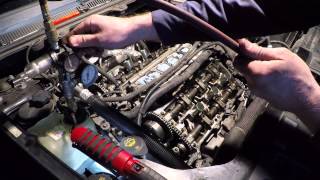
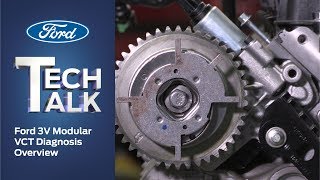
For this generation of Lincoln Continental, which uses the 2.7L, 3.0L, and 3.7L engines, the P0016 code is frequently linked to the Variable Camshaft Timing (VCT) system. Lincoln has issued multiple Technical Service Bulletins (TSBs) acknowledging that small debris in the engine oil can cause the VCT solenoids to stick, triggering this code. 🎬 Watch: Ford technician explains VCT system diagnosis and common failures. This makes a sticking solenoid a more likely initial culprit than a major mechanical failure like a stretched timing chain, although that remains a possibility, especially on higher-mileage vehicles or on the 3.7L V6 where internal water pump failure can contaminate the oil.
🎬 Watch: How internal water pump failure destroys these V6 engines.Diagnostic Flowchart
Tap your situation to follow the diagnostic path that matches what you're seeing on this vehicle.
Symptoms You May Notice
- Check Engine Light is on
- Rough idle or stalling
- Reduced engine power and poor acceleration
- Engine rattles, especially on cold startup, indicating a possible timing chain issue.
- Poor fuel economy
- Engine cranks but fails to start in severe cases.
- Replacing the crankshaft or camshaft position sensors without verifying the mechanical timing. The code indicates a 'correlation' problem, which is often mechanical (timing chain) or hydraulic (VCT system), not a sensor failure.
- Replacing the VCT solenoid without first checking the oil level and condition. Dirty oil can cause the new solenoid to fail quickly.
Most Likely Causes
- Sticking or Failed VCT Solenoid 🔴 High Probability → Shop Engine Variable Valve Timing (VVT) Solenoid Manufacturer TSBs (SSM 48423, SSM 47170) directly state that small debris in the oil can cause the VCT solenoid to stick on these vehicles, making it a very common and officially recognized issue.
How to confirm: A technician can use a scan tool to command the solenoid on and off to check for a response. A useful DIY diagnostic is to swap the Bank 1 intake solenoid with the Bank 2 intake solenoid. If the code changes to P0018 (Bank 2 Intake Correlation), the solenoid is confirmed to be faulty. Visual inspection after removal may also show debris or sludge.
Typical fix: Replace the Bank 1 intake VCT solenoid. It is often recommended to replace both intake and exhaust solenoids for the bank at the same time, or all four for the engine.
Est. part cost: $40-$95 per solenoid - Low or Dirty Engine Oil 🟡 Medium Probability The VCT system is entirely dependent on clean oil at the correct pressure to function. Infrequent oil changes lead to sludge that clogs the small passages in the VCT solenoids and phasers, causing them to stick.
How to confirm: Check the oil level on the dipstick and inspect its condition. If it is low, black, or sludgy, it needs to be changed.
Typical fix: Perform an oil and filter change using the manufacturer-specified oil viscosity (e.g., 5W-30 for EcoBoost engines). Clear the codes and see if P0016 returns.
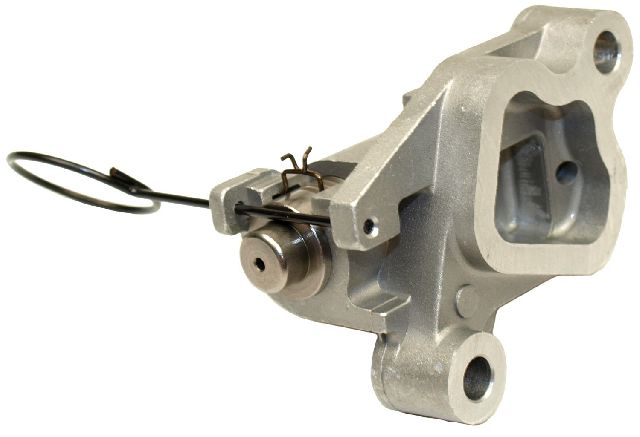
Est. part cost: $50-$100 - Stretched Timing Chain 🟡 Medium Probability → Shop Engine Timing Chain Over time, especially past 80,000 miles, the timing chain can stretch. This causes slack, which the tensioner may not be able to compensate for, leading to a correlation error. This is a known issue on the 2.7L and 3.0L EcoBoost engines.
How to confirm: This is a complex diagnosis. A common symptom is a rattling noise on cold startup. A technician must perform an in-depth mechanical inspection, which involves removing the valve cover to visually inspect the timing chain tensioner's extension.
Typical fix: Replace the timing chain, tensioners, guides, and sprockets. This is a major, labor-intensive repair. On the 3.7L V6, the internal water pump should always be replaced at the same time.
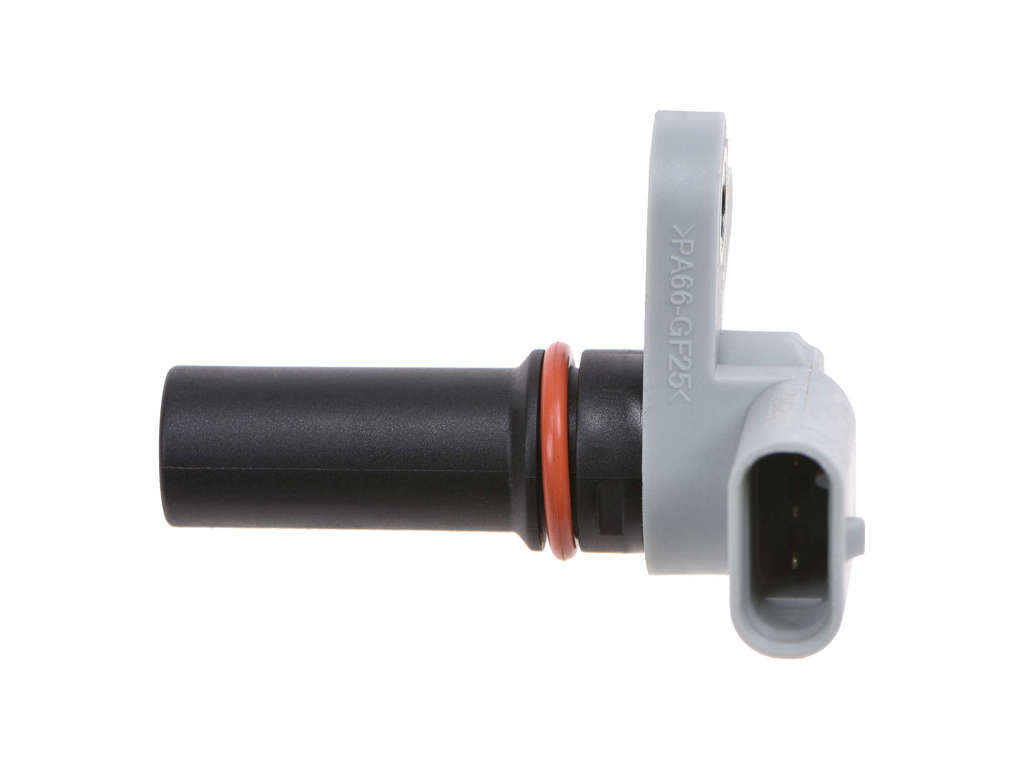
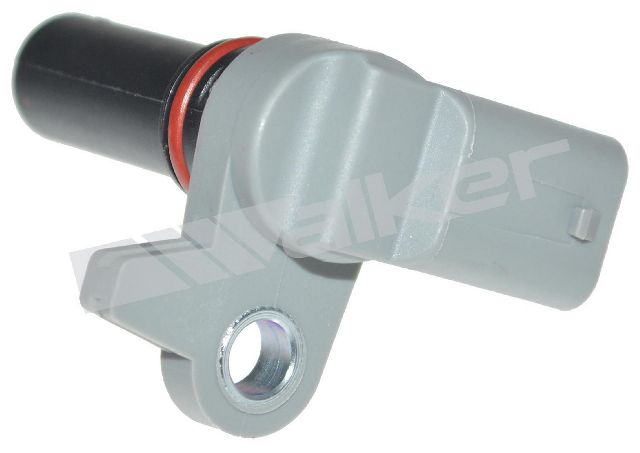
Est. part cost: $300-$600 for a kit - Failed Camshaft or Crankshaft Position Sensor ⚪ Low Probability → Shop Engine Crankshaft Position Sensor
How to confirm: Use an oscilloscope to check the sensor's signal pattern. A scan tool may also show erratic readings from the suspected sensor. Swapping the sensor with one from another location (if identical) can also help diagnose.
Typical fix: Replace the faulty sensor. The code specifies Bank 1 Sensor A, which is the intake camshaft sensor.
Est. part cost: $30-$80
Rare But Worth Checking
- Internal Water Pump Failure (3.7L V6 Only): → Shop Engine Water Pump On the 3.7L V6 engine, the water pump is located inside the engine and driven by the timing chain. If its seal fails, it leaks coolant directly into the oil pan. This contamination turns the oil to sludge, destroying the timing components, causing the chain to stretch or jump, and triggering P0016. This can lead to catastrophic engine failure if not addressed immediately.
- Damaged Reluctor Ring: The toothed tone ring on the crankshaft or camshaft that the sensor reads can become damaged or slip, sending incorrect data. This is uncommon but can mimic a sensor failure.
Diagnosis Steps
- Verify the code with an OBD-II scanner and check for any other related codes. Note any codes like P0011, P0012, P0017, or P0018.
- Inspect the engine oil level and condition. If low or dirty, perform an oil and filter change with the correct viscosity oil. This is the easiest and cheapest first step and can sometimes resolve the issue.
- Listen for any rattling noises from the engine, especially during a cold start, which strongly indicates a timing chain/tensioner issue.
- Using a professional scan tool (like FORScan), monitor the live data for desired vs. actual camshaft angles for Bank 1 (VCT_ADV1 vs VCT_ADV_REQ1). A significant deviation points to a problem.
- Per TSB SSM 48423, use the scan tool's functional commands to cycle the Bank 1 intake VCT solenoid 10 times to attempt to clear any debris. Clear codes and re-test.
- If the code returns, swap the Bank 1 intake VCT solenoid with the Bank 2 intake solenoid. Clear codes and drive the vehicle. If the code changes to P0018 (Bank 2 Intake Correlation), the solenoid is faulty and should be replaced.
- If the VCT system appears to be working and the solenoid swap doesn't move the fault, the next step is to inspect the camshaft and crankshaft sensors and their wiring for damage or loose connections.
- If all other components check out, a mechanical inspection of the timing chain, guides, and tensioners is necessary. This is a labor-intensive step and is best left to a professional.
Parts You'll Likely Need
- Variable Camshaft Timing (VCT) Solenoid
(OEM #FT4Z-6M280-A (or superseding -B) for 2.7L/3.0L EcoBoost; BL3Z-6M280-B for 3.7L V6)— This is the most likely cause according to multiple Lincoln TSBs, which state the solenoid can stick due to oil debris.
Trusted brands: Motorcraft, Dorman, Standard Motor Products
OEM price range: $60-$95
Aftermarket price range: $40-$75 - Timing Chain Kit — If the chain has stretched, a full kit including the chain, guides, and tensioners is required to restore proper mechanical timing. This is a high-labor job.
Trusted brands: Motorcraft, Cloyes
OEM price range: $400-$700
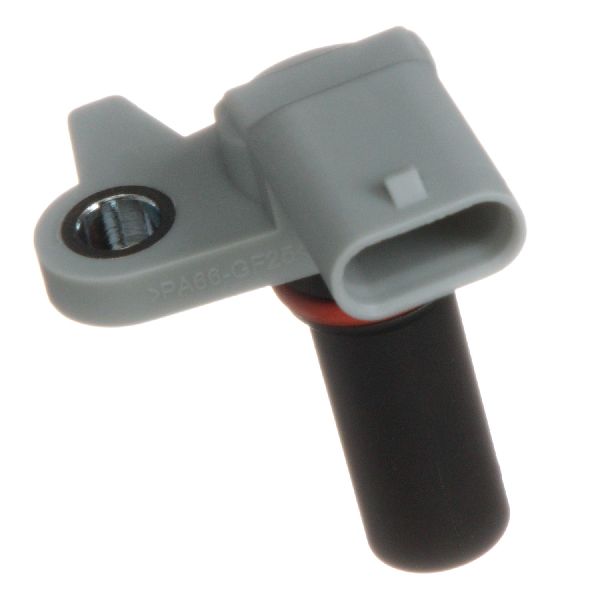
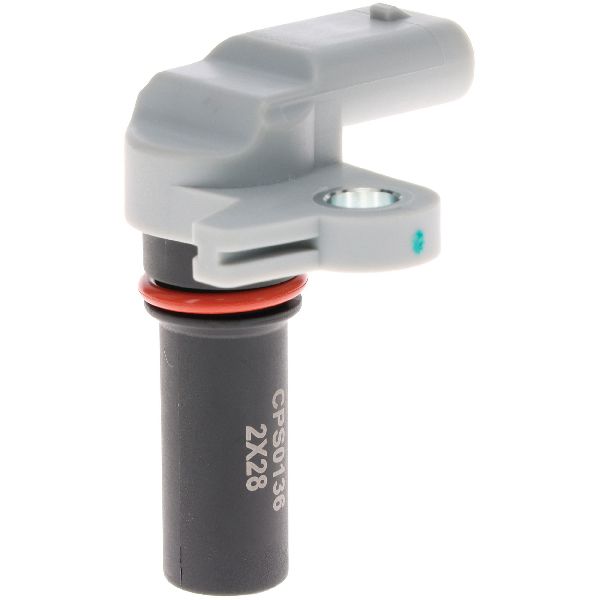
Aftermarket price range: $250-$500 - Camshaft Position Sensor — While less common than a VCT or timing chain issue, a failed sensor can directly cause this code.
Trusted brands: Motorcraft, Bosch, NTK
OEM price range: $50-$80
Aftermarket price range: $30-$60
Related Codes That Often Appear With This One
- P0017 — This is the correlation code for the exhaust camshaft on Bank 1. If P0016 and P0017 appear together, it points more strongly to a base timing issue, like a stretched chain, affecting the entire bank.
- P0018 / P0019 — These are the correlation codes for Bank 2 (front/radiator side). Seeing P0016 along with P0018 points to a problem affecting both banks, such as a stretched primary timing chain or severe oil contamination from a failing water pump (on the 3.7L).
- P0011 — This code means 'Camshaft Position A - Timing Over-Advanced'. It often appears with P0016 and can indicate a VCT solenoid stuck open or a cam phaser issue.
- P0012 — This code means 'Camshaft Position A - Timing Over-Retarded'. It also points to a VCT control problem, like a stuck solenoid or low oil pressure.
Technical Service Bulletins (TSBs) & Recalls
- SSM 54366: Some 2015-2021 Ford and Lincoln vehicles may exhibit an illuminated MIL with diagnostic trouble codes (DTCs) P0011, P0012, P0014, P0015, P0016, P0017, P0018, P0019, P0021, P0022, P0024 and/or P0025. This TSB provides guidance for running Pinpoint Test HK in the service manual.
- SSM 48423: Some 2015-2020 Ford and Lincoln vehicles may exhibit an illuminated MIL with various VCT-related DTCs including P0016. It states this may be due to small debris causing the VCT solenoid to stick and advises cycling the solenoid with a scan tool before replacement.
- SSM 47170: An earlier version of the same bulletin as SSM 48423, noting that VCT codes like P0016 may be due to debris causing the solenoid to stick.
Platform-Specific Known Issues
- TSB SSM 48423 and SSM 47170 note that on some 2015-2020 Ford and Lincoln vehicles, P0016 can be caused by small debris causing the VCT solenoid to stick. The TSB recommends attempting to clear the debris by cycling the affected solenoid 10 times with a scan tool before replacement.
Mechanic-Grade Diagnostic Values
- VCT Solenoid Internal Resistance — expected: 7 to 14 Ohms. Failure: A reading outside this range, or showing an open (OL) or short (0 Ohms), indicates a failed solenoid coil.
- Camshaft Position Sensor (3-wire Hall Effect) Voltage Test — expected: With the key on and engine off, the power supply wire should have ~5V or battery voltage, and the signal wire should also show voltage (typically 4-5V).. Failure: No voltage on the power supply wire points to a wiring or PCM issue. The signal wire voltage should drop to zero when a piece of metal is passed in front of the sensor tip; if it doesn't, the sensor is likely faulty.
- FORScan Live Data - VCT Error — expected: The PID for VCT error (e.g., VCT_ERR1 for Bank 1) should hover around 0 degrees at idle and during steady-state driving.. Failure: A persistent deviation of more than +/- 5 degrees for an excessive amount of time indicates a problem with the VCT system's ability to control cam phasing. Large, erratic swings in the error PID (e.g., over 40 degrees) can point to a sticking solenoid that is slow to react and overcorrects.
- Engine Oil Pressure at Hot Idle — expected: A minimum of 15 PSI at hot idle with the VCT system inactive.. Failure: Oil pressure below 15 PSI at idle can cause the VCT system to malfunction, as it is hydraulically operated. Low pressure can cause the camshafts to oscillate and trigger timing correlation codes.
Scan Tool Commands That Help
- FORScan or Ford IDS: VCT Solenoid On/Off Test or Cycle Command — As mentioned in TSBs, this command rapidly cycles the solenoid (e.g., 10 times) to dislodge small debris that may be causing it to stick. This should be used as a diagnostic step before replacing the solenoid.
- FORScan or Ford IDS: Monitor PIDs: VCT_ADV_REQ1, VCT_ADV1, and VCT_ERR1 — These PIDs represent the PCM's 'Requested' cam angle, the 'Actual' reported angle, and the 'Error' or difference between them for Bank 1. Graphing these values provides a clear visual of how well the phaser is responding to commands. A slow response or large, persistent error value points to a hydraulic (solenoid, oil pressure) or mechanical (phaser) issue.
- Ford IDS or high-end bidirectional scanner: Actuator Test: Command VCT Solenoid % — When the engine is idling, manually commanding the VCT solenoid to activate (increase duty cycle) should cause a noticeable change in engine idle quality, such as a stumble or roughness. If there is no change, it confirms the solenoid is not actuating the phaser, likely due to being stuck, clogged, or an electrical fault.
Real Owner Repair Stories
- Ford Fusion Forum user report (Lincoln MKZ with 3.7L V6 (engine shared with Continental)) — Check Engine Light with code P0016.
❌ Tried (didn't work) Initial diagnosis pointed towards VCT solenoids or other common timing components.
✅ What actually fixed it The confirmed cause was a failed internal water pump, which is driven by the timing chain on the 3.7L engine. The failure contaminated the engine oil with coolant, which in turn destroyed the timing components. The fix required a complete timing job, including a new water pump, timing chains, and tensioners.
OEM Part Supersession History
FT4Z-6M280-A→FT4Z-6M280-B— This is a common revision for the VCT solenoid used in the 2.7L and 3.0L EcoBoost engines. Part supersessions often involve improvements to address known failure modes, such as resistance to debris or electrical failure.
Heads up: The parts are interchangeable, but it is recommended to use the latest -B revision for repairs.8L3Z-6M280-A→8L3Z-6M280-B— This is a supersession for a VCT solenoid used in earlier V8 engines but is relevant as it shows a pattern of Ford updating these components. The BL3Z-6M280-B used in the 3.7L V6 follows a similar pattern of revisions to improve reliability.
Helpful Videos

We Have This Part in Stock


The information in this article is provided for general reference and educational purposes only. Vehicle specifications, procedures, and part compatibility can vary by production date, trim level, and region. Always consult your vehicle's factory service manual and verify part numbers before purchasing or performing repairs. Safety-critical components such as airbags, seat belts, and braking systems should be installed by a qualified professional.
- Lincoln CONTINENTAL:
- 🧭 Diagnostic Flowchart
- 🎬 Helpful Videos
- 🛍️ Shop This Part
- What's Unique About the 2017-2020 Lincoln CONTINENTAL
- Symptoms You May Notice
- Most Likely Causes
- Rare But Worth Checking
- Diagnosis Steps
- Parts You'll Likely Need
- Related Codes That Often Appear With This One
- Technical Service Bulletins (TSBs) & Recalls
- Platform-Specific Known Issues
- Mechanic-Grade Diagnostic Values
- Scan Tool Commands That Help
- Real Owner Repair Stories
- OEM Part Supersession History
- 🎟️ Get 5% Off