

P0016 on 2015-2021 Lincoln Navigator: Crank/Cam Timing Correlation Causes & Fixes
P0016 on a Lincoln Navigator indicates a timing misalignment between the crankshaft and the Bank 1 intake camshaft. The most common causes are low/dirty oil, a failing VCT solenoid, or a stretched timing chain. A VCT solenoid is a relatively inexpensive part, but a timing chain replacement can cost thousands. The issue is very common on the 3.5L EcoBoost platform.
- P0016 signifies a critical timing mismatch between the crankshaft and the passenger-side intake camshaft.
- Always check your engine oil level and condition first; low or dirty oil is a primary cause of VCT system problems.
- The most likely parts to fail are the VCT solenoid (a moderate repair) or the timing chain (a major, expensive repair).
- Do not ignore this code. While the vehicle may still drive, you risk severe and costly engine damage if the timing chain is the cause and it fails completely.
- Given the complexity, professional diagnosis is highly recommended to distinguish between a faulty solenoid and a stretched timing chain.
What's Unique About the 2015-2021 Lincoln NAVIGATOR
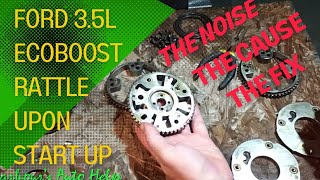
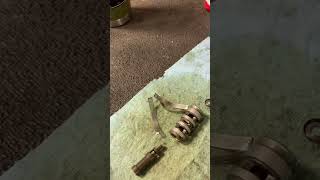
The 3.5L EcoBoost engine in the Navigator is known for timing chain stretch, particularly in the 2015-2017 models, which can directly cause the P0016 code. Additionally, Ford/Lincoln has issued multiple Technical Service Bulletins (TSBs) acknowledging that the VCT system is sensitive to oil condition and that small debris can cause VCT solenoids to stick, leading to a range of timing correlation codes including P0016. For the 2018+ models, a notorious "cold start rattle" is often linked to failing cam phasers, a problem acknowledged by Ford's Customer Satisfaction Program 21N03 🎬 Watch: Hear the rattle and see the phaser fix, which extended warranty coverage for this specific issue. This makes checking oil quality, listening for startup rattles, and testing VCT solenoid function 🎬 See how a failed VCT solenoid behaves critical first steps before suspecting the more costly timing chain replacement.
Diagnostic Flowchart
Tap your situation to follow the diagnostic path that matches what you're seeing on this vehicle.
Generation note: This range covers two Navigator generations: the third (2015-2017) and the fourth (2018-2021). Both use a 3.5L EcoBoost V6, but the 2018+ models have a second-generation version with updates. While the fundamental causes are similar, the first-generation EcoBoost (2015-2017) is more commonly associated with premature timing chain stretch leading to P0016. The second-generation (2018-2021) is more known for a distinct cam phaser rattle on cold starts, addressed by Ford's TSB 20-2315 and Customer Satisfaction Program 21N03.
Symptoms You May Notice
- Check Engine Light is on
- Rough or unstable idle
- Poor acceleration and reduced engine power, sometimes described as 'limp mode'
- Engine is hard to start or cranks but won't start
- Rattling or ticking noise from the engine, especially on a cold start (often described as 'marbles on the top of the motor')
- Decreased fuel economy
- Engine stalling
- Replacing the camshaft or crankshaft position sensors without testing them. The issue is far more likely to be oil-related or a mechanical timing component (solenoid, chain, phaser) than a failed sensor.
- Replacing only the timing chain without replacing the cam phasers, tensioners, and guides. This often results in the code or noise returning.
Most Likely Causes
- Low, Old, or Incorrect Viscosity Engine Oil 🔴 High Probability The VCT system is hydraulic and highly dependent on oil pressure and cleanliness. The TSBs for this vehicle specifically mention debris in the oil causing VCT solenoids to stick. Using full synthetic 5W-30 oil and a high-quality filter (like Motorcraft) is critical.
How to confirm: Check the oil level on the dipstick and review service records for the last oil change date and oil type used. The oil should be at the full mark and not appear overly dark or sludgy. Change oil every 5,000 miles, especially if not using full synthetic. A mechanical gauge can be used to test oil pressure; at idle, it should be at least 25 PSI on most engines.
Typical fix: Perform an oil and filter change using the correct OEM-specified grade (Motorcraft 5W-30 Full Synthetic) and a high-quality filter (e.g., Motorcraft FL-500S).
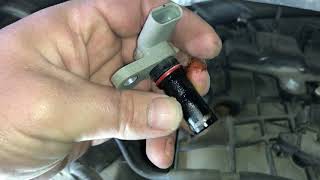
Est. part cost: $50-$100 - Failing VCT Solenoid (Bank 1, Intake) 🔴 High Probability → Shop Engine Variable Valve Timing (VVT) Solenoid As noted in TSBs SSM 48423 and SSM 47170, these solenoids can stick due to small debris in the engine oil, causing incorrect cam timing. TSB 16-0093 also points to faulty solenoids causing these codes on new vehicles with very low mileage.
How to confirm: Use a scan tool (like FORScan) to monitor desired vs. actual cam angle. You can also command the solenoid on and off to check for a response. A common diagnostic step is to swap the Bank 1 intake solenoid with the Bank 2 intake solenoid and see if the code changes to P0018 (for Bank 2 Intake).
Typical fix: Replace the Bank 1 intake VCT solenoid. It's recommended to replace them in pairs (intake and exhaust) or all four at once. TSB SSM 48423 suggests attempting to cycle the solenoid 10 times with a scan tool to clear debris before replacement.
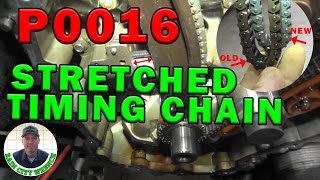
Est. part cost: $40-$120 per solenoid - Stretched Timing Chain 🟡 Medium Probability → Shop Engine Timing Chain The 3.5L EcoBoost, especially the first generation (2015-2017), has a known issue with the primary timing chain stretching over time. This creates slack, which the hydraulic tensioner cannot overcome, throwing off the mechanical timing between the crank and cams.
How to confirm: This is a physical inspection. A technician will remove the passenger-side valve cover to check the timing chain tensioner. If the tensioner is fully extended (showing multiple teeth), it confirms the chain has stretched. A cold start rattle is a strong audible indicator. Using a scan tool like FORScan, a technician can monitor the VCT_INT_ACT1 PID; a reading consistently above 6 degrees at idle suggests significant chain stretch.
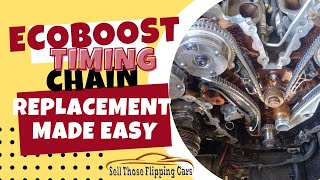
Typical fix: Replace the timing chain, tensioners, guides, and often the cam phasers and water pump at the same time. This is a major engine repair with costs often exceeding $2,500.
Est. part cost: $400-$800 for a full kit - Failed Camshaft Phaser 🟡 Medium Probability → Shop Engine Camshaft The cam phasers (VCT units) can fail, especially on 2018+ models, causing a loud rattle on cold starts. A locking pin inside the phaser wears out, allowing the internal rotor to move freely when oil pressure is low, creating noise and potentially timing errors. Ford addressed this with TSB 20-2315 and Customer Satisfaction Program 21N03.
How to confirm: A distinct 2-5 second rattle from the front of the engine after a cold soak of 6+ hours is the primary symptom. Often diagnosed during a timing chain replacement. A scan tool may show the phaser angle is stuck or slow to respond.
Typical fix: Replace all four cam phasers. This is typically done as part of a full timing chain service. Ford's official repair procedure per TSB 20-2315 involves replacing the VCT units and reprogramming the PCM.
Est. part cost: $150-$300 per phaser
Rare But Worth Checking
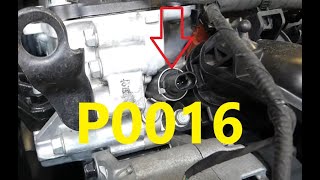
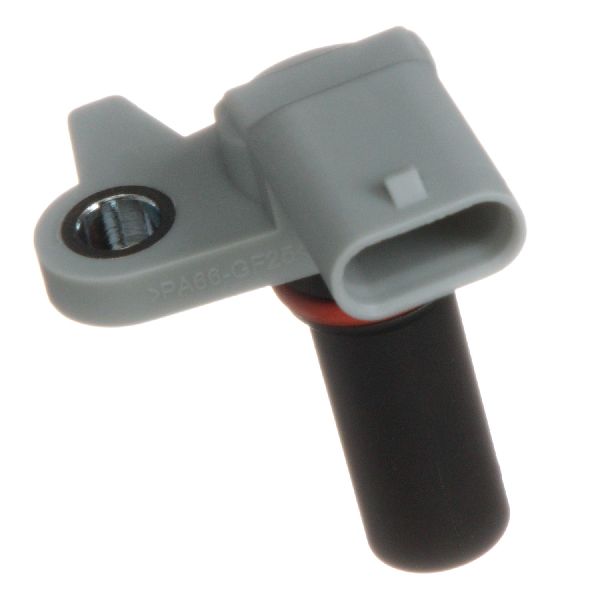
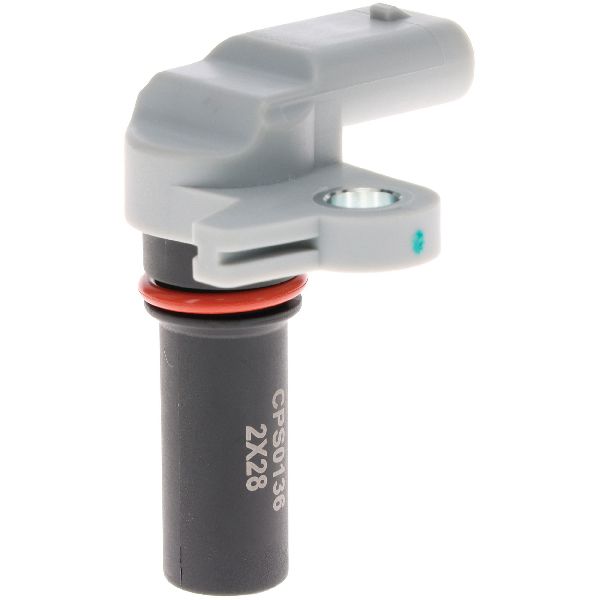
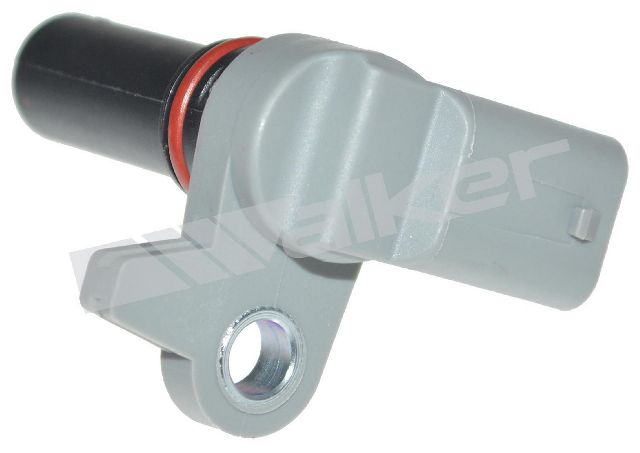
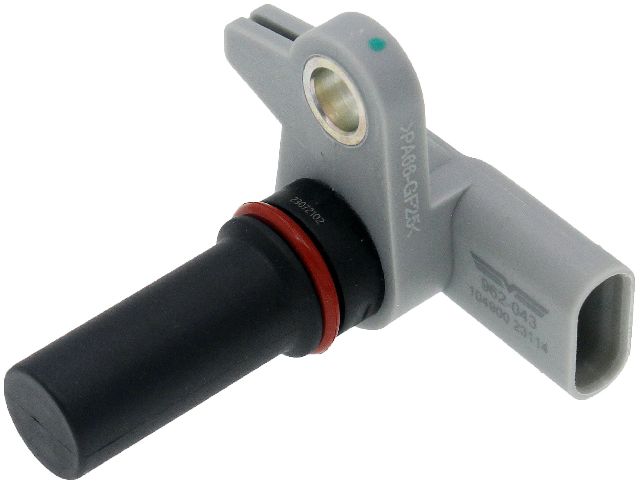
- Failing Camshaft or Crankshaft Position Sensor: → Shop Engine Crankshaft Position Sensor While possible, it's more common for a sensor failure to produce a specific sensor circuit code (like P0340) rather than a correlation code. However, a sensor providing intermittent or incorrect data can still trigger P0016. Many owners replace these first due to low cost, but it's often not the root cause.
- Damaged Tone Ring: The reluctor wheel (tone ring) on the crankshaft or camshaft that the sensor reads can become damaged or slip, causing incorrect readings. This is very rare but can happen.
- Wiring Harness Damage: Frayed or corroded wiring to the VCT solenoid or one of the position sensors can cause a loss of signal, leading to this code. Checking for loose pins in the VCT solenoid connectors is a recommended diagnostic step.
Diagnosis Steps
- Verify engine oil level and condition. If low or dirty, perform an oil and filter change with OEM-spec 5W-30 full synthetic oil and a Motorcraft filter, then clear the code.
- Connect an OBD-II scanner (preferably one with Ford-specific data like FORScan) and check for any other stored trouble codes.
- Listen for a 2-5 second rattle from the front of the engine on a cold start after the vehicle has sat for several hours. This is a key indicator of cam phaser or timing chain issues.
- Using a capable scan tool, monitor the live data PIDs for desired vs. actual camshaft position for Bank 1 Intake (VCT_INT_ACT1 and VCT_INT_DIF1). A large or erratic discrepancy indicates a problem.
- Command the Bank 1 Intake VCT solenoid on and off with the scan tool. Listen for a click and watch for a change in engine idle to see if it's responding. Per TSB SSM 48423, cycling it 10 times may clear debris.
- If the solenoid is suspect, swap the Bank 1 intake solenoid with the Bank 2 intake solenoid. Clear the codes and drive the vehicle. If the code returns as P0018 (Bank 2), the solenoid is faulty.
- Inspect the wiring and connector for the VCT solenoid and cam position sensor for any damage, corrosion, or loose pins.
- If the above steps do not resolve the issue, the next step is a mechanical inspection. Remove the passenger-side valve cover and inspect the timing chain tensioner for over-extension, which indicates a stretched chain.
Parts You'll Likely Need
- Variable Camshaft Timing (VCT) Solenoid
(OEM #HL3Z-6M280-A)— This solenoid controls oil flow to the cam phaser and is a very common failure point, often getting stuck due to oil debris as noted in manufacturer TSBs.
Trusted brands: Motorcraft, Dorman
OEM price range: $40-$80
Aftermarket price range: $30-$70 - Timing Chain Kit
(OEM #ML3Z-6D256-A (example, verify by VIN))— Required when the timing chain has stretched, which is a known issue on the 3.5L EcoBoost engine. A full kit should include the chain(s), guides, tensioners, and phaser bolts.
Trusted brands: Motorcraft, Cloyes
OEM price range: $500-$900
Aftermarket price range: $350-$600 - Camshaft Phaser (VCT Unit)
(OEM #ML3Z-6256-A (Intake, example), ML3Z-6C525-A (Exhaust, example))— A known failure point, especially on 2018+ models, causing the 'cold start rattle'. Often replaced as a set of four during a timing chain job.
Trusted brands: Motorcraft
OEM price range: $150-$300 per phaser
Aftermarket price range: $100-$200 per phaser - Camshaft Position Sensor
(OEM #Motorcraft DY1149 (example, verify by VIN))— Though less common to be the root cause, it's a relatively inexpensive part that some owners replace as a preliminary step.
Trusted brands: Motorcraft, Bosch, Delphi
OEM price range: $25-$50
Aftermarket price range: $15-$40
Related Codes That Often Appear With This One
- P0017, P0018, P0019 — These are correlation codes for the other camshafts. If the timing chain has stretched, it can affect the timing on multiple cams simultaneously.
- P0011, P0012, P0021, P0022 — These codes indicate a cam is over-advanced or over-retarded. They often appear alongside P0016 as they are all related to the VCT system's inability to control cam timing. The cited TSBs list all these codes together.
- P0299 — Turbo/Supercharger Underboost. This code can sometimes appear with P0016 when the engine enters a failure management or 'limp' mode, which reduces boost to protect the engine.
Technical Service Bulletins (TSBs) & Recalls
- States that P0016 and other timing codes can be caused by small debris causing a VCT solenoid to stick. Recommends cycling the solenoid with a scan tool before replacement.
- Addresses a cold start ticking/tapping or rattle noise on 2018-2020 Navigator/Expedition and 2017-2020 F-150s. Identifies the cause as worn VCT units (cam phasers) and prescribes replacement of all four units and a PCM reprogram.
- Extends the warranty on cam phasers for certain 2018-2020 Navigators due to undesirable noise (rattle/knocking). This is for customers who continue to have issues after a previous PCM update.
- Addresses timing codes, including P0016, on very low-mileage (<2000 miles) 2016 vehicles, including the Navigator. The prescribed fix was to replace the affected VCT solenoid.
Platform-Specific Known Issues
- Cam Phaser Rattle (2018-2021 Models): → Shop Engine Timing Gear The second-generation 3.5L EcoBoost in the 2018+ Navigator is particularly known for a loud 2-5 second rattle upon cold startup. This is due to a faulty locking pin design in the cam phasers. Ford issued TSB 20-2315 and a customer satisfaction program (21N03) to address this by replacing the phasers with an updated design and reprogramming the PCM. While often just a noise, it can eventually lead to timing correlation codes like P0016.
- Timing Chain Stretch (2015-2017 Models): → Shop Engine Timing Chain The first-generation 3.5L EcoBoost is more prone to the primary timing chain physically stretching over time, usually after 80,000 miles. This causes the tensioner to max out, creating slack and leading directly to the P0016 code. The fix is a full timing job, which is labor-intensive and expensive.
Mechanic-Grade Diagnostic Values
- VCT Actual vs. Desired Camshaft Position (FORScan PID: VCT_INT_ACT1 vs VCT_INT_DSD1) — expected: Should be nearly identical at idle and under load. The difference (VCT_INT_DIF1) should be close to 0 degrees.. Failure: A consistent or erratic difference, especially a value greater than 6 degrees at idle, points towards a stretched timing chain or failing phaser. Slow response to changes in desired value can indicate a sticking VCT solenoid.
- Engine Oil Pressure (Mechanical Gauge) — expected: At least 25 PSI at idle when the engine is at operating temperature.. Failure: Pressure below 25 PSI at idle indicates a systemic oil pressure problem that must be addressed before replacing VCT components, as the system is hydraulically actuated.
- VCT Solenoid Resistance — expected: Approximately 5-15 Ohms, though specific values can vary. Comparing the resistance between all four solenoids is a good diagnostic check.. Failure: A reading of infinite resistance (open circuit) or zero resistance (short circuit) indicates a failed solenoid.
Scan Tool Commands That Help
- Ford IDS (Integrated Diagnostic System): Reset All Adaptations / Reset Camshaft Position — This function should be used after replacing timing components like phasers or solenoids. It clears the learned values in the PCM, forcing it to relearn the new components' positions and response rates, which can prevent the code from returning after a repair.
- FORScan / Ford IDS: Variable Cam Timing (VCT) Solenoid On/Off Command — This is a bidirectional test used to verify if a VCT solenoid is mechanically functioning. By commanding the solenoid on and off at idle, a technician can listen for an audible click from the solenoid and observe a change in engine RPM. A lack of response indicates a stuck or failed solenoid.
Real Owner Repair Stories
- Ford Truck Enthusiasts Forums (2014 Ford F-150 3.5L EcoBoost with 150k miles) — Slightly rough idle before operating temperature, followed by a recurring P0016 code.
❌ Tried (didn't work) Clearing the code (it would return daily).
✅ What actually fixed it Despite preparing for a full timing chain replacement, the owner decided to first replace the Bank 1 Intake Camshaft Position Sensor as a precaution. This single, relatively inexpensive part replacement resolved the P0016 code, and the fix was confirmed to have lasted for six months and 10,000 miles. - Ford F150 Forum (2013 F-150 3.5L EcoBoost with 90k miles) — P0016 code present.
❌ Tried (didn't work) A complete timing job was performed, including a new timing chain, phasers, and guides using the latest Ford parts kit. The engine ran smoothly after the repair, but the P0016 code returned within 5-10 minutes of driving.
✅ What actually fixed it The forum thread did not have a final confirmed resolution from the original poster, highlighting the complexity and potential for misdiagnosis even after performing the most common major repair. This serves as a cautionary tale that even a correctly performed timing job might not resolve the code if another underlying issue exists.
OEM Part Supersession History
BL3Z-6M280-A / BL3Z-6M280-B→HL3Z-6M280-A— Updated design for improved durability and performance in the Gen 2 EcoBoost VCT system.
Heads up: The newer HL3Z-6M280-A solenoids are specified for 2017+ models and may not be backward compatible with the Gen 1 engine's PCM calibration without an update.Various older phaser part numbers→HL3Z-6256-CD (Intake VCT Unit)— Redesigned to address the cold start rattle issue where the locking pin would fail. This is the part specified in TSB 20-2315 and Customer Satisfaction Program 21N03.
Heads up: When replacing phasers for the cold start rattle, all four VCT units must be replaced with the updated parts, and the PCM must be reprogrammed with a new calibration as per TSB 20-2315.
Model Year Variations Within This Range
- 2015-2017 (Gen 1 EcoBoost): These models use the first-generation 3.5L EcoBoost, which is more prone to premature timing chain stretch. They also feature a direct-injection-only fuel system and are paired with a 6-speed automatic transmission.
- 2018-2021 (Gen 2 EcoBoost): These models feature the second-generation 3.5L EcoBoost with significant updates. This includes a more robust VCT system, redesigned cam phasers, and a dual fuel injection system (port and direct injection) which helps mitigate carbon buildup on intake valves. These engines are paired with a 10-speed automatic transmission. The most common cause of timing-related codes on these years is often the cam phasers causing a cold-start rattle, addressed by TSB 20-2315.
Helpful Videos
Used OEM Parts in Stock
New Aftermarket Parts Available


The information in this article is provided for general reference and educational purposes only. Vehicle specifications, procedures, and part compatibility can vary by production date, trim level, and region. Always consult your vehicle's factory service manual and verify part numbers before purchasing or performing repairs. Safety-critical components such as airbags, seat belts, and braking systems should be installed by a qualified professional.
- Lincoln NAVIGATOR:
- 🧭 Diagnostic Flowchart
- 🎬 Helpful Videos
- 🛍️ Shop This Part
- What's Unique About the 2015-2021 Lincoln NAVIGATOR
- Symptoms You May Notice
- Most Likely Causes
- Rare But Worth Checking
- Diagnosis Steps
- Parts You'll Likely Need
- Related Codes That Often Appear With This One
- Technical Service Bulletins (TSBs) & Recalls
- Platform-Specific Known Issues
- Mechanic-Grade Diagnostic Values
- Scan Tool Commands That Help
- Real Owner Repair Stories
- OEM Part Supersession History
- Model Year Variations Within This Range
- 🎟️ Get 5% Off