

P0016 on 2006-2012 Mitsubishi Eclipse 3.8L V6: Crank-Cam Correlation Causes and Fixes
On the Eclipse 3.8L V6, P0016 almost always means the timing belt has stretched or the hydraulic tensioner has failed, causing the mechanical timing to jump by one or more teeth. This is a critical issue requiring immediate attention. Do not replace the cam or crank sensors first; the problem is almost certainly mechanical. A complete timing belt kit replacement, including the belt, hydraulic tensioner, pulleys, and water pump, is the definitive fix.
- P0016 on this engine is a critical warning of a mechanical timing problem.
- DO NOT drive the vehicle, as a snapped timing belt will destroy the engine.
- The most likely cause is a stretched timing belt and/or a failed hydraulic tensioner.
- Do not waste money replacing the cam or crank sensors unless mechanical timing has been verified as 100% correct.
- The correct fix is almost always a complete timing belt service, including a new belt, tensioner, idler pulley, and water pump.
What's Unique About the 2006-2012 Mitsubishi Eclipse
The 6G75 3.8L V6 is an interference engine that uses a timing belt, not a chain. This is critical because a failed belt or a faulty hydraulic tensioner will cause the pistons to collide with the valves, resulting in catastrophic engine damage. While the code's definition points towards sensors, on this platform, it's overwhelmingly a mechanical failure of the timing belt system. The hydraulic tensioner is a known weak point that can leak or fail, allowing the belt to go slack and jump a tooth. Owners and even some shops mistakenly replace the sensors first, only for the light to return immediately because the underlying mechanical timing issue was not addressed.
Symptoms You May Notice
- Check Engine Light is on
- Engine is hard to start or requires long cranking
- Rough or unstable idle
- Significant loss of power and poor acceleration
- Engine may stall unexpectedly, especially at idle
- Engine RPM may be limited to 4,000 (limp mode)
- Popping or backfiring noises from the intake or exhaust
- A rattling or knocking noise from the timing belt cover area, indicating a failed tensioner or slapping belt.
- Replacing the camshaft position sensor without checking mechanical timing.
- Replacing the crankshaft position sensor without checking mechanical timing.
- Replacing the MIVEC oil control solenoid 🎬 Watch: 6G75 timing belt and MIVEC housing gasket service without checking mechanical timing.
Most Likely Causes
- Stretched Timing Belt or Failed Hydraulic Tensioner 🔴 High Probability → Shop Engine Timing Chain Timing belts are rubber and stretch over their 60k-100k mile service life. More critically, the hydraulic tensioner that keeps the belt tight is a known failure point. Its internal seals can degrade, causing it to leak fluid and lose pressure. Once slack develops, the belt can easily jump a tooth on a camshaft sprocket, causing the correlation error.
How to confirm: Visually inspect the timing marks on the crankshaft and camshaft sprockets. This requires removing the upper timing covers. If the marks do not align perfectly, the timing has jumped. A failed tensioner may also show visible signs of fluid leakage around its pushrod.
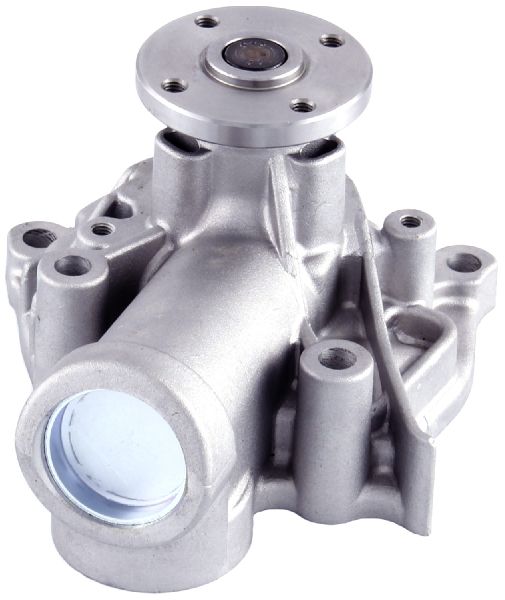
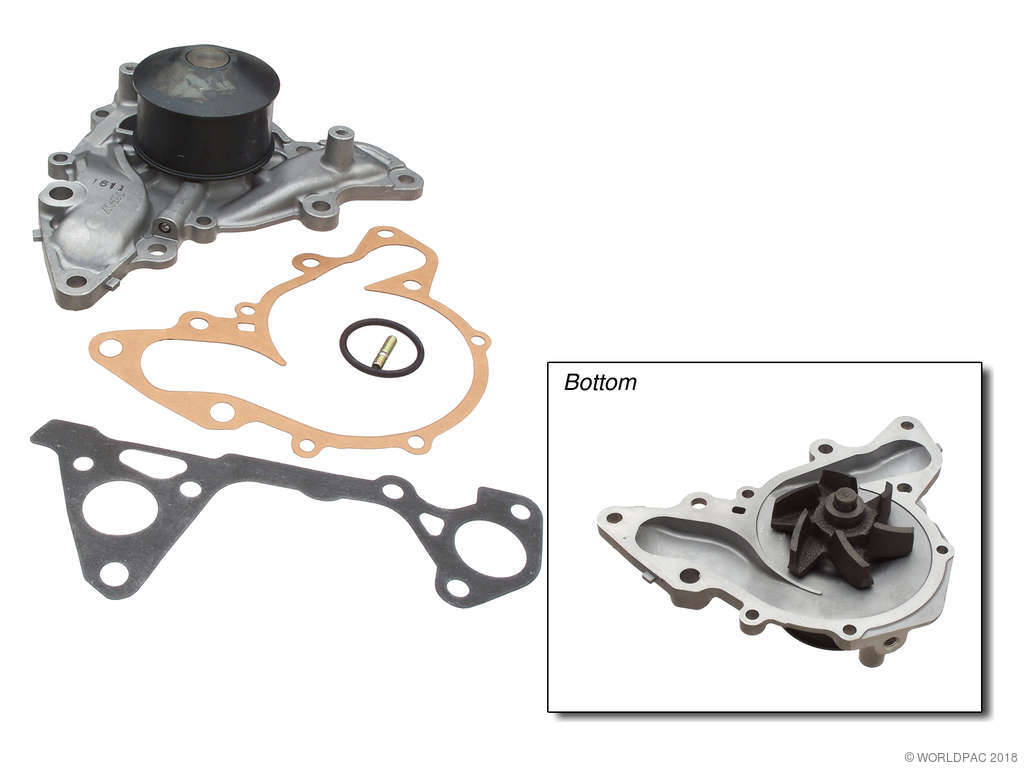
Typical fix: Replace the complete timing belt kit. This must include the belt, hydraulic tensioner (the primary culprit), idler pulley, and tensioner pulley. The water pump is also replaced as a 'while you're in there' item since it is driven by the timing belt.
Est. part cost: $150-$400 - Incorrect Timing After a Recent Service 🟡 Medium Probability The timing procedure for this V6 is precise. If a timing belt replacement was recently performed and the code appeared shortly after, it's highly likely one of the camshafts or the crankshaft is off by a tooth. Another common error is improper tensioner procedure; the mechanic must pre-load the tensioner pulley correctly *before* pulling the 'grenade pin' on the new hydraulic tensioner.
How to confirm: Confirm with the vehicle's service history. If a timing belt job was just done, this is the most likely cause. The timing marks must be re-verified by removing the covers.
Typical fix: The timing belt must be removed and re-installed correctly, aligning all timing marks as per the factory service manual. The tensioning procedure must be followed exactly.
Est. part cost: $0 (if work is under warranty) or cost of new belt/kit if re-using parts is not advisable. - Low or Dirty Engine Oil ⚪ Low Probability The MIVEC (Mitsubishi's VVT system) uses oil pressure to adjust cam timing via an oil control valve (solenoid). Severely sludgy or low oil can cause the cam phasers to respond slowly or get stuck, which could theoretically create a temporary correlation fault. However, this is far less likely than a mechanical timing failure on the 6G75.
How to confirm: Check the engine oil level and condition on the dipstick. If the oil is very low, black, or sludgy, this could be a contributing factor.
Typical fix: Perform an engine oil and filter change with the correct viscosity oil (5W-20). If the problem persists, the cause is almost certainly mechanical.
Est. part cost: $40-$80
Rare But Worth Checking
- Faulty ECM Software Logic: Mitsubishi issued Technical Service Bulletin TSB-12-13-002 for this issue. It states that incorrect parameters in the ECM's software can cause it to falsely detect a P0016 or P0017 code, even when mechanical timing is perfect. The fix is to have a Mitsubishi dealer reprogram the ECM with updated software. This should only be considered as a last resort after confirming the mechanical timing is perfect and the tensioner is new.
- Faulty Crankshaft or Camshaft Sensor: → Shop Engine Crankshaft While extremely uncommon for this specific code on this engine, a sensor can fail. In forum discussions, this is the most common misdiagnosis. Only after confirming perfect mechanical timing, a new tensioner, and correct ECM software should the sensors and their wiring be suspected.
Diagnosis Steps
- Check engine oil level and condition. Top up or change if necessary, but do not expect this to fix the issue.
- Scan for any other accompanying trouble codes. Address those first if they relate to specific sensor circuits (e.g., P0340).
- Crucial Step: Verify mechanical timing. Remove the upper timing covers and rotate the engine to Top Dead Center (TDC). Check if the timing marks on both camshaft sprockets and the crankshaft sprocket align perfectly with their reference marks on the engine block/heads.
- If timing is off, the cause is a jumped/stretched belt or failed tensioner. Replace the complete timing belt kit.
- If timing is correct, carefully inspect the hydraulic tensioner. Has the pin been removed? Is there evidence of leaking oil? A visually correct timing mark can still be thrown off by a weak tensioner under load.
- If timing is perfect and a new, properly installed tensioner is in place, inspect the wiring and connectors for both the crankshaft position sensor and the Bank 1 camshaft position sensor for any damage, corrosion, or loose connections.
- If wiring is good, test the sensors themselves using a multimeter for resistance or an oscilloscope to view their live waveform pattern. Compare the pattern to a known-good reference.
- If timing is perfect and sensors test good, consult a Mitsubishi dealer about TSB-12-13-002 to check if an ECM reprogram is needed.
Parts You'll Likely Need
- Timing Belt Kit with Water Pump
(OEM #1145A054 (Full Kit OEM Number, may vary))— This is the most common cause of P0016. A complete kit ensures all wear items (belt, hydraulic tensioner, idler, tensioner pulley, water pump) are replaced at once. Aisin is a known OEM supplier for Mitsubishi, making their kits a top choice.
Trusted brands: Aisin (Kit TKM-005), Gates (Kit TCKWP345), Dayco
OEM price range: $350-$500
Aftermarket price range: $180-$350 - Camshaft Position Sensor (Bank 1)
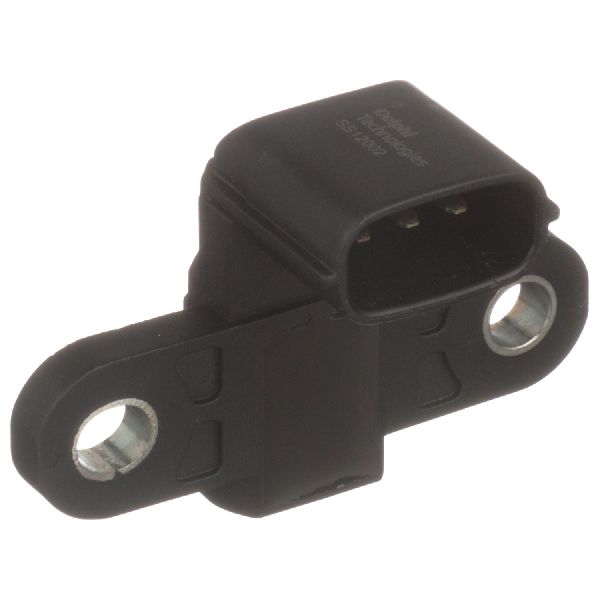
(OEM #MR578768)— Replaced only if the sensor is tested and found to be faulty after confirming mechanical timing is correct. This is a very rare cause of the issue.
Trusted brands: Mitsubishi Electric (OEM), Denso, NGK/NTK
OEM price range: $50-$80
Aftermarket price range: $25-$50 - Crankshaft Position Sensor
(OEM #MR985145)— Replaced only if the sensor is confirmed to be the point of failure after ruling out all mechanical timing issues. This is an extremely rare cause.
Trusted brands: Mitsubishi Electric (OEM), Denso, Walker Products
OEM price range: $60-$90
Aftermarket price range: $30-$60
Related Codes That Often Appear With This One
- P0300 — A random misfire code can occur because the incorrect cam timing disrupts the combustion process across multiple cylinders.
- P0017 — This is the same correlation error but for the exhaust camshaft (Bank 1, Sensor B). If the timing belt has jumped, it's very common for both intake and exhaust cam timing to be off, triggering both codes.
- P0018 — This is the Crank-Cam correlation error for Bank 2 (the front bank). It is less common to see with P0016 unless the belt has jumped multiple teeth, affecting both cylinder banks.
Technical Service Bulletins (TSBs) & Recalls
- TSB-12-13-002: Notes that an incorrect parameter in the ECM software may cause a false P0016 or P0017 code. The solution is an ECM reprogram by a dealer. This should be considered a last resort after all mechanical causes have been ruled out.
Platform-Specific Known Issues
- On forums like Club4G and Reddit, owners consistently report that P0016 on the 3.8L V6 is resolved by a timing belt and tensioner replacement, often after wasting money on sensors first.
- The hydraulic tensioner is the specific component that fails. A YouTube video by PrimeTech Auto focusing on
Mechanic-Grade Diagnostic Values
- MIVEC (Intake) Oil Control Valve Solenoid Resistance — expected: 6.9 - 7.9 Ohms at 68°F (20°C). Failure: A reading of 0 Ohms indicates a short, while an infinite (O.L.) reading indicates an open circuit. Readings outside the specified range suggest a faulty solenoid.
- Camshaft Position Sensor (3-wire Hall Effect) Signal Voltage — expected: Approximately 5V on the signal wire with Key On, Engine Off (KOEO). Voltage should drop to near 0V when a ferrous metal object is placed in front of the sensor tip.. Failure: Voltage that does not change or is consistently 0V indicates a failed sensor or wiring issue.
- ECM Code Trigger Threshold (Cam/Crank Correlation) — expected: The ECM sets P0016 if the intake valve open timing is faster than -15 degrees or slower than +15 degrees After Top Dead Center (ATDC) for 10 seconds (values may vary slightly for California emissions models).. Failure: Live data on a scan tool showing cam angle deviation outside this range confirms a correlation fault.
Scan Tool Commands That Help
- Mitsubishi M.U.T.-III Scan Tool (or equivalent): Timing Chain Learned Value Reset — This function should be performed after replacing the timing belt/chain or related components. It forces the ECM to relearn the baseline timing parameters, which can be necessary to clear a persistent P0016 code after a repair.
Wiring & Ground Locations
- G10 — Top rear of the engine, near the air intake duct.. This is a primary engine ground. A poor connection here can cause erratic behavior from multiple engine sensors, including the cam and crank sensors, leading to false correlation codes.
- Engine Ground Strap — Strap connecting the engine block (near the motor mount) to the chassis frame rail.. This is the main ground path for the engine block. Corrosion or a loose connection can introduce electrical noise and voltage drops, potentially disrupting the sensitive signals from the crankshaft position sensor, which is mounted to the block.
- ECM Ground — The ECM is located in the engine compartment, forward of the relay box on the left side. It has multiple ground pins that are grounded to the chassis nearby.. A faulty ECM ground can cause a wide range of issues, including incorrect sensor readings and false diagnostic trouble codes like P0016.
Real Owner Repair Stories
- YouTube user comment/demonstration (Vehicle with timing belt (unspecified model, but demonstrates a universal issue applicable to the Eclipse)) — P0016 code immediately after a timing belt replacement.
❌ Tried (didn't work) Initial installation of the timing belt.
✅ What actually fixed it The mechanic found the timing was off by a single tooth on one of the cam gears. Instead of a full disassembly, they were able to release tension, slip the belt off the gear, rotate the gear by one tooth to align the mark perfectly, and re-seat the belt. This corrected the alignment and resolved the P0016 code.
Model Year Variations Within This Range
- 2006-2008 vs 2009-2012: The 2009 model year facelift included minor changes, but the core 6G75 engine and timing belt system remained mechanically identical. However, the TSB regarding a software reflash (TSB-12-13-002) may apply to specific software versions used in earlier years of the range. Always verify applicability with a dealer based on VIN.
Diagnostic Flowchart
Other Known Issues on This Vehicle
Issues unrelated to this code that are worth knowing about as an owner of this generation:
- Cracked or Peeling Dashboard 🟠 Medium — Extremely common, especially in warmer climates. The material shrinks and cracks or lifts near the windshield and vents.
- Clear Coat / Paint Failure 🟠 Medium — Widespread issue, particularly on dark-colored vehicles. The clear coat peels on the hood, roof, and bumpers due to UV exposure.
- Valve Cover Gasket Oil Leaks 🟡 Low → Shop Engine Valve Cover — A very common leak point on the 6G75 V6. Oil seeps from the valve cover gaskets, and if neglected, can leak into the spark plug tubes, causing misfires.
- Automatic Transmission Solenoid Failure 🟠 Medium — Failures of shift solenoids inside the automatic transmission are common, leading to codes like P1775 and the transmission being locked in 3rd gear (limp mode).
Used vs. New Parts: Buying Guide for This Vehicle
When a used part is the smart pick: For this specific P0016 repair, using used parts is strongly discouraged for the core components. The only potentially acceptable used part would be an engine wiring harness if a specific connector or wire is damaged and cannot be repaired, or external components like the timing covers.
Donor-vehicle mileage cap: roughly under 80000 miles for the part to have meaningful remaining life.
What to inspect on the donor part:
- For a wiring harness, check for any signs of brittleness, cut wires, or damaged connector clips.
- Ensure the donor vehicle was not involved in a front-end collision that could have damaged the harness.
- Verify the harness is from the exact same model year and engine to avoid pinout differences.
OEM-only on this vehicle (don't cheap out):
- Hydraulic Timing Belt Tensioner: This is the single most critical failure point. Aftermarket tensioners have a high failure rate. Use only a genuine Mitsubishi or OEM-supplier (Aisin) tensioner.
- Timing Belt: Given the interference engine design, the risk of using a belt of unknown age or quality is too high. Always use a new, reputable brand.
- Water Pump: A seized water pump will destroy the timing belt and the engine. Always replace with a new unit during a timing belt service.
Aftermarket brands forum-validated for this vehicle:
- Aisin (for the complete timing belt kit, as they are an OEM supplier)
- Gates (for timing belt kits)
- Denso (for camshaft/crankshaft sensors, if needed)
- NGK/NTK (for camshaft/crankshaft sensors, if needed)
Brands owners have reported issues with on this vehicle:
- No-name, unbranded timing belt kits from online marketplaces. The cost savings are minimal compared to the risk of catastrophic engine failure.
Real Owner Stories
Aggregated from forums and TSBs cited above. Mileages and costs reflect what owners reported in those sources.
2006 Mitsubishi Eclipse 3.8L V6
Symptoms: Owner was advised to prioritize the timing belt and water pump as the key maintenance item to ensure the car's reliability.
What fixed it: Replacing the timing belt and water pump with factory parts.
Source hint: Reddit r/MitsubishiEclipse - '2006 Eclipse as a first car?'
2006-2012 Mitsubishi Eclipse 3.8L V6
Symptoms: Owners often report wasting money on sensors first before finding the real mechanical cause.
What fixed it: Timing belt and tensioner replacement.
Source hint: Club4G and Reddit vehicle_specific_issues
Related OBD-II Codes
Frequently Asked Questions
Could my P0016 code be caused by a software error instead of a mechanical failure?
I just bought a 2006 Eclipse; what is the most critical maintenance item to prevent P0016?
Can I just change my oil to fix the P0016 correlation error on my 3.8L V6?
Why did my P0016 code appear immediately after I had my timing belt replaced?
Is the hydraulic tensioner a known weak point on the 2006-2012 Eclipse?
Does the P0016 issue affect other Mitsubishi models with the 3.8L engine?
Helpful Videos
We Have This Part in Stock


The information in this article is provided for general reference and educational purposes only. Vehicle specifications, procedures, and part compatibility can vary by production date, trim level, and region. Always consult your vehicle's factory service manual and verify part numbers before purchasing or performing repairs. Safety-critical components such as airbags, seat belts, and braking systems should be installed by a qualified professional.
- Mitsubishi Eclipse:
- 🧭 Diagnostic Flowchart
- 🎬 Helpful Videos
- 🛍️ Shop This Part
- What's Unique About the 2006-2012 Mitsubishi Eclipse
- Symptoms You May Notice
- Most Likely Causes
- Rare But Worth Checking
- Diagnosis Steps
- Parts You'll Likely Need
- Related Codes That Often Appear With This One
- Technical Service Bulletins (TSBs) & Recalls
- Platform-Specific Known Issues
- Mechanic-Grade Diagnostic Values
- Scan Tool Commands That Help
- Wiring & Ground Locations
- Real Owner Repair Stories
- Model Year Variations Within This Range
- Other Known Issues on This Vehicle
- Used vs. New Parts: Buying Guide for This Vehicle
- Real Owner Stories
- 2006 Mitsubishi Eclipse 3.8L V6
- 2006-2012 Mitsubishi Eclipse 3.8L V6
- Related OBD-II Codes
- Frequently Asked Questions
- 🎟️ Get 5% Off