

P0016 on 2007-2014 Porsche Cayenne 4.8L V8: Cam/Crank Correlation Causes and Fixes
P0016 on the Porsche Cayenne 4.8L V8 indicates a timing mismatch between the crankshaft and the Bank 1 intake camshaft. Common causes range from a simple faulty camshaft position sensor to more serious issues like sheared camshaft adjuster bolts or a stretched timing chain. The most notorious cause is the failure of aluminum camshaft adjuster bolts on 2010-2012 models, which can cause a sudden loss of brake assist and potential catastrophic engine damage. Diagnosis is critical before replacing p
- P0016 on a 4.8L Cayenne is a serious code that should be addressed immediately to prevent engine damage.
- Do not assume it's a stretched timing chain. The most likely causes are a faulty camshaft position sensor or sheared camshaft adjuster bolts.
- For 2010-2012 models, check if recall AH08 for the camshaft adjuster bolts has been performed.
- Diagnosis should start with the simplest fixes: checking oil, inspecting sensor wiring, and swapping sensors between banks.
- This is not a DIY-friendly repair for most home mechanics due to the need for special tools and extensive disassembly.
What's Unique About the 2007-2014 Porsche Cayenne
The 4.8L V8 engine family (M48) in the Cayenne is known for a few specific issues that can directly cause a P0016 code. The most notorious is the failure of aluminum camshaft adjuster bolts, particularly on 2010-2012 models, which were subject to a recall. These bolts can shear, causing an immediate loss of timing. A critical design aspect of this engine is that the intake camshafts drive accessories at the rear of the engine. If the Bank 1 (passenger side) intake cam stops turning due to a sheared adjuster, the vacuum pump it drives will also stop, leading to a sudden and dangerous loss of power brake assist. If the Bank 2 (driver's side) adjuster fails, it stops the high-pressure fuel pump, causing the engine to stall. While a stretched timing chain is a possible cause on higher mileage engines, it's less common than sensor or adjuster bolt issues.
Generation note: This range covers two Cayenne generations: the first-generation facelift (957, 2007-2010) and the second generation (958, 2011-2014). Both used versions of the 4.8L V8. The most notable difference is the camshaft adjuster bolt issue, which was subject to recall (NHTSA 17V-368 / Porsche recall AH08) primarily on 2010-2012 models. However, forum posts from owners show that bolt failures have occurred on models outside the official recall years, such as 2015 models. The recall involved replacing the original aluminum bolts with steel ones, or replacing the entire camshaft adjuster assembly if damage was found.
Symptoms You May Notice
- Check Engine Light illuminated
- Rough idle, especially on cold start
- Engine stalling or hard starting
- Rattling noise from the engine, particularly the front or top
- Reduced engine power and sluggish acceleration
- Poor fuel economy
- PSM/Chassis System/Start-Stop failure messages on the dashboard, often appearing simultaneously
- Sudden loss of power brake assist (hard brake pedal) if the Bank 1 adjuster fails
- Immediately replacing the timing chain without checking sensors or camshaft adjuster bolts. A timing chain job is extremely expensive and may not be the root cause, especially on models known for the bolt issue.
- Replacing the camshaft position sensor without checking live data for camshaft deviation. A large deviation points to a mechanical issue, not a sensor one.
- Assuming the camshaft adjuster bolt issue only affects 2010-2012 models. While the recall was specific, owners of other model years have reported similar failures.
Most Likely Causes
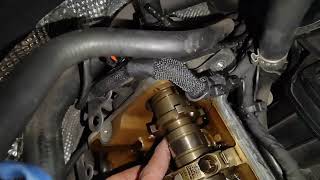
- Sheared or Loose Camshaft Adjuster Bolts 🔴 High Probability → Shop Engine Camshaft Early M48 V8 engines in 2010-2012 models used aluminum bolts inside the camshaft adjuster assemblies that were prone to shearing due to material and assembly process issues. 🎬 Watch: What a failed camshaft adjuster looks like inside. This was common enough to warrant a safety recall (AH08). When the bolts break, the adjuster comes apart, the intake cam stops rotating, and engine timing is lost instantly.
How to confirm: A quick check can sometimes be done by opening the oil filler cap and using a flashlight to inspect the back of the Bank 1 adjuster. If the bolts you can see are dark and magnetic, they are the updated steel parts. A definitive diagnosis requires removing the valve covers for a direct visual inspection of the bolts on the front of the camshaft adjusters. The updated steel bolts have a pin or are solid, while the old aluminum ones do not. A significant camshaft deviation value (e.g., 20 degrees) on Bank 1 in live data is also a strong indicator.
Typical fix: Replace the original aluminum bolts with the updated steel versions as per recall AH08. If a bolt has already sheared, the camshaft adjuster assembly must be replaced with the updated version (Part No. 948.105.051.22 or higher). It is critical that all sheared bolt fragments are recovered from the engine, which may require removing the timing cover and oil pan. Failure to do so can lead to total engine failure.
Est. part cost: $50-$150 for bolts, $800-$1500 for a new adjuster if damaged. - Faulty Camshaft Position Sensor (Bank 1) 🟡 Medium Probability → Shop Engine Camshaft Position Sensor Sensors are common failure items. Aftermarket sensors on Porsches are known to cause issues, so using an OEM or high-quality Bosch sensor is strongly recommended. While often suspected first, it's frequently not the root cause for P0016 on this platform.
How to confirm: Swap the Bank 1 and Bank 2 camshaft position sensors. If the code changes to P0018 (correlating to Bank 2), the sensor is faulty. A multimeter or oscilloscope can also be used to test sensor output for a clean square wave signal.
Typical fix: Replace the Bank 1 camshaft position sensor.
Est. part cost: $80-$200 - Stretched Timing Chain or Failed Guides 🟡 Medium Probability → Shop Engine Timing Chain Timing chains wear over time, especially with high mileage (>100,000 miles). On this engine, another failure point is the plastic timing chain guides, which can become brittle and disintegrate, causing slack in the chain and leading to a P0016 code.
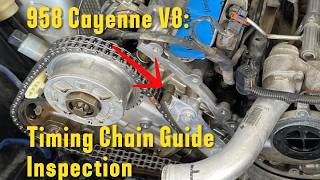
How to confirm: This is often a diagnosis of exclusion after ruling out sensors and adjuster bolts. A visual inspection through the oil filler cap may reveal broken plastic pieces of the guide on top of the chain. 🎬 See how to inspect your timing chain guides for damage. Definitive confirmation requires engine disassembly to measure chain slack and verify timing marks with specialized tools.
Typical fix: Replace the timing chain, tensioners, and all plastic guides. This is a very labor-intensive job that may require engine removal.
Est. part cost: $800-$1500 for a full timing kit. - Low or Dirty Engine Oil ⚪ Low Probability The VarioCam Plus system uses oil pressure to adjust camshaft timing. Insufficient pressure from low oil levels or sludge from extended oil change intervals can cause the adjusters (phasers) to respond slowly or get stuck, triggering a correlation code.
How to confirm: Check the oil level and condition. If it's low, black, or sludgy, this could be a contributing factor. This is the first and easiest check to perform.
Typical fix: Perform an oil and filter change using a Porsche-approved oil (e.g., Mobil 1 0W-40).
Est. part cost: $100-$200
Rare But Worth Checking
- Faulty VarioCam Solenoid/Actuator: The solenoid controls oil flow to the camshaft adjuster. If it becomes clogged with sludge or fails electronically, it can prevent proper timing adjustment, mimicking a mechanical timing issue. This can sometimes be fixed by cleaning the solenoid, but replacement is often necessary.
- Damaged Camshaft Reluctor Wheel: → Shop Engine Camshaft The sensor reads a toothed wheel (reluctor) on the camshaft. If this wheel is bent, damaged, or incorrectly installed, it can send an incorrect signal to the ECM, triggering P0016.
- Faulty Crankshaft Position Sensor: → Shop Engine Crankshaft Position Sensor While the code points to the camshaft, the ECM compares the cam signal to the crank signal. A faulty or intermittent crankshaft sensor can, in rare cases, cause this correlation code, though it is more likely to set other codes as well.
Diagnosis Steps
- Verify engine oil level and condition. Top up or change if necessary. This is the simplest first step.
- Use a Porsche-specific scan tool (like PIWIS or a high-end Autel) to read live data. 🎬 Watch: Using a scan tool to diagnose P0016 codes. Check the 'camshaft deviation' for Bank 1 and Bank 2. A value near 0 is normal. A significant deviation on Bank 1 (e.g., > 6-8 degrees) strongly indicates a mechanical timing issue on that side.
- Inspect the wiring and connector for the Bank 1 camshaft position sensor for any damage or corrosion.
- Test the Bank 1 camshaft position sensor. The easiest method is to swap it with the Bank 2 sensor and see if the fault code moves to P0018. If it does, the sensor is bad.
- If sensors are good and deviation is high, perform a visual inspection. Open the oil filler cap and try to see the camshaft adjuster bolts and the top of the timing chain guide. Look for non-magnetic bolt heads (the old aluminum style) or broken plastic from the guide.
- For a definitive mechanical inspection, remove the valve cover for Bank 1.
- Inspect the camshaft adjuster bolts for any signs of shearing or looseness. If any are loose or broken, they must be replaced with the updated steel bolts.
- If bolts are intact, use Porsche-specific timing tools to lock the crankshaft at TDC and verify the physical alignment of the camshafts.
- If timing is confirmed to be off, inspect the timing chain for stretch and the plastic guides for any breakage or wear. This requires significant disassembly.
- If mechanical timing is correct, test the VarioCam solenoid for Bank 1. Check its resistance and consider swapping it with the Bank 2 solenoid to see if the problem follows.
Parts You'll Likely Need
- Camshaft Adjuster Bolts (Set)
(OEM #94810525400)— This is the main M12 bolt securing the adjuster to the camshaft; it must be replaced anytime the adjuster is serviced. The recall (AH08) addressed smaller M7 bolts within the adjuster assembly, often by replacing the entire adjuster unit.
Trusted brands: Porsche (OEM)
OEM price range: $15-$25 per bolt
Aftermarket price range: N/A - Camshaft Position Sensor
(OEM #94860621503)— This sensor provides the signal that the ECM uses to track camshaft position. It is a common point of failure and a key diagnostic step.
Trusted brands: Bosch, Porsche (OEM)
OEM price range: $150-$200
Aftermarket price range: $80-$120 - Camshaft Adjuster Assembly
(OEM #94810505123)— If the adjuster bolts have sheared, the entire unit is typically replaced with the updated version which includes new steel bolts. This is the official remedy per Porsche TSB AH08 if the old unit is found to be loose or damaged.
Trusted brands: Porsche (OEM), Febi Bilstein
OEM price range: $1200-$1500
Aftermarket price range: $250-$500 - Valve Cover Gasket Set — Required for inspecting the camshaft adjuster bolts and any timing work. These are one-time use and must be replaced once the valve cover is removed.
Trusted brands: Victor Reinz, Elring, Porsche (OEM)
OEM price range: $100-$150 per bank
Aftermarket price range: $50-$80 per bank
Related Codes That Often Appear With This One
- P0344 — P0344 indicates an intermittent signal from the Bank 1 camshaft position sensor. This code often appears with P0016 because a failing sensor, damaged wiring, or a wobbling/incorrectly timed camshaft can cause both a bad signal and a correlation error.
- P0018 — This is the equivalent correlation code for Bank 2. If a technician swaps the Bank 1 and Bank 2 sensors for diagnosis and the code changes from P0016 to P0018, it confirms the sensor is the faulty component.
Technical Service Bulletins (TSBs) & Recalls
- AH08 / NHTSA 17V-368: A safety recall issued by Porsche to address a defect where aluminum fastening screws on the camshaft controllers could fail. The failure could lead to engine vibrations, check engine light, and potential engine stalling, which increases the risk of a crash. The remedy was to replace the screws with steel versions or, if necessary, replace the entire camshaft controller assembly, free of charge. The recall covered approximately 18,000 vehicles in North America, including 2011 Cayenne S/Turbo and various 2010-2012 Panamera models.
Platform-Specific Known Issues
- Recall AH08 / NHTSA 17V-368 was issued for 2010-2012 models to replace faulty aluminum camshaft adjuster bolts with steel ones. Owners should verify if their vehicle was affected and if the recall was performed.
Mechanic-Grade Diagnostic Values
- Camshaft Deviation (Bank 1 vs. Bank 2) — expected: Near 0.0 degrees at idle. Porsche's general limit is +/- 6 degrees.. Failure: A consistent deviation above 6-8 degrees on one bank (e.g., 9, 11, or even 20 degrees) points to a mechanical timing issue like a stretched chain, failed guide, or jumped timing, not a sensor fault.
- VarioCam Solenoid Resistance — expected: Approximately 10.6 to 15.2 ohms across the terminals.. Failure: A reading significantly outside this range, or an open/short circuit, indicates a failed solenoid. Note that readings can vary slightly between banks.
- Engine to Chassis Ground Resistance — expected: 0.0 to 0.2 ohms.. Failure: A reading higher than 0.2 ohms indicates excessive resistance from corrosion or a loose connection, which can cause erratic sensor readings and phantom codes.
Scan Tool Commands That Help
- PIWIS Tester (Porsche Dealer Tool): Reset adaptation values — After replacing timing components, sensors, or performing an oil change for a related fault. The DME stores adaptation values for camshaft control that can go out of tolerance. Resetting these values forces the system to re-learn. This is found under 'Engine electronics (DME)' -> 'Maintenance/repairs' -> 'Reset adaptation values'.
Wiring & Ground Locations
- Engine-to-Chassis Ground Strap (Upper) — On the 957 generation, one primary ground strap runs from the alternator area to the left front (driver's side for LHD) frame rail/strut tower.. A poor ground connection can cause erratic voltage and faulty signals from engine sensors, including the cam and crank sensors, potentially triggering a correlation code without a true mechanical fault.
- Engine-to-Chassis Ground Strap (Lower) — A second main ground strap is located underneath the engine, connecting the bottom of the engine block to the vehicle's frame.. This is a critical ground path. Corrosion or looseness here can lead to a variety of electrical issues, including no-start conditions or incorrect sensor data being sent to the DME.
- Camshaft Position Sensor Connector — Located at the rear of the engine near the firewall, on top of the valve covers. The connector is a 3-pin oval shape.. This is the direct connection point for the sensor. The wiring harness here can become brittle from heat. Check for damaged pins, corrosion, or a loose connection before replacing the sensor.
Real Owner Repair Stories
- Rennlist user (2013 Cayenne GTS, 131k miles) — P0016 and P0344 codes, rough idle, PSM error message, some hesitation.
❌ Tried (didn't work) Replaced crankshaft position sensor, Replaced Bank 1 camshaft position sensor
✅ What actually fixed it The user diagnosed a camshaft deviation of ~20 degrees on Bank 1 using an Autel scanner, while Bank 2 was at zero. This strongly pointed to a mechanical failure localized to Bank 1, such as a stretched secondary timing chain, failed tensioner, or a problem with the adjuster itself, despite having the updated bolts. The thread did not post the final repair, but the diagnosis correctly shifted from sensors to a significant mechanical fault. - RennTech.org user (2008 Cayenne Turbo, 176,000 km) — P0016 and P0344 codes, Check Engine Light.
❌ Tried (didn't work) Replaced Bank 1 VarioCam solenoid, Replaced Bank 1 camshaft position sensor
✅ What actually fixed it After failed attempts with the sensor and solenoid, the owner concluded the timing chain for Bank 1 was stretched. The final fix was a complete timing service, including replacing the timing chain, oil pump chain, all guides, sprockets, and bolts. The total cost was nearly $5,500 CDN. This case highlights that on high-mileage examples, chain stretch can be the root cause after other common items are ruled out.
OEM Part Supersession History
Aluminum Camshaft Adjuster Bolts (various)→Steel bolts (e.g., 999.067.803.30 - M7x21 Cheese head bolt)— The original aluminum bolts were prone to shearing, causing catastrophic timing failure. The recall AH08 replaced them with stronger steel bolts.
Heads up: If a bolt has already sheared, the entire camshaft controller (adjuster) must be replaced with the latest version (e.g., 948.105.051.23 or newer), not just the bolts.
Model Year Variations Within This Range
- 2007-2010 (957 Generation): These models use a 6-speed Tiptronic transmission and have a different interior/exterior design. While they have the 4.8L V8 with VarioCam Plus, they were not part of the main camshaft adjuster bolt recall (AH08), which focused on 2010-2012 models. P0016 on these is more likely related to high-mileage wear (chain stretch, guides) or sensor/solenoid failure.
- 2011-2014 (958 Generation): This generation introduced an 8-speed transmission and is about 400 lbs lighter. The 2011-2012 models are the primary focus of the AH08 camshaft adjuster bolt recall. The overall engine architecture is similar, but these models have more complex electronics and are the ones where a PIWIS tool is often needed to reset adaptations after repairs.
Diagnostic Flowchart
Real Owner Stories
Aggregated from forums and TSBs cited above. Mileages and costs reflect what owners reported in those sources.
2011 Porsche Cayenne S/Turbo
Symptoms: Engine vibrations, check engine light, and potential engine stalling due to failed aluminum fastening screws on the camshaft controllers.
What fixed it: Replaced the aluminum screws with steel versions, or replaced the entire camshaft controller assembly under safety recall.
Source hint: TSB AH08 / NHTSA 17V-368
2011 Porsche Cayenne — ~120000 miles
Symptoms: Triggered a P0016 code accompanied by PSM (Porsche Stability Management) and Start/Stop failure messages on the dashboard.
What fixed it: Diagnosed the common P0016 symptoms on a high-mileage vehicle; context indicates this requires checking the camshaft adjuster bolts and timing chain.
Source hint: Rennlist forum thread 'P0016 - Rennlist - Porsche Discussion Forums (2022)'
Porsche Cayenne (958)
Symptoms: Check engine light with codes P0016 and P0344. Live data showed a ~20 degree camshaft deviation on Bank 1.
What fixed it: Replaced sensors initially, but an Autel scanner confirmed a deeper mechanical fault remained despite having the updated bolts.
Source hint: Rennlist forum thread 'Error codes P0016 & P0344'
Porsche Cayenne (958)
Symptoms: Snapped camshaft adjuster bolt resulting in simultaneous engine failure and loss of brake hydraulics (hard brake pedal).
What fixed it: Identified sheared bolts on the Bank 1 camshaft, which drives the vacuum pump for the brakes, requiring adjuster replacement and fragment recovery.
Source hint: 6SpeedOnline thread 'Snapped Camshaft Adjuster Bolt = Engine & Brake Hydraulics Failure ?'
2015 Porsche Cayenne S
Symptoms: Suffered from the sheared camshaft adjuster bolt failure, triggering timing codes.
What fixed it: Required replacement of the camshaft adjuster assembly due to sheared bolts.
Source hint: Rennlist forum thread '2015 Cayenne Cam Adjuster Bolts Failure'
Related OBD-II Codes
Frequently Asked Questions
Does Recall AH08 apply to my Porsche Cayenne for the P0016 code?
Why did my brake pedal suddenly get hard when the check engine light came on?
Why am I getting PSM and Start-Stop failure messages with a P0016 code?
How can I quickly check if my Cayenne has the updated camshaft adjuster bolts?
What is an acceptable camshaft deviation value when scanning my Cayenne?
Should I use an aftermarket camshaft position sensor to fix P0016?
Helpful Videos
Used OEM Parts in Stock
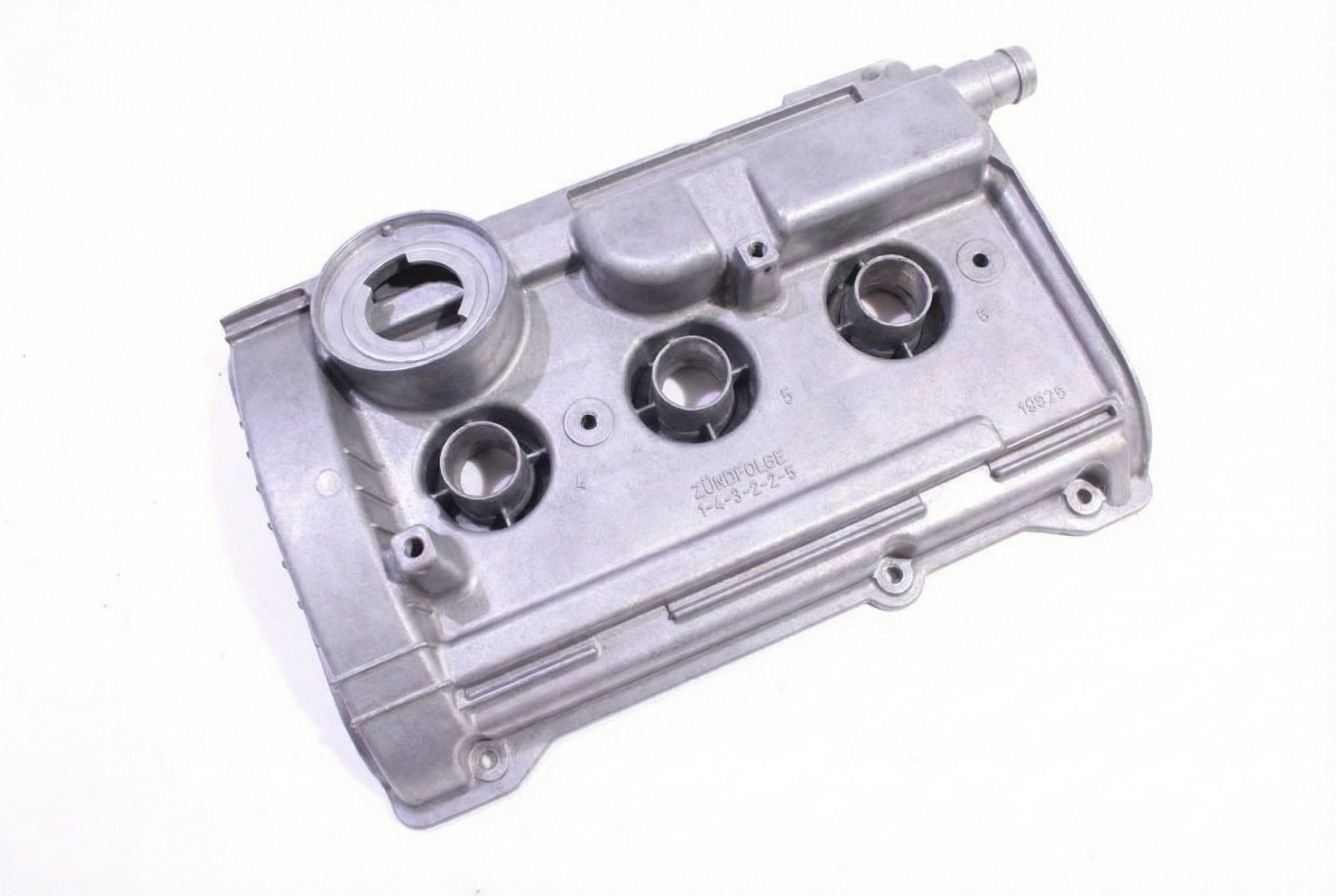
New Aftermarket Parts Available
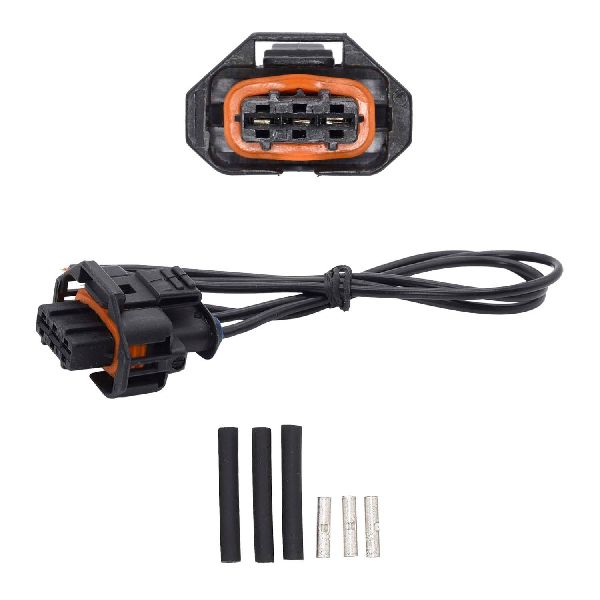

The information in this article is provided for general reference and educational purposes only. Vehicle specifications, procedures, and part compatibility can vary by production date, trim level, and region. Always consult your vehicle's factory service manual and verify part numbers before purchasing or performing repairs. Safety-critical components such as airbags, seat belts, and braking systems should be installed by a qualified professional.
- Porsche Cayenne:
- 🧭 Diagnostic Flowchart
- 🎬 Helpful Videos
- 🛍️ Shop This Part
- What's Unique About the 2007-2014 Porsche Cayenne
- Symptoms You May Notice
- Most Likely Causes
- Rare But Worth Checking
- Diagnosis Steps
- Parts You'll Likely Need
- Related Codes That Often Appear With This One
- Technical Service Bulletins (TSBs) & Recalls
- Platform-Specific Known Issues
- Mechanic-Grade Diagnostic Values
- Scan Tool Commands That Help
- Wiring & Ground Locations
- Real Owner Repair Stories
- OEM Part Supersession History
- Model Year Variations Within This Range
- Real Owner Stories
- 2011 Porsche Cayenne S/Turbo
- 2011 Porsche Cayenne — ~120000 miles
- Porsche Cayenne (958)
- Porsche Cayenne (958)
- 2015 Porsche Cayenne S
- Related OBD-II Codes
- Frequently Asked Questions
- 🎟️ Get 5% Off