

P0016 on 2006-2009 Saab 9-3 2.8L V6: Crank/Cam Correlation Causes and Fixes
On a Saab 9-3 with the 2.8L V6 engine, P0016 almost always means the timing chains have stretched. This is a known design flaw. The repair involves replacing all three timing chains, guides, and tensioners, which is a very labor-intensive and expensive job, often costing between $2,500 and $4,000.
- P0016 on a Saab 9-3 2.8L V6 is a serious code that almost always points to stretched timing chains.
- Do not start by replacing the cam or crank sensors; this is a common misdiagnosis.
- The repair is extremely labor-intensive and expensive, often requiring engine removal.
- This issue is a known design flaw affecting the GM High Feature V6 engine family, including models from Cadillac and Opel/Vauxhall.
- Before extensive teardown, check for low/dirty oil and verify that two specific electrical connectors near the front of the engine haven't been swapped during a previous repair.
What's Unique About the 2003-2011 Saab 9-3
The Saab 9-3's B284 engine is a GM-sourced High Feature V6 (also known as LP9), manufactured by Holden in Australia and turbocharged by Saab. This engine family is infamous for premature timing chain stretching across multiple GM brands. Unlike many vehicles where P0016 could have several likely causes, on this specific engine, it is almost always a symptom of this well-documented design flaw. The problem was often exacerbated by the original long factory oil change intervals, which accelerate wear. For many owners, timing chain failure is a matter of 'when,' not 'if.'
Symptoms You May Notice
- Check Engine Light is on
- Engine rattle, scraping, or buzzing noise, especially on a cold startup lasting a few seconds
- Rough or unstable idle
- Reduced engine power and poor acceleration
- Hesitation or misfiring
- Engine may crank but fail to start in severe cases
- Replacing the camshaft position sensor or crankshaft position sensor without diagnosing the root cause. These sensors are rarely the problem for a P0016 code on this engine; they are simply reporting the mechanical misalignment of the timing chains.
- Swapped electrical connectors after a repair. GM TSB 19-NA-150 warns that the connectors for the Bank 1 intake cam actuator and the intake actuator park lock solenoid are identical and can be easily swapped during reassembly, causing a hard P0016 code.
Most Likely Causes
- Stretched Timing Chains and Worn Guides/Tensioners 🔴 High Probability → Shop Engine Timing Chain This is a widely documented design flaw of the GM LP9/B284 V6 engine. The system uses three separate chains, and wear is accelerated by long oil change intervals. The existence of 'strengthened' aftermarket kits from specialists like Speedparts Sweden confirms the weakness of the original components.
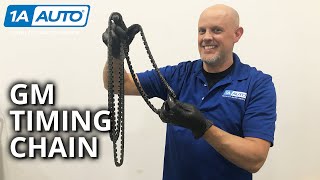
How to confirm: A persistent rattling noise from the engine is a strong indicator. A mechanic can use a scan tool to view cam/crank deviation data 🎬 Watch: How to determine if you need a new timing chain, but the definitive diagnosis is a physical inspection of the chains for slack, which is highly labor-intensive. In one documented case, a user found a broken chain guide upon inspection after getting the code.
Typical fix: Complete replacement of all three timing chains, all plastic guides, and all hydraulic tensioners. This is a major engine-out repair. 🎬 See this professional diagnosis and timing chain replacement walkthrough GM TSB 12-06-01-009 notes that for a stretched chain, only the chains and tensioners typically need replacement, not the sprockets or guides unless they are visibly damaged.
Est. part cost: $400-$800 for a quality complete kit. - Low or Dirty Engine Oil 🟡 Medium Probability The camshaft phasers (VVT system) use engine oil pressure to adjust timing. Low or degraded oil can prevent the phasers from operating correctly or cause VVT solenoids to stick, leading to a correlation error.
How to confirm: Check the oil level on the dipstick and inspect its condition. If the oil is very dark, thin, or below the minimum level, this could be a contributing factor.
Typical fix: Perform an oil and filter change using a high-quality full-synthetic oil of the correct viscosity (e.g., 0W-40 or 5W-40 depending on spec). This is the cheapest and easiest first step in diagnosis.
Est. part cost: $50-$100 - Failing Camshaft Actuator Solenoid (VVT Solenoid) ⚪ Low Probability → Shop Engine Camshaft
How to confirm: The solenoid can be removed and tested for operation with a 12v source. You can also check for sludge or debris on its small filter screens. Swapping the Bank 1 and Bank 2 intake solenoids and seeing if the code changes to P0018 (for Bank 2) can also confirm a bad solenoid.
Typical fix: Replace the faulty VVT solenoid for Bank 1 (intake).
Est. part cost: $30-$70
Rare But Worth Checking
- Failed Camshaft or Crankshaft Position Sensor: → Shop Engine Crankshaft Position Sensor This is rare. The sensors are usually doing their job correctly by reporting the mechanical timing error. Do not replace sensors unless you have tested them and confirmed they are faulty, which is uncommon for this code.
- Slipped Camshaft Reluctor Wheel: → Shop Engine Camshaft In rare cases, the reluctor wheel, which is press-fit onto the camshaft, can spin slightly. This causes the sensor to get an incorrect reading even if the mechanical timing of the chain is perfect. GM TSB PIP4548C discusses this possibility on related engines.
- Loose Crankshaft Balancer Bolt: → Shop Engine Crankshaft As a cross-manufacturer reference for similar GM-based platforms, TSB Bulletin #PIP4581B notes that if a rattle noise is duplicated with a P0016 or P0017 code and standard diagnosis fails to isolate the cause, the crankshaft balancer bolt should be re-torqued to specification.
Diagnosis Steps
- Check engine oil level and condition. If low or dirty, perform an oil and filter change, clear the codes, and see if the code returns. This is the easiest first step.
- Use an advanced scan tool to monitor the live data for camshaft and crankshaft position. Observe the commanded vs. actual cam angle for Bank 1. A significant, persistent deviation points to a mechanical issue.
- Listen for a rattling or scraping noise from the engine, especially during a cold start. This sound is a classic symptom of a worn timing chain system.
- If the engine has been recently serviced, verify the electrical connectors for the Bank 1 intake cam actuator and the park lock solenoid are not swapped. They are identical connectors and this is a known issue. (Ref: GM TSB 19-NA-150).
- Inspect the wiring and connector for the Bank 1 intake camshaft position sensor and the VVT solenoid for any visible damage or corrosion.
- Consider swapping the Bank 1 and Bank 2 intake VVT solenoids. If the code changes to P0018 (Bank 2), the solenoid is faulty.
- If all other steps fail to find a cause, the issue is almost certainly the timing chains. This requires a physical inspection of the chains, guides, and tensioners, which involves significant engine disassembly.
Parts You'll Likely Need
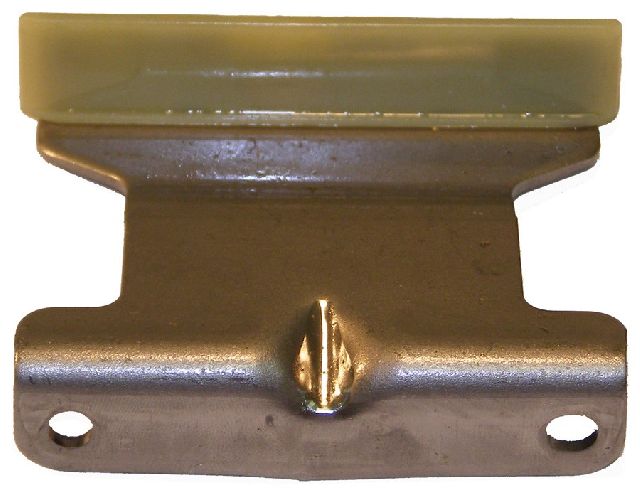
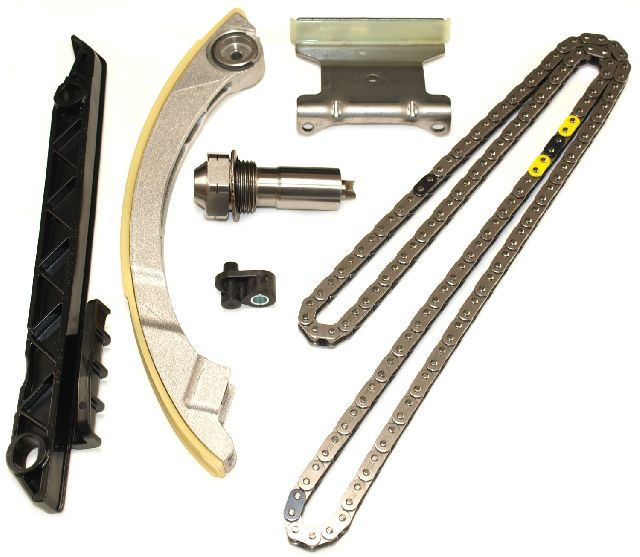
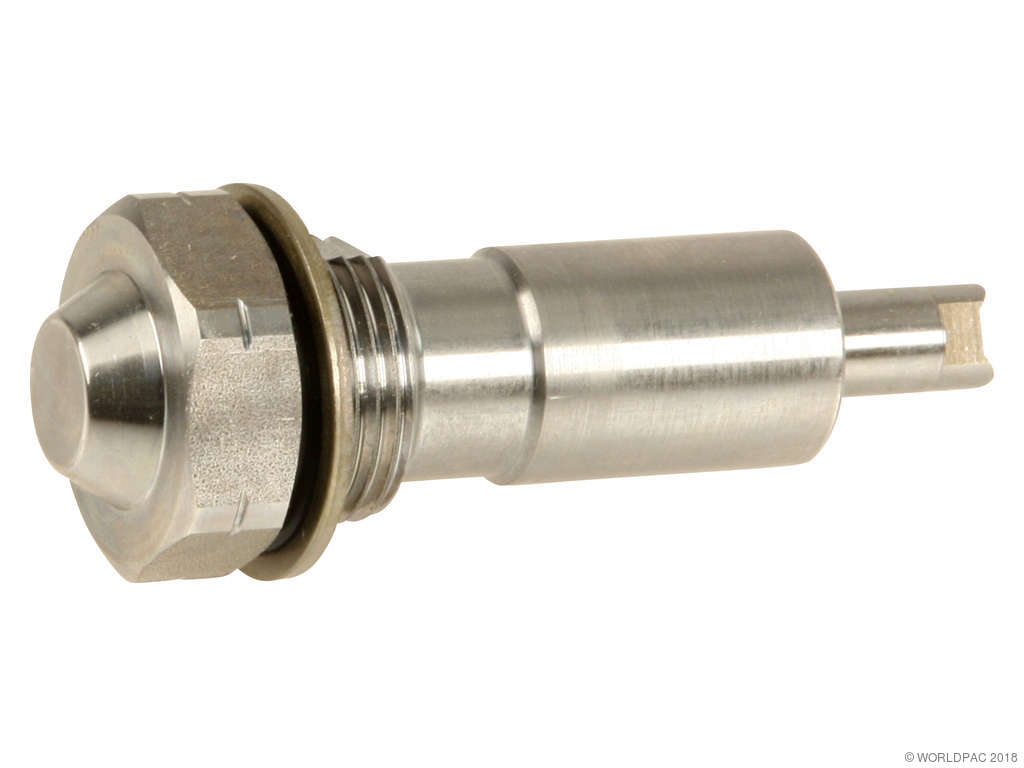
- Timing Chain Kit
(OEM #Cross-references: 12634213, 12623513, 12623514, 12612838, 12612839)— This is the definitive fix for the most common cause of P0016 on the B284 engine: stretched timing chains. A complete kit should include all three chains, all guides, and all tensioners.
Trusted brands: Cloyes (Kit P/N: 9-0753S), INA, Pro Parts Sweden, Speedparts (strengthened version)
OEM price range: $600-$900
Aftermarket price range: $400-$800 - Camshaft Position Sensor
(OEM #12608424)— Replaced only if specifically tested and found to be faulty. It is not a common cause of this code but may be replaced during a larger job.
Trusted brands: Bosch, ACDelco, NTK
OEM price range: $50-$80
Aftermarket price range: $25-$50
Related Codes That Often Appear With This One
- P0017 — Crankshaft Position - Camshaft Position Correlation (Bank 1 Sensor B - Exhaust). If the timing chain is stretched, it can affect both the intake and exhaust cam timing on the same bank.
- P0008 — Engine Positions System Performance (Bank 1). This is a more general code indicating a timing problem on Bank 1, often set alongside P0016.
- P0009 — Engine Positions System Performance (Bank 2). If the primary timing chain is very stretched, it can cause timing deviations on both banks of the engine.
- P0018 — Crankshaft Position - Camshaft Position Correlation (Bank 2 Sensor A - Intake). Often seen if the primary chain is stretched or if issues exist on both banks.
Technical Service Bulletins (TSBs) & Recalls
- GM TSB 12-06-01-009: Addresses DTCs P0008, P0009, P0016, etc., on High Feature V6 engines. It clarifies that when these codes are caused by stretched timing chains, it is often unnecessary to replace the idler sprockets or chain guides, as they are not typically worn. This was issued to prevent unnecessary parts replacement during a timing chain job.
- GM TSB 19-NA-150: Warns technicians that a P0016 code and rough idle can occur after engine service if two identical electrical connectors are swapped: the Bank 1 intake camshaft actuator solenoid and the Bank 1 intake actuator park lock solenoid. It advises checking wire colors to ensure they are correctly routed before proceeding with further diagnostics.
- TSB Bulletin #PIP4581B: Notes that for certain GM-sourced engines, a rattle noise accompanied by P0016 or P0017 may require re-torquing the crankshaft balancer bolt if other diagnostic steps do not isolate the cause.
Platform-Specific Known Issues
- The B284 V6 engine is widely known for premature timing chain failure. This is not an isolated issue but a common problem for the model.
- No recall was ever issued for this problem, so repairs are the owner's responsibility.
- The three-chain system is complex, making the repair significantly more labor-intensive and expensive than on 4-cylinder models.
Mechanic-Grade Diagnostic Values
- VVT Solenoid (Camshaft Actuator) Coil Resistance — expected: 5-20 Ohms. Failure: A reading of infinite resistance (OL) indicates an open coil, while a very low reading (under 2 Ohms) indicates a short. The solenoid should be replaced in either case.
- Camshaft vs. Crankshaft Correlation Angle — expected: Less than 9 degrees advanced or 12 degrees retarded.. Failure: The ECM will set P0016 if it detects the Bank 1 intake camshaft is greater than 9 degrees advanced or 12 degrees retarded in relation to the crankshaft.
Scan Tool Commands That Help
- Tech2 / GDS2: Camshaft Position Actuator Test — This bidirectional command allows a technician to manually command the VVT solenoid to advance or retard timing. By observing live data while activating the solenoid, a technician can determine if the solenoid is responding and if the camshaft phaser is mechanically able to move, helping to distinguish between an electrical and a mechanical fault.
Wiring & Ground Locations
- G2 — On the side of the left-hand structural member/strut tower by the connector bracket in the engine bay.. This is a primary chassis ground point in the engine bay. A poor connection here can cause erratic behavior in various engine sensors, including the camshaft and crankshaft position sensors.
- G7 — On the engine control module's top right attachment lug.. This is the direct ground for the Engine Control Module (ECM). Corrosion or a loose connection here can cause a wide range of phantom codes and drivability issues, including timing correlation faults.
- Extra V6 Ground Cable — An extra ground cable runs between the cylinder banks on the B284 V6 engine.. This engine-specific ground strap ensures proper grounding between the two cylinder heads. A faulty connection could potentially affect the sensor readings on one bank, contributing to correlation codes.
Real Owner Repair Stories
- SaabCentral Forum user 'SaabKen' (2006 Saab 9-3 Aero SportCombi 2.8T V6) — Check Engine Light with code P0016. Car ran fine otherwise, with no noticeable noises or performance issues.
❌ Tried (didn't work) Oil and filter change, Replacing camshaft position sensor, Replacing crankshaft position sensor
✅ What actually fixed it The user took the car to a Saab specialist who confirmed the timing chains were stretched. A complete timing chain kit replacement, including all three chains, guides, and tensioners, resolved the P0016 code permanently.
OEM Part Supersession History
N/A - Engine Serial Number Break→Updated Timing Chain Kit— An updated timing chain kit was introduced for engines built after a specific serial number.
Heads up: Timing chain kits are specified for engines before or after engine number 022736. Using the wrong kit can result in improper fitment. For example, the Cloyes 9-0753S kit is specified for engines from 2007.5 with serial number 022736 and up.
Model Year Variations Within This Range
- 2008-2009: In 2008, the engine code for the 2.8L V6 in the 9-3 changed from B284 to B284R, which had a slight power increase. While the fundamental timing chain issue remains the same, always verify parts compatibility by VIN or specific engine code when ordering components.
Diagnostic Flowchart
Real Owner Stories
Aggregated from forums and TSBs cited above. Mileages and costs reflect what owners reported in those sources.
2008 Saab 9-3 Aero — 210000 miles
Symptoms: Check Engine Light with code P0016. The user also mentioned needing to pass emissions, implying the CEL was the primary symptom.
What fixed it: Replaced the timing chain. The owner did the job themselves and noted it would have been easier to remove the engine from the car.
Source hint: Reddit r/saab Thread 'Had to replace the timing chain on my 08' 93 Aero'
2006 Saab 9-5 2.8T — 75000 miles
Symptoms: The user doesn't specify symptoms, but mentions the timing chain was replaced during a service that also included the water pump, implying it may have been preventative or prompted by a related issue rather than a specific CEL code.
What fixed it: Timing chain was replaced along with the water pump and a new set of ignition coils.
Source hint: Reddit r/saab
Saab 9-3 B284 V6
Symptoms: Reported a P0016 code.
What fixed it: Upon opening the valve cover, discovered the chain was visibly loose and the intake-side guide was broken, confirming mechanical failure.
Source hint: Saabclub.fi Forum Thread 'P0016'
Related OBD-II Codes
Frequently Asked Questions
Is there a recall for the timing chain issue on the Saab 9-3 B284 V6 engine?
Does GM TSB 12-06-01-009 mean I have to replace the sprockets and guides when fixing code P0016?
I just had my engine serviced and now I have a P0016 code and a rough idle. What happened?
Can low oil cause a P0016 on my 2.8L Turbo V6?
Are there stronger aftermarket timing chains available for the Saab 9-3 2.8T?
How can I test if the VVT solenoid is causing the P0016 code instead of the timing chain?
Helpful Videos
We Have This Part in Stock


The information in this article is provided for general reference and educational purposes only. Vehicle specifications, procedures, and part compatibility can vary by production date, trim level, and region. Always consult your vehicle's factory service manual and verify part numbers before purchasing or performing repairs. Safety-critical components such as airbags, seat belts, and braking systems should be installed by a qualified professional.
- Saab 9-3:
- 🧭 Diagnostic Flowchart
- 🎬 Helpful Videos
- 🛍️ Shop This Part
- What's Unique About the 2003-2011 Saab 9-3
- Symptoms You May Notice
- Most Likely Causes
- Rare But Worth Checking
- Diagnosis Steps
- Parts You'll Likely Need
- Related Codes That Often Appear With This One
- Technical Service Bulletins (TSBs) & Recalls
- Platform-Specific Known Issues
- Mechanic-Grade Diagnostic Values
- Scan Tool Commands That Help
- Wiring & Ground Locations
- Real Owner Repair Stories
- OEM Part Supersession History
- Model Year Variations Within This Range
- Real Owner Stories
- 2008 Saab 9-3 Aero — 210000 miles
- 2006 Saab 9-5 2.8T — 75000 miles
- Saab 9-3 B284 V6
- Related OBD-II Codes
- Frequently Asked Questions
- 🎟️ Get 5% Off