

P0016 on 2008-2009 Saturn Astra: Crank-Cam Correlation Causes and Fixes
On a 2008-2009 Saturn Astra, code P0016 usually points to a problem with the engine's timing belt or Variable Valve Timing (VVT) system. The easiest and often successful first step is replacing the two VVT solenoids (~$80-$150 for a pair). If that fails, or if you hear a rattling noise on startup, the issue is likely a stretched/slipped timing belt or failing camshaft phasers, which requires a more involved service.
- P0016 on the Saturn Astra indicates a serious mechanical timing issue.
- Start your diagnosis by checking the engine oil and replacing the two VVT solenoids, as this is an easy and common fix.
- If the code persists, the timing belt has likely stretched or slipped and needs to be replaced immediately to avoid catastrophic engine damage.
- The 1.8L engine is an interference design; do not ignore this code or continue driving for an extended period.
- Always use a quality timing belt kit that includes the tensioner, idlers, and water pump for a complete repair.
What's Unique About the 2008-2009 Saturn ASTRA
The Saturn Astra is a rebadged European Opel Astra, and its 1.8L Ecotec engine (Z18XER) uses a timing belt, not a chain. This belt is a critical maintenance item that requires replacement, typically around every 70,000-100,000 miles. Due to the age of these vehicles, many P0016 codes are a direct result of a worn, stretched, or slipped timing belt. Issues with the VVT system's oil-controlled solenoids are also very common on this engine and its platform mates like the Chevy Cruze and Sonic.
Diagnostic Flowchart
Tap your situation to follow the diagnostic path that matches what you're seeing on this vehicle.
Symptoms You May Notice
- Check Engine Light is on
- Rough or unstable idle, sometimes feeling like a bad motor mount.
- Engine hesitation or lack of power
- Stalling, especially when coming to a stop or at low RPM.
- Reduced fuel economy.
- Engine rattling or ticking noise on startup that goes away after a few seconds (a strong indicator of failing VVT phasers).
- Replacing only the camshaft position sensor without checking the mechanical timing or VVT system components.
- Replacing the crankshaft position sensor, which is a difficult job on this vehicle and rarely the cause of this specific code.
- Assuming an oil change will fix a problem after the timing belt has already stretched or a phaser has failed mechanically.
Most Likely Causes
- Stretched or Slipped Timing Belt 🔴 High Probability → Shop Engine Timing Chain The timing belt is a rubber component that wears and stretches over time. The recommended service interval is around 10 years or 100,000 miles. Many Astras are past this point, making belt failure a primary cause. Even a slip of one tooth can trigger the P0016 code.
How to confirm: A physical inspection of the timing marks on the camshaft and crankshaft sprockets is required. This involves removing the upper timing cover and valve cover to check alignment with a specialized locking tool.
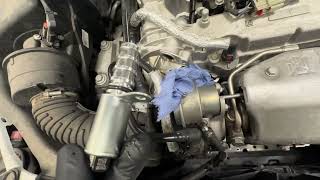
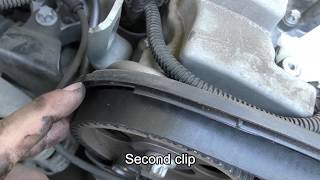
Typical fix: Replace the timing belt, tensioner, idler pulleys, and water pump as a complete kit. 🎬 Watch: Step-by-step timing belt and water pump replacement guide.
Est. part cost: $150-$350 - Faulty Camshaft Position Actuator Solenoids (VVT Solenoids) 🔴 High Probability → Shop Engine Camshaft These solenoids control oil flow to the cam phasers and are a known failure point across the GM Ecotec family. They can become clogged with oil sludge or fail electronically, causing timing correlation issues.
How to confirm: A common diagnostic step is to swap the intake and exhaust solenoids. If the code changes to P0017 (exhaust correlation), the solenoid is bad. They can also be tested with a multimeter for resistance, which should be between 6.9 and 7.9 ohms.
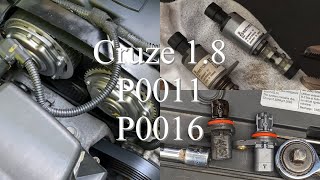
Typical fix: Replace both the intake and exhaust VVT solenoids. This is a simple DIY job that takes less than an hour. 🎬 See how easy it is to replace VVT solenoids.
Est. part cost: $80-$150 for a pair - Low or Dirty Engine Oil 🟡 Medium Probability The VVT system is entirely dependent on clean oil at the correct pressure to function. Old, sludgy, or low oil can clog the tiny screens and passages in the VVT solenoids and cam phasers, preventing them from adjusting timing correctly.
How to confirm: Check the oil level on the dipstick and inspect its condition. If it's low or appears very dark and thick, this is a likely contributing factor.
Typical fix: Perform an engine oil and filter change using the manufacturer-specified full-synthetic oil. This is often a good first step before replacing parts.
Est. part cost: $40-$70 - Failing Camshaft Phaser (Actuator Gear) 🟡 Medium Probability → Shop Engine Camshaft The mechanical gear (phaser) on the end of the camshaft can fail. A common symptom is a rattling noise at startup for a few seconds until oil pressure builds. The internal locking pin can fail, allowing the camshaft to move erratically at low oil pressure, triggering the code.
How to confirm: This is often diagnosed after VVT solenoids and sensors have been ruled out. The key symptom is the startup rattle. Physical inspection for excessive play is done during a timing belt job.
Typical fix: Replace the faulty camshaft phaser(s). This is an intensive job that is typically done at the same time as a timing belt replacement due to the significant labor overlap.
Est. part cost: $100-$250 per phaser
Rare But Worth Checking
- Incorrectly Installed Camshaft Actuator Oil Sleeve: → Shop Engine Camshaft Per TSB #PIP4543D, if this code appears immediately after a repair involving the camshaft actuators (phasers), a unique black plastic oil sleeve between the actuator and camshaft may have been missed, damaged, or installed incorrectly. This sleeve is critical for directing oil to the phaser and is only available as part of a new camshaft actuator assembly.
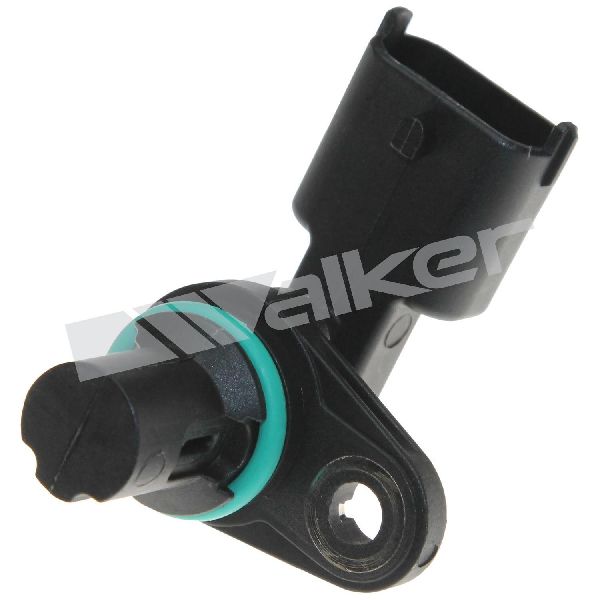
- Faulty Camshaft or Crankshaft Position Sensor: → Shop Engine Crankshaft Position Sensor While possible, it's less common for the sensor itself to fail than the mechanical components it monitors. Owners often replace these sensors first without success. Usually, a failing sensor will set its own specific circuit code (e.g., P0366) in addition to the correlation code.
- Spun Crankshaft Reluctor Wheel: → Shop Engine Crankshaft In very rare cases, the reluctor wheel (which the crankshaft sensor reads) can spin on the crankshaft, providing an incorrect base timing signal to the ECM. This is extremely difficult to diagnose and can cause the P0016 code to persist even after a full timing job.
Diagnosis Steps
- Check engine oil level and condition. Top up or perform an oil and filter change if necessary.
- Scan for any other DTCs that could provide more clues (e.g., sensor circuit codes, exhaust cam codes).
- Listen for a rattling noise during a cold startup. A rattle that lasts a few seconds strongly points to failing cam phasers.
- Swap the intake and exhaust VVT solenoids. They are identical and easily accessible. Clear codes and drive the vehicle. If the fault changes to P0017 (exhaust cam), the solenoid you moved is faulty.
- If solenoids are good, inspect their wiring and connectors. Test the solenoids with a multimeter; resistance should be between 6.9-7.9 ohms.
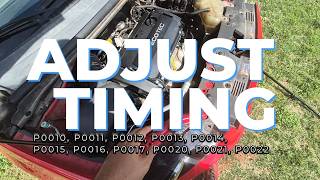
- If VVT components seem okay, the next step is to inspect the mechanical timing. This requires removing the upper timing cover and valve cover to use a camshaft locking tool to verify the cams are correctly aligned when the crankshaft is at Top Dead Center (TDC). 🎬 Watch: How to check and adjust your engine timing.
- If timing marks are aligned, suspect a failing camshaft phaser (actuator), especially if startup rattle was present.
- If all else fails, the issue could be a faulty sensor or, in rare cases, a wiring harness issue or a spun reluctor wheel.
Parts You'll Likely Need
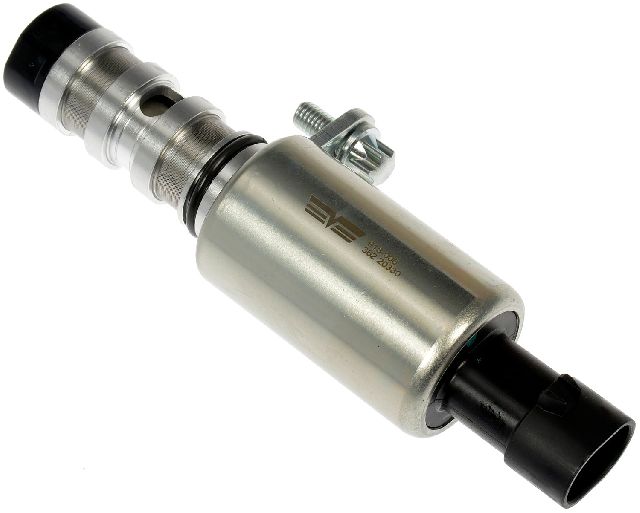
- Engine Variable Valve Timing (VVT) Solenoid Kit
(OEM #55567050)— These are a very common failure point due to clogging and are relatively inexpensive and easy to replace. It is highly recommended to replace them in pairs.
Trusted brands: ACDelco, Delphi, Dorman
OEM price range: $120-$180 for a pair
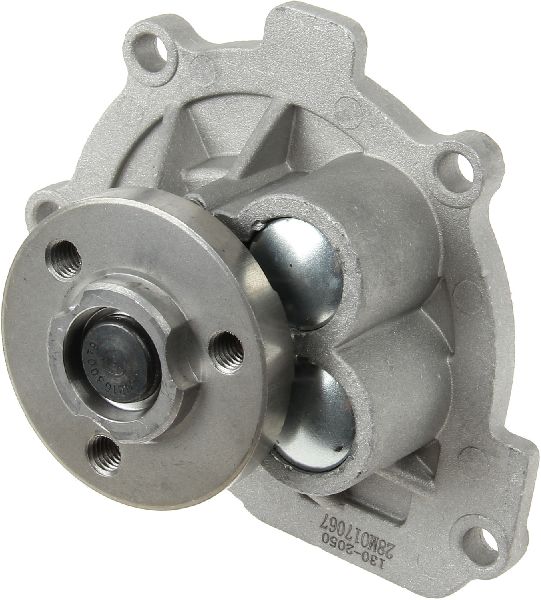
Aftermarket price range: $60-$120 for a pair - Timing Belt Kit with Water Pump — The timing belt is a critical wear item. If it has stretched or slipped, it must be replaced. The kit includes the belt, tensioner, idlers, and water pump, all of which should be replaced at the same time.
Trusted brands: Gates (e.g., TCKWP335), Continental, ACDelco
OEM price range: $480-$600
Aftermarket price range: $150-$350 - Camshaft Position Actuator (Phaser)
(OEM #55567049 (Intake), 55567048 (Exhaust))— Replaced if a startup rattle is present or if the P0016 code persists after replacing solenoids and verifying timing. Failure of the internal locking pin is common.
Trusted brands: ACDelco (GM Genuine), INA, Dorman
OEM price range: $200-$300 per phaser
Aftermarket price range: $100-$200 per phaser
Related Codes That Often Appear With This One
- P0017 — Crankshaft Position - Camshaft Position Correlation (Bank 1 Sensor B - Exhaust). If both P0016 and P0017 are present, it strongly suggests a base timing issue, like a slipped timing belt, affecting both cams.
- P0011 — Intake Camshaft Position Timing - Over-Advanced (Bank 1). This points more specifically to a problem with the intake VVT solenoid or phaser getting stuck, rather than a base timing belt issue.
- P0014 — Exhaust Camshaft Position Timing - Over-Advanced (Bank 1). Often seen with P0016 if there are widespread oil pressure/sludge issues affecting the entire VVT system or if the exhaust VVT components are also failing.
Technical Service Bulletins (TSBs) & Recalls
- PIP4543D: Provides information about DTCs P0011, P0014, P0016, or P0017 setting after a repair involving the camshaft actuators, pointing to a specific plastic oil sleeve as a potential cause. This TSB applies to the Astra, Aveo, Cruze, Sonic, and G3.
Platform-Specific Known Issues
- TSB #PIP4543D: This bulletin is crucial if the P0016 code appears immediately after a repair involving the camshaft actuators. It highlights a specific black plastic oil sleeve that fits between the actuator and the camshaft. If this sleeve is missing, damaged, or installed incorrectly, it will disrupt oil flow to the phaser and set this code. The sleeve is only sold as part of a new camshaft actuator assembly.
Mechanic-Grade Diagnostic Values
- Camshaft Position Actuator Solenoid (VVT Solenoid) Resistance — expected: 6.9 to 7.9 Ohms at 68°F (20°C). Failure: A reading outside this range, or an open/infinite reading, indicates a faulty solenoid.
Wiring & Ground Locations
- Engine Harness Main Ground — On the back of the engine block, above the starter, secured by a 10mm bolt holding two ring terminals with multiple wires.. A poor main engine ground can cause erratic sensor readings and unpredictable behavior from the ECM and related components, potentially triggering correlation codes.
- G104 — Engine compartment, exact location varies but is a primary ground point for the engine performance wiring harness.. This is a ground point for the Engine Control Module (ECM) and various sensors in the engine performance circuit. Corrosion or a loose connection here can affect sensor signals.
- Underhood Fuse Box Ground — Near the left (driver's side) headlight assembly.. This ground is critical for the underhood fuse box (electrical center). A poor connection here has been documented to cause numerous electrical issues, which could include power problems for the ECM or its sensors.
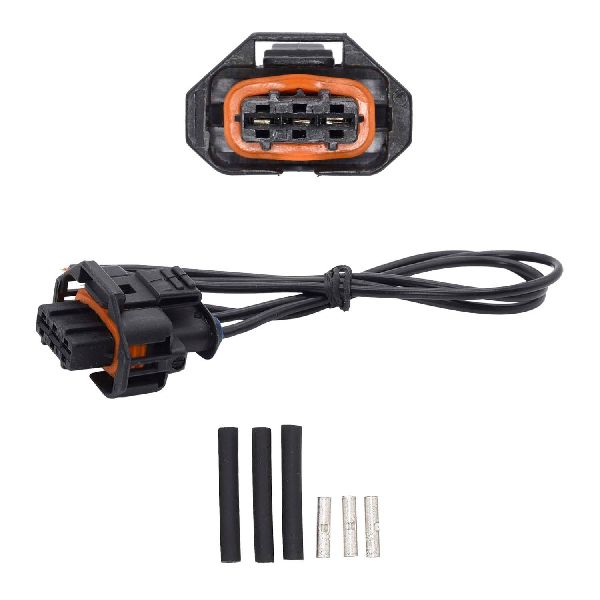
- ECM Connector (Crankshaft Sensor) — On a related Z18XE engine, the crankshaft position sensor signal is at Pin 5 of the ECM connector.. When diagnosing a persistent code after replacing sensors, checking for signal continuity from the sensor connector to the correct pin at the ECM is a necessary step to rule out a wiring harness break.
Real Owner Repair Stories
- YouTube video 'Fix DTC P0016 Chevrolet 1.8 f18d4' (Chevrolet Cruze 1.8L (with the same Z18XER engine family)) — P0016 code indicating a crank-cam correlation error.
❌ Tried (didn't work) The technician first assumed a timing belt issue.
✅ What actually fixed it After verifying the timing belt marks were perfectly aligned using the proper tools, the technician checked the camshaft phasers. By removing the oil plugs on the phasers, they discovered the intake phaser was completely dry, indicating no oil was being supplied. This immediately pointed to a stuck/failed VVT solenoid that was not allowing oil to pass through to the phaser. The fix was to test and replace the faulty VVT solenoid.
OEM Part Supersession History
12992408→55567050— Part revision by manufacturer.12992410, 25194445→55567048 (Exhaust Phaser)— Part revision by manufacturer.12992409, 5636632→55567049 (Intake Phaser)— Part revision by manufacturer.
Model Year Variations Within This Range
- 2008-2009: No significant mechanical or electrical differences related to the engine or timing components have been documented between the 2008 and 2009 model years for the Saturn Astra. Minor cosmetic and feature updates for 2009 do not affect the diagnosis or repair of P0016.
Helpful Videos
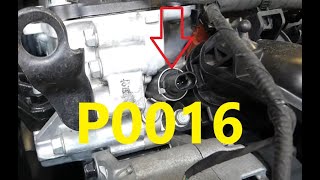
We Have This Part in Stock


The information in this article is provided for general reference and educational purposes only. Vehicle specifications, procedures, and part compatibility can vary by production date, trim level, and region. Always consult your vehicle's factory service manual and verify part numbers before purchasing or performing repairs. Safety-critical components such as airbags, seat belts, and braking systems should be installed by a qualified professional.
- Saturn ASTRA:
- 🧭 Diagnostic Flowchart
- 🎬 Helpful Videos
- 🛍️ Shop This Part
- What's Unique About the 2008-2009 Saturn ASTRA
- Symptoms You May Notice
- Most Likely Causes
- Rare But Worth Checking
- Diagnosis Steps
- Parts You'll Likely Need
- Related Codes That Often Appear With This One
- Technical Service Bulletins (TSBs) & Recalls
- Platform-Specific Known Issues
- Mechanic-Grade Diagnostic Values
- Wiring & Ground Locations
- Real Owner Repair Stories
- OEM Part Supersession History
- Model Year Variations Within This Range
- 🎟️ Get 5% Off